


A critical task that metal_stamp performs in its production is shaping and forming metal into components and products that we need daily. From automotive parts to household uses, it finds application in countless industries. What constitutes this process, and how are the dies behind the tools capable of delivering such precision and efficiency? This blog is an ultimate guide wherein one can study the basics of metal stamping, including the typical techniques and machinery needed, and the tools pivotal to the process. Whether seasoned industry professionals or novices, this article strips away the technicalities and explores why metal stamping is a manufacturing powerhouse. Prepare to know the process, the key tools involved, and what it means to modern manufacturing.
Introduction to Metal Stamping

Metal stamping is a manufacturing process that involves shaping flat metal sheets into particular forms using die combinations and presses. It is extensively used in producing parts and components for various industries, including automotive, electronics, and appliances. This procedure is highly regarded for its speed and precision, giving it a high standing for the mass production of identical products. Some key techniques involved in the metal stamping processes include punching, bending, and embossing to suit specific design purposes. Being versatile and cost-efficient, metal stamping has thus contributed much to modern manufacturing.
What is Metal Stamping?
Metal stamping is a manufacturing process used to shape a flat metal sheet through techniques like punching, bending, embossing, and flanging. It uses precision-engineered dies and presses to form and dimension, thus serving many industries. The global metal stamping market was estimated to be worth about $210 billion in 2022, growing at a CAGR of over 4% from 2023 to 2030, owing to increasing demand from the automotive, aerospace, and construction markets.
The process improves efficiency, allowing for mass production at low costs while maintaining standards. Technological advancements, including CAD and CAM, have only increased stamping’s precision and capabilities. The applications are unlimited, from small electron components to large automotive body panels.
Overview of the Metal Stamping Process
Metal stamping is a cold-forming process in which dies and high-pressure machinery impart shape or design onto flat sheets of metal. This process is very efficient and can accept various materials such as steel, aluminum, copper, and alloys. Thus, utilization of the process is common in many industries, including automotive, aerospace, electronics, and construction.
Key Steps in the Metal Stamping Process:
- Blanking—This first step involves cutting the metal sheet into the desired size and shape, known as a “blank,” using precision dies.
- Forming- The blank is shaped into complicated shapes by bending, stretching, or drawing.
- Punching- Holes or shapes are punched into the metal with the help of special tools.
- Trimming- Unwanted metal is trimmed away to meet the product’s final dimensions.
- Finishing—Surface treatments are used to coat or finish an item to enhance its resistance, appearance, or other desired properties.
Latest Advancements and Data in Metal Stamping
Computer-aided manufacturing and Artificial Intelligence have provided recent advances in metal stamping. These tools increase the precision of operations, reduce material waste, and speed up the production cycle. Nowadays, servo presses enjoy greater control and efficiency than mechanical presses, with speeds nearing 1,400 strokes per minute.
Industry reports show that the global metal stamping market was valued at $198.2 billion in 2022 and is expected to grow at a CAGR of 4.3% between 2023 and 2030. The automotive sector is the largest consumer, with demand for lightweight and high-strength vehicle components.
Sustainability trends have also pushed manufacturers to engage in greener stamping processes, lowering the energy consumption in the forming processes and promoting recyclable materials. Together, these innovations ensure metal stamping remains a critical and evolving aspect of world manufacturing.
Importance of Metal Stamping in Manufacturing
Metal stamping is among the major manufacturing processes used in industries to manufacture precise and high-quality components. The method involves applying pressure to the flat sheet metal to form metal parts to a particular shape using dies so that the parts can be mass-produced efficiently and cheaply. As reported by recent market research, the global metal stamping market is anticipated to attain USD 299.6 billion by 2030, growing at a CAGR of 4.3% from 2023 to 2030. This growth stands testimony to the increased industry use of metal stamping.
Using metal stamping in the areas where it is most in demand is heavily concentrated in the automotive sector, which claims the highest order of use. A drive for light and strong vehicle components that promote the vehicle’s fuel efficiency and meet stringent emission norms is behind the newer improvements in stamping technology. Fortunately, these improvements in technology are not limited to automotive stamping. The electronics industry relies heavily on metal stamping for products such as connectors, switches, and micro-precision parts that go into modern consumer devices.
Recent transformations have seen a move toward sustainability. Environmentally friendly stamping processes with advanced recycling technologies are designed to save energy and reduce material wastage per international environmental standards. These processes have increased the accuracy and pace of production lines, thus reducing errors and increasing productivity.
Metal stamping is adaptable and efficient, meeting the increasing demands of manufacturers worldwide. Its journey from adaptable metal stamping to the further nooks and crannies of manufacturing ensures its continued existence as a backbone of major sectors ranging from automotive, electronics, aerospace, and medical equipment.
Types of Metal Stamping
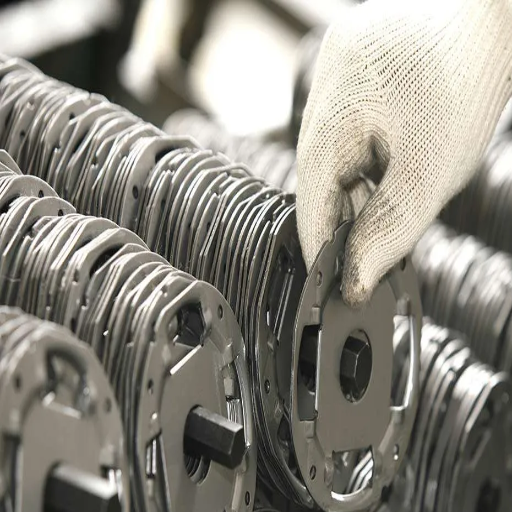
Metal stamping falls mostly into four categories:
- Progressive Die Stamping
This method carries out the blanking, forming, and shaping actions at separate stations in one die, with the bare strip passing from station to station. It is preferred for high-volume parts and high-precision requirements.
- Deep Draw Stamping
This process involves shaping a flat sheet of metal into a three-dimensional form without losing its structural integrity. It is most frequently used for making parts with large depths and intricate shapes, such as cans, containers, and automotive parts.
- Transfer Die Stamping
In contrast to progressive stamping, transfer stamping takes the workpiece from one die to another for each process step. This option accommodates operations where large or complex parts must be made in multiple operations.
- Blanking and Piercing Stamping
These are the basic cutting tools by which metal sheets are cut to a specific shape or through holes of definite shapes in the material. These may be used in a vast number of fields.
Each of these types of metal stamping offers unique benefits, and hence, it is important to select the one best suited to the application requirements.
Different Stamping Methods
Metal stamping is a process that can be used to do many things-different methods are used depending on the intended result. Let’s review some of the primary stamping methods, together with detailed information and relative data:
- Progressive Die Stamping
Progressive die stamping involves a metal strip fed through stations that perform different operations in sequence- i.e., cutting, bending, and punching. It will be done all simultaneously, and it is, therefore, highly beneficial when the application calls for mass production. Because it is considered cost-effective and is one of the best methods for producing intricate designs, it has been quoted to account for over 40% of the world’s usage of stamping.
- Transfer Die Stamping
Transfer die stamping utilizes a mechanical transfer device to move separate parts through die stations. It is mainly employed to manufacture larger components or parts requiring several operations. According to a manufacturing study in 2023, transfer die stamping grew by 15% over the past ten years mainly because of its suitability for highly complex geometries and heavy materials, with preference in the automotive and aerospace sectors.
- Fine Blanking
Fine blanking is an extremely precise stamping method for polishing tightly toleranced components with smooth edges into shapes. It is used in this industry to make gears, medical equipment, and electronics. Modern analysis shows that fine blanking machines carry out ±0.0005-inch tolerances, ideal for producing precision components.
- Deep Drawing
Stretching thin sheets of metal into the desired shape, and without committing a fracture on it, to give rise to aluminum cans, automotive fuel tanks, and kitchen sinks, comprises the actual meaning of deep drawing. Ratios as high as 2.5:1 can be achieved for deep drawings between depth and diameter. These new lubricants significantly reduced friction, enhancing the efficiency of the entire process by roughly 20%, according to a technical report published in 2022.
- Hydroforming
Hydroforming shapes metal sheets or tubes by pressurized hydraulic fluid into lightweight yet strong components. This technique is primarily used where weight is an issue, like automotive and aerospace engineering. The global market value of hydroformed components exceeded 2 billion in 2023, with the demand expected to rise at a CAGR of 7% till 2030 due to the recent trend in electric vehicle manufacturing.
- Blanking and Piercing
These are the primary metal stamping methods, involving cutting the material into specific shapes or punching holes with extreme accuracy. At least 70% of all stamped parts begin their lives with blanking and piercing operations, making these processes almost essential in every manufacturing field.
Further technological breakthroughs in material science and automation will make metal stamping methods increasingly efficient and flexible. Companies now employ computer-aided designs and AI for tooling and production optimization, thus granting greater flexibility and faster turnaround times. These advances have significantly changed stamping processes, thereby allowing manufacturers in different industries to fashionably keep up with the demand for quality components.
Common Types of Metal Stamping
Meta-Information: The various types of metal stamping include progressive, transfer, deep drawing, fine blanking, and four-slide.
|
Type |
Description |
Key Use |
|---|---|---|
|
Progressive |
Multi-station process |
Complex parts |
|
Transfer |
Station-to-station |
Large parts |
|
Deep Drawing |
Depth > diameter |
Cylindrical parts |
|
Fine Blanking |
Precision cutting |
Burr-free parts |
|
Four-Slide |
Multi-bend forming |
Intricate shapes |
Applications of Sheet Metal Stamping
Sheet metal stamping is a versatile form of manufacturing used in various industries, mainly due to its speed and precision. There are five major applications of sheet metal stamping:
- Automobiles
Metal stamping is a common technique in automotive production: creating body panels, chassis, engine components, and transmission components. This technique guarantees strength and accuracy, vital for safety and performance.
- Aerospace
Being more precise, hardware manufacturing stamps wings, panels, brackets, and fuel system parts according to stringent tolerances.
- Electronics
Metal stamping is required for the precision and repeatability of small, detailed parts such as connectors, terminals, and enclosures for electronic devices.
- Medical
Sheet metal stamping is utilized to manufacture surgical instruments, medical device components, and implantable devices, all to stringent standards and hygiene requirements.
- Consumer Goods
Metal stamping for household appliances, kitchenware, and decorative metals can create robust, complex designs that combine functionality and artistry.
The Metal Stamping Process

The metal stamping process is the shaping and cutting of sheet metal into a particular shape using a stamping press. Essentially, a few essential steps are followed in the process:
- Designing and Tool-Making
First, a complete design is made, and subsequently, tools, which can be dies, are made that are very specific to the actual metal parts to be manufactured.
- Material Selection
The correct type of sheet metal, including the thickness, is selected depending upon the application and performance criteria of the finished product.
- Stamping
The sheet metal is fed into a stamping press, and processes such as blanking, punching, bending, or forming are performed to form it into a desired shape.
- Quality Control
The stamping components are thoroughly inspected to comply with strict specifications and quality standards.
Serving different industries, fulfilling these steps with utmost care ensures the end product is accurately engineered, durable, and high-quality.
Steps Involved in the Sheet Metal Stamping Process
Manufacturers have added other technologies and practices to increase the speed and accuracy of the sheet metal stamping process. Such technologies include CAD software for making parts with high accuracy, automated stamping machines for repeatability, and real-time monitoring systems for detecting defects in production. The materials are chosen based on strength, flexibility, and resistance to corrosion to achieve optimum performance. Further yet, companies frequently implement a progressive die stamping process to consolidate multiple operations into one continuous flow, thereby saving production time and costs. In this manner, the process continuously evolves to meet ever-stringent requirements of modern-day industries, such as automotive, aerospace, and electronics.
Understanding Stamping Dies
Stamping dies are tools engineered specifically to shape or cut materials, chiefly sheet metal, into designs and configurations. They marry the principles of precision engineering with creative technology to attain accuracy and consistency for high-volume production. Modern stamping dies employ advanced materials and coatings to prolong life and improve performance. CAD and simulation tools are also frequently used in the development phase to optimize die design, minimize waste, and maximize production efficiency. This ensures that stamping dies are at the cutting edge of manufacturing innovation, thus meeting the tight demands of various industries.
Precision Metal Stamping Techniques
Metal stamping is precision work, working hand in hand with sophisticated machines and specialized techniques to forge top-quality, finely shaped metal parts for diverse applications. Some modern ways are deep drawing, progressive die stamping, and fine blanking-backbreaking work, each fit for a particular manufacturing purpose.
- Deep Drawing: The technique is revered for producing seamless, cylindrical, or complex shapes. Using this process, the manufacturer forms parts such as automotive body panels and appliance components with good structural integrity. Deep drawing is an accurate process capable of tolerances within ±0.001 inches, making wonderful details.
- Progressive Die Stamping is commonly used for large-scale productions. Here, multiple stations are utilized within a single die setup. Each section performs separate operations applicable to the final part, like cutting, bending, and punching. This method is high-speed, producing up to 1,500 parts in one minute.
- Fine Blanking: Works toward creating parts with split precision using blanking and machining steps. This method is typically used by the automotive and aerospace industries, designing components with smooth edges and close tolerances of about ±0.0005 inches.
Benefits of Modern Stamping Technologies
- Higher Efficiency: Automations in precision-stamping processes help reduce cycle time and labor cost, with some systems even clocking production rates of more than 100,000 parts per hour.
- Saving on Materials: The stamping systems do not produce excessive waste and use resources judiciously, helping manufacturers reduce their overall costs.
- Broad Material Diversification: Precision stamping offers a wide spectrum of materials, including aluminum, stainless steel, brass, and exotic alloys, to meet the requirements of several industries.
The effective combination of these sophisticated processes and high-end machinery/software allows industries to fabricate mass quantities of rugged, high-precision parts, thereby innovating in the automotive, electronics, and medical device industries.
Tools Used in Metal Stamping

Commonly, these tools are used in metal stamping processes:
- Dies are used for cutting, bending, or shaping metal into the desired form. They are built for each specific application to ensure precise results.
- Press Machines apply the forces required for the stamping process. Depending on the stamping process requirements, they may be mechanical or hydraulic.
- Punches: Punches are considered to make holes or relatively thin cuts in the metal during the stamping operations.
- Strip Feeders: They provide automated feeding of metal sheets or strips into the machine, enhancing efficiency.
- Press Brakes: These bend metal sheets with precision and consistency.
- Tooling Components: These are used as fasteners, springs, or guides to help dies and machinery function properly.
All the above tools are directly or indirectly involved in the smooth operation of metal stamping, which is relatively inefficient.
Overview of Stamping Presses
Stamping presses are the primary machines in industries to shape and cut metal materials into the desired form. The complementary forces, cooperation of precision, and tooling combine to enable the manufacturer to obtain high-quality products for the automotive, aerospace, electronics, and household appliance industries. Stamping presses could be broadly classified into two types, having different operating principles. One is mechanical, and the other is hydraulic.
Mechanical Presses: The mechanism whereby a flywheel generates kinetic energy, which gets transferred to the ram of the stamping press, is termed mechanical pressing. Mechanical presses are so very fast that they make the application of massive production. A modern mechanical setup will be working at speeds ranging from 20 SPM to 1,500 SPM, subject to the complexity of the part it is manufacturing.
Hydraulic Presses: Hydraulic presses apply force to the workpiece via a hydraulic cylinder. They provide uniform pressure for the entire stroke, suitable especially for complex deep drawing applications. They run slower than mechanical presses, usually at the rate of about 15-40 SPM. However, they definitely provide higher forming versatility and process control.
Advancements in Stamping Press Technology
Modern stamping presses have a digital control system and automation features to increase reliability and precision further. According to industrial reports, automation of stamping presses has led to an increase in productivity of up to 30% and at the same time a reduction in the wastage of materials. For instance, the servo-driven press, being a mixture of mechanical and hydraulic systems, allows for precise control of speed and motion, thereby providing the means to manufacture more complex geometries in part production.
Moreover, the intelligent monitoring systems installed in new presses provide real-time detection of any wear and tear occurring in the machines, thus minimizing downtime. The global stamping press market is forecast to grow at a CAGR of 4.8% between 2023 and 2030, owing to the demand for lightweight and exact components in the automotive and electronics industries.
Stamping presses today are continuously evolving, with innovations in energy efficiency, safety features, and flexibility being introduced to meet the requirements of various manufacturing needs.
Essential Tools for Metal Stamping Projects
Some primary tools for achieving utmost productivity and precision throughout a metal stamping exercise are high-end stamping machines that work as the core machinery with their controlled force applied upon the metal sheet to make it take on specific shapes. Complementing press machines are die sets and cutting dies to cut out designs with dimensional details of the stamped items. A shear or cutter would cut raw materials into the required dimensions before stamping.
Lubricants help reduce friction and wear during the stamping processes, thereby increasing the life of the machinery and providing smoother operations. Regarding quality control, measuring instruments, including calipers and micrometers, may be used to check the accuracy of measurements for any stamped parts. Material handling equipment, such as feeders and conveyors, organizes the flow, boosting productivity and ensuring safety. With these tools and techniques in any designer’s repertoire, metal stamping projects can produce successful metal works catering to diverse industrial needs.
Choosing the Right Tool for Your Stamping Project
There are several key considerations to selecting a tooling for metal stamping works: material, project complexity, and required precision. Firstly, consider the material operating with metals such as aluminum, steel, or copper with varieties of hardness and ductility depending on the choice of stamping dies and press machines. Then, consider the complexity of the pattern. For highly detailed pattern work, select tooling techniques capable of efficiently generating uniform results, such as progressive dies. Thirdly, choose tooling that suits the scale of production, whether a small batch or a high volume. Investigate recent use of automated systems and innovative technologies to achieve greater accuracy and higher productivity towards meeting modern industrial standards.
Reference Sources
- HDR image-based deep learning approach for automatic detection of split defects on sheet metal stamping parts (Singh et al., 2023, pp. 2393–2408) (2023): This paper proposes an automated inspection framework using computer vision and deep learning to detect defects in sheet metal stamping. High Dynamic Range (HDR) imaging is used to overcome challenges posed by harsh lighting conditions and reflective surfaces common in manufacturing environments. The methodology involves capturing HDR images of stamped samples, using these images to train a Convolutional Neural Network (CNN), and evaluating the model’s accuracy in defect detection. Key findings show that HDR image-based models achieve significantly higher accuracy with minimal false positives.
- Data-driven indirect punch wear monitoring in sheet-metal stamping processes (Unterberg et al., 2023, pp. 1721–1735) (2023): This study focuses on indirect punch wear monitoring in sheet metal stamping. It uses acoustic emission signals to model the quality of the sheared surface of the scrap web as a proxy for punch wear. The experimental work was conducted in an industrial fine blanking process. Regression models were used to establish the relationship between acoustic emission features and sheared surface quality. The key finding is that the models effectively predict sheared surface quality and suggest adhesive wear as a primary cause of surface impairment.
- A study on the parametric optimization of drawing metal stamping process for aluminum alloy tailgate parts using response surface methodology (Kim et al., 2023, p. 502) (2023): This research optimizes the drawing metal stamping process for aluminum alloy tailgate parts using Response Surface Methodology (RSM). Blank holding force, coefficient of friction, and die speed were identified as key process parameters. RSM was used to optimize these parameters, and field experiments validated the results. The study aims to improve the shape quality of aluminum alloy parts during stamping.
- Top Metal Stamping Parts Manufacturer And Supplier In China
Frequently Asked Questions (FAQs)
What are Metal Stamping Services?
Metal stamping services refer to the various manufacturing processes used to create metal parts and components from raw metal. These services can include a range of techniques such as progressive die stamping, multi-slide stamping, and deep drawing. By utilizing these processes, manufacturers can shape flat metal sheets into specific designs that meet precise specifications. Stamping professionals employ advanced stamping tools to ensure accuracy and efficiency during production. Additionally, metal stamping services can cater to large-scale production runs and custom projects, making them versatile in the metal fabrication industry.
What is the Process Used in Metal Stamping?
The process used in metal stamping involves several key steps that transform a sheet metal blank into a finished product. Initially, a flat piece of metal or coil is fed into a stamping machine, and it is shaped using various metal forming techniques. These techniques include bending, cutting, and punching to create complex metal parts. Using tool steel in stamping tools is critical as it ensures durability and precision during the forming process. After the initial shaping, the metal piece may undergo secondary operations, such as finishing and assembly, to meet specific design requirements.
What are the Types of Stamping in Metal Fabrication?
There are several types of stamping in metal fabrication, each suited for different applications and materials. Common types include progressive stamping, which allows for continuous operation and high-volume production, and hot stamping, which involves using molten metal to create intricate designs. Another type is multi-slide stamping, which provides the ability to produce complex shapes with precision. The choice of stamping method often depends on the complexity of the metal part required and the type of metal being used, such as sheet metal or strips of metal. Understanding these types of stamping helps manufacturers select the best process for their specific needs.


