


Widely praised as an alloy with excellent strength and corrosion resistance, and thus very versatile in different fields of application, aluminum 5052 is the preferred choice in many industries. This alloy has superb strength and corrosion resistance, coupled with excellent adaptability, and performs well in some of the most demanding applications. This is why, when looking for material to go into marine equipment, automotive components, or architectural applications, it would pay off to have some knowledge about the specific characteristics and advantages of 5052 aluminum. This article reviews why 5052 aluminum is so special, with an overview of the basic features, typical applications, and benefits involved. By then, you should thoroughly understand why this alloy is a solution to almost all professional and engineering needs.
What is 5052 Aluminum?

5052 aluminum belongs to a high-strength and corrosion-resistant group of aluminum alloys primarily alloyed with magnesium. The metal possesses qualities that can provide excellent resistance to seawater or hostile environments, good weldability, and excellent forming properties, making it useful for various applications. Due to its strength and lightness, the alloy is often used in marine hardware, automotive components, and industrial construction. Given its versatility and dependability for use in many areas, these factors make it an esteemed choice.
What are the key characteristics of 5052 aluminum alloy?
5052 aluminum alloy is famous for many remarkable characteristics that transpire to make it an excellent alternative for various uses. It is highly corrosion-resistant in saltwater and marine atmospheres, so it is preferable for equipment that is supposed to set sail. Strength-wise, it is moderate-to-high compared with many other non-heat-treatable alloys, so it can normally be expected to perform satisfactorily in a given situation. A further feature is that it can be welded easily and formed without difficulty into the required shapes, even those of very complex designs. The alloy is relatively light, thereby increasing fuel efficiency and allowing easier transportation of the end product. In addition, the material also boasts good thermal conductivity and fatigue resistance, so it stays true and reliable with repeated use over time. The company tries aluminum 5052 into a sky full of marine, vehicle, aircraft, and industrial usage.**
How does aluminum 5052 compare to other aluminum grades?
5052 aluminum is more corrosion resistant, formable, and weldable, and hence used for marine and chemical applications. On the strength side, the 5052 aluminum alloy is less strong than 6061 and 7075.
|
Parameter |
5052 |
6061 |
7075 |
|---|---|---|---|
|
Strength |
Low |
Moderate |
High |
|
Corrosion Res. |
Very High |
High |
Moderate |
|
Formability |
Excellent |
Moderate |
Poor |
|
Weldability |
Excellent |
Good |
Fair |
|
Machinability |
Moderate |
Good |
Fair |
|
Applications |
Marine, Tanks |
Structural |
Aerospace |
|
Cost |
Low |
Moderate |
High |
What are the primary uses of 5052 aluminum sheet?
5052 aluminum sheet finds its application in almost every industry for one simple reason it has the best blend of strength, corrosion resistance, and workability. These were principally applied in marine environments due to the metal’s high resistance to saltwater corrosion; therefore, boat hulls, tanks, and ship components would be manufactured with this metal. In the automobile industry, being lightweight, it finds applications in manufacturing parts such as fuel tanks, panels, and other structural components to improve fuel efficiency. Aerospace 5052 aluminum sheet serves non-critical applications, such as hydraulic tubing and aircraft fuel tanks. It is used in industrial applications, including making pressure vessels, storage tanks, and appliances. Moreover, it is the best in architecture for signage, railings, and decorative elements because of its excellent workability.
What are the mechanical properties of 5052 Aluminum?

5052 aluminum has mechanical properties that are considered very good:
- Ultimate tensile strength: Generally from 31,000 to 44,000 psi, dependent on temper.
- Yield strength: Around 28,000 psi, under the annealed condition.
- Elongation: Good ductility, ranging from 12 to 20%, depends on thickness and temper.
- Hardness: The Brinell hardness is usually about 60 HB.
- Modulus of elasticity: Around 10 million psi, in other words, resistance to deformation under stress.
These properties explain why 5052 aluminum is highly durable, corrosion-resistant, and versatile in a million applications.
How does fatigue strength affect the performance of aluminum 5052?
Thus, fatigue strength is crucials for the existence or longevity of aluminum 5052 in specific applications. Fatigue strength means the ability of a material to resist cyclic loading having variable loads through different loads without failure over time. The aluminum alloy 5052, resisting fatigue very well, would thus find its way into automotive, shipbuilding, and aerospace applications where parts are subjected to vibration or cyclic stress. It is highly resistant to fatigue cracking, maintaining structural integrity in rigorous environments. Its corrosion resistance complements this property, making aluminum 5052 a natural choice for rugged applications in marine and outdoor environments.
What is the significance of yield strength in 5052 aluminum?
The aluminum alloy 5052 series is a vital engineering metal concerning yield strength because it describes the ability of a material to withstand permanent deformation under stress. In the case of 5052 Al, the yield strength is roughly 193 MPa (28,000 psi). This property becomes important when the material must be kept against load applications, e.g., pressure vessels, automotive parts, and storage tanks. Theoretically, higher yield strength means that the material can withstand higher forces up to structural failure, thus making aluminum 5052 a highly durable and reliable choice under more demanding conditions. The high strength and excellent corrosion resistance make it suitable for marine and industrial applications.
How does the corrosion resistance of 5052 aluminum work?
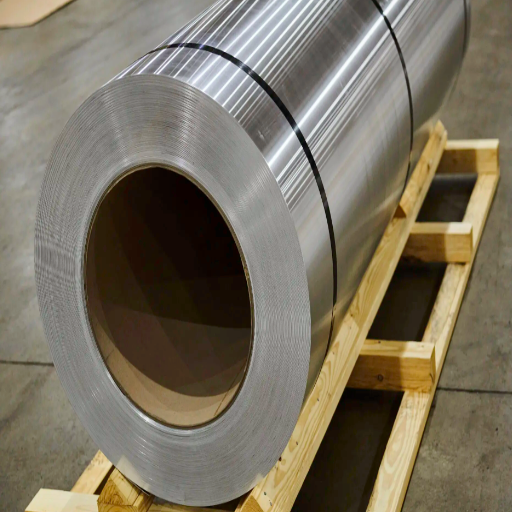
Corrosion resistance in aluminum 5052, primarily due to its high magnesium content, helps in the performance of forming an oxide layer on the surface. The oxide layer, protecting the metal underneath from moisture and corrosive agents, serves as a barrier. Marine and industrial environments pose an even higher threat to many metals. The aluminum 5052 stands out with its durability during exposure to salt water and chemicals. This provides an edge, where the material is employed in applications subject to harsh weather or corrosive conditions.**
What makes 5052 aluminum highly resistant to corrosion?
5052 aluminum’s corrosion resistance is mainly from its chemical composition and the manufacture of an oxide film on the metal surface, having exceptional protective qualities. This alloy contains magnesium in appreciable quantities that augment its resistance to environmental aggressors such as saltwater and industrial pollutants. The aluminum oxide film acts as a barrier to halt further oxidation and basification of the material’s degradation. This renders 5052 aluminum appropriate for marine applications, chemical processing equipments, and outdoor structures in general, where exposure to severe environmental conditions is standard practice.
Are there specific environments where 5052 aluminum alloy excels?
The 5052 aluminum alloy is deemed the most appropriate choice for high corrosion resistance environments in marine and saltwater applications. Due to its fairly high magnesium content, 5052 aluminum resists corrosion very well in saltwater and from chloride substances, making it ideal for marine purposes like boat hulls, shipbuilding, and dock parts.
It also finds application in areas with high humidity or areas exposed to industrial chemicals. It resists corrosion from sulfuric acid mists, seawater, and other industrial pollutants, making it suitable for chemical storage vessels and pressure vessels. It is also used in cryogenic environments today, where it maintains strength at low temperatures.
With its strength and resistance to pitting and stress corrosion cracking, 5052 aluminum alloy gives an edge for plants, fuel tanks, and aerospace components that need to function long-term in aggressive environments. Excellence in these working conditions is one of the impetuses for the alloy’s performance, and it provides a cheap solution to difficult applications.
How does corrosion resistance compare with other aluminum alloys like 6061?
5052 aluminum is much more corrosion-resistant than 6061, especially in marine and saltwater environments. So, 6061 aluminum resists corrosion, but not in harsh conditions.
|
Parameter |
5052 |
6061 |
7075 |
|---|---|---|---|
|
Corrosion Res. |
Very High |
High |
Moderate |
|
Marine Use |
Excellent |
Good |
Fair |
|
Saltwater Res. |
Excellent |
Moderate |
Poor |
|
Chemical Res. |
High |
Moderate |
Moderate |
|
Applications |
Marine, Tanks |
Structural |
Aerospace |
What are the fabrication and welding capabilities of 5052 Aluminum?

It offered the forte of excellent fabrication and welding properties. Al was easily work-formed, and complex components can be formed without cracking, making it perfect for applications requiring deep drawing or bending. 5052 Aluminum has excellent weldability, for it is weldable by different welding processes such as TIG, MIG, or resistance welding. Strength and corrosion resistance continue in welded areas 5052, suitable for structural fabrications and marine or industrial environments. It is pretty versatile and can remain consistent in challenging applications.
What is the weldability of 5052 aluminum sheet?
Widely known for its excellent weldability, the 5052 aluminum sheet is used in many industrial and engineering applications. The sheet can be welded through routine welding procedures, such as GTAW or GMAW welding. Owing to its strength from magnesium (nearly 2.5%), the 5052 aluminum retains much of its structural integrity after welding, with hardly any chance for cracking. It is best suited for applications where welded joints constitute primary service elements, such as in marine environments or pressure vessel,s whereby welds are deemed to sustain strength and corrosion resistance under rough weather conditions. The 5052 aluminum welds without further treatment, making it easier to weld than other commonly used aluminum alloys like 6061, which sometimes need heat treatment after welding.
How to effectively weld 5052 aluminum?
To weld 5052 aluminum successfully, several methods must be followed to uphold its structural integrity and properties. TIG welding is the most popular type of welding for 5052 aluminum, which allows precision and cleanliness. Prepare the clean aluminum surface by wiping away any oxide layer or contaminants that may affect the weld quality. A suitable filler rod, such as 5356 or 4043, can provide strong and durable joints with the 5052 alloy.
Usually, no preheating is necessary while working on 5052 aluminum because of its good thermal conductivity and moderate strength. Using a stable arc and a proper shielding gas during welding, such as pure argon or argon-helium gas mixture, would prevent porosity and give good weld penetration. Controlling heat input is vital to avoid excess distortion or weakening of the material. Post-weld cleaning might be necessary to remove discoloration or residue to achieve a smooth finish. High-quality welds would be possible by following these good practices for 5052 aluminum.
What fabrication techniques work best with 5052 alloy?
The 5052 aluminum alloy is highly versatile, which means various techniques can process it. One of its strengths is excellent formability; it can be rolled, stamped, or drawn into intricate shapes without cracking. The other processes that work best for it are deep drawing and spinning because the alloy is highly ductile. Even bending 5052 aluminum is relatively easy if one does it correctly, as the metal has a high strength-to-weight ratio and is very malleable, so it is less likely to crack. Modern CNC machining tools also operate well on this metal, producing precision cuts with minimal material wastage. The weldability of 5052 aluminum thus favors fabrication because joints can be reliably welded by methods such as TIG or MIG. With these qualities, it is famous for applications requiring shaping and durability, like in the marine, automotive, and aerospace industries.
Reference Sources
1. Dynamic Testing of Friction Stir Processed Aluminum-5052
- Authors: Mohamed Y. Mohamed et al.
- Published: December 19, 2024
- Journal: Key Engineering Materials
- Key Findings:
- Investigated the high-strain-rate behavior of friction stir processed Aluminum 5052.
- Found that processed samples exhibited a lower yield strength (20.8% less at a strain rate of 5000 s⁻¹) compared to unprocessed samples but had a higher hardening rate.
- Methodology:
- Used a Split Hopkinson Pressure Bar (SHPB) system to measure compressive responses at strain rates between 2700 s⁻¹ to 5000 s⁻¹.
- Employed high-speed imaging and digital image correlation techniques for full-field strain measurement(Mohamed et al., 2024, pp. 3–11).
- Authors: Hyun-Uk Jun et al.
- Published: January 5, 2024
- Journal: Korean Journal of Metals and Materials
- Key Findings:
- Analyzed the differences in weldability between Al 5052-H32 and Al 6014-T4 alloys.
- Found that Al 5052-H32 had a thicker magnesium oxide film, leading to higher resistance and larger nugget diameter during welding.
- Methodology:
- Conducted resistance spot welding experiments and analyzed the welds using X-ray photoelectron spectroscopy (XPS) to assess surface conditions(Jun et al., 2024).
3. Effect of Air Humidity in MIG Welded Joints on Tensile Strength and Impact Strength of Aluminum 5052
- Authors: Fandi Bachtiar Nduru, Nur Yanu Nugroho
- Published: June 14, 2023
- Journal: BERKALA SAINSTEK
- Key Findings:
- Investigated the impact of air humidity on the mechanical properties of MIG welded joints.
- Found that higher humidity levels decreased both tensile and impact strength, with the best results at 53% humidity.
- Methodology:
- Used experimental quantitative methods and analysis of variance (ANOVA) to analyze the effects of different humidity levels during welding(Nduru & Nugroho, 2023).
4.Top Aluminum CNC Machining Parts Manufacturer And Supplier In China
Frequently Asked Questions (FAQs)
Q: What is 5052 aluminum alloy known for?
A: 5052 aluminum alloy is known for its exceptional corrosion resistance, good formability, and high fatigue strength, making it suitable for various industrial applications.
Q: How does the machinability of aluminum 5052 alloy compare to other alloys?
A: Aluminum 5052’s machinability is good but not as high as some other alloys, such as 6061. It is a non-heat-treatable alloy, which can influence its machinability in certain applications.
Q: What are the primary alloying elements in 5052 aluminum alloy?
A: The primary alloying element in 5052 aluminum alloy is magnesium, contributing to its strength, corrosion resistance, and overall properties.
Q: Can you explain the difference between 5052 and 3003 aluminum alloys?
A: 5052 aluminum alloy has a higher magnesium content, which gives it superior strength and fatigue resistance compared to 3003, which is more formable but has lower strength.
Q: Is 5052 aluminum alloy heat treatable?
A: No, 5052 aluminum alloy is non-heat-treatable, meaning it cannot undergo heat treatment to increase its strength, unlike other aluminum alloys.
Q: What are the common forms of 5052 aluminum available in the market?
A: Common forms of 5052 aluminum available include sheets, plates, and coils, with 5052 sheet being particularly popular for sheet metal applications.
Q: What industrial applications commonly use 5052 aluminum sheet?
A: 5052 aluminum sheet is commonly used in marine environments, automotive fuel tanks, pressure vessels, and heat exchangers due to its high corrosion resistance.
Q: How do you buy 5052 aluminum for your projects?
A: You can buy 5052 aluminum from specialty metals suppliers or local metal distributors. Specify the desired form, such as sheet or plate, and check for available grades.
Q: What is the tensile strength of 5052 aluminum alloy?
A: The tensile strength of 5052 aluminum alloy typically ranges from 210 to 260 MPa, depending on the specific temper and thickness of the material.


