


In precision machining and manufacturing, the choice of material can be a make or break in realizing the actuality of a project. Among the few machining steels that are favored for their excellent machinability and reliability is AISI 12L14 carbon steel. Considered a free-machining steel, this alloy is one of the few that possesses good mechanical properties while being extremely easy to process, thus serving as a good general-purpose steel across many industries. This article will describe the essential properties, applications, and features unique to AISI 12L14 carbon steel. Whether by maximizing production efficiency or deciding precisely on a material for your next project, this article promises to offer enough know-how for making a good decision.
Properties of AISI 12L14 Steel

AISI 12L14 steel, with sulfur and lead as alloying elements, imparts excellent machinability to steel. In terms of mechanical properties, it has a fair tensile strength, hardness, and reflect durability for high-speed machining operations. It generally allows a decent surface finish and is watched upon for easy forming and machining. Welding, however, should never find application in it, neither should it be placed in corrosive circumstances. Its major properties shape the production of tiny, precision parts such as screws, bolts, and fittings.
Chemical Composition
Such free-machining steels of which steel 12L14 is one-type have their chemical constitution planned to ease machinability while retaining adequate mechanical properties. The key elements and their concentration ranges, given approximately, are:
- Carbon (C): 0.15%-0.26%-It adds to hardness and strength of steel while still keeping it ductile enough from the machining standpoint.
- Manganese (Mn): 0.85%-1.15%-It increases toughness, acts as a deoxidizer during the steel’s making.
- Phosphorous (P): 0.04%-0.09%-Increases machinability by varying tool wear and by promoting chip breaking during cutting operations.
- Sulfur (S): 0.26%-0.35%-The manganese sulfide (MnS) inclusions formed from sulfur act as lubricants for ease of cutting, hence greatly aiding machinability.
- Lead (Pb): ≤ 0.35%-It increases machinability by promoting chip formation and reducing tool wear in high-speed machining.
- Iron (Fe): Balance-The base of the alloy and provides most of its mechanical strength.
The balance of these elements leads to increased efficiency in machining processes. High sulfur and lead content make 12L14 steel an improper metallurgic act for welding or other environment wherein corrosive resistance is required. This makes it extremely competent in the production of small precision machined parts for the automotive, aerospace, and electronics industries.
Mechanical Properties of 12L14 Steel-Close View
12L14 steel, known for its superb machinability, is usually known as free-machining steel. This remarkable machinability is imparted to the steel due to its peculiar composition with sulfur and lead acting as lubricants in the cutting process. Due to these properties, it is extremely popular in producing precision components with close tolerances in high volumes.
Some key mechanical properties of steel 12L14 include:
- Tensile Strength: The tensile strength ranges from approximately 390 to 415 MPa (57,000 to 60,000 psi). It is thus sufficiently strong for those components that do not bear extreme loads.
- Yield Strength: Normally 285 MPa (41,000 psi). This strength offers a good resistance to deformation at low stress.
- Hardness: It is between 120 and 180 HB (Brinell), which provides for easy machining and very little wear to cutting tools.
- Elongation: Normally, 10-13% in 2 inches. Moderate elongation allows it to accommodate some deformation during processing.
Hence, 12L14 steel is suitable for fast, efficient machining processes for manufacturing gears, bushings, couplings, and various fasteners. Nevertheless, its applications are limited to corrosion-resistant or high-temperature strength-required environments.
Lead Machining Properties
Lead improves the machinability of 12L14 steel, making it one of the most favorite materials for high-speed machining applications. A small amount of lead, generally 0.15 to 0.35 percent by weight, is admixed in the steel to modify some internal properties of the metal by reducing friction and heat at the machining interface. This ensures the smoothness of operation and reduces tool wear while allowing the finest surface finish.
Research has shown that lead acts like a lubricant at the cutting interface and allows the tool to cut through the material with much less resistance. Based on the findings of the Steel Founders’ Society of America, the presence of lead delivers an increase of 25 to 30% in machinability as compared with comparable steel grades minus lead. This level of improvement allows manufacturers to increase production rates and reduce cost-uniformly without compromising on product quality.
It must be noted that although lead imparts excellent machinability to the steels, it does not contribute to strength or wear resistance of the material. Also, rising environmental and health concerns over the use of lead have resulted in some restrictions being imposed in certain jurisdictions. Alternate methods, such as other resulfurized or rephosphorized free-machining steels, have been investigated, but leaded steel such as 12L14 continues to be a very effective choice for some industrial applications that require high degrees of precision and efficiency.
How 12L14 Bar Differs from Other Steel Grades?

The 12L14 bar differs from the other steel grades mostly in terms of machinability. An extra amount of lead is introduced into the steel, lowering the friction between the steel and the tool during machining, whereas the 12L14 is thus far the easiest and fastest steel to be machined. Standard steels are good for high-strength applications, while the 12L14 is good where high precision and efficiency are needed, such as in making of small parts. This steel is, therefore, not suitable for applications with the highest requirements for strength and durability.
Comparing 12L14 to Other Low Carbon Steels
12L14, 1018, 1020, 1045, and A36 are common low carbon steels often compared based on machinability, strength, and applications.
| Parameter | 12L14 | 1018 | 1020 | 1045 | A36 |
|---|---|---|---|---|---|
| Machinability | Excellent | Good | Good | Moderate | Moderate |
| Strength | Low | Moderate | Moderate | High | Low |
| Weldability | Moderate | High | High | Moderate | High |
| Durability | Low | Moderate | Moderate | High | Low |
| Application | Precision | General | General | Structural | Structural |
The Advantages of Cold Drawn Round Bar
Cold drawn bars come with several advantages that are appealing to the industries. One is that these bars, through cold drawing, gain an improved surface finish and dimensional accuracy, allowing for tighter tolerances on precision applications. Such bars, therefore, find application where precision is required, including gears, shafts, and machine parts. Another characteristic gained from cold drawing is enhanced tensile strength and improved mechanical properties, enabling it to resist much stress and loads. Furthermore, the cold drawn bars tend to be more machinable, thereby easing processing and fabrication. These advantages serve to provide more economical and versatile manufacturing and engineering applications.
What are AISI 12L14 Steel Applications?

AISI 12L14 steel finds utility in applications that demand precision and ease of machining. For automotive components, this includes bushings, shafts, gears, fasteners, fittings, and couplings. Because of its high machinability and improved surface finish, it is preferred for the high-volume production of small and intricate parts.
Industrial Uses and Benefits
Manufacturing industries, due to their high machinability and capacity for efficient high-volume production, widely use AISI 12L14 steel. It proves best in the manufacture of precision-machined components such as screws, bolts, and fittings. Free-cutting properties of the steel result in reduced production time and cost, thereby favoring industries where rapid machining is essential.
Role in CNC and Screw Machine Processes
Due to its excellent machinability and compatibility with high-speed operations, AISI 12L14 steel plays a decisive role in CNC and screw machine products. This low-carbon steel holds sulfur and lead additives that reinforce its free-cutting nature, therefore resulting in faster machining with less tool wear. For CNC machining, it is most preferred to achieve tight tolerances and accomplish complex intricate shapes efficiently.
Recent reports showed that AISI 12L14 steel can achieve machinability ratings of up to 170% of the baseline machinability established for plain carbon steels. This allows manufacturers to substantially reduce their operational costs while maintaining precision. Being a versatile steel, it finds applications in the manufacture of various semi-custom and custom parts, such as bushings, valve components, and industrial fasteners. CNC machines profit from this material as its predictable behavior during machining reduces the frequency of adjustments required and allows for consistent part quality during mass production.
The free-machining enhancements of the steel increase throughput on screw machines, especially in the production of high-volume small parts. This brings about a cost-effective option for industries such as automotive, aerospace, and electronics, which demand fast manufacturing and high-level detailing. The contemporary machining methods, together with the properties of AISI 12L14, nurture manufacturers to achieve the racing objectives of production efficiently and accurately.
How AISI 12L14 Steel Is Processed and Supplied?

AISI 12L14 steel most often experiences cold drawing in its processing to polish the surface somewhat and make it dimensionally accurate. It is supplied in various sizes and shapes such as bars, rods, hexagons, etc., depending on the requirements of the machining operation. Industries catering to precision and high production rates usually prefer a vast range of sizes in such steel.
About Cold Finished Condition
Cold finished condition in AISI 12L14 steel has much to offer for machining and production operations. The cold drawing process improves surface smoothness of the finish and strain hardens the steel, thereby raising its tensile strength and hardness. Such traits enable the steel to be machined at very high speeds and consequently lessen wear of tooling, thereby building productivity.
Some important specifications and data for the cold finished conditions are often:
- Tensile Strength: Nearly 80,000 psi (550 MPa).
- Yield Strength: Nearly 70,000 psi (480 MPa).
- Elongation: Typically 10% in 2 in., showing a moderate ductility.
- Brinell Hardness: Range from 159 to 187 depending upon the actual processing parameters.
- Machinability Rating: Is 193% benchmarked against other carbon steels, rendering it one of the most machinable steels.
Cold finished AISI 12L14 items are geared toward providing top-notch dimensional accuracy, thus being perfect for automotive, appliance, and connector manufacturing. In addition to this dimensional accuracy, it also alleviates deformity in the machining stage, improving machining efficiency, and compromising price.
Supply and Availability of Suppliers
According to my experience, most of the major steel suppliers supply AISI 12L14 due to its high demand in multiple sectors. Such suppliers stock it in various sizes and forms to make it accessible for a wide array of manufacturing needs. Furthermore, the higher demand implies that makings are shorter; thus, it is the second name of time-winning projects.
Standard Designations and Equivalent Grades
AISI 12L14 is a free-machining steel under a few standard designations depending each region and global standard. For instance, it is classified as UNS G12144 in the UNS. Furthermore, it is identified as 1.0737 in the European EN standard. Material is often compared to other grades like 1215 of great machinability but of different composition and mechanical characteristics. These equivalent grades offer compatibility and ease of substitution whenever specific needs arise in manufacturing or procurement processes.
Machinability of AISI 12L14
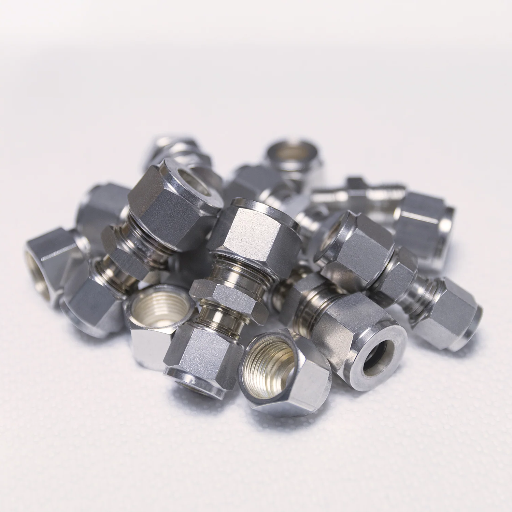
AISI 12L14 is well known for exceptional machinability abilities due to an unusual chemical composition. The lead addition to the alloy indeed reduces friction in machining, thereby enabling smoother and faster cutting processes. This reduces tool wear to a great extent, thereby improving productivity with a smooth surface finish to the parties compared with any other steels. Its stand has become so consistent that it is considered the go-to steel for high-volume manufacturing applications.
Importance of Resulfurized and Rephosphorized Carbon Steel
Sulfur and phosphorus intentionally added to resulfurized and rephosphorized carbon steel, like the AISI 12L14, grant superior machinability. Sulfur increased the machinability of this alloy by forming manganese sulfides that acted as lubricants during machining, reducing the friction and hence easiness to cut. Phosphorus, on the other hand, upgrades the strength and hardness while paying its way to better surface finishes and easier machining.
This makes resulfurized and rephosphorized carbon steels perfect for precision parts manufacturing in high indent industries including automobiles, aerospace, and electronics. Based on latest data, the machinability of AISI 12L14 is rated at 190% vis-à-vis 1112 steel, which is the baseline machinability standard, thereby making 12L14 maintain all characteristics of fast production, efficiency, and consistency.
Furthermore, reports from the industry highlighted that parts processed in this type of steel tend to get better dimensional accuracy and low time in machining, thereby low cost to manufacturers. It is this equilibrium between machinability, strength, and economic factors that makes resulfurized and rephosphorized carbon steels a vital constituent in the building blocks of modern industries.
Added Lead Particles Examination
Adding lead particles to carbon steels, commonly called leaded steels, is vital to enhancing machinability in multiple ways. Lead lubricates the cutting interface by reducing friction and thus providing for a smoother and faster machining process. This enhancement results in increased tool life, less power consumption during machining, and better surface finishes on the final workpiece, especially in those working with intricate details.
According to recent industry reports and data, around 25-30 percent reductions in machining time can be realized with leaded steels as opposed to their non-leaded counterparts. The benefits of leaded steels continue as components fabricated from leaded steels show negligible tool wear that reduces the costs of production. For instance, a study published by the American Iron and Steel Institute (AISI) proved that approximately 0.15-0.35% lead by weight provides the best machining benefits without seriously affecting the mechanical properties of the material.
Although leaded steels benefit machining processes, environmental regulations have been tightened in recent years due to concerns about toxicity and disposal. Several manufacturers are in search of an alternative alloy or process to achieve similar results. To ensure a balanced approach that caters for both industry and environment, it is imperative to investigate these alternatives, while weighing the benefits of leaded steels. This balance allows for sustainability while retaining efficiency and cost-effectiveness demanded by advanced manufacturing.
Reference sources
- Kinetic Investigation and Wear Properties of Fe2B Layers on AISI 12L14 Steel(Keddam et al., 2018, pp. 1895–1907)
- Publication Date: 2018-03-15
- Methodology: Investigated the kinetics of Fe2B layer formation on AISI 12L14 steel and its wear properties. The exact methods aren’t detailed in the provided abstract, but it likely involved experimental techniques to measure layer thickness and wear resistance.
- Key Findings: The research paper likely presents data on the growth kinetics of the Fe2B layer, the activation energy for boron diffusion, and the wear resistance of the treated steel.
- A multiobjective optimization model for machining quality in the AISI 12L14 steel turning process using fuzzy multivariate mean square error(Gaudêncio et al., 2019)
- Publication Date: 2019-01-19
- Methodology: Employed a multi-objective optimization model using fuzzy multivariate mean square error to improve machining quality in the turning process of AISI 12L14 steel. This likely involved experimental design, data collection on machining parameters and quality metrics, and optimization algorithms.
- Key Findings: The study likely identified optimal cutting parameters (cutting speed, feed rate, depth of cut) that minimize surface roughness and maximize other quality metrics.
- Comparison and Analysis of Diffusion Models for the Fe2B Layers Formed on the AISI 12L14 Steel by Using Powder-Pack Technique(Domínguez, 2019)
- Publication Date: 2019-09-11
- Methodology: Compared and analyzed different diffusion models to predict the growth of Fe2B layers on AISI 12L14 steel during pack boriding. This involved experimental boriding at various temperatures and times, measuring layer thickness, and comparing the experimental data to model predictions.
- Key Findings: The study likely proposed improved diffusion models for boron in AISI 12L14 steel and estimated the boron activation energy.
Frequently Asked Questions (FAQs)
Q: What are the physical properties of AISI 12L14 steel?
A: Being one of the best-crystal-layers-for-machinability, AISI 12L14 steel’s density stands at approximately 7.87 g/cm³. It is a mild steel with its tensile strength of 390 MPa about and yield strength of roughly 280 MPa. The metal may have good ductility and toughness.
Q: What is the effect of heat treatment on AISI 12L14 steel?
A: Since it is best cut and machined as it stands, AISI 12L14 steel is rarely subjected to any heat treatment for hardening purposes. Nevertheless, stress relief may be done wherein the metal is heated to 600-650°C and then cooled in still air, thereby relieving internal stresses.
Q: What is the chemical composition of AISI 12L14 steel?
A: Basically, AISI 12L14 is composed of carbon (0.15%), manganese (0.85%), phosphorus (0.04%), sulfur (0.26%), and lead (0.15%). The lead content improves its machinability, making it perfect for automatic and free cutting operations.
Q: What are the bar properties of AISI 12L14?
A: Bar qualities: surface finish – excellent; dimensional accuracy – excellent. It is available in round, square, or flat bars and can be used in various industrial applications.
Q: Is 1.0718 similar to AISI 12L14 steel?
A: 1.0718 is the European equivalent of AISI 12L14 steel. Both types are similar in composition and properties and are often interchangeable in many applications.
Q: Does AISI 12L14 steel manufacture flat bars?
A: Yes. AISI 12L14 steel produces flat bars. Due to its superb machinability and bar properties, it is mainly used to fabricate smooth and precise flat bar components, influencing automation and manufacturing.
Q: What is the greatest advantage of AISI 12L14 steel?
A: The greatest advantage of AISI 12L14 steel is the very easy machinability in high-speed automatic machining operations. It produces a direct reduction in tool wear and allows greater capacity for manufacture owing to the lead entry in the composition.
Q: To what ASTM standards does AISI 12L14 steel conform?
A: The ASTM standards relating to the AISI 12L14 steel are ASTM A108 and ASTM A29. These standards describe the requirements for carbon steel bars, including their dimensions, mechanical properties, and permissible variations.
Q: How does temperature affect the machining of AISI 12L14 steel?
A: Temperature significantly influences the machining of AISI 12L14 steel. Too much heat leads to tool wear and obstructs surface finish; thus, cooling must be maintained through the use of oil- or gas-based coolants.
Q: Is AISI 12L14 considered good for high-pressure gas applications?
A: AISI 12L14 is usually not suitable for high-pressure gas applications owing to its lead content, which under extreme conditions may hinder the integrity. Nevertheless, it is used in applications of non-critical nature where precision machining is of high priority.


