


Grade 5 Titanium, or Ti-6Al-4V, is, in fact, one of the most versatile and widely used titanium alloys, balancing industry demands. Its strength, lightness, corrosion resistance, and high-temperature capability make it a preferred candidate for aerospace, biomedical devices, sports equipment, and marine engineering applications. So what’s different about Grade 5 Titanium compared to other materials? How does it do in various applications, and why is it considered the industry standard in a few domains? This blog takes you into the fascinating realm of Grade 5 Titanium, exploring its main properties, applications, and comparisons with other materials. Whether you are an engineer, designer, or just curious about the subject, this introduction will cover the fantastic capabilities of this alloy and why it stands tall today as one of the most critical materials for powering state-of-the-art technologies.
What is Grade 5 Titanium?

Grade 5 Titanium, or Ti-6Al-4V, is a titanium alloy consisting of 90% titanium, 6% aluminum, and 4% vanadium. It is known for its excellent strength-to-weight ratio, corrosion resistance, and versatility. It finds applications in aerospace, medical, and automotive industries for extreme conditions that require a still weighing-a-lot-little alloy. Due to its peculiar strength and resistance against heat and chemical exposure, this alloy finds most applications that demand more.
Overview of Titanium Alloy Grade 5
The intangibles of the mechanical properties it offers and its application versatility have rendered this material highly important to many industrial sectors that depend on it. In aerospace applications, the alloy is used to make aircraft structures, engine parts, and space vehicles, where both strength and light weight are required. The medical field is another area where the alloy works wonders, as it is perfect for implants, prostheses, and surgical instruments, achieving biocompatibility with a defined environment. The automotive industry uses it for racing and high-performance vehicles due to the alloy’s resistance to high temperatures and corrosion. Thus, the alloy finds applications in marine and industrial fields, where reliability is demanded in composite, harsh, corrosive working environments. The range of uses speaks volumes for Titanum Alloy Grade 5 in terms of its versatility and consumer trust.
Key Properties of Grade 5 Titanium
Since it is widely considered the highest-strength titanium, there are some properties for which it is famously sought after. This titanium alloy has the following properties that make it highly valued:
- High Strength-to-Weight Ratio: It is far lighter than steel but offers almost as much strength. Therefore, its uses are generally those for which weight restrictions exist.
- Corrosion Resistance: Grade 5 Titanium is corrosion-resistant under various conditions, including seawater and oxidizing acids.
- Biocompatibility: Because it is compatible with the human body, titanium is extensively used in medical implants and devices.
- Heat Resistance: Grade 5 Titanium retains strength and integrity at elevated temperatures, making it fit for high-performance applications in aerospace and automotive industries.
- Durability and Toughness: The alloy shows superb toughness and resistance to fatigue even under harsh conditions.
These properties, in tandem with highly advanced applications and a guarantee of intentional performance across fields, have made the alloy one of the best substitutes ever conceived.
Applications of Grade 5 Titanium in Various Industries
- Aerospace
Grade 5 titanium finds extensive application in aerospace engineering due to its best strength-to-weight ratio and corrosion resistance. It is used in bearing fields such as turbine blades, engine casings, and structural elements of airframes. This alloy works for fuel efficiency and durability and must hold prominence in modern aerospace engineering.
- Medical
Due to its biocompatibility, Grade 5 titanium is the preferred material for implants, prosthetics, and surgical instruments. Its integration with biological tissues and resistance to corrosion within the human body ensure that these implants last a long time and offer safety to the patient.
- Automotive
The automotive industry uses Grade 5 titanium in performance vehicles, mainly for exhaust, engine, and suspension systems. The lightweight system aids in the vehicle’s weight reduction for increased efficiency and performance.
- Marine
The marine industry highly regards grade 5 titanium for its resistance to seawater corrosion. It is used in shipbuilding, underwater search equipment, and offshore oil and gas structures to ensure reliability under rugged aqueous conditions.
- Chemical Processing
Because of its resistance to corrosion by a wide range of chemicals, Grade 5 titanium is widely used in chemical processing plants. It is also found in heat exchangers, reaction vessels, and piping systems, where durability and longevity take precedence.
How Does Grade 5 Titanium Compare to Other Grades?
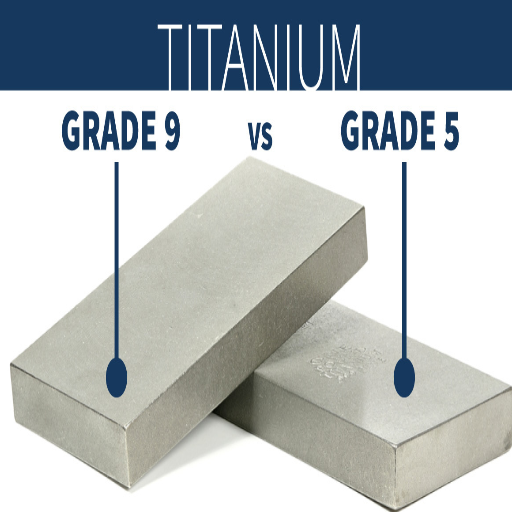
However, the strength-to-weight ratio and versatility of Grade 5 titanium are supreme amongst other titanium grades. It is far stronger than the commercially pure titanium Grades 1-4 but also possesses excellent corrosion resistance. Heat resistance and strength were added to the applications of some grades, in particular Grade 5 for the aerospace and automotive high-performance applications. Although a bit weaker in corrosion resistance than the pure titanium grades, its mechanical properties make it the first choice in situations that demand strength and reliability.
Grade 5 vs Titanium Grade 2: Key Differences
Grade 5 titanium (Ti-6Al-4V) is stronger and more heat-resistant, while Grade 2 titanium excels in corrosion resistance, ductility, and cost-effectiveness.
|
Parameter |
Grade 2 |
Grade 5 |
|---|---|---|
|
Strength |
Moderate |
High |
|
Corrosion |
Excellent |
Very Good |
|
Ductility |
High |
Moderate |
|
Density (g/cm³) |
4.51 |
4.43 |
|
Weldability |
Excellent |
Good |
|
Hardness |
Low |
High |
|
Cost |
Lower |
Higher |
|
Applications |
Marine, Chem. |
Aerospace, Med. |
Grade 5 vs Grade 9 Titanium: Strength and Applications
Grade 5 titanium (Ti-6Al-4V) is stronger and more heat-resistant, while Grade 9 titanium (Ti-3Al-2.5V) gives greater formability, moderate strength, and more effortless workability.
|
Parameter |
Grade 5 |
Grade 9 |
|---|---|---|
|
Strength |
High |
Moderate |
|
Formability |
Low |
High |
|
Corrosion |
Very Good |
Excellent |
|
Density (g/cm³) |
4.43 |
4.5 |
|
Weldability |
Moderate |
Good |
|
Applications |
Aerospace, Med |
Marine, Auto |
|
Cost |
Higher |
Lower |
Advantages of Grade 5 Titanium Over Other Grades
- Superior Strength-to-Weight Ratio
Grade 5 titanium has a superior strength-to-weight ratio, which is best suited for situations demanding utmost strength but less weight. Its tensile strengths can be as high as 120,000 psi (827 MPa), far beyond any lower-grade titanium alloy.
- Resistant to High Heat
Withstanding temperatures up to 800°F (426°C), Grade 5 titanium suits environments exposed to intense heat, such as turbine components and aerospace applications.
- Biocompatibility in Medical Uses
Due to its biocompatibility, Grade 5 titanium is extensively used in the medical field for implants and prosthetics. It resists corrosion and interacts harmlessly with human flesh, creating a huge demand in this field.
- More Versatile Applications
Grade 5 titanium is strong, light, and corrosion-resistant. It finds applications across many industries, including aerospace, automotive, marine, and sports equipment manufacturing. This singular versatility affords it an advantage over other titanium grades.
- Durability in Harsh Conditions
The rugged alloy resists stress and fatigue and endures operational wear, maintaining durability even in the harshest environments, like underwater applications and high-pressure environments.
What are the Mechanical Properties of Grade 5 Titanium?
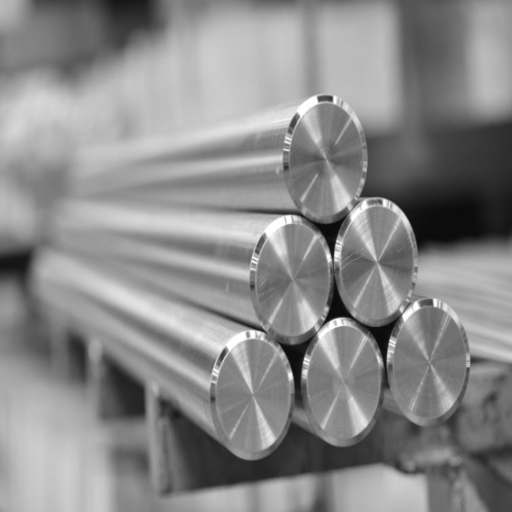
Grade 5 Titanium- Ti-6Al-4V is widely known for its remarkable mechanical properties, which make it suitable for diverse applications across engineering sectors. Here are the properties of this alloy:
- Tensile Strength: About 950 MPa for annealed samples; hence provides very high strength to applications requiring it.
- Yield Strength: Roughly 880 MPa, offering high resistance to deformation under applied stress.
- Density: 4.43 g/cm(3, giving it a lightweight yet strong option.
- Elongation: Approximately 10-15%, allowing medium ductility and flexibility.
- Hardness: Lies in the range of 30-40 HRC, giving it wear resistance.
Such properties make it a more versatile alloy in industries where an object or equipment is expected to be very strong, light, and resilient in extreme conditions.
Tensile Strength and Hardness of Grade 5 Titanium
One has the highest tensile strength and hardness; hence, the metal Ti-6Al-4V is crucial for areas demanding high strength. The exact values for tensile strength would commonly lie between 895 and 950 MPa, annealed, and 1170 MPa after heat treatment, measuring up to the highest specifications in the performance category. The Grade 5 titanium in the usual sense cannot fail in high-stress environments. The hardness, ranging from 30 to 40 HRC, would provide good resistance to wear and deformation. Aerospace, medical implants, and automotive applications require a proficiently accomplished system. All these features make Grade 5 Titanium one of the most reliable and versatile titanium alloys available today.
Corrosion Resistance of Grade 5 Titanium
Grade 5 Titanium has a high level of resistance to corrosion, setting the basis for its utilization in corrosive and demanding environments. Such resistance arises from having a stable and protective oxide layer on its surface in the presence of oxygen. This alloy is so resistant to corrosion, given the variety of environments, e.g., seawater, oxidizing acids, and chloride solutions, giving it secondary applications in marine, aerospace structures, and biomedical implants. Such natural corrosion resistance lessens the risk of incurring further expenses for coating or treatments, thus enhancing cost-effectiveness and longevity.
Welding and Fabrication of Grade 5 Titanium
Welding and fabrication of Grade 5 Titanium, also known as Ti6Al4V, are challenging processes because of the material’s reactivity at high temperatures and the protection requirement. During welding, gases such as argon or helium must be used, as opposed to oxygen, nitrogen, and hydrogen, which are essential; these gases could lessen the weld strength. Best practice recommends processes including gas tungsten arc welding (GTAW) or electron beam welding.
Heat input must be finely controlled to reduce heat-affected zones and maintain the mechanical integrity of the alloy. And, with modern industrial processes in tow, laser welding and additive manufacturing have allowed greatly enhanced processing of Grade 5 Titanium for the creation of intricate and high-performance items, from aerospace components to suitable systems for medical applications.
When to Choose Grade 5 Titanium?

Whenever maximum strength, lesser weight, and high corrosion resistance are needed, Grade 5 Titanium or Ti-6Al-4V should be selected. Thus, it finds its place in manufacturing aerospace, medical, or marine equipment designed for high endurance and performance in adverse environments. This alloy is the perfect choice whenever mechanical properties balanced with corrosion resistance are called for, especially under harsh or demanding conditions. Above all, biocompatibility makes this alloy an excellent option for medical implants and devices.
Factors to Consider When Choosing the Right Titanium
- Grade of Titanium
Titanium is offered in different grades, each with different capabilities. Grades 1 through 4 are all commercially pure titanium; however, their strength increases as ductility decreases. Titanium alloys, namely Grade 5 (Ti-6Al-4V), are stronger and provide higher performance for instances requiring such strength.
- Corrosion Resistance
Titanium’s primary advantage is its outstanding corrosion resistance. When choosing titanium, consider environmental conditions such as exposure to seawater, chemicals, or temperature extremes to ensure the best performance.
- Mechanical Properties
Depending on your application, the mechanical properties must be considered, i.e., tensile strength, toughness, and fatigue resistance. Titanium alloys might also be chosen because of their superior mechanical properties when high-performance industries are concerned.
- Weight-to-Strength Ratio
Titanium’s very high strength-to-weight ratio makes it useful in aerospace, automotive, and sports equipment applications. Including the correct type ensures the greatest loss of weight while maintaining structural integrity.
- Biocompatibility
Titanium’s biocompatibility is a prime concern for medical applications involving implants or devices. Certain grades and alloys are selected to minimize any risks of adverse reaction and achieve acceptable structural performance.**
Applications Requiring High Strength: Why Grade 5 Titanium?
Grade 5 Titanium is also known as Ti-6Al-4V, and it is widely recognized for its incredible strength, lightweight nature, and impeccable corrosion resistance, among which it is put in the extreme class to demand applications. Outlined are five critical applications where Grade 5 Titanium is extensively utilized:
- Aerospace Components
Grade 5 Titanium is widely used by the aerospace industry for critical components such as turbine blades, structural airframe components, and landing gear. Owing to its good strength-to-weight ratio, it withstands high temperatures and is resistant to fatigue.
- Biomedical Level Implants
Depending on biocompatibility and strength, Grade 5 Titanium is used to manufacture joint replacement implants, dental implants, and surgical instruments. It discourages corrosion resulting from body fluids.
- Automotive Components
Grade 5 Titanium is used in high-performance vehicles to manufacture components like the exhaust system, connecting rods, and valve springs. It helps reduce the vehicle’s overall weight while keeping it durable under severe conditions.
- Marine Application
Grade 5 Titanium is employed in marine environments for propeller shafts, underwater exploration, and boat hull reinforcement, thanks to its tremendous corrosion resistance even in saltwater environments.
- Sporting Goods
The lightweight strength of Grade 5 Titanium makes it sought-after in building premium-grade sporting equipment such as bicycle frames, golf clubs, and tennis rackets. It offers ultimate durability and performance enhancement for athletes and enthusiasts alike. **
Cost Considerations for Grade 5 Titanium
Grade 5 Titanium, also called Ti-6Al-4V, is famous for its excellent strength-to-weight ratio and its ability to hold up in extreme conditions, and with all these qualities comes a much-needed price tag. In general, few things are more expensive than Grade 5 Titanium because of its inherent production process involving titanium extraction, alloying, and, eventually, fabrication; each step is laborious and energy-demanding. The Grade 5 Titanium is generally priced from $30 to $100 per pound, according to demand, purity, and other processing specifications.
One of the key cost aspects includes the complex refining process to give titanium end products of the aerospace or medical variety. Prices of aerospace or industrial titanium increase with increasing specifications imposed due to strict quality standards. Other factors adding to the fluctuating market price include supply chain disruptions globally and geopolitical issues affecting raw material availability.
The expenses are largely offset by benefits that include an extended lifespan, corrosion resistance, and lightweight nature that minimize the costs for maintenance and replacement in applications like aerospace, marine, and sporting goods industries. For buyers considering bulk purchasing options or direct dealings with well-established suppliers, this can help to minimize the per-unit cost, not to mention guarantee an even level of quality.
Reference Sources
- Characterization of a Macro- and Micro-Textured Titanium Grade 5 Alloy Surface Obtained by Etching Only without Sandblasting
- Authors: Simone Carone et al.
- Published: November 1, 2020
- Journal: Materials
- Citation Token: (Szmukler-Moncler et al., 2020)
- Key Findings:
- The study characterizes the surface of a titanium grade 5 dental implant surface obtained by etching without sandblasting.
- The surface exhibited macro- and micro-textures similar to sandblasted surfaces, with moderate roughness and no titanium hydride found.
- Methodology:
- The surface was analyzed using scanning electron microscopy (SEM), non-contact profilometry, and X-ray diffraction (XRD) to assess topography, roughness, and subsurface element distribution.
- Temperature Dependence of the Friction Coefficient of Grease-Lubricated PTFE Linear Bushings Against Titanium Grade 5 Alloy (Ti6Al4V) and Life Tests Operating at High-Speed
- Authors: I. Valiente-Blanco et al.
- Published: September 1, 2020
- Journal: Journal of Tribology- Transactions of The ASME
- Citation Token: (Valiente-Blanco et al., 2020)
- Key Findings:
- The study investigates the friction coefficient of PTFE grease-lubricated bushings against titanium grade 5 at high temperatures.
- The coefficient of friction was proportionally sensitive to temperature, affecting the wear and life of the bushings.
- Methodology:
- The experiments were conducted under varying temperatures and loads, with life tests performed to assess the performance of the bushings.
- Characterization and modelling of tool electrode wear during planetary EDM of titanium grade 5 alloy
- Authors: V. Mathai et al.
- Published: April 24, 2020
- Journal: International Journal of Innovative Technology and Exploring Engineering
- Citation Token: (Mathai et al., 2020, pp. 445–466)
- Key Findings:
- The paper discusses the effects of machining parameters on tool wear during electrical discharge machining (EDM) of titanium grade 5.
- The study found that the planetary actuation of the tool electrode significantly improved the machining effectiveness.
- Methodology:
- Experimental investigations were conducted to analyze the tool electrode’s wear rate, and semi-empirical models were developed to predict the erosion rate.
- Top Titanium Machining Parts Manufacturer And Supplier In China
Frequently Asked Questions (FAQs)
Q: What is the main difference between titanium grade 5 and grade 2?
A: The main difference is that titanium grade 5, known as Ti 6Al-4V, is an alloy consisting of 90% titanium, 6% aluminum, and 4% vanadium, while grade 2 is commercially pure titanium. This makes it less intense but more ductile and corrosion-resistant.
Q: Is titanium grade 5 stronger than grade 2?
A: Yes, titanium grade 5 is significantly stronger than grade 2. Its excellent strength-to-weight ratio makes it ideal for high-stress applications, while grade 2 is better suited for environments where good corrosion resistance is required.
Q: In what applications is grade 5 titanium typically used?
A: Titanium grade 5 is commonly used in aerospace, medical implants, and high-performance automotive parts due to its strength, fatigue resistance, and lightweight properties.
Q: How does grade 2 titanium compare to grade 5 titanium regarding corrosion resistance?
A: Grade 2 titanium has better corrosion resistance than titanium grade 5 due to its commercially pure composition, making it suitable for applications in harsh environments, such as chemical processing.
Q: Can titanium grade 5 be used in marine applications?
A: Yes, titanium grade 5 can be used in marine applications, but grade 2 or other commercially pure grades are often preferred due to their superior corrosion resistance in saltwater environments.
Q: What are the weight differences between titanium grade 2 and grade 5?
A: Both grade 2 and grade 5 titanium have low densities, but the weight difference is negligible since they are both lightweight materials. However, grade 5 offers more strength per unit weight.
Q: What are the machining characteristics of titanium grade 5 compared to grade 2?
A: Titanium grade 5 can be more challenging to machine than grade 2 due to its higher strength and hardness. It typically requires special tools and machining techniques to achieve desired tolerances.
Q: Are there any other titanium grades comparable to grade 5?
A: Yes, titanium grades 3 and 4 are also considered for specific applications. However, grade 5 remains the most popular for applications requiring a balance of strength and fatigue resistance.
Q: How does the cost of titanium grade 5 compare to grade 2?
A: Titanium grade 5 is generally more expensive than grade 2 due to its alloying elements and processing requirements, contributing to its enhanced properties.


