


The demand for materials with unprecedented strength, durability, and lightweight qualities has increased exponentially in the aerospace and sporting equipment industries. Ultra High Strength Carbon Fiber now stands as a revolutionary material set that has wrought a new meaning in High Modulus Carbon Fiber applications. But what makes this better and advanced material stand out? Furthermore, why is this being touted as the future of innovation? This article will delve into the revolutionary properties of Ultra High Strength Carbon Fiber, compare it with and explain its advantages over traditional materials, and foresee the further use this material brings and has been able to accomplish in today’s engineering. Whether you are an aficionado, a professional, or just merely curious about state-of-the-art materials, here lies an introduction to the future.
What is High Modulus Carbon Fiber?
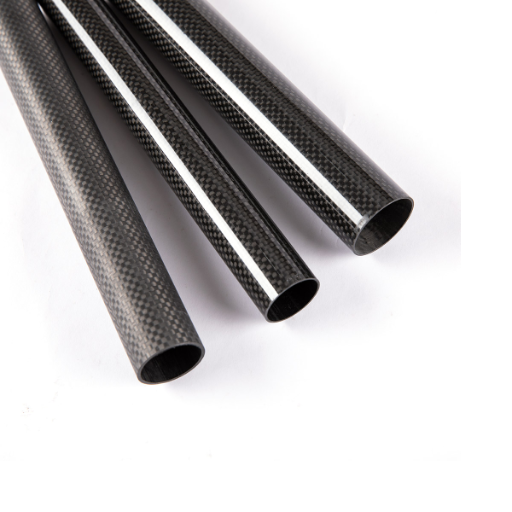
High modulus carbon fiber is a kind of carbon fiber with an unusually high stiffness and strength. It is made by forcing carbon atoms into a tightly bonded crystalline structure, wherein fibers are very light yet extremely rigid due to this nature. This characteristic makes it suitable for uses where it should have little or no flexibility but should bear heavy loads, for example, in aerospace components, top-end sports equipment, and highly specialized engineering projects. Its strength and low weight and durability make it different from regular carbon fiber.
Key Properties of High-Modulus Carbon Fiber
- Exceptional Stiffness
High-modulus carbon fiber is renowned for its unparalleled stiffness, with tensile modulus values ranging between 290 GPa and over 600 GPa. This makes it ideal for applications where rigidity is prioritized, such as space structures and precision instruments.
- Lightweight Structure
Despite its extreme stiffness, high modulus carbon fiber maintains a low density, typically around 1.8 g/cm³. This allows for the creation of lightweight components without compromising structural integrity.
- High Tensile Strength
High modulus carbon fibers may reach tensile strength of up to 3.5 GPa, thereby resisting breakage fairly well with considerable stress. Resistance to such intense force is important in high-performance automobile and aerospace applications.
- Thermal Stability
Good thermal stability can describe high modulus carbon fiber that resists temperatures above 500°C, provided inert conditions exist. Low thermal expansion also keeps its size stable across a range of temperatures.
- Fatigue Resistance
Components manufactured from high-modulus carbon fiber exhibit outstanding fatigue resistance, retaining performance through many cycles of stress. This is why they are chosen for manufacturing wind turbine blades and several other structures subjected to cyclic loadings.
- Corrosion Resistance
This material resists corrosion and chemical degradation, making it ideal for prolonged use in harsh environments such as marine or chemical processing industries.
- Optimal Electrical Conductivity
Whereas standard carbon fibers are poor conductors, these high modulus fibers tend to be highly electrically conductive, functional in electromagnetic shielding or other electrical applications.
With its bundle of extremely advanced characteristics, high modulus carbon fiber continues to redefine what is possible in engineering, triggering breakthroughs in diverse areas such as aerospace, sports equipment design, civil engineering, and more.
Applications of High-Modulus Carbon Fiber in Industry
- Aerospace Engineering
High-modulus carbon fiber is extensively used in aerospace engineering to manufacture lightweight yet durable components like fuselages, wings, and spacecraft structures. Its better strength-to-weight ratio improves fuel efficiency and performance in high-stress environments.
- Automotive Industry
Automotive manufacturers utilize high-modulus carbon fiber to produce performance parts in body panels, drive shafts, and suspension components. The material reduces weight, which increases fuel efficiency and improves speed and handling.
- Sports Equipment
High-modulus carbon fiber is mainly used in the manufacturing of high-performance sports equipment, including tennis rackets, bicycles, golf clubs, and fishing rods. It is lightweight yet sturdy, providing athletes with increased stability and responsiveness.
- Civil Engineering
High tensile strength is another reason high modulus carbon fiber is used in civil engineering applications for structural reinforcement in bridges, buildings, and other infrastructure projects. Its application guarantees a long service life, especially in structures that bear loads or are prone to earthquakes.
- Renewable Energy
High modulus carbon fiber is used in the wind energy sector to manufacture stiff yet lightweight wind turbine blades. This maximizes energy capture efficiency and provides for a longer life span of the turbines under varied environmental conditions.
What Are the Different Types of Carbon Fiber?

There are several types of carbon fiber, classified primarily by their properties and manufacturing process:
- High-Modulus (HM) Carbon Fiber
Known for being very stiff, carbon fiber is usually used in applications demanding high rigidity, such as aerospace and sporting goods.
- High-Strength (HS) Carbon Fiber
It has excellent tensile strength and is often used in structural and load-bearing applications, such as automotive frames and construction materials.
- Intermediate-Modulus Carbon Fiber
This carbon fiber strikes a good balance between strength and stiffness. It is versatile, and it finds common applications in sporting equipment and industry in general.
- Standard-Modulus Carbon Fiber
The most often used type confers a certain degree of strength. It is flexible enough to remain cost-effective for various applications, including general-purpose consumer items, toys, and sporting goods.
Each type carries advantages that might be demanded for different project-oriented applications.
Exploring Ultra High Modulus vs. Standard Modulus Carbon Fiber
While ultra-high modulus carbon fiber provides maximum stiffness, this happens negatively for strength to remain inferior and incur much higher pricing than the very versatile and cheap standard modulus.
|
Parameter |
Standard Modulus |
Ultra High Modulus |
|---|---|---|
|
Stiffness |
Moderate (33-36 MSI) |
Extreme (110 MSI) |
|
Strength |
High (500-700 KSI) |
Low (425 KSI) |
|
Cost |
Low |
Very High |
|
Applications |
General-purpose |
Space, specialized |
|
Weight |
Lightweight |
Lightweight |
|
Durability |
High |
Low |
Differences Between Intermediate Modulus Carbon Fiber and Other Types
Intermediate modulus carbon fiber, balancing more stiffness and strength than the standard modulus fiber, stands in the middle of the price and versatility range between high and ultra-high modulus fibers.
|
Parameter |
Standard Modulus |
Intermediate Modulus |
High Modulus |
Ultra High Modulus |
|---|---|---|---|---|
|
Stiffness |
Moderate (33-36 MSI) |
Higher (43-47 MSI) |
Very High (57 MSI) |
Extreme (110 MSI) |
|
Strength |
High (500-700 KSI) |
Higher (800-1000 KSI) |
Moderate (640 KSI) |
Low (425 KSI) |
|
Cost |
Low |
Moderate |
High |
Very High |
|
Applications |
General-purpose |
Aerospace, industrial |
Aerospace, precision |
Space, specialized |
|
Weight |
Lightweight |
Lightweight |
Lightweight |
Lightweight |
|
Durability |
High |
High |
Moderate |
Low |
Choosing the Right Type of Carbon Fiber for Your Project
Choosing the right carbon fiber depends on many factors such as weight, strength, flexural demand, and project cost. High modulus carbon fiber is an excellent option for light applications, such as cycling frames or aerospace components, with their pristine strength-to-weight ratios; however, the high cost is an added deterrent. Intermediate modulus carbon fiber is more balanced between strength and flexibility, so it might be used in sports equipment or automotive parts where rigidity and a little flexibility are required. The standard modulus carbon fiber remains a cost-efficient option for general purposes. By considering your project’s performance specification and budget, you can select materials that will give maximum performance and will not waste your budget.
How Does the Stiffness of Carbon Fiber Affect Its Performance?

Carbon fiber stiffness, often called modulus, is a direct parameter defining the performance of a fiber because it specifies how much it resists deformation under stress. Carbon fibers with higher stiffness are used in applications demanding rigidity, for instance, aerospace components, and precision machinery, where any bending is an unwanted deformation, compromising the very structure and integrity of the element. However, fibers of low stiffness offer more flexibility and tend to be more favorable in sporting equipment and components where a certain degree of flexibility is required to absorb impacts. From one point of view, a suitable stiffness would be selected based on how much rigidity and flexibility are needed in the given performance requirements.
Understanding Stiffness and Its Relation to Tensile Strength
Being interrelated phenomena, stiffness and tensile strength immensely influence how materials behave under stress. The deformation that sets in due to an applied force within a material is resisted by its stiffness. At the same time, tensile strength is that property by which we measure the maximum stress the material can withstand before breaking. Usually, materials with high stiffness hardly show any deformation. Yet this need not always be proportional to tensile strength, since stiffness mainly relates to the material’s rigidity, as opposed to the breaking force.
Something often cited about carbon fiber composites is their excellent stiffness-to-weight ratio, yet their tensile strength depends on the fiber orientation and resin matrix composition. Combining high stiffness and sufficient tensile strength for aerospace structural components becomes vital as rigidity and the ability to resist heavy loads determine performance and safety. The engineers must assess these properties in conjunction when selecting materials, considering that the project’s requirements should never render the material vulnerable or too flexible.
The Role of Weave in Carbon Fiber Stiffness
The weave type is known to influence significantly carbon fiber’s rigidity and other mechanical performances. Different weave types dispel strength and flexibility in various ways: a plain weave offers high stability and less distortion, thereby being preferred for use in applications requiring uniform stiffness; twills compromise flexibility and strength- they are slightly more flexible, though still very rigid. Engineers often choose a weave based on the directions of stresses and load requirements of the project; the directional properties of the weave have a pronounced effect on how forces are transmitted across the material.
How Stiffness Impacts Carbon Fiber Products in Aerospace Applications
The stiffness of carbon fiber products needs a cut above for aerospace technology. High stiffness means that parts can tolerate extreme pressures and loads without going into deformation, particularly essential in the framework of aircraft wings, fuselages, and structural supports, while carbon fiber being anisotropic gives the engineers the freedom to tailor the stiffness in particular directions to resist the aerodynamic forces.
Recent data reveal that lighter aircraft have been designed with increasing stiffness in carbon fiber composites, directly improving fuel economy and decreasing carbon emissions. Apart from being stiffer, carbon fiber materials also provide the best ratio of stiffness to weight in high-vibration environments, thereby reducing structural fatigue over time. Such strength, lightness, and durability fuel innovation, allowing aerospace engineers to make safer and more economical vehicles for modern aviation needs.
What Are the Properties of Ultra-High Modulus Carbon Fiber?

Ultra High Modulus (UHM) carbon fibers are indeed made to have all the high stiffness and strength properties. Usually, UHM carbon fiber has its tensile modulus above 600 GPa, making it ideal for applications that need to show minimal deformation under stress. It is light, thus providing a better strength-to-weight ratio than conventional materials. It also offers excellent thermal resistance and resistance to fatigue, rendering it an excellent fit for environmental applications requiring long-term reliability, such as aerospace and top-tier sports equipment. Accordingly, advanced engineering applications require its presence.
Examining the Strength and Elasticity of Ultra-High Modulus Carbon
Ultra High Modulus (UHM) carbon fibers have ultimate strength and elasticity, making them the prime choice for advanced applications. It can be recorded that the tensile strength exceeds 3.5 GPa. In comparison, the modulus of elasticity crosses 300 GPa, so UHM carbon permits the making of extremely strong and rigid components. In a nutshell, this unique combination allows engineers to fabricate lightweight structures that are highly durable and capable of withstanding enormous loads and stresses. These properties become essential in aerospace, where weight reduction and structural applications can determine the success of a project, as well as in sports equipment, where performance and durability matter.
Advantages of Using Ultra-High Modulus Carbon Fiber Over Other Materials
- An Exceptional Strength-to-Weight Ratio</b>
Ultra-high modulus carbon fiber provides a strength-to-weight ratio greater than almost every other material, including steel and aluminum. Steel may be said to possess tensile strength in the range of 400-600 MPa, whereas ultra-high modulus carbon fiber may attain tensile strength in excess of 3000 MPa, with great lightness.
- Superior Stiffness
With a modulus of elasticity usually over 400 GPa, ultra-high modulus carbon fibre is one of the stiffest materials in the world. Therefore, it is the best choice for applications in which structural integrity with exact precision is vital, such as aerospace components and high-performance sporting goods.
- Resisting Environmental Factors
Carbon fibre, unlike metals, will not rust and corrode, giving it superb protection against harsh environmental conditions. Such durability enhances the product’s lifetime and limits the need for maintenance, particularly in marine and outdoor contexts.
- Thermal Stability
UHMMC promotes very low thermal expansion characteristics, so the shapes are not distorted regardless of how severe the temperature fluctuations may be. This gives UHMMC a high stance in determining satellite design and advanced optics.
- Design Flexibility
The property of being moldable into complex-shaped components helps engineers implement novel designs without compromising on structural performance. This versatility lends itself to designers of cutting-edge architecture, luxury automobiles, and leading-edge technology.
Potential Applications of Ultra-High Modulus Carbon Fiber
Aerospace Engineering>Ultra-high modulus carbon fiber is employed in the aerospace components building for satellite structure, airframe, and fuselage reinforcements. Its strength and lightweight qualities decrease the fuel consumption and improve performance and durability.
- Sports Equipment
Advanced materials have gone into making high-performance sports equipment such as tennis rackets, golf clubs, and racing bicycles. The fibers provide stiffness and precision that are one step ahead for the athletes and guarantee long-term quality.
- Medical Devices
Due to its incredible stiffness and biocompatibility, ultra-high modulus carbon fiber has applications in prosthetics, surgical instruments, and imaging devices. In prosthetics, it facilitates strength while being lighter in weight, thus making it comfortable for the patient.
- Automotive Industry
Used generally to optimize the strength-to-weight ratio of body panels, chassis components, and drive shafts, thus improving vehicle efficiency and safety without compromising speed or design flexibility.
- Wind Energy
Ultra-high modulus carbon fiber is widely used in wind turbine manufacture, especially for turbine blades. Its lightweight and high stiffness assist in enhancing energy efficiency by optimizing blade performance and reducing blade wear over time.
Reference Sources
- Preparation of ultra-high mechanical strength wear-resistant carbon fiber textiles with a PVA/PEG coating (Feng et al., 2021, pp. 25530–25541)
- Key Findings:
- Adding PVA/PEG composite coating to carbon fiber cloth (CFC) improved the surface lubrication performance and reduced the friction coefficient and surface wear.
- Oil as a lubricant can significantly reduce the friction coefficient and surface wear of the PVA/PEG/CFC composite material.
- Methodology:
- CFC was synthesized by chemical cross-linking, and the PVA/PEG/CFC composites were synthesized.
- The tribological properties of PVA/PEG/CFC were tested under different concentrations, loads, and velocities.
- The effects of different lubricants, surface morphologies, and tensile strengths on the mechanical and tribological properties of PVA/PEG/CFC were studied.
- Key Findings:
- Biotissue‐Inspired Anisotropic Carbon Fiber Composite Hydrogels for Logic Gates, Integrated Soft Actuators, and Sensors with Ultra‐High Sensitivity (Li et al., 2022)
- Key Findings:
- The anisotropic hydrogels showed superior tensile strength, modulus, electrical conductivity, and ultra-high sensitivity along the carbon fibers.
- The extremely high anisotropic ratio in conductivity produced high-level output in the parallel direction and low-level output in the perpendicular direction, which was used to fabricate AND and OR gates.
- The pre-twisted carbon fiber helices in the composite hydrogels imparted internal stress that drove reversible actuation of the hydrogel helices upon thermo-stimulation.
- Methodology:
- Composite hydrogels were fabricated using thermo-responsive poly(N-isopropylacrylamide) (PNIPAM) hydrogels with highly aligned carbon fibers.
- The composite hydrogels’ anisotropic properties, electrical conductivity, and sensitivity were characterized.
- The composite hydrogels were converted into thermo-responsive actuators with pre-twisted carbon fiber helices.
- Key Findings:
- Fatigue resistance of ultra-high-modulus pitch-based carbon fiber/epoxy composites under tensile loading (Waller et al., 2021, pp. 167–179)
- Key Findings:
- Pitch-based carbon fiber reinforced epoxy composites exhibited higher normalized tensile fatigue strength and a less steep stress-life (S-N) curve than standard-modulus polyacrylonitrile (PAN)-based carbon fiber composites.
- Cyclic loading of the pitch fiber composite resulted in minimal matrix damage, and the eventual fractures were localized and fiber-dominated for all stress levels.
- Methodology:
- Woven quasi-isotropic epoxy matrix composites reinforced with ultra-high-modulus pitch-based and standard-modulus PAN-based carbon fibers were subjected to uniaxial tension fatigue testing.
- The fatigue behaviors of the two types of composites were compared, and the differences were attributed to the different strain levels attained at similar stress levels and the consequent difference in matrix damage development.
- Key Findings:
-
Top carbon fiber cnc machining Parts Manufacturer and Supplier in China
Frequently Asked Questions (FAQs)
Q: What is high modulus carbon fiber, and how does it differ from other types of carbon fiber?
A: High-modulus carbon fiber has a higher modulus of elasticity than standard carbon fibers. This means it exhibits greater stiffness and strength, making it suitable for applications requiring high structural integrity. Other types, such as low-modulus or intermediate-modulus fibers, offer different balances of strength and flexibility.
Q: What are the key properties of carbon fiber that make it a popular choice for composite materials?
A: Carbon fiber’s key properties include a high strength-to-weight ratio, excellent stiffness, low coefficient of thermal expansion, and high resistance to fatigue. These characteristics make carbon fiber an ideal raw material for composite materials used in the aerospace, automotive, and sporting goods industries.
Q: How is carbon fiber made, and what raw materials are used in its production?
A: Carbon fiber is made through a complex process involving the thermal treatment of precursor materials, primarily polyacrylonitrile (PAN) or pitch fiber. These materials are heated to extremely high temperatures to form crystalline filaments of carbon, which are then spun into strands for various applications.
Q: What is the significance of the modulus of elasticity in carbon fiber composites?
A: The modulus of elasticity, or Young’s modulus, measures a material’s stiffness. In carbon fiber composites, a higher modulus indicates that the material can withstand greater stress without deforming, which is crucial for structural applications where rigidity is essential.
Q: Can you explain the difference between intermediate and ultra-high modulus carbon fiber?
A: Intermediate modulus carbon fiber generally offers a balanced combination of strength and flexibility, making it versatile for many applications. Ultra-high modulus carbon fiber, on the other hand, is engineered for maximum stiffness and minimal elongation under load, making it suitable for specialized applications where high rigidity is essential.
Q: What role does epoxy play in carbon fiber composite materials?
A: Epoxy is the matrix material in carbon fiber composites, binding the carbon fiber strands together and transferring loads between them. It also enhances the composite’s overall mechanical properties, including its strength and durability.
Q: How does the strength of carbon fiber compare to other materials?
A: Carbon fiber’s strength is significantly higher than that of many traditional materials like steel and aluminum, especially when considering its weight. This high strength-to-weight ratio allows for lighter, more efficient designs in various applications, from aerospace to automotive industries.
Q: What are the applications of high modulus carbon fiber in industry?
A: High modulus carbon fiber is widely used in aerospace components, automotive parts, sporting goods, and other applications where high stiffness and low weight are critical. Its properties make it ideal for structures that withstand high loads while minimizing weight.
Q: What is Dragonplate, and what makes it unique in carbon fiber composites?
A: Dragonplate is a brand known for its high-quality carbon fiber composite materials. It is unique due to its innovative manufacturing techniques that enhance the properties of carbon fiber, producing lightweight yet firm panels and components suitable for various applications.


