


Brass CNC machining in the present age of manufacturing holds a place of great relevance, affording a high prevalence of precision, toughness, and versatility. Whether you are an industry professional aiming to refine processes or an enthusiast wishing to know about some of the finer elements of machining techniques, working with brass should be in your core knowledge. This article will highlight every aspect of brass CNC machining, from its advantages, applications, and expert tips to better your working procedures. We will cover such major points as great machinability and industries like electronics, automotive, and plumbing that use this material abundantly, giving you a strong backtrack to work efficiently. So, follow along for a complete guide on brass CNC machining!
What Is Brass Machining?

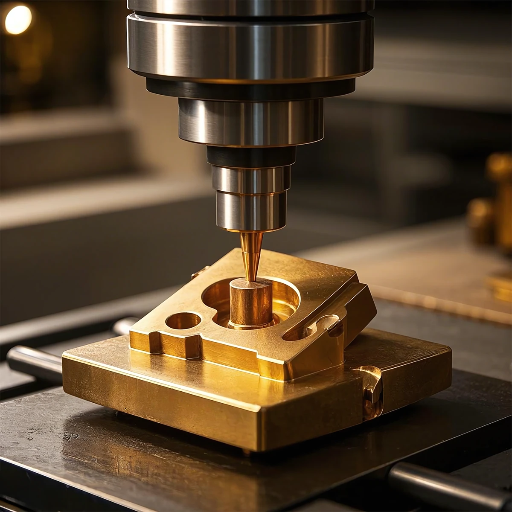
Brass machining makes reference to the process of shaping, cutting, or drilling brass using special tools like CNC machinery. Brass is one machining material that is popular for use because of its excellent workability, durability, and corrosion resistance. It is used for manufacturing precision parts for the electronics, plumbing, and automotive industries. Its applications have low friction value and high thermal conductivity, making it highly favored for ones that require high shifts between performance and reliability.
Explaining the Machining Process
The machining process for brass involves several essential steps for ensuring accuracy and efficiency. Usually, brass is machined by a system with Computer Numerical Control (CNC), thus giving very accurate and repeatable results. CNC machining allows one to work with complex shapes and dimensions within very tight tolerances (often in the range of microns). Thus, machining on brass is suitable for industries such as aerospace, electronics, and medical that require high standards with exacting tolerances.
During the machining, different cutting speeds and feed rates are chosen to cope with the specifications of the brass. Brass is very easy to machine with speeds varying commonly between 100 and 300 surface feet per minute (SFM). This is very high when compared with stainless steel, which is typically machined between 50 and 125 SFM. The choice of cutting tools is also highly important, and tungsten carbide and high-speed steel are preferred due to their durability and resistance to wear.
More productive and shorter lead times have been made possible by more complex machining methods such as multi-axis CNC milling and turning. Research has also revealed that brass parts machined by CNC with a high degree of precision can see their production time slashed by up to 40% when compared to manual methods. Most of these CNC machines also use coolant systems that reduce the heat buildup during machining, thus preserving tool life and ensuring a consistent surface finish.
Quality control is one important process in machining. Coordinate measuring machines (CMM) and laser scanners are technologies typically applied after machining to confirm that dimensions conform exactly to their specifications. This high level of accuracy can assure that brass components will fit very well in larger assemblies.
How Does CNC Work for Machining Brass?
CNC machining with brass is highly valued across various industries because of the unique properties that the material affords: excellent machinability, resistance to corrosion, and conductivity of heat. It begins by inputting the CAD (Computer-Aided Design) file, which includes the specifications for the design of the component. This file will be converted into machine code, commonly G-code, by using a CAM (Computer-Aided Manufacturing) software. This G-code will be used by the CNC machine, thus controlling the movements of the cutting tools, allowing it to chisel out definite parts from a brass workpiece.
The ease with which brass can be milled and turned makes it most suitable for CNC machining-type processes, mainly because of its softness and low melting point. Some research also indicates that brass has a machinability rating of about 100%, which is set as the baseline when other metals are compared. This high level of machinability helps reduce production costs and manufacturing time, hence making it the best choice for sectors such as automotive, health, and electronics.
However, during machining, the combination of high speeds and precision is needed. Tolerances as tight as ±0.002 inches are attained during the CNC machining of brass components, ensuring accuracy for fittings, connectors, and valves. Besides, due to its thermal efficiency, brass is often used in heat exchangers and radiators, which makes dimensional accuracy during manufacturing even more critical. They also make use of coolant systems to hold down tool temperature and increase tool life, especially on long, extended runs.
Brass CNC machining also happens to be an environmentally friendly process as brass is recyclable in almost all of its forms. Scrap material originating while machining may be recycled in other applications, producing less wastage and lowering the environmental impact of manufacturing. In all these, the uncommon traits of brass join CNC machining for a solution to high-performance, reliable components.
Advantages of Brass in Machining
In view of its properties and machinability, brass serves numerous purposes in machining. There is a good point of singled-out machinability rating of 100 percent and may well be the easiest metal to machine efficiently. Low friction coefficient helps in cutting tools’ wear; hence brass leads to quicker production cycles and lower manufacturing cost.
Excellent corrosion resistance is provided by brass, which ensures durability and use for a long time, even in severe environments. Then it is beneficial in industries like marine, automotive, and manufacturing. Testing in the industry shows that brass retains structural integrity when exposed to water, moisture, and different chemicals for a much more extended period.
It is also an excellent thermal and electrical conductor, making it perfect for applications like electrical connectors, heat exchangers, and precision instruments. Studies indicate that brass has electrical conductivity almost on par with copper, ranging approximately between 28% and 37% International Annealed Copper Standard (IACS), depending on the alloy composition.
Environmentally, brass is also good because it is recycled. It is estimated that around 90 percent of brass usage for manufacturing is from recycled sources, thus creating much less energy consumption and generation of waste. This attribute of brass being environmentally friendly fits well with the present sustainability goals and so makes brass a material for responsible machining.
Thus, the combination of easy machining, durability, good conductivity, and environmental friendliness contributes to brass remaining a popular choice across many industries.
What are the Different Brass Grades for CNC Machining?

- C360 Brass (Free-Cutting Brass) – It is considered the most machinable brass grade and more suitable for precision working of fittings, gears, and fasteners.
- C260 Brass (Cartridge Brass) – It has good corrosion resistance and formability, mostly used in applications like tubes and decorative components.
- C385 Brass (Architectural Bronze)) – This is generally used for architectural and decorative works due to its great machinability and fine polished finish.
Common Brass Grades Used In Machining
Machining uses brass for its strength and corrosion resistance with good machinability properties. Some commonly used code brass grades in machining applications are:
- C360 Brass (Free-Cutting Brass) – This grade is considered to be the most machinable. Hence, it finds wide application in making precision parts, such as fittings, gears, fasteners, and valve components. High-speed machining processes often call for this material.
- C260 Brass (Cartridge Brass) – C260 brass has good corrosion resistance and good ductility, making it suitable for tubes, casings, decorative elements, and shell casings. Due to its ductility, it is capable of withstanding forming processes, thereby making it suitable for many uses.
- C385 Brass (Architectural Bronze) – Also known as architectural bronze, this grade is one which is famous for such ease of machining and polished finish that it finds wide application in architectural details and decorative elements as well as other aesthetically oriented designs.
These grades are preferred based on their unique characteristics in order to fulfill the demands of a wide range of machining projects in the most efficient manner.
Choosing the Right Brass Grade for Your Project
To select the right brass grade for my project, I focus on identifying particular requirements of the job. If the project requires excellent machinability, I tend to prefer C360 Brass, where it can be easily produced and finished smoothly. C385 Brass, on the other hand, would be a go-to brass grade for decorative or architectural elements simply because of excellent polished finish and easy machining. For all intents and purposes, where strength is desired and resistance to corrosion is equally important, I would prefer to use C260. Thus, perusing what the project needs—be it strength, aesthetics, or machinability—determines the outcome of which brass will suit the job best.
Properties of Brass Which Affect Machining
It is generally considered one of the best machinable metals in several important properties. These include composition, hardness, and tensile strength. The addition of lead highly increases the machinability of brass by minimizing friction during cutting and allowing a smoother chip formation. For example, the C360 Brass, termed Free-Cutting Brass, contains about 3% lead, which is responsible for its rating of machinability of 100, that is used as a reference for comparison with other alloys.
Another vital factor is the copper-zinc ratio. A brass with high zinc content would naturally be hard and brittle, and this condition will probably interfere with his cutting performance in contrast to a brass with less zinc content. For instance, the C260 Brass, which contains approximately 70% copper and 30% zinc, gives an average balance of about 52,000 psi tensile strength, which performs adequately well in applications requiring accurate operations.
Thermal conductivity is another noticeable property. Brass of the C385 type disperses heat away quickly during machining, with minimal thermal distortion and tool life. Another notable point is the moderate elasticity of the material, such that its deformation under cutting forces cannot be too much to prevent acceptable dimensional stability.
Newer Tooling Materials and Machining Lubricants have brought about a further increase in machinability of the brass alloy. Making use of the right tool that consists of carbide inserts for non-ferrous metals coupled with cutting speeds usually set at 200-300 SFM (surface feet per minute) can greatly enhance the work rate and surface finish of the process. Further implication of the above discussed properties will significantly help the selection of brass grades to fit various machining needs and put these into the gears of precision and productivity in actual manufacturing.
How to Choose the Wrong Brass for Your Machining Project?

- Intended Use: For intricate designs or decorative applications, machined brass with high machinability such as C360 is used. For rough use, the part is made from C377 brass with high tensile strength.
- Strength and Durability Requirements: If the parts require greater strength for use in fittings or valves, a brass alloy with high tensile strength should be selected such as C377.
- Corrosion Resistance Requirements: For moisture or highly harsh environment projects, corrosion-resistant alloys such as C464 naval brass must be selected.
- Machinability: Select a grade exhibiting easy machining for processing efficiency; examples are grades like C360, considered among the most machinable brass alloys.
Some Factors to Consider When Selecting a Brass Grade
Apart from the material itself, a few key elements should be examined to find the best fit for your project requirements:
- Application: Identify the specific use for the brass. For decorative purposes, a bright-finished brass such as C260 cartridge brass would be agreeable, whereas for heavy-duty or industrial applications, high-performance alloys may be required.
- Environmental Conditions: Take into account the exposure conditions the material will encounter. Alloys that provide an improved corrosion resistance, such as C464 naval brass, are best for marine or highly humid environments.
- Mechanical Properties: Consider the mechanical requirements imposed on the application, such as tensile strength and hardness. Alloys such as C377 are good for applications where superior strength and durability are required.
- Workability: If the project will involve heavy machining, forging, or bending, grades with reputation for excellent workability should be preferred. C360 is very well regarded when considering its machinability.
- Cost and Availability: Make compromises when choosing alloys on the basis of performance versus cost and being readily available within project budget constraints.
When these factors are reviewed, the correct grade can be selected with confidence to give maximum performance and longevity in the application.
Comparing Brass Components and Alternatives
Brass components are commonly compared to alternatives such as steel, aluminum, copper, and plastic for factors like strength, corrosion resistance, cost, and machinability.
| Parameter | Brass | Steel | Aluminum | Copper | Plastic |
|---|---|---|---|---|---|
| Strength | Moderate | High | Moderate | Moderate | Low |
| Corrosion Resist. | High | Moderate | Moderate | High | High |
| Cost | Medium | Low | Medium | High | Low |
| Machinability | High | Moderate | High | Moderate | High |
| Conductivity | Moderate | Low | Low | High | Low |
| Weight | Moderate | Heavy | Light | Moderate | Light |
Why Properties of Brass Make it Ideal for Machining
Brass has long been deemed the epitome of machinable material due to its excellent set of properties. Its generally accepted machining rating, often being more than 90% compared to other metals, ensures maximum efficiency and precision in cutting, forming, and finishing. Machining-capability-wise, the ratings are high because brass is relatively soft, has excellent electrical and thermal conductivity, and dissipates heat generated during the working process quickly. These factors account for a low rate of tool wear and a reduced chance of overheating or deformation; hence the production time takes less, which in turn lessens the cost of manufacturing.
In scenarios where objects require being both tough and lightweight, brass is an excellent choice indeed. The moderate strength of brass upholds its structural integrity while a lower friction coefficient helps in achieving smooth finishes on the machined surface. In comparison, common brass alloys, such as C360 (free-machining brass), cut faster due to the presence of lead; lead serves as a lubricant in the machining process, helping increase tool life and attain dimensional accuracy.
Machining time reduction for brass is claimed by the trade to reach as high as 50% in contrast to other materials like stainless steels or aluminum. This property gives it preference for manufacturing precision components used in plumbing fittings, electrical connectors, and automotive parts. Also, when a plated surface is not required, corrosion resistance gives a lasting service life in adverse situations. This is a combination of all the advantages that makes brass the ideal machining material.
What are the Typical Applications of Brass Machined Parts?

- Plumbing components such as valves, faucet, and pipe fittings.
- Electrical connectors and terminals for reliable conductivity.
- Automotive parts like hose fittings and heat exchangers.
- Aerospace parts that require strength and corrosion resistance.
- Decorative hardware and ornaments.
Broad Industries Using CNC Machined Brass
- Plumbing and HVAC- For valves and fittings that require high durability and corrosion resistance.
- Electronics- For electrical connectors and components that require precision and conductivity.
- Automotive- For fuel system components, hose adapters, and heat exchangers.
- Aerospace- For high-strength, lightweight parts that resist wear and corrosion.
- Consumer Goods- For decorative hardware and durable household appliances.
Custom Brass Parts and Their Uses
Custom brass parts assume a high degree of importance in a variety of industries due to their wide range of applications and durability coupled with superior properties. These parts are custom-made to suit particular needs in applicative fields where precision, strength, and corrosion resistance are of utmost importance. For example, in the Plumbing and HVAC monetizations, custom brass parts such as valves, fittings, and connectors have to stand the tests of high-pressure systems and corrosion from water or other fluids.
Likewise, in the Electronics sector, brass parts serve very specific connectors, terminal blocks, and switches, benefiting from excellent brass conductivity and machinability. The Automotive side of things considers custom brass fittings for fuel system components and heat exchangers, where practicability and heat resistance are needed.
In contrast, Aerospace goes for custom brass parts to create lightweight yet strong components, like bushings and fasteners, necessary for high-performance applications. On the Consumer Goods end, custom brass hardware gladly makes aesthetically pleasing and tough household items such as knobs, hinges, and fixtures. All these customized brass components assure top quality and dependability wherever they are employed.
Examples of Brass Machined Parts in Use
Due to their strength, durability, and corrosion resistance, custom brass machining parts are common across almost all industries. Examples include brass bushings and fittings in plumbing, precision connectors in electrical, and decorative hardware like knobs and hinges for consumer goods. These parts are appreciated for their reliability, ease of repair, and visual appeal.
What are the Key Considerations for Brass CNC Machining?
- Material Properties – From one perspective, brass is a malleable soft metal and is easy to machine under most conditions. However, the choice of brass alloys has to be considered to ensure that they suit the application.
- Tool Selection – Sharp, well-designed cutting tools `for` non-ferrous metals should be used to get clean, precise cuts and results.
- Cutting Speeds – With a soft metal like brass, cutting speeds can be quite high-incresing the machining time and thus maintaining accuracy.
- Cooling and Lubrication – Adequate cooling and lubrication are essential to prolong the life of the cutting tool and obtain optimal surface finish.
- Quality Control – Continuous inspection and monitoring are essential for ensuring dimensional accuracy and conformance to specifications.
Understanding Machinability and Tooling
Machinability describes the ease with which a material is cut, shaped, or finished while working efficiently or precisely. The reputation brass enjoys due to its high machinability is because it generates less friction, has high thermal conductivity that helps reduce heat at the cutting interface, thereby leading to easy cutting and less wear of the tool. Tool selection is necessary for optimal results and precision; for example, one might employ carbide or high-speed steel tools for machining brass. Maintaining the tool properly, using the correct cutting speeds, and applying suitable lubricants further increase machinability and tool life.
Managing Machining Time and Costs
Managing machining time and cost effectively lays great emphasis on a profitable working environment. One approach has been given to optimize cutting speeds and feed rates. For instance, studies have concluded that increasing the cutting speeds by 10-15% can reduce the cycle time for machining brass without compromising surface quality, due to brass’s high thermal conductivity.
Another significant factor is the selection of tooling materials and coatings. Using carbide tooling coated with TiN or TiAlN boosts cutting efficiency and tool lifespan, thus cutting down the number of tool changes and periods of downtime. It is further backed up by CNC advancements that facilitate the automation of repetitive machining operations, thereby cutting down labor costs by up to 20%, according to industry data.
Implementing monitoring systems for the machines generate real-time data on tool performance, energy use, and downtime. These data then help manufacturers to identify areas of inefficiency. Such systems have helped reduce energy costs by around 10-15% with time. In addition, utilizing batch machining for components that have similar designs means that it helps save on setup time and material wastage, thereby contributing to a reduction of production costs.
The manufacture’s minimization of machining time and costs using advanced tooling, CNC automation, and data-driven strategy would ensure higher operational efficiency and an edge in the market.
Solution to the Challenges of Brass CNC Machining
In addition to being very efficient, Brass CNC machining carries with it some challenges that in some way require solutions in order to ensure maximum performance and accuracy. One of the critical issues is tool wear caused by the high zinc content of brass, which eventually cuts down the cutting capacity of the tool. To overcome this, manufacturers often use carbide or coated tools engineered to resist wear for extended tool accounts. Well-maintained tools enhance machining performance by 20%, according to the experts.
The other challenge is maintaining the rate of production and precision. Brass is a soft and easily machinable material, but too high feed rate or too aggressive cutting parameters can cause surface defects or dimensional inaccuracies. Employing high-speed CNC machines in conjunction with real-time monitoring systems ensures that quality and throughput are maintained, achieving tolerances as tight as ±0.005 inches.
Chip evacuation stands as an important issue during machining. An accumulation of chips can hinder cutting operations and result in overheating or damage to the workpiece. Chip removal efficiency is enhanced with the use of advanced coolant systems and air blow mechanisms, thus bringing down the downtime attributed to cleaning processes and protecting the material against thermal deformation.
Keeping track of and combating environmental factors like vibration and temperature is primary to improving the precision of brass machining. Data collected from modern IoT-enabled systems indicated that active vibration damping installations yield a 15% reduction in machining errors in high-speed machining. It is coupled with temperature regulation and enhancement of consistency in produce technosequence.
Employing these kinds of technologies coupled with well-versed strategies speaks volumes on how the manufacturers can overcome those challenges and bring brass CNC machining to a different level of efficiency and stay competitive on the market.
Reference sources
- Effect of standoff distance and traverse speed on the cutting quality during the abrasive water jet machining (AWJM) of brass(Abouzaid et al., 2024, pp. 392–414)
- Publication Date: 2024-04-16
- Methodology: Abrasive Water Jet Machining (AWJM) experiments were conducted on 0.8-mm-thick brass sheets. The stand-off distance (SOD) and traverse speed (TS) were varied to optimize cutting quality, measured by kerf width (KW), cutting quality (CQ), and surface roughness (Ra).
- Key Findings: Reducing SOD and increasing TS minimized KW and improved cutting quality. However, higher TS resulted in increased Ra and decreased CQ. Optimal machining outcomes were achieved with a fine-tuned SOD of 1 mm and a TS of 90 mm/min, resulting in a minimum KW of 1.706 mm.
- The Influence of Abrasive Paste on the Effects of Vibratory Machining of Brass(Bańkowski & Spadło, 2023)
- Publication Date: 2023-05-08
- Methodology: Investigated the finishing of M63 Z4 brass using vibratory machining with abrasive paste. The study analyzed the effects of workpiece mass, machining time, and abrasive paste on mass loss and surface geometry. Surface roughness was measured using a Talysurf CCI Lite optical profiler.
- Key Findings: Adding abrasive paste to the vibratory machining process increased mass loss and accelerated surface smoothing. The process was conducted in two stages: deburring and polishing. The authors suggest future research using abrasive pastes with larger abrasive grains and longer processing times.
- Effect of Wear on Vibration Amplitude and Chip Shape Characteristics during Machining of Eco-Friendly and Leaded Brass Alloys(Monka et al., 2023)
- Publication Date: 2023-04-23
- Methodology: A novel method was used to study the frequency response of the machining system to tool wear and cutting speed. Artificial wear was introduced to the tools before machining three types of brass alloys (CW510L, CW614N, CW724R). Vibration and chip shape characteristics were analyzed.
- Key Findings: CW510L and CW614N alloys exhibited significantly lower vibration damping than CW724R. Problematic chip shapes were observed only in some cases during the machining of CW510L and CW724R.
Frequently Asked Questions (FAQs)
Q: What is brass machining?
A: Brass machining is the shaping and forming of brass, an alloy of copper and zinc, into parts or components by machining methods, which may include CNC machining. This process takes into account the properties that mold brass into an ideal material for precision work.
Q: What different types of brass can be used for machining?
A: Types of brass used for machining include red brass, common brass, and free machining brass. Each type varies with copper content and properties that may make it suitable for particular kinds of work. Choices of brass will revolve around strength, corrosion resistance, and machinability.
Q: Why is brass suited for CNC machining?
A: Brass is considered good for CNC machining because it is very machinable, corrosion-resistant, and capable of giving precise and high-quality machined brass parts. It will give complex parts efficiently and economically.
Q: What should one take into consideration while selecting brass to be CNC-machined?
A: One should take into consideration the type of brass, the composition of copper and zinc, the mechanical properties required, corrosion resistance, and ultimately the requirements of the application when selecting brass to be CNC-machined. This will ensure the machined parts give the best performance for the purpose.
Q: How does the CNC machining process work for brass?
A: CNC machining for brass means computer-controlled cutters precisely cutting and shaping brass into the required components. It provides a high degree of accuracy and repeatability and permits the production of complicated and detailed parts.
Q: What advantages do CNC machining services provide to brass fabrication?
A: CNC machining services for brass procure high precision, waste reduction, fast production, and the ability to create complex geometries. They can provide custom solutions for numerous industries, guaranteeing quality and efficiency.
Q: What are CNC machining brass parts used for?
A: CNC machining brass parts serve numerous-markets, such as in electronics, plumbing, auto, and aerospace. For example, these parts take advantage of the excellent conductivity, corrosion resistance, and aesthetic appeal of brass for functional and decorative applications.
Q: How does the selection of various brass alloys influence CNC machining?
A: The selection of various brass alloys influences machinability, strength, and corrosion resistance of the material while CNC machining. Depending on the appropriate alloy, the final product will duly comply with those specific requirements of application.
Q: CNC machining brass options?
Aese: CNC machining options for brass include utilizing advanced CNC machines for complex designs, selecting the correct type of brass, and making use of machining services that specialize in brass components. Through these options, fingertips can ensure due and efficient productions of brass parts.
Q: How does CNC machining affect the surface quality of custom brass parts?
A: In CNC machining, the surface quality of custom brass parts is enhanced because of the high precision with which the machining process offers smooth and accurate finishes. This helps improve the aesthetics and utility of brass parts, making it fit for high-class applications.


