


When precision cleaning, material handling, or storage tasks are required in harsh industrial conditions, the appropriate apparatus makes all the difference. In manufacturing, aerospace, medical, and automotive industries, using stainless steel parts baskets is common as these offer a convenient storage of parts during ultrasonic cleaning or exposure to high temperatures. However, no stainless steel basket surpasses the other. With various constructions, materials, and attributes, deciding on a specific basket for such a purpose is often tricky. This guide highlights all the aspects to look out for when sourcing a stainless steel parts basket to fit the purpose of the operations in place without compromising effectiveness or durability. Please, hold on to grasp every bit of vital information to help you come to a logical conclusion.
What Makes a Stainless Steel Parts Basket Ideal for Industrial Use?

Manufacturers frequently rely on stainless-steel parts baskets because the material can shrug off rust and chemical attack while still keeping its shape under stress. Heavy-gauge alloy holds up under furnace heat and lets workers pile on extra weight without visible sagging. Clean-up crews like the surface finish since grime, oil, and residue rinse away in seconds, a point that matters when a plant runs food lines or lab-grade washes. Because the metal cores do not chip or crack the way coatings do, baskets stay serviceable decade after decade, regardless of rotation or environment. Longevity, toughness, and easy hygiene, coupled with the simple fact that a single design fits nearly every station on the floor, make these baskets one of the default picks on any shop bill of materials.
Why is Stainless Steel the Preferred Material?
Stainless steel is often the material of choice because it combines impressive strength with outstanding resistance to rust and wear. The alloy performs well even in aggressive settings where chemicals and moisture are present, maintaining structural integrity. Moreover, its smooth surface demands little upkeep, is quick to clean, and meets the strict hygiene protocols in food, medical, and pharmaceutical fields. Collectively, these qualities deliver dependable service and curb long-term costs, making stainless steel a versatile partner across many industrial projects.
How Does the Wire Mesh Design Benefit Parts Washing?
Wire mesh baskets provide many practical benefits whenever parts must be cleaned, and those benefits appear in nearly every industrial sector. The grids’ open design lets wash fluid and air move freely, boosting every stage of cleaning, rinsing, and drying, so fewer bits of dirt or residue stay behind, even on oddly shaped or delicate pieces.
Most baskets are made of stainless steel or another corrosion-proof alloy, so they withstand powerful detergents or high-heat tunnels without losing strength. That toughness lets factories run the baskets shift after shift and still count on them; they resist bending, clogging, and the slow degradation that ends other parts-washing tools.
Performance tests confirm that a mesh with the right hole size captures more of the fines that cause surface blemishes. Fine cloth screens snag dust-sized particles while coarser weaves let heavier shards pass and deliver fast, unrestricted flow. Because the system adapts easily, wire mesh equipment has become the go-to choice in aerospace, automotive, and medical manufacturing, where every surface must meet exacting cleanliness limits.
Wire mesh baskets and trays are light and easy to grip so that workers can load and unload them quickly during the wash cycle. Their rigid frame supports fragile or complex components, holds them steady as the spray or tumbling action runs, and cuts the chances of scratching or misalignment. These features boost throughput, improve part cleanliness, and streamline the washing operation.
What Role Does the Lid Play in Parts Washer Baskets?
The lid on a stainless steel plastic cleaning basket is paramount in washing. The lid largely secures the components within the basket, preventing them from moving or being displaced during intense washing processes like ultrasonic vibrations or spray pressure. This containment is especially key for fragile, tiny, or odd-shaped parts, as they will otherwise move and may get damaged or not be cleaned thoroughly.
Moreover, lids also help attain superior cleaning by relieving pressure across the surface and the noted items in the baskets and allowing cleaning solutions access to all parts, including those difficult to reach. Additionally, some lids feature perforations or locks to enhance fluid flows and increase draining and drying times for optimal processing. Evidence from cleaning equipment shows that when a cleaning lid is used, it is meticulously fitted, the cleaning time is enhanced, and the spread of contaminants is controlled, thereby maintaining specific precision levels for various production and maintenance activities. Also, placing a lid means that loose parts will not be exposed to danger during clean-up.
How Do You Select the Right Wire Mesh Basket?
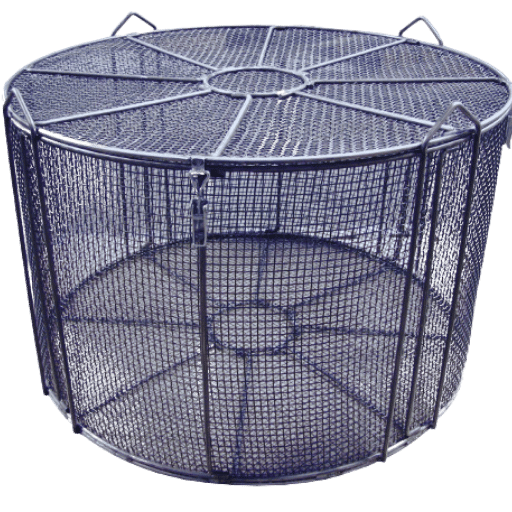
What are the Specifications to Consider?
- Material Composition: Use stainless steel whenever possible; its strength, resistance to rust, and compatibility with almost any wash or handling system make it an ideal choice.
- Mesh Size and Pattern: Choose a mesh that is tight enough to retain small parts yet open enough to let cleaning fluid or air move freely around every surface.
- Load Capacity: Check that the basket can carry the full weight of the load without bending, sagging, or losing its original shape.
- Dimensions and Design: Confirm that the basket’s width, height, and overall outline match the machine it will be used in and the components it will transport for heat treatment.
- Finish and Coating: Choose smooth surfaces or light protective coatings to limit nicks and scratches on fragile parts during every process step.
How Do Different Industries Utilize Stainless Steel Wire Baskets?
Stainless steel wire baskets have become indispensable in many workplaces because they are sturdy, resist rust, and adapt to different tasks. The following examples show how each sector puts these baskets to good use:
- Medical and Healthcare Industry: In hospitals and clinics, staff rely on stainless steel wire baskets to carry instruments through sterilization routines. Baskets can tolerate the heat and harsh chemicals of autoclaving, keeping surgical tools safe while meeting strict cleanliness rules. That combination gives caregivers confidence that each item remains protected and perfectly hygienic.
- Food and Beverage Industry: Food processors and kitchens use wire baskets for washing, drying, and storing raw ingredients and finished goods. Because the metal does not react with acids, oils, or moisture, baskets prevent off-flavors and protect public health. Workers also slide them into industrial dishwashers where the open design speeds circulation and leaves every surface spotless.
- Manufacturing and Aerospace: In precision shops, especially aerospace facilities, technicians depend on wire baskets to hold small parts during cleaning and degreasing. Custom sizes and mesh patterns let workers wash delicate components without scratching or trapping debris in moving surfaces. That care reduces waste, extends machinery life, and supports the industry’s high-quality standards.
- Pharmaceutical Industry: During drug manufacturing, stainless-steel wire baskets carry vials, ampoules, and similar containers between steps. Thanks to their sturdy build, they endure repeated cleaning and sterilization without bending or losing shape, even in tightly regulated clean rooms.
- Electronics Sector: Manufacturers use wire baskets of the same alloy when washing delicate parts like circuit boards and microchips. The latticed surface lets solvents flood every nook while allowing draining, so debris is removed, yet short circuits are never invited.
By customizing these baskets for each application, firms preserve efficiency, cleanliness, and quality at every production stage.
What are the Advantages of Using an Ultrasonic Cleaning Basket?
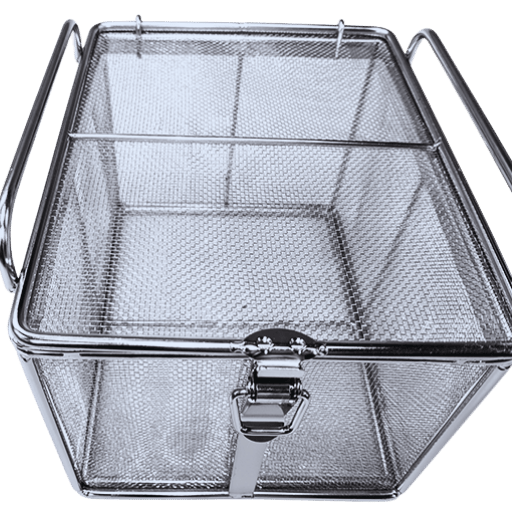
How Does Ultrasonic Cleaning Enhance Parts Washing?
Ultrasonic cleaning methods have revolutionized parts washing because the sound waves are exposed at a very high frequency, which generates small pockets of air in the washing solvent. This phenomenon is called cavitation. However, it collapses, pulling back substantial amounts of dirt and soiling from the surface of the parts, such as greases, oils, dust, and even visible debris. Such a practice is excellent for these tasks, considering the structures and not-so-easily accessible machine elements, such as electronic microassemblies, which, on most occasions, regular hand or almost all other solutions cannot be applied.
The latest scientific studies reveal that ultrasonic cleaning reduces normal cleaning time by at least 60% compared to manual or other commonplace cleaning methods, ensuring even better cleaning efficacy. The specific form of sound waves ensures this, and the mechanical sensitivities make high-frequency energy reach perfect cleanliness in even the minutest of crevices and hole positions without destroying those surfaces.
Suppose we further develop the technologies of ultrasonic cleaning, especially using specialized cleaning agents for the targeted cleaning of the nature of the contamination. In that case, we can clean up particles in submicron size, and the disinfection/ cleaning process reaches the standard of clean room health needed in the health sector and this equipment. Ultrasonic cleaning eliminates the need for certain solvents containing harsh chemicals, which makes it an eco-friendly procedure in Many industries, as opposed to traditional methods, leading to a fall in the expenses on labor and materials. Combining these advantages explains why ultrasonic cleaning is crucial in the current parts cleaning arena.
Which Applications Benefit Most from Ultrasonic Cleaning Baskets?
Ultrasonic cleaning baskets are now a staple wherever people need to cleanse fragile or complicated parts with extreme care. Healthcare leads the way, since every surgical tool and implant must meet rigid sterility rules, while manufacturing relies on them to clear fine debris from aerospace and automotive precision components. Electronics labs use the baskets to lift grime off sensitive circuit boards, and jewelers turn to them because the gentle wave action revives shine without scratching. By delivering uniform, speedy cleaning that protects surfaces, these baskets have become essential in every industry where quality cannot be compromised.
Are Small Parts Baskets Suitable for Ultrasonic Processes?
Small parts baskets perform exceptionally well in ultrasonic cleaning stations where care and accuracy matter most. Inside the tank, high-frequency sound waves travel through the liquid, forming tiny cavitation bubbles that lift away dust, oil, and stubborn residues. Made from stainless steel or other rust-resistant metals, these baskets hold fragile or finely detailed pieces in place throughout the cycle.
Both research studies and field observations agree that cleaning results improve sharply when ultrasonic baths are paired with baskets that filter debris. Designers must choose mesh sizes and openings that let sonic energy pass freely yet stop micro-components from slipping out. Evidence shows that even parts with twisting shapes or thin walls—glass, foil, or sheet metal—see uniform results when placed in these rugged, purpose-built trays. Therefore, many medical device manufacturers rely on ultrasonic baskets to ensure sterile, intact parts.
Recent advances in ultrasonic cleaning equipment work hand in hand with small-parts baskets. Adjustable power settings, programmable cycles, and redesigned tanks match baskets of different sizes and weights, boosting overall efficiency. These innovations make ultrasonic units and baskets a key pairing for thorough, dependable cleaning in many technical and industrial settings.
Why Choose a Custom Stainless Steel Mesh Basket?

What are the Benefits of a Custom Design?
- Optimized for Specific Applications: Custom stainless-steel mesh baskets can be designed to fit the exact size, weight, and material properties of each part, guaranteeing the best possible performance in a given task.
- Enhanced Durability: Engineered from premium alloys and manufactured to strict tolerances, these baskets resist chemical spills, extreme temperatures, and the wear that comes from constant handling.
- Improved Efficiency: A tailored layout keeps components organized and securely seated, so damage during washing, transport, or storage is far less likely.
- Corrosion Resistance: The stainless-steel construction resists moisture and salts, prolonging the basket’s service life and reducing upkeep.
- Adaptability to Complex Workflows: Optional features-dividers, lids, lift handles, or mounting brackets-ensure each basket slots smoothly into existing processes while adding extra utility.
How to Engineer a Small Stainless Steel Basket for Specific Needs?
- Define Application Requirements: Explain what the basket is meant to do. Consider where it will work, what materials it will carry, and any limits it must obey, such as maximum weight or the need to survive extreme heat or cold.
- Select the Appropriate Material: Pick a grade of stainless steel that suits those duties. 304 works for everyday tasks, but 316 resists relentless corrosion, so choose it for hostile settings or jobs where failure is not an option.
- Optimize the Dimensions and Design: Decide on the right size, shape, and frame so the basket holds the load and still slides into the tight space or machine it was built for.
- Integrate Functional Features: Attach extras, such as dividers, lids, or a stackable layout, that enhance the workflow. Check that each feature fits an ergonomic model and does not slow operators down.
- Prioritize Durability and Safety: Add stiffened edges, mirror-smooth surfaces, or light protective finishes that extend service life and shield users, especially in locations where the basket is constantly handled.
- Conduct Performance Testing: Make a prototype, put it through fundamental shifts, and watch for cracks, overloads, or awkward grips; only when it clears those tests should production move ahead.
How Does Parts Washer Basket Design Affect Cleaning Efficiency?

What are the Key Design Features of a Stainless Steel Parts Basket?
- Mesh Size and Configuration: The openings must permit the free flow of wash fluid yet grip parts tightly enough to prevent them from slipping out or getting damaged.
- Material Grade: Select premium stainless steel that resists rust, withstands daily abuse, and keeps its strength in harsh cleaning conditions.
- Stackability and Space Utilization: Shape the basket so multiple units can nest or stack neatly, boosting throughput and saving valuable floor space in the washer.
- Ergonomic Handles: Fit solid, well-angled handles that let operators lift, slide, or carry the load safely without straining their hands.
- Temperature and Chemical Resistance: Confirm the material endures high heat and aggressive detergents, remaining intact and authentic over the basket’s long service life.
How Does Steel Mesh Optimize Cleaning in a Washer?
Steel mesh has become the go-to choice for baskets in industrial washing because it blends open design with metal strength. The grid allows water and detergent to reach every corner, stripping dirt from all sides and leaving little chance for leftover residue. By letting cleansing fluid move freely, the mesh reduces the chance that soap or soil will dry on the washed parts.
The same openness permits quick drainage, cutting down on standing water and speeding the drying cycle. Steel stands up to hot caustic washes and harsh chemicals, so the baskets last through years of heavy use without snapping or rusting. Research shows that grades such as stainless steel resist corrosion much better than plastic or mild steel, helping hospitals, factories, and other regulated sites meet strict hygiene standards.
Moreover, the material combines lightweight with impressive strength, making baskets easy to lift, load into machines, or feed into automated lines. Together, these traits-not just structure but the resilience of steel-turn simple mesh into a vital element that elevates the entire washing process.
Frequently Asked Questions (FAQs)
Q: What should I consider when selecting a stainless steel parts basket?
A: When selecting a stainless steel parts basket, especially a working one or any other type, consider the length and depth, the material used, such as 304 stainless steel, the construction ability, and the weight capacity. This also includes any contact during the cleaning process, for instance, ultrasonic parts washers, overwash, or any other environmental conditions.
Q: How does the construction of mesh parts baskets affect their durability?
A: The case is different, particularly when using mesh parts baskets, commonly constructed using corrosion-resistant stainless steel wire mesh. These baskets in question are built with heavier gauge wires and the approach known as solid welding, in which they excel in maintaining their desirability and use even when exposed to demanding conditions such as heat treat processes.
Q: Why is stainless steel preferred for parts washing baskets?
A: Stainless steel is used for parts washing baskets because of its properties, such as corrosion resistance, limited exposure to soap and chemicals, and inability to burn. It can withstand heat exceptionally well when cleaning automotive and general industrial components.
Q: Can I get custom stainless steel baskets for specific requirements?
A: Yes, many wire basket manufacturers manufacture custom-sized stainless steel baskets that can accommodate special needs or demands, such as specific dimensions, stacks of baskets, or storage trays/shelves, including tray brackets and drainage grommets, among others, integrated into the main frame of the basket.
Q: Are there benefits to using stackable baskets and racks?
A: Stackable baskets and racks are elements of efficient layouts because they save space. Particular attention is given to arranging small conics, especially the accessories needed in manufacturing or performing specific jobs.
Q: How do stainless steel mesh parts baskets facilitate the sterilization process?
A: Stainless steel mesh parts baskets facilitate the sterilization process as they allow all surfaces of the items inside to be reached and cleared or sterilized.
Q: What types of items are best suited for a stainless steel basket for small parts?
A: A stainless steel basket for small parts suitable for delicate or fragile things that may not suffer loss throughout washing methods, whether they are chemi-cleaning or soaking.
Q: Can an ultrasonic parts washer use stainless steel wire mesh baskets?
A: Yes, stainless steel wire mesh baskets allow ultrasonic waves to penetrate through them without much difficulty and, above all, facilitate the cleaning of even the most intricate parts, making them suitable for use with ultrasonic parts washers.
Q: How do handles enhance the functionality of parts washing baskets?
A: Handles enhance the functionality of components washing baskets by enabling ease of carrying and movement, particularly when used in an industrial setting or where the baskets are frequently relocated.
Q: Why is choosing the right size stainless steel parts basket important?
A: It is essential to choose the right size stainless steel parts basket, as it usually helps ensure the parts rest properly, are fitted inside without excessive movement, and are adequately cleaned. Appropriately fitting the size of the parts basket and the cleaning hardware is also essential to help clean them better.
Reference Sources
1. Prototyping and characterization of 316L stainless steel materials and lattice structures fabricated through metal fused filament technology
- Authors: Ludovico Martignoni et al.
- Publication Date: June 4, 2024
- Citation: (Martignoni et al., 2024)
- Summary:
- This study summarizes the evaluation of printing parameters of the commercially available 316L stainless steel filament and how they affect the printed parts’ porosity and associated mechanical properties, including complex geometries.
- Methodology: The design included a three-stage experimental program that consisted of the printing parameters, imaging the microstructure and pores with microscopy, and mechanical strength tests. The space and a close examination of these results strongly suggest adjusting the printing parameters to make high-strength parts.
2. A Multicellular Basket for the Preparative Process—Health care essays on durable stainless steel baskets are presented.
4. Leading Stainless Steel CNC Machining Services Provider in China


