


Aluminum alloys are among the most versatile materials used for industries ranging from aerospace to construction because of their great strength, lightness, and corrosion resistance. Of the numerous types available, Aluminum 6061 and Aluminum 6063 are the two most popular choices for diversified applications. Now, how does one decide which one is well suited for their job? This article goes over the nitty-gritty of Aluminum 6061 and 6063-who is made of what, who behaves how, and who is best fit for what function-so that you may make an informed decision on what is best for your specific project.
In Brief: Introduction to Aluminum Alloys

Aluminum alloys are widely used materials across many industries because of their exceptional strength-to-weight ratio, corrosion resistance, and ease of fabrication. Aluminum alloys are produced by adding another element like magnesium and silicon to aluminum to change or improve its properties. Among these, Aluminum 6061 and Aluminum 6063 are considered to be two of the utmost applied aluminum alloys. Though similar in benefits, they differ in composition and mechanical characteristics and hence find better application suitability. The choice of alloy depends on factors such as the required strength, machineability, and intended use of the alloy.
What are Aluminum Alloys?
The aluminum alloys are materials formed by combining pure or base aluminum with other elements to improve one or more mechanical and chemical properties. The elements added may include copper, magnesium, zinc, silicon, and manganese. They are usually selected to impart an alloy with certain enhanced characteristics such as strength, corrosion resistance, durability, and thermal conductivity. Thus, a wide range of possible properties are offered by aluminum alloys, making them versatile in aerospace, automotive, construction, and consumer goods. Aluminum alloys are generally broadly classified into two main types of alloys, namely wrought alloys and casting alloys, depending on the processes used in their production techniques. This flexibility and performance make the aluminum alloys indispensable in modern engineering and manufacturing.
Why Importance Is There in Choosing the Right Alloy?
A proper selection of aluminum alloys is necessary to strive for optimal performance and efficiency in subsequent uses. Different aluminum alloys are designed to perform various functions such as strength, corrosion resistance, or reduction in weight. The 7075 aluminum is often viewed in the aerospace industry, a high strength to weight ratio and excellent fatigue resistance, whereas the 6061 is widely used for general structural work due to its versatility, weldability, and corrosion resistance.
Research data indicate that improper use of an alloy leads to premature failure of materials and inefficiency, increased costs being an effect. For instance, to use a softer, less-durable alloy in a high-stress environment can reduce service life and give rise to high replacement costs. A recent industry report states that making alloy-based choices according to the needs of an application can prolong about 30% the lifetime of materials and can cut down 20% maintenance costs.
Moreover, cold resistance and machinability are considered major parameters when it comes to the automotive and construction sectors since the materials are exposed to a fluctuating environment. An adequate aluminum alloy guarantees better thermal conductivity abilities for heat exchangers or better flexibility while bending and forming operations. Exploiting recent developments by utilizing alloys prepared with rare earth elements can propel materials’ properties to heights beyond what is required for evolving industries.
Introduction to 6061 and 6063 Aluminum Alloys
6061 and 6063 aluminum alloys rank among the best-known metals in general and bear excellent mechanical properties and adaptability for a variety of industrial applications. The 6061 is considered a strong and durable alloy as it has some strength-to-weight ratio, corrosion resistance, and weldability. It finds extensive applications in aerospace, automotive, and building industries, where performance is an essential factor and must be reliable. It is also heat-treatable for increased hardness and tensile strength.
In comparison, the fabrication of shop window frames, glazed doors, and pipes of the 6063 is more striking for better surface finishing and extrudability. It is also highly corrosion-resistant, although not as strong as 6061. For projects where flexibility and workability are the number one priority, 6063 would be an excellent choice. Both alloys are an evolution of engineering possibilities with aluminum in their own ways, each serving a distinct purpose in terms of performance and application needs.
Properties of Aluminum 6061
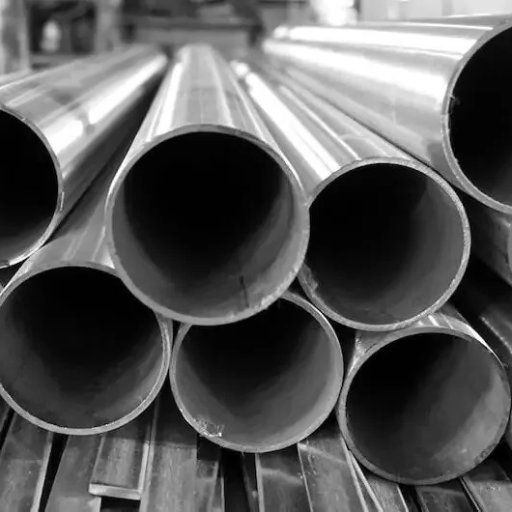
6061 aluminum is a versatile and durable alloy with a wide array of applications. It is considered to have an excellent strength-to-weight ratio, corrosion resistance, and machinability. The alloy is heat-treatable for enhanced mechanical properties and weldable, which allows the construct of structures from 6061. It stands an excellent resistance against stress and cracking and is reliable in hostile environments. These properties balance strength with workability, thus making 6061 aluminum useful in aerospace, automotive, and construction industries.
Mechanical Properties of Aluminum 6061
The aluminum 6061 possesses a series of excellent mechanical properties that underpin its massive versatility across various industries. In the T6 temper, this alloy has an ultimate tensile strength of some 310 MPa (45,000 psi) and a yield strength of some 276 MPa (40,000 psi). It has the best elongation at break, normally 10-12%, so it can endure the deformation applied to it before actually breaking down and therefore considered trustworthy under stress.
The modulus of elasticity of Aluminum 6061 is approximately 10 Mpsi (69 GPa), which strikes a fine balance between stiffness and flexibility. Depending on temper, it can have between 95 and 105 Brinell hardness, thereby making it quite resistant to wear and surface deformation. The thermal conductivity, on the other hand, is 167 W/m·K, facilitating smooth thermal transitions required during its usage in heat exchangers.
This set of properties is made even better by its 2.70 g/cm³ density, emphasizing its lightweight relative to its strength. Thus, this property package truly cements the place of Aluminum 6061 as a significant player in aerospace, marine, and transportation, where mechanical reliability and weight-saving solutions are crucial.
Strength-to-Weight Ratio of Aluminum 6061
One of the extraordinary features of Aluminum 6061 is its good strength-to-weight ratio that makes it a cherished choice in industries who favor something lighter without compromising on strength. The alloy has approximately 310 MPa tensile strength and a yield strength of 276 MPa. Aluminum 6061 maintains a skeletal density of only 2.70 g/cm³ while packing in robust mechanical strength; henceforth engineers have always been able to optimize their designs for lighter applications where structure could never be compromised.
Weight reduction is directly related to fuel efficiency and performance, making this ratio highly beneficial in aerospace engineering. By using Aluminum 6061 in making airplane components like wings and fuselages, along with support structures, huge weight savings can be achieved without compromising the strength needed to withstand weathering of extreme environments. On the other hand, this strength-to-weight ratio also assists with vehicle efficiency and eco-friendly automobile emissions with lower energy consumption in automotive and transportation applications.
In comparison with other alloys and metals, Aluminum 6061 provides the best balance between tensile strength and density. To illustrate, steel has higher tensile strength, but its density of 7.85 g/cm³ really ups the weight of any construction tremendously. This, thus, makes Aluminum 6061 the better choice when seeking weight reduction solutions while ensuring peak-performance reliability.
Machinability and Weldability of 6061 Aluminum
Since it enjoys a reputation as a very good machinability and weldability alloy, Aluminum 6061 became the choice of countless manufacturing and engineering applications. The machinability rating of 6061 aluminum alloys stands at about 90%, which suggests that it can easily be cut, milled, or shaped by means of usual machining tools. Its moderate strength and corrosion resistance make the alloy suitable for a wide range of precision applications requiring high efficiency level considerations. The use of appropriate cutting tools and lubricants would further prevent deformation of workpiece and allow smooth machining.`
Concerning weldability, 6061 aluminum is among the most widely used materials in welding works. It can be welded utilizing several welding techniques, such as tungsten inert gas (TIG) welding and metal inert gas (MIG) welding. Welding generally reduces the strength of the material within the heat-affected zone (HAZ). To counteract this effect, post-weld heat treatments including artificial aging and solution heat treatments are commonly applied to restore the mechanical properties. For instance, achieving a T6 temper after welding entails solution heat treatment followed by artificial aging that will almost restore the mechanical properties to their pre-welded state.
Several sources’ evidences have it that 6061 Aluminum exhibits very good results under different machining and welding techniques. With a melting temperature of about 580–650°C (1,076–1,202°F), and a strength-to-weight ratio, the alloy finds its prominent use in aerospace, automotive, and marine engineering. The ease of machining and the reliability of weldability make it one of the most commonly used materials in both structural and functional components.
Aluminum 6063 Properties
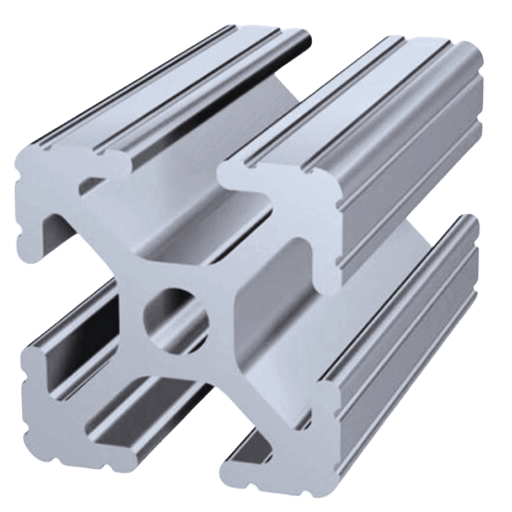
Aluminum 6063, also known as an architectural alloy, has superior corrosion resistance and surface finish. It is somewhat less strong than 6061 but is easier to extrude; hence it is generally used for complex shapes like window frames, tubing, and architectural structures. Its good weldability and decent machinability also make it suitable for both structural and decorative purposes.
Mechanical Properties of Aluminum 6063
Aluminum 6063 possesses rather good mechanical properties that balance a variety of requirements. It has a tensile strength that can range anywhere between 27,000 – 30,000 psi (186 – 207 MPa) and a yield strength of about 21,000 psi (145 MPa) in the T6 temper. In addition to having a good elongation property, usually about 8-10% in the T6 condition, it offers outstanding formability for applications where moderate strength coupled with a degree of flexibility is required. It also has a hardness of about 60 Brinell (HB) and a fatigue limit of approximately 10,000 psi, making it a competitive choice for lightweight structures needing to be durable and resilient.
Strength-to-Weight Ratio of 6063
The excellent strength-to-weight ratio is what makes aluminum alloy 6063 a favored choice among diverse structural applications. On occasion, engineered materials must be lighter because structural use of these materials would otherwise make the systems too heavy. The density value of 6063 is about 2.70 g/cm³, keeping it on the lower end of the scale of weight compared to steel while still able to carry applications that require a good level of strength. The tensile strength-to-mass ratio of the 6063 alloy makes this material useful for manufacturing lightweight, yet hard components that find their uses in architectural and aerospace industries.
On the other hand, in areas demanding the reduction of structural weight, this T6 temper alloy enjoys a good strength-to-weight benefit and is able to offer assiduity to such stipulated strength and serviceability requirement. This corrosion resistance, meanwhile, suits 6063 aluminum well in any environment where rust could otherwise pose a threat to the alloy’s strength and usefulness. Hence, combined strength-to-weight ratio and corrosion resistance make 6063 an all-round performer, especially in applications where deflecting weight factors against structural integrity is a key consideration.
Machining and Welding of 6063 Aluminum
It is considered excellent in terms of weldability and machinability, and this attribute makes it quite popular for industrial use. Its machinability rating is close to 50; this means that it is quite easy to machine and shape but should be done using the best tools with proper technique to enhance both efficiency and surface quality. Carbide tools are usually recommended for cutting harder aluminum alloys.
6063 also boasts a good weldability. It can be welded by many welding techniques, including Tungsten Inert Gas (TIG) or Metal Inert Gas (MIG) welding, which are suitable for most aluminum alloys. The alloy provides a good melting point that ensures efficient fusion without undue distortion. It is generally advisable to use filler materials such as 5356 or 4043 alloys to help create strong welds that can last in use. The 5356 is normally preferred where the weld must preserve a degree of mechanical strength, while 4043 is used frequently where appearance after welding is paramount.
Welding may cause the reduction of strength in the heat-affected zones (HAZ), but with appropriate post-weld heat treatments or tempering, most of these effects may be alleviated. Such a combination of excellent machinability with the wonderful weldability of 6063 aluminum makes this alloy an ideal candidate for complex architectural designs, transportation infrastructures, and high-end performance components.
Comparing the Two Aluminum Alloys 6061 and 6063
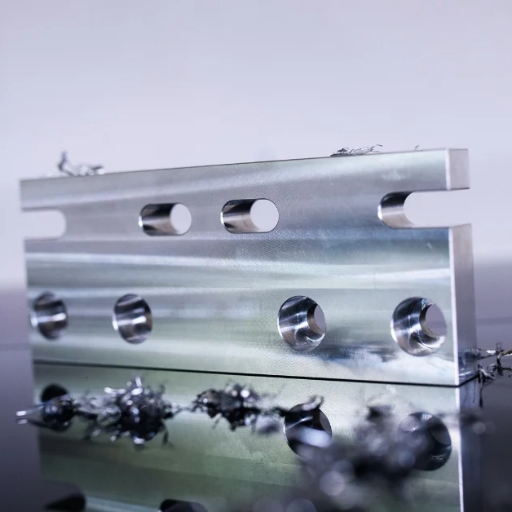
Both Aluminum Alloys 6061 and 6063 are versatile alloys, yet they have significant differences that suit their applications. Hence, 6061 is a little more strong and resistive to corrosion, and hence, it is good for making structural components, aerospace applications, and heavy-duty applications. In contrast, it is 6063 that offers better surface finishes and formability, and is usually chosen for architectural and decorative purposes. In terms of mechanical strength, it is 6061 which is good for projects. But in terms of design, 6063 aluminum assists really well in shaping and extruding complicated designs with a superior look. Depending on the strength needed, appearance in question, or end-use conditions will decide the choice of the two varieties.
Major Mechanical Differences
The 6061 aluminum alloy has greater mechanical strength and higher resistance to fatigue than 6063; so, it is more suited to structural and high-stress applications. It also has a higher tensile strength and yield strength. On the other hand, while 6063 has a lesser strength, it offers better flexibility and is easier to be extruded into intricate shapes; hence, it is considered apt for applications where designs and aesthetics are given greater importance, but loads are lesser.
Applications of 6061 vs 6063 Aluminum
6061 aluminum is widely used in aerospace, automotive, structural, and industrial applications, while 6063 aluminum is commonly found in architectural, decorative, and low-stress applications.
| Parameter | 6061 Aluminum | 6063 Aluminum |
|---|---|---|
| Strength | High | Moderate |
| Flexibility | Moderate | High |
| Fatigue Res. | Excellent | Fair |
| Machinable | Good | Excellent |
| Corrosion | Moderate | Good |
| Use Cases | Structurals, vehicles | Frames, trims |
| Aesthetics | Moderate | Excellent |
Advantages and Disadvantages of Each Aluminum Alloy
6061 Aluminum
Advantage: It is strong; has the best fatigue resistance; good machining; used in structural and vehicle applications.
Disadvantage: Moderate flexibility and corrosion resistance and less aesthetic than the 6063.
6063 Aluminum
Advantages: High flexibility; very good machinability; good corrosion resistance; superior aesthetic qualities suitable for frames, trims, and ornamental work.
Disadvantages: It has average strength and moderate fatigue resistance, being limited in its applications at high stress.
Choosing the Correct Aluminum Alloy

When choosing a specific alloy of aluminum, you want to weigh the specifications of your application. Strength and durability matter? Then 6061 is apt to be the better choice. But when appearance, machinability, and corrosion resistance matter, we’d rather go with 6063. Compare the pros and cons of each in your application to define which would best suit your needs.
Factors to Consider When Selecting an Alloy
Selection of alloy depends on one’s project requirements. I usually consider things like strength, corrosion resistance, machinability, and appearance. The more demanding applications require alloys with higher durability; meanwhile, for aesthetic use or low stress, I incline toward the alloys with better surface finish and corrosion resistance. I consider cost and availability because they ensure that the alloys would meet really well with budget and performance requirements.
Recommended Uses of Aluminum 6061
Aluminum 6061 being a very versatile alloy has good strength-to-weight ratio, corrosion resistance, and machinability and is thus suitable for varied applications. It is commonly used for structural components because it is a durable material that can withstand high-stress applications, making it ideal for aircraft and automotive applications. The corrosion resistance allows for applications in marine structures and outdoor structures such as bridges, pipelines, and recreational equipment. It has become very popular for fabricating bicycle frames, furniture, and other consumer product designs where both strength and appearance are important. Its ability to adapt to different situations ensures that this alloy may be found working in many industries where performance is considered.
Recommended Uses of Aluminum 6063
Aluminum 6063 is preferred for applications emphasizing surface finish and corrosion resistance. It has architectural uses such as the manufacture of window frames, door frames, and curtain walls. The alloy is thus perfect for any construction project demanding intricate shapes because it advertises excellent extrudability. Aluminum 6063 also fairs well for piping and tubing applications that offer moderate pressure ratings. This alloy comes as a shine given its ability to deliver on the aesthetic requirements of decorative trims and automotive accessories.
Reference sources
- Comparison of Cold-Sprayed Coatings of Copper-Based Composite Deposited on AZ31B Magnesium Alloy and 6061 T6 Aluminum Alloy Substrates (Xue et al., 2023)
- Key Findings:
- The surface roughness, thickness, and adhesion of the coatings deposited on the two different substrates (AZ31B magnesium alloy and 6061 T6 aluminum alloy) both increase with an increase in gas temperature and gas pressure.
- The surface roughness and adhesion of the coatings on the soft substrate (AZ31B magnesium alloy) are greater than those of the coatings on the hard substrate (6061 T6 aluminum alloy), while the thickness of the coatings is not obviously affected by the hardness of the substrate.
- Methodology:
- Copper-coated graphite and copper mixture powders were deposited on the two different substrates under different process parameters using a solid-state cold spray technique.
- The microstructure, surface roughness, thickness, and adhesion of the coatings were analyzed using optical microscopy, scanning electron microscopy, 3D profilometry, and scratch testing.
- Key Findings:
- Comparison of Radiographic Bone Density Measurements of the Radius in Dogs Using 6063 and 6351 Aluminum Scales (Costa et al., 2024)
- Key Findings:
- As the thickness of the anatomical piece (radius) increased, the density and absorption of radiation also increased, making it feasible to use aluminum alloys 6351 and 6063 as densitometric references for the determination of radiographic bone mineral density (rBMD).
- A perfect correlation (r = 0.9999 with p < 0.01) was observed between the values of the two aluminum step wedges, indicating that they can be used interchangeably as densitometric references.
- Methodology:
- Five simple digital radiographs of five dry bones (radii) from healthy adult male and female dogs were taken, along with the aluminum reference scales.
- The radiographs were digitized and analyzed using ImageJ software to compare the grayscale shades of the ultra-distal epiphysis of the radius with the pixel intensity of the step wedges.
- Key Findings:
- Comparison of Static and Dynamic Mechanical Response of Aluminum 6061 Subjected to Multi-Directional Forging (Bahat & Yapici, 2024, pp. 21–28)
- Key Findings:
- After multi-directional forging, the grain size of the Al 6061 alloy was refined down to below 11 microns from an initial grain size of 13 microns.
- This grain refinement resulted in increased hardness and yield strength in the quasi-static regime, as well as increased dynamic strength, but with a relatively brittle behavior.
- Methodology:
- The Al 6061 alloy was subjected to multi-directional forging (a severe plastic deformation technique) for up to three cycles, involving a total of nine passes, at a raised temperature of 200°C.
- The deformed material was then tested under quasi-static and dynamic (Split Hopkinson Pressure Bar) loading conditions to characterize its mechanical properties.
- Key Findings:
- Top Aluminum Extrusion Machining Parts Manufacturer and Supplier in China
Frequently Asked Questions (FAQs)
What is the difference between alloy 6061 and aluminum alloy 6063?
The main difference between aluminum alloy 6061 and alloy 6063 is in their mechanical properties and physical characteristics. Alloy 6061 is used for industrial purposes because it is stronger and more versatile. Meanwhile, aluminum alloy 6063 extrudes better and finds its use in architectural products for aluminum. In such instances, the 6061 aluminum has better strength features, whereas 6063 becomes the choice for looks and corrosion resistance. Knowledge of these differences is essential in the right choice of aluminum products for the projects.
Mechanical properties of 6061 versus 6063?
The mechanical properties of the 6061 and 6063 alloys differ enough to merit special consideration, particularly with regard to strength and hardness. 6061 aluminum is used wherever a high strength-to-weight ratio is necessary, meaning that such applications demand solid structural support. On the other hand, 6063 aluminum, mainly alloyed with magnesium, is deemed better for extrusion and complex shapes. While they both have excellent machinability, 6061 may often be stronger and is often employed when strength is a concern. Considerations of the project’s strength requirements versus aesthetic implications are the determinants of the preferred alloy.
What applications are best suited for aluminum extrusion of 6061 and 6063?
Aluminum extrusion is a very popular manufacturing process involving both 6061 and 6063 alloys, but the application differs with their use. The higher strength of 6061 makes it highly suited to uses where it acts as a structural element on machinery and equipment. For architectural applications such as window frames and decorative trims, however, 6063 aluminum is chosen for its aesthetically pleasing finishes and for corrosion resistance. Both are aluminum base alloys that are widely versatile; however, the choice of an aluminum product depends largely on the specific demands of the project, which may include load-bearing requirements and aesthetic needs.
Is aluminum 6063 better than 6061 for some applications?
While aluminum 6061 is stronger, aluminum 6063 is suitable for applications where good machinability and weldability are required. Aluminum 6063 is an extrusion alloy and is used extensively for manufacturing complex shapes with smooth finishes, which are quintessential for architectural aluminum. Moreover, aluminum 6063 stands better against corrosion, hence it is favored for outdoor use. So the decision between 6061 and 6063 should be put forth considering the nature of the application, including the ease of design to environmental factors.
What are the physical properties of aluminum 6061 and 6063?
Examples of such differences between aluminum 6061 and 6063 physical properties impact their suitability for various applications. Aluminum 6061 presents a higher tensile strength, favorable for use in structural development where the strength factor is considered. Aluminum alloy 6063, however, is most suitable for use in architecture because of its excellent extrusion characteristics and thermal conductivity. As far as corrosion resistance is concerned, both present a barrier against the same; however, 6063 is the better performer under moist environmental conditions. The knowledge of these physical properties is crucial to an engineer and a designer for making the right choice with regards to the alloy for a specific need.


