


When selecting the right material for your project, the choice between Delrin and ABS can make or break the good performance of the project. These two popular thermoplastics are shaped by their properties, but which one suits your requirements? This post explains the distinguishing elements between Delrin and ABS, weighing factors such as strength, durability, applications, and others. Afterward, you will be able to make a proper choice that would lead to the successful application of your project requirements. Whether you are looking to fabricate precision components or need an all-purpose plastic-this blog has got you covered!
What is Delrin and How Does One Use It?
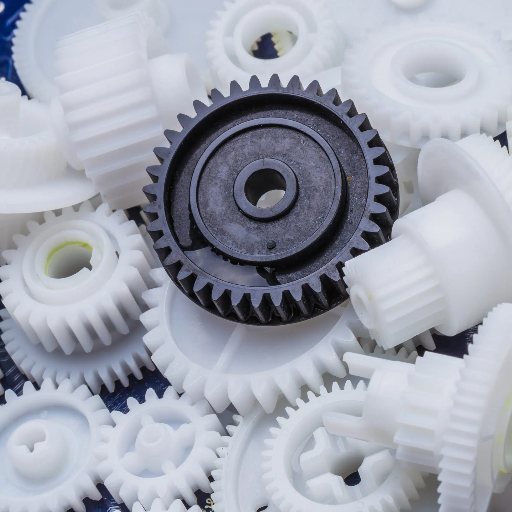
Delrin is a high-performance engineered thermoplastic and is well known for its quality of strength, stiffness, and wear resistance. It finds its uses wherever precision and wear resistance is pertinent; gears, bushings, and automotive parts might be good examples. Delrin creates low friction and moisture resistance; thus mechanical imparts to endure repeated movement or altered environment are carried out.
Delrin As A Brand Name For Acetal
In the DuPont nomenclature, Delrin is recognized as polyoxymethylene (POM), a type of acetal homopolymer. Engineering application materials use it much on account of its high capability for mechanical strength, stiffness, and dimensional stability. Unlike other types of acetal copolymers, Delrin, a homopolymer, stands out from most other acetals based on its purity and improved mechanical properties such as better tensile strength and fatigue endurance.
Information available through recent data reveals Delrin is generally selected for instances where precision and reliability are of the utmost importance. For example, when Delrin retains a tensile strength of about 69 MPa, it continues to exhibit excellent performance when temperatures range from -40°F to 194°F (-40°C to 90°C), while short-term exposures can be as high as 257°F (125°C). Other excellent qualities include a low coefficient of friction, with measurements of approximately 0.2 when lubricated, which allows for smooth operations of moving parts.
Delrin has a wide range of applications, including automotive, aerospace, consumer electronics, and medical.-It can be used in fuel system components, conveyor belts, zippers, and insulin-delivering devices, just to name a few. Chemical resistance, UV resistance, and moisture resistance make the material suited for a variety of environments. In a workplace where all conditions work in contradiction with each other, these well-balanced properties reinforce the stand for Delrin as a brand name premium in the world of engineered thermoplastics.
Many Industrial Applications of Delrin
Delrin with its uncommon balance of strength, rigidity, and low coefficient of friction serves industries in many different ways. It is primarily used in the automotive field in the manufacture of fuel system components, seat belt mechanisms, and gears, owing to its durability and wear resistance. Similarly, in consumer electronics, Delrin is used to fabricate precision components such as connectors and switches, which guarantee reliability and long life. The material is also used in medical applications for insulin delivery devices and surgical instruments because of its resistance to chemicals and biocompatibility. In addition, Delrin is capable of withstanding highly aggressive environmental conditions typical for industrial applications such as conveyor systems and fasteners. Versatile applications such as these propel the material to a height position in the industrial sphere.
Why Specifically Machining With Delrin?
Delrin has earned its place as one of the premier materials used for machining. Its properties and ability to work with various industries make it stand out from others. Delrin’s superior machinability also puts a smooth surface finish and tight tolerance into manufacturing components with complicated geometries. Delrin also exhibits low friction and excellent wear resistance and resilience to produce parts such as gears, bearings, and bushings capable of enduring repetitive motion.
Delrin’s mechanical strength and dimensional stability provide performance that a user can depend on under a variety of conditions, including moisture and chemical exposure. It acts perfectly structurally between -40°F and 180°F, essential for those applications that need a robust thermal response.
Machining Delrin is shown to increase machining time reductions for up to 20% over aluminum or steel machining procedures based on perforances obtained from application engineers. The lightweight nature of Delrin further aids in faster operation during the machining process. This versatility, coupled with the low cost and excellent performance, proves why Delrin has remained the choice for design engineers and manufacturers when seeking a reliable material for precision parts.
Understanding ABS Plastic and Its Uses
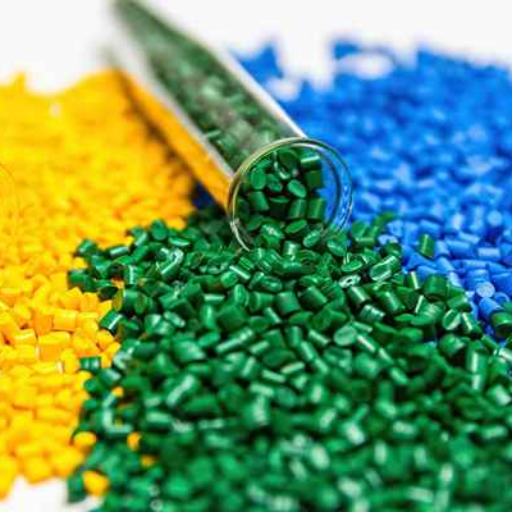
ABS plastic, or Acrylonitrile-Butadiene-Styrene is a sturdy thermoplastic that has found use across industries. It has very good impact resistance, strength, and is machinable; hence, it is used in making automotive parts, consumer electronics, and for 3D printing. Being lightweight, yet strong, manufacturing is easy, and the qualities of durability and performance are maintained even in very demanding environments.
What Makes ABS Material Unique?
ABS has a unique combination of mechanical and thermal properties. It exhibits high-impact resistance at low temperatures and is, therefore, suitable for those products that must undergo some physical stress. Also, the excellent dimensional stability of the material lends components that do not change shape or size even in a trying environment. ABS also exhibits a good balance between rigidity and toughness, thus allowing manufacturers to design complex and tough parts.
Another big advantage of ABS is that it is made very easy to process. It can be through injection molding, extrusion, or by thermoforming, giving it versatility over a wide range of applications. Being at a low melting point, of usually between 200 and 260°C, it creates a very fast and cost-effective manufacturing process. According to recent records, ABS plastics have a density of approximately 1.04 g/cm³ and tensile strength between 40 and 50 MPa, depending on the formulations used, which are some of their prominent physical characteristics.
ABS plastics are highly resistant to the corrosive action of chemicals and tolerate scratching and scrapes well, therefore appropriate in protective housing and surface finishes. ABS can be combined with various other materials to meet particular requirements, such as flame retardance or resistance to ultraviolet rays, supposing greater opportunities for industrial applications.
The recyclability of ABS also brands it as a consciously present solution. In old times, disposed ABS materials were re-processed and used by manufacturers, thereby reducing waste with sustainable industrial production lines. Together, these features make ABS a unique and superior material for numerous engineering, industrial, and consumer products.
Most Common Uses of ABS in Manufacturing
The most common uses of ABS in manufacturing are auto parts, electronic enclosures, and household items. ABS makes for an ideal material for automotive applications such as car bumpers, dashboards, and outer trims on account of its resistance and lightness. Concurrently, ABS is very suitable for manufacturing tough and light-weight enclosures for electronics such as computers and phones. Due to the very good impact resistance of ABS and great versatility, it is a preferred material for manufacturing toys, luggage, and kitchen utensils and appliances.
When to Use ABS for Prototyping
Acrylonitrile Butadiene Styrene (ABS) is an excellent option for prototyping, especially wherein the production of durable and functional parts is sought to be paramount. Because of the strength, impact resistance, and temperature tolerance, it perfectly suits prototypes requiring testing under current configurations. Due to its ability to mold, process, and post-process such as sanding, painting, or drilling, ABS has been for a long time adopted in 3D printing as well as injection mold prototyping.
Recent data puts ABS in a large share of the materials used for prototyping in fields such as automotive and consumer products where structural integrity and durability are of great importance. ABS prototypes for car parts include brackets, housings, and vent components, and enable manufacturers to subject them to stress and impact tests before commencement of bulk production. The other factor favoring its usage is the heat resistance of ABS, up to 221°F, or 105°C, especially in the manufacture of prototypes where thermal stability is vital.
Furthermore, it is an excellent compromise in relation to manufacturability and cost. ABS is relatively cheaper as compared to the other engineering plastics, which makes the iterative development of prototypes quite economical. Considering aspects such as detail reproduction and dimensional stability, ABS is amongst the best materials considered for functional prototypes where utmost attention is required for testing. Combining with recycle-hood, ABS is an eco-friendly alternative for prototype development standards.
ABS and Delrin: Some Key Differences
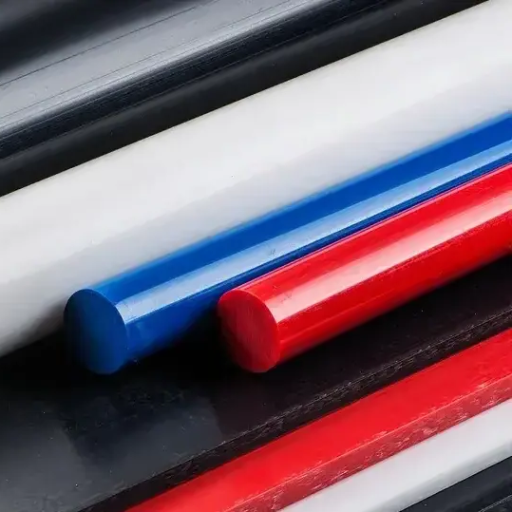
Both acrylonitrile butadiene styrene (ABS) and polyoxymethylene (POM, name trademarked as Delrin) are commonly used plastics, yet they differ widely in characteristics and applications. ABS ranks highest in cheapness, manufacturability, impact resistance, etc., and is used mostly for prototypes and consumer products. Delrin material, which features good mechanical strength, stiffens materials, and low friction, is preferred for more precise components-the kind of gears and bearings it is made for. Cost-wise, ABS is lower and more versatile, whereas Delrin is more expensive and stronger-wear-resistant. Either type could go with a project, depending upon considerations like mechanical and cost constraints or environmental factors.
Comparison Between Mechanical Properties
Mechanical properties of ABS and Delrin to be considered include tensile strength, impact strength, and thermal stability. ABS has fair tensile strength coupled with good impact resistance, making it a preferred choice in lightweight applications and situations where the component might undergo moderate stress. The wider range of temperature tolerance is another feature of ABS, however, at extreme heat, its performance dwindles.
Delrin instead has exceedingly high tensile strength, stiffness, and good resistance to wear. It performs very well under heavy loads in harsher environments and is best when smooth friction is required between moving parts. Although mechanically more robust, these qualities also make Delrin more expensive, which may prove a serious limitation for any microscopically concerned project. Knowing the mechanical requirements for a given application would be crucial in deciding the appropriate product.
Wear Resistance and Durability Features
Several factors must be considered in the evaluation of materials used in high-durability, wear-resistant applications. Delrin offers outstanding wear resistance along with low coefficient-of-friction benefit and very high fatigue endurance. Its ability to maintain performances under repetitive stress and sliding contact mode makes it preferred in accuracy requirements for gears, bearing applications, and conveyor systems. It can resign itself to regular use in environments where very little lubrication can be supplied, thereby reducing operational maintenance requirements.
According to recent research, the wear rate of Delrin is between 25 and 35 micrometers per year under moderate load, much better than materials like ABS, which has a wear rate of about 70 to 90 micrometers under similar conditions. Moreover, its abrasion resistance renders Delrin suitable for applications where surface wear could compromise structural integrity or functionality.
However, wear performance can be affected by environmental factors such as temperature and moisture. In particular, Delrin maintains its properties up to a temperature of 185°F (85°C) and does not absorb moisture, as do alternatives like Nylon, which may swell in such conditions. This ensures longevity and smooth operations even when used in changing environmental conditions.
Choosing Delrin for demanding applications ultimately translates into longer component life, less downtime, and greater efficiency, even in tough industrial conditions.
Interferences of Chemical Resistance in Choice
Chemical resistance is decisive for the selection of materials in industrial applications. Delrin shows excellent resistance to many chemicals, including fuels, solvents, and many weak acids, making it a versatile choice in environments where these substances are commonly present. According to industry data, Delrin remains resistant against the degrading effects of chemical interaction better than almost all other engineering plastics, thus ensuring that components do not lose mechanical and structural integrity in the course of time.
To cite test findings, Delrin retains more than 95 percent of its tensile strength after prolonged exposure to gasoline and other hydrocarbon liquids, while materials such as ABS and Polycarbonate suffer significant deterioration in similar conditions. This very high resistance makes the risk of failure of components very low, keeping maintenance costs down and guaranteeing efficient function. Moreover, Delrin’s low moisture absorption combines with chemical resistivity to avert swelling or warping, even in an environment that is chemically aggressive with high humidity.
Consequently, Delrin is a favorite among engineers and designers in applications such as fuel system components, pump housings, and valves, where chemical exposure is a matter of course. Using a material with strong chemical resistance, such as Delrin, assures that the company can count on the greatest durability of their products as well as maintain an environment of safety and efficient industrial operations.
How Do Delrin and ABS Perform in Machining?
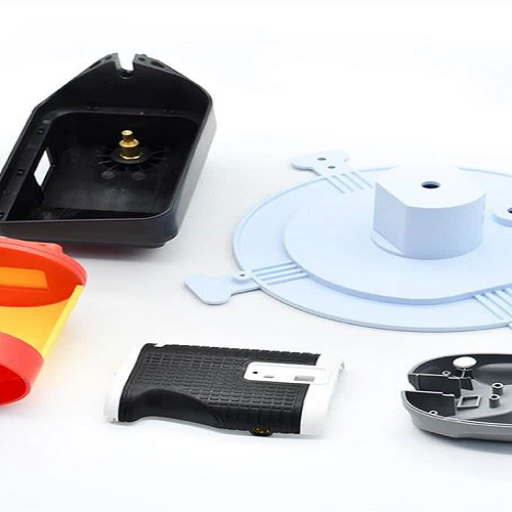
Both materials can be machined well, while their machining characteristics differ. Delrin offers very good machining qualities because of the low friction it has, high modulus of elasticity that allows it to hold tight tolerances very well, and in essence, is best suited for precision parts. ABS is also machinable but is softer and less rigid, and thus the results are less precise. Delrin should be selected when strength or dimensional stability is of concern. When moderately durable parts are adequate that need to be made in bulk at lower cost, ABS would be the right choice. Hence, the choice usually depends on design considerations.
Machinability of Delrin versus ABS
When assessing the machinability of Delrin and ABS, a number of factors come into consideration whilst their machining performance is under discussion. Delrin, being an acetal homopolymer, is known for its superb machinability, exhibiting marked stiffness, low coefficient of friction, and dimensional stability. With this property, Delrin can be accurately machined to produce detailed parts under CNC machining environments, with minimal tool wear, and can be finished with a smooth surface. It further allows for high speeds and feeds in cutting operations, adding to the productivity of machining.
There are some differences while assessing the performance of ABS machining. Its lower stiffness makes it soft, causing it to come into tolerances that are not as accurate as Delrin. Because of their properties, another drawback would be that ABS could easily melt or deform under high-speed cuts or heating generated during machining. One should cut at slower speeds and employ exceedingly sharp tools in order to avoid these problems. An advantage of ABS over other materials is its inexpensive cost and good impact resistance, making it better for non-critical parts or cost-sensitive projects.
Usually, machinability tests numerically assess the rate of material removal, tool wear, and surface roughness. For Delrin, depending on tooling, cutting speeds are in the range of 300 to 450 m/min, while feed rate ranges from 0.1 to 0.4 mm/rev. Surface roughness for Delrin normally lies in the Ra 0.8 – 1.2 µm range. For ABS, the cutting speeds are recommended to be set to 150 to 300 m/min with feed rates of 0.05 to 0.3 mm/rev. The common surface finishes from machining of ABS will be close to around Ra 1.5 – 2.5 µm.
In the end, it is a matter of which one will really suit the project, Delrin, or ABS. If very tight tolerances, durability, and precision are essential features, Delrin is the material of choice, while ABS will be a good choice when material cost and impact resistance outweigh these factors.
Friction and Heat Effects on Materials
From my point of view, the effects of friction and heat during machining must be considered critically for both materials Delrin and ABS. Being of the homopolymer acetal type, Delrin would set forth great wear resistance and low friction, which enables it to handle heat build-up much better without undue deformation. On the contrary, ABS is more prone to the effects of heat and excessive friction may result in melting and warping. I would suggest the use of a cool lubricant and adjusting feed and speeds in conformity with the thermal characteristics of a material to reduce such developments.
Which Material is the Best: ABS or Delrin?
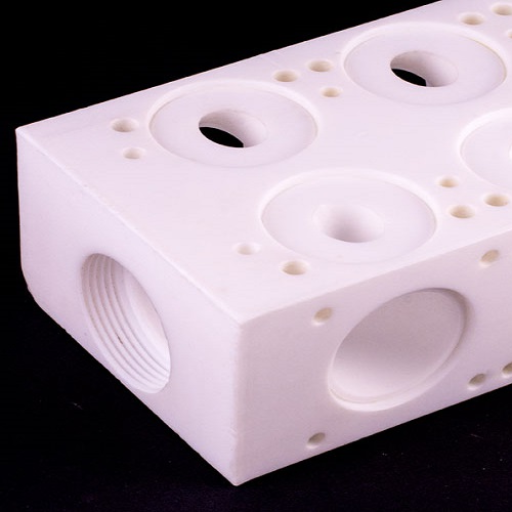
The choice between ABS and Delrin comes down to the application. Delrin is a better choice for any situation that involves high friction or requires something that maintains its durability and stability under heat. On the other hand, ABS is good for applications where impact resistance and ease of machining can be given priority over being the lightest material. If your application requires wear resistance and thermal stability, then the better option is Delrin. If it has to do with impact strength and versatility, then ABS is the better choice.
Considerations When Choosing Your Material
- Durability: This is where Delrin excels: wear resistance and thermal stability for high-friction and high-temperature applications.
- Impact Resistance: This is the strength of ABS, which is a more versatile material for impact strength in lightweight projects.
- Application Needs: Use Delrin for designs whose needs lean more toward durability; use ABS whenever strength can be compromised a little for ease of machining.
Cost Comparison of Delrin and ABS
Delrin is generally more expensive than ABS but offers greater durability and performance in specific applications.
| Parameter | Delrin | ABS |
|---|---|---|
| Cost | Higher | Lower |
| Durability | Excellent | Moderate |
| Machinability | Good | Excellent |
| Weight | Moderate | Lightweight |
| Temperature | High | Moderate |
| Friction | Low | Moderate |
| Impact | Moderate | High |
Long-Term Benefits of Delrin
Delrin grants various long-term benefits making it a material in demand in several industrial and engineering applications. It is very resilient; therefore, parts made of Delrin will have a longer life even in working to conditions for long periods. It has wear resistance and low friction; therefore, it is suitable for parts that are in movement so many times that it rarely needs replacement. Due to its high-temperature resistance, Delrin can retain its strength over time in severe operating conditions. Yet, it is still easy to machine; this makes it highly dependent in the manufacture of components that are accurate and reliable. More reliable components mean less maintenance and greater efficiency in operational services in the long run.
Reference sources
- A study of Fused Filament Fabrication process efficiency: ABS vs PLA materials
- Authors: K. Ninikas et al.
- Published: March 1, 2022
- Summary: This study investigates the shape accuracy of parts created using the Fused Filament Fabrication (FFF) process, comparing ABS and PLA materials. The authors conducted experiments varying infill percentages, shell numbers, and layer heights, analyzing the dimensional accuracy of the printed parts. The results indicated that PLA exhibited better dimensional accuracy than ABS.
- Methodology: The study employed the Taguchi methodology for experimental design, performing nine experiments and analyzing the results using descriptive statistical tools such as analysis of means (ANOM) and analysis of variance (ANOVA)(Ninikas et al., 2022).
- Addition of Modifying Agents vs Basic Functional Properties of Moldings Made of ABS
- Authors: M. Trzaskalska
- Published: April 11, 2024
- Summary: This paper explores the effects of adding modifying agents to ABS during the injection molding process. It examines how these modifications impact the functional properties of ABS moldings, such as mass, density, and gloss. The study found that higher blowing agent content and injection temperatures resulted in lower mass moldings, while the addition of colorbatch influenced the gloss of the samples.
- Methodology: The research involved creating ABS samples with and without colorbatch and blowing agents, testing them under various processing conditions to assess their functional properties(Trzaskalska, 2024).
- Post-processing of ABS Replicas with Vapour Smoothing for Investment Casting Applications
- Authors: J. Chohan et al.
- Published: February 19, 2020
- Summary: This study focuses on the post-processing techniques for ABS replicas used in investment casting. It discusses the effectiveness of vapor smoothing in enhancing the surface finish of ABS parts, which is crucial for achieving high-quality castings.
- Methodology: The authors conducted experiments to evaluate the impact of vapor smoothing on the surface quality of ABS replicas, analyzing the results to determine optimal processing conditions(Chohan et al., 2020, pp. 97–102).
- Top Aluminum CNC Machining Parts Manufacturer and Supplier in China
Frequently Asked Questions (FAQs)
Q: What are the main differences between ABS and Delrin?
A: ABS and Delrin are two plastics having contrasting properties. ABS offers a good impact resistance and toughness, while Delrin-a trade name for acetal-has high rigidity and high mechanical properties. These differences render them suitable for divergent applications.
Q: How are ABS and Delrin as far as machinability goes?
A: Delrin is easier to machine with respect to ABS due to its excellent mechanical properties. Machinists favor Delrin when precision machining is required because it is a very machinable plastic.
Q: What are some uses of Delrin?
A: Delrin finds application where high rigidity and good mechanical properties are required. It is uniquely positioned for tight tolerance components such as gears and bearings.
Q: Can ABS and Delrin tolerate high-temperature conditions?
A: ABS stands moderately high temperature; it may, however, not do well under continuous exposure. Delrin can hold up against higher-temperature and is preferred in heat conditions.
Q: Unique Advantages that Delrin offers over ABS?
A: Delrin is extremely rigid, with low friction and high wear resistance-perfect for mechanical parts. These unusual features of Delrin make it a material of preference in applications that require both high precision and durability.
Q: Can they stand corrosive environments?
A: ABS has moderate resistance to corrosive substances, while Delrin is more resistant to a wide range of chemicals. This makes Delrin more suitable for corrosive environment applications.
Q: How are ABS and Delrin priced?
A: Normally ABS is cheaper than Delrin. However, selection between these two materials should not be based on price alone, but on their specific properties and the requirements of the application.
Q: What should be considered when deciding between ABS and Delrin?
A: The decision between ABS and Delrin should be based upon mechanical requirements, environmental conditions, and the specific properties needed for one’s application. Delrin’s rigidity and machinability may be best suited to precision work, while ABS’s toughness would be very useful in a broader range of applications.
Q: Injection molding capabilities of ABS and Delrin?
A: Both ABS and Delrin can be injection molded. ABS is easier to mold and can be molded into more complex shapes, while Delrin provides a better surface finish and better dimensional stability for high-precision parts.


