


Choosing the correct stainless steel for your project usually boils down to two popular choices—304 and 430 stainless steel. Both types are widely used, appreciated for their distinct characteristics, and whichever works best for you will depend on what aspects you want to focus on: durability, corrosion resistance, or economics. This article explores the elements that set 304 and 430 stainless steels apart and what advantages each possesses and finds application in. Whether working with these materials in manufacture or construction or just wanting to know something about them, this article will clarify your choice on which alloy suits you best in providing for your needs.
Differences Between 304 and 430 Stainless Steel
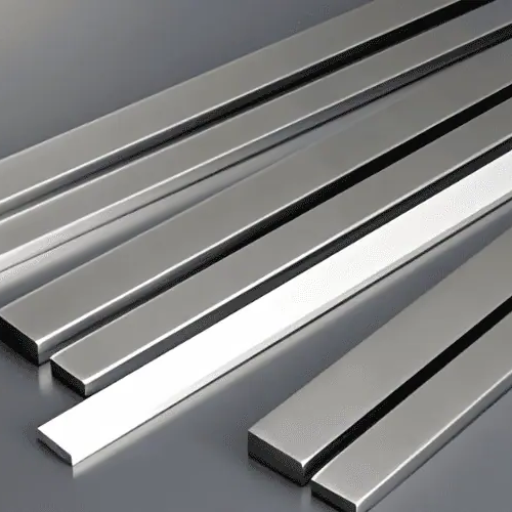
The main differences between the stainless steels include composition, corrosion resistance, and applications. 304 Stainless steel is an alloy of austenitic structure having a high content of chromium and nickel, thus exhibiting higher corrosion resistance and oxidation resistance. Being an austenitic steel, it is also non-magnetic and formable, thus making it suitable for applications such as kitchenware, laboratory equipment, and chemical containers. 430 Stainless steel is a ferritic steel containing less chromium and virtually no nickel. Its corrosion resistance is fair but less suited to corrosion in aggressive environments than Type 304. Being magnetic, it is less expensive and finds use in decorative applications, automotive trim, and household appliances where costs are paramount.
Chemical Composition of 304 and 430
An analysis of their chemical composition is crucial to explain the differences between 304 and 430 stainless steel. Type 304 stainless steel normally contains nearly 18-20% chromium and 8-10.5% nickel, placing it high among other stainless steels in corrosion resistance and formability. Nickel improves the corrosion resistance of stainless steel in harsh environmental conditions and also makes it non-magnetic.
In contrast, type 430 has about 16-18% chromium and very little nickel, thereby explaining its comparatively low cost and corrosion resistance to type 304. The absence of nickel makes 430 a magnetic alloy, too. Thus, the variations in chemical composition account mainly for the differences in performance, price, and applications between the two stainless steel grades. Knowing these factors allows for making better-informed decisions in material selection for specific uses.
How Does Nickel Affect Performance?
Nickel is mainly responsible for enhancing corrosion resistance and improving toughness and metallurgical stability in stainless steel. For instance, the presence of 8-10.5% nickel in 304 stainless steel gives the material an unrivaled resistance to oxidation, rendering it suitable for applications concerning exposure to acids, high humidity, or chlorides, such as kitchenware, medical equipment, and architectural applications.
Conversely, lower-nickel or nickel-free grades such as 430 stainless steel do not possess the increased corrosion resistance given by nickel and thus will rust quicker when ever exposed to moisture or aggressive chemicals; this narrows down their applications to dry or less-demanding environments. Conversely, the absence of nickel reduces costs, favoring these alloys in less rigorous applications such as decorative trim and household appliances, where some cost limitations must be observed.
Materials data suggest that the more the content of nickel, the higher the average value of pitting resistance (measured in Pitting Resistance Equivalent Number, PREN). About 8% nickel can therefore doubles or triples the life time of 304 in chloride-based environment as compared to nickel-free alternatives. Second to that nickel fosters ductility and weldability, making high-nickel grades easier and less expensive to manufacture.
Knowing these distinctions certainly assists in making proper stainless steel selection balancing performance, prices, and environmental conditions for longevity.
Chromium Composition and Corrosion Resistance
Chromium is the most important element imparting corrosion resistance to stainless steel. When present at levels exceeding 10.5%, chromium reacts with oxygen in the environment to form a very thin non-reactive layer of chromium oxide, which offers protection to the underlying material from further oxidation and corrosion. If damage occurs to the surface, the chromium present in the steel will allow the passive film to heal itself, provided oxygen is also present.
Higher levels of chromium impart higher levels of resistance to several corrosive media. For example, grades of stainless steels with 18-20% chromium, such as 304 and 316, have excellent resistance to rusting and staining under most atmospheric conditions. With regard to chemical applications, research shows an increase in chromium content above 20% further improves performance in highly oxidizing media formerly faced in chemical processing or marine environment.
Chromium in synergy with other alloying elements such as molybdenum and nitrogen enhances the effect of chromium. For example, it has been shown that stainless steel grades containing both chromium and molybdenum, such as 316L (16-18% chromium, 2-3% molybdenum), possess the best resistance to pitting in chloride-containing environments, as supported by the high Pitting Resistance Equivalent Number (PREN).
Understanding chromium content with reference to specified applications presents important aspects of materials selection. For critical applications, grades with chromium contents of over 22%, e.g., the super duplex stainless steels, can achieve an extraordinary life in harsh industrial or marine environments. It is in these applications, in particular, that the chrome will assist in mitigating aggressive corrosion mechanisms for long-term reliability.
Is 304 Stainless Steel Better Than 430 for Cookware?
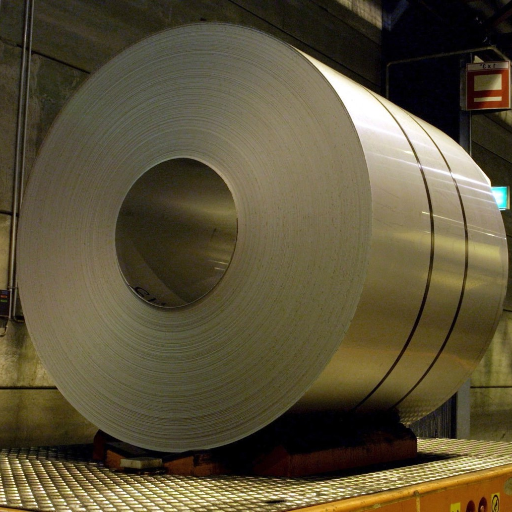
Generally, in the field of cookware, the grade 304 stainless steel is considered much better than the grade 430 stainless steel. More nickel content in 304 stainless steel means more strength against rusting and corrosion, which gives it a life-long character. Heat resistance is also of higher degrees in this grade, very useful for cookery utensils exposed to high temperature. Even though 430 has a cheaper price and offers also fair corrosion resistance, it is less durable and more prone to discoloration as time goes. If a truly good and reliable cookware is desired, one will go for 304 stainless steel.
Examining the Mechanical Properties of 304 and 430 Stainless Steel
Regarding mechanical properties, the 304 stainless steel does possess superiority over the 430 stainless steel in certain respects. The greater tensile strength and elongation capacity of the 304 stainless steel give it more versatility in applications requiring durability and flexibility. It also has a higher yield strength so that it can bear greater stress before deformation can take place. But the 430 stainless steel being a ferritic grade is a tad more brittle and less ductile as compared to the austenitic structure of the 304 stainless steel. Such difference has made the 304 stainless steel favored for demanding applications where structural integrity and resilience are very important. But the 430 stainless steel may serve well in areas where less mechanical strength is required, while there is no denying that the 304 will serve better where performance under strain is more rigorous.
Why Is 304 Stainless Steel Preferred for Cookware?
The reason for first naming 304 stainless steel as the ideal cookware material is that it possesses an unusual combination of durability, corrosion resistance, and inertness. Chromium (18%) and nickel (8%) confer on it most of the unique traits: superior resistance to rust and oxidation and this even in a high-humidity or acidic environment-building conditions found in the kitchen. This composition is also practiced to prevent leaching of any harmful substances that would have adverse effects in cooking or in contact with food.
Moreover, 304 stainless steel can withstand high baking temperatures for cookware such as pots, pans, and utensils without going through warping or degradation process, thereby ensuring longer life and conformation. The nonporous surface will not absorb tastes or odors, so the food’s purity is retained even after repeated use. With respect to polishing, the strength of this alloy also allows the cookware to have a scratch-resistant finish able to maintain initial appearance as time goes by.
Where this material is concerned from a practical perspective, the cookware is easy to clean and maintain. It is dishwasher safe and can be mildly scrubbed without worrying about any undue damage. Actually, according to data gathered through industry research, 304 stainless steel cookware may very well last for decades if maintained properly, making it worthy of investment in spite of its higher initial cost when compared to 430 stainless steel or non-stick options.
For the working-and home-use chef alike, 304 stainless steel has found preference as a cookware material for having the balance of performance, safety, and aesthetic qualities. Its resilience in demanding kitchen conditions speaks volumes about how versatile it is.
Evaluating Corrosion Resistance in Cookware
Corrosion resistance is one determinant for the durability and performance of cookware. 304 stainless steel has gained acclaim because of its very high resistance to rusting and staining. The reason 304 stainless steel owes to its rarity is that it contains about 18-20% chromium and 8-10.5% nickel. Chromium Charms the surface with a passive oxide layer while nickel adds to the metal’s resistance against acids or bases.
The 304 stainless steel promises to perform well in everyday kitchen conditions by resisting pitting and corrosion when faced with humidity, salts, and different food ingredients. On the contrary, 430 stainless steel, as it contains less in quantity or nearly no nickel, is comparatively more susceptible to the corrosive attacks suffered often in coastal climates, particularly those humid ones. So far, 304 stainless steel is considered better for settings that need lasting reliability.
Such corrosion resistance also contributes to the ease of maintenance of 304 stainless steel. With simple cleaning techniques such as washing the cooking ware using warm water and some mild soap, avoiding abrasive cleaners and harsh chemicals, this external protective layer will remain intact. In addition, professional testing has proven that with proper maintenance, 304 stainless steel cookware remains very clean and polished up to 20 years or more, thus massively outliving carbon steel or non-stick coated cookware.
If any cookware owner is looking for a beautiful cookware set that can lift the beauty of any kitchen and would perform great at functionality, then the corrosion resistance offered by the 304 stainless steel will assure that it performs for a sustained period alongside diminishing demand for replacements, hence, giving it a more economical warranty in the long run.
How Does Magnetic Property Impact the Use of Stainless Steel?
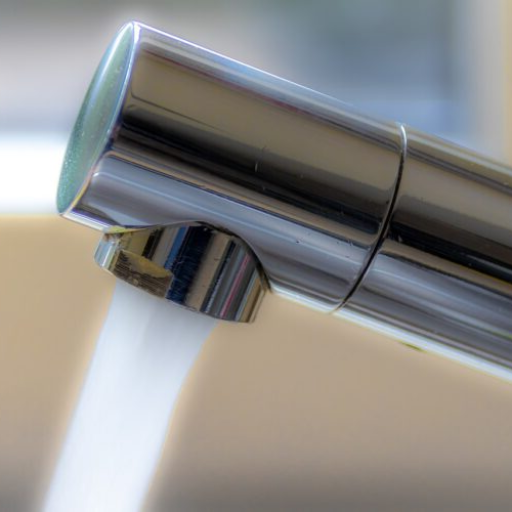
The magnetic property of stainless steel affects its compatibility with induction cooktops. For stainless steel to work on an induction cooktop, it must be magnetic; in other words, it must contain a particular composition of iron. Grades like 430 stainless steel are useful for this purpose due to their ferromagnetic properties, whereas grades like 304 stainless steel, which is mostly non-magnetic, may not work unless paired with a magnetic base. This property is important to consider when choosing the cookware for induction cooking.
Why Is 430 Stainless Steel Magnetic?
430 stainless steel is magnetic because it is a ferritic stainless steel with a body-centered cubic (BCC) crystal structure. This structure permits the magnetic moments of iron atoms to align, thus enabling magnetism. The major element responsible for this characteristic is iron, which remains magnetic at room temperature. About 16-18% chromium and very little nickel, approximately zero, are present in 430 stainless steel, making it different from austenitics such as 304.
The presence of an insignificant amount of nickel in 430 stainless steel helps preserve the ferritic microstructure. Unlike 304 stainless steel, which has nickel that stabilizes the face-centered cubic (FCC) structure, 430 ferritic structure remains magnetic under normal conditions. Hence, one of its biggest applications has been those requiring magnetic characteristics, such as induction cookware and appliances.
Interpreting data, the magnetization of 430 stainless steel is quite high, with relative magnetic permeability exceeding 400. This sets it for excellent application in situations where magnetic interactions play a central role. Chromium renders it corrosion resistant, but due to general lower corrosion resistance as compared to austenitic grades, 430 stainless steel finds use in situations where exposure to adverse environments is minimal.
Comparing Austenitic and Ferritic Properties
Austenitic and ferritic stainless steel differ in composition, corrosion resistance, magnetism, ductility, strength, and temperature tolerance.
| Property | Austenitic | Ferritic |
|---|---|---|
| Composition | High Ni | Low Ni |
| Corrosion | High | Moderate |
| Magnetism | Non-magnetic | Magnetic |
| Ductility | High | Low |
| Strength | Moderate | High |
| Temp Tolerance | High | Moderate |
What Are the Fabrication and Weld Characteristics of 304 vs 430 Stainless Steel?
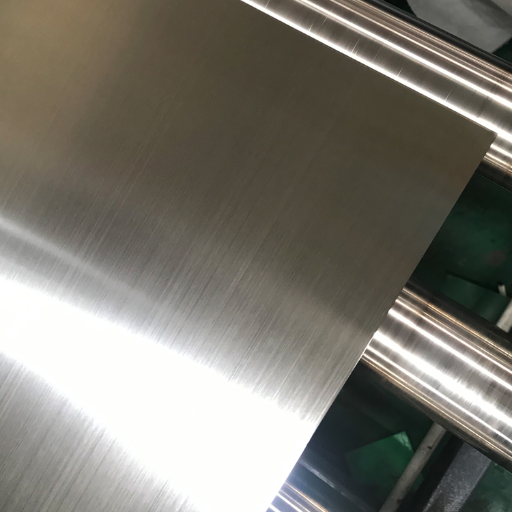
304 is an extremely versatile stainless steel and possesses excellent ductility, which also means that it exhibits easy fabrication. Being less susceptible to cracking when stressed, it is suitable for forming and shaping operations. Further, 304 stainless steel is easily weldable by most welding techniques without any necessity for pre-weld or post-weld heat treatment.
The other type of stainless steel, 430, being less ductile, is harder to form and fabricate. While it can be welded, it demands more care in technique and might encounter problems such as cracking or distortion. It may require post-weld treatment to restore corrosion resistance.
While 430 stainless steel can certainly be fabricated and welded, the 304 tends to be the preferred type of stainless steel when fabrication and weldability are of equal issues.
How Does Carbon Content Affect Welding?
Carbon content in steel greatly affects its welding property and overall performance. The high carbon on steel increases its hardness and strength but conversely reduces ductility and weldability. In the welding process, heating near the point of weld may induce carbon migration causing formation of brittle phases upon cooling in the heat-affected zone (HAZ), thereby increasing cracking incidences of the weld with a simultaneous decrease in toughness.
For example, low-carbon steel, or mild steel (carbon below 0.3%), welds very well with very low chances of cracking and HAZ problems. Medium-carbon steel (0.3 to 0.6% carbon) needs preheat and postweld heat treatment to control the cooling rate and avoid structural inconsistencies. High carbon steels, with a carbon content above 0.6%, become a greater challenge to weld and require precise control on welding parameters and postweld maintenance of the weld itself.
According to most experts, steels are considered easy to weld if the carbon equivalents (calculated by formulas such as CE = C + Mn/6 + (Cr + Mo + V)/5 + (Ni + Cu)/15) are below 0.4. In contrast, when carbon equivalent exceeds 0.4, extra precautions are needed, including pre-heating, controlled welding speed, and post-weld heat treatment to prevent welding defects such as hydrogen-induced cracking or distortion.
It is comparatively easier to weld low carbon materials, such as 304 stainless steels, than to weld the higher carbon variants in proper maintenance of structural integrity and corrosion resistance. Understanding the carbon content implication is critical in determining the choice of materials and techniques necessary for the best weld.
Effects of Mechanical Properties on Fabrication
The mechanical properties of a material, such as tensile strength, ductility, hardness, and toughness, greatly influence the laws under which it behaves during fabrication; therefore, it is extremely vital to understand these properties if one shall decide correctly on the processes to be employed and be sure of the structural stability of the product.
Besides its tensile strength varying according to the nature of applied stress, if it is tensile strength that is applied, the tensile strength is the maximum stress that a material can endure when it is trying to stretch or being pulled before it breaks up. For example, high-carbon steel has a high tensile strength, so it can be used in applications requiring high durability, but it has less ductility than low-carbon steel. Ductility is a measure of how much plastic deformation a material can sustain before fracture and is directly related to the ease with which a material can be formed or bent into the desired shape. For example, aluminum alloys are highly ductile and highly employed for applications requiring complex shapes and light-weight structures.
Another property of a material is hardness; this affects its resistance to wear and abrasion while the material is being fabricated and during service conditions. Much data confirm that materials with higher hardness, such as quenched and tempered steels, require more efficient cutting equipment and cutting methods to ensure efficient processing. Then comes toughness, “indicates the ability of the material to absorb energy before failure,” that is critical for applications subject to dynamic loads or impacts. An example of ASTM A572 Grade 50 steels illustrates a balanced mix of strength and toughness, making it a choice for construction and bridge building.
Improper management of mechanical properties may pose serious fabrication problems, such as cracking, distortions, or premature failure of materials, as outlined by data from recent literature. Oftentimes, heat treatment processes are arranged to allow modification of unwanted attributes to tackle fabrication problems or meet fabrication requirements. By utilizing an in-depth comprehension of mechanical properties, allied with advancements in fabrication technology, industries can lead to more efficiency, cost reduction, and improved product performance.
Difficulties in Welding 430 Stainless Steel
The main structure of 430 stainless steel presents serious problems for welding in general, from my personal experience. Grain growth in the heat-affected zone, and embrittlement of the weld properties, are considered to be the main anomaly clan. In addition, the lower chromium content as compared to higher-grade stainless steels can lead to reduced resistance to corrosion in a narrow zone close to the weld area. I use low heat input, preheating when necessary, and post-weld cooling to manage these problems.
Why Select 304 and 430 Stainless Steel For Different Applications?
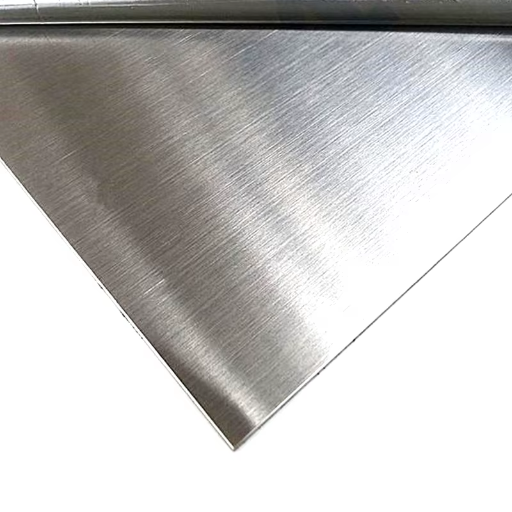
- 304 Stainless Steel: Often called an all-around stainless steel, it enjoys an excellent resistance to corrosion. Exposure to moisture or chemicals occurs in quite a few applications, such as kitchen equipment, food processing, and the medical field. The high durability of 304 also makes it apt for structural uses.
- 430 Stainless Steel: Its corrosion resistance is somewhat lower than 304’s and is often selected for use indoors where exposure to harsh environments is limited. Being cheaper and heat-resistant, it assures the better choice for decorative pieces, appliances, and automotive trims.
When Is Type 304 Stainless Steel Used?
Type 304 stainless steel should be used when resistance to corrosion is paramount and there is a presence of moisture, chemicals, or exposure to high temperatures in the environment. It is suitable for use with kitchen equipment, food processing instruments, medical appliances, and outdoor applications where resistance to rust and durability are essential.
Applications Best Suited for Grade 430 Stainless Steel
The 430-grade stainless steel is mainly chosen for use in applications demanding moderate corrosion resistance and good formability. Typically it has been used in indoor environments for decorative trim, appliances, and kitchen utensils where exposure to moisture and harsh chemicals is limited. It is also a bargain when it comes to less-critical applications compared to higher grades of stainless steel.
Importance of Stainless Steel Grades in Industry
Grades of stainless steel dictate the proper application of materials within different industries. Over 150 grades of stainless steel classified into five separate families of austenitic, ferritic, martensitic, duplex, and precipitation-hardening stainless steels respond to specific demands for strength, corrosion resistance, and durability. Thus, the proper selection ensures being the choice for the industry option.
For instance, austenitic stainless steels, such as Grades 304 and 316, are wanted for high corrosion resistance and versatility to use in food processing, marine environments, and medical devices. Especially, Grade 316, with higher molybdenum content, prevents chloride attacks and adverse conditions greater than 0.01 mm/year corrosion rate on average in marine environment. On the other hand, ferritic grades such as 430 offer cheaper alternatives for indoor applications that are low demanding, including kitchen appliances and automotive trim.
Statistics of the global stainless steel production underscore that in 2022 around 58.3 million metric tons were produced, mostly consisting of the austenitic type, a reflection of their mass-scale industrial applications. This, therefore, in turn, draws attention to the importance of knowing the specific material. Choosing the wrong grade results in premature failure, increased cost of maintenance, or do not comply. That being the case, industry professionals continue to work with material science advances and standards to pick materials for optimization within specification requirements of quality and safety.
Reference sources
- “On the Intergranular Corrosion Susceptibility of 304 Stainless Steel with Ultrafine Grains and Comparison with Micrometer Austenitic Grains Counterpart” (2023) (Zhao et al., 2023)
- Key Findings:
- Ultrafine grains (~430 nm) of 304 stainless steel exhibited weaker intergranular corrosion (IGC) attacks than micrometer grains (~3.1–9.8 μm).
- The degree of sensitization (DOS) decreased from 26.61% to 1.52% with the grain ultra-refinement from micrometer to ultrafine.
- Methodology:
- Transmission electron microscopy (TEM) was used to analyze the microstructure of the samples after sensitized treatment.
- Immersion corrosion tests in H2SO4-CuSO4 solution and double-loop electrochemical potentiokinetic reactivation (DL-EPR) tests were conducted to evaluate the IGC susceptibility.
- Key Findings:
- “Comparison of Quasi-Static Constitutive Equations and Modeling of Flow Curves for Austenitic 304 and Ferritic 430 Stainless Steels” (2017) (Şener & Yurci, 2017, pp. 605–607)
- Key Findings:
- Four different quasi-static flow curve models were investigated to describe the flow curves of austenitic (304) and ferritic (430) stainless steel sheets.
- The predictions made by the El-Magd model were in good agreement with the experimental data for both 304 and 430 stainless steel sheets.
- Methodology:
- Uni-axial tensile tests were carried out, and material constants of the models were determined by curve fitting technique.
- The applicability of the models over the uniform plastic deformation region was evaluated according to the value of nonlinear regression parameter R.
- Key Findings:
- “Effect of Nickel on the Adhesion and Corrosion Ability of Pseudomonas aeruginosa on Stainless Steel” (2019) (Thuy et al., 2019, pp. 5797–5805)
- Key Findings:
- The study did not directly compare 304 and 430 stainless steel, but it investigated the effect of nickel on the adhesion and corrosion ability of Pseudomonas aeruginosa on stainless steel.
- Methodology:
- Experiments were conducted to evaluate the adhesion and corrosion ability of Pseudomonas aeruginosa on stainless steel with different nickel contents.
- Key Findings:
- Top custom stainless steel parts Manufacturer and Supplier in China
Frequently Asked Questions (FAQs)
Q: What are the fundamental differences between 430 and 304 stainless steel?
A: The main differences existing between 430 and 304 stainless steel are their composition and properties. 430 stainless steel is ferritic, meaning it contains more chromium but less nickel than 304 stainless steel. 304 stainless steel, being an austenitic type, has a higher nickel content that confers it better corrosion resistance and formability.
Q: Does 430 stainless steel resist rust better than 304 stainless steel?
A: Both 430 and 304 stainless steels resist corrosion, but with the higher nickel content, the 304 resists rust better. The 430 stainless steel resists well in less corrosive environments but may have a harder time holding up in corrosive situations than 304 stainless steel.
Q: Which stainless steel is preferred for making kitchen appliances, 430 or 304?
A: Generally, 304 stainless steel is most suitable for making kitchen appliances because of good corrosion resistance and good appearance. Because it resists various environments, it is widely used for cookware, sinks, and kitchen equipment.
Q:What is the comparison of the price of stainless steel 430 as against 304?
A: From the usual market point of view, 430 stainless steel is less expensive than 304 stainless steel. Costly nickel is not present in 430 stainless steel, whereas 304 stainless steel contains a greater nickel content that significantly attributes to its price. The decision must therefore be based on its appropriate application, not simply cost.
Q:Can 430 stainless steel be more suitable in a setting with increased temperature as compared to 304 stainless steel?
A: Due to its austenitic constitution and high nickel content, which gives greater thermal stability, 304 stainless steel is better able to withstand the effects of increased temperature. Due to its ferritic nature, 430 stainless steel has lower thermal resistivity and may not present itself well at high temperatures.
Q: What aesthetic distinctions set apart 430 stainless steel from 304 stainless steel?
A: Both 430 and 304 stainless steel can be polished to a shiny finish, but 304 stainless steel offers more aesthetic value due to its ability to retain smoothness and shininess for extended periods. 430 stainless steel is prone to showing wear and corrosion marks, damaging its appearance.
Q: Are there any areas in which 430 stainless steel would be preferred over 304?
A: It is more often chosen for applications where cost is of utmost importance, and the environment is only mildly corrosive, such as for automotive trim, dishwashers, and range hoods. Its ferritic properties make it suitable for situations requiring magnetic properties.
Q: How do the mechanical properties of 430 stainless steel compare to those of 304 stainless steel?
A: Due to its austenitic structure, 304 stainless steel has better mechanical properties overall with more ductility and toughness. Therefore, it works well with cold working processes. 430 has less ductility and is more inclined to crack under stress.
Q: What are the consequences of using different grades of stainless steel in a given construction?
A: The choice of stainless steel grades such as 430 and 304 in construction depends on things like corrosion resistance, strength, and cost. 304 stainless steel is selected for superior corrosion resistance and mechanical properties that suit it for exterior application purposes. 430 stainless steel may be selected for interior components where exposure to harsh conditions is limited.
Q: Where does stainless steel 430 and stainless steel 304 fit into the widely known grades of stainless steel?
A: 430 and 304 are common stainless steel grades that descend from different families. 304 belongs to the austenitic family of stainless steels, noted for excellent resistance to corrosion and formability. 430 is a ferritic stainless steel grade, popular for good corrosion resistance and cheaper cost but with limitations in a high-temperature and high-corrosion environment.


