


Precision, efficiency, and innovation being the backbone of the automotive industry, CNC machines come close to embodying all of these qualities. These futuristic machines have altered the landscape of automotive parts designing and manufacturing, ensuring the highest precision and the least time for production. This blog post will touch upon how CNC machining has emerged as a vital part of the automotive industry, considering its varied applications ranging from the fabrication of intricate engine parts to transformation of strong body panels. Manufacturing professionals, car lovers, or just the curious about technology would all discover interesting facts about how CNC machines have revolutionized automotive engineering for the future in this article.
Introduction to CNC Machining in the Automotive Industry

CNC machining is an advanced manufacturing technique that uses tools positioned and directed by automatic computer commands, so there can be greater precision, efficiency, and consistency. By converting digital drawings into real-world objects, CNC machining has become an indispensable tool in the automotive industry. This machining technology takes into account the complex and high-performance nature of automotive parts to ensure that these parts meet quality and reliability standards while satisfying the stringent demands of modern-day engineering.
Overview of CNC Machines
CNC machines are automated mechanical tools that cut materials including metals, plastics, wood, and composites with a high level of precision and efficiency. These machines execute movements and actions of the tool according to the software program written beforehand, thereby interpreting the digital design. Consequently, recent reports in the industry inform that the global CNC machine market was valued at around USD 76 billion in 2023 and is forecasted to continue growing with a CAGR of 5.5% during 2023-2030. Such growth will be fueled by technological advancements, the rise of automation in production processes, and increasing demand for manufacturing of superior quality.
Depending on the machine type and design, CNC machines can perform various functions such as cutting, milling, drilling, turning, and grinding. They are often classified into CNC milling machines, CNC lathes, CNC routers, and 5-axis CNC machines, each fulfilling different manufacturing requirements. Further integration of IoT (Internet of Things) connectivity and AI (Artificial Intelligence) features have enhanced their capabilities in real-time monitoring, predictive maintenance, and performance optimization.
Industries like aerospace, automotive, electronics, and healthcare have come to depend heavily on CNC machining for the capacity to always produce complex parts with utmost tolerance. In aerospace, CNC fabricates turbine blades and engine components that are intricate, whereas in healthcare, it makes prosthetics and surgical instruments. This versatility cuts across sectors, making CNC machines the backbone of modern industries that demand invention and precision.
Importance of CNC Machining in Automotive Manufacturing
CNC machining is crucial in automotive manufacturing due to its precision, efficiency, cost-effectiveness, ability to work with complex designs, and production speed.
| Key Point | Parameter |
|---|---|
| Precision | High accuracy |
| Efficiency | Reduces waste |
| Cost-Effect | Saves expenses |
| Complexity | Handles designs |
| Speed | Fast production |
Trends in the Automotive Sector
The automotive industry is fast-evolving because of technological advancement, sustainability-based issues, and consumer wants. The bigger trend facing the industry is electric mobility. Industry data show that sales of electric vehicles are expected to reach 14 million units worldwide by the end of 2023, 35% up on 2022. This move is thus associated with the increasingly stringent emissions regulations and green energy initiatives on an international scale.
Another transformation causing this is the so-called autonomous vehicles. Research from McKinsey & Company estimates the global AV market could hit $300 billion by 2030 as advancements in AI and machine learning further the edge of fully self-driving cars. Smart manufacturing methods, including CNC machining, correlated with these developments, guarantee the very fine manufacture of critical components.
Last, sustainability enters the industry as its important element. The companies seek lightweight materials that include aluminum and carbon fiber to enhance fuel efficiency, along with recycling. These trends show the shift towards clean, smart, and efficient automobiling solutions.
Types of CNC Machines Used in Automotive Manufacturing

- CNC Milling Machines – Used for making accurate parts, such as engine parts, by machining and shaping materials.
- CNC Lathes – Good for making cylindrical parts such as shafts and bushings by rotational cutting.
- CNC Drilling Machines – Drilling holes in various automobile parts with accuracy and efficiency.
- CNC Grinding Machines- Used to provide surface finish to parts such as gears and bearings.
- CNC Plasma Cutters – For cutting sheet metals into required shapes precisely and quickly.
Vertical Machining Centers
Vertical Machining Centers (VMCs) represent the CNC machine setup where the spindle axis is vertical, thus imparting a lot of versatility to a wide range of applications. They are extensively used in automotive, aerospace, and manufacturing fields because they are precision cutting, drilling, and milling machines. Market data suggests that the global market for vertical machining centers is forecasted to register a CAGR of 5.2% between 2023 and 2030, with market growth attributed to rising demand for high-efficiency manufacturing systems.
Today’s VMCs are fitted with cutting-edge tech such as high-speed spindles, multi-axis capabilities, and automated tool changes, all aimed at ramping up productivity and precision. For instance, these machines can now reach spindle speeds of up to 20,000 RPM, which allows for faster machining of complicated components. Also, newer CNC software coupled with Industry 4.0-enabled integration provides capabilities like real-time monitoring, predictive maintenance, and outstanding accuracy, where the tolerance can be in the vicinity of ±0.001 inches. Owing to these advances, vertical machining centres will continue to be the cornerstone of manufacturers worldwide trying to retain their competitive edge in this fast-paced environment.
Horizontal Machining Centers
Horizontal machining centers are critical in precision machining, providing the highest level of efficiency and flexibility for particular machining operations. Unlike vertical machining centers, HMCs have a horizontal spindle orientation and offer better accessibility to different sides of a workpiece, which makes them best suited to high-volume production and applications requiring complex and multi-sided machining.
According to recent data, the global market for horizontal machining centers is projected to grow steadily, offering a Compound Annual Growth Rate of around 5.2% from 2023 to 2030. With automation and smart technologies gaining prominence, their growth is fostered. Modern HMCs enjoy the benefits of automatic pallet changers and tool changers, cut downtime, and feed throughput. Other integrations involve IoT-driven systems for real-time monitoring and predictive analytics, helping manufacturers with higher efficiency in operations.
Performance-wise, HMCs are recognized throughout the industry for their rigidity and stability, hence supporting higher cutting speeds while working against vibration during operations. Many high-end HMCs can currently boast spindle speeds from 8,000 to 20,000 RPM and tool magazine capacities greater than 120 tools. Therefore, HMCs are perfect for aerospace, automotive, and medical equipment manufacturing, where precision and efficiency are essential.
About CNC Lathes and Their Applications
CNC lathes are versatile machining centers used worldwide in industries for precision machining of parts. Due to technological advancement, modern CNC lathes provide operations with extreme accuracy and efficiency. These machineries are used in manufacturing cylindrical parts, such as shafts, bushings, and other types of rotational elements, with the least need for human intervention.
According to recent data, the global CNC lathe machine market is valued to reach $33.17 billion by 2030, growing with a compound annual growth rate (CAGR) of 6.0% from 2023 to 2030. This growth is triggered by the increasing demand in industries such as aerospace, automotive, and electronic manufacturing. The current trend is spotted with multi-axis CNC lathes that can machine simultaneously and cut down on production time. Advanced techniques enable 5 to 7 axes in multi-axis lathes, producing complex geometries in a single setup. Technological developments in control systems provide real-time monitoring and automation, which increases accuracy and lessen the wastage of material.
Manufacturers carry out threading, contour turning, boring, and others with CNC lathes, which are capable of tolerances in the order of ±0.001 inches. These are some of the production requirements for medical devices, oil and gas, and defense-related components. IoT integration in CNC lathes also supports the evolution of smarter and more interconnected production processes that promise higher productivity and better organization of resources.
Applications of CNC Machining in the Automotive Sector

CNC machining plays a crucial role in the automotive sector by assuring high-precision production of components, including those of engines, power transmission, and braking systems. While accuracy demands consistency and reliability in mass production, versatility calls for the creation of modification in standard parts. CNC machining facilitates rapid prototyping that fast-routes the invention of innovative automotive technologies.
Manufacturing Precision Parts
Precision parts manufacturing has been entirely changed with the high levels of accuracy and efficiency available through CNC machining. From industry reports, it is projected that the global CNC machining market will hit a value of $132.93 billion by the year 2030, growing at a CAGR of 5.4% from the year 2022 to 2030, propelled by increasing demand for unparalleled components from aerospace, automotive, and healthcare industries.
Advanced CNC machines, such as 5-axis CNC machining and machine tool adjustment, produce highly intricate and detailed parts within a tolerance of as tight as ±0.005 mm. For instance, in the automotive sector, CNC machining parts guarantee fuel efficiency and better performance of the automobile through CNC machining of lighter, yet harder parts. On the other hand, aerospace uses CNC technology to a high extent for making turbine blades and other structural components that demand an extreme level of precision.
With Industry 4.0 on the rise, CNC machining has integrated smart manufacturing protocols for monitoring and predictive maintenance on a real-time basis. Integration of AI and IoT has resulted in more productivities, reduced downtimes, and cost savings; thus, CNC machining becomes the backbone of modern manufacturing.
CNC Cutting Methods Used for Making Automotive Components
CNC cutting methods are necessary for automotive industries where precision and efficiency are crucial. Advanced methods of laser cutting, plasma cutting, and waterjet cutting are widely employed in high-tech industries for making complex automotive components. Laser cutting, for example, can cut metal sheets used for car bodies and frame structures with extreme precision within a tolerance of ±0.001 inches. In 2023, industry analysts forecast that the global CNC laser cutting market in the automotive industry would record a CAGR of 6.5% between 2022 and 2030, confirming a greater acceptance.
The CNC waterjet cutters cut carbon fiber and composites, which are furthermore materials used for building high performance vehicles. This method has the advantage of introducing no heat-affected zones, thus preserving the initial properties of the materials. Plasma cut, capable of slicing metal sheets up to 150mm in thickness, is yet another CNC technique associated with the making of components for heavy-duty trucks.
An integration of the most advanced CNC software has further aided in optimizing such operations through automated tool path generation and error reduction. IoT-enabled cutting systems provide real-time data that allow manufacturers to track critical production metrics such as cycle time, quality, and material usage. The injection of such updates into CNC cutting techniques is proof of how it continues to evolve, thus satisfying the most stringent requirements posed by automotive-making processes while increasing speed, precision, and costs.
Prototyping and Custom Parts Fabrication
CNC cutting is an integral part of prototyping and production of custom parts, ensuring superior precision and repeatability. It is projected by recent data that the global prototyping market will proceed with a CAGR of around 23.5% between 2023 and 2030-a trend much driven by the advancement of CNC technologies. CNC systems allow manufacturers to develop accurate prototypes from various materials such as metal, plastic, and composites with shortened turnaround times.
CNC machining for custom parts production allows for new, tailor-made parts to be manufactured quickly and cost-effectively. The machinery allows, for instance, for tolerances as tight as ±0.005 in, upholding even the most stringent criteria. Top industries in aerospace, medicine, and consumer electronics rely on such precision to produce new solutions and meet the needs of end-users. The blend of CNC cutting with digital designs enables manufacturers to smoothly take their designs from concept to production, achieving scalability, and cost-efficiency.
Advantages of CNC Machining in Automotive Production

CNC machining presents some crucial advantages in an automotive manufacturing setup. It demands very high precision and consistency for making complicated components with very tight tolerances. Hence, CNC services are really fast in production speeds, that is to say, that apart from working really fast in production, they do not compromise on quality. CNC woodworking could be performed on a myriad of materials, ranging from metals to composites, giving much scope in design and production. This versatility makes CNC machining equally imperative for mass-production of robust and reliable automotive parts.
Better Precision and Accuracy
CNC machining, through modern technological advancements, can offer much better precision and accuracy. Recent studies report CNC machining can produce components within a tolerance of ±0.001 inches, delivering exact results for the most delicate automotive components with strict engineering specifications. According to several studies, CNC machining can increase the precision of an automotive component by eliminating human errors due to the CNC machine operation, especially with multi-axis machining and an integrated CAD/CAM system.
CNC technology has also contributed significantly to reducing production cycles. For example, several studies have reported that production lines with CNC machines can realize a reduction of production time even by 40% compared with manual production ways while improving production quality. This capability, coupled with real-time monitoring, allows manufacturers to detect errors and rectify them promptly, thus minimizing wastage of raw material and operational costs. Incorporation of such modern technologies into production processes guarantees the capacity to maintain uniformity and reliability in the manufacture of automotive components where measurement is of extreme importance, and durability is crucial.
Increasing Production Efficiency
The development of production efficiency saw a huge upturn in recent decades thanks to the incorporation of modern technology, including automation and AI. Automation enables faster turnaround with the least human errors in performing repetitive work, whereas AI-driven analytics search for patterns to optimize workflow and resource allocation. This in turn, boosts the overall efficiency of the production chain and also endows companies with the scalability to grow their operations without compromising product quality. Less standing time, along with the reduction of wastage, means companies can now really make more money and meet demands faster than in any of the preceding decades.
Cost-Effectiveness and Waste Reduction
In my opinion, it has been the use of automation and AI that has given us an edge in being cost-efficient and waste-mitigative. Through automation, we have been able to eliminate the heavy consumption of manual time and resources while minimizing human error. AI analytics, on the other hand, have optimized the processes for resource allocation and reduced all forms of inefficiencies; hence, from a standpoint of budget, we cannot afford to waste resources when we are operating at top-level performance.
Innovations in CNC Machining in Automotive Industry
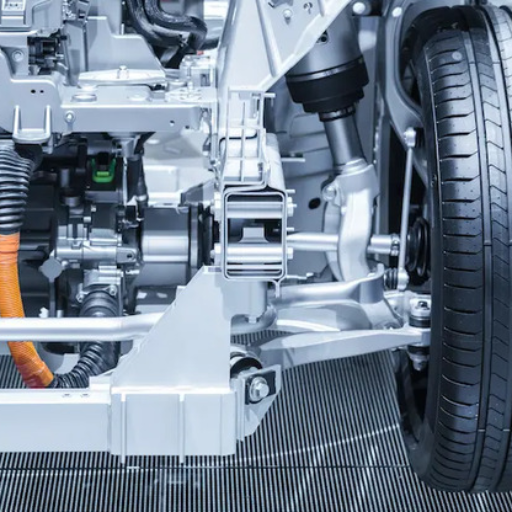
CNC machining in automotive industry has dawned an era for manufacturing with high precision and in a highly efficient manner, where the parts are very complicated. Application of new concepts like multi-axis machining, new tooling materials, and real-time monitoring systems have therefore greatly enhanced precision, allowing production time to be very much less. On the other hand, CNC machines integrated with automation and AI allow for easy customization and prototyping with changing needs of automotive designs. These enhancements help in providing better performance to vehicles, lighter components, and low-cost manufacturing.
Advanced CNC Technologies in Automotive Manufacture
Introduction of advanced CNC technologies has reshaped automotive manufacturing, offering hitherto unimaginable levels of efficiency and precision. The current industry trend is that five-axis machining is the most in-use means to make very intricate automotive components. This process reducing multiple set-up changes otherwise required for such manufacturing, reduces manufacturing time as to sudden effects. To assert an example, MarketsandMarkets proceeds to state in their survey that the global market for CNC machining is likely to verder around $93.1 billion in 2023, further driven by automotive innovations into $127.7 billion by 2028.
Another major highlight from the CNC front is offered by AI-powered monitoring. Such real-time analysis and predictive maintenance cut downtime by 20%-30%, states McKinsey. Furthermore, CNC machining technologies are used to machine lightweight materials like aluminum and carbon fiber for automotive components that aid in reducing vehicle weight and hence fuel consumption by about 15%.
Further, automated CNC processes enable the rapid prototyping needed for electric vehicles (EVs) and autonomous driving systems. This finding, highlighted in a Deloitte study, illustrates how CNC technologies assist electric vehicle manufacturers in slashing prototype lead times by nearly 50%, allowing them to iterate faster and bring products to market quickly.
Therefore, these factors speak for the fruitful interplay of advanced CNC technologies with automotive developments, setting the grounds for more sustainable, efficient, and innovative vehicle production systems.
Automation in CNC Machining
Integration of automation into CNC machining leads manufacturing processes down new paths of precision, efficiency, and scalability. The global CNC machine market is forecasted to attain a value of $132 billion by 2030, with a CAGR of 5.5% from 2022 to 2030, as reported through recent market insights. Increased use of automation that facilitates production and scales down human intervention has been a driving factor for that growth.
Automated CNC machines, with robotic systems and sophisticated software support, provide uninterrupted operations with minimum downtime for production and with increased output quality. Smart factories have presently implemented such great monitoring techniques coupled with artificial intelligence for predictive maintenance along with maximizing uptime for these machines. McKinsey further asserts that digitized and automated CNC systems have the capability of drastically reducing costs of production by about 30% and improving precision with a great margin of reduction in errors.
The robotic and automated approaches for specialized tasks like multi-axis machining and high-volume production are increasingly found in sectors like aerospace, automotive, and healthcare. These trends also coincide with sustainability-related objectives, reduce waste of materials and consumption of energy, and automation-led CNC machining looks to be the sign of a connected, efficient, and sustainable value creation into the future.
Automotive CNC Machining: The Way Forward
The automotive CNC machining will undergo some major transformation, where CNC machining will, however, play an important role in shaping its future. In the wake of industries and factory demands for electric vehicles and autonomous driving advancements, CNC machining is touted for greater precision, efficiency, and innovation. These rising industry reports forecast that the global Automotive CNC Machining market will grow to USD 68.8 billion by the year 2030, with an estimated CAGR of 5.4% from 2023 to 2030.
One interesting trend to note is the increasing use of lightweight materials such as aluminum and carbon fiber in vehicle manufacturing. CNC machining techniques can perfectly handle the machining of these materials and hence enable manufacturers to produce components that help to reduce vehicle weight and increase energy efficiency. For instance, CNC-machined aluminum parts are commonly used in the construction of EV battery housings, thus enhancing range and performance attributes.
Additional integrating trends involve the advancement of greater technology deep into the CNC systems in the form of AI and machine learning. AI CNC machines allow for predictive maintenance, adaptive machining processes, and quality control, ultimately leading to reduced downtime and materials wastage. An industry report reveals that more than 60% of automotive vendors will most likely implement AI-integrated machining systems by 2026, indicating the transition of the industry toward digitalization.
At the same time, additive manufacturing (which is 3D printing) continues to complement CNC machining, thus opening up hybrid manufacturing models capable of exploiting the strengths of each process. This further broadens the manufacturers’ ability to enhance customization and speed up prototyping and production of complex geometries, which is fundamental to the design and development of next-generation vehicles.
To summarize, automotive CNC machining is set for the future sponsorship of sustainability, at the forefront of digital transformation, and in search of evermore innovation. The very essence of these trends is the fertile ground for a highly driven, efficient manufacturing ecosystem that will slowly engage into fulfilling the requirements of the automotive-sector industry in constant flux.
Reference sources
- The Development Trends of Computer Numerical Control (CNC) Machine Tool Technology
- Authors: Kai-Chao Yao et al.
- Publication Date: June 21, 2024
- Summary: This study discusses the importance of CNC machines in the global manufacturing industry, particularly in the automotive sector. It emphasizes the need for manufacturers to adapt to changing market demands by integrating automated equipment and smart manufacturing technologies. The research involved expert interviews and fuzzy Delphi analysis to establish development trends and a technology roadmap for CNC machines.
- Methodology: The study utilized expert interviews and fuzzy Delphi analysis to gather insights from academia, industry, and research institutions. It identified 26 key sub-technical items and achieved a consensus level of over 80% among experts(Yao et al., 2024).
- Development of Electric Control Panel to Control a CNC Thread Milling Machine
- Authors: Punya S, Hemanth R
- Publication Date: August 23, 2024
- Summary: This paper provides an overview of the development of electrical control panels for CNC thread milling machines, which are crucial in automotive manufacturing. It discusses the layout, components, and practices that enhance the functionality and reliability of CNC machines.
- Methodology: The study involved a comprehensive review of the design and components of electrical control panels, focusing on their roles in improving CNC machine performance(S & R, 2024).
- Feed Rate Improvement for Face Hobbing on a Six-Axis CNC Bevel Gear Cutting Machine
- Authors: Yi-Pei Shih et al.
- Publication Date: April 1, 2025
- Summary: This research focuses on optimizing feed rates in CNC bevel gear cutting, which is essential for automotive applications. The study introduces a new simulation method for calculating material removal rates (MRR) and optimizing feed rates, significantly reducing machining times.
- Methodology: The authors developed a ring-dexel-based cutting simulation method to calculate MRR and optimize feed rates. Experimental results demonstrated a linear relationship between MRR and cutting torque, leading to improved machining efficiency(Shih et al., 2025).
- Top Cnc Automotive Parts Manufacturer and Supplier in China
Frequently Asked Questions (FAQs)
What are the advantages of CNC machining for automotive parts?
CNC machining offers an advantage in terms of precision manufacturing for automotive parts, ensuring even very complex parts are manufactured with a great deal of accuracy. Automotive machining underwent a revolutionary phase since CNC machinery enabled manufacturers to achieve tighter tolerances, unlike conventional machining methods. CNC machining services offer manufacturers great flexibility in terms of manufacturing any component, be it engine parts or transmission housings. Likewise, this versatility allows CNC machining to undertake small or large production runs. Automotive designers and engineers thus rely upon CNC machining in assuring parts that meet the industry standards for performance and reliability of the vehicle.
How CNC machining improves automotive production?
In automotive production, CNC machining is mainly used to give speed and precision to the manufacture of components. Using advanced machining solutions would allow reduction in lead times in the processes of manufacturers. Herewith, CNC machining reduces the lead time so that automotive companies can produce new parts faster while maintaining quality, which serves well in a competitive situation. Besides, the machine tools that use CNC machining methods like milling and drilling, allow complicated geometries as required in contemporary automotive designs. This will allow them to complete not only the design process but also to adequately meet the strict requirements of the automotive industries.
What are the common automotive CNC machine tools within the scope of CNC machining?
Automotive CNC machining equipment comprises various machine tools intended for particular services in the automotive sector. CNC machining centers are majorly recommended because they allow multiple operations-performance in milling, drilling, and turning-on a single set-up. Coordinate Measuring Machines (CMM) are also very important in inspecting and verifying that the designed parts are produced to a given measure. Other machines like CNC lathes and CNC routers are very specialized in their applications and hence allow manufacturers to produce only critical parts with little allowance for error. Choosing the best suitable automotive CNC machining equipment shall make a great difference to automotive machining in terms of results.
How does CNC machining assure quality in automotive machining?
Quality assurance in CNC machining is guaranteed through maintaining consistent tolerances and precise tolerances during the machining processes. Manufacturers who setup and set an advanced technique and are computer controlled can keep an eye on the machining procedure as it happens and proceed to minimize any deviation or intervention artificially. These controls prevent a defective occurrence and strongly assure that the automotive parts industry’s quality assurance demands are met. Moreover, CNC machining can help automate the processes that should otherwise be done manually, and thus minimize the error occurrence. In short, automotive companies can always rely on CNC machining to clothe high-quality components satisfactorily required to define vehicle performance.
What role does CNC machining play in advances in automotive technology?
CNC machining plays an important role in advances in automotive technology by enabling fabrication of new designs and materials. As the automotive industry advanced toward inclusion of high-quality components, CNC machining provides for the rapid prototyping and manufacture of these new parts. Working with such materials as lightweight composites and metals further improves the vehicle’s performance and efficiency. In addition, CNC machining methods help pave both the way for electric and autonomous vehicles, where precision and reliability are imperative. Simply put, CNC machining is at the core of pushing the limits in automotive technology and production capabilities.


