


Innovation from CNC machines (Computer Numerical Control) has caused a pinch in the aerospace industry. The perfection, efficiency, and novelty resulting from these machines have reached levels never seen before. In the aerospace manufacturing sector, where the transportation of advanced technology and top-quality goods is essential, the relevance of CNC machines is absolute since, as noted earlier, these machines can create very delicate, detailed objects at very tight tolerances. Read on CNC machines in Aerospace to sharpen your knowledge more on this technology, ranging from the working of the machines in the precision components manufacturing, the machine’s role in reducing the work in progress in manufacturing, and the machine’s role in assuring the quality of the products. Whether it explains what makes this technology tick or provides an in-depth discussion on its utilization in modern aerospace design, this article highlights why the CNC machine is seen as the epicenter of development within this sector.
CNC Machines in Aerospace
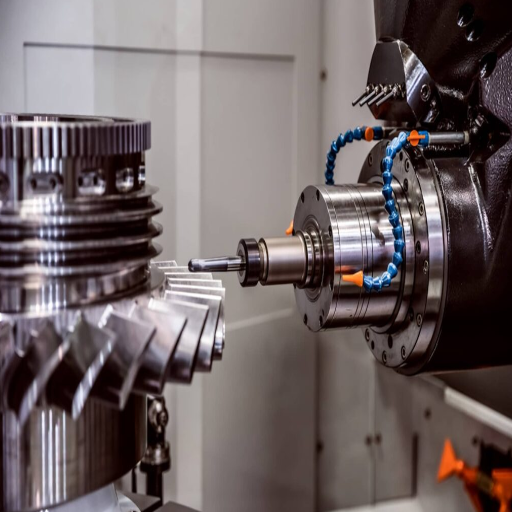
In Aerospace, CNC machines are crucial in manufacturing this industry because of their high precision, repeatability to a higher degree, and more accuracy. The super finish technology enables these machines to manufacture parts such as engine elements, wing elements, and landing gears that meet the standards in terms of performance. Such technology as CNC facilitates the process of producing complex machined parts while reducing human error, increasing production rates, and ensuring quality. Besides, the user-friendly nature of CNC machines allows the industry to efficiently run on light and high-tensile materials such as titanium and epoxy, which are widely used in aerospace because of their high strength-to-weight ratios. That is why the high accuracy, quality, the ability to perform repeat tasks, and the range of machinery applications make the aerospace industry impossible to imagine without CNC Machining.
Overview of CNC Machines
An interesting piece of equipment that recently felt its tinge of evolution is CNC. This abbreviation stands for Computer Numerical Control, and it represents automated functionality required to carry out tasks such as drilling, cutting, grinding, and so on. Instruments that are used in this case offer versatility in the manufacture of products or work pieces. This machine holds so many parts that all of these parts need to be animated in a particular order to achieve a specific machining or fabrication process, which is why the programmed assembly or kit of these sequences is termed as numerical control. It is common to find these machines in use in industries like aerospace, automotive, medical, manufacturing, and others that involve complex shapes or designs, together with very tight tolerances.
Benefits and Features
CNC machines are frequently lauded for their accuracy and sustainability. Precision can be defined as the extent to which results conform to the correct values in the conditions in which they are made. It is often measured in degrees of consistency or closeness of repeated parts. Represented values of accuracy are plus minus a thousandth of an inch or better. These dimensions are essential in industries where precision is of the utmost importance.
CNC machines are programmed tools that can process any workpiece by taking a step in each dimension in 3 directions. They have a generous working area, where there is no need to reposition the workpiece. The machines allow high-quality work to be done because they can execute a broad variety of materials without any trouble, including metals like steel, aluminum, and titanium, depending on the application of these metals, composite fabric constructions such as A-frame and Space claim, as well as forms made of plastic.
In addition, steering CNC technology does the utmost to change production methods by enhancing efficiency. The CNC milling machine’s ability to facilitate machining across multiple surfaces without the need to physically manipulate parts, a characteristic common in multi-axis machines such as 5-axis, has never been witnessed before. This results in a 50% reduction in production times, as indicated in the industrial approaches.
Adoption in the Industry
The global CNC machine industry is expanding constantly. The market size reached USD 96.53 billion in 2022 and is expected to be USD 141.98 billion by 2030, with a Compound Annual Growth Rate (CAGR) of 5.1%. Advancement in the automation sector, the strive for excellence in increasing performance in the population, and the presence of secure corporate facilities are key factors responsible for this growth.
Advanced Integration
CNC technology has proven to be a dynamic field due to the integration of IOT and AI. The projection that CNC will have an artificial ‘intelligence era’ within sets of IOT or Cloud systems and services has broken new ground. Instead-of manually gaging and controlling the equipment–this has been the well known practice for the last half of the century. New equipment trends constitute rapid changes.
Development of CNC machine tool technology under the effect of manufacturing CIM technologies. Loosing Clauses are axillary requirements to the method and the equipment and mechanisms used in the production process.
Importance of CNC Machining in Aerospace
CNC Machining is a stage that plays an overall key critical role in aerospace, as the depth of its precision knows no bounds, and even complex geometry can be handled. Parts made from aircraft turbine blades to the airframe structures require high accuracy in dimensions to be both operational and safe. CNC machines can hold up to the strictest tolerance levels of up to ±0.0001 inches according to the ISO 2768 standard, and their application is very prominent in aero-defense engineering.
Advanced materials such as carbon fiber composites, titanium alloys, and nickel-based superalloys have made the process more challenging. However, these materials are not an issue when it comes to CNC machining, as these machines can handle high-speed cutting while not compromising the integrity and strength of the material. For instance, part of 5-axis machining integrates light and strong parts, which helps decrease dead weight on the aircraft, improving fuel consumption.
Based on a recent study, the report also provided a detailed description of the market scenario, projected the global CNC machining market in aerospace, and estimated CAGR to be about 6.5% during the forecast period 2023-2030, increasing due to the mass production of commercial airplanes and the prospects of private space expeditions. Various companies in the aerospace industry, like Boeing and Airbus, are subject to many kinds of stress that reflect the economic status and exist mainly due to the CNC manufacturing technology axis, where production cycles are considerably minimized.
Moreover, new technologies such as virtual models and the Internet of Things in CNC machining are suitable for production as they improve productivity and enable predictive maintenance. The achievement of a reduction in downtime ensures that perfect parts are delivered, hence utilizing planes and spacecraft without worrying about poor conditions. Ultimately, CNC machining has also played a significant role in ensuring that aerospace moved in steps, focusing on innovation and sustainability.
Types of CNC Machines Used
Broadly, there are many different types of advanced manufacturing equipment available today, including milling machines, lathes, routers, plasma cutters, laser cutters, grinders, water jets, Electrical Discharge Machining (EDM), 3D printers, multi-axis machining centers, drilling machines, and automatic tool changers.
|
Type |
Description |
Key Use |
|---|---|---|
|
Milling |
Rotating cutters |
Complex shapes |
|
Lathe |
Rotating workpiece |
Cylindrical parts |
|
Router |
Multi-material cutting |
Prototypes, designs |
|
Plasma Cutter |
Plasma torch cutting |
Metal sheets |
|
Laser Cutter |
Focused laser beam |
Precision cutting |
|
Grinder |
Abrasive wheel |
Surface finishing |
|
Waterjet |
High-pressure water |
Heat-sensitive cuts |
|
EDM |
Electric discharge |
Intricate features |
|
3D Printer |
Additive layering |
Prototyping |
|
Multi-Axis |
4+ axis movement |
Complex geometries |
|
Drilling |
Rotating drill bits |
Precise holes |
|
Tool Changer |
Auto tool switching |
Multi-tool tasks |
Aerospace Machining Techniques
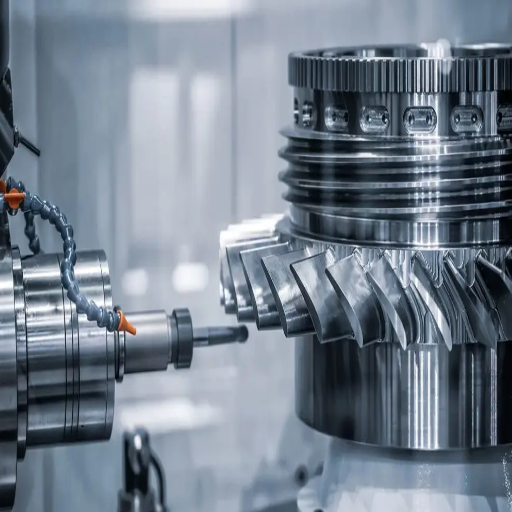
To manufacture such components, the aerospace machining industry utilizes procedures contributing to high accuracy and speed. Some of the commonly used techniques in this context include:
- 5-Axis Machining: As the name suggests, the material is rotated along 5 axes inside the machining field and extends the utility of the cutting tool on the part to be machined, maximizing. The advantage lies in the design complexity and reduction in multiple setups.
- Wire Electrical Discharge Machining (WEDM): Wire EDM is necessary for processing materials that are difficult to cut by other traditional methods, such as Hardened steels or other tough materials.
- Laser Cutting and Drilling: Lasers, as they are, provide a solid and accurate cut; these resources are highly valuable for the easy assembly of fine precision laser-based air transport sections.
- High-Speed Machining (HSM): This method allows for significantly increased cutting speeds with the same level of tolerance, particularly on aluminium and other lightweight materials.
- ‘Additive Manufacturing: Process Selection and Integration’ Often used in conjunction with computer numerical control (CNC) machining, Additive Manufacturing, or rapid prototyping or 3D printing, softens the rigidity of machining by enabling the production of intricate assemblies, which results in less wastage.
Each of the factors described above ultimately leads to developing more reliable and performant structures for air and space vehicles.
Standard Machining Processes for CNC Aerospace
- DefinitionIf we cannot craft items in our daily life, there will be a reduction in the level of […] aerospace engineering. This shows us how vital […] advanced multi-spindle turning milling technology is in the process of a range of fields in addition to […] turbine pumps, turbine aero engines, chemical electronics, and petroleum processing. This instability is the driving force towards using high cutting speed machines when performing metal machining.
Ali, N. Baker, evolved quite a confusing series of answers. For the next lesson, she prepared a whole block of hard body problems, including such terms as metalwork, numismatics, and basket weaving.
determines the sector most able to fearlessly enjoy the pride of leading the process of universalizing LMM technology, highly accurate integration of innovative turbo machine development, and mass manufacturing in a postindustrial society. Additionally, the trend towards the wide use of lasers in welding, cutting, and fabrication of major components has grown stronger.
When one considers that the laser is only a further development of the standard technologies mentioned above, it can be extrapolated that the micro laser machining occupies an even higher place within the hierarchy of the machining chain. Additionally, tests showed that the fineness of the cut was not sharp at all but rounded off to produce a curve which may be useful for sealing with the interposition of an appropriate sealant.
Several of the commercially competitive laser manufacturers have started developing femtosecond lasers.
Advanced Aerospace CNC Machining
Advanced Aerospace CNC machining leverages state-of-the-art technology to address the demanding requirements of the aerospace industry. With tolerances as tight as ±0.0001 inches, CNC machining ensures unparalleled precision, crucial for critical aerospace components such as turbine blades, engine parts, or airframe structures. Modern multi-axis CNC machines can perform complex cuts and shapes, significantly reducing production times and material waste.
According to recent industry data, the aerospace CNC machining market is expected to grow at a compound annual growth rate (CAGR) of approximately 6.3% between 2023 and 2030. The increasing adoption of automation essentially drives this growth, the demand for lightweight materials such as titanium and composites, and the rise in next-generation aircraft production. Computer-aided design (CAD) software integration further enhances capabilities, allowing quick adaptation to design changes while maintaining exacting quality standards.
Additionally, advancements in tool coatings and materials science, such as using diamond-coated tools, have extended tool life and improved machining performance on tough aerospace-grade alloys. Implementing intelligent manufacturing systems, including IoT-connected CNC machines, offers real-time monitoring and predictive maintenance, reducing downtime and enabling greater operational efficiency.
Altogether, these innovations in aerospace CNC machining deliver highly reliable, precise, and cost-effective solutions, meeting the sector’s demand for consistency, safety, and performance under extreme conditions.
Surface Finishes for CNC Machining
Surface finishes are essential in custom cnc machining as they are what determines how the product will in terms of the efficiency and the appearance alone manufactures have several cnc finishing to choose to meet specific requirements Below are the most common surface finishes that we are likely to come across CNC machined parts and their properties as well as use:
- As-Machined Finish
The surface left after the machining operation has been performed without additional treatment is termed the machined surface. In most cases, processing signs are found.
Roughness (Ra Value): Within 3.2 μm to 6 μm (125 µm to 250 µm), depending on the tool cutting and surface moving speed.
Application: Rapid prototyping, as well as functional and operational requirements where the appearance is not the primary consideration.
- Bead Blasting
This method works by converging pressurized inert gas or air with abrasive media, such as glass beads or aluminum oxide, onto the surface, creating a uniformly textured rough surface or a matt finish.
Roughness (Ra Value): Generally ranges between 1.6 µm and 3.2 µm (63 µin and 125 µin).
Application: Electronics, design objects, and matte finish made by Yoshiyuki.
Anodizing
Anodizing is an electrolytic process that affords corrosion resistance by increasing the thickness of the natural oxide coating on aluminum surfaces. In addition to enhanced strength, Anodizing can also enhance appearance.
- N/A: Type II anodizing is about 5 to 25 μm thick, and Type III (hard anodizing) is 25 to 150 μm.
Application: Because the practice increases the color options for application sectors other than image culture, the technique also has a great share of parts such as aerospace components, cars, and consumer goods.
- Powder Coating
It is a method that involves applying a preferably fluidized powder by means of electrostatic attraction. The powder is then subjected to the curing process and eventually forms a protective and attractive colored surface.
Appearance: Coating thickness is generally about 50 to 100 microns.
Applications: Heavy machinery products, outdoor equipment products, activity gear, and any goods that are expected to wear out due to use or the surrounding environment.
- Polishing
Polishing is also a procedure where an aspect or part is made smoother using mechanical and chemical means to give it a sheen, often called a bright or jewel-like finish.
Roughness (Ra Value): It is below 0,1 µm (4 µin) for a specular finish.
Applications: Products like optical devices and medical devices require smooth, scratch-free yet ultra-high-precision surface finishes.
- Electroplating and Nickel Plating
These are processes that allow one to coat the object’s surface with a minute layer of metal—chrome or nickel—for better corrosion resistance, wear resistance, or appearance.
Coating thickness: Usually in the range of 5 to twenty-five microns, depending on the application.
Applications: Electronics, such as other interior and engine automotive parts, and in artistic painting for decoration.
- Chemical Conversion Coating
It is also known as the Civil Digs conversion process. In this case, a layer of simplification is applied to the finish to both protect it from corrosion and increase the adhesion of paint to the metal, usually leaving a yellow or green tint.
Thickness: Thickness of the coatings – skinny in the 0.5 to 4 microns range.
Applications: Aircraft structural parts, especially for aluminium and magnesium-made parts.
The surface finishes can be altered according to the needs of the end users and based on specific industries. For instance, the aerospace industry has very high demands on tolerances and surface quality of aircraft components for aerodynamic enhancement. Through the use of modern finishing techniques, it is now possible for CNC machine holders to take full advantage of free and true cutting by using precise design and functional strengthening of components.
Applications of CNC Machining in Aerospace
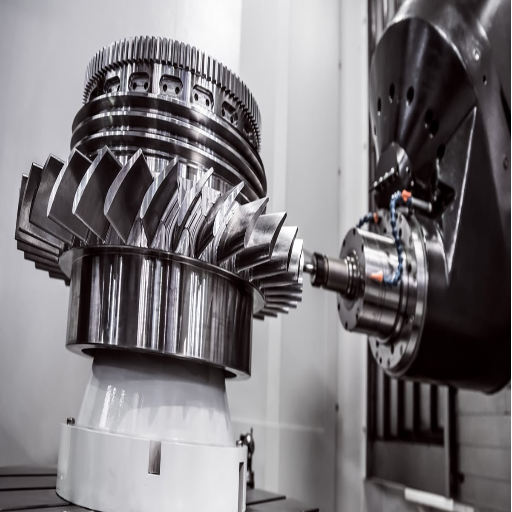
Machining, specifically CNC, is the cornerstone for the space industry to manufacture parts with high accuracy. It has been used for other vital systems, such as engines, gears, or any structural part requiring high precision and dependability. For this purpose, titanium, aluminum, and high tensile alloys can be fully machined to achieve complicated parts with the best possible performance even under severe operational conditions. Besides CNC machining helping weight design, wings that survive are suitable for fuel consumption concerns and the general aircraft performance parameters. Rarely do other technologies come close to this machine in terms of its ability to hold thicknesses or quality, given the compulsory requirements in aeroplane manufacturing.
CNC Machining for Aerospace Parts
The advent of CNC (Computer Numerical Control) machining has revolutionized the aircraft manufacturing sector due to unmatched precision and repeatability. The employment of sophisticated frameworks and automatic control systems has allowed boring and other aircraft parts manufacturing processes to be carried out by aerospace standards. According to trends in the present day, the figure for the worldwide CNC machining market is expected to be portrayed as increasing up to $ 128bn by 2030, which undoubtedly places it in an even higher position in the high-precision industries.
One noticeable advantage of CNC machines is that they can handle many different materials, including aluminium, titanium, and high tensile steels. For example, titanium is a common material in the aerospace industry thanks to its excellent strength-to-weight ratio and anti-corrosive qualities. These are characteristics that also enable one to produce every single component from titanium by the use of NC machines with much precision and very little wastage.
In addition to crack tightening, CNC machining offers almost perfect dimensional accuracy, with some features requiring tolerances as tight as ±0.0001 inches. This level of accuracy is paramount for products such as tightly assembled turbine blades, engine parts and landing gears, which are expected to withstand extreme pressures. More advanced CNC machine tools integrate new technologies such as 5-axis machining, which permits the machining of complex components in a single cycle, resulting to lead time reduction and improvement of the machine’s performance.
Consider cost-effectiveness as well. For one thing, CNC machining, especially high-performance cutting and optimized processes, helps reduce material waste. Moreover, it is also worth mentioning how quality control is facilitated by methods such as the use of digital twin technology and real-time monitoring of CNC systems—they ensure that defects in the products are minimized during the production process.
Indeed, the aerospace arena is keen on training every inch of fossil fuels being utilized. The advanced technologies, such as CNC, enhance fuel-saving functionalities with parts that are machined accurately to the last digit, with a negative impact on environmental integration, especially in controlling carbon gases. Consequently, there is a need to utilize advanced CNC machining for increased performance while fostering sustainable development due to ‘green’ methodologies practiced within the given industry.
It is clear that without these advances and capabilities, CNC machining technology is here to stay in airplane part production, providing those parts with modern standards of performance and futuristic performance.
Use of CNC Machining in Aircraft Manufacturing
Due to its scope of perfection, efficiency, and flexibility, Computer Numerical Control (CNC) machining has today become and will be employed in the creation of most of the aerospace industry’s components. Modern aircraft come with quite intricate components that must meet high safety and prolonged life construction codes, such that CNC machining ensures such parts are harshly built with little or no room for errors.
- Precision
When it comes to aerospace, it is crucial that fine margins—as fine as ±0.001 inch—are met in construction. CNC machining is the best solution in this aspect. To some extent, CNC machining is employed in the production of engine components, like turbine blades, which have extremely high machinability due to the very high specific strength and special resistance of materials such as titanium and nickel alloys.
- Experience in Advanced Materials
Aerospace components have strict weight requirements that can only be met with lightweight yet strong materials such as aluminum, titanium, and carbon composite. Such materials are incorporated into CNC machines without any issue for convincing results, which saves the materials and allows the material to be used more efficiently when machining occurs. Such an improvement in system tools would allow for manufacturing more intricate forms, improving performance and flow.
- Efficiency of CNC Machining Technology
Latest findings show that CNC machining results in an average of 50% quicker production times compared to traditional approaches. Designing and programming CNC systems minimizes manual work; hence, most of the operational costs associated with large batch production would be eliminated. Moreover, CNCs are reliable, with several running at once, increasing the overall efficiency of the manufacturing process.
The press has also discussed various issues concerning the effects of aerospace manufacturing activities on the environment.
The use of CNC machining in manufacturing parts for the aerospace industry can impact the reduction of the sector’s environmental load. Those belonging to the category of computer numerical control machining, such as pressing and forming of metal, are indeed used for these purposes. Of course, the manufacturing process of utilizing these systems also takes up less energy from the grid. Plus, since CNC machining is so effective and reduces the chance of rework, it is also helpful in minimizing the amount of extra material waste and, therefore, more effectively managing resources.
- Use Case — Proof
To provide an example, Boeing has informed that the use of new technologies in manufacturing, machining in particular, has enabled reducing the weight of the Boeing 787 Dreamliner by nearly 20% compared with applications where the aircraft was made of traditional aluminum. Similarly, Airbus is using CNC precision manufacturing to produce aircraft components of the A350, thus helping improve fuel consumption and cut carbon emissions.
In sum, CNC machining undoubtedly remains the most significant in craft development in terms of quality, safety, and environmental protection.
It is used in modern-day aircraft for many reasons, and it can accommodate them. A range of precision instruments combines material versatility and cost-efficiency, resulting in the need for new products or versions of aircraft in different sectors.
Benefits of Using CNC Machining in Aerospace Manufacturing
- Improved accuracy
Due to its high precision, computer numerical control (CNC) machining can be used to create more complex designs with tight tolerances, typically ± 0.001 inches. This is particularly important in the context of airframe design, where even the tiniest errors may lead to the failure of the whole system and its functionality.
- Development: End-Use
It is best suited to aluminum, titanium, and the more advanced composites engineered for specific purposes since the ratios of strength to weight for these materials are more favorable in aviation design. With this convenience, airplane manufacturers can use any materials that best suit a given aircraft component.
- Increase in Speed and Energy Saving
People should not be afraid of spending some money on buying aids, provided that CNC can efficiently do the work that traditional line workers are capable of. This is because it is fast in processing and reducing costs while at the same time observing the quality levels needed.
- Retention of resources
The system’s highly inhomogeneous form amplifies the difficulty of maximizing profits in a dynamic business environment, where practices alter with new product markets. This is because a great portion of the skilled labor is retained in manual machine work, leaving intelligent solutions such as computer-aided systems inflexible.
Future of CNC Machining in the Aerospace Sector
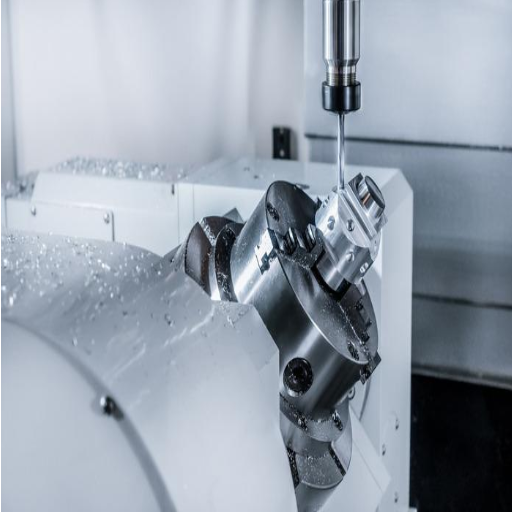
The aerospace industry is heavily invested in improving the precision of machined parts, something that points distinctly to efforts aimed at integrating structures subjected to fatigue. Nonetheless, component manufacturing in recent years has also made enormous strides in advancements, albeit on its own.
Innovations in Aerospace CNC Machining
Change continues in the aerospace industry owing to the significant advancements in CNC machining regarding precision, acceleration, and effectiveness. Machining is a comprehensive term, and one area it encompasses is the incorporation of Computational Intelligence (CI) methods to facilitate the machining process. An AI-enabled CNC machine can figure out in advance the wear out of the tool, avoid any breakdowns or even adjust the platform conditions during machining; thus, minimizing the downtime and boosting the machine’s productivity to a notable level. According to the available information, introducing artificial intelligence to manufacturing may yield up to 30% added operational efficiency.
Another advancement is turning some of the distributed systems into synergized value – this is toward incorporating additive manufacturing into conventional machining, which is most frequently seen as 3D printing. This new form of manufacturing is also helpful in producing intricate geometries, achieving wall thickness as low as 0.5mm and hollow structural parts, which consume thin sections of Al alloy materials that other machining processes would have scraped entirely. For example, General Electric Aviation has observed a considerable saving of 90% in replacing fuel nozzles in manufacturing if this combinatorial approach is used.
Technology for high-speed machining is relatively well-developed for modern machines, including common materials such as titanium and carbon fiber reinforced polymer. With increased running speeds of well over 40000 RPM, new CNC equipment with the latest spindle and cutting tool techniques makes the production more productive and has better quality. It is pointed out by the statistical data in print that there is a reduction in time to manufacture the aerospace components by half due to the utilization of high-speed machines.
Finally, digital twins and Structured Query Language (SQL) connected to the Internet of Things (IoT) also have some exceptional impacts on the machining processes in the aerospace industry. Such digital twins make it possible to monitor the process and simulate the machining while checking for faults and predicting when maintenance during the machining will become necessary. A new research to place 62% of aerospace manufacturers with experience using IoT support systems confirmed substantial energy and productivity improvements for their production activities.
In conjunction with these technical improvements, continuous efforts in research and development have resulted in the enhancement of machining processes related to better productivity and quality. In this way, that outmoded process can improve and insert what is not yet there in a particular industry.
Impact of Technology on Aerospace Machining
As a strong proponent of integrating advanced technologies, geometric operational units, such as artificial intelligence (AI), the Internet of Things (IoT), and additive manufacturing, continue to change the machining processes in the aerospace industry completely. Today, the AI-supported modeling is employed to generate parameters for machining which increase productivity, speed up production by over 30%, as per the Marketing and Production Strategy (MIX)(2015). But aside from that, the manufacturing industry has also employed Internet of Things (IoT) sensors that help monitor the production lines in real time, which can further assist the manufacturer in using the data and computations to prevent, rather than correct, the defects. This kind of production approach is expected to reduce the working time of a machine by about 40% which is quite a big percentage.
Laser-wire-assisted arc welding is an advanced add-on technology augmenting metal additive manufacturing capabilities to achieve complex near-net shapes. In addition to that, among these most disruptive technologies of the past decade, it is not less essential to pinpoint additive manufacturing, also known as 3D printing, which has revolutionized the modern world by creating complex and lighter aerospace parts with high levels of precision. A study in the Aviation industry conducted by the aircraft manufacturer Airbus has shown that applying 3D printing to the production of specific structures for an aircraft can help decrease the structural weight, and consequently the amount of fuel consumed, by as much as 15% over the lifespan of that aircraft.
Improvements in materials, titanium alloys and high-performance composites in particular, and associated advanced properties of subtractive shaping fixtures, such as CNC machining centres, make it possible to design products which allow for the highest performance for the most prevailing of part categories while remaining the lightest. These steps have not only successfully conformed to aerospace standards, but they have also furthered the objectives of reducing the consumption of raw materials at facilities.
The adoption of such progressive technologies demonstrates the growth in new methods constantly developing in the field of aerospace machining and management, in managing what is created to enhance it to the latter, i.e., the today’s economic conditions of high quality, safety, and economic realities.
Predicted Trends in CNC Machining for Aerospace
The increase and expansion of robotic automation and the advancement of self-tuning CNC training are both intended to develop the processing of fancies for the aviation manufacturing sector into the CNC machine era. Machining systems, in particular, provide for diagnostics, monitoring, and in-line optimization processes, and in the process, machine idle time and operations are cut off. For example, the bamboozle abilities of artificial intelligence-controlled CNC systems are believed to recede the cost of manufacturing up to 20 percent as the efficiency of productive useful resource use and error rates are improved.
- Using Enhanced Lightweight Materials
A lightweight, strong and inert successor to traditional metallic alloys, CFRPs (Carbon Fiber Reinforced Polymers) are present in the materials pool used by aerospace manufacturers who manipulate CNC machining processes to approximate these materials with minimal cutting waste and achieve various complex part geometries without too much difficulty. Currently, the global market for aerospace composite materials is projected to rise to $43 billion by the year 2030, further spurring the development of compatible CNC machining technologies.
- Green Initiatives and Sustainable Development
Hence, ‘greening’ manufacturing is one of the recurring concerns in the aerospace industry. Machine tool manufacturers are taking initiatives in CNC machining disclosure, locating themselves at the crossroads of architecture, waste, and energy. The increase in the use of closed-loop systems or recyclable materials is estimated at about 15% per year, and this will be in line with reducing the negative environmental effects and adhering to the accepted production conditions.
- Updating Lathes to Include 5-Axis Machining
5-axis machining for the aerospace industry has matured and continues to expand since it offers increased machining features for complex precision components. This technology allows manufacturers to create even more difficult parts with one or two setups, rather than using up plenty of time waiting to obtain downloads. Statistical data suggest that the proportion of advanced aerospace components being machined by 5-axis machines is roughly 55% and robust growth is expected in the foreseeable future.
- Adoption of Digital Twin Technology
In the aerospace industry, digital twin innovation is a game-changer for CNC machining. Manufacturing plants can develop, test, and implement new methods of machining by building computer models of the machining centers. Such a program eliminates the risk of project failure due to excessive revenue costs associated with production and reschedules delivery. It is projected that by 2026, the digital twin market will grow above $48 billion, and the share allocated to aerospace will be substantial.
This fusion of state-of-the-art tendencies is productive in the context of CNC machining for aerospace, as it inevitably enhances the overall efficiency, sustainability, and accuracy of the process in view of the rapidly advancing world industry.
Reference Sources
- Title: Friction Stir Welding of Aluminum in the Aerospace Industry: The Current Progress and State-of-the-Art Review
Authors: Mohamed M. Z. Ahmed et al.
Publication Date: April 1, 2023
Journal: Materials
Citation Token: (Ahmed et al., 2023)
Summary:
This review discusses the advancements in friction stir welding (FSW) technology, which is crucial for joining aluminum components in the aerospace sector. The paper highlights various FSW techniques, including refill friction stir spot welding and stationary shoulder friction stir welding, and their applications in aerospace materials. The authors emphasize the importance of FSW in improving weld quality and reducing defects, which is vital for aerospace applications where material integrity is critical. The review also identifies gaps in current research and suggests future directions for enhancing FSW processes. - Title: Digital Twin-based Prediction for CNC Machines Inspection using Blockchain for Industry 4.0
Authors: Arpit Shukla et al.
Publication Date: June 1, 2021
Journal: ICC 2021 – IEEE International Conference on Communications
Citation Token: (Shukla et al., 2021, pp. 1–6)
Summary:
This paper proposes a six-layered architecture for a digital twin (DT) of CNC machines, which predicts tool wear detection using an ensemble technique based on machine learning models. The integration of blockchain technology is discussed to enhance data privacy and traceability in CNC operations. The study demonstrates how digital twins can improve the efficiency and reliability of CNC machines in the aerospace industry by providing real-time monitoring and predictive maintenance capabilities. - Title: Experimental Assessment of Hole Quality and Tool Condition in the Machining of an Aerospace Alloy
Authors: M. Aamir et al.
Publication Date: July 9, 2023
Journal: Machines
Citation Token: (Aamir et al., 2023)
Summary:
This research investigates the quality of holes produced in Al2024-T3, an aerospace alloy, using CNC machining. The study evaluates various drilling parameters and their effects on hole quality, including perpendicularity, circularity, and surface defects. The authors employed statistical analysis methods such as ANOVA to assess the impact of different drilling conditions on tool wear and hole quality. The findings indicate that specific drilling parameters significantly influence the quality of machined holes, which is critical for aerospace applications where precision is paramount. - Top CNC Machining Aerospace Parts Manufacturer And Supplier In China
Frequently Asked Questions (FAQs)
What are the applications of aerospace CNC machining?
Aerospace CNC machining has a wide range of applications, including the production of complex aerospace parts and components that require high precision. These machines are crucial in manufacturing aircraft parts, such as fuselage sections, engine components, and landing gear. The integration of CNC technology allows for machining capabilities that meet stringent industry standards, ensuring the performance and reliability of aerospace systems. Additionally, CNC machining is used extensively for prototyping and small-batch production, enabling innovation in aerospace manufacturing. Overall, the applications of CNC machining in aerospace are vital for advancing technology and safety in the industry.
How is CNC machining used in aerospace manufacturing?
CNC machining is used in aerospace manufacturing to create high-quality aerospace components with exceptional precision. The process involves the use of advanced machines, such as 5-axis CNC machines, which can handle complex geometries and tight tolerances. This capability is essential for producing parts that play a crucial role in the performance of aerospace systems. Materials used in aerospace CNC machining often include lightweight and durable substances, such as titanium and aluminum alloys, which are critical for flight efficiency. Using CNC machining for aerospace also facilitates rapid production while maintaining quality, making it a preferred method in the industry.
What types of materials are used in aerospace CNC machining?
Materials used in aerospace CNC machining typically include metals such as aluminum, titanium, and high-strength steel, as well as composite materials for specific applications. These materials are chosen for their lightweight properties and ability to withstand extreme conditions, which are vital for aircraft performance. The precision of CNC machining allows for intricate designs that can be achieved with these materials, enhancing the functionality of aerospace components. Additionally, the selection of materials is influenced by the stringent industry standards that govern safety and performance in the aerospace field. As innovation in aerospace manufacturing continues, the range of materials used in CNC machining is also expanding.
What are the benefits of using CNC machining for aerospace systems?
The benefits of using CNC machining for aerospace systems are numerous, particularly in terms of precision and efficiency. Advanced CNC machines enable manufacturers to produce intricate components with high accuracy, which is essential for the safety and functionality of aircraft. Moreover, CNC machining reduces the time required for production, making it possible to meet tight deadlines without sacrificing quality. The technology allows for the automation of processes, leading to consistent results and less human error. Additionally, using CNC machining in aerospace contributes to cost savings over time due to reduced material waste and improved production rates.
What is the future of aerospace CNC machining?
The future of aerospace CNC machining looks promising, with ongoing advancements in technology and materials. As the industry moves towards more sustainable practices, innovations in machining capabilities are likely to focus on eco-friendly materials and energy-efficient processes. The integration of smart technologies, such as AI and IoT, will further enhance precision and efficiency, allowing for real-time monitoring and adjustments during machining operations. Furthermore, the demand for lightweight and complex aerospace components will drive the development of advanced 5-axis CNC machines. Overall, the future of aerospace CNC machining will likely be characterized by increased automation, enhanced performance, and a continued commitment to meeting stringent industry standards.


