


CNC machining has changed the way industrial processes work by creating customized solutions for an array of different needs. Whether you are an engineer, designer, or business professional seeking quality parts, it becomes important to familiarize yourself with the abilities of CNC machining.Art this blog post finds itself in the best possible series of articles in CNC machining services; it tells how it works, what the advantages are, and how a custom CNC service can enhance your projects. From highly complicated prototypes requiring a few parts to large production runs, CNC machining sits at the very top for precision, reliability, and efficiency in a manufacturer’s life nowadays. Stick around to grab all the information about this technology and all that can do to fulfill your requirements.
Understanding CNC Machining
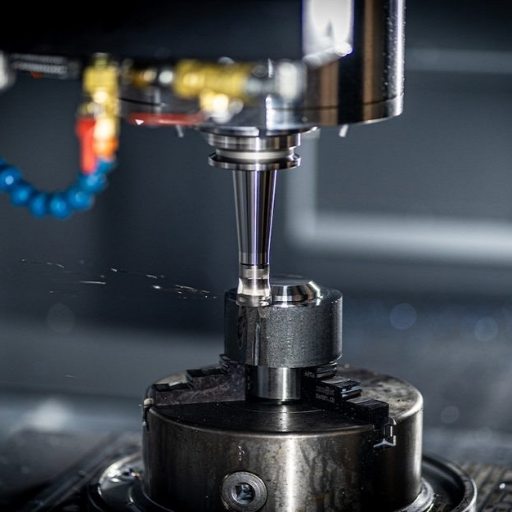
CNC machining, or Computer Numerical Control machining, serves as a manufacturing process in which a pre-coded software dictates the machinery’s movement and that of a tool. Various efforts of cutting, drilling, milling, or turning materials such as metals, plastics, or woods are undertaken to fabricate different parts very precisely. It is its capacity to create products with the utmost precision and consistency that separates it from others, so it ranks as a necessary consideration while producing a prototype or any quantity of production parts.
What is CNC machining?
CNC machining, also termed Computer Numerical Control machining, is defined as one of the most advanced manufacturing processes in which machines are operated with computer-guided systems with an unmatched level of precision and efficiency. CAD (Computer-Aided Design) or CAM (Computer-Aided Manufacturing) software is installed to control tools, which include drills, lathes, mills, and grinders, to work on metal, plastic, or wood and produce parts according to exact design specifications.
This technology brought further advancement to the manufacturing industry. Recent industry analysis stated that according to reports, in 2022, the global CNC machining market size was estimated to be around USD 100 billion. This market is also expected to witness significant growth owing to applications in aerospace, automotive, and medical devices. One of the biggest advantages of CNC machining is producing complex geometries with a tolerance as close as ±0.001 inches, thereby ensuring flawless product consistency and quality.
The reduction in production times and minimized human errors also allow CNC machining to serve as the most budget-friendly and scalable avenue to meet present-day manufacturing requirements. CNC machining finds usage in rapid prototyping and gigantic production capacities, giving both emerging businesses and monster enterprises a composite tool.
Explanation of the CNC Machining Process
CNC stands for Computer Numerical Control; its machining, a computer-based machine, and tool control-making highly precise automated manufacturing process. It begins with creating a digital design file, often with CAD (Computer-Aided Design) software. This CAD model gets converted into machine-readable code called CAM (Computer-Aided Manufacturing), instructing the CNC machine on appropriate cutting, drilling, and shaping operations.
Applications of CNC Machining
- Designing and Programming: Engineers design 3D modeling of the parts to be made. The models are then converted to G-code, which is the language that controls CNC machines.
- Material Preparation: Clamping or other means are used to secure the workpiece to the machine; the workpiece usually is metal, plastic, or composite.
- Machining Operations: The CNC machine then faithfully follows programmed instructions; it cuts and drills with immaculate precision, operating tools including drills, milling cutters, lathes, and grinders; with the most advanced CNC machines running simultaneously on a number of axes, complex geometries and detailed designs are manufactured.
- Quality Control: After machining is done, the finished part undergoes inspection and testing for assurance of quality. Dimensions, tolerances, and surface finishes may often be verified by state-of-the-art metrology equipment such as coordinate measuring machines (CMMs).
CNC machines and their capabilities

CNC, or Computer Numerical Control, machining is the process in which machines or tool centers carry out pre-programmed instructions with great contrast in accuracy. Software programs are used creating the instructions, where design specifications are converted into a series of commands. These commands are then executed by the CNC machine to cut, shape, or assemble materials with utmost precision. All this ensures uniformity, reliability, and manufacture of complex parts employed in various industries.
Types of CNC Machines
- CNC Milling Machines – These machines cut and shape materials using rotating cutting tools along multiple axes.
- CNC Lathes – These are designed for machining cylindrical parts while the lathe rotates the material and fixes the tool.
- CNC Plasma Cutters – Using higher plasma torch, these machines cut through metal and other conductive materials.
- CNC Laser Cutters – Use a laser for cutting all kinds of materials, from metal to wood.
- CNC Routers – Mostly used for wood, plastics, and soft metals, creating intricate designs and cutouts.
- CNC Grinders – These are surface finishing machines, removing material with an abrasive tool very accurately.
CNC Machining Capabilities
Pressingly favored by aerospace, automotive, health, and electronics industries alike, CNC machining is capable of doing different jobs. One of the very key things that give this machining popularity is the capability of producing parts with tolerances as tight as ±0.001 inches, granting it the feature of being able to keep exact specifications vital for applications.
CNC machines work with metal materials including aluminum, steel, and titanium, as well as plastics such as ABS, polycarbonate, and PEEK. Advanced CNC systems can even tackle cutting composite materials, ceramics, and exotic alloys, making it all the more flexible.
Today CNC machining centers operate on 5 axes, thereby manufacturing parts comprising complex geometry. In effect, this enables CNC machining, through 5-axis machines that can simultaneously move on X, Y, and Z and also rotate on A and B axes, to make parts such as turbine blades, impellers, or even medical implants that are otherwise impossible to manufacture through conventional manufacturing means.
Doing things fast is another thing about CNC machining. Automated tool change, optimal cutting path, and zero waste keep lead time and material costs to a minimum. According to an industry encyclopedia, the lead time for CNC machining is halved compared to traditional manual machining processes.
Adding to that, advances in software such as CAD and CAM have greatly enhanced the programming capability, allowing machinists to simulate the production process and optimize it, ensuring good production results with minimal errors.
With all this flexibility and accuracy comes the CNC machining that makes building complex parts easier and cheaper for businesses.
CNC Machining Materials
A variety of materials are supported by CNC machining, making it adaptable for many applications across industries. CNC machining typically uses metals like aluminum, steel, brass, and titanium-categorized for their strength and durability. Metals included are also plastics such as ABS, nylon, and polycarbonate, for their light weight and resistance to corrosion. At the same time, composites and specialty materials may be machined for applications requiring unique characteristics, e.g., heat resistance or electrical insulation. The material choice thus shall stand dependent on the desired properties and required criteria of application for the final product.
Custom CNC Machining Services

Custom CNC machining services offer a variety of production methods to suit any kind of design and functional requirements. These services are provided with all possible types of material such as metals, plastics, and composites, all allowing precise fabrication of components with unique features. Therefore, supported by the most up-to-date technology, custom CNC machining provides highly accurate, efficient production and the possibilities of complex geometries, making them preferable for very specialized applications in different industrial fields.
Advantages of Custom CNC Machining
- Precision and Accuracy- The custom CNC machine carries out operations with extraordinary accuracy to assure that each component complies with the design specification.
- Efficiency- It tends to be fast and cost-efficient to reduce contaminants wastes.
- Versatility- It supports any variety of materials and the intricate design, according to unique project specifications.
- Consistency- CNC machining offers an impeccable quality finish constantly, even for huge parts.
- Industry Adaptability- Good for aerospace, automotive, medical, and so on applications to meet many industry requirements.
How to Order Custom Parts Online
- Choose a Reliable Platform- Select a service that has been well-received, with many positive reviews and established expertise in custom part manufacturing.
- Upload Your Design- Send in a clean digital file representing your design, for example, a CAD file, to maintain accuracy.
- Select preferences- It is highly encouraged to stipulate the materials, dimensions, quantities, and any other relevant specifics for your project.
- Review the Quote- The cost and timetable that have been offered must be reviewed and approved before moving forward with the order.
- Place your order- After you have placed your orders, keep track of their progress as updates on production and delivery are provided by the platform.
Rapid CNC Prototyping
Rapid CNC prototyping has changed the course of product development for fast, accurate, and inexpensive design fabrication. CNC machines employ pre-programmed computer software to drive instruments like lathes, mills, or routers for making intricate designs with pin-point accuracy. This reduces the time taken to go from an idea to the physical appearance of a prototype and hence stands for industries like aerospace, automotive, and consumer.
An analyst recently stated that tolerances as fine as ± 0.005 in could be achieved through CNC machining, depending on the material and complexity of design. Materials like aluminum, steel, plastics, and composites are what are commonly used so that engineers and designers can experiment with various functionalities and looks. One of the greatest benefits of rapid prototyping using CNC machining is the ability to manufacturers low and high volume parts with equal quality.
Recent technology advancements in CNC machining have improved its capabilities by making the processing times faster and by enhancing multi-axis machining for more sophisticated geometries. For instance, very good accuracy is possible from 5-axis CNC machines by reaching out to hard-to-reach geometries and significantly reducing setups for machining. Thereby it improves smooth flow and lowers production cost.
Moreover, CNC-oriented prototyping reduces wastage of raw material as compared to conventional methods. New machines are made in such a way that the efficient use of material is maximized, such that it is an environmentally friendly approach to manufacturing. With the above benefits and newer ways, CNC machining still stands high as a preferred technology for those who seek a fast, precise, and cost-effective means of developing a prototype.
CNC Machined Parts and Surface Finishes

Surface finishes on CNC machined parts include many options and are selected to impart unique appearances, properties, and performance to the parts. Anodizing involves corrosion resistance; powder coating refers to coating with an extra-thick layer of heat-cured polymer; and simple forms of polishing deliver that super-smooth finish with a reflection. Some other finishes may involve plating, bead blasting, or other forms of texturing depending on requirements for aesthetic or protection and based on the particular materials they are made of. These finishing processes are offered to enable CNC parts to conform as nearly as possible to particular industry standards and application requirements.
Common Types of CNC Machined Parts
CNC machined parts commonly include gears, brackets, shafts, enclosures, medical devices, aerospace components, engine parts, and custom prototypes.
| Type | Material | Key Use | Feature |
|---|---|---|---|
| Gears | Metal/Plastic | Transmissions | Durable |
| Brackets | Aluminum | Structural Mount | Lightweight |
| Shafts | Steel | Rotational Power | Precise |
| Enclosures | Various | Housing Units | Customizable |
| Medical Devices | Titanium | Surgical Use | Biocompat. |
| Aerospace Parts | Aluminum | Aircraft Systems | Resilient |
| Engine Parts | Steel/Alloys | Automotive | High-Temp |
| Prototypes | Plastics | Product Testing | Scalable |
Understanding Surface Finishes in CNC Machining
Surface finishes will matter a great deal in CNC machining and so will be related to the function and design of the final product. A surface finish is the texture or smoothness the surface of a part exhibits after being machined, directly affecting properties such as performance, durability, and appearance. Common types of surface finishes include very smooth finishes polishing to moderately rough finishes for good gripping or decorative purposes and any types of coatings- anodizing, plating, or paint-for corrosion protection and wear resistance. Surface finishes are chosen on the basis of their end applications and also the material and operational environment for their respective parts. By understanding the selection of finishes, they can ensure the required service conditions and other design requirements have been met by the component.
CNC Machining Tolerances
Tolerances that CNC machining shall be the allowable variation in making a part so that it is consistent with the design specifications while it meets the functional and assembly requirements. With the tighter the tolerance, the more precise a machine can be, but the price always gets more as the machining time and difficulty increase. The most common CNC machining tolerances are ±0.005 inches (±0.127 mm) to ±0.001 inches (±0.025 mm), depending on such things as machine capabilities, material, or even the build of the part.
For common applications, tolerances of ±0.005 inches (±0.127 mm) suffice and are cost-efficient. Precision machining, however, requiring parts to perform with extreme accuracy, demands tolerances of ±0.001 inches (±0.025 mm), used within aerospace or medical device manufacturing consequently. Prod machines employing state-of-the-art CNC tooling achieve tight tolerances up to ±0.0002 inch (±0.005 mm) rarely used for other than the most demanding jobs.
Environmental conditions, choice of material, and machining processes also affect the required tolerance level. For example, plastics tend to be more susceptible to thermal expansion, slightly changing the result, while metals such as aluminum or stainless steel would be more stable during machining. Temperature, fixture conditions, and inspecting conditions always have a considerable impact on whether or not tight tolerances can be achieved.
As for design engineers, some tolerance aspects need balancing against production feasibility. Getting the tolerance too tight may cause exorbitant costs and exceedingly long production time periods. On the other hand, tolerance that is not tight enough may become a loose fit for operation specs. Hence knowing something about particular applications will help immensely in deciding on tolerance during CNC machining.
CNC Machining: Cost and Pricing Factors

The price tai outil to machine on CNC depends on various factors such as material, part design complexity, quantity, and tolerance. Aluminum or steel materials might be relatively cheap to machine, but will CNC machining service charge more for titanium or other composites? Simpler parts with less tight tolerances will have lower machining times and costs, while tight tolerances and complex designs will increase production costs. Consequently, prices begin to drop with a higher volume of orders being an economy of scale. Better pricing can be achieved by clearly specifying design details and discussing the design for manufacturability with CNC machining service providers.
CNC Machining Service Pricing Factors
When considering the price of CNC machining services, I always bear some major considerations in mind. Material choice will be a big consideration, since a harder or more exotic material will cost much more. Design complexity is also something I look at—simple designs with loose tolerances are usually cheap to produce, while intricate geometries increase costs. I also look into how volume of orders plays into this, since a bigger quantity usually translates into a lower per-unit price thanks to economies of scale. By having clear and detailed specifications and collaborating with the service providers, I make sure that the design is as manufacturable as possible given the cost limitations.
Instant CNC Service Quote
Thanks to the proliferation of online platforms and digital tools, it has become increasingly common to obtain instant manufacture service quotes in very short time frames. Bearing credit to these tools by speeding engine and plan decisions, companies and individuals can actually compare and contrast between continuously more options for their projects. Most CNC service firms use an e-quoting system where a user simply uploads a CAD file, inputs the desired material specs, surface finish preferences, and quantity.
Besides that, companies including Xometry and Protolabs boast automated systems that combine AI-powered evaluators, enabling them to scoop up an instant price with respect to a design. They claim that these platforms can analyze quote requests in under 15 seconds, which is much faster compared to the conventional process. Some even review and explain whether alterations can be made to the design for manufacturability, potentially saving costs or otherwise improving the design.
Variables in the quoting process would include the selection of material such as aluminum, stainless steel, titanium; tolerance dimensions; production lead time. Recent trends revealed that aluminum is still by far the most common material used in CNC machining operations, especially considering its strength-to-weight ratio and cheap cost of CNC machining that ranges between $7 and $15 for each part, depending on complexity. Of course, higher-tolerance requirements or exotic materials like titanium will push prices aside for $50 to $150 per part.
Another feature of online platforms is that they integrate real-time analytics, dynamically modifying prices based on orders’ volumes, with larger volume orders usually enjoying decreasing unit cost. These tools, therefore, help their users explore several configurations from different perspectives, allowing them to ultimately narrow down to the most economical solution for their manufacturing needs. This streamlining of quoting processes has transformed the CNC industry into one that is fast, transparent, and easy to operate.
Cost Comparisons of CNC Machining
In carrying out comparative work in CNC machining costs, consideration should be given to every factor in existence to ensure that the comparison is exhaustive. For example, material choice factors largely since materials vary so widely in price and machinability. Metals like aluminum are usually more economical and easier to machine when compared to high-strength alloys or special materials like titanium. Design complexity also affects price, as parts with complex geometries require more production time and advanced tooling. Quantity ordered will also have an effect on price, as higher quantities benefit more from economies of scale with decreased cost per unit. Before such consideration is given into these variable factors, businesses will balance perfect and price alternatives for their own benefit.
Reference sources
- Title: Digital Twin Based Machining Condition Optimization for CNC Machining Center
Authors: B. Sim, Wonkyun Lee
Journal: International Journal of Precision Engineering and Manufacturing-Smart Technology
Publication Date: 2023-07-01
Citation Token: (Sim & Lee, 2023)
Key Findings:- The study proposes a method for optimizing machining conditions using a digital twin of a CNC machine, which includes physical models of the controller and feed drive systems.
- The optimization aims to minimize machining time and production costs while maintaining quality.
- The results demonstrate a significant reduction in machining time and production costs through the proposed method.
Methodology:
- The authors constructed a digital twin of a CNC machine and evaluated it based on machining experiments.
- A genetic algorithm was used to determine optimal machining conditions, focusing on minimizing machining time and production costs.
- Title: A bibliometric analysis of large language model-based AI chatbots in surgery
Authors: Zhiyan Wang, Hongru Zhou, Tao Song
Journal: Annals of Medicine & Surgery
Publication Date: 2025-05-12
Citation Token: (Wang et al., 2025)
Key Findings:- The analysis identifies key application areas for AI chatbots in surgery, including their potential use in CNC machining processes for surgical tools.
- The study highlights the importance of AI in enhancing surgical procedures and patient education.
Methodology:
- A bibliometric analysis was conducted using the Web of Science database to assess research trends and applications of AI chatbots in surgery.
- The study analyzed 260 relevant papers, focusing on publication trends, leading institutions, and key authors.
- Title: Tool orientation optimization for the five-axis CNC machining to constrain the contour errors without interference
Authors: Qun-Bao Xiao, M. Wan, Weihong Zhang
Journal: Journal of Manufacturing Processes
Publication Date: 2022-04-01
Citation Token: (Xiao et al., 2022)
Key Findings:- The study presents a methodology for optimizing tool orientation in five-axis CNC machining to minimize contour errors.
- The proposed method enhances machining accuracy and efficiency.
Methodology:
- The authors developed an optimization algorithm that considers the geometric constraints of the machining process.
- The effectiveness of the method was validated through simulations and practical machining tests.
- Top CNC Machining Parts Manufacturer and Supplier in China
Frequently Asked Questions (FAQs)
What are the applications of CNC machining on metals and plastics?
CNC machining finds application; for various uses across an array of industries, for parts made of metals and plastics. It involves precise production of components including custom-threads and complex designs. The automotive, aerospace, and medical industries often CNC-machine parts for prototype and production. CNC machining services can look after materials depending upon the design to bring out the final product with engineering specifications. CNC rapid prototyping is advantageous in rapidly bringing up the original designs. Next, CNC milling and turning processes will create the final parts with utmost accuracy.
How do I order CNC machining services for sheet metal fabrication?
Start by requesting a quote from a reputable CNC shop. Most services today offer online CNC machining, so uploads for online evaluation are easy. Specify your sheet metal type such as aluminum 6061 or other alloys to have the right material considered. Provide all details of your specifications, including dimensions with tolerances, so that they can manufacture precision parts conforming to your standards. On quote approval, production usually starts with a short turnaround for the parts.
What is CNC rapid prototyping, and what are its applications in production?
CNC rapid prototyping is a rather fast and efficient means of producing prototypes and production parts using CNC machining technology. This process allows one to test their designs using CNC machines rapidly while making changes to designs prior to full-scale production. Engineering and manufacturing companies can use CNC machines to produce few high-quality prototypes both in metals and plastics, ensuring the prototypes are actually functional and the design is correct. The ability to make quick-turn parts keeps projects from stagnating into bureaucracy. This is of utmost importance to companies that wish to commercialize their innovation and reduce time-to-market for new products.
How do I get quotes for CNC machining?
Getting a quote for CNC machining services is very straightforward. Majority of CNC shops will have you submit an online form detailing your project; an overview of the type of parts made, materials, and desired quantities. Be very specific about your machining needs, whether for CNC turning with live tooling or CNC milling of complex shapes. After submitting the form, the shop will review the specifications provided and send you back a detailed quote showing costs and times. This process ensures transparency and allows one to compare manufacturer services to fit their budget and requirements.
What kind of precision CNC services is available for the fastening of metal parts?
Uses of precision CNC services for metal parts include CNC milling, turning, and sheet metal fabrication. They represent literally any processing of metal components featuring tight tolerance and complex design that require high-quality treatments. The custom metal parts can be designed and manufactured for particular applications using various metal materials, including aluminum alloys and other metal blocks. CNC machining is particularly useful to put together machined parts that have cylindrical features which must be machined to specification for a final assembly. By using modern machining centers, manufacturers can provide superior surface finishes for their parts and assure that each is up to the prescribed standard of quality.


