


Introduction to Nickel
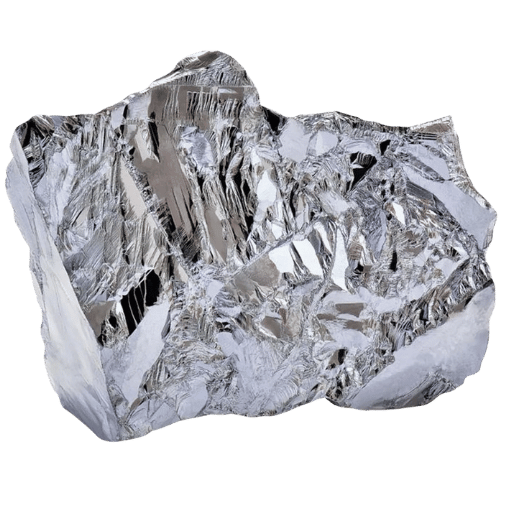
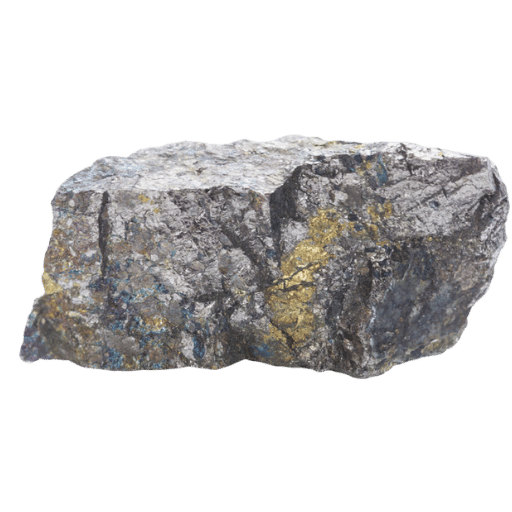
Nickel is a silvery-white metal, valued mainly for its strength, corrosion resistance, and versatility. It forms the main ingredient of stainless steel, imparting strength and resistance to oxidation. Nickel finds great application in batteries, especially in rechargeable lithium-ion types, as it stores considerable energy. Nickel is found in the Earth’s crust, with laterite and pentlandite considered common ores for nickel. Due to their mechanical and chemical stability, these materials are found in various applications across the fields of construction, transportation, energy, and electronics.
Overview of Nickel and Its Properties
Being attractive due to its strength, corrosion resistance, and high-temperature endurance, nickel is a highly versatile metal. It is an excellent ductile metal; hence, it is used for various forming processes, including the manufacture of alloys. Generally, nickel is alloyed with iron, chromium, and other metals to provide hardness and durability to materials used in building, aerospace, and marine applications.
Key Properties of Nickel
- Excellent ductility: Perfect for various forming processes
- High temperature resistance: Maintains integrity under extreme conditions
- Good conductivity: Valuable in electrical applications
- Chemical stability: Resistant to corrosion and oxidation
- High recyclability: Environmentally sustainable material choice
Periodic Table Position of Nickel
Atomic Number
28
Group
10
Period
4
Atomic Weight
58.69 u
Nickel sits at position 28 in the Periodic Table as a transition metal, classified under group 10 and period 4. It is a silvery-white metal with high corrosion resistance, having a melting point of 1455 °C (2651 °F), and demonstrates a face-centered cubic crystal structure. With its position in the Periodic Table, it becomes highly suitable for creating various alloys and is therefore highly valued in industries and by authorities in chemistry.
Atomic Structure and Electron Configuration
With its atomic number being 28, one can determine that there are 28 protons in the nucleus of nickel. In another way, its electron configuration can be written as [Ar] 3d⁸ 4s², which means nickel’s electrons are distributed across different energy levels, with eight in the 3d subshell and two in the 4s subshell. It is this particular arrangement that characterizes the activity of nickel and its ability to form chemical bonds in various oxidation states, mainly +2 and +3.
Understanding Density: Definition and Measurement
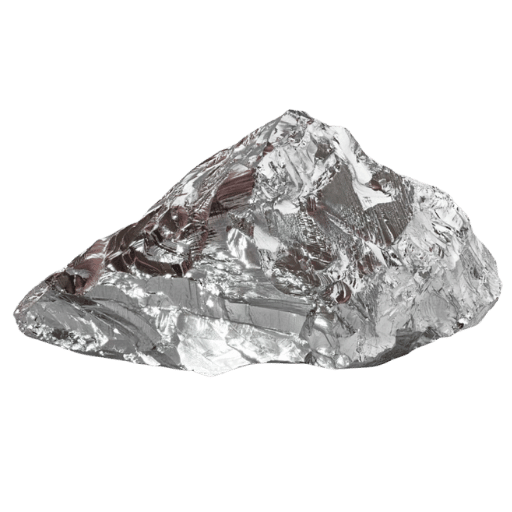
Density is mass per unit volume, expressed by the fundamental formula:
This basic physical property takes on different units depending on the specific situation: mass units are measured in either grams or kilograms, and volume units can be expressed in either cubic centimeters or cubic meters. Density is always one of the foremost parameters, as its presence directly indicates composition and behavior under various physical conditions.
The Density of Nickel
The density of nickel at ambient temperature is around 8.908 g/cm³. The hallmark of nickel is its relatively high density, characterized by a very compact atomic spacing. This high density lends itself to nickel’s favor in cases where hardness and strength matter, such as alloy construction and coin minting.
Factors Affecting Nickel Density
Key Influencing Factors
- Crystal Structure: Crystalline arrangement affects density when distortions or imperfections exist within the lattice
- Alloying Elements: Introduction of other elements may alter density based on their proportion and atomic mass
- Temperature: Thermal expansion takes place at high temperatures, thus decreasing the density of the material
- Pressure: As pressure increases, it presses the material, resulting in an increased density
- Manufacturing Processes: Microstructures and bulk density may be affected by powder metallurgy and casting
- Impurities: Foreign elements will have a profound impact on the overall density of the material
Industrial Applications and Significance
Manufacturing Industry
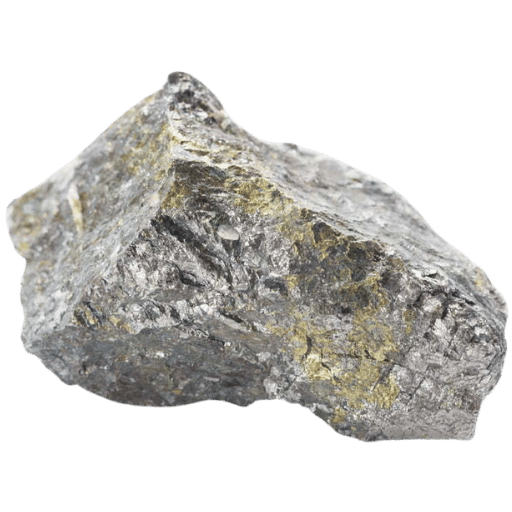
With a density of 8.91 g/cm³, nickel is vital due to its mechanical properties and strength considerations during manufacturing. In the aerospace and automotive industries, in addition to the high temperatures and mechanical stresses experienced by high-density materials like nickel, particularly turbine blades and structural elements, precise manufacturing is required.
Electronics and Technology
It is widely used in connectors, batteries, and circuitry due to its electrical properties and corrosion resistance. Lithium-ion batteries with nickel-rich cathodes offer high energy density, enabling them to power smartphones, laptops, and electric vehicles. Market growth is expected with a CAGR of more than 15% over the coming decade.
Coinage Applications
With the density almost perfectly balanced for coinage, nickel is extensively used. American nickels comprise 25% nickel and 75% copper, providing these coins with a perfect weight-to-size ratio. The density of these nickel coins imparts a distinct feel and resonance throughout their circulation.
Aerospace Industry
These nickel alloys withstand the high-temperature, high-stress environment of turboshaft engines. More recently, studies have focused on controlling grain structure and alloy composition to enhance efficiency in jet turbine engines and power generation systems.
Density Comparison with Other Metals
| Metal | Density (g/cm³) | Common Applications | Relative to Nickel |
|---|---|---|---|
| Aluminum | 2.70 | Lightweight structures, aircraft frames | Much lighter |
| Iron | 7.87 | Steel production, construction | Slightly lighter |
| Nickel | 8.91 | Alloys, batteries, coinage | Reference |
| Copper | 8.96 | Electrical wiring, plumbing | Slightly heavier |
| Lead | 11.34 | Radiation shielding, batteries | Much heavier |
| Tungsten | 19.25 | High-temperature applications | More than twice as heavy |
Implications of Density Differences
These density variations play a crucial role across various industries. Metals with high densities, such as tungsten, are the densest; they are primarily used where a great mass in a small volume is critical, such as in radiation shields and counterweights in aerospace applications. Low-density metals, such as aluminum, are well-suited for lightweight structural applications, where their reduced weight leads to improved fuel efficiency and performance.
Recent Research and Advancements
Innovations in Nickel Usage
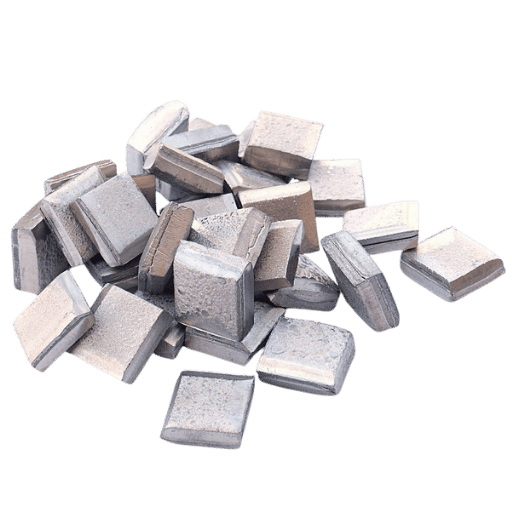
Recent developments have significantly expanded nickel applications in critical sectors:
Battery Technology Breakthroughs
- Nickel-rich cathodes: NMC cathodes with up to 90% nickel content increase energy density
- Enhanced performance: Longer driving ranges and faster charging rates for electric vehicles
- Thermal stability: Improved safety characteristics in high-capacity batteries
Superalloy Developments
Higher efficiencies obtained in gas-turbine engines and energy systems certainly contribute to their development in grain structure refinement and alloy composition optimization in advanced nickel-based alloys for aerospace and power generation.
Additive Manufacturing
3D printing with nickel alloy can support a near-net-shape manufacturing of complex components, minimizing material wastage and allowing for the creation of geometries that were impossible using traditional manufacturing processes.
Future Industry Implications
Market Projections
The electric vehicle industry is predicted to drive the nickel demand growth well above 65% by 2030. As an integral part of battery chemistry in NCMs, nickel establishes its foothold in the establishment of the EV revolution and energy storage systems.
Besides batteries, nickel is directly involved in stainless steel production, accounting for approximately 70% of the world’s consumption. With numerous advanced processing methods, lighter yet stronger and corrosion-resistant materials are being developed for use in the construction, transportation, and aerospace industries.
The growing trend toward green hydrogen production plants is, therefore, indicative of the global importance placed on nickel-based catalysts in the decarbonization process. Such demands have prompted industrialists to adopt environmentally sustainable sourcing and recycling initiatives, in line with the principles of the circular economy.
Frequently Asked Questions
Reference Sources
- Princeton University – Nickel Properties: Comprehensive database featuring nickel’s density of 8.9 g/cm³ with detailed material specifications.
- Massachusetts Institute of Technology (MIT) – Nickel Characteristics: Technical documentation specifying nickel’s mass density at 8900 kg/m³ for engineering applications.
- Materials Science and Engineering Research: Peer-reviewed studies on nickel density measurements and industrial applications in modern technology sectors.


