


Regarding CNC plastic turning, machining cast nylon offers opportunities for experience and challenges. Being a somewhat of a lightweight yet durable product, cast nylon is a very versatile material used in industries like automotive, aerospace, and manufacturing. However, cast nylon machining demands an understanding of the peculiarities of cast nylon and standard practices for precision and efficiency. This blog explains the basics of machining cast nylon and gives essential insights, tips, and strategies for improving your processes. Whether you’re a knowledgeable machinist or a student just getting into this material, this will teach you how to turn out stronger results with maximum efficiency. So keep reading and learn how to do CNC plastic professionally turning for cast nylon!
Understanding Nylon and Its Properties
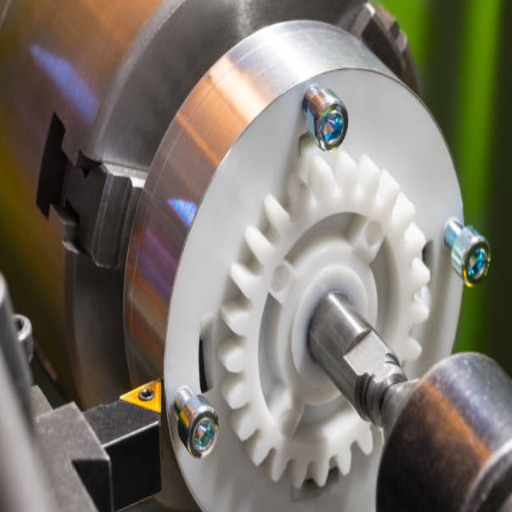
Nylon is an admirable synthetic polymer with durability, strength, and wear resistance. It is light yet sturdy for multiple industrial uses, including machining. It also offers chemical resistance, low moisture absorption, and excellent dimensional stability to keep it precise while manufacturing. Self-lubricating decreases friction and is suitable for moving components like gears and bearings. The application combinations make nylon one of the material choices for industries with efficiency and performance compromises.
Overview of Cast Nylon
Cast nylon is highly sought after for its outstanding mechanical and thermal properties, which provide essential advantages to many industries. The cast method uses liquid monomer, producing parts with large dimensions and high homogeneity. It also possesses excellent wear resistance, high tensile strength, and the capacity to bear heavy loads. Considerations are usually given to extremely demanding applications, from industrial equipment to automotive components. Cast nylon is also a material with superior resistance to abrasion and impact, facilitating low noise levels for moving machinery. Its ability to be mixed with additives further increases its use in specialized applications, thereby securing its place in modern engineering solutions.
Mechanical Properties of Nylon
Nylon combines a particular mechanical property set that renders it an essential material in many industries. The tensile strength varies from 50 to 100 MPa, depending on the grade and formulation, giving it strength and durability under stress. Nylon also has a remarkably high elongation at break, generally from 20% to 100%, which enables it to endure intense deformation before failure. The material also has very high-impact resistance and is favored in applications undergoing sudden forces or shocks. With an elastic modulus value ranging from 2.5 to 4 GPa, nylon has just the right amount of stiffness to give it design flexibility. These materials’ properties make nylon lightweight and very versatile for any engineering use.
Applications of Machined Nylon Parts
With their robust strength and durability, machined nylon parts find incredible culinary use in different industries. The following highlights the five most common applications where machined nylon parts help in making a difference:
- Gears and Bearings
Nylon, with its lovely low friction and self-lubricating properties, is considered a perfect material for the manufacture of gears and bearings. By operating silently and with lowered friction, these parts suffer very little wear and tear, thereby prolonging the lifespan of the machines.
- Industrial Rollers
Nylon rollers are used in conveyor systems and material handling equipment. Their impact resistance and light weight guarantee smooth system operation, thereby decreasing the load on the system.
- Wear Pads
With high abrasion resistance, nylon wear pads knit moving parts of heavy machinery together and extend their operational life by several years. They also contribute to lowering noise and vibration while in operation.
- Seals and Gaskets
Nylon is chemically resistant and dimensionally stable, so seals and gaskets made of it are used in automotive, aerospace, and industrial applications. Such components provide tight seals under all environmental conditions.
- Bushings
Commonly used to lessen friction within mechanical systems, nylon bushings fight for time-wearing. Under almost the heaviest service loads, they provide better motion than metal alternatives: smooth and quiet.
CNC Machining of Nylon: Essential Guidelines
- Tool Selection
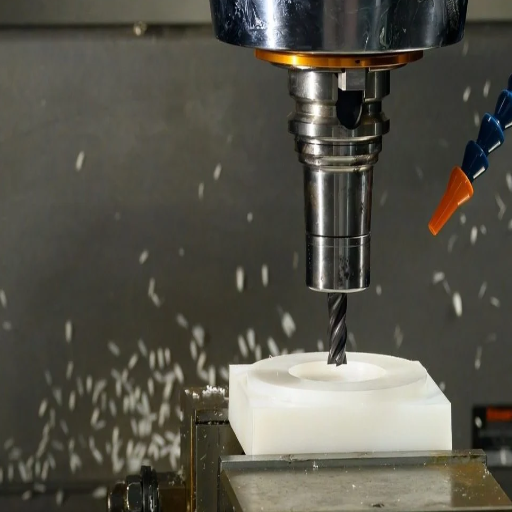
Use sharp HSS or carbide cutters for nice, clean finishes. Do not allow the work to be done with a dull tool, as this will result in a poor finish and deformation of the material.
- Cutting Speeds and Feeds
Use moderate cutting speeds with low feed rates to prevent excessive heat buildup that results in melting or warping.
- Clamping and Workholding
Ensure proper clamping to avoid movement or vibration during machining. Because nylon is flexible, it requires special handling for accuracy.
- Cooling and Lubrication
Apply air cooling or at least light lubrication to reduce friction and heat generation. Avoid heavy coolant application as it may affect dimensions.
- Allowance for Material Expansion
Allow for thermal and moisture expansion when evaluating the final designs, as nylon is sensitive to such considerations.
Following these guidelines will ensure smooth machining while maintaining the integrity of the nylon components.
Choosing the Right Machining Method
Factors to consider when deciding on the best machining method for nylon parts include the part’s complexity, portions, and production volume. CNC is one of the most preferred techniques due to its versatility and precision, allowing for very intricate designs and high consistency in quality. Injection molding could present another, more inexpensive option for simpler or higher-volume parts. Other factors to consider include tooling, cutting speeds, and proper lubrication during machining, which might affect the final result. When properly studied, this combination will guarantee the answers that meet the requirements with a low budget.
Key Machining Parameters for Nylon
Being a nylon machinist presents an interesting challenge due to the particularities that distinguish the material: low thermal conductivity, high elasticity, and moisture absorption properties. These features affect the machining procedure and subsequent product quality. The following are the machining parameters and considerations for nylon:
- Cutting Speed
Cutting speeds for nylon should be between 200 and 400 m/min (656 and 1312 ft/min). The lower speed regime is utilized in rougher cuts to prevent overheating and material deformation.
- Feed Rate
The feed rate recommended for cutting nylon typically stays between 0.1-0.2 mm/rev (0.004-0.008 in/rev). Feed rates are slower for better surface finishing, but surface finishing could be compromised for relatively faster feed rates when more material removal is desired.
- Tooling
Sharpened steel or carbide tools are the best for ensuring a clean cut. Diamond coating could enhance tool life and performance even further for specific applications. Well-maintained tools should always be used to avoid pulling or fraying nylon during machining since such defects cannot be repaired.
- Lubrication and Cooling
Nylon’s relatively low melting point is 220-250°C (428-482°F), so efficient cooling is the key. Water-based coolants or air jets may facilitate rapid heat dissipation so the workpiece does not soften or warp.
- Chip Removal
Throughout machining, nylon gives rise to long, continuous chips, necessitating efficient chip evacuation to avoid entanglement with the operation or its possible damage to the part.
- Moisture Content
Being hygroscopic, nylon absorbs moisture from the ambient atmosphere. Proper drying should be ensured for the material before machining to minimize the chances of dimensional changes and internal stresses. Drying temperatures for nylon stand around 80-90°C (176-194°F) for 8-12 hours, depending on moisture content.
- Dimensional Stability
Due to environmental moisture, machined nylon parts may display minor expansion or shrinkage over time. Annealing after machining at about 85-105°C (185-221°F) for a couple of hours will ensure dimensional stability.
Following such parameters and accommodating the nylon peculiarities will give manufacturers a far better surface finish, tighter tolerances, and improved part performance in different applications.
Understanding Cutting Speeds and Feeds
Cutting speeds and feeds are paramount in optimizing machining conditions, especially when dealing with nylon as the material. The cutting speed is the speed with which the tip of a cutting tool moves along the material’s surface, expressed in surface feet per minute (SFM) or meters per minute (m/min). The feed rate is the distance that the tool’s tip moves into the material for one revolution of the workpiece, expressed in inches per revolution (IPR) or millimeters per revolution (mm/rev).
For nylon and similar thermoplastics, cutting speeds in the 300-800 SFM (90-250 m/min) are generally valid, depending upon the part geometry and tool geometry. Lower speeds correspond to thicker cuts, whereas higher speeds improve surface finish for shallow cuts. Most suitable feed rates lie between 0.003-0.020 IPR (0.08-0.50 mm/rev) because these rates minimize tool deflection and promote efficient chip removal without exerting stresses on nylon during machining.
Because nylon has a low melting point, a high cutting speed or aggressive feed rate can generate heat, which could melt or deform the material. Polished and sharp cutting tools, combined with good cooling methods, such as air or mist, help minimize friction and maintain dimensional accuracy during machining.
Also worthy of mention is that advanced CNC systems and software can dynamically adjust machining cut speeds and feeds in real time to respond to the nuances of a challenging project. A thorough grasp of these parameters helps maximize tool life, productivity, and quality of nylon work across industries.
Tooling Considerations for Machining Nylon

Machine nylon right, and head for tools and settings that can offer the best results. Sharp tools are the best for reducing any heating or deformation of the material in cutting. High-speed steel or carbide tools are preferred to last longer and hold their edges well. Slower speeds with a higher feed rate minimize friction and the chances of a melt. Coolant, specifically air or mist, further assists with heat management while keeping the material stable during processing. These basic tooling considerations will help manufacturers machine nylon parts correctly and efficiently.
Types of Cutting Tools for Nylon
Material for use includes high-speed steel (HSS), carbide, diamond-coated, and specialized plastic-cutting tools.
|
Parameter |
HSS Tools |
Carbide Tools |
Diamond-Coated |
Plastic Tools |
|---|---|---|---|---|
|
Durability |
Moderate |
High |
Very High |
Moderate |
|
Sharpness |
Good |
Excellent |
Superior |
Good |
|
Heat Res. |
Moderate |
High |
Very High |
Moderate |
|
Cost |
Low |
Moderate |
High |
Low |
|
Use Case |
General |
High-Volume |
Abrasive Nylon |
Precision Cuts |
|
Tool Life |
Short |
Long |
Longest |
Short |
Tool Geometry and Its Impact on Machining
Tool geometry affects nylon machining efficiency and accuracy. Such tool geometry directly assists in chip formation; hence, cutting forces should be minimized, and machining does not cause tool wear without damage to almost any tool. In machining nylon, tools with sharp cutting edges and large rake angles are preferred as these will reduce cutting resistance and, basically, the deformation of the material being cut. Also, care must be taken in selecting an appropriate relief angle, for excessive friction on the tool may cause heat buildup, finally melting the nylon. These optimum geometries, customized for the properties of nylon, will also yield a greater finish and extend tool life, thus enhancing nylon machining productivity.
Coatings and Materials for Cutting Tools
Choosing coatings and materials for cutting tools is crucial for best performance in machining nylon or similar polymers. With modern developments in cutting tools, coatings have become specialized in reducing friction, preventing buildup, and thus protecting against wear. Coatings recommended for nylon include Titanium Nitride (TiN) and Diamond-Like Carbon (DLC). TiN coating ensures less heat generation and improves tool life, while DLC coatings offer a very smooth surface that prevents material adhesion, a frequent problem with polymers.
From the perspective of materials, the best cutting materials for working with nylon are high-speed steel (HSS) and carbide. HSS tooling is versatile and cheap enough for low to moderate cutting speeds. In contrast, carbide tools are capable of operating at higher cutting speeds and have better tool life for harder machining environments because of their hardness and thermal resistance.
It has been reported that appropriate coatings on carbide tools could increase tool life up to 45% for abrasive or high-performance reinforced nylons. These coatings also help hold tighter tolerances and finer finishes, which in return aid in reducing secondary operations. Thus, this blend of specialized tool materials and advanced coatings can provide a highly efficient and cost-effective machining scenario, mostly applicable for bulk production.
Common Challenges in Machining Nylon

- Deformation of Material: With its low melting point and high flexibility, nylon can undergo deformation during machining, particularly when excessive heat or forces are too high.
- Heat Generation: Machining nylon produces heat, which may melt the material or cause it to warp, harming the dimensional accuracy and surface finish.
- Tool Wear: Usually, nylon is reinforced with some abrasives, which increases the wear of the tool and decreases its life if not addressed.
- Chip Control: Nylon creates long and stringy chips that tend to get entangled with the tool or clog the equipment; thus, chip evacuation becomes difficult.
- Moisture Sensitivity: Since nylon is hygroscopic, it absorbs moisture, which can cause dimensional or mechanical property changes that hinder precise machining.
Knowing about such issues and applying proper machining techniques will help reduce this problem. Such methods include using sharp tools, ample coolant, and controlled cutting parameters.
Dealing with Chip Formation
Chip formation when machining nylon presents particular difficulties due to the material’s tough, elastic nature. Because nylon tends to produce long, stringy chips during the cut, the tool may become entangled with chips, diminishing machining efficiency and leading to surface defects. These problems must be controlled effectively through proper control techniques and technologies.
Some remedies to chip problems include utilizing properly designed sharp cutters for cutting plastics. These tools should have polished cutting edges to minimize friction and resist adhesion of the workpiece material. Single-flute or double-flute tools generally work well when machining nylon because they allow good evacuation of chips. Other factors that should be controlled are feed rate and spindle speed, which cause the material to overheat and are responsible for changes in chip size. Evidence shows that feed rates around 0.15–0.5 mm/rev in conjunction with cutting speeds of 200–400 m/min will give better results for nylon machining.
Apart from that, forced air or vacuum systems can be implemented to expel chips. Keeping the nylon material cool is necessary since its chips can melt or smear when exposed to high temperatures. Designing a chip-breaking tool setup can also be useful in limiting the length of continuous chips.
Lastly, cleaning the machining zone is essential. Letting the chips pile up may cause equipment jamming or distract accuracy. Proper coordination of these measures and alignment with sound working principles can eliminate the constraints of chip formation, thereby improving fine finishes, productivity, and tool life.
Managing Thermal Issues During Machining
Temperature increases pose one of the largest challenges during machining: high temperatures negatively affect tool life, surface finish, and workpiece quality. Findings from recent studies suggest that, during high-speed machining, temperatures in cutting zones can soar beyond 1000°F (537°C), causing rapid wear, not to mention the thermal expansion in the workpiece that could adversely affect dimensional accuracy.
Consequently, an efficient cooling strategy should be implemented. Flood coolant, provided by several water-based cutting fluids, can lower temperatures and lubricate the interface to reduce friction. Cryogenic cooling is becoming the choice for situations requiring high technologies. Cut process temperatures can be lowered by 70% to 80% with liquid nitrogen or carbon dioxide, improving tool life by 300%.
Choosing the right cutting speed, feed, and tool materials is also an important means to avoid thermal problems. Cutting tools including ceramics or polycrystalline diamond (PCD) are heat-resistant to a better degree and can maintain their structural strength at high temperatures. Data shows ceramic inserts can work at temperatures above 2192°F (1200°C) without losing procedure effectiveness.
Another environmentally safe way of tackling thermal issues is dry machining, also known as machining without cutting fluids. The best-case scenario is to coat the tools with specialized coatings like titanium aluminum nitride (TiAlN), which can add thermal resistance.
Integrating cutting-edge cooling methods with suitable cutting parameters and materials can solve thermal problems in machining processes, thereby increasing productivity and quality.
Reference Sources
1. Machinability Examination on Nylon-6 GFRP Composite with Abrasive Water Jet Machining
- Authors: Not specified in the provided context.
- Publication Date: December 30, 2019
- Journal: International Journal of Innovative Technology and Exploring Engineering
- Key Findings:
- This study aimed to understand the influence of abrasive water jet machining parameters on the surface roughness of Nylon-6 glass fiber reinforced polymer (GFRP) composites.
- The results indicated that maximum applied pressure, low transverse speed, and optimal standoff distance significantly reduced surface roughness.
- The analysis of variance (ANOVA) showed that standoff distance was the most critical factor affecting surface roughness, followed by transverse speed and applied pressure.
- Methodology:
- The Nylon-6 GFRP composites were fabricated using an extrusion process.
- An L27 orthogonal array was employed for experimental studies, focusing on three parameters: applied pressure, standoff distance, and transverse feed.
- The Taguchi method was used to determine the optimal combination of machining parameters.
2. Top Nylon CNC Machining Parts Manufacturer And Supplier In China
Frequently Asked Questions (FAQs)
Q: What are the recommended speeds for machining nylon materials?
A: The recommended speeds for machining nylon materials can vary based on the type of nylon used, such as unfilled nylon or glass-filled nylon. Generally, a spindle speed of around 800 to 1200 RPM is effective for most nylon grades. Adjusting the speed and feed rate according to the machining operations, such as milling or turning, is essential. Maintaining a high rake angle can also help achieve a smooth surface finish on nylon, reducing heat generated during machining. Additionally, using coolant to reduce heat is advisable to improve tool life and performance during machining.
Q: How does the machining process differ for plastic machining from metal machining?
A: The machining process for plastic machining, including nylon, is distinct from metal machining in several ways. Plastics, like nylon, tend to melt or deform when subjected to high temperatures, necessitating lower cutting speeds and feed rates. For instance, while metal machining might benefit from aggressive cutting parameters, working with nylon requires a balance to prevent heat buildup. Using sharp cutting tools is essential to achieve a high-quality surface finish and reduce the risk of swarf accumulation. Moreover, incorporating finishing passes can enhance plastic parts’ precision and ensure tolerances are met. Understanding the properties of the grade of nylon being machined is vital for optimizing these processes.
Q: Can you explain the importance of using coolant to reduce heat in nylon CNC machining?
A: Using coolant to reduce heat in nylon CNC machining is crucial due to nylon’s sensitivity to temperature fluctuations. Excess heat can lead to melting or warping of the material, adversely affecting the dimensions and surface quality of the finished parts. Coolant helps maintain an optimal temperature and improves the tool life by reducing wear from friction. High-speed steel tools can benefit significantly from coolant when machining nylon, allowing for higher feed rates while minimizing the risk of damaging the material. Additionally, effective cooling can aid in chip removal, preventing swarf from clogging the cutting area during machining operations. Incorporating coolant into the process is key to achieving high precision and optimal performance.
Q: What types of cutting tools are best for machining this material?
A: The best cutting tools for machining nylon materials include high-speed steel and carbide tools with a positive rake angle. These tools effectively reduce cutting forces and improve the quality of the surface finish on nylon. For milling or drilling applications, using sharp cutting tools is essential to minimize heat generation and prevent material melting. Tools with a high rake angle can also enhance chip formation and improve the machining process. It’s also recommended to choose tools optimized explicitly for plastic machining to ensure the best results, especially when dealing with filled nylon or high-strength nylon that may present unique challenges during machining.


