Braking systems sit at the very heart of vehicle safety, where even the smallest defect can turn decisive milliseconds into disaster. Run-of-the-mill rubber hoses may satisfy everyday commuters, yet anyone chasing track-ready feel soon reaches for braided steel. Such aftermarket lines resist swelling under maximum hydraulic pressure, so pedal response stays immediate no matter how hot the calipers get. The discussion that follows breaks down those advantages in exhaustively technical terms, spelling out why race teams and road-going perfectionists alike consider braided steel a non-negotiable upgrade.
What Are Stainless Steel Braided Brake Lines and Why Choose Them?

Stainless steel braided brake lines are high-performance parts meant as replacements for ordinary rubber brake lines. They comprise a Teflon or equivalent polymer inner tube ensheathed with a braided stainless steel outer layer. With such a setup, greater durability is attained, and the lines do not expand with pressure, so a consistent amount of hydraulic force is transmitted during braking. These steel lines resist wear, corrosion, and temperature changes; thus, they provide enhanced braking efficiency, pedal feel, and reliability. Such a line is thus the apt choice for any driver who demands command and performance, particularly in situations of greater stress or performance.
Understanding the Brake Line Anatomy
Brake lines are tubes transporting the hydraulic fluid from the master cylinder to the brakes at every wheel, thus linking calipers, wheel cylinders, and other components.
Benefits of Stainless Steel Braided Over Rubber
- Durability: Stainless steel braided lines offer more resistance compared to rubber lines against wear and tear and, therefore, have a much longer lifespan.
- Expansion: With rubber lines, under high hydraulic pressure, you will usually experience an expansion. This expansion can adversely affect the braking performance. With stainless steel braiding, such expansion is practically nil.
- Better Pedal Feel: Braided brake lines give a firm, responsive brake pedal feel under hard application due to their reduced flexibility.
- Resistance to Corrosion: Stainless steel resists rusting and corrosion caused by environmental factors, such as moisture and road salt, in effect minimizing degradation over the years.
- Heat Resistance: Braided lines offer better resistance to high temperatures than rubber ones, so even under extreme operating conditions, they don’t lose out on performance.
- Looks: Stainless steel braided lines are usually available with different finishes and allow you to enhance the look of your brake system on your vehicle.
- Preferred Option for Performance Environments: Perfect for high-performance vehicles, motorsports, or heavy-duty applications, in settings where constant braking is paramount.
Longevity and Durability of Braided Brake Lines
The braided brake lines are necessarily highly durable and can last for a number of years, or ideally for the lifetime of a given vehicle, provided the servicing of the lines is done, since their life depends on factors such as quality of material, driving conditions, and regular inspections.
How Do Performance Brake Lines Enhance Driving?

Impact on Brake Response
Performance brake lines provide better response by a slight reduction of flex, generally observed in rubber lines. Therefore, the hydraulic pressure transference from the brake pedal to the stopping system occurs very fast and with precision. The slight consistencies retain braking performance and allow greater control, especially during high-pressure or repeated brake situations.
Increasing Brake System Efficiency
Maintenance on the braking system goes a long way—it is something to keep brake fluid at the correct level, must replace worn-out brake pads, and must not let brake fluid be contaminated. All of which sustain braking performance with consistency and allow less deterioration in performance over time.
Role in Performance Brake Setups
Performance braking systems are designed to make a car stop faster, be more reliable, and work without a hitch under heavy loads, such as those put on by motorsports or aggressive driving. The recent trends highlight that critical components, including ventilated rotors, multi-piston calipers, and advanced materials for brake pads (ceramic or carbon composite), are vital in dissipating heat and reducing brake fade. High-quality brake fluid and steel-braided lines ensure top pressure transmission and minimize damage to the brake system.
People now search more for customized brake solutions, indicating their preference for these systems to be more adaptable to their specific vehicle and use. What this basically means is that more and more people are starting to realize that upgrading brake components goes a long way in enhancing overall vehicle performance, especially under high-speed or heavy-load conditions. Therefore, custom brake solutions should be researched well and installed professionally, thus ensuring optimal performance.
How to Ensure Custom Length and Fit for Your Vehicle?
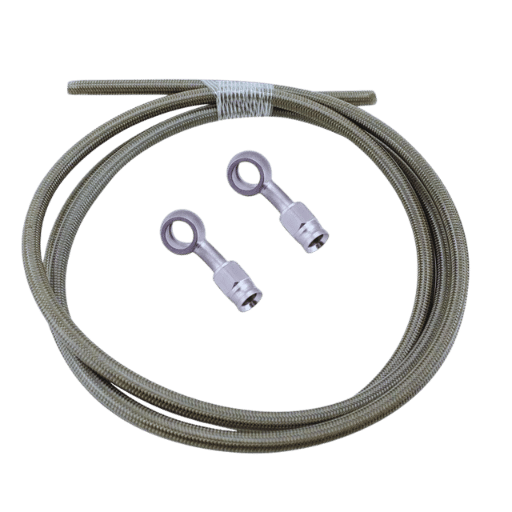
Measuring for Exact Specifications
Such measurements are generally taken to exact specifications, employing calibrated tools and precise methods, while the margin of error or limitations is taken into consideration in order to ensure the utmost accuracy.
Choosing the Right Fitting and Connections
Before I select any fittings or connections, I see to it that they are compatible with my vehicle’s make and model. Highest quality materials worthy of sturdiness and corrosion resistance are my bases for choice; stainless steel or brass fit the bill. I cross-examine thread sizes and connection types against those laid down in the manual to make sure of no leaks or subpar performance. Prioritizing precision and reliability guarantees a tight fit capable of rendering maximum brake output.
Ensuring Compatibility with Brake and Clutch Lines
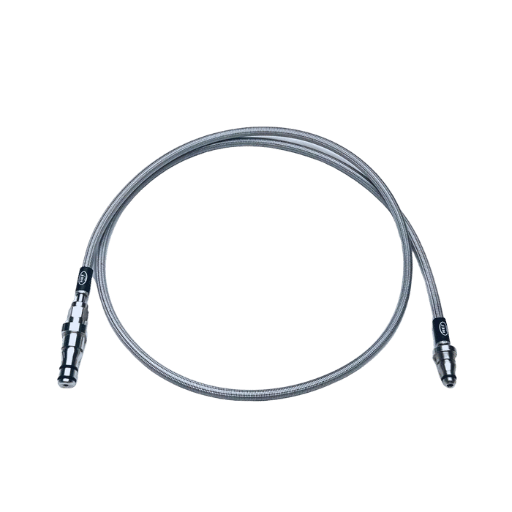
Material Selection and Performance Standards
The material is the first thing to consider when trying to get the best out of brake and clutch lines. Today, stainless steel braided lines are preferred as they do not expand under high pressure and thus offer consistent braking response. Industry sources report that stainless steel lines can increase braking efficiency by up to 30 percent over conventional rubber lines that wear and swell with time.
Thread and Connection Standards
A thorough understanding of thread and connection standards, which generally differ from one type of vehicle to another, ensures proper compatibility. For instance, metric thread sizes such as M10x1.0 or M12x1.0 are common for European vehicles, whereas SAE thread sizes generally dominate in North American models. These specifications should thus be confirmed against the manufacturer’s guidelines to avoid expenses on damages or system failures.
DOT Compliance and Safety Ratings
Brake and clutch lines must be rated according to several regulatory standards, such as the DOT, for example. DOT-approved brake lines are subjected to very demanding tests, including those on durability, flexibility, and pressure retention capacity exceeding 1500 psi operating pressures. This rating, therefore, provides an extra safety assurance for all safety-critical automotive systems.
Environmental Factors and Longevity
The performance of brake and clutch lines is tremendously affected by environmental factors. Elements depressing corrosion processes can and do attack the processes, such as road salt, humidity, and large temperature fluctuations. Studies have proven that stainless steel lines outshine such conditions, hence greatly reducing the risk of premature failure and lengthening the life of the components compared with ordinary rubber lines.
By focusing on these technical considerations-material quality, adherence to connection standards, regulatory compliance, and resistance to environmental factors-your brake and clutch lines should provide reliable functions, which contribute to the total vehicle safety.
What to Consider When Designing Custom-Made Stainless Steel Braided Brake Lines?
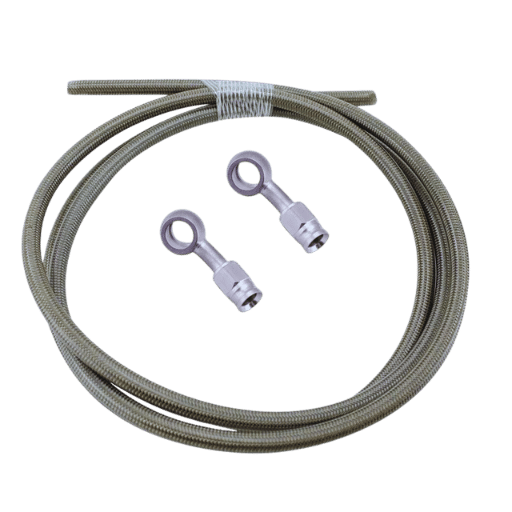
Selecting the Best Steel Braided Lines Material
Consider materials of high-grade stainless steel that resist corrosion well, such as grades 304 and 316, for stainless steel braided brake lines. These grades provide strength and long-lasting service in varying environmental conditions. The inner tubing, on the other hand, should be made of a chemically resistant material such as PTFE (polytetrafluoroethylene) so that any degradation of the fluid is prevented, and there is reliable operation even under high pressure. Check whether these materials conform to established safety standards and specifications for automotive applications.
The Process of Creating Your Custom Brake Hose
All aspects of custom brake hose manufacturing require an exacting combination of technicalities to ensure safety, performance, and durability for automotive applications. Below is an overview of the major steps involved in the manufacture of high-grade custom brake hoses.
1. Material Selection
Material selection is the fundamental step. Stainless steel, either 304 or 316 grade, is generally preferred for the outer tubing due to its corrosion and mechanical wear resistance. Besides, the inner lining must be of a material that abides by chemical resistance, like PTFE. A lining like this will resist exposure to hydraulic fluids, extreme temperatures, and high-pressure conditions. The choice of material has different degrees of impact on the ability of the hose to last.
2. Design and Measurement
Designing entails a series of measurements according to the exact vehicle specifications. Other standards that are specific to the industry should also be considered, such as those prescribed by the SAE International (SAE J1401 for brake hoses). Engineers use the newest computer-aided design software to design the hoses so that these hoses will fit correctly with the vehicle’s braking system. Proper length, diameter, and fitting configurations are carefully considered to avoid problems such as excessive slack or decreased fluid flow.
3. Reinforcement Application
After the design stage, the hose reinforcement stage consists of applying layers of braided stainless steel over the PTFE core. This reinforcement further enhances the pressure rating of a hose to gain increased wall integrity. According to recent data, stainless steel braiding can reach pressures of up to 4,000 psi in high-performance applications and thus are more fitting for modern vehicles and extreme conditions.
4. Assembly of Connectors and Fittings
Using hydraulic crimping machines with high precision, industry-standard fittings such as banjo fittings or flare nuts are applied to the brake hoses. These fittings undergo testing to affirm their leak-proof characteristic. To resist rust and corrosion, zinc-plated or stainless-steel fittings are generally favored, in particular for environments rife with moisture.
5. Testing and Quality Assurance
Upon assembly, the custom brake hose goes through rigorous quality assurance tests to attest its dependability. It is high-pressure tested, which is normally at a higher pressure than in operating conditions, in the interest of safety. It would be tested in conditions of, for instance, 6,000 psi against the rating at 2,000 psi to ascertain utmost guarantee of longevity. Other tests would look at temperature resistance, variation, vibration, and oxidation.
6. Certification and Compliance
The finished product must apply for and possess an industry certification, thus ensuring cosmetic compliance to automotive safety standards under DOT (Department of Transportation) or ISO 3996, so that they can go into vehicles in an approved and safe manner.
7. Packaging and Delivery
Packaging, sealing, and shipment of custom brake hoses are performed carefully to prevent any potential damage during transit. The packaging is suitably labeled with specifications and directions for installation to maximize efficiency for a technician.
The above-described steps emphasize a technically sophisticated and detail-oriented approach employed in producing custom brake hoses capable of delivering safe, reliable, and consistent performance under all demanding automotive conditions. For passenger applications, these steps will assure the end product of the utmost quality, tailored to custom specifications for a sports car and/or industrial machinery.
Customization Options for Brake Hose and Clutch
Customization considerations for brake hoses and clutches are designed for application compatibility, safety, and performance. Areas of key customization include:
- Material Selection: Rubber or stainless-steel braided hose can be selected under special pressure and durability requirements.
- Fittings and Connectors: A variety of end fitting types can be used, including banjo, flare, or threaded connections to match vehicle specifications.
- Length and Diameter: Brake hoses and clutches can both be cut to exact specifications, such as length and internal diameter for efficient fluid flow.
- Color Coding: Colors can be chosen on a custom basis for visual appeal or for specific application purposes.
- Pressure Ratings: Depending on the designated pressure levels, various components are designed to suit the functionality in high-pressure areas under all circumstances.
Based on specific requirements, the above options are considered to ensure a second-to-none use-case solution for almost any automotive or industrial system.
How Do Braided Brake Lines Compare to Other Brake Options?
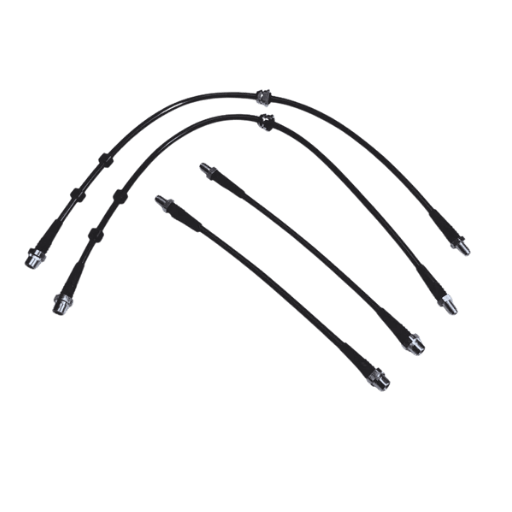
Differences Between Steel Brake and Rubber Brake Lines
Steel brake lines would be resistant to expansion under pressure, while with rubber brake lines, materials and resistance are not the same, so the cost will be less; it also has flexibility, hence the ability to wear and expand with time.
|
Parameter |
Steel Lines |
Rubber Lines |
|---|---|---|
|
Durability |
High |
Moderate |
|
Flexibility |
Moderate |
High |
|
Pressure |
Resists expansion |
Expands over time |
|
Cost |
Higher |
Lower |
|
Maintenance |
Requires checking |
Less frequent |
|
Performance |
Better response |
Mushy feels over time |
|
Lifespan |
Longer |
Shorter |
|
Debris Risk |
Needs protection |
Less prone |
Comparing Performance Brake Lines to Standard Options
There is better durability, reduction in expansion under pressure, increase in pedal feel, and better heat resistance provided by performance brake lines, which are generally braided stainless steel, than in the case of ordinary rubber brake lines, which are cheaper and good enough for everyday driving.
|
Parameter |
Performance Lines |
Standard Lines |
|---|---|---|
|
Durability |
High |
Moderate |
|
Expansion |
Minimal |
Noticeable |
|
Pedal Feel |
Firm |
Softer |
|
Heat Resistant. |
High |
Low |
|
Cost |
Higher |
Lower |
|
Lifespan |
Longer |
Shorter |
|
Use Case |
Performance/Off-road |
Daily Driving |
|
Corrosion |
Resistant |
Prone |
|
Maintenance |
Moderate |
Low |
Cost-Benefit Analysis of Stainless Steel Brake Lines
Advantages
- Durability Enhancement: Stainless steel brake lines resist wear, tear, and environmental factors, and hence endure a longer working life than rubber brake lines.
- Minimal Expansion: Braking remains consistent as little expansion occurs under pressure, together with improved pedal feel and responsiveness.
- Heat Resistance: They have great heat resistance, able to keep working effectively under conditions of heavy braking or off-road driving.
- Corrosion Resistance: Stainless steel resists rust and degradation, giving less maintenance and higher reliability over an extended period.
Costs
- Higher Initial Value: The possibility of paying extra for stainless steel braided brake lines may not be feasible for some budgets.
- Moderate Maintenance: Durability notwithstanding, they may require specific checks for wear or damage, particularly in performance or off-road applications.
- Specialized Uses: The benefits of stainless steel braided brake lines may outweigh the costs only on rare occasions when high demands are placed on the brake systems during performance or off-road use, so they are less applicable for everyday driving.
Frequently Asked Questions (FAQs)
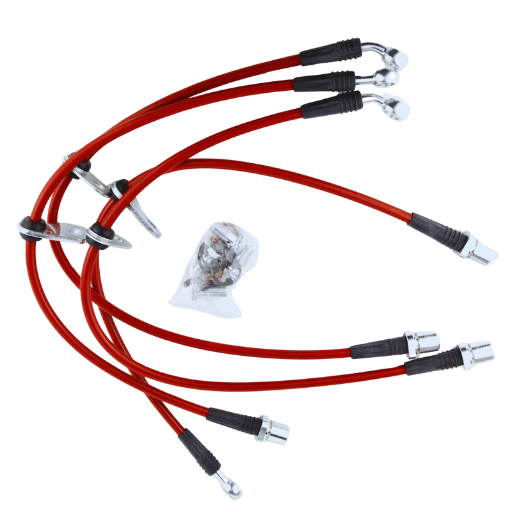
Q: What are the benefits of using custom stainless steel braided brake lines?
A: With improvements in performance, durability, and corrosion resistance against traditional rubber lines, custom-made stainless steel braid brake lines give a more responsive feel and thus are used in high-performance applications.
Q: How does a brake line kit help to enhance vehicle performance?
A: A brake line kit with stainless brake lines enhances vehicle performance in that it decreases the expansion of the brake system under pressure. Therefore, creating a firmer pedal feel and the most consistent braking, which is essential for everyday applications and high performance.
Q: Why would you choose braided steel brake lines over rubber?
A: Braided stainless steel brake lines are chosen and installed in place of rubber lines because of their superior strength and wear resistance properties, with stainless steel construction ensuring no rust, thus longer lifespan and reliability in high-performance environments.
Q: What features make braided stainless steel brake hoses desirable for high performance?
A: Under high pressure, braided stainless brake hoses will limit the resizing of the system to maximize linear brake efficiency with consistent braking force while resuming halting power along with significant control through aggressive driving or outright racing.
Q: Can custom brake and clutch lines be assembled for any vehicle?
A: Yes, custom brake and clutch lines can be assembled for virtually any vehicle. Each custom hose is constructed using non-corrosive stainless steel fittings for a perfect fit and reliable performance suited to specific vehicle requirements.
Q: What advantage does a non-rusting stainless steel fitting provide in brake lines?
A: Non-rusting stainless steel fittings will offer longevity and resistance against cabinet attacks from environmental factors such as moisture and salt that may lead to corrosion, thereby providing a more reliable braking system over time.
Q: How do manufacturers crimp stainless steel braided lines directly to high-performance applications?
A: Crimping of stainless steel braided lines is made directly in high-performance applications using special equipment that securely attaches the fittings to the hose, ensuring zero leakage and maintaining the integrity of the brake system under extreme conditions.
Q: Do stainless steel braided brake hoses have special maintenance requirements?
A: These hoses are almost maintenance-free due to stainless steel strength, but inspection for wear or damage in these lines is critical, especially in high-performance situations, and ensuring they remain in good order is key to ensuring optimal braking performance.
Q: What should be considered in selecting an optimal custom brake line kit?
A: Factors to consider for selecting an optimal custom brake line kit should include the quality of the material, such as whether it is a high-performing stainless steel braided line, compatibility with your vehicle, and the reputation of the manufacturer to ensure that you have reliable and efficient braking performance.
Reference Sources
1. Title: Stainless steel/nitinol braid coronary stents: Evaluation on the braiding structure stability and cut section treatment
- Acknowledgement: K. Ueng et al
- Journal: Journal of Industrial Textiles
- Publication Date: 2016-03-01
- Citation Token: (Ueng et al., 2016, pp. 965–977)
- Summary: In this regard, the present study aims to develop innovative braided coronary stents through braiding. It indicates that the braiding angle affects the stability of the braiding structure. According to the research, increased braiding angles result in less lateral movement of the fiber interaction points, which is crucial for maintaining the integrity of braided materials used in medical applications.
2. Title: Design of Whip Test System for S.S. Brake Hose Fatigue Testing and Analysis of Critical Component Whip Test System
- Authors: Suraj Aglave, S. Limaye
- Journal: Journal of emerging technologies and innovative research
- Date of publication: 01 September 2020
- Token of citation: (Aglave & Limaye, 2020)
- Summary: This work describes the whip test system’s design for stainless steel brake hoses. The study highlights the importance of testing all automotive applications for fatigue and durability. The methodology further developed a test setup under conditions approximating those found in reality to evaluate the performance and life of brake hoses.
3. Title: Design of Durability Test Setup for S.S Braided Exhaust Pipe Used in Automobiles and Modal Analysis Base Frame of the test setup
- Authors: Sanket Nagendra Gurav, S. Limaye
- Journal: Journal of emerging technologies and innovative research
- Publication Date: 2020-11-01
- Citation Token: (Gurav & Limaye, 2020)
- Summary: This work lays its focus on setting up a durability test for stainless steel braided exhaust pipes used in automobiles. It details the design and modal analysis of the test setup by which the performance and reliability of the exhaust system in various working conditions are envisaged.
4. Toyota Disc Brake Conversion Brackets – Talks primarily about brake lines and their integration in a custom setup.
5. Senior Design Proposal for Brakes Subsystem 2019-2020 – Deals with custom brake systems, including brake lines and their configurations.
6. Brake