


An essential element in science is nitrogen, and it is widely used in many scientific and industrial processes. This melting factor is fascinating in extreme cold, which talks about how it behaves, and as such, it can be utilized for many applications. In this blog post, we will gain a deeper understanding of the nitrogen melting factor, its practical applications, measures, and the science behind it. When a reader delves deeply into this melting topic, they will better comprehend the nitrogen physical properties that heavily shape cryogenics, chemical engineering, and so much more. With that being said, we shall soon be unlocking the mechanisms and revealing the larger ramifications of the discovery of the nitrogen melting factor.
Introduction to Nitrogen

Nitrogen is a colorless, odorless, and tasteless gas that makes up around 78% of the atmospherical air. In the world of living organisms, it helps in the synthesis of amino acids, proteins, and nucleic acids. Industrially, nitrogen finds applications in fertilizer manufacture, food preservation, and cryogenics because of its extremely low boiling point. At room temperature and pressure, the inert nature of this gas makes it a great servant in many scientific and engineering pursuits.
Overview of Nitrogen’s Atomic Structure
Nitrogen, with the chemical symbol N, is an element whose chemical number is 7. This means it has 7 protons, and since its most stable isotope has an equal number of neutrons, it usually has 7 neutrons. Furthermore, nitrogen has an electronic configuration of 1s² 2s² 2p³, indicating that five electrons are located in the outermost shell. Theoretically, it will be trivalent in many of its compounds. Being relatively small in size and extremely electronegative, nitrogen atoms can form strong covalent bonds; hence, this element is essential in both organic and inorganic chemistry.
Physical Properties of Nitrogen
Under normal conditions, nitrogen exists as a diatomic gas resulting from two nitrogen atoms held together by a strong triple bond, with a bond dissociation energy of about 942 kJ/mol. This triple bond renders nitrogen one of the most inert diatomic molecules at room temperature.
Nitrogen is colorless and has no odor or taste when in its gaseous state. At a temperature of 0°C and pressure of 1 atm, nitrogen is found to have a density of 1.2506 g/L, which is quite slightly less than that of air. Nitrogen has a melting point of -210.00°C (-346.00°F) and a boiling point of -195.79°C (-320.41°F). Low boiling points have made it a highly priced cryogenic fluid for the rapid freezing of products in various industries, including medicine.
Its critical point is at -146.9°C (126.2 K) and a pressure of 3.39 MPa, above which it cannot exist in the liquid state due to the high temperature. Additionally, nitrogen is poorly soluble in water, with a solubility of approximately 20 mg/L at 20°C, which varies depending on pressure and temperature.
These properties of nitrogen set the limits on its existence as a physical entity under some conditions and thus bring about its usage in so many areas, ranging from refrigeration to packing of foods, as well as inert atmospheres required for chemical reactions, where stability is a must.
States of Nitrogen: Solid, Liquid, and Gas
Depending on temperature and pressure, nitrogen is found in three states: solid, liquid, and gas. At standard atmospheric pressure, nitrogen exists as a diatomic gas molecule, that is, N₂ and accounts for roughly 78% of Earth’s atmosphere. Going through a phase change to liquid at its boiling point of -195.79°C (-320.33°F) at one atmosphere of pressure, it sees applications in cryogenics. Rapid freezing, specimen preservation, and industrial processes are among the typical applications of liquid nitrogen. Solid nitrogen, on the other hand, forms only at temperatures lower than -210°C (-346°F), mostly under special laboratory conditions.
Indeed, the transitions from one stable or metastable state to another are governed by thermodynamics. For instance, nitrogen cannot be liquefied by pressure beyond the critical temperature of -146.9°C (-232.4°F), as beyond this point, it is a supercritical fluid. Such a concept has been the pivot around which several technologies have evolved in several industries ranging from medicine to aerospace, where processes are optimized using the peculiarities of nitrogen in its various states.
Nitrogen’s Melting Point and Phase Changes

At a temperature of -210.0°C (-346.0°F), nitrogen from solid state transitions into liquid at standard atmospheric pressure. When this change of phase occurs, thermal energy contracts the intermolecular bonds in the solid state to make nitrogen molecules move freely. Melting, boiling, and sublimation of nitrogen are phase changes that are pressure- and temperature-dependent. Knowledge of these properties helps determine cryogenic applications, where nitrogen is maintained in specific states to enhance the efficiency and safety of processes operating at extreme temperatures. Investigating these phases will enhance both scientific and industrial systems.
Defining Melting Point and Boiling Point
The melting point of a substance is the temperature at which the solid turns into the liquid phase at 1 atmospheric pressure. A boiling point is the temperature at which the already liquid substance turns into a gas phase. These phase-change points are considered intrinsic properties of substances but generally do vary with external conditions like pressure. For example, nitrogen under normal atmospheric pressure has a melting point of somewhere about -210°C (-346°F) and a boiling point close to -196°C (-320°F). Such levels of exactness are necessary in designing cryogenic systems where maintaining phase stability is crucial. Enhancements in experimental and computational research methods have provided greater accuracy in determining and predicting these crucial values, furthering their targeted application in advanced scientific and technical domains, including engineering, medicine, and the environment.
The Role of Pressure in Melting Point Determination
Pressure determines the melting point of materials because it directly influences intermolecular interactions within a material. When a high-pressure environment is created, molecular bodies are literally forced into closer proximity, and correlations adjust to maintain a distance greater than at standard pressure. Hence, energy characterizing resistance to changes in these forces is utilized, which is specific to the substance’s melting point. Therefore at any other low-pressure situation, melting is found to be at a lower temperature as it requires minimum energy to break intermolecular forces.
Anisotropic molecules and hydrogen-bonded compounds show more considerable pressure-induced variations of melting point. Substances like ice show peculiar phase behavior under pressure, with a multitude of solid phases of water each having its own melting characteristics. Hence, understanding the relationship is crucial for high-pressure applications, such as materials synthesis, geological studies, and industrial processes, wherein a phase transition must be controlled. Experimentally, methods have been proven to select from corresponding computational models to predict melting behavior under a broad spectrum of pressures, keeping pace with the developing areas of materials science and thermodynamics.
Understanding Nitrogen’s Triple Point
The triple point of nitrogen is a thermodynamic condition at which the solid, liquid, and gaseous phases coexist in equilibrium. This occurs at a temperature of 63.15 K (approximately -210.00 °C) and a pressure of roughly 12.52 kPa. Because it is stable and reproducible, this point is used to calibrate temperature measurement devices such as standard platinum resistance thermometers. Furthermore, the study of the triple point of nitrogen helps to understand the phase behavior that occurs within environmental conditions crucial to various applications, ranging from cryogenics to aerospace engineering.
Significance of Nitrogen’s Melting Point in Industries

The melting point of nitrogen at 63.15 K (-210.00 °C) lends itself well to being known as an “industrial cooling agent” due to the various cryogenic processes with which it is associated. It is a refrigerant below its melting point, such as nitrogen, used in industries like food preservation, semiconductor manufacturing, and medical services for cryopreservation. Additionally, this exact temperature is used as a reference in the calibration of temperature-measuring instruments to achieve the highest accuracy in scientific research and industrial instrumentation. Thus, due to the far-reaching scope of industries where nitrogen finds application in extreme cooling and thermal control, it has acquired the status of an essential material.
Aerospace Applications
In aerospace applications, particularly in cryogenic engineering, thermal stability becomes a crucial property, as exemplified by the melting point of nitrogen. The function of liquid nitrogen is to test the different components of a spacecraft under extreme cold conditions, thereby simulating the realism of the outer space environment. The process of cryogenic cooling, very much alike liquid nitrogen, helps in refining the nice new propulsion system and temperature management of critical instruments. The intangible features of nitrogen at low temperatures ensure precise and dependable execution from the very onset, meeting the rigorous standards required for thermal tests on the ground as well as thermal control during actual flight.
Cryogenics and Supercooling Processes
Nitrogen has a melting point of approximately -210°C (-346°F), which is highly crucial to cryogenic and supercooling applications. At this temperature, nitrogen turns from a liquid to a solid, thus affecting various industrial and scientific processes. The remarkably predictable thermal properties of nitrogen make it ideal for applications that require precise cooling, such as the preservation of biological specimens and the stabilization of sensitive electronics, as well as the enhancement of superconducting states in materials. Its supercooling abilities are exploited again in the research of advanced materials, allowing molecular structures to be studied at near-absolute-zero temperatures. The accessibility and reliability of nitrogen make it a preferred medium for cryogenic systems in various medical applications and even space technology.
Food Preservation Techniques
With a melting point of nitrogen being very low, at around -210°C (-346°F), it remains a significant attribute in food preservation. Liquid nitrogen is actively used in flash freezing of foods where foods are cooled rapidly to preserve texture, flavor, and nutrition. This method prevents the formation of large ice crystals, which can affect the cellular structures of food products. Additionally, nitrogen plays a crucial role in creating inert atmospheres, functioning by absorbing oxygen to prevent spoilage, oxidation, and microbial growth. These properties, therefore, make nitrogen crucial for the development of human life and the shelf life of perishables, particularly in industrial settings such as cold food production and transportation.
Comparative Analysis of Melting Points
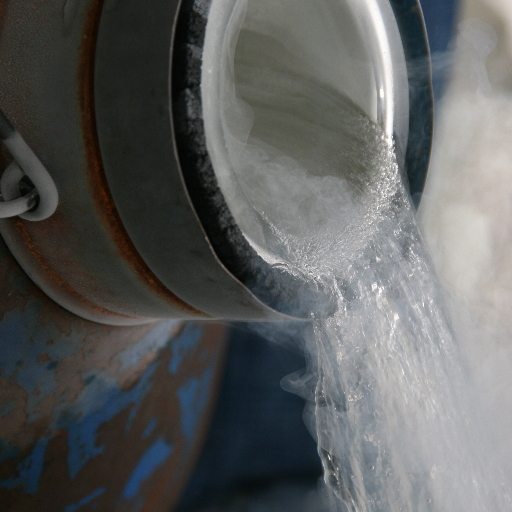
A melting point comparison necessitates the consideration of the intermolecular force in each given substance. Stronger intermolecular forces, such as hydrogen bonds or ionic interactions, translate to higher melting points, with the weaker ones resulting in low melting points such as van der Waals interactions. Others, such as molecular mass, arrangement of structure, and symmetry, are responsible for determining melting points. For example, a crystalline solid with an orderly molecular lattice structure would melt at a comparatively high temperature, while an amorphous solid melts at lower temperatures. This information proves valuable for relating a material to its thermal stability and its application in specific industrial processes.
Comparison with Other Elements
Nitrogen’s melting point (-210 °C) is relatively low compared to most elements, such as metals with higher melting points and other nonmetals like oxygen (-218 °C), fluorine (-220 °C), and noble gases including helium (-272 °C) and neon (-248 °C).
Key: M.P. = Melting Point, Trend = Relative comparison of melting point values. This concise summary highlights the substantial variability among elements, influenced by their atomic structure and bonding.
Implications of Melting Point Differences
The differences in melting points among elements have a number of significant implications having consequences in scientific, industrial, and practical contexts. Elements with high melting points, such as tungsten, have found applications in various industries that require materials that can withstand the rigors of intense heat, including aerospace and manufacturing. Elements with low melting points, such as neon and fluorine, find applications in areas involving refrigeration, cryogenics, or specialized lighting, where the materials must maintain their stability in low-temperature environments. On their part, melting points differ due to atomic structure: high melting points are characteristic of atoms involved in either strong metallic bonds or network covalent structures, whereas low melting points are associated with those in which weak van der Waals forces are at play. Hence, an understanding of these properties offers a basis for purposely choosing materials in terms of their performance required under different thermal conditions.
Theoretical Contexts of Melting Point Variations
Theoretically, the variations in melting points may be explained through the atomic and molecular structure, intermolecular forces, and crystal lattice formations of a material. Substances that exhibit powerful intermolecular forces, such as hydrogen bonding forces or ionic bonding forces, will have much higher melting points, as these interactions require a significant amount of energy to overcome. On the contrary, those substances that are held together chiefly by much weaker dispersion forces will display much lower melting points. The arrangement of the crystal lattice is also essential, as more ordered structures are more stable and will therefore have higher melting points than amorphous types. Another factor may be the amount of impurity in a material, because any interruption to a uniform lattice arrangement lowers the amount of thermal energy that must be invested. A theoretical framework such as this quite well describes the delicate balance of physical and chemical interactions that govern the thermal behavior of a material.
Measurement Techniques for Melting Point

- Capillary Tube MethodOne of the most common methods for determining melting points is the capillary tube method. The substance is placed into a thin capillary tube in a tiny mount, heated in a controlled fashion inside a melting point apparatus, and the range of temperature from the solid state to the liquid state is taken as the melting point of the substance. Accuracy depends on factors such as the use of a uniform heating rate and the sample’s purity.
- Differential Scanning CalorimetryIn Differential Scanning Calorimetry, heat flow related to phase transitions is measured, indicating the melting point. The sample and a reference material are heated under similar conditions, and differences in heat flow are calculated. This is considered a precise and elaborate technique that is ideally suited for studying complex materials or mixtures.
- Hot Stage MicroscopyIt is a combination of visual observation and controlled heating to determine melting points. Namely, the sample is placed on a microscope slide and heated along with observation under the microscope. Such optical changes in the sample during the melting process can be directly observed; thus, they serve perfectly well to study polymorphic transformations.
- Automated Melting Point ApparatusThese days, modern automated melting point apparatuses employ digital imaging and temperature control to deliver fast and accurate measurements. Usually, the equipment comes equipped with software programmed to record and analyze melting point measurements, thereby minimizing human-induced errors. This type of instrument is well-needed for research purposes and industrial quality control.
Different techniques offer different advantages, depending upon the characteristics of the sample, measurement precision required and the application context.
Advanced Laboratory Equipment for Accurate Measurement
Advanced laboratory equipment for melting point determination provides precision, reliability, and reproducibility. Modern instruments are widely equipped with automated sample handling mechanisms, programmable ramp rates of temperature, and high-resolution digital imaging for endpoint determination. Advantages: The instruments come equipped with software that analyzes results in real-time and documents them, allowing for meeting the quality standards in the industry or pharmaceutical sectors, either according to ASTM or USP guidelines. Top systems will also analyze multiple samples, increasing throughput and maximizing laboratory efficiency. These apparatuses enable the analysis of a broader range of samples, from purity analysis in the pharmaceutical industry to material characterization in chemical research.
Conditions Required for Reliable Results
Conditions of experimentation should be examined for their proper control, so that verified results in melting point are obtained. The first element for consideration is the purity of the sample, as impurities introduce a range in melting points and, therefore, inconsistent extraneous materials that do not behave thermally in accordance with established standards. The sample should be very finely powdered and should be half-filled into the capillary tube to get good uniform heat distribution. Additionally, control of the heating rate should be maintained within a preferred limit of 1-2°C per minute, close to the melting point range, to avoid errors arising from thermal lag. It is advisable that melting point apparatus be calibrated with certified reference materials to warrant the accuracy of its readings and standards conformity. Variations related to the environment, such as maintaining a consistent room temperature and minimizing vibration, would further enhance the reliability and reproducibility of the results.
Challenges in Measuring Nitrogen’s Melting Point
The biggest challenge in determining the melting point of nitrogen is that it is shallow: -210.01°C at standard atmospheric pressure. Control of temperature must be meticulous, as even slight fluctuations can harm accuracy. Specialized instruments, such as high-performance cryostats and calibrated thermometers, must be used to ensure that the desired cryogenic temperature can be achieved and maintained steadily. In addition, pressure variations significantly affect nitrogen’s phase transitions, where even minor pressure differences can cause deviations in the measured melting point. The presence of contaminants in either the sample or the experimental environment will also affect the phase transition behavior. With all these considerations, strong calibration, steady environmental conditions, and state-of-the-art experimental methodology are necessary to obtain reliable measurements.
Reference Sources
- Nitrogen | Definition, Symbol, Uses, Properties, Atomic … – BritannicaThis source provides detailed information on nitrogen’s physical properties, including its melting and boiling points.
- Nitrogen – WikipediaA comprehensive overview of nitrogen, including its physical properties and general applications.
- What is the Main Industrial Use of Nitrogen? | CGTFocuses on the industrial applications of nitrogen, such as controlling oxygen levels and maintaining specific atmospheres.
- Why Is Nitrogen Important to Manufacturing and N2 … – Onsite GasHighlights nitrogen’s role in manufacturing and its applications in the food and beverage industry.
Frequently Asked Questions (FAQs)
What is the melting point of nitrogen, and why is it significant?
This melting point is a crucial physical property that determines the states of matter under various conditions. At atmospheric pressure, nitrogen liquefies at -210.00°C (-346.00°F), and further solidifies at this temperature. This melting point must be correctly understood for applications in cryogenics and for utilizing liquid nitrogen in numerous industrial processes.
How Does Pressure Affect the Melting Point of Nitrogen?
The melting point of nitrogen changes with varying pressure. At high pressure, the melting point could, in fact, increase, and nitrogen can, therefore, remain as a solid at temperatures where it would usually become gaseous under normal atmospheric pressure. This becomes a point of consideration regarding how nitrogen behaves in different environments, such as under high pressures.
What are the chemical properties of nitrogen compounds?
Nitrogen is a gaseous element that forms various reactive compounds, including ammonia, nitric acid, and nitrogen oxides. These compounds possess their own unique properties, necessitating applications in agriculture and industry. Ammonia, for instance, is used in some fertilizers, while nitric acid is utilized in explosives and chemical synthesis.
What Is the Atomic Weight of Nitrogen?
The atomic weight of nitrogen is 14.01 uranium (approximately) with 7 as the atomic number. This super light atomic weight makes nitrogen gas abundant in Earth’s atmosphere, with a usual 78% presence in the air. Being conversant with its nuclear weight becomes vital for scientific calculations and applications.
Can Nitrogen Be Used as Inert Gas?
Nitrogen is considered an inert gas because it is chemically stable and remains generally unreactive under ambient conditions, thus providing a perfect inert atmosphere in various processes like metal fabrication and food packaging where preventing oxidation and contamination is essential.
What Are the Allotropes of Nitrogen, and Why Are They Important?
There are some allotropes of nitrogen, among which molecular nitrogen N2 is the most common. Another significant allotrope is hexanitrogen N6, as it is a neutral nitrogen allotrope with some exceptional properties. The study of these allotropes, in turn, broadens the plethora of applications of nitrogen in material science and atmospheric chemistry.
Conclusion
Understanding nitrogen’s melting point and its physical properties is crucial for numerous scientific and industrial applications. From cryogenics to food preservation, aerospace engineering to material science, nitrogen’s unique characteristics at extremely low temperatures make it an invaluable resource in modern technology and research.


