


In terms of aluminum alloys, selecting an alloy correctly can drastically affect how well, or for how long, and how much money your project will take. When aluminum is subjected to a hot forging process, alloy 6061 or 6082 can be used just as often. These two grasped their niches and efficiencies. However, selecting the appropriate material in the presence of several additional technical characteristics of this or that material is often difficult. We have prepared this article to break it down for you. We discuss the main differences between alloy 6061 and 6082, compare their properties and sphere of use, and help you choose the most suitable option within the project framework. Whether you are designing intricate parts or need material that can be used in the industry, this article will help you choose the required material.
What are the Key Differences Between 6061 and 6082 Aluminum Alloys?
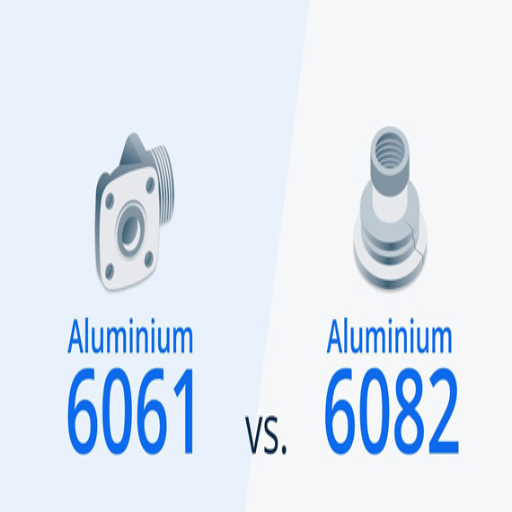
- Composition of ingredients and the stress it can withstand.
6061 and 6082 aluminum alloys differ primarily due to their concentration of chemical elements. Both belong to the 6xxx series and have the exact cost and most properties. The slight additional manganese content in 6082 increases its strength, which is why it is better than 6061 in terms of mechanical properties, especially in terms of yield strength.
- Consumption
However, weldability is not the main idea behind 6061, which is widely known for its best weldability even during the arc process, which makes it most often a preferred choice for welded structures. 6082, conversely, if it is capable of being welded, there are often issues with crack formation, which include additional risks.
- Scope
6061, on the other hand, is used routinely in the aerospace, automotive, architectural, and other sectors due to its adequate strength and corrosion resistance. 6082, with its advanced properties, is used in high-load bearing structural applications such as buildings, cranes, etc.
- Distribution
6061 is a globally common material and is easy to procure for many applications. On the other hand, 6082 is sought after mostly in the EU and might be a difficult material to find in other areas.
This information may be helpful while determining the proper alloy for an application, depending on the project specifics.
Understanding the Chemical Composition of 6061 and 6082 Aluminum
The primary discerning characteristic in the composition of 6061 and 6082 aluminum alloys is the different quantities of certain alloying elements. These two grades belong to the Group 6000 series alloys, where the major alloying elements are magnesium and silicon. These elements give the respective grades strength and good resistance to corrosion.
Regarding chemical content, 6061 aluminum usually has approximately 0.8-1.2% magnesium, 0.4-0.8% silicon, and a few minor components such as chromium and copper, which are added primarily to make the material easier to weld and machine. In contrast, 6082 aluminum typically has a magnesium content of 0.6-1.2% and silicon between 0.7 and 1.3%, illustrating a relatively greater structural strength in specific applications than 6061. Nonetheless, due to its higher strength, 6082 may have a drawback in that its machinability will be limited compared to 6061.
Both the 6061 and 6082 aluminum alloys have all principal components in the same proportion, but they are suited for different purposes based on the performance requirements. The choice of the most appropriate alloy shall be determined by the system’s requirements in terms of mechanical strength, weldability, concealed corrosion resistance, and machining properties.
Mechanical Properties of 6061 Aluminum Alloy vs. 6082 Aluminum Alloy
6061 aluminium alloy is relatively readily machinable and possesses moderate strength. 6068, on the other hand, while offering better tensile strength, is more corrosion-resistant and suits better high-stress applications in particular.
|
Key Point |
6061 Alloy |
6082 Alloy |
|---|---|---|
|
Tensile Strength |
~340 MPa |
~410 MPa |
|
Yield Strength |
~320 MPa |
~370 MPa |
|
Elongation |
Higher (~12%) |
Lower (~10%) |
|
Corrosion |
Moderate |
Higher resistance |
|
Machinability |
Easier |
More challenging |
|
Applications |
Automotive, Frames |
Construction, Bridges |
|
Cost |
Lower |
Higher |
Corrosion Resistance: 6061 vs. 6082 Aluminum
Aluminum alloy of grade 6061 offers different degrees of corrosion resistance. 6082 aluminum is just a little bit resistant; however, it is particularly suitable for harsh and marine environments for thin-sheet and high-strength applications.
|
Key Point |
6061 Alloy |
6082 Alloy |
|---|---|---|
|
Corrosion Res. |
Moderate |
Higher |
|
Marine Use |
Less suitable |
Ideal |
|
Saltwater Res. |
Average |
Excellent |
|
Oxidation Res. |
Standard |
Superior |
|
Longevity |
Decent |
Longer |
How Does Forging Affect the Properties of 6061 and 6082 Aluminum?
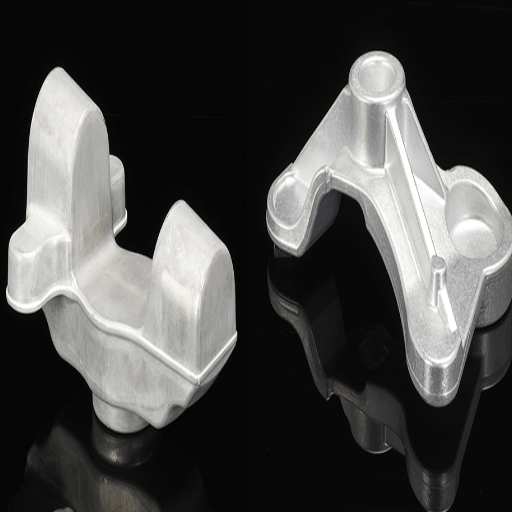
The properties of the 6061 and 6082 aluminum alloys have been increased relatively by forging. This involves subjecting the material to high pressure, which changes the grain size and improves the strength and stiffness of the material. In the case of 6061 aluminum, forging increases its tensile strength and general impact toughness, making it appropriate for use in applications that require toughness and satisfactory corrosion resistance. Therefore, for 6082 aluminum, optimizing performance in higher loads implied structural applications is detrimental, but the material still retains excellent corrosion resistance. The new grain structure, which results from enhanced formability, also improves wear and fatigue resistance of both nickel superalloys. This provides a viable solution for various harsh conditions.
The Forging Process and Its Impact on 6061 Aluminum
6061 aluminum is extensively used in forging processes for mechanical applications that seek a balance of machinability and strength. Without any second thoughts, there is a significant improvement in the mechanical properties of 6061 aluminum owing to the ready availability of the process. The volume of material that undergoes deformation during forging is constantly under high pressure, as is the case here. This refining of the grain structure shows that any internal defects are eliminated. Such improvements are manifested by better tensile strength, yield strength, and resistance to impact. Also, the process can influence the capability of the material to withstand failure effectively under the influence of fatigue loads. Note that 6061 aluminum, especially after forging, can resist corrosion in the most aggressive environments, thus ensuring the long life of such products. However, this is still a key advantage of 6061 aluminum in terms of corrosion protection. For these reasons, combined with the lightness of this material and the possibility of multiple heat treatments, 6061 aluminum is the final product for all aerospace, automotive, and other industrial units that maintain the required strength and machining properties of the material.
Benefits of 6082 Aluminum Forging
- Strength at Its Lightest
With an excellent strength-to-weight ratio, 6082 aluminium offers great potential for reducing weight without compromising strength, positioning itself as the most appropriate material in automotive and aerospace applications.
- Resistance to Corrosion
It is worth noting that this type of aluminum has a remarkable corrosion resistance, primarily in marine and other industrial atmospheres, which ensures durability and stability.
- Machinability
The development of aluminum 6082 has so far been successful. It boasts good machinability and economy in precision manufacturing.
- Types of Heat Treatment Covers
6082 aluminium possesses the ability to be wrought and heat-treated. In particular, it has T6 temper to improve its specific application mechanical characteristics.
- Protecting the Environment by Using Aluminum
Aluminum 6082 is an eco-friendly material, as it is recyclable, it has minimal disposal threats, increasing its demand. Additionally, the material is found to possess good recyclability without losing its end performance; hence, it is ideal for any manufacturer looking to support environmental preservation and cleanliness while in business.
Common Applications for Forged 6061 and 6082 Aluminum
- 6061 and 6082 aluminum alloys are commonly utilized in the aeronautical space for their good strength-to-weight ratio, high corrosion resistance, and temperature resistance, whether supercold or superhot. They are often used in making the main parts of the airframe, wings and even fuselage of whatever aircraft they are installed.
- Under Automotive Parts, there are applications for forged aluminum made from 6061 and 6082 aluminum alloys. In this light, these designed products are more effective for light automotive parts like chassis frames, suspension units, and wheeling systems, just to mention a few. In addition, the long life of the materials and low friction enhance the absolute performance of the vehicle.
- In the Construction and Architecture section, these materials are frequently used to construct shipbuilding components as they do not corrode in salt water, which is mainly composed of naval brass, bronze, aluminium bronze, unh T6.
- 6061 and 6082 aluminum materials find application in the manufacture of industrial machinery components that need to be strong and wear-resistant, such as hydraulic components and gears. They are also used in precision engineering tools for different industrial processes, where their lightweight and ease of fabrication make them the material of choice. These are high-quality materials, so a high-end finishing process is needed in their manufacture.
What Are the Machinability and Weldability of 6061 vs. 6082 Aluminum?
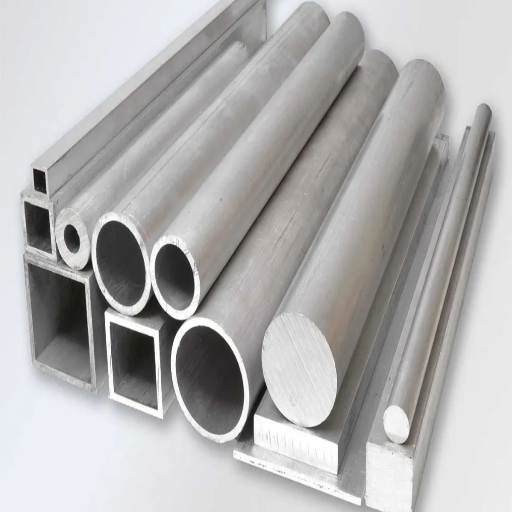
Both 6061 and 6082 aluminum alloys are considered to be relatively easy to process and weld, allowing their use in different fields of industry. Nevertheless, there are some nuances:
- Machinability
In most cases, 6061 aluminum is known to be more machinable because of its more compliant structure and great finishing ability. This is used in applications where there are structural reasons to make precise, smooth cuts. 6082 aluminum, which can also be machined, might be somewhat more difficult to machine because it is stronger and tougher; hence, tool wear may also be high.
- Weldability
Both of these alloys are very easy to weld and work well with a good number of welding processes that suit the design of the columns and other civil engineering structures. Nevertheless, for 6061, this process is even easier and better because there are fewer crack-predisposing factors or heat-effective zone-related defects. 6082, on its part, can be welded, albeit with scoping implications during welding to avoid any weakening in high-stress areas.
Each material has its uses, and the application of 6061 or 6082 is often determined by the required strength, ease of machinability, and weldability.
Comparing the Machinability of 6061 and 6082 Aluminum Alloys
Since 6061 is a pure metal and 6082 a fortified version of aluminium, 6061 is again much easier for most operations involving machine tools compared to 6082, mainly due to its composition and a few of its production characteristics.
|
Parameter |
6061 |
6082 |
|---|---|---|
|
Machinability |
Better |
Good |
|
Strength |
Moderate |
Higher |
|
Corrosion Res. |
High |
High |
|
Weldability |
Excellent |
Good |
|
Heat Treatable |
Yes |
Yes |
|
Application |
General |
Structural |
Weldability: Can You Weld 6061 and 6082 Aluminum?
Yes, 6061 and 6082, combined with many other aluminum alloys, can be joined effectively. After all, metals are materials, and humans have developed a process that involves bonding them. However, the everyday use of 6061 aluminum revolves around its advantageous ease of weldability, making it one of the predominant materials in welding applications. Given its low temperature, it allows for better melding with minimal breaches, although due to the different process needed, which is TIG or MIG welding. However, 6082 can also be joined; however, it is slightly higher in strength and is a little more susceptible to heat, which means it is a bit more problematic. It is usually recommended that 6082 undergoes postweld heat treatment to regain most physical properties and better resistance to brittleness. Correct protective gas, certain filler pieces(e.g., 5356 or 4045 fillers), and appropriate intensity are all required to obtain good-quality welds using each material.
How Do Heat Treatment Processes Differ for 6061 and 6082 Aluminum?

The heat treatment of 6061 and 6082 aluminium alloys is mainly determined by their behavior when subjected to thermal cycles and the resultant mechanical properties. In general, both alloys are given solution heat treatment, after which they are artificially aged to produce the strength levels required by the application. However, 6061 aluminum is frequently treated more easily owing to the well-balanced properties and better predictability in response to heating or quenching. Contrary to the former, 6082 aluminum benefits from more strength at elevated temperatures but is less forgiving of the thermal range within which the heat treatment is carried out. Lastly, 6082 needs more attention to heat treatment, including temperature control and time, to avoid deformation and loss of mechanical properties, as in the base metal.
Heat Treatment Options for 6061 Aluminum Alloy
Several procedures are involved in processing 6061 aluminium alloy to improve its strength and performance. A significant part of this procedure is capable of T6 – T6-T6-solutionizing heat treatment, followed by ageing hardening treatment. This provides that the alloy has high strength as well as resistance to corrosion in or at least in some, if not all, critical areas. T4 temper is another or the next stage in the aluminium 6061. This temper adds the age of the harsh aged condition, where no temperature is required to maintain strength. Age hardening properties and only malleability is limited. A T651 temper is another commonly employed heat treatment for 6061 that relieves residual stresses caused by heat treatment and machining. All in all, these factors mean that the most appropriate overheating method is given importance.
Reference Sources
- Regarding Strength and Formability: Papers like “Investigation on Compressive Formability and Microstructure Evolution of 6082-T6 Aluminum Alloy” (Xu et al., 2020) detail the formability and strength of 6082 under various forging conditions. These studies highlight the influence of temperature, strain rate, and heat treatment on the mechanical properties. While not directly comparing to 6061, they suggest that 6082, with its higher silicon content, might exhibit different formability characteristics (potentially better at higher temperatures) and slightly different strength levels compared to 6061.
- Microstructure and Heat Treatment: Many papers discuss the microstructure evolution of both 6061 and 6082 under different thermal treatments and processing. For example, “Effect of Thermal-cold Cycling Treatment on Mechanical Properties and Microstructure of 6061 Aluminum Alloy” (Wang et al., 2023, pp. 677–681) and “Effect of aging temperature on microstructure and corrosion behavior of 6082 aluminum alloy” (Yang et al., 2023) show how heat treatments influence the precipitation of strengthening phases (like Mg2Si) and consequently affect mechanical properties. These studies indirectly suggest that the different compositions of 6061 and 6082 will lead to variations in their microstructural response to heat treatments, impacting their final forged properties.
- Forging Process Optimization: Papers focusing on forging process optimization, such as “Forming analysis and process study for a 6082 aluminum alloy automobile control arm in the process of forging” (Wang et al., 2022, pp. 8598–8608) and “Optimization of forging processes and die of 6082 aluminum alloy control arm using finite element simulations” (Xie et al., 2022, pp. 1250040-1250040–1250048), use finite element analysis (FEA) to model the forging process and optimize parameters for specific parts. Although these studies focus on 6082, the methodologies could be applied to 6061, but the optimal parameters would likely differ due to the alloys’ different material properties.
- Top Aluminum CNC Machining Parts Manufacturer And Supplier In China
Frequently Asked Questions (FAQs)
Q: What is the main difference between 6061 and 6082 aluminum alloys?
A: The main difference lies in their chemical composition and resulting properties. 6061 is generally known for its versatility, excellent machinability, and good corrosion resistance, while 6082 offers higher strength and hardness but is more challenging to machine.
Q: Which aluminum alloy is commonly used in the automotive industry?
A: 6061 is often used in the automotive industry due to its good balance of strength and ductility, making it suitable for structural components. However, 6082 can also be utilized for parts requiring higher strength.
Q: Is 6061 or 6082 aluminum better for forging?
A: The choice between 6061 and 6082 for forging depends on the specific application. 6061 is more widely used due to its excellent machinability and weldability, whereas 6082 is selected for applications that require higher strength.
Q: How does the heat treatment affect 6061 and 6082 aluminum alloys?
A: Both alloys can undergo heat treatment processes like solution treatment and artificial aging. For instance, 6061 can be heat-treated to achieve T6 temper, significantly enhancing strength and hardness.
Q: Are there any conductivity differences between 6061 and 6082 aluminum?
A: Yes, 6061 generally has better conductivity compared to 6082. This property makes 6061 a preferred choice in applications where electrical conductivity is essential.
Q: Can 6061 and 6082 be used in machinery applications?
A: Yes, both alloys are used in machinery applications. 6061 is favored for its machinability and corrosion resistance, while 6082 is chosen for its higher strength in structural components.
Q: What factors should be considered when selecting the right aluminum alloy for forging?
A: When selecting the right material for forging, factors such as the required strength, weight, corrosion resistance, machinability, and the specific application should be considered to ensure optimal performance.
Q: How does exposure to harsh environments affect the choice between 6061 and 6082 aluminum?
A: 6061 offers excellent corrosion resistance, making it suitable for applications exposed to harsh environments. Although 6082 provides higher strength, its added difficulty in machining and potential corrosion issues need to be evaluated based on the specific conditions of use.
Q: What is the role of fatigue strength in choosing between 6061 and 6082 aluminum alloys?
A: Fatigue strength is a crucial factor when selecting an aluminum alloy. 6082 exhibits higher fatigue strength compared to 6061, making it preferable for applications where repeated stress is a concern.
Q: Are there any specific applications where 7075 aluminum is preferred over 6061 or 6082?
A: Yes, 7075 aluminum, known for its high-strength properties, is often preferred in aerospace applications and high-stress structural components, where its superior strength-to-weight ratio outperforms 6061 and 6082.


