


CNC machining titanium represents the meeting point where exacting manufacture confronts an extraordinary metal. Engineers turn to titanium not only because it sits light in the hand, but also because it shakes off rust, survives harsh chemicals, and refuses to trigger allergic reactions in the body. In practice, however, picking the right alloy reads more like dart-throwing than science-so many grades, so many specs, and every project demanding its answer. Thinner sheet or chunky billet? Heat-treated high-strength or the near-pure grade that machines like butter? Each route changes tool wear, chip load, and, of course, final cost in ways that only a careful read can unveil. This discussion lays bare those choices, from Grade 2 to Grade 5 and beyond, so veterans and rookies alike can step to the mill armed with more than a hunch.
What is the Best Titanium Grade for Machining?

Choosing the ideal titanium alloy for a machining task is rarely a one-size-fits-all decision; the final pick reflects a careful trade-off among cut-ability, power-to-weight advantage, and real-world workload. Many engineers still circle Grade 2 when the blueprint calls for smooth turning, sturdy corrosion resistance, and no exotic budget. Conversely, Ti-6Al-4V, commonly dubbed Grade 5, earns its reputation by offering one of the lightest, stiffest profiles in metals, even though it hands machinists a steeper tool bill. Whatever the application, the spec writer must settle upfront on tolerances, finish grades, and payroll limits before making the alloy call.
Understanding Titanium Grades and Their Applications
Titanium is classified into a series of grades based primarily on the material’s oxygen content. Grade 1 is the softest and most ductile; Grade 4 is the hardest and strongest of the commercially pure forms. Grade 5, commonly known as Ti-6Al-4V, quickly overshadowed the others once aerospace engineers discovered its combination of lightweight, high strength, and weldability.
|
Grade |
Strength |
Ductility |
Corrosion |
Applications |
Notes |
|---|---|---|---|---|---|
|
1 |
Low |
High |
Excellent |
Marine, Medical |
Soft, Formable |
|
2 |
Moderate |
Good |
Excellent |
Aerospace, Marine |
Versatile |
|
3 |
High |
Moderate |
Excellent |
Industrial, Marine |
Strong, Rare |
|
4 |
Highest |
Moderate |
Excellent |
Medical, Aerospace |
Strongest Pure |
|
5 |
Very High |
Moderate |
Excellent |
Aerospace, Medical |
Alloy, Popular |
Why Grade 5 Titanium is Preferred for CNC Machining
Grade 5 titanium, often referred to as Ti-6-4, commands attention in CNC shops by marrying remarkable tensile strength with a compellingly low density. Although no metal is machined perfectly, this alloy tolerates cutting tools better than most other titanium variants, leveling the playing field for precision parts that must come in on time. Where aerospace wings, surgical implants, and oil-field wells share no common ground, they do agree on one thing: Grade 5 endures fatigue, resists seawater, and accepts anodizing, all without shedding its reputation for versatility. From high-speed spindles to custom bone screws, engineers keep returning to it because the metallurgical balance feels almost instinctive.
Comparing Titanium vs Steel in Machining Processes
In the working of titanium and steel, the variations of properties are their strength, weight, corrosion resistance, thermal conductivity, and cost; there are differences in the fields in which they are utilized.
|
Parameter |
Titanium |
Steel |
|---|---|---|
|
Density |
Low (~4.5 g/cm³) |
High (~7.8 g/cm³) |
|
Strength |
High (900-1400 MPa) |
Varies (400-2000 MPa) |
|
Corrosion |
Excellent |
Moderate to High |
|
Thermal Conduct. |
Low |
High |
|
Machinability |
Challenging |
Easier |
|
Cost |
High |
Low |
|
Applications |
Aerospace, Medical |
Automotive, Tools |
How to Choose the Right Titanium Grade for Your Needs?
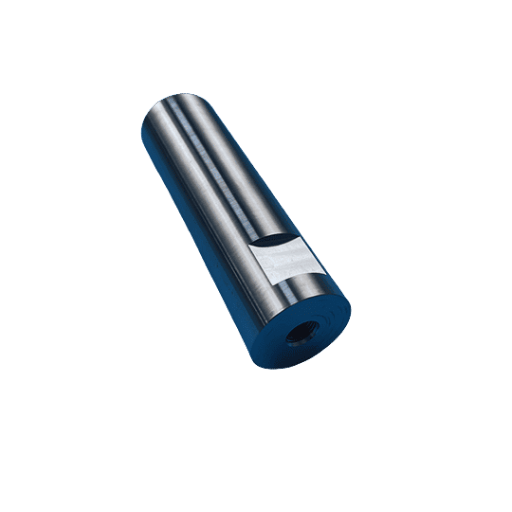
Factors to Consider in Titanium Machining
- Material Grade: This titanium grade has a very strong impact on the machinability, with some being more ductile and others stronger but more resistant to cutting.
- Tool Selection: For efficient machining, wear-resistant and heat-resistant cutting tools gamma carbide or tools coated with Titanium Aluminum Nitride (TiAlN), should be used.
- Cutting Speed, Feed Rate: Being a poor thermal conductor and having fragile surface layers, titanium demands strictly adhering to optimal cutting speed and feed rate values.
- Coolant: High-quality coolant is aimed at reducing temperature buildup and tool wear.
- The Workpiece Rigidity: Clamping and workpiece stability should be ensured to maintain accuracy and prevent vibrations, which can cause quality problems.
- Chip Management: Good chip evacuation methods should be put in place to avoid chip buildup and ensure smooth operation.
- Operating Conditions: Controlling the spindle speed and keeping temperature conditions stable is required to prevent time distortion.
- Design Complexity: Complex designs call for innovative methodologies to maintain exact tolerances, including multi-axis machining or special-purpose equipment.
- Cost Optimization: Achieving a balance between sheer operational costs, including wear and tear of tools and machining time, and desired levels of performance is critical for continued production.
The Role of Corrosion Resistance in Material Selection
Corrosion resistance often dictates the final call in material selection whenever machinery or infrastructure must face acids, salt water, or sudden temperature swings. Fresh search engine data suggests researchers and engineers are leaning harder toward stainless steels, titanium alloys, and polymer composites because those classes hold up best against rust and pitting. Choosing a highly resistant material rarely proves a luxury; the decision typically pays off in longer service life and sharply lower upkeep invoices. Sectors such as marine engineering, aerospace travel, and chemical refining lean on that durability to keep accidents rare and production schedules honest. To squeeze out even more reliability, shops now layer cutting-edge coatings or hone surface finishes- engineers call the practice an extra polish for good reason.
Importance of Strength-to-Weight Ratio in Aerospace
In aerospace engineering, the strength-to-weight ratio ranks among the most important benchmarks, influencing nearly every aspect of flight performance. Stronger materials that remain lightweight grant airframes the resilience they need while shedding unnecessary mass. Every kilogram saved translates into lower fuel consumption, room for extra payload, and greater agility in turbulence. Airlines and militaries alike look to that slim margin for projects that demand tight budgets and greater distance. Finding that sweet spot where strength meets slenderness is still the surest way to push modern aviation forward.
What are the Different Grades of Titanium for Machining?
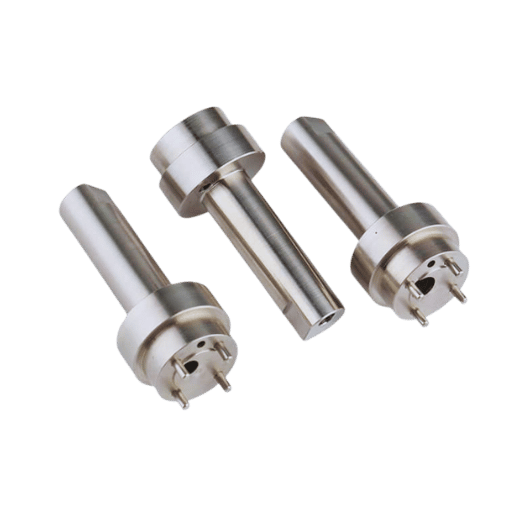
An Overview of Commercially Pure Titanium Grades
Commercially pure titanium falls into four distinct grades, numbered 1 through 4. Grade 1 is remarkably resistant to corrosion and shapes easily, yet it ranks lowest in strength; at the opposite end, Grade 4 combines considerable tensile strength with only moderate ductility.
Exploring Grade 1 and Grade 2 Titanium Properties
Grade 1 Titanium is the softest and most ductile of the commercially pure grades, making it preferred in applications where corrosion resistance and formability are required. It has a tensile strength of about 240 MPa (34.8 ksi) while the yield strength is 170 MPa (24.6 ksi), which enables ready shaping and adaptation for marine applications, chemical processing, and medical devices by the user. The material is free from added alloys and has an excellent weldability property, aiding in fabrication with little or no difficulty.
In contrast, Grade 2 Titanium is regarded as the workhorse among the commercially pure titanium grades. It represents a compromise between strength and formability, having tensile strength of approximately 345 MPa (50 ksi) with a yield strength of 275 MPa (40 ksi). This grade offers great corrosion resistance and is capable of bearing higher stresses than Grade 1. It is, therefore, graded for a variety of demanding environmental applications, such as heat exchangers, aircraft components, and desalination plants.
Both retain the generic properties of titanium: outstanding chemical resistance, biocompatibility, and low density, rendering them critical in fields ranging from medicine to aerospace. Most of the distinction between Grade 1 and Grade 2 is application-based, where strength is required (Grade 2) or higher formability and corrosion resistance (Grade 1).
Key Characteristics of Grade 4 Titanium
Grade 4 titanium stands out among the commercially pure alloys because its blend of tensile strength and ductility is hard to match. Users regularly cite its stubborn resistance to seawater, chemical spills, and high-temperature oxidants. The metal also takes to bending, rolling, and light welding work almost without complaint.
Why is Titanium Grade 5 Widely Used in CNC Machining?
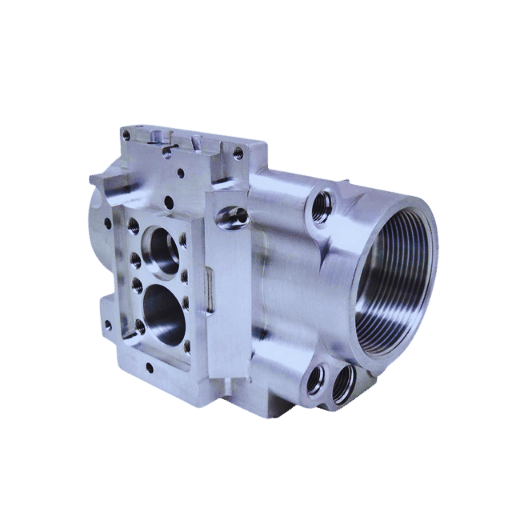
Benefits of High Strength and Hardness
- High Load-Bearing Capacity: Being a high-strength material, Titanium Grade 5 is most commonly found in application areas where the components are subjected to heavy loads with little to no deformation or outright failure.
- High-Service Life: Residual hardness and fatigue wear will increase the life expectancy of operation of the component in demanding environments, possibly even with repeated mechanical stresses.
- Weight-To-Strength Advantage: Despite being lightweight, steel can give the structure a sufficiently strong holding capacity, yet with the help of Grade 5 titanium, the amount of material used can be lowered.
- In High-Stress Environments: Maintaining the highest mechanical properties of Titanium Grade 5 under stress has made it an ideal candidate for aerospace, automotive, or high-performance industries.
- Reduced Failure: The possibility of fractures or damage gets reduced owing to its strength and hardness; hence, the reliability of this material gets increased in critical applications.
- Under High-Pressure Environment: The rigid matrix does not allow compromise under high-pressure environments where other materials falter.
The Impact of Vanadium in Grade 5 Titanium
Vanadium is not a mere additive in Grade 5 titanium; it is one of the cornerstones of the alloy’s identity. When alloyed in calculated proportions, this transition metal boosts hardness and preserves a lightweight profile, traits engineers usually treat as trade-offs. The same chemistry retains resilience at red-line temperatures and absorbs sudden shock without cracking, a behavior that keeps aerospace fuselages- and, increasingly, orthopedic implants schedule for takeoff. Because every gram of vanadium shifts the microstructure in ways that neither aluminum nor tin can, researchers obsess over melt-sheet chemistry long before a single part hits the test rig.
Applications in Medical Implants and Aerospace
Medical Implantations
- Artificial Joint Replacements (e.g., Hip and Knee Implants)
- Orthopedic bone screws and plates for fracture fixation
- Dental implants for permanent durability
- Spinal fusion devices and orthopedic rods
- Biocompatible surgical instruments
Aerospace
- Aircraft structural components such as wings, fuselages, and landing gears.
- Jet-engine parts that are allowed to dart into heaven at high temperatures.
- Turbine blades and disks that are efficient and resistant to wear.
- Rocket casings and fuel tanks.
- Spacecraft structures for strength and lightness.
How Does CNC Machining Titanium Compare to Other Metals?
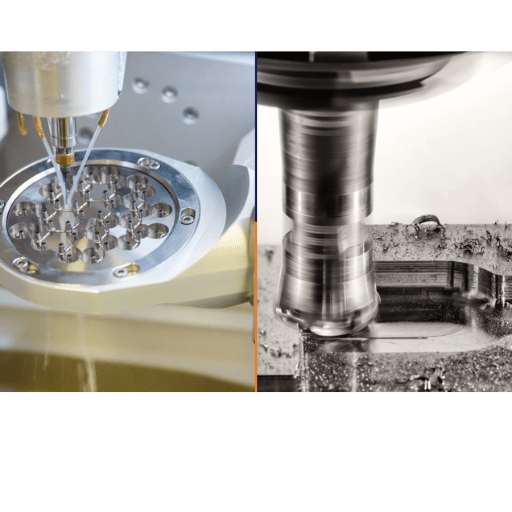
Challenges in Titanium Machining
Working with titanium on the lathe or mill never fails to test my patience. The metal holds heat as stubbornly as it resists deformation, so the cutting edge dazzles blue long before the operator feels the burn. Chatter follows close behind; its combination of high strength and elasticity launches small, wobbly earthquakes that rip precise features out of tolerance. Add in the way titanium chemisorbs to grades of carbide once the temperature crosses a threshold, and even seasoned machinists start second-guessing spindle speed. Making the effort pay off still requires planning, sweat, and a fair amount of hard-won know-how.
Achieving Optimal Surface Finish with Titanium
When working on titanium to bring about a better finish, precision and control should be of utmost importance. Cutting tools that are made with top materials and strong enough to resist wear must be used when working with titanium, since it is highly reactive and easily generates heat. Therefore, one has to keep cutting speeds low and maintain feed rates in moderate ranges to avoid excessive heat buildup and eventual wear or deflection of the tools. Applying a sufficient amount of coolant also prevents overheating and helps maintain a stable environment for cutting. By conducting frequent checks on the cutting tools and by closely monitoring the machining parameters, surface quality consistency can be maintained. Following these directions will yield a precise, smooth finish.
Comparative Analysis of Titanium and Titanium Alloys
Corrosion resistance, strength-to-weight ratio, biocompatibility, and suitability for particular service environments separate titanium from its alloys and further distinguish the various alloy families themselves.
| Parameter | Titanium | Titanium Alloys |
|---|---|---|
|
Corrosion |
High |
Varies by alloy |
|
Strength |
Moderate |
Higher |
|
Elasticity |
Low |
Adjustable |
|
Biocompatibility |
Excellent |
Excellent |
|
Applications |
General |
Specialized |
|
Cost |
Lower |
Higher |
|
Processing |
Easier |
Complex |
|
Density |
Low |
Slightly higher |
|
Wear |
Moderate |
Improved |
|
Heat Resistance |
Moderate |
Enhanced |
Frequently Asked Questions (FAQs)

Q: Why choose titanium for CNC machining projects?
A: Titanium is often chosen for CNC machining due to its high strength-to-weight ratio, excellent corrosion resistance, and ability to withstand high-temperature environments. These properties make it an ideal material for aerospace, medical, and automotive applications.
Q: What are the machinability challenges of different titanium grades?
A: Machining titanium can be challenging due to its low thermal conductivity and high strength. Grades 1 and 2 titanium are generally easier to machine compared to harder titanium alloys, but all types of titanium require careful planning and the right tooling to achieve the best results.
Q: How does titanium grade 1 compare to titanium grade 2 in machinability?
A: Titanium grade 1 is the softest and most ductile, making it the easiest to machine among pure titanium alloys. Titanium grade 2, while slightly harder, offers a good balance of machinability, strength, and corrosion resistance, making it one of the most common titanium grades used in industry.
Q: Is machining titanium parts more difficult than machining aluminum?
A: Yes, machining titanium is generally more difficult than machining aluminum. Titanium’s hardness and low thermal conductivity make it more challenging to cut, requiring specialized tools and techniques. However, its superior mechanical properties often justify the additional effort.
Q: What are some common titanium grades used in CNC machining?
A: Some common titanium grades used in CNC machining include grades 1 and 2 for their machinability, grade 5 (a widely used titanium alloy) for its high strength, and grade 23 for medical applications. Each grade offers different benefits based on the specific requirements of the project.
Q: What factors should be considered when choosing titanium for CNC machining?
A: When choosing titanium for CNC machining, consider the material’s machinability, strength, corrosion resistance, and application requirements. The specific grade of titanium—such as grade 1 or grade 2—should be selected based on these factors and project needs.
Q: What is the role of titanium aluminum nitride in CNC milling?
A: Titanium aluminum nitride (TiAlN) is often used as a coating for cutting tools in CNC milling. It enhances tool life and performance by providing increased hardness and heat resistance, which is particularly beneficial when machining materials like titanium.
Q: What are the benefits of using titanium grade 11 in machining?
A: Titanium grade 11 offers excellent corrosion resistance and is similar to grade 1 but includes a small amount of palladium, which enhances its protective properties in harsh environments. It is often used in chemical processing applications.
Q: How do machine shops handle the challenges of machining titanium?
A: Machine shops handle the challenges of machining titanium by using specialized equipment, cutting tools with appropriate coatings, and precise cutting parameters. They focus on reducing heat generation and optimizing tool paths to achieve high-quality results.
Reference Sources
1. An examination focused on strategies to enhance the machining efficiency of titanium (Ti-6Al-4V) superalloy
- Authors: K. Ravi
- Publication Year: 2023
- Summary: In this peer-reviewed academic journal paper, the segment of the given research deals with challenges related to engraved articles out of Titanium Grade 5 (Ti-6Al-4V). This is because of the special characteristics of this metal, which finds huge applications in aerospace and biomedical sectors. Due to its strength and low thermal diffusion, Taylor’s Tool Life equation does not suffice and helps in the accurate prediction of the said life span of the cutting tool with its diameter of the main material on which the cutting tool is applied. Increased operational efficiency, extended tool’s operational life are examined through some techniques, such as dry flood and mist lubricants.Ravi(2023).
2. Enhancing sustainability during the process of engineering titanium alloys of grade 4 and above: use of machining operations under minimum quantity lubrication
- Authors: T. Mathonsi, R. Laubscher
- Publication Year: 2023
- Summary: This paper explores the application of MQL in the machining of Grade 4 titanium. The authors performed a series of tests to evaluate the ways in which dry, wet, and MQL affect the machining process. The results show that MQL gives a better dimension quality of the product and prolongs the life of the working tool as a result, making it a better method of machining alloys with titanium (Mathonsi & Laubscher, 2023, pp. 1077–1087).
3. A Study on the Surface Roughness and Material Removal Rate in WEDM of Titanium Grade 7 (Ti-0.15Pd) Alloy Using Statistical Methods
- Author: R. Suresh
- Year: 2023
- Description: The present work relates to the wire-cut electric discharge machining process of Titanium Grade 7, an alloy with palladium. In this context, it aims to analyze the effect of machining control variables (pulse-on time, pulse-off time, indicated power) on the obtained performance characteristics, i.e., surface roughness and material removal rate (MRR), using statistical methods. On the basis of these results, the optimization of the control parameters in the machining process is considered to be effective, as the results indicated the existence of Grade 7 titanium for improvement in corrosion (Suresh, 2023).
4. Corrosion
5. Metal
6. Alloy


