


CNC tools belong to lathe precision tool sets that transform raw materials into intricately crafted components with the highest accuracy. For instance, software CNC guys must have a genuine appreciation for these tools if working at maximum efficiency with good results; thus, this article outlines the CNC turning tools-their primary features, functions, and benefits. The article gives insight into all angles, the tools, and the different uses to help you improve whatever discipline of machining you may be working in. Get ready to infuse your lathe process with precision and creativity!
What is cnc turning, and How Does it work?
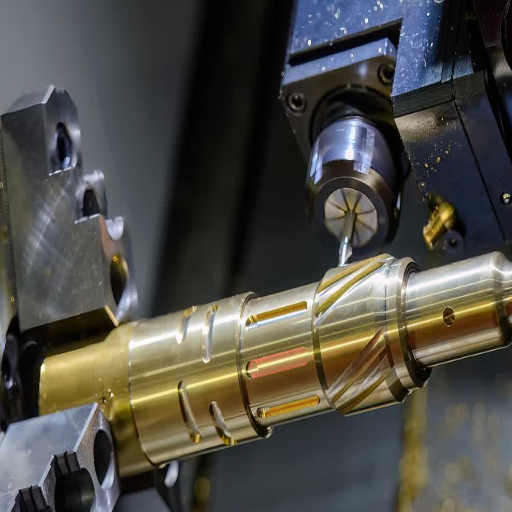
CNC turning is a machining process in which computer-controlled lathes shape materials (generally metals or plastics) into precise components. At high speed, the cutting tool removes materials from the securely held workpiece, giving it the required shape and dimensions. Highly efficient and consistent, this process is best suited to making complex parts or requiring less human intervention in large-run manufacturing. Precision and trustworthiness have made CNC an essential capability within aerospace, automotive, and manufacturing industries.
Defining the cnc turning process
The CNC turning process, or Computer Numerical Control turning, is a series of automated, precision-controlled machining operations that produce cylindrical components by removing material from a workpiece. The cutting operations are conducted on a CNC lathe or turning centre, which essentially follows detailed instructions provided by the programmer specifying which tool movements to make. Hence, CNC turning is employed by industries to manufacture parts that require great intricacy with tight tolerances, repeatedly with precision. This minimizes flaws and maximizes production speed, which is beneficial in aerospace and automotive sectors. CNC turning applied with current manufacturing will further evolve quickly, precisely, and reliably.
Components of a cnc lathe machine
The CNC lathe machine consists of several essential components, each playing a role in its function and precision:
- The headstock houses the central spindle and drive mechanism, imparting rotational force for machining. It also contains a set of gears or belts to vary the speed.
- Chuck: This secures the workpiece during machining operations. Depending on the application and precision required, different types of chucks are available in the market, such as the 3-jaw chuck or 4-jaw chuck.
- Tailstock: It is present in line with and opposite to the headstock. It usually supports the other end of the workpiece, especially for longer pieces, thus providing enhanced stability during machining.
- Tool Turret: The tool turret, binary for a CNC 3-axis lathe, protects several cutting tools and rotates to bring a desired tool into position depending on machining needs. Thus, it allows many operations on a single setup.
- Bed: It is ruggedly stable and is a bed for the whole machine. It mounts the headstock, tailstock, and tool carriage and maintains their alignment for high precision.
- Carriage and Cross Slide: The carriage slides along the bed, holding the cutting tools in the required positions. The cross slide allows movement perpendicular to the bed’s axis for accurate cutting operations.
- Control Panel: This interface allows the operator to set the required machining parameters, such as speed, feed rate, and cutting paths. Modern CNC control boards provide touch-screen capability and full programmability.
- Coolant System: This system prevents overheating and ensures smooth cutting by providing a continuous flow of coolant near the cutting area.
Chip Conveyor: This carries away the chips and debris thrown up by the cutting action, keeping the working environment clean and the machine performing well.
All these components work perfectly together to permit CNC lathe machines to perform accurate and repeatable machining tasks, which in turn greatly enhance manufacturing productivity and quality.
Benefits of Using CNC Turning
- Precision and Accuracy
CNC turning machines deliver the highest precision and consistency while eliminating errors from the manufacturing process. The accepted tolerance for CNC turning is as low as 0.0001 inches, which means the parts are of very high quality and meet difficult specifications.
- Improved Productivity
These machines work around the clock, resulting in speedier production cycles and higher commercial outputs. Because there is minimal downtime, it can produce volume, which enormously increases the manufacturing capacity.
- Reduce Waste
CNC turning minimizes waste by optimizing the machining process and reducing errors. Such savings-based construction results in sustainable manufacturing practices.
- Material Versatile
Consider CNC turning for metals, plastics, or composites: it is a versatile finishing avenue for aerospace, automotive, and medical fields.
- Automation-Friendly
CNC turning integrates well with automated processes, eliminating manual intervention and lowering labor costs while enhancing safety and efficiency in the workflow.
What are the Different types of lathe cutting tools?
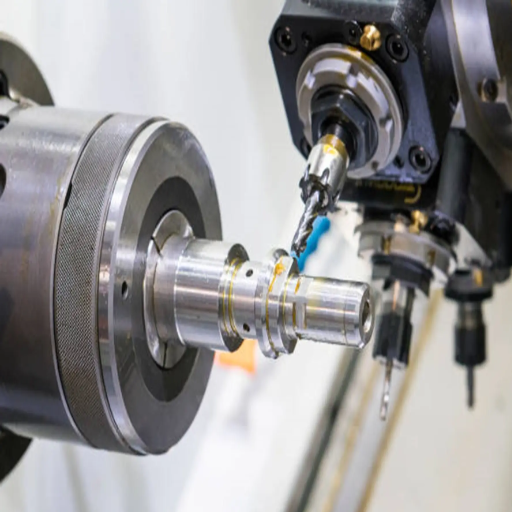
- Turning Tools
They are used to remove material from the outer surface of the workpiece to provide the desired shape and size.
- Boring Tools
Designed to enlarge or finish the inside diameter of a hole or cavity in a workpiece.
- Threading Tools
These are used to cut thread patterns internally or externally on the workpiece.
- Parting Tools
Parting tools are designed to cut off or separate a portion of the workpiece.
- Facing Tools
These tools are applied to make a workpiece end smooth and flat by removing material.
Each tool serves a distinct purpose, allowing precision and versatility during machining operations.
Overview of Common Lathe Cutting Tools
Lathe cutting tools are valuable for machining operations, which makes them essential in many industries. They provide extreme precision to create designs with fine details and exact dimensional counterparts. They are versatile, handling materials ranging from metals to plastics and even wood. Cutting tools of today mainly provide further resistance to wear and tear, reducing their need for replacement significantly through different coatings. They offer smooth finishes with ease for geometric shapes that are quite complex, thus keeping lathe cutting tools in demand for small-scale workshops and large manufacturing units.
Specialized cutting tools for CNC turning
CNC turning special tools are developed to gain high efficiency, versatility, and precision in machining processes. The tools are designed for particular works, such as grooving, threading, boring, and parting off, thus assuring the best job performance. Modern CNC turning tools are equipped with technologies such as carbide inserts, coating surfaces such as TiN (Titanium Nitride), and a fine edge to perform the task quickly and with all sorts of material. More advancements in tool geometry and materials are continually being developed to improve cutting performance and tool life, hence a requirement in aerospace, automotive, and medical manufacturing industries.
Choosing the Right Lathe Tool for Your Project
You need to consider certain factors when selecting the right lathe tool to obtain optimum performance and achieve desirable results. First on the list would be assessing what material you would be working on, whether it be steel, aluminum, brass, or plastics, as these would require different types of tools with specific coatings to cut the material under particular process conditions effectively. Second comes designing the geometry and size of the tool to cut as per the target specification and corresponding machining requirements. Suitable tools will have suitable rake angles, nose radii, and cutting edges that will significantly affect the precision and eventual product of the operation. Next, select between high-speed steel (HSS) and carbide tooling. HSS would be preferred at low speeds and carbide at high speeds due to high resistance to wear. Last but not least, pick a tool set that corresponds with your lathe machine and considers the level of complexity of your project- these factors will guarantee augmented serviceability and efficiency under harsh working conditions. By thoroughly putting the latter factors into perspective, one can work with a high degree of productivity and fantastic finishes in machining.
What is the Difference Between cnc turning and cnc milling?
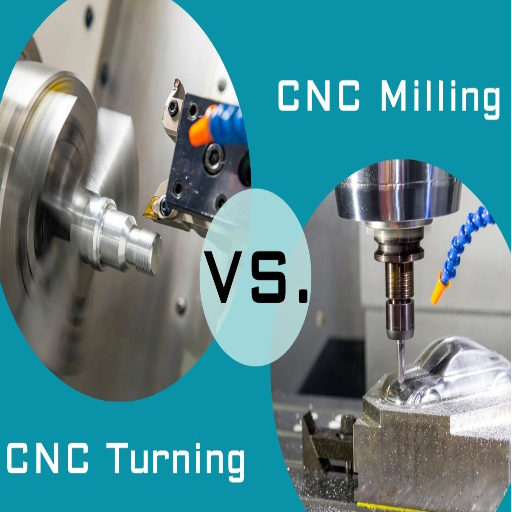
Two machining processes, CNC turning and CNC milling, are therefore commonly attributed to manufacturing:
- In CNC turning, a workpiece is held in a rotating chuck while the cutting tool removes material from its outside diameter. Hence, this operation is primarily suited for producing shafts, bushings, and symmetric parts.
- CNC milling, on the other hand, uses a stationary workpiece; a rotating cutter removes the material. Hence, this operation is better suited for the fabrication of intricate shapes, holes, and non-symmetrical components, such as gears or complex parts.
The significant difference is the motion generated between the tool and the workpiece: turning denotes rotation of the workpiece, whereas milling denotes rotation of the cutting tool.
Key Differences in Machine Operation
Machine operation varies with the type of machining (conventional vs. non-conventional), kinds of work materials, speed, accuracy, surface finish, and tooling.
|
Aspect |
Key Points |
Details |
|---|---|---|
|
Machining Type |
Conventional, Non-conventional |
Contact vs. no contact |
|
Material |
Soft, Hard |
Material hardness |
|
Speed |
Slow, Fast |
Process duration |
|
Accuracy |
Low, High |
Precision levels |
|
Surface Finish |
Basic, Fine |
Finish quality |
|
Tool Need |
Physical, None |
Tool dependency |
Applications of cnc turning and cnc milling
- Automotive Industry
CNC turning and milling are used extensively to manufacture automotive parts precisely. This includes engine parts, shafts, gears, and perhaps custom parts required to assemble a vehicle. The processes involved here guarantee that the sector demands the highest assemblage of human skill and quality.
- Aerospace Industry
The aerospace sector demands components that are of the highest durability and precision. CNC milling and turning produce turbine blades, fuselage components, wing sections, and other complex parts that are important for aircraft’s proper functioning and safety.
- Medical Industry
CNC turning and milling process surgical instruments and medical implants with high precision and complex geometry, such as prosthetics, orthopedic implants, and dental components. Their applicability in the medical field is enhanced by their capability of working with biocompatible materials.
- Electronics Industry
CNC machining enables small, intricately detailed parts such as electronic device connectors, enclosures, and heat sinks. Precision assures the effectiveness and functioning of these parts in high-tech applications.
- Oil and Gas Industry
CNC turning and milling make valves, pistons, and drilling tools robust and accurate. Since parts are subjected to harsh conditions, ensuring reliability and accuracy becomes paramount in this domain.
When to Use Each cnc machine
Choosing the CNC machine largely depends on the project’s demands, such as the material used for machining, the degree of accuracy required, and the particular job. For example:
- CNC Lathe
A CNC lathe machine produces cylindrical parts such as shafts, bushings, and fittings. Turning, threading, and boring operations are carried out here, which are crucial for round parts with very exact dimensions in the automotive and aerospace fields.
- CNC Milling Machines
Milling machines specialize in fabricating complicated multi-axis parts with fine surface geometry. They are perfect for manufacturing flat or irregular surfaces like brackets, gears, and molds. Being extremely versatile, the machine is a popular choice for prototyping and creating small batches.
- CNC Routers
These are predominantly used to cut softer materials like wood, plastic, and foam, although they can also cut lightweight metals. Excellent cut and design work is required in furniture manufacturing, signage, cabinetry, and other industries.
- CNC Plasma Cutters
Plasma cutters are intended for cutting electrically conductive materials such as steel, aluminum, and brass. They are employed on a large scale to cut and shape metal sheets in heavy machinery, the automotive, and construction sectors.
- CNC Laser Cutters
Laser cutters are used for high-precision work and are suitable for projects requiring extremely fine engravings or extremely thin cuts. They are also employed in jewelry, electronics, and custom product manufacture.
- CNC EDM (Electrical Discharge Machines)
CNC EDM is applicable in cutting hard metals and shapes that are difficult to cut by traditional abrasive cutters. Aerospace and tool-making industries commonly use EDM equipment for high-precision parts.
A manufacturer may select the most appropriate CNC machine to achieve the best results by carefully considering the project’s material, complexity, and tolerance.
How to Choose the Right Turning Center for Your Needs?
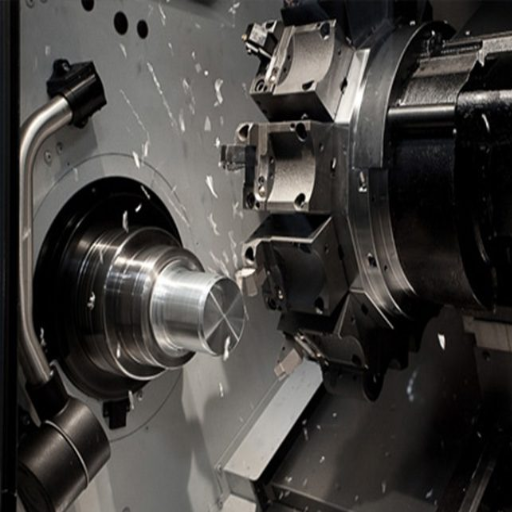
- Define Your Application Requirements
Specify the exact processing that the turning center will undergo, such as turning, threading, or drilling. Consider the material type, part size, and complexity.
- Check on Precision and Tolerances
Ensure that the machine can achieve the level of precision required for your components. In certain industries, like aerospace or medical manufacturing, high accuracy is a must.
- Check the Production Volume
If large production batches are anticipated, consider machines with automation, such as bar-feeders or robotic arms, to save time and increase output.
- Assess Spindle and Tooling Capacities
Check specifications like spindle speed, horsepower, and tooling capacity to ensure they meet your production requirements.
- Control System Features
Select a machine with a suitable control system, which is user-friendly and matches the programming skill level of your operators.
- Budget and Maintenance Costs
Consider your machine’s purchase price, running cost, and the technical support and availability of spare parts.
A detailed analysis of these factors will help you select the turning center that suits your operations and achieves maximum output.**
Factors to Consider in a cnc turning center
Many factors must be studied when choosing a CNC turning center to ensure it fits your production requirements and operational goals. Five major factors are discussed in detail:
- Size and Capacity
The turning center’s size and capacity should be checked to see if it fits in parts of certain dimensions and weight you want to produce. Also consider chuck size, spindle bore, maximum turning diameter, and length.
- Spindle Speed and Power
Evaluate the spindle’s speed range and power output to verify its efficient handling of the material types and cutting needs of your production methods.
- Tooling and Turret Configuration
Check your turret’s tooling capacity and tool change speed. Multi-axis and live tooling options increase part machining flexibility on complex geometries.
- Precision and Repeatability
Verify that the machine is capable of exact and repeatable operations, the outputs of which continue to hold spec through long production runs.
- Automation and Integration Features
Review the automation features available, including bar feeding, robotic loading, or part-catching, and, most importantly, check for seamless integration into your current production system (such as CAD/CAM).
Upon judging these factors carefully, one can invest in a CNC turning center capable of assuring efficiency, accuracy, and subsequent business growth.
Comparing Different types of cnc turning centers
CNC turning centers fall into two categories of machining: horizontal and vertical. Horizontal CNC lathes are more common, whereas vertical ones are used for heavy casting and/or short parts.
| Aspect | Key Points | Details |
|---|---|---|
|
Type |
Horizontal, Vertical |
Orientation of the spindle |
|
Usage |
Common, Heavy parts |
Application focus |
|
Chip Flow |
Downward, Trapped |
Chip management |
|
Gravity Effect |
Neutral, Part seating |
Impact of gravity |
|
Automation |
Easier, Built-in |
Automation setup |
Budget Considerations for a cnc lathe machine
Buying CNC lathe machines is a balancing act between cost and price, functionality, and return on investment (ROI). Entry-level machines, though cheap, may not have advanced features or be sturdy enough for intensive industrial use. Mid-level machines, on the other hand, present a good combination of value and performance and are therefore the most viable choice for small-to-medium enterprises. High-end CNC lathes offer futuristic technology and find use in industries where utmost precision and durability are required, helping yield better production and efficiency in the long run. That being said, hidden costs such as tooling, maintenance, and operator training should be considered to better understand the total investment.
Reference Sources
- Authors: Min-Liang Huang, Jr-Syu Yang, Jheng-Wu Yu, Shih-Hsing Chang
- Publication Year: 2020
- Key Findings:
- This study introduces the ν-Support Vector Regression (ν-GSVR) model with a Gaussian loss function for predicting the short-term wear value of CNC turning tools.
- The proposed model outperformed other models in forecasting wear values, which is crucial for determining when to replace tools to maintain dimensional accuracy in machining.
- The hybrid evolutionary algorithm (CCGA) was developed to optimize the parameters of the ν-GSVR model.
- Methodology:
- The study involved collecting data on tool wear during CNC turning operations, considering factors such as spindle revolution, cutting depth, and feed rate.
- The performance of the ν-GSVR model was validated against other predictive models, demonstrating its superior accuracy in wear value forecasting(Huang et al., 2020, pp. 369–378).
2. “Effect of spatial moving structure and topology optimization of the CNC turning machine tools”
- Authors: T. Chan, Sabbella Veera Venkata Satyanarayana Reddy, Aman Ullah, Bedanta Roy
- Publication Year: 2023
- Key Findings:
- The study utilized finite element methods (FEM) to analyze and optimize the structure of CNC turning machines, focusing on reducing machining errors and improving precision.
- The research highlighted the importance of analyzing stress and deformation in machine components to enhance performance and lifespan.
- The study provided experimental validation of the modal analysis results, confirming the effectiveness of the optimization strategies.
- Methodology:
- A virtual model of a CNC turning machine was created, and various analyses (modal, static, and transient) were conducted to assess its behavior under operational conditions.
- The study compared old and new machine designs, demonstrating improvements in modal frequencies and structural rigidity(Chan et al., 2023, pp. 2969–2987).
3. “Experimental study of geometric error of CNC turning machine tools based on ISO 13041-6”
- Authors: Herman Budi Harja, Elan Suherlan, Nandang Rusmana, Dhion Khairul Nugraha
- Publication Year: 2023
- Key Findings:
- This research focused on evaluating the geometric errors of CNC turning machines, which significantly affect the quality of machined products.
- The study identified geometric inaccuracies that exceeded acceptable tolerance levels, including circularity and linear positional errors.
- The findings indicated regular inspections and alternative measurement methods are necessary to ensure operational viability.
- Methodology:
- The study followed ISO 13041-6 standards for conducting experimental cutting tests to assess geometric errors.
- Data was collected using a Coordinate Measuring Machine (CMM) to analyze the geometric accuracy of machined workpieces(Harja et al., 2023).
4. .Top CNC Turning Service Supplier in China
Frequently Asked Questions (FAQs)
Q: What is a CNC turning machine?
A: A CNC turning machine is a machine tool used for turning operations. It utilizes computer numerical control (CNC) technology to automate the movement of the machine parts, allowing for precise machining of cylindrical parts through the rotation of the workpiece against cutting tools.
Q: What are the different types of lathe tools used in CNC turning?
A: The types of lathe tools used in CNC turning include rough turning tools, finish turning tools, grooving tools, and thread cutting tools. Every kind of lathe tool serves a specific purpose in the turning operation, helping to achieve the desired shape and finish of the workpiece.
Q: Can you explain the basics of CNC turning?
A: The basics of CNC turning involve using a CNC lathe to perform subtractive machining on a rotating workpiece. The process includes programming the machine to control the cutting speed and tool movement, thus shaping the material into the desired form through various turning operations.
Q: What are the key capabilities of CNC turning services?
A: CNC turning services offer high precision and repeatability in machining operations. They can handle a variety of materials, support different turning operations like taper turning and straight turning, and utilize advanced CNC technology to execute complex designs efficiently.
Q: What is the role of cutting speed in CNC turning operations?
A: Cutting speed plays a crucial role in CNC turning operations, as it determines the rate at which the cutting tool engages the material. Proper cutting speed helps achieve optimal cutting conditions, reduce tool wear, and improve the quality of the finished product.
Q: What are the different turning operations performed on a CNC lathe?
A: Different turning operations performed on a CNC lathe include rough turning, finish turning, taper turning, thread cutting, and grooving. Each operation is designed to achieve specific results based on the requirements of the turning work.
Q: How does a CNC turning machine differ from traditional lathe machines?
A: A CNC turning machine differs from traditional lathe machines primarily in its automation and precision. CNC machines are computer-controlled, allowing for complex shapes and high repeatability, while traditional lathes require manual operation and are less capable of precision machining.
Q: What materials are commonly used for cutting tools in CNC turning?
A: High-speed steel (HSS), carbide, and ceramic are the materials used for cutting tools in CNC turning. The choice of material depends on the type of machining operation, the workpiece material, and the desired machining performance.
Q: What is meant by ‘turning services’ in the context of CNC machining?
A: Turning services in CNC machining refer to the professional services offered by machine shops to perform turning operations on various materials. These services encompass CNC turning machines to produce precision-engineered parts tailored to specific customer requirements.
Q: What is the significance of thread cutting tools in CNC turning?
A: Thread-cutting tools are significant in CNC turning as they create internal and external workpiece threads. This is essential for applications requiring threaded connections, such as screws and bolts, and is a common requirement in turning services.


