


Regarding polymer technological plastics, PTFE (Polytetrafluoroethylene) and PEEK (Polyetheretherketone) are often categorized as the most versatile and sought after materials. This is about various industries. Whereas both are widely used and highly regarded for their high levels of endurance, heat resistance, and resistance to chemical corrosion, these materials possess distinct and different characteristics that render them highly compatible with other applications. And even if you are considering what areas to apply the material to: aeronautics, medical, production, or service military, knowing the difference between PTFE and PEEK should not be underestimated when picking one for your particular need. This study focuses on the main characteristics, benefits, and primary applications of these two polymers to assist you in making a rational decision.
Introduction to PTFE and PEEK
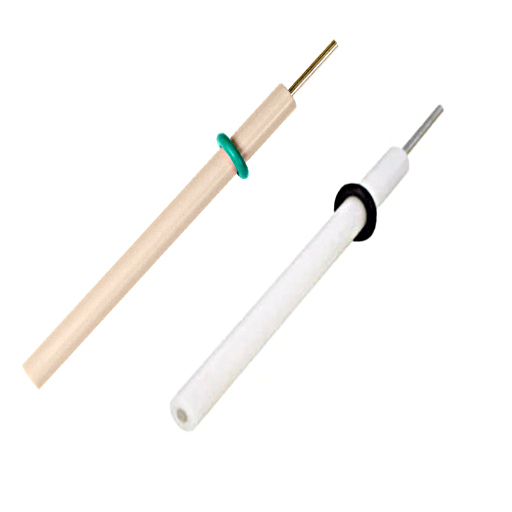
PTFE (Polytetrafluoroethylene) and PEEK (Polyetheretherketone) are high-performance polymers with different properties and purposes. The primary developments in PTFE occurred in the expansive ability to form virtually impermeable, semi-permanent, smooth, slippery, and hard-to-wear films and the resistance to heat and chemicals, which drives its use as a coating or insulation. In contrast, the main characteristics of PEEK are its good tensile strength, rigidity, and excellent wear resistance under extreme conditions, which result in its use in aerospace, medical implants, and industrial equipment. The demands within different fields are relatively high; therefore, both materials have been employed, while the choice between them depends on some defined performance parameters hard in the application.
Overview of PTFE
Polytetrafluoroethylene (PTFE) is a unique thermoplastic material containing fluorine atoms and was first invented in 1938, under the commercial name of Teflon. It is inert and is used more commonly in aggressive environments or applications involving high or low temperatures, as it has a service temperature of up to 260°C (500°F). Items such as non-stick pans, gaskets, adhesive tapes, seals, and insulated wires also contain PTFE. PTFE is beneficial in separative moving parts because it can reduce stick friction. Spectacularly, ninety years since its discovery, PTFE is still being improved to work in new fields like motor engineering, ergonomics, and healthcare, playing a significant part in the evolution of engineered materials.
Overview of PEEK
Polyetheretherketone (PEEK) is a material type thermoplastic which is employed in high performance applications because of its mechanical and chemical properties so PEEK is characterized by relatively high strength-to-weight ratio, exceptional thermal stability and a great deal higher chemical resistance even in harsh conditions, as a consequence making it possible to employ it in various advanced fields such as aerospace, automotive and medicinal. One thing that draws more attention to this material, even apart from the fact that it happens to stand out in high-temperature working conditions, is that it can even retain its shape of enclosing a stiffener up to a temperature of 250°C (482°F). Furthermore, it has been claimed that PEEK can be safely implanted in the body due to its biocompatibility, thus frequently applying this material in manufacturing such medical implants as spine fixators, teeth, and dental crowns.
Another significant advantage of PEEK is that it is highly resistant to wear and has a very low coefficient of friction. Hence, the durability of bearings and so on in structures with components is uncertain. Since it is known to resist radiation and hydrolysis it does not simply prohibit instant use of the structure in steam sterilization processes and high radiation zones. Due to the necessity of advanced materials that combine weight reduction and high strength, PEEK has continued to be supported and developed due to its provision of alternative ideas for intricate engineering problems.
Applications of PTFE and PEEK
While the PTFE and PEEK are high-performance polymer materials, which are extremely useful in various industries with different properties, some of their closest relations are as follows. Outlined below are the most useful instances of those materials:
- The Aerospace Industry
In this industry, the renowned PTFE finds application in wire covering, seals, and gaskets because it falls short of zero chemical activity and has high thermal stability. Besides PEEK, weight control, fabricating brackets, clamps, and other lightweight structures are used for components.
- Medical Devices
PEEK is a preferred material for devices other than indwelling ones. It is used in spinal cages and dental components due to its implant-friendly compatibility and good mechanical attributes. Moreover, this material has found relevance in medicine, medical tubing, andin vascular grafts because it possesses excellent chemical and thermal resistance.
- Automobile Industry
While most of the garnered knowledge on polymers and in this country has been on PEEK, this, or rather its ability to stick resistant materials, can be at very incredible amounts on already developed parts. In other places, using PEEK-able materials, such as gears, bushings, and bearings, can control abrasion and improve working. PTFE construction is four times lighter than any other known material, making it possible to burn PTFE-based works like recycled concrete and clay into the concrete. At the same time, PTFE covering hoses, gaskets, and seals provide optimal performance despite ultralow temperatures and aggressive substances.
- Semiconductor Manufacturing
PTFE is also used in shaping devices for semiconductor manufacturing, as PTFE has one of the highest chemical optic finishes that completely abates UV exposure. The chemical compatibility of PEEK materials restrains any concerns, and in effect, PEEK is also used in chemical space plasma semiconductor processing tools and other related chip fabricating and testing equipment.
- Oil & Gas Sector
For instance, PEEK is utilized in the construction of pipe components and underwater housing materials for elaborate uses because of the high pressures and substrates used. In this sector, this is done by designing and fabricating PTFE exposures over valve seats, gaskets, and seals, thus optimizing efficiency due to the high corrosion.
Comparative Analysis: PTFE vs PEEK
- Resistance to Changes in Temperature
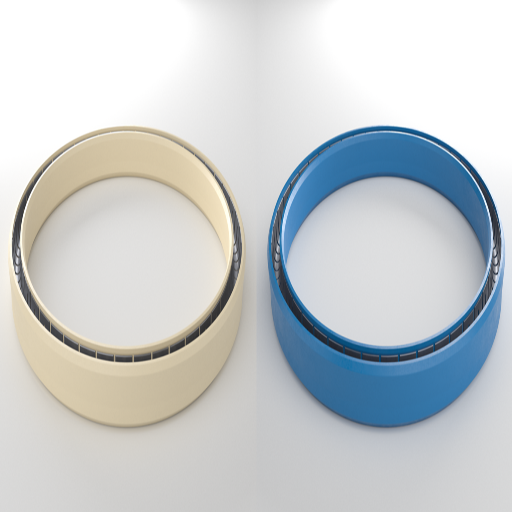
PTFE can tolerate much higher temperature changes than any other polymer and can also sustain lower-than-freezing temperatures. Zaxe is another polymer that is resistant to a wide range of temperatures, up to 260-270°C. Presently, though, PEEK serves well at about 250°C or lower temperatures, with several improved PEEKs managing to give slightly higher service temperatures.
- Strength and Toughness
PEEK is quite strong and rigid compared to PTFE, which makes it a better candidate if high mechanical performance is required, such as in heavy or impact loadings.
- Chemical Compatibility
Both PTFE and PEEK show good resistance to a variety of chemical attacks. However, PTFE’s unaffectedness against most compounds is almost absolute, while PEEK’s affectedness increases to mechanical stresses in certain media.
- Wear and Friction
Regarding wear resistance, PEEK has the edge over PTFE, especially in dynamic applications that involve some form of friction.
- Affordability
In most cost comparison studies, PEEK is more tender than PTFE, making it more suitable for applications where the pressure is less on its performance or utility.
In general, the decision on PTFE or PEEK depends on the conditions of using the polymer, namely the operating temperatures and the product’s mechanical characteristics and economic feasibility.
Chemical Resistance of PTFE and PEEK
The superb chemical resistance of Polytetrafluoroethylene (PTFE) and Polyether Ether Ketone (PEEK) makes them materials of choice for use in highly corrosive environments. However, their properties change depending on the chemicals they are exposed to and the temperatures.
- PTFE Chemical Resistance
PTFE is the most chemically inert polymer, withstanding strong acid and base exposure and attack by organic solvents. It is stable even when used in aggressive environments, like hydrochloric acid, sulfuric acid, or nitric acid. Therefore, it is usually used in chemical processing in pumps, tanks, and piping. PTFE can be used over a broad range of temperatures (-200°C to 260°C) while retaining its physical properties. However, it has reduced resistance to halogenated compounds like molten alkali metal at high temperatures and fluorine gas.
- PEEK Chemical Resistance
PEEK exhibits excellent resistance to many aggressive chemicals, including hydrocarbons, alcohols, and mild acids. Although it can resist many organic and inorganic substances, its resistance diminishes with high concentrations of sulfuric acid or strong oxidizing environments. PEEK is most appreciated for its ability to endure high temperatures without losing its mechanical or chemical performance, which sometimes exceeds 250°C. Also, in contrast to PTFE, its gas or liquid absorption is relatively lower. It is, therefore, more convenient in applications where a material is supposed to absorb minimal gas or liquid.
In summary, when selecting PTFE or PEEK, special attention should be paid to defining the chemical environment and the purpose of achievement. PTFE is generally employed where maximum chemical resistance is warranted, while PEEK is a better option for instances with high strength and high temperature operations.
Mechanical Strength Comparison
Comparing PTFE and PEEK regarding mechanical properties, PEEK shows a significantly higher value of both the tensile and bearing strengths. PEEK has a tensile strength of 90-100 MPa, depending on the material for filler used, and PTFE is less, with an average of 20-30 MPa. PEEK is recommended for structures requiring enhanced resistance and maintenance of the mechanical panel load, such as in the aerospace or automotive sectors. PTFE is preferable in the low mechanical load application case, in which the pest elimination activities and friction play a more dominant role. The choice, however, in many cases comes down to the design and the application, as competing needs include the need for strength and other properties.
Electrical Insulation Properties
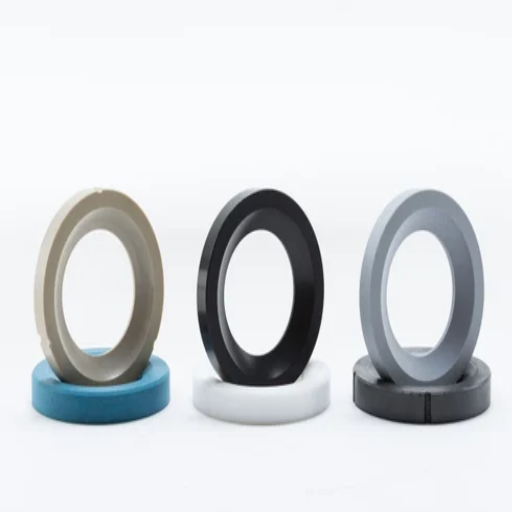
The resolution of electrical insulation control for PEEK and PTFE is of high value high Dielectric qualities. For the case of PEEK, even when subjected to high voltages, the material demonstrates consistent performance and does not exhibit any electrical breakdown. This allows high reproducibility of parts, as the material is stress-free. This is electric equipment, mainly in the wireless industry, where the frequency of operation is considerably high. Both materials depict appropriate insulation performances, much as PTFE is believed to have better electrical arcing and breakdown capabilities over most other competitive materials. However, PEEK presents a more favorable scenario for insulation, at least considering situations that call for good mechanical strength and electrical properties.
Dielectric Strength and Breakdown Voltage Comparison
Dielectric strength and breakdown voltage play essential roles in assessing the extent to which insulating materials such as PEEK and PTFE are capable of electrical isolation. Dielectric strength refers to the maximum electric field a material can survive before it fails, and breakdown voltage refers to the stopping voltage.
PTFE (Polytetrafluoroethylene) has a dielectric strength that varies between 19 and 40 kV/ mm depending on the thickness and use conditions. It is also very strong as an insulating material, most especially in situations that require it to carry high voltages and function in very harsh conditions.
However, in contrast, PEEK (Polyether ether ketone) demonstrates dielectric strengths that are generally around 20-25 kV/mm, which is a bit lower than that of PTFE. Nevertheless, PEEK mitigates this by supporting more tensile mechanical properties and higher thermal resistance, allowing it to operate within areas where high mechanical loads and temperatures are combined.
Regarding breakdown voltage, these two materials performed well in the tests. PTFE is beneficial with its high electrical properties and very low dielectric loss—one can precisely work with its high-frequency and AC applications. On the other hand, PEEK may not be as strong electrically, but it still comes in handy when dealing with designs where mechanical strength is as important as insulation.
In recent times, research in the field of material manipulation and testing has shown that additional factors, such as thickness, temperature, and other environments, such as radiation or chemicals, can considerably affect the dielectric property of these materials. Thus, these material science fundamentals must be considered very significant in the selection of materials for specific applications that need them.
Surface Resistivity Comparison
A characteristic impedance measures how well an insulating material can withstand electrical flow along its surface. High surface impedance indicates that PEEK or PTFE are recommended for use in applications that require good electrical resistance.
- Recent figures have also established that:
PTFE usually has an area between 10¹⁶ and 10¹⁸ Ohms per square cm, which is one of the highest for any polymer. This makes PTFE appropriate for use in high-voltage environments and places where surface leakage is a worry.
PEEK, on the other hand, is lower in surface resistivity than PTFE, but for the most part, about 10¹⁴ to 10¹⁶ ohms per square. This resistivity of PEEK is still enough for use in most constructional applications of electrical insulation of the first order. In addition, its very good mechanical properties make it a target material when performance in both mechanical and electric aspects is to be achieved.
Both materials can be observed to have high surface resistivity, though PTFE is preferred by a tiny fraction because it has better resistance against surface connections. However, one capability between PEEK and PTFE is directly dependent on the kind of application in question, whether it is high or moderate; also, it has been proven that the concentration of power from the prevailing choice.
Biocompatibility of PTFE vs PEEK
PTFE and PEEK are two types of biocompatible plastics. PTFE is an inert material that is safe to use with food and for surgery. Because of its toughness, PEEK is used in the creation of medical products.
|
Parameter |
PTFE |
PEEK |
|---|---|---|
|
Biocompatibility |
Excellent |
Excellent |
|
Applications |
Medical, Food |
Implants |
|
Durability |
Moderate |
High |
Mechanical Properties of PTFE and PEEK

PTFE and PEEK have different mechanical properties that suit various applications. PTFE is appreciated for its low friction and high mobility. It is favorable for applications that require easy flow and minimum wear. PTFE also has weaker tensile stress and is likely to be bent even under lesser loads.
Furthermore, PEEK has fantastic static and dynamic mechanical strength, crystallinity, and thermal resistance, resulting in a low expansion coefficient at room temperature. It is often used in complex aerospace and medical device applications where robust and stiff materials with excellent chemical stability are also needed.
Tensile Strength and Durability
The determination of tensile strength and wear resistance leads one to the choice of material in many cases. Performance enhancement is delivered by PEEK. It is not distorted while being applied pressure, which is why it is considered a material of choice in industries where intense competition and reliability are essential to maintain. Based on recent research, PEEK exhibited better mechanical strength than many of the standard plastics under the same conditions, at high temperature or under tensile fatigue. This advantage should be factored into the overall evaluation, especially in healthcare, automotive, and aerospace applications, where endurance is crucial for speed and effectiveness.
Flexural Strength Analysis
Flexural strength is the resistance of a material to bending loads and its deformation under the same loads – an essential characteristic for materials used in applications where loads are predominantly bending. The latest findings suggest that PEEK outperforms mostly all common polymers in its ability to withstand flexural stresses without losing its toughness even in severe working conditions. PEEK is highly demanded in other sectors like aerospace, as it is characteristic of materials constantly battered by mechanical forces and high temperatures, especially airframes. Reviewing the data from these tests enables the conclusion that the lighter weight and improved mechanical characteristics of PEEK enable performance and efficiency to be enhanced to meet the rigorous technical requirements.
Impact Resistance of Both Polymers
In the metric to assess the impact resistance of two plastics, it is clear that of the two, PEEK is the most robust when exposed to high energy and still does not break. It’s ductility and toughness. Make it very suitable for applications where loads are applied suddenly and then stop. Contrarily, conventional plastics are fine for most impact resistance requirement levels, but it is not uncommon that they would not meet the stated extreme conditions for which they were intended. What was established in the most recent information about PEEK is the degree to which it can sustain either very cold or very hot, and even very high or very low forces, without deterioration in performance. Articulated mainly to critical sectors like automotive and medical device manufacturing industries, PEEK is a rather high-temperature linear polymer.
Reference Sources
- Ultralow friction PTFE/PEEK heterolayer: A new solid lubrication approach toward simplicity (Sun et al., 2023, pp. 120–135)
- Key Findings:
- A PTFE/PEEK heterolayer (HL) exhibited the lowest friction coefficient (μ = 0.031) and ultralow wear, surpassing state-of-the-art polymeric coatings/composites by at least 200%.
- The HL’s high lubricity is attributed to its multi-length physical and chemical heterogeneity, which facilitates a stable tribofilm with high subsurface stability and surface instability.
- Methodology:
- Pin-on-disk tribometry was used to evaluate the tribological performance of the PTFE/PEEK HL under typical conditions.
- Mechanistic investigations, including SEM and optical microscopy, were conducted to understand the friction and wear mechanisms.
- Key Findings:
- A Mechanism-based General Theory for Friction of PTFE/PEEK Composite: Effects of PTFE Morphology and Composite Microstructure (Lo et al., 2022)
- Key Findings:
- A mechanism-based general friction theory based on the “apparent” friction coefficient of the PTFE phase was developed for PTFE/PEEK composites.
- The theory accurately predicted the composite friction coefficients, which were validated through comprehensive experimental results.
- The friction behavior of PTFE/PEEK composites was attributed to the semi-crystalline PTFE’s unique “band” morphology and sliding deformation mechanisms.
- Methodology:
- PTFE/PEEK composites with varying PTFE and PEEK volume contents were fabricated, and their microstructure features were examined.
- Sliding friction experiments were conducted using a pin-on-disk tribometer, and the results were used to validate the developed friction theory.
- Key Findings:
- Effect of Transfer Films on Friction of PTFE/PEEK Composite (Qu et al., 2021)
- Key Findings:
- The effect of transfer films on the friction coefficient of PTFE/PEEK composites was investigated.
- Two distinct mechanisms were identified for the effect of transfer films: solid-state film lubrication and PTFE as a solid-state lubricant on the top surface of transfer films.
- The friction theory developed in this study accurately predicted the PTFE/PEEK composite friction coefficient, including the effect of transfer films.
- Methodology:
- Friction experiments investigated the transfer-film development during sliding contact of PTFE/PEEK composites with different PTFE volume fractions.
- A micromechanics-based friction theory was developed to predict the PTFE/PEEK composite friction coefficient, accounting for the effect of transfer films.
- Key Findings:
-
Top PEEK CNC Machining Parts Manufacturer And Supplier In China
Frequently Asked Questions (FAQs)
Q: What are the properties of PEEK compared to PTFE?
A: PEEK, known for its exceptional chemical resistance, offers superior mechanical properties compared to PTFE. While PTFE is widely known for its low friction coefficient and excellent chemical resistance, PEEK provides a much broader temperature range and stability. This makes PEEK suitable for high-strength and demanding applications, particularly in harsh environments. On the other hand, PTFE excels in chemical inertness, making it a preferred choice in many chemical processing applications. Therefore, the choice between PEEK and PTFE largely depends on the application’s specific requirements.
Q: How does temperature resistance differ between PEEK and PTFE?
A: Temperature resistance is a critical factor when comparing PEEK vs PTFE. PEEK can withstand a wide range of temperatures up to 250°C, while PTFE is typically effective up to about 260°C but loses mechanical properties at elevated temperatures. This difference makes PEEK a better option for applications that involve continuous exposure to high temperatures. Furthermore, PEEK maintains its integrity and performance in harsh environments, while PTFE may be more susceptible to deformation under extreme conditions. Thus, understanding the temperature stability of each material is crucial for selecting the ideal material for specific engineering challenges.
Q: How does PEEK handle chemical environments compared to PTFE?
A: When considering chemical environments, PTFE excels in chemical resistance and low friction, making it a common choice for applications involving aggressive chemicals. However, PEEK offers exceptional resistance to chemicals and high temperatures, making it suitable for more demanding applications. PEEK’s more potent mechanical properties also provide advantages in environments where stress and strain are factors. In contrast, PTFE is processed to be more chemically inert, which is beneficial in certain situations. Ultimately, the decision between PEEK and PTFE often comes down to the specific chemical resistance required for the application.
Q: Why do people frequently mix up PTFE and PEEK materials?
A: Many people frequently mix up PTFE and PEEK due to their similar applications in the engineering world and their shared characteristics as thermoplastics. However, they differ significantly in properties, such as temperature stability and mechanical strength. While PTFE is widely used for its excellent chemical resistance and low friction coefficient, PEEK is known for its exceptional mechanical strength and versatility in harsher environments. This confusion can lead to inappropriate material selection, which might compromise the performance of an application. Understanding the unique characteristics of each material can help clarify its appropriate uses.


