Copper C110-Electrolytic Tough Pitch carries a near-legendary reputation in manufacturing circles. Its hallmark is power delivery; the alloy ranks at the top of the conductivity scale, even outrunning pure copper in some corrosion-fighting tests.
Besides that electrical edge, the grade bends and stretches without cracking, a quality that tradespeople label ductile. That softness raises no reliability red flag, so designers often specify C110 where failure is not an option. Switch cabinets, bus bars, lightning-rod hardware, and even a few Art Deco façades quietly owe their strength to this one copper variant.
Researchers, shop-floor veterans, and curious students alike still run the same two-word mantra through their heads: Get C110. No batch of sensors or transit rail fittings has yet delivered a convincing case for anything else.
What are the Key Properties of C110 Copper?

Copper C110, which is also called electrolytic tough pitch (ETP) copper, is known for its excellent electrical and thermal conductivity and is therefore one of the most utilized copper grades. Some of its important properties are:
- Electrical Conductivity: C110 has a conductivity ranging from 1% to 5% more than that prescribed by the IACS and thus is suitable for carrying electric currents.
- Conductivity: Effective conduction of heat is achieved and is useful for heat exchangers and the associated apparatus.
- Corrosion: C110 copper has corrosion resistance properties in both indoor as well as outdoor environments.
- Ductility: The material is excellently drawn, formed, and worked, with structures remaining intact.
- Purity: With a composition of 99.9% copper, it performs well in heavy-duty work applications.
All these attributes make copper C110 indispensable in sectors like electrical installations, building aspirations, and even electronic designs, among others.
Understanding the Conductivity of C110 Copper
C110 copper remains the gold standard wherever raw electrical flow is non-negotiable. Engineers routinely point to its 101% rating against the IACS benchmark, a number rooted in the grade’s remarkable 99.9% elemental purity. At room temperature, its resistivity hovers around 1.68 µΩ-cm, a figure that reads like a manufacturer’s wish list for power bus, high-speed coax, or any conductor tasked with ferrying current over long stretches. Heat follows the same path; the alloy conducts it at roughly 385 W-mK, so plant coolers, welding setups, and high-frequency substrates lean on C110 every day. Gradual tweaks in melting, refining, and rolling practices keep pushing the boundary, letting the metal keep pace with tomorrow’s turbines, telecoms, and factory floors.
Exploring the Corrosion Resistance in C110 Alloy
The C110 alloy is nearly pure copper, claiming 99.9 percent by mass. In ordinary atmospheres, its corrosion resistance is impressive, yet elevated temperatures paired with corrosive agents-such as carbon dioxide-can trigger localized pitting and cracking that seriously undermine that immunity.
Mechanical Characteristics of C110 Copper
C110 copper-electrolytic tough pitch copper stands out for its outstanding ability to conduct both electricity and heat. Components made from it resist surface degradation and tarnish better than many alternatives. Testing labs routinely report a yield strength around 36,300 psi, an ultimate tensile strength close to 42,100 psi, and a Rockwell hardness rating near B40.
How is C110 Copper Used in Various Applications?
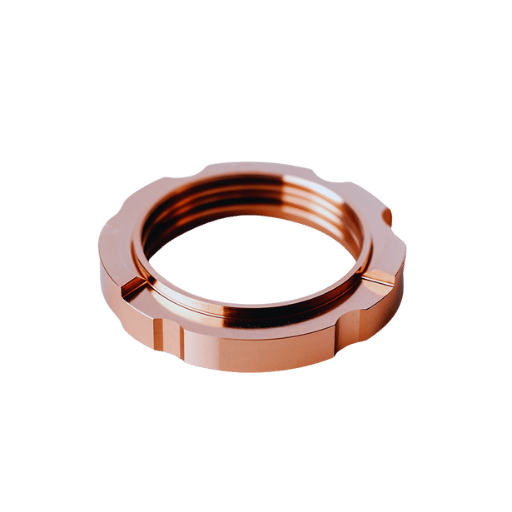
The Role of C110 Copper in Electrical Components
Copper C110 grade is recommended for electrical applications. Some applications of this material include the production of power cables, electrical connectors, switchgear, busbars, etc., where the energy must be transferred in as efficiently a manner as possible, with the minimum energy loss, where possible. Corrosion resistance facilitates work in various aggressive environments, most importantly for the efficient operation of electrical systems, because C110 grade copper is a corrosion-resistant material.
C110 Alloy in Engineering and Fabrication
C110 copper, usually traded under the name electrolytic tough pitch (ETP), occupies a staple position on engineering shop floors. Its chemical makeup hovers around 99.9 percent copper; that near-purity translates directly into exceptional electrical and thermal conductivity. Because the alloy stays tensile even after heavy work, any craft from welding or forging to machining handles C110 without protest. Heat exchangers, press plates, and sacrificial anodes crop up on the same parts list time and again. In clean, moisture-limited atmospheres, the material resists corrosion far better than most coppers, offering users an extended service window. These traits explain its ongoing popularity in precision sectors such as aerospace, automotive power trains, and utility-turbine control systems, where every ounce of efficiency counts.
Applications in Heat and Thermal Management
- Heat exchangers are fabricated for heat transfer in industries.
- Construction of fins and cooling plates for power electronics to manage heat dissipation.
- Making of radiator and condenser assemblies for automobile and aircraft cooling.
- Fabrication of parts for industrial devices like kilns and furnaces, where thermal conductivity is a concern.
- Utilizing the medium in different joining processes like soldering and brazing, because of its high thermal conductivity.
- Design of HVAC systems moderates thermal bridging for better energy performance.
- Moulds and dies making where heat has to be transferred quickly, otherwise there is a productivity problem.
3) Incorporation in electrical transformers of high power to avoid overheating.
What Makes C11000 ETP Copper a Preferred Metal?
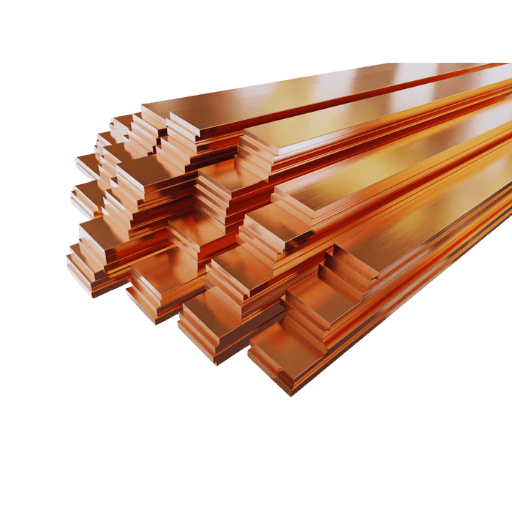
The Electrical and Thermal Conductivity of C11000
C11000 copper displays an electrical conductivity of 100 percent IACS-which translates, somewhat more technically, to 58 million siemens per meter-and offers a thermal conductivity near 394 watts per meter-kelvin.
Comparing C11000 with Other Copper Alloys
To acknowledge the differences between copper alloys C110000 and C10100, C12200, and other grades of copper alloy concerning purity, conductivity, mechanical properties, and corrosion resistance.
|
Parameter |
C11000 |
C10100 |
C12200 |
|---|---|---|---|
|
Purity (%) |
99.90 |
99.99 |
~99.90 |
|
Conductivity |
High |
Very High |
Moderate |
|
Strength |
Moderate |
Moderate |
High |
|
Corrosion Res. |
High (marine) |
High |
Moderate |
|
Thermal Cond. |
High |
Very High |
Moderate |
|
Fabrication |
Easy |
Easy |
Easier |
How is C110 Copper Processed and Fabricated?
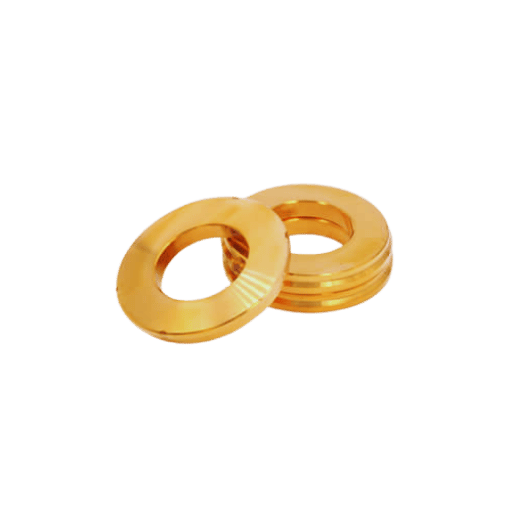
Understanding Weld and Solder Techniques for C110
C11000 copper accepts either welding or soldering, and the choice usually hinges on the specific task at hand. Professionals often gravitate toward gas tungsten arc welding, mostly called TIG welding, because the process delivers pinpoint control while leaving the alloys’ electrical conductivity intact. Many fabricators preheat the base metal as a safeguard against sudden thermal stresses.
When soldering, lead-free filler metals are the go-to option for crews that want to meet modern environmental standards. A quick scrub or abrasive brush on the copper surface pays dividends by removing surface grit and exposing clean metal for the joint. Flux is then daubed onto the area; the mixed paste or liquid film curbs oxidation and lets the filler bond without flaw.
Best Practices for Maintaining Quality Control in C110
Proper observance of Standards and incorporation of advanced techniques, among other strategies, is essential for the smooth running of a quality control system for copper C110. In this regard, the following shall be the necessary exercises for stability and efficiency in the performance:
1. Certification of Materials and Provenance
It is truly necessary for quality control to ascertain the amount of C110 copper in connection with ASTM B152. Likewise, it is most important to verify material certificates such as chemical composition and physical properties against available records from the supplier within the batches to ascertain that compliance as well as tracking is achieved. The minimum copper content for high conductive and hard materials such as tamperproof screws copper/aluminum alloys C110 coppers shall be from the research exceeding 99.9 % over copper.
2. Application of Clean Surface Preparation
The presence of oils, oxides, and dirt on surfaces will increase or reduce the effectiveness of the electricity or joint as described. Mechanical or chemical preparations, such as but not limited to, abrasive pads or reactive solventless-based chemical solutions, have been reported to cut the interfacial resistance by around 30%. Another concern is that the preparation must be uniform since it allows a soldered or a welded joint to work effectively.
3. Shape Analysis
Defining specifically such parameters as dimensions is crucial to understanding how copper of the C110 composition, on the basis of applications like electronic devices and electric connections, may be able to fulfill the function. In this regard, sophisticated dimensioning devices such as laser micrometers and coordinate control machines (CMMs) should be capable of checking the thickness, width, or profile, especially regarding accuracy. A deviation that is out of the range can cause waste of resources through the likelihood of failure of the product’s functioning.
4. Thermal and Mechanical Testing
Regularly conducted thermal and mechanical testing serves to ascertain the durability of C110 copper against fatigue induced by the usage of that material. It [t]est[s] includes evaluation of thermal conductivity and strength, which helps in proving that these [properties] adhere to the specifications given, while also making identification of possible fatigue of the material possible. There is evidence that indicates that the thermal conductivity of high-purity copper (99.9%) is around 385 W/m•K.
5. Non-Destructive Testing (NDT) for Defects
Make use of NDT methods for such as ultrasonic testing and eddy current inspection for the detection of subsurface defects such as cracks or voids without having to cut up the material. It has been proved that the employment of automatic NDT devices in defect detection reduces the time taken during the quest to find defects by about 40% compared to the use of manual means.
6. Calibrating control devices regularly
It is very crucial to adhere to the calibrations for the equipment within the laboratory to avoid bias and ensure control and measurement. For instance, calibrating against the National Institute of Standards and Technology or NIST helps to reduce mistakes and ensures that the different lots of production are consistent.
By implementing this approach and upon carrying out these practices, a producer is able to deliver enhanced products, satisfying the regulatory regimes while ensuring the continued availability and use of the C110 in strategic applications such as the power transmission and other electronics industries.
Challenges in Processing C110 Alloy
C110 copper alloy boasts excellent thermal conductivity, yet that very property tends to siphon heat away from cutting tools. Softness also compounds the problem by allowing the material to smear rather than shatter, a behavior that quickly blunts inserts and complicates efforts to hold tight tolerances.
What are the Advantages of Using C110 Sheet and Rod?
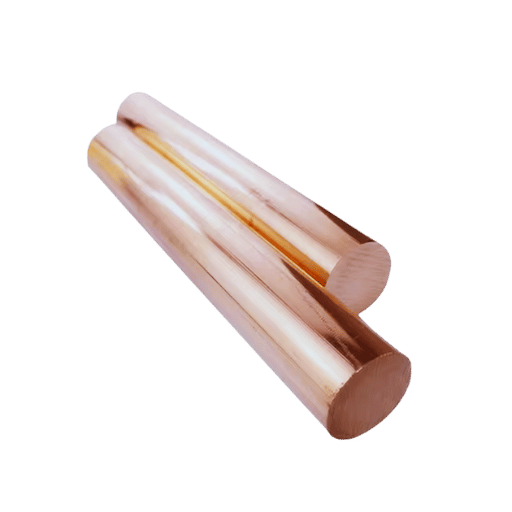
Advantages of C110 Sheet in Industrial Use
- High Electrical Conductivity: The sheet of copper C110 has very high electrical conductivity, which makes it useful in electrical applications such as implementation as bus bars, connectors, as well as groundings.
- Adequate Thermal Conductivity: In applications that require heat removal, like HVAC and power electronics, it’s good heat conduction facilitates the heat removal process.
- Corrosion Resistance: The material exhibits good anti-corrosion properties, especially in neutral and mildly acidic conditions, thus promising the durability and efficient delivery of functions.
- Malleability and Ductility: C110 sheet displays an extreme degree of malleability and ductility, which allows it to be easily bent in a manner that encompasses all boundaries set for compound and complex structures.
- Solderability: The ability of C110 sheet to be easily soldered makes it possible in assembly processes to have strong and adhered joints.
- Strength and Durability: Even though it is soft, C110 copper possesses adequate mechanical strength and can withstand the processes involved in the normal industrial environment.
- Eco-Friendly and Recyclable: Copper C110 can be recycled completely without any loss, therefore enhancing sustainability in industrial processes by minimizing the generation of waste.
- Non-magnetic properties: The fact that it lacks magnetism makes it ideal for integrated circuit boards and other devices where crosstalk is undesirable.
The Benefits of C110 Rod for Structural Support
- High strength and endurance: Due to the mechanical ability of copper c110 rods, these raw materials find usage as a functional member in many load-bearing applications, with strength being the main concern.
- Corrosion: Kinetics of corrosion includes the application of thin antimony or antimony-copper layers onto Cu surface.
- Fabrication-Friendly: These rods are too soft and very pliable, such that they can be cut, joined, and molded to desired structures without any problems at all.
- Applications in Power Conduction: The high conductivity, whether heat or electricity present in copper c110, enables the structure to encompass any conductive parts without losing the extended purposes of the structure.
- Applications Beyond a Single Industry: The C110 rod finds wide usage in structural strengthening purposes in construction, energy utility, transport, and telecommunication industries due to its structural strength, durability, and conductivity.
Utilizing C110 in a Variety of Shapes for Precision Jobs
In doing high precision works with Copper C110 metal of whatever shape, be it in sheets, bars, or whatever designed configuration is needed, I am more concentrated on what’s appropriate for the job in hand. Due to its good workability and machinability, and ability to machine work can be performed with great precision, while these special components wairing such as connections for high currents or structural conieniaed without any problems, thanks to the high conductivity. For each task, each form would be used to its maximum efficiency without dropping the quality, which may violate the stringent requirements of the most advanced industries.
Frequently Asked Questions (FAQs)
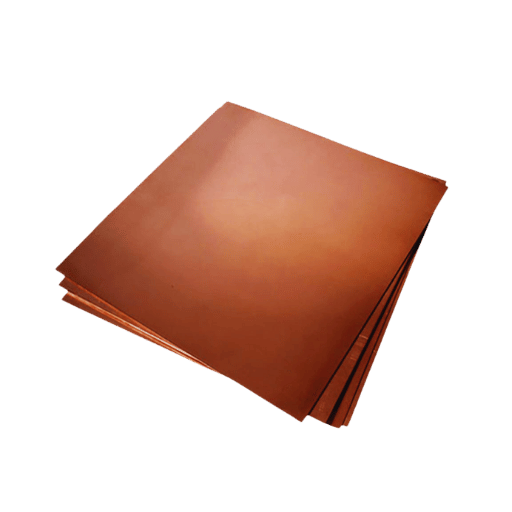
Q: What is Copper C110, and its uses?
A: Copper C110 is generally named Electrolytic Tough Pitch copper and is a commercially available material, having excellent electrical conductivity and formability. It finds commercial use in very high conductivity applications such as electrical wiring and bus bars.
Q: What are the most common applications of Copper C110?
A: Copper C110 is widely used for applications such as electrical conductors, bus bars, wiring, plumbing hardware, and electronic components due to its superior conductivity and workability.
Q: How Electrical Conductive is Copper C110 Compared to Pure Copper?
A: Copper C110 offers high electrical conductivity, almost that of pure copper, having a conductivity value close to 99.9% IACS (International Annealed Copper Standard). It is one of the highest electrical conductivity materials.
Q: What does the term “110” in Copper C110 more exactly mean?
A: The “110” in Copper C110 is related to its UNS (Unified Numbering System) designation, which is meant to standardize and properly categorize this type of copper alloy so it can be properly identified and used within the industry.
Q: What are the various forms offered to Copper C110?
A: The commercial forms offered to Copper C110 include tubes, square bars, and fittings.
Q: Does Hydrogen Embrittlement Affect Copper C110?
A: Yes, hydrogen embrittlement can occur to Copper C110, especially in the presence of hydrogen at high temperatures, so care has to be exercised during processing.
Q: How Does Copper C110 Workability Compare to Other Materials, Such as Brass?
A: Copper C110 is excellent for work, hot and cold, better than many other materials, such as brass. The ductility allows for easy forming operations; hence, it can be formed to a desired shape without loss of integrity.
Q: What Are The Standards And Specifications To Which Copper C110 Conforms?
A: Copper C110 conforms to ASTM standards for its production and, thus, meets the respective requirements for use in various applications.
Q: Do We Have Any Impurity or Oxide concerns in Copper C110?
A: Copper C110 is known for the high purity of copper metallurgically, having very close to negligible amounts of impurities and oxide. This makes it one of the best conductors and suitable for the most demanding electrical applications.
Q: Who Are The Vendors and Manufacturers of Copper C110?
A: Vendors and manufacturers of Copper C110 consist of companies for copper products and services, thereby offering an array of options for industrial and commercial use.
Reference Sources
1. Title: The Influence of H2S on Hydrogen Absorption and Sulfide Stress Cracking Resistance of High-Strength Low-Alloy Carbon Steel C110
- Authors: Lianlian Liu, R. Case
- Journal: Journal of Natural Gas Science and Engineering
- Publication Date: January 1, 2022
- Citation Token: (Liu & Case, 2022)
- Overview: The 2022 investigation by Liu and Case zeroes in on how hydrogen sulfide affects the hydrogen-take-up and cracking-resistance profile of high-strength low-alloy steel C110. To drill into the question, the researchers rely on electrochemical tools such as hydrogen-permeation readings and EIS sweeps, carefully varying both sulfide and sodium chloride levels in the test cell. A central takeaway is stark-H2S boosts hydrogen absorption in the steel, and that bump markedly ups the odds of stress-corrosion cracking in casing pipe applications.
2. Title: The Influence of Hydrogen Sulfide and Chloride Ion Concentrations on Hydrogen Permeation through C110 Low-Alloy Steel
- Authors: Lianlian Liu and R. Case
- Journal: Corrosion Engineering, Science and Technology
- Date of Publication: November 13, 2021
- Citation Format: Liu and Case, 2021, pp. 132-139
- Summary: The research quantifies the degree to which dissolved H2S and NaCl drive hydrogen penetration into high-strength C110 steel. Hydrogen current profiles are collected via standard electrochemical permeation tests. An inductive response technique confirms that even modest H2S levels markedly increase hydrogen loading. This finding sharpens the cost-performance dialogue for C110 in offshore or sour service pipelines.
3. Metal