


It is wrong to say that Nylon is a highly balanced material in the manufacturing industry. Most importantly, the quality of the Nylon is highly light and provides excellent strength and other vital features to supply machine parts. It is appreciated for its high tensile strength, flexibility, and resistance to the self-wear capabilities of nylon pla. It is why it is employed by various industries, from the automotive and aerospace sectors to consumer electronics. This article will attempt to briefly explain the benefits of using the precision parts of nylon and demonstrate how it enhances the efficacy of some modern engineering techniques. Within the high precision engineering community, others search for nylon components and materials that can take on challenging environments and serve as a metal replacement. This deep dive into nylon in machine parts will hopefully provide more reasons why such an unparalleled wonder polymer has shone so brightly in precision production.
Understanding Nylon and Its Properties

Nylon, a human-made plastic, is appreciated for its ability to withstand forces like tension, wear, and tear. It is characterized by being hardwearing, but lightweight at the same time, and therefore it meets the requirements for several applications. Among its many benefits, nylon is durable and appreciably withstands destruction for a long time due to abrasion, chemicals, and moisture. Its unique characteristics include malleability and the possibility of shaping without severe distortion that ordinary materials cannot achieve. Further, the low coefficient of nylon friction and its ability to lubricate itself decrease the extent of attrition during wear and tear, increasing tolerance in the precision parts. The reasons why nylon is the best option for industries such as automotive, aero, and production are as follows:
What is Nylon?
Nylon is a polymer classified as polyamide and was introduced by DuPont in 1935. It is produced through a process known as polymerisation, which usually involves the reaction of amines with various carboxylic acids to form the basic. This is so thanks to the physical and mechanical qualities such as strength, elasticity, and temperature resistance. Nylon is also employed extensively in the textile industry to produce fabrics, carpets, and thick outdoor clothes such as safari leathers or tents. For such parts as gears, bearings, and fasteners, among others, nylon is used because it is heat resistant, rugged, and can resist abrasion. It is made to conform to the environment and contributes to its popularity in present-day industries such as manufacturing and designing by being easily reusable and processed again.
Properties of Nylon that Make it Suitable for Machine Parts
Nylon was the first synthetic polymer developed commercially, and its physical structure does not allow for the implementation of materials for engineering components across a wide range of industries.
Since the philosophy of “define what is to be learned and show it can be learned” is the basis on which the internal operation of the United Nations Higher Education Unit is built, it can be seen from here that each individual adopted teaching and learning solution type was developed to facilitate learning discipline.
There is a primer on transpersonal psychology, which encapsulates meditations, rituals, and the motto of all colleges that have classes in the transpersonal field, among other things.
Different Types of Nylon Used in Manufacturing
Several types of nylon are usually utilized in manufacturing, such as Nylon 6, Nylon 6/6, Nylon 12, Nylon 4/6, Nylon 5/10, glass-filled Nylon, and other composites.
|
Type |
Melting Pt. |
Strength |
Flexibility |
Moisture Abs. |
Key Use |
|---|---|---|---|---|---|
|
Nylon 6 |
~220°C |
High |
Moderate |
High |
Gears, Bearings |
|
Nylon 6/6 |
~260°C |
Very High |
Moderate |
Moderate |
Auto Parts |
|
Nylon 12 |
~180°C |
Moderate |
High |
Low |
Tubing, Seals |
|
Nylon 4/6 |
~295°C |
Very High |
Low |
Moderate |
High Temp Parts |
|
Nylon 5/10 |
~200°C |
Moderate |
High |
Low |
Specialty Uses |
|
Glass-Reinforced |
Varies |
Very High |
Low |
Low |
Structural Parts |
Applications of Nylon in Machine Parts

Nylon is highly sought in manufacturing parts for machines due to its strength and ability to adapt to different designs at reasonable expenses. The most common uses are as follows:
- Gears and Bearings: When there’s a need to minimize both the noise from moving parts and early wear, as well as extend the wear life of the parts, then one has to employ Nylon, whose self-lubricating properties are of a low frictional coefficient and high abrasion property.
- Bushings and Seals: Its mechanical and non-mechanical properties allow this material to be used in seal fabrication and bushings if necessary, especially when the hydraulic fluid that is to be sealed is under significant pressure.
- Rollers and Wheels have a high strength-to-weight ratio, which is beneficial in any equipment, including conveyor systems and material handling equipment.
- Fasteners and Connectors: Nylon is often used for fasteners, connectors, and other hardware components because it’s strong, durable, and able to resist chemicals better than most polymers. Nuts, bolts, and even other hardware components are often made of nylon.
In these cases, nylon’s use benefits an organization or industry by removing inefficiencies.
Common Applications of Nylon in Industrial Settings
Nylon remains valuable in contemporary industries for a reason. With recent technological advances and how businesses function over time, that has only become stronger. The earlier information suggests that 3D printing started to involve nylon as well. In 3D printing, it is used as a strong and highly flexible wire for producing different models or parts. In addition, its appreciation is increasingly driven by its substitution in vehicles for lighter parts such as engine covers and air intake manifolds, improving fuel economy and minimizing air pollutants released into the atmosphere. One more item on this list is the textile sector, where nylon is a key material in the manufacturing of performance clothing, especially soft activewear or raincoats. This plastic’s characteristics, besides others, could be considered secondary; it fosters the fact that nylon is indeed highly essential when it comes to developing and enhancing industrial processes.
Nylon in CNC Machining
The superiority of nylon in turning operations lies in several qualitative attributes, such as machinability and non-existence.
Following its composition of chemical substances, this new construction material makes it possible to design articles within expected tight tolerance levels, especially if the modules are designed to have high stiffness but small machine, electricity consumption, and friction ( cost) in joints. In the machining of gears, bearings, and insulating components. Held together by some form of fastening, there are spherical bushings in the bearing sleeve that consist of a plastic material, such as nylon material of either a micarta or a vespel type. In addition to its machining capabilities, using nylon’s energy absorption and vibration-damping properties is of the utmost concern in impact cases or other mechanical loads. It is also worth noting that the material has a superb resistance to nearly all chemical compounds and can be practically bent into any complexity without breaking up during high-speed machining work.
Examples of Precision Parts Made from Nylon
The Advantages of nylon, in terms of its physical and chemical composition, have made the material invaluable in various components used in multiple industries, especially in the engineering and automotive sectors. Even smaller industries have found great benefit in using such materials. A look at some common uses will reveal that these benefits are not just theoretical, as illustrated below:
- Gears
One such component that requires close tolerances and advanced moulding is the gear, sometimes called the ‘toothed wheel’ because so many cams are made out of it. Nylon is durable, so it can be used to make gears, and we will print just a test here. And the gears can be much smaller than those made of other materials. Now, you have self-lubricating features on the filters, which help reduce the noise that operators of such systems are often exposed to when they are in use. As per the data available now, nylon gears are resistant to specific conditions of load or abnormal circumstances, and can serve five or even 10 times longer than the traditional metal gears.
- Bushings and Bearings
Housing with excellent vibration-absorbing materials is essential for equipment so that the vibration amplitude will not be transmitted to the floor. Here, nylon bushes and bearings are used, which have a low or zero maintenance requirement. Usually, such bushings are made of nylon with low moisture absorption and high impact resistance, and thus, they are widely used in cars and other machines. Empirical data suggests that replacing the metal bearings with nylon will lead to about 20% less noise, and such bearings are preferred where noise is a concern.
- Fasteners with Clamping Function
This fastening method may include self-locking and reversible fasteners in inserts and bolts, such as fasteners including pressure-sensitizing attachment or screw-like devices. High temperatures, large volumes of pressure or vacuum, rapid and intensive motion, and chemically aggressive environments all contribute to the destruction of materials. I may say, however, on the record, that such conditions are not extreme, as it is a common practice to use temperature-resistant fasteners on bolts such as Kevlar® and fiberglass inserts.
- Insulators
In modern electrical systems, some areas contain a lot of dielectric material. Elements made of precision-molded nylon, such as insulators, boast qualities that other materials used for insulating equipment do not. These include very high dielectric retentions at high temperatures, an intense heat resistance, and the capability to be splashed by a strong current. Lubricants are frequently used in various mechanical and electrical systems for voltage insulation, sealing, cooling, or other functional purposes in construction.
- Sealing Rings and Gaskets
It is easier to machine some materials like nylons into complicated or straightforward designs, including sealing rings or gaskets in plumbing or hydraulic systems. Also, durability of these components is more pronounced because of the high resistivity of these materials to most chemicals, hence valuable for preventing equipments from wear and tear.
- Conveyor Components
Components such as conveyor belt rollers and guides have long service lives, including lowered wear and tear. The conveyor belt is made from nylon, and it is very easily used as a component. In food processing and manufacturing, developments in polymer engineering have led to new types of nylon that increase the lifespan of these components in specific applications.
These aforementioned points indicate the importance of nylon in making accurate components in many industries, such as cars, electronics, and urethanes.
Benefits of Using Nylon in Machine Parts
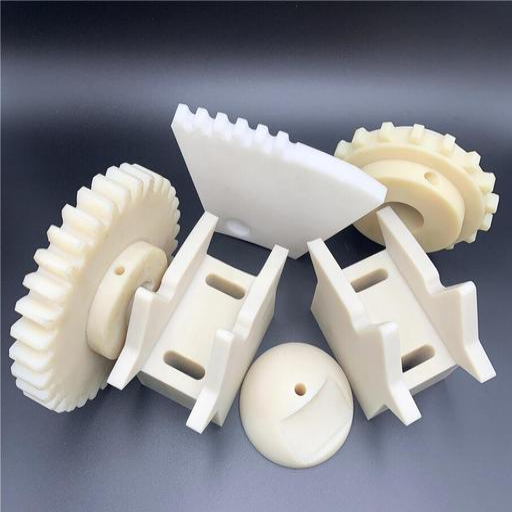
Not subject to measure: For example, in the case of nylon, significant wear and tear are involved with the machine parts. This reduces the number of replacements that need to be used.
- Chemical proof: It is immune to oil, grease, and most other such chemicals, even though exposed to them in the harshest working conditions present in complex industry.
- Featherlight: The technical word also refers to its light weight, which again aids in reducing the overall mass of equipment without resorting to the loss of strength.
- Slippery: One of the advantages of nylon is that, due to the introduction of self-lubrication, various surfaces are subjected to less friction, which improves and elevates the need for repair.
Ability of Accommodation: It is easy to work with the material andthe inbuilt complex shapes found in many industrial products.
Durability and Performance of Nylon Plastic
This material, the subject of which is nylon plastic, stands out with good durability and provides an excellent performance irrespective of the field of application, therefore, it can be said that apart from the industries like automotive, construction and consumer goods in which the material is predominantly used, nylon is also an inevitable constituent. It is so as the tensile strength in the material ensures there is resistance to physical deterioration. On the other hand, the impact strength allows it to sustain various static loads up to some extent. This is apart from the fact that it has good chemical stability within the (“Nylon also remains stable at different temperatures”). Furthermore, repeated moisture exposure and efforts to subject the material to unfavorable environmental circumstances can only shorten the time of its optimum efficiency. More so, the continuous development of polymer technology provides the ulterior advantage of ensuring the availability of nylon as a dependable and practical solution to the evolving engineering technologies.
Cost-Effectiveness of Nylon in Manufacturing
The production of nylon is very cost-effective and has proven over the last several years to be quite capable of offering advantages in performance without overly stressing production costs. In the long-term, its maintenance and repurchasing costs are comparably lower than other competitors due to the fact that nylon is relatively lightweight and hardy. Furthermore, besides making the designs of the produced pieces more expensive, such as in the formation of shapes that are not uniform, this thermal and wear-resistant material can be manufactured in almost all industrial designs and forms at an estimated cost and time. Additionally, progress in the present recycling methodologies renders the thrown away items practically useful, doubles the costs for building materials, alleviates environmental pollution, and slashes costs.
Environmental Considerations of Using Nylon
Even though nylon is a beneficial and strong material, the pressing environmental concerns occasioned by its overuse cannot be ignored. Most of the nylon production is based on petroleum products that are fossil, and this non-renewable raw material has a role to play in the increase of greenhouse and other polluting gas emissions. For example, the manufacturing process of nitrous oxide, operates as a catalyst of greenhouse effect by over 300 times that of carbon dioxide as crucial as it is to global warming. For example, many environmental studies estimate that one ton of nylon production has an equivalent carbon footprint of about 10 tons of CO2.
It is also important to note that nylon is one such non-biodegradable compound in the environment because if disposed of, it remains in the landfill or any other possible location for almost three decades or more, and that’s more pollution remediation on a long-term basis. The problem is most adverse in marine areas, specifically in disposing fishing gear made from nylon as the gear can cause a hazard to marine peristalsis. Indeed, according to the UN, approximately 10% of all marine waste by mass is due to ghost fishing gear, primarily made from nylon.
However, there are current developments that help in reducing the consequences of the application of nylon to the environment. It has become very feasible with some organisations and their recycling programs or use of some advanced chemical supply factories to transform used consumer or industrial nylon into new material during the making process called ECONYL®. It has also been demonstrated that this technique can save as much as 90% of the CO2 that would have been emitted if the pure nylon were to be made. These developments highlight the potential for a more circular and sustainable use of nylon; however, the more competent use of these technologies and their reach will be needed if such significant reductions of the environmental impact are to be realized.
Choosing Nylon for Your Machine Parts

In the aspect of machine parts machining, particularly, nylon as a material shall be extensively dealt with. Thanks to its long life expectancy, wear-resistant behavior, and inherent lightness, this polymer is usually applied in areas of gears, bearings, and eccentric wheels since it can withstand specific compressive clamping loads. It adds value by being very good with oils and chemicals, not rejecting abrasion even. Hence, it fits into various industrial conditions as well. It is worth understanding what other conditions, such as temperature and humidity, will limit its functions in the materials and planning how to overcome them.
Request a Quote for Custom Nylon Parts
Inquiries for Nylon Components And A Condition For A Quote Are Better Made With As Detailed Technical Requirements As Possible Because It Will Enable The Quotation To Be More Accurate As Well As The Desired Product To Be Achieved. This usually consists of the dimensions of the part, tolerances, and where the part will be used. Don’t forget to mention which type of nylon material will be used- whether it will be Nylon 6, Nylon 66, or reinforced grades in which complex mechanical and thermal properties are required, like glass-filled nylon. You may also have specific operational considerations such as post-processes including cutting, painting or plating, these items affect the product’s price and should be stated out.
Benefits of Custom Nylon Parts:
- Exceptional tensile and bending strength: The characteristic that needs to be noted at the very beginning stage is the tensile and bending strength of polyamides, which is near that of steels and non-ferrous alloys.
- Light Weight: The object mass does not exceed ten percent of the weight of the metal components made of such other materials as steel and aluminum. This only means that a lower mass of components is necessary without diminishing parts’ strength.
- Low Friction and High Anti-Wear Ability: Is best for sliding or rotational motion, where material wear is essential.
- Chemical Resistance: As a nylon material, this polymer is resistant to most oils, gases and chemicals.
- Value for Money: There is no mistake of metals; using nylons provides an inexpensive approach to producing a high-performing part.
Contact Information for Quote:
For a more efficient contact with suppliers and to accelerate the price quoting process, the following information will be helpful:
The Material (Specify the kind and grade, such as Nylon 6, Nylon 66, reinforced types, etc..).
- Expected volumes of– prototyping, small series, or mass production.
- Creation of 2D (two-dimensional) or 3D (three-dimensional) CAM (Computer Aided Manufacturing) drawings.
- Drawings with application-relevant conditions, such as temperature regime, chemical influence, and load expectations.
- You can get custom parts from many manufacturers whose main specialization is nylon.
According to current query volumes, the most popular companies offering the above services are those with the highest response speed, the most modern machining equipment, and those that provide worldwide delivery.
For a precise cost assessment that considers all the features of the project, one should contact trustworthy professionals with advanced equipment for molding and machining processes.
Factors to Consider When Choosing Nylon
- Mechanical Properties
Nylon’s mechanical properties, such as resistance to external loads and the possibility of withstanding loads without failure, suggest that it is suited for heavy-duty applications. Please check the tension and material elasticity of the nylon you have at your disposal prior to using it to ascertain that the project will not lead to additional expense.
- Temperature Self-tolerance
Different types of nylon have different thermal resistances. Inquire about the temperature that is best for working, and if the chemical composition is heated, the material will be able to maintain its normal characteristics.
- Chemical Properties
The use of certain chemicals may damage nylon through the chemical bond. Consideration of the chemical environment of an application is demanded, and a particular type of nylon is required where it does not respond to any other surface finishes, such as oils, solvents, etc.
- Absorption of Moisture
As nylon is a hygroscopic material, it can absorb moisture from its surroundings, affecting its performance and dimensions over time. In cases where dimensional stability is needed, use water-resistant grades of nylon or other options offered.
- Tribology and Wear Characteristics
That being said, nylon is also considered for its inclusion in cases where the amount of wear falls below the limits. In instances where wear is expected or it is used in objects with components that move, such as drives, select nylon, which has superior abrasion strength.
Reference Sources
1. Machine Learning Modeling to Predict Mechanical Properties of Nylon Parts Fabricated via 3D Printing
- Authors: Bouchaib Zazoum, Mahbub Ahmed
- Published In: ASME 2025 Aerospace Structures, Structural Dynamics, and Materials Conference
- Publication Date: May 5, 2025
- Summary:
- This study investigates the relationship between 3D printing process parameters (Nozzle Temperature, Layer Height, and raster deposition angle) and the tensile strength of nylon (polyamide) parts.
- Four machine learning models (Multilinear Regression, XGBoost, Support Vector Machine, and Random Forest Regressor) were employed.
- The Random Forest Regressor performed best, with an R² of 0.82, RMSE of 0.42, and MAE of 0.11.
- The findings suggest that optimizing 3D printing parameters can enhance the mechanical properties of nylon parts, making them suitable for aerospace applications(Zazoum & Ahmed, 2025).
- Authors: N. Mohammed Raffic et al.
- Published In: Journal of Materials Engineering and Performance
- Publication Date: August 23, 2023
- Summary:
- This paper focuses on minimizing dimensional errors in 3D printed nylon aramid composites through parameter optimization.
- The study utilized SWARA-CoCoSo (a multi-criteria decision-making method) alongside machine learning algorithms to identify significant parameters affecting dimensional accuracy.
- The results indicate that specific parameter settings can significantly reduce geometric deviations, enhancing the reliability of nylon parts in manufacturing(Raffic et al., 2023, pp. 11326–11346).
3. Effect of Heat Treatment on the Mechanical Properties of Nylon Parts in Additive Manufacturing
- Authors: L. Tumarchenko et al.
- Published In: Naukovyi Visnyk Natsionalnoho Hirnychoho Universytetu
- Publication Date: April 30, 2025
- Summary:
- This research investigates how heat treatment affects the mechanical properties of nylon parts produced via Fused Deposition Modeling (FDM).
- The study analyzed various heat treatment parameters, including temperature and duration, and their impact on tensile strength and elongation at break.
- The findings revealed that optimal heat treatment conditions could enhance the strength and ductility of nylon parts, making them more suitable for industrial applications(Tumarchenko et al., 2025).
4. Top Nylon CNC Machining Parts Manufacturer And Supplier In China
Frequently Asked Questions (FAQs)
Q: How is nylon used in machine parts?
A: Nylon is frequently used in machine parts due to its excellent wear and impact resistance. This engineering plastic is ideal for applications requiring components that can withstand significant stress and wear over time. Its lightweight nature makes it popular in various industries, including automotive and consumer products. Parts made of nylon can include gears, bearings, and intricate parts with tight tolerances. Additionally, nylon’s easy-to-machine properties allow for creating complex parts tailored to specific engineering applications.
Q: What properties make nylon suitable for precise parts?
A: The properties that make nylon suitable for precise parts include its dimensional stability, low friction characteristics, and resistance to deformation under load. Nylon is often chosen for highly precise and durable parts, as it maintains its shape even under extreme conditions. Its versatility as an engineering plastic means it can be formulated into various grades to meet specific performance needs. Common grades of nylon, such as nylon six and nylon 66, offer unique benefits for different applications. Overall, nylon’s ability to perform well in various applications makes it a top choice for manufacturers seeking reliable components.
Q: What are the applications requiring nylon in machine parts?
A: Nylon is widely used in machine parts across various applications, from automotive to industrial machinery. Its properties make it an ideal candidate for components that endure high wear and tear, such as bearings and wear surfaces. In automotive parts, nylon’s lightweight and durable characteristics help improve fuel efficiency while maintaining performance. It is also common in machined parts where precision is key, such as in gears and pulleys. Reinforced nylon composites are often employed in situations requiring enhanced strength and durability, showcasing the material’s versatility in engineering applications.


