In CNC machining with copper, utmost precision, utmost efficiency, and utmost versatility must be conveyed for working with one of the most sought-after industrial materials; therefore, the craft plays a primary role in modern manufacturing. Copper has been widely known for its unparalleled electrical and thermal conductivity and thus serves industries like electronics, aerospace, and telecommunications. However, machining copper is not without certain special challenges: Its softness and tendency to clog cutting tools. Now that you understand copper CNC machining to some extent, this guide will take you further into the depths of the process, benefits, and important considerations. Whether you are a manufacturer, engineer, or even a decision-maker, this article will arm you with the knowledge to enhance your operations and achieve better results in copper machining.
What is Copper CNC Machining?
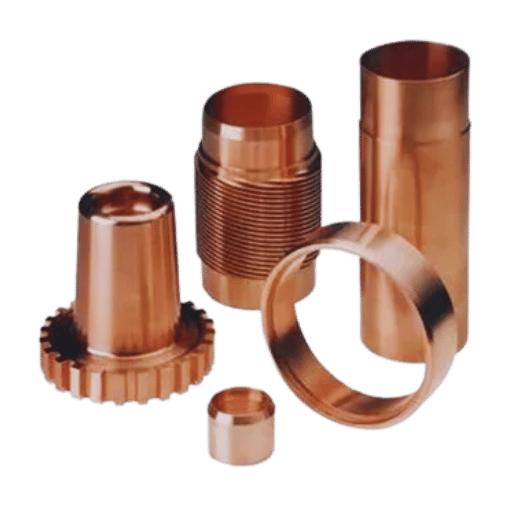
Copper CNC machining is a making operation that employs CNC machines to cut, shape, finish, and drill copper parts. It uses automated tools and pre-programmed software to handle complex geometries with excellent accuracy and repeatability. Given copper’s excellent thermal and electrical conductivities, it finds applications in electronics, energy, and industrial components. CNC machining thus allows manufacturers to meet tight tolerances and high-quality finish requirements so that the copper parts satisfy their design and functional specifications.
Understanding Copper Material
Copper is a soft metal that can be drawn into thin filaments and has excellent thermal and electrical conductivity; it is also resistant to corrosion, as its unique texture is characteristic of a reddish-gold hue.
The Process of Machining Copper
Machining copper is a process involving turning, milling, drilling, and grinding to manufacture components of precise dimensions. Because copper is soft and a conductor par excellence, the materials require sharp cutting tools and controlled machining speeds lest deformation should develop; hence, it must be maintained at the highest accuracy. Proper application of the coolant must be considered to control the heat buildup formed during machining. Furthermore, the choice of the grade of copper also affects its machinability; some alloys, for example, free-machining brass, perform better for certain purposes.
Benefits of Using CNC Machines for Copper Parts
- Precision and Accuracy: CNC machines offer mind-blowing precision, allowing copper parts to be manufactured within very tight tolerances and precise specifications that leave no room for any error.
- Product Consistency: Since CNC machines employ automated control, they provide the best production environment if asked to be asked for making parts for high-volume production runs.
- Efficient Material Usage: CNC machinery minimizes material waste through machining optimization of cutting paths, which can save cost and better manage resources.
- Capability to Handle Complex Design: CNC excels in the manufacture of copper components having intricate geometries and minute details, something that is either hard or impossible for a human operator.
- Increased Productivity: CNC machines run by themselves following a program, practically drastically cutting down layout time, so copper parts are delivered quicker.
- Improvement in Surface Finish: CNC operations cast copper components that required superior finishes to necessitate less secondary finishing.
- Software Integration: Modern CNC machines allow integration with CAD/CAM software, thereby offering smooth communication from design down to manufacture and allowing for faster design iterations.
- Reduced Human Error: Automation limits manual processes, which allows a decreased magnitude of human errors and ultimately a better product.
- High Repeatability: CNC machines ensure that every single part under production will conform to the same highest standard, which is indispensable for applications requiring identity.
- Support for Various Tools and Machining: CNC machines support a variety of machining operations, from milling to turning and drilling, thereby equipping versatility for machining copper parts.
How to Choose the Right Grade of Copper for CNC Machining?
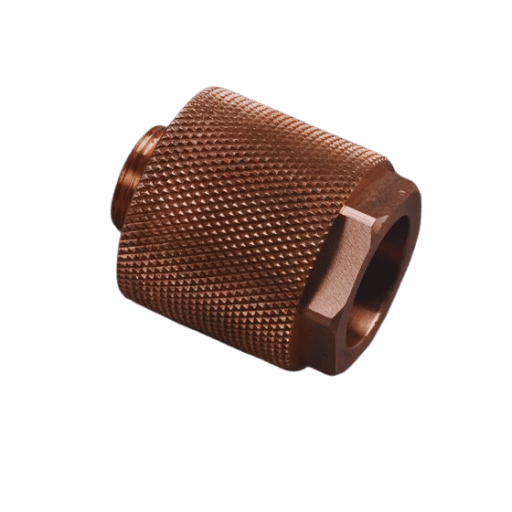
Different Grades of Copper and Their Machinability
Machining of copper depends on its various grades: Pure Copper, Electrolytic Copper, Oxygen-Free Copper, Free-Machining Copper, Brass, Bronze, Nickel-Silver, and Copper-Nickel Alloy.
|
Grade |
Purity |
Machinability |
Key Use |
Conductivity |
Strength |
|---|---|---|---|---|---|
|
Pure Copper |
99.9%+ |
Low |
Electrical parts |
High |
Low |
|
Electrolytic Copper |
99.9% |
Moderate |
Wires, cables |
High |
Moderate |
|
Oxygen-Free Copper |
99.99% |
Moderate |
Vacuum electronics |
Very High |
Moderate |
|
Free-Machining |
Alloyed |
High |
Gears, bearings |
Moderate |
High |
|
Brass |
Alloyed |
High |
Decorative, gears |
Moderate |
High |
|
Bronze |
Alloyed |
Moderate |
Bearings, bushings |
Moderate |
High |
|
Nickel-Silver |
Alloyed |
Moderate |
Marine parts |
Moderate |
High |
|
Copper-Nickel |
Alloyed |
Moderate |
Marine equipment |
Moderate |
High |
Comparing Pure Copper with Copper Alloys
Basic copper is softer, more conductive, and corrosion-resistant; copper alloys, including brass, bronze, or cupronickel, on the other hand, are strengthened, hardened, and made more durable by the presence of zinc, tin, or nickel.
|
Parameter |
Pure Copper |
Copper Alloys |
|---|---|---|
|
Composition |
99.9% Cu |
Cu + Zn/Tin/Ni |
|
Hardness |
Softer |
Harder |
|
Strength |
Lower |
Higher |
|
Conductivity |
Excellent |
Reduced |
|
Corrosion |
High resistance |
Varies |
|
Durability |
Moderate |
High |
|
Flexibility |
High |
Lower |
|
Applications |
Electrical, thermal |
Structural, marine |
Applications of Various Copper Grades
- Pure Copper (C11000)
- Electric wire and cable
- Busbars and electrical contacts
- Heat exchanger and radiator
- Plumbing systems
- Brass (Copper-Zinc Alloy)
- Ornamental fixtures and fittings
- Musical instruments
- Ammunition casings
- Maritime fastening and hardware parts
- Bronze (Copper-Tin Alloy)
- Bearings and bushings
- Gears and machine parts
- Statues and art castings
- Industrial marine components
- Copper-nickel alloys
- Seawater piping systems
- Desalination plants
- Thermal power plants
- Shipbuilding and marine hardware
- High-Strength Copper Alloys (Cu-Be Alloys)
- Aircraft elements
- Plastic tooling dies
- Resistance welding electrodes in the automobile industry
- Springs and diaphragms of the very highest quality
What Techniques are Used in CNC Machining Copper?
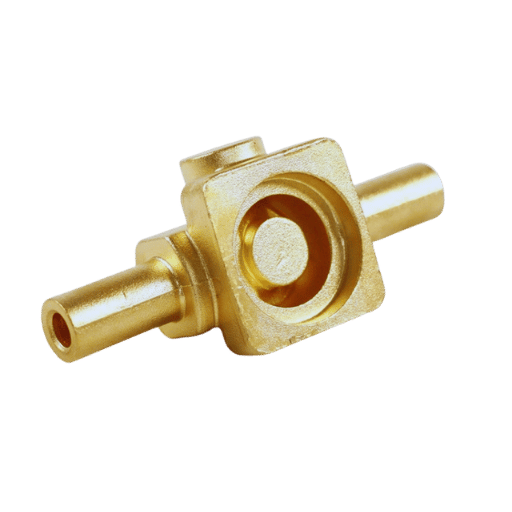
CNC Milling vs CNC Turning for Copper
For engineering with complex geometries and smooth surfaces, it is CNC milling, and CNC turning leads to cylindrical components and faster production.
|
Parameter |
CNC Milling |
CNC Turning |
|---|---|---|
|
Workpiece |
Stationary |
Rotating |
|
Tool |
Rotating |
Stationary |
|
Shape |
Complex |
Cylindrical |
|
Speed |
Moderate |
Faster |
|
Precision |
High |
High |
|
Axes |
Multi (3-5) |
Fewer (2-4) |
|
Volume |
Low-Medium |
High |
|
Material |
Versatile |
Symmetrical |
|
Applications |
Complex parts |
Round parts |
Effective Cutting Speeds and Feeds for Copper
Because machining copper requires high precision and requires the maintenance of tool life and surface finish, one must be very careful with the choice of cutting speeds and feeds. Soft, ductile copper has good thermal and electrical conductivity properties, and because of its malleability, it can pose problems, including tool wear and material buildup. Some information bound to cutting speeds and feeds when cutting copper is given below for more effective use.
|
Copper Type |
Cutting Speed (FPM) |
Feed Rate (IPR) |
Tool Material |
Notes |
|---|---|---|---|---|
|
Pure Copper (C11000) |
200-500 |
0.002-0.004 |
HSS |
Use light coolant for a better finish. |
|
Brass (C36000) |
1000-3000 |
0.005-0.010 |
Carbide |
High-speed machining is possible. |
|
Bronze (C93200) |
300-700 |
0.003-0.006 |
Carbide |
Moderate cutting speeds for precision work. |
Important Considerations
- Inspection of tools should be done regularly so that the accumulated built-up edge (BUE) is not detrimental, since copper-based materials tend to adhere.
- Set up spindle speeds according to machine rigidity and material properties.
- It is advisable to slowly increase feed rates during roughing operations to avoid premature tool wear.
By following these general guidelines and keeping an eye on machining conditions, machinists are able to maximize both productivity and quality while working with copper and its alloys. Always consult the latest material-specific data sheets and tooling recommendations for best results.
Advanced Techniques for Machining Copper Alloys
Copper alloys’ advanced machining methods are EDM for complex geometries, water jet cutting to prevent any thermal distortion, and precision CNC milling and turning- all under the right toolings, cutting parameters, and cooling means.
What are the Challenges in Copper CNC Machining?
Handling Copper’s Electrical and Thermal Conductivity
CNC machining of copper presents certain challenges because of the metal’s high electrical and thermal conductivity. The transfer of heat from the workpiece goes to heating the tools, thereby reducing their life and precision in machining. To alleviate such situations, good-quality cutting tools of appropriate coating, proper cooling, and optimum feed rate and cutting speed should be used. This helps in controlling heat as well as good machining performance.
Dealing with Copper’s Softness and Workability
Being soft and very ductile, copper is a difficult material to work with. The material will easily deform and work its way into the specimen, making it harder to maintain dimensional accuracy, while workpiece collapse becomes a fatal problem during cutting. Thus, one has to be especially careful in keeping the cutting tool sharp, paying close attention to the tool geometry. It’s also important to apply the right type of lubricant or cutting fluid to decrease friction and prevent tearing of the material.
Industry practice, coupled with some frequently searched references, suggests that machining copper with low cutting forces and moderate spindle speeds is ideal. These parameters establish the proper balance to contend with the metal’s ductility while keeping track of the surface finish qualities. Moreover, high-level CNC machining technologies and engineering of specialized toolpath strategies have given increased control over material removal, thereby achieving greater precision in machining copper.
Addressing Tool Wear and Tear in Copper Machining
While discussing tool wear and tear emanating from copper machining, I would put the choice of tools and coatings first. These coatings would help reduce friction and thermal damage and, thus, include titanium nitride or diamond-like carbon. I ensure there is proper cooling as well as lubrication to take care of the heat generated during machining and help prolong the tool life. Regular monitoring of the parameters for tools and timely replacements are the two factors that make a trail for me in sustaining the precision and reducing downtime to a minimum.
How to Optimize CNC Machining Services for Copper?
Choosing the Right CNC Service Provider
Selecting the best CNC machining service provider involves a handful of key criteria to be assessed to ensure quality and efficiency. First, the provider must have copper-working experience and must understand how machining requirements are unique to copper. Then comes their equipment and technology: Your provider should guarantee precision and reproducibility of the production. Finally, your asks of them include quality control measures, opportunely intervening inspections, accepted industry standards, etc.; good communication between you and your provider; delivery deadlines met; custom-engineered solutions, etc. Working with someone who emphasizes these aspects increases results and satisfaction on both ends.
Cost-Effective Strategies for Copper Machining Services
To make copper machining services more cost-effective, a combination of modern techniques, efficient methods, and astute decision-making must be taken. Below are some cost-minimizing strategies while producing quality work:
1. Make use of CNC Machining
Nowadays, CNC (Computer Numerical Control) machining gets copper machining done highly precisely and efficiently, against wastage of material or time in production. CNC machining is so accurate that manufacturers can now design complex parts with almost negligible errors. Industry figures suggest CNC machining can improve material utilization by 30 per cent, thereby saving huge costs.
2. Maintain Proper Cutting Tools and Speeds
Operating to proper cutting-tool standards and matching cutting speeds with copper properties will improve machining efficiency. Copper is relatively soft and ductile and requires tools, probably carbide or diamond-coated, to get a smooth finish and avoid excessive wear from the tool. Research has shown that adjusting cutting speeds to suit the thermal and conductivity properties of copper can increase tool life by 50%.
3. Buy Material in Bulk
Buy copper materials in bulk quantities to reduce raw material prices because of volume discounts. Establishing a healthy relationship with suppliers and drawing long-term contracts should keep prices steady and lower expenses. The metal market reports in 2023 have highlighted the consistent cost-saving trend for manufacturers who opt to source in bulk.
4. Implement Lean Manufacturing Practices
Lean manufacturing is aimed at waste reduction, improving workflows, and enhancing productivity. Processes focusing on setup time, material handling, machine utilization, etc., should be streamlined to limit expenditure while retaining the quality. Recent case studies suggest that employing lean manufacturing principles will reduce production costs by some 20 per cent.
5. Preventive Maintenance
Unexpected breakdowns and downtime can be avoided by regular maintenance of machines. Due to the high thermal conductivity of copper, machining generates heat, which, when coupled with heat, may speed up wear and tear of tools and equipment. Preventive maintenance schedules keep machines running at optimum performance and extend the life of the machinery.
6. Energy Conservation
Machining copper is energy hungry because it entails precision and high shooting speeds. Energy-efficient technologies and processes would reduce operational costs as well as check on environmental pollution. According to the U.S. DOE report, energy-efficient machining practices are capable of reducing electricity consumption in manufacturing by up to 15%.
By combining some best technologies, sound planning, and optimized daily operations, any company can keep its costs down in copper machining processes without compromising quality and consistency. In turn, these strategies will help make the business profitable while promoting sustainable and efficient manufacturing practices.
Ensuring Quality and Precision in Copper Machined Parts
The copper machined parts need to be designed, configured, and prepared with high quality and precision while selecting appropriate copper grade, working with precise CNC machines, and using appropriate post-processing to strengthen and enhance functionality.
What are the Considerations for Copper CNC Machining?
Pre-Machining Preparation and Planning
In order to achieve quality outcomes in copper CNC machining, the pre-machining activities have to be done properly, including appropriate preparation and planning. Depending on the application terms, different copper grades are chosen because they are all different concerning the factors of machinability, thermal conductivity, and tensile strength. Precise CAD (Computer-Aided Design) models must be built from the exact specifications and tolerances to match the production requirements. Tooling also needs to be selected that suits working with softer materials like copper to avoid tool wear or deformation during machining.
Post-Machining Finishing Techniques
The finishing processes following machining play an essential role in obtaining the desired surface condition and hence increased usability of the copper components. Among other processes, polishing, electroplating, and passivation can be applied. Polishing removes surface irregularities and greatly improves the aesthetic appearance of the treated surface, and therefore finds applications in decorative purposes. Electroplating, such as nickel or tin plating, is used to impart corrosion resistance to the material and enhance electrical conductivity, which is useful for electronic components. Passivation involves a chemical treatment to allow further protection of the material against environmental degradation by forming a protective oxide layer. Proper polishing-enhanced machining combined with one or more output finishing techniques will ensure that manufactured products are performing the best while standing the tests of time on both functional and aesthetic bases in different industries.
Environmental and Safety Considerations
Environmental and safety considerations are critical while implementing the material finishing processes. More often than not, finishing processes make use of chemicals, energy, and water, which become their wastes and emissions if not managed properly. Compliance with environmental regulatory norms used to reduce hazardous waste generation and incorporate a treat-based system for water will help lessen the impact on nature. Thereafter, an effective safety program should include the use of PPE equipment, as well as processes that guarantee adequate ventilation to reduce employees’ exposures to potentially harmful emissions. The use of sustainable practices and ensuring safety standards promotes environmental stewardship and employee welfare.
Frequently Asked Questions (FAQs)
Q: Could you define copper CNC machining services?
A: Machining services of copper entail the operation of machines with numerical control capability to manipulate and dress copper as per the component to be made. Such services allow copper products to be carved and create complex shapes with great precision and very efficiently.
Q: What kinds of CNC machining are carried out on copper?
A: In the manufacturing processes that involve ‘shaping’ copper, several kinds of machines called CNC (Computer Numerically Controlled) are used, such as milling, turning, and drilling. Depending on the design and solution that is required for the mechanical component to be produced, one of the above-mentioned CNC machining methods is applied.
Q: When performing CNC on Copper components, what type of which is best in its use, in terms of use?
A: When it comes to CNC machining of copper pieces, the type of material to be used for CNC operations changes depending on the specific purpose of use. Some of the commonly used materials are pure copper, which is used in electrical applications, and any of the free copper materials for general purposes.
Q: How is CNC copper machining carried out as opposed to other metals?
A: It is more difficult to machine copper components in a CNC mill than other metals, being CNC copper machining is challenging. Cunear tools and techniques need to be used for making very high-speed copper, because copper is easily bent and heats up the tools.
Q: Which copper CNC machining issues can be explained, and what are their solutions?
A: Step-down issues include tool wear and a high level of heating during copper CNC machining. Improvement measures include considering the appropriate material for machining, supporting the tool with a coolant, and determining of correct cutting parameters.
Q: In what way/s is precision engineering significant in the information technology and aerospace sectors, where most copper machined components are employed?
A: Precision components are in high demand when it comes to copper parts since most applications are very sensitive, mostly electronics and technology, where there are highly complex parts of copper parts designed for certain purposes
Q: What are the attributes of copper that may be relevant in CNC machining?
A: Copper contains attributes such as high heat conduction, ductility, as well as high electrical conduction, which may bring possible complications to CNC machining operations. These features require specific approaches and core tools for the machining of copper along with its alloys.
Q: When commencing a CNC machining job involving copper, how can you determine the best type of copper?
A: Determining the type of copper to use considers many aspects such as the expected electrical or thermal properties of the part, its strength, and its complexity. Most probably, any supplier of copper CNC services would make a relevant recommendation.
Q: In what ways do CNC machines utilize copper and its alloys?
A: Copper and alloys of copper do form an important material in CNC machining. Copper and its alloys are extensively used in manufacturing electronic parts, such as heat sinks, and also precise components for different industry applications by use of CNC.
Q: Please elaborate on the machining of the copper components using CNC machines.
A: Machining of the copper components will need to program the CNC equipment according to the specific designs, alongside choosing the instruments and methods for cutting copper, after which the milling execution takes place, making the specified shape and part ready.
Q: Everything you need to know for CNC machining Copper
A: Everything is for CNC Copper machining, and it is easy if you organize information this way.
Reference Sources
1. Copper Components Manufactured by Atomic Diffusion Additive Fabrication Process and Precision Machined Components
- Authors: Monzón E. et al.
- Journal: Materials, 2024
- Date of Publication: 1st March 2024
- Reference: Monzón et al. (2024)
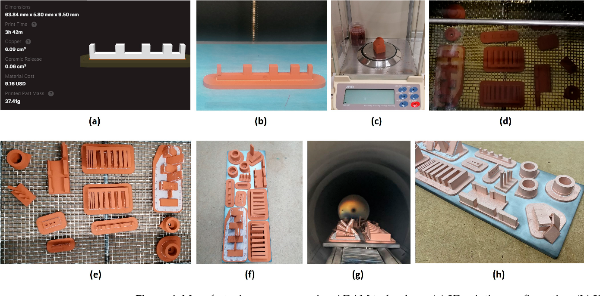
- Brief: This paper discusses the application of the techniques of Atomic Diffusion Additive Manufacturing (ADAM) and CNC machining in processing copper workpieces. It presents the accuracy characteristics of the ADAM components and finds problems associated with thin walls, inclinations, and the inaccuracies in size. The work included the modification of the ISO/ASTM tests and revealed that hybrid manufacturing techniques can be used to ensure maximum accuracy in dimensions with deviations of less than 0.5% in the final product if good compensation factors for CNC machining were available.
2. Optimization of Process Variables within CNC-Based Turning of Copper and its Accompanying Alloy using Taguchi Technique
- Authors: Ruby Haldar, Santanu Duari
- Periodical: IROASUET International Journal
- Date of Issue: 30 April 2022
- Citation: (Haldar & Duari, 2022)
- Abstract: This research focuses on the contrasts in optimization of CNC conducting turning parameters for materials such as copper and aluminium with the aid of Taguchi methodology. The factors considered in the accounts were coded in an orthogonal layout (L27), which was used to determine the significant factors that affect the surface roughness while focusing on the speed, feed, and depth of cut. The results summarize that the use of the Taguchi technique for improving the machining should be encouraged since it improves the surface finish of the products and also reduces the cost of machining.
3. CNC Machining Of The Complex Copper Electrodes
- Authors: I. A. Popan and his colleagues.
- Journal: ACTA Universitatis Cibiniensis
- Availability Date: the first of July, 2015
- Citation: (Popan et al., 2015, pp. 153–158)
- Description: This research delineates the difficulties encountered in CNC machining complex copper configurations, as the material is soft and sticky. The contributing authors describe the facilities adopted to improve the precision and quality of the manufacturing and the specific tooling being used, together with process conditions. The authors add that the chronology of machining processes challenges the trainees in performing these operations and reminds engineers on the purpose of CAD/CAM software and how its execution is achieved.
4. Machining
6. Copper