


The aerospace industry requires unparalleled precision and reliability, and thus, CNC machining gained significance as a core technology meeting these exacting standards. From jet engine parts to spacecraft components, CNC machines manufacture parts at micrometer accuracy to ensure safety and performance in flight. This article delves into the crucial place CNC machining holds in aerospace applications, emphasizing its features and applications and how it has brought about innovations in the advanced fabrication of complex and high-performance parts. Whether you are an aerospace professional or just an enthusiast in manufacturing, join us in exploring how CNC machining is creating a future for aerospace engineering.
Aerospace CNC Machining Overview
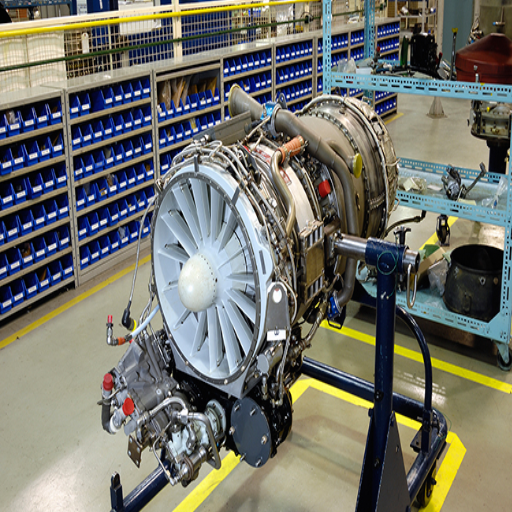
CNC machining is of utmost necessity in aerospace manufacturing as it produces complex and precision-engineered components. Computer-controlled tools work with staggering precision and repeatability, ensuring aerospace industry standards answer these designations. These components are made with stringent tolerances to provide ultimate safe and efficient functioning, including turbine blades, structural brackets, and engine parts. CNC machining further allows the processing of advanced materials such as titanium and carbon composites, which are often utilized in aerospace designs for their thin and durable qualities. The trio of precision, efficiency, and platform of materials puts CNC machining in the forefront of modern aerospace engineering.
Introduction to CNC Machines
CNC machines are automated tools that direct their actions and control according to pre-programmed instructions. They are widely used in manufacturing processes to cut, shape, and fabricate any given raw material with high accuracy. Unlike manual machining, CNC machines are responsive to computer commands and maintain high accuracy and repeatability over the production process. They are valuable in the fabrication of complicated components and thereby lessen the error rate while increasing productivity in aerospace, automobile, and electronics sectors.
Importance of CNC Machining in the Aerospace Sector
CNC machining is paramount in aerospace, where precision and reliability are mainstays. The tolerances for aircraft components are so tight that the minute mechanical imperfections would decrease the aerodynamic performance and jeopardize safety. CNC machines can achieve these microscopic tolerances and are essential for manufacturing thin parts such as turbine blades, engine parts, and structural elements.
One advantage of CNC machining in aerospace production is its ability to handle advanced materials like titanium, aluminum, and nickel-based alloys. These materials are favored in aerospace applications primarily for their resistance to high temperatures and strength-to-weight efficiency. CNC machining treats these materials consistently, guaranteeing the final product’s quality and performance.
On the other hand, improvements in CNC technology and machines like the multi-axis have further enhanced machining potential with complex geometries that aerospace demands. For example, 5-axis CNCs are mainly used to manufacture complex parts, such as fuel nozzles and wing sections, in a single setup, thus helping to reduce lead times and minimize waste. According to a market analysis report, the global CNC machine tools market, reaching nearly $96 billion in 2021, continues to grow, partly due to the demand for aerospace.
By facilitating production processes, eliminating human error, and satisfying demanding quality standards, CNC machining guarantees that the aerospace business efficiently produces sturdy and performance-oriented objects. With the ever-rising commercial aviation and space exploration, CNC technology will be even more crucial for aerospace.
Key Machining Techniques Used
- Milling
One of the most common CNC machining techniques in aerospace manufacturing is milling. Advanced 5-axis CNC milling machines provide the necessary means to carve out complex geometries and accurate components required for aircraft and spacecraft. Industry reports reveal that such a 5-axis CNC machining centre operates at higher speeds and processes almost twice as much as a conventional 3-axis. In executions that require tight tolerances, it is vital to mill engine parts, turbine blades, and structural components.
- Turning
The CNC turning operation was essentially for shaping cylindrical components like shafts, bearings, and fasteners. Turning mills and lathes with multiple axes achieve higher accuracies and better surface finishes, which convinces CNC operators to fulfill aerospace demands. The emergence of live tooling and multitasking CNC lathes has made it viable to manufacture complex designs that assure the reliability of parts in top-grade aircraft.
- Drilling
CNC drilling machines create holes of specified depths and diameters for airframe assembly and engine manufacture. High-speed drilling technology has, in fact, increased production rates, with certain machines drilling thousands of precise holes on one component. Aerospace-level automated drilling simultaneously does counter-sinking and threading for part beds.
- Grinding
In aerospace, grinding is used to obtain extreme precision tolerances and superior surface finishes. CNC grinding is paramount when manufacturing turbine engine blades and landing gear components, where precision and durability are imperatives. The application of advanced grinding materials like CBN and cubic boron nitride wheels has thus improved the efficiency and longevity of machined parts.
- Electrical discharge manufacturing
EDM is used extensively for intricate machining, especially hard-to-machine metals, a group of metals that includes titanium and inconel, which are commonly found in aerospace. It cannot be dispensed while machining hardened workpieces, which require complex geometries to manufacture fuel injector nozzles and turbine discs. The global EDM market surpassed $5 billion last year, underpinning its retention across high-tech industries including aerospace.
- Integration of Additive Manufacturing
Though not a traditional machining technique, additive manufacturing increasingly integrates with CNC machining to constitute a hybrid system. Machining can perform finishing operations where hybrid systems manufacture near-net shapes through 3D printing. This reduces a great deal of material wastage and production costs while carving out lightweight, intricate components critical in aviation.
Each machining process is a key enabler in empowering the aerospace industry to take on demands for increased precision, safety, and innovation. Commendable improvements in tooling, automation, and CNC technology will see further head of efficiency and performance improvements.”
Applications of Aerospace CNC Machining

- Aircraft Structural Components
CNC machining processes manufacture lightweight yet sturdy structural parts, such as airframes, wings, and fuselage components.
- Engine Parts
Here is where the claim for precision comes into play in the turbine blades, housings, and rotors-planned psycho engineered with CNC machinery on top of optimal performance and safety.
- Avionics
Machining intricate casings and support structures for avionics systems protects the sensitive equipment while ensuring operating reliability.
- Landing Gear
Landing gear components are manufactured through CNC machining for durability and precise engineering, which are suitable for transferring extreme forces on takeoff and landing.
- Spacecraft Components
Aerospace CNC machining is utilized for satellite panels, engine nozzles, and other space-bound components that require high accuracy and performance.
Machining Aerospace Parts
The aerospace industry requires absolute precision and perfection for every part, whereas even the most minor discrepancy can bring significant consequences. CNC machining helps meet these standards in both accuracy and efficiency. According to the recent data, new materials and manufacturing technique developments give rise to an expected CAGR of 6.1% for the global aerospace CNC machining market from 2023 to 2030.
Advanced Materials
As lightweight and highly strong, titanium, aluminum, and advanced composites are machining materials suitable for aerospace applications. Titanium alloys, for instance, are used in manufacturing turbine blades and certain structural parts of aircraft, as they offer corrosion resistance and can endure very high temperatures. These materials demand exact machining processes conducted by high-speed tools working under severe tolerances, often in the micron range.
5-Axis CNC Machining
5-axis CNC machines have emerged as a necessity for manufacturing complicated aerospace parts like turbine blades and impellers. These state-of-the-art machines facilitate five-axis simultaneous motion, thus allowing the manufacture of complex geometries with minimal repositioning, thereby reducing lead times and improving part quality because machining is carried out continuously without any interruption.
Quality Assurance and Standards
Every aerospace part is subjected to quality control to meet safety and operational criteria. Such controls include modern surveying and measurement techniques utilizing Coordinate Measurement Machines, laser scanners, and Non-Destructive Testing methods to confirm dimensions and material properties. Aerospace manufacturers follow strict certifications such as AS9100, laying down quality management system requirements for aviation, space, and defense industries.
Efficiency Through Automation
With the Industry 4.0 setup, the machining of aerospace components has witnessed drastic evolution. Automated CNC systems integrated with artificial intelligence and real-time data monitoring act, to some extent, on predictive maintenance and production cycle optimization. This was a win-win scenario for them, with less downtime and more savings; in fact, reports suggest that such solutions have the potential to boost productivity by 20%.
The synergy between precision machining and technologies continues to advance aerospace, paving the way for safer and more efficient aircraft and spacecraft.
Using CNC Machining for Aerospace Components
CNC machining produces aerospace components of very high quality. Aerospace applications require, among other specifications, absolute precision, repeatability, and reliability, all of which CNC machining guarantees. This technology transforms complex geometries from high-performance materials, such as titanium, aluminum, and carbon fiber-reinforced polymers, that stand up to the severe conditions encountered in aerospace applications.
Industry reports show that CNC machining reduces manufacturing times by up to 50%, allowing faster production cycles without compromising quality. Furthermore, such a high degree of automation compensates for a lack of human proficiency in making complicated parts or assemblies. Human errors are minimized, so critical tolerances, often within ±0.001 inches, are achieved time after time. Aircraft engine components and fuselage panels need this level of precision to function properly and ensure safety during operational flights.
Now equipped with 5-axis technology, CNC machining has seen unprecedented rapid development, which provides increased scope for making complicated parts in one setup. These developments increase efficiency and reduce wastage of raw material, thereby bringing about cost savings. Boeing has adopted CNC technology to make lightweight yet strong parts and services that have helped cut aircraft weight by as much as 20%, consequently enhancing fuel efficiency.
CNC machining is at the cutting edge of aerospace manufacturing. With its precise engineering, sophisticated software, and modern materials, it presses forward in technical progress, defining the future of aviation and space exploration.
Specific Use Cases in the Aerospace Industry
Being a machine with marked accuracy, efficiency, and adaptability, CNC machining affects many factors of aerospace manufacturing. Given hereafter are some specific cases that showcase its versatility and effects:
- Manufacturing of Engine Components:
CNC machining is used to manufacture delicate jet engine components such as turbine blades, compressor discs, fuel nozzles, etc. These components require ultra-tight tolerances of the order of 0.0001 inches because they have to function perfectly and safely. General Electric (GE) CNC machines precision-engineered components for high-performing engines that run with better fuel economy and lower emissions.
- Lightweight Structural Parts:
Weight reduction is being entirely demanded in the aerospace industry to enhance fuel consumption efficiency and reduce carbon emissions. CNC machining can create lightweight structural components fabricated from advanced materials such as titanium and carbon-fiber-reinforced plastics. These materials are not only strong but also light. Airbus applies CNC machining to manufacture precision parts for the A320 and A350 models, ultimately resulting in weight reduction of the whole aircraft and, hence, operating cost reduction.
- Prototyping and Testing New Designs:
Aerospace manufacturers use CNC machines for rapid prototyping and testing of new designs. Boeing uses CNC to make scaled-down prototypes of new aircraft parts so that it can test design concepts under simulated conditions. This considerably enhances the time scale for development and, henceforth, the reliability factor before the concept goes for full-scale production.
- Space Exploration and Satellites:
CNC machining is the basis for high-precision machining for crafts and satellites. SpaceX and NASA use CNC-machined parts for everything: rockets, spacecraft modules, and satellite housings. In particular, SpaceX’s use of CNC machining for Falcon 9 helped in its reusability, thereby slashing cost and changing the face of the space industry.
- Landing Gear and Actuators:
These systems are complex, where safety and durability standards must be met precisely. CNC machining fits right in, ensuring safety standards and durability of the components. These machined parts are often coated with exceptional finishes and undergo surface treatments to resist extremely high-pressure and temperature conditions.
CNC machining has improved aeronautics not only by improving the accuracy of components but also by fast-tracking the manufacturing timelines and reducing costs. According to a 2023 report, the aerospace CNC machining market is expected to maintain a CAGR of 8.5% from 2021 to 2031, further underlining its utmost importance for the future of aerospace manufacturing.
Machining Processes for CNC Aerospace
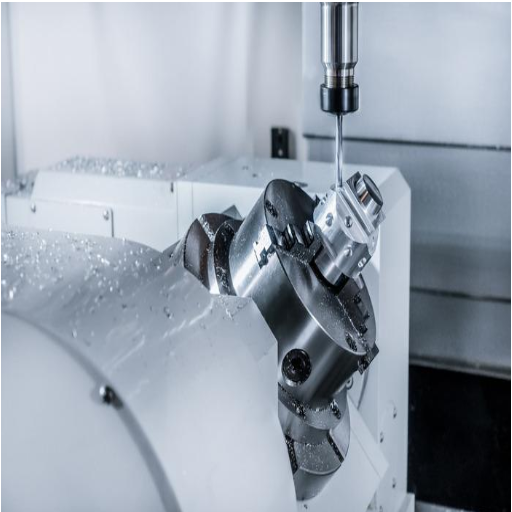
These are machining processes usually involved in CNC aerospace manufacturing:
- Milling—This process involves machining precise parts by removing material with rotary cutters. It is great for contours, slots, and complex geometries.
- Turning is the best way to shape cylindrical components by spinning the workpiece against a cutting tool. It is very often used with shafts and engine components.
- Drilling is needed for making precise holes in aerospace components, and of course, it must be very precise to comply with the stringent tolerances.
- Grinding is used to achieve the finest surface finishes and dimensional tolerances for extremely critical parts, like turbine blades.
- Electric Discharge Machining (EDM)- It’s a non-contact method suitable for machining hard metals and producing detailed shapes on complex components.
In all, these processes ensure that aerospace components adhere to tight performance and reliability requirements.
Overview of Machining Processes
Machining processes have considerably evolved, in terms of technology, even, affording the capacities of greater precision, efficiency, and flexibility. These are some of the advances in machining processes and the industry ramifications:
- Additive Manufacturing (3D Printing)
The disruptive approach of additive manufacturing has complemented machining. More intricate parts can be manufactured layer by layer using metal powders or polymers with minimal or no material waste. Recent statistics indicate that the worldwide additive manufacturing market will pass the $60 billion cap in 2030, caused mainly by increased use in aerospace to manufacture lightweight and custom-designed components.
- High-Speed Machining
HSM(es) uses the high spindle speed and feed rate of the machine tool to quickly remove materials. At the onset of skilled CNC technologies, HSM(High-Speed Machining) was being utilized to bring down production time to a bare minimum level while maintaining tolerances. It has been demonstrated that HSM can reduce cycle time by 70% in aerospace applications in some areas.
- Nano-Machining
Being an advanced process, nano-machining attains nm precision for forming highly sensitive components. It finds great use in applications like microelectronics, optics, and medical devices. The solution market in nano-manufacturing is growing by over 15% annually due to increasing demand for micro-scale components.
- Hybrid Machining Systems
Hybrid machining utilizes a single system to carry out additive manufacturing and traditional subtractive processes. This innovation is particularly suited for rapidly prototyping and repairing costly parts, such as turbine blades. For example, some hybrid machining systems can add material to a component’s damaged areas and then machine the repairs back to the original geometry, reducing the overall repair cost by as much as 50%.
- Sustainable Machining Practices
Sustainability in machining came to the forefront as industries tried to cut down on their carbon footprints. Facilities promoting green manufacturing include dry machining, which eliminates cutting fluids, and energy-efficient CNC machines. It has been suggested that sustainable machining will save as much as 30% on energy consumption related to machining.
This goes on to show how these machining advances stay in line with the increasing demands of today’s sponsored industries for higher productivity, cheaper manufacturing, and environmental protection.
Surface Finishes for CNC Machining
Introduced surface finishes are paramount to CNC-machined components’ aesthetics, quality, and functionality. It stands to reason that the final surface finish can influence the look and feel of the part, its wear resistance, friction, and in some situations-part compatibility during assembly. We consider a few prominent surface finishes that can be performed on CNC machining with data and processes for the development of precision and durability:
- Finishing “As-Machined”
The “as-machined” finish is the default surface condition of a CNC-machined part, which is usually left with tool marks.
Surface roughness values (Ra): 1.6 µm to 3.2 µm
It is a more economical finish and fits where the appearance is not of the utmost concern.
- Bead Blasting
Bead blasting uses delicate glass beads or abrasive particles to etch a uniform matte texture.
Used mainly for the beauty of it all to hide tool marks, giving a smooth surface without any gloss.
Surface Treatments for Aluminum and Stainless Steel-Best Fit.
- Anodizing-Type II and Type III
Anodizing enhances corrosion resistance, surface hardness, and material durability.
Type II Anodizing: Decorative colored layer in various hues.
Type III Anodizing (Hardcoating): Thicker and harder coating for additional abrasion resistance.
0.001″-0.004″ thickness for anodized coatings.
- Powder Coating
A dry finishing process where powders consisting of a combination of resins, pigments, or additives are applied electrostatically to the surface of parts.
A highly durable and corrosion-resistant finish is available in many colors and textures.
Widely used in the automotive, construction, and consumer electronics industries.
Polishing
Has mirror-like finishes that reduce surface roughness to extremely low levels.
Roughness (Ra): values as low as 0.005 depending on the material and process.
Used widely in precision optical components, medical devices, and applications requiring aesthetics.
- Plating
Electroplating creates the final protective resistance or appearance layer.
Data show that nickel-plated parts can extend their lifetime by 20%, possibly due to the protective layer.
- Surface Passivation
Free iron removal from stainless steel parts by chemical attack improves corrosion resistance.
Very common in applications where sanitation and better longevity are required for medical and food-grade use.
Importance of Measuring Surface Roughness
Manufacturers often use surface roughness testers and profilometers to ensure accurate and consistent measurements and finishes. Common surface roughness parameters are Ra (roughness average), Rz (average peak-to-valley height), and Rt (total roughness height). Today, nanotechnology and precision measurement instruments offer finishes that tightly conform to tolerances often demanded in aerospace, medical, and semiconductor fields.
Further enhancing CNC machining’s versatility to cover a broader spectrum of industries and applications is the capability of customizing the surface finish, brought about by recent improvements in machining technology and surface treatment processes.
Innovative Techniques in Aerospace Machining
Concise Summary: The latest trends in aerospace machining include 5-axis machining, multitasking machines, and additive manufacturing, interspersed with high-speed machining and automation integration.
|
Technique |
Description |
Key Benefit |
|---|---|---|
|
5-Axis |
Multi-directional cutting |
Complex geometries |
|
Multi-Tasking |
Combines processes |
Efficiency boost |
|
Additive |
3D printing integration |
Lightweight parts |
|
High-Speed |
Faster cutting rates |
Reduced cycle time |
|
Automation |
IoT and AI integration |
Precision & safety |
Benefits of Using CNC Machining in Aerospace

- Precision and Accuracy: CNC machining works within tight tolerances and with higher precision to ensure that aerospace components fulfill stringent safety and performance standards.
- Consistency in Production: CNC machines assure repeatability, thereby permitting mass production of components of identical design without loss of accuracy or reliability.
- Material Versatility: It constitutes materials like titanium, aluminum, and composites typically used for aerospace, enabling the production of parts with a balance of strength-to-weight-to-durability characteristics.
- Efficiency and Speed: CNC machining shortens production time compared to conventional methods, making it fit for the stringent time demands of aerospace manufacturing.
- Complex Geometries: This technology allows manufacturing complex, intricate designs that are difficult or impossible to produce conventionally.
- Cost-Effectiveness: Setting up is costly, but machining drastically reduces material wastage, labor hours, and production errors that would otherwise cost more in the long run.
Precision and Accuracy in Manufacturing
Precision and accuracy hold a very special status in a discipline such as aerospace manufacturing concerning aircraft parts’ safety, performance, and reliability. CNC machining meets these standards of accuracy, with its capabilities to undertake instructions with minimal deviation. With the use of high-end software and machinery, tolerances can be maintained within a few microns, thus ensuring the parts are made to exact specifications. This precision, therefore, eliminates any risk of operational failure while reinforcing the quality of the final product. Production systems governed by utmost precision are a pillar of modern aerospace engineering.
Cost-effectiveness and Efficiency
Cost-effectiveness and efficiency form the core of contemporary aerospace engineering as enterprises strive to cut expenditures while enhancing or maintaining product quality. As per recent studies, automation and robotics, in many aerospace manufacturing sectors, have reduced production costs by as much as 25 percent. Additive manufacturing methods such as 3D printing have helped mold the landscape of aerospace manufacturing, such that waste of materials has plummeted by roughly 30%, and the production time has also nearly halved. Production of some aerospace components reportedly has led to cutting down lead times from weeks to just a few days with 3D printing.
The other efficiency gains are realized through implementing digital twins and predictive maintenance. A Deloitte study concluded that just digital twins cut maintenance costs by 20% and unexpected downtime by 50%. Now analytics and AI are employed by aerospace companies to optimize fuel consumption, which according to the International Air Transport Association (IATA) has the potential to save the airline industry billions of dollars annually through a reduction of consumption by 10-15%.
These advancements, alongside sector-wide efforts to remain sustainable, ensure that aerospace manufacturing continues to embody the two-fold pillars of cost-effectiveness and operational efficiency while meeting stringent industry demands.
Scalability and Flexibility in Production
Given that fluctuating demands and increasing technological intricacies hamper scalability, the aerospace manufacturing sector demands highly scalable and flexible processes. Among the factors driving scalability is additive manufacturing or 3D printing. A research report published by MarketsandMarkets predicts that the global aerospace additive manufacturing market is expected to grow at a compound annual growth rate of 20.2%, increasing from $3.1 billion in 2023 to $7.8 billion by 2028. This technology aids manufacturing and is based on producing complex and light components in less time and less expense, thereby adding speed and flexibility to the production cycles.
Production flexibility is also supported by smart factories and Industry 4.0 technologies. While IoT—and AI-driven automated systems ensure adaptive monitoring with real-time decision-making, they offer flexibility toward changing requirements. To cite an example, Boeing claims that with the implementation of such advanced automation technologies and digital twins, they have, in some facilities, cut down production times by almost 50%. Such technologies also add value by enabling manufacturers to rapidly switch from one product line to another, thus fulfilling customer requirements in time and minimizing wastage.
In addition, modular production lines are being increasingly adopted in aerospace manufacturing. Such solutions help with scalability and ensure that production will be customized for new designs and customer requirements, thus keeping up with the fast changes in market trends. By fusing digital technologies with production solutions, the aerospace industry is well-positioned to address growth while providing better-performing and sustainable solutions.
Reference Sources
- Title: Experimental Assessment of Hole Quality and Tool Condition in the Machining of an Aerospace Alloy
Authors: M. Aamir, Aamer Sharif, M. Zahir, K. Giasin, M. Tolouei-Rad
Publication Date: July 9, 2023
Journal: Machines
Citation Token: (Aamir et al., 2023)
Summary:
This study investigates the quality of holes produced in Al2024-T3, an aerospace alloy, using CNC machining. The authors conducted experiments with 6 mm uncoated carbide and HSS drill bits under dry conditions and various drilling parameters. They assessed hole quality in terms of perpendicularity, cylindricity, circularity, and size. The methodology included ANOVA (analysis of variance) and Pareto charts to analyze the effects of drilling parameters on hole quality. The findings revealed that hole quality deteriorated with increased feed rate and spindle speed, with drill bit material being the most significant factor affecting quality. The study emphasizes the importance of selecting appropriate drilling parameters to ensure high-quality aerospace components. - Title: Integrated Energy Use Optimisation and Cutting Parameter Prediction Model – Aiding Process Planning of Ti6Al4V Machining on the CNC Lathe
Authors: N. Tayisepi, L. Mugwagwa, Margret Munyau, Takudzwa Muhla
Publication Date: November 13, 2023
Journal: Journal of Engineering Research and Reports
Citation Token: (Tayisepi et al., 2023)
Summary:
This paper presents the Integrated Energy Use Optimisation and Cutting Parameters Prediction Tool Model (IEUOCPPTM) designed to optimize machining parameters for titanium alloy Ti6Al4V on CNC lathes. The authors utilized MATLAB genetic algorithms and Visual Basic applications to create the model, which was validated through an empirical 18 full factorial experiment design using Minitab. The study highlights the significance of optimizing cutting parameters for energy conservation and sustainability in the aerospace industry, where titanium alloys are commonly used. The model demonstrated improved performance outcomes compared to traditional guesswork methods. - Title: Optimization of Machining Input Parameters of CNC Milling Operation by Taguchi Approach
Authors: Vijayshree Yadav, Ajeet Kumar
Publication Date: 2023
Citation Token: (Yadav & Kumar, 2023)
Summary:
This study focuses on optimizing CNC milling operations using the Taguchi method to enhance the quality of aerospace components. The authors applied the Taguchi approach to identify optimal machining parameters, including cutting speed, feed rate, and depth of cut. The methodology involved conducting experiments to analyze the effects of these parameters on surface roughness and material removal rate. The findings indicate that the Taguchi method improves machining efficiency and product quality, making it a valuable tool for aerospace manufacturing processes. - Top CNC Machining Aerospace Parts Manufacturer And Supplier In China
Frequently Asked Questions (FAQs)
CNC Machining Aerospace: What Are Its Applications in Aerospace?
CNC machining is extensively used in aerospace to create complex parts that require high precision. Applications include producing critical aerospace components such as engine parts, brackets, and housings. Aerospace companies use advanced CNC machining technology to manufacture parts that meet stringent safety and reliability standards. Additionally, CNC machining enables aerospace systems to achieve optimal performance and efficiency. The ability to work with various materials used in aerospace, such as aluminum and titanium, further enhances the versatility of CNC machining in aerospace projects.
How Is CNC Machining Used in Aerospace Machining Processes?
The aerospace machining process incorporates CNC machining to produce exceptional, accurate, and repeatable components. This technology allows manufacturers to leverage multi-axis machining capabilities, enabling the creation of intricate geometries that are often required in aerospace applications. CNC machining for aerospace parts involves a meticulous approach to ensure that every component meets the required specifications. By utilizing advanced machining techniques, manufacturers can significantly reduce lead times while maintaining the integrity of aerospace components. This reliance on CNC machining in the aerospace industry underscores its importance in producing aerospace parts.
What Are the Materials Used in Aerospace CNC Machining?
Materials used in aerospace CNC machining are crucial for ensuring the reliability and performance of aerospace machined parts. Common materials include aluminum, titanium, and composite materials, each selected for its unique properties. Aluminum is widely used in the aerospace industry due to its lightweight and strength, while titanium offers superior corrosion resistance and high strength-to-weight ratios. Additionally, advanced CNC machining techniques allow for the effective machining of composite materials, which are increasingly used in aerospace applications. The choice of materials significantly impacts the overall performance of aerospace parts, making material selection an essential aspect of the CNC machining process.
What Are the Future Prospects of CNC Machining in the Aerospace Sector?
The future of aerospace CNC machining looks promising, with technological advancements poised to enhance machining capabilities further. Innovations such as automation and AI integration are expected to streamline the production of aerospace parts, improving efficiency and precision. As the global aerospace industry evolves, manufacturers will increasingly adopt multi-axis CNC machines to produce more complex geometries. Additionally, the demand for lightweight and durable materials will drive the development of new machining processes. Overall, the future of CNC machining in aerospace is focused on improving production techniques while maintaining the highest quality and safety standards.
How Do Aerospace Companies Ensure the Integrity of Aerospace Machined Parts?
Aerospace companies implement rigorous quality control measures to ensure the integrity of aerospace machined parts. This includes thorough inspections during different stages of the machining process, utilizing precision CNC machining techniques to guarantee adherence to specifications. Advanced machining equipment is employed to minimize defects and enhance the reliability of components. Manufacturers also follow strict industry regulations and standards, which dictate the quality requirements for aerospace parts. By prioritizing quality assurance, aerospace companies can confidently produce components that meet the high-performance demands of the aerospace industry.


