


Nylon 6/6 is a thoroughly industrial thermoplastic of immense versatility, having diverse applications across automotive and consumer-oriented industries. Being strong, tough, and resistant to wear, it had never forged its path as an ultimate user in demanding environments. What then differentiates this polymer? How is it manufactured, and why has it become an established trademark for industrial and household applications? This article looks into the different properties that set Nylon 6/6 apart, its myriad applications, and various advanced processes used to manufacture it. This guide will be an essential resource on nylon plastic for any product designer, engineer, or the general curious.
Understanding Nylon 6 and Nylon 66
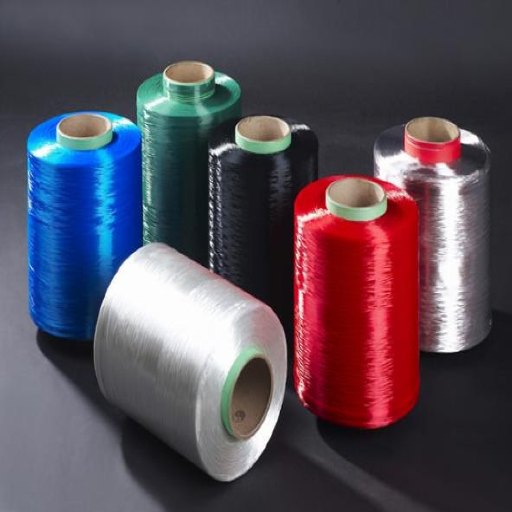
Nylon 6 and 66 are two closely related types of synthetic polymers known for their strength, durability, and resistance to wear. The key difference lies in their chemical structure and production process. Nylon 6 is produced by polymerizing caprolactam, a single monomer that allows easier recycling and processing. Nylon 66, on the other hand, is made by combining two monomers—hexamethylenediamine and adipic acid—resulting in a polymer with a higher melting temperature and strength.
Both materials have their strengths. Nylon 6 is favored for applications requiring flexibility and impact resistance, such as textiles and automotive components. Nylon 66, with its superior thermal and chemical resistance, is often chosen for high-performance engineering applications like industrial machinery and electrical components. Understanding these nuanced differences helps in selecting the right nylon for specific needs.
Differences Between Nylon 6 and Nylon 66
A typical comparison between Nylon 6 and 66 would include differences in monomer composition, melting points, impact resistance, rigidity, abrasion resistance, moisture absorption, and suitability for specific applications.
|
Parameter |
Nylon 6 |
Nylon 66 |
|---|---|---|
|
Monomer |
Caprolactam |
Adipic acid, HMDA |
|
Melting Point |
215-220°C |
250-265°C |
|
Impact Res. |
Higher |
Lower |
|
Rigidity |
Moderate |
High |
|
Abrasion Res. |
Moderate |
Superior |
|
Moisture Abs. |
Higher |
Lower |
|
Heat Res. |
Moderate |
Superior |
|
Flexibility |
Higher |
Lower |
|
Applications |
Flexible uses |
High-stress uses |
Properties of Nylon 6/6
Nylon 6/6 is more commonly known as Nylon 66; technically, it is a high-performance engineered synthetic polymer. Mechanical strength is exceptional, while rigidity and durability are featured, so Nylon 6/6 is chosen for demanding applications. High abrasion, chemical, and heat resistance are exhibited by this material, melting at around 509°F (265°C). Furthermore, it has a considerably low coefficient of friction and superior dimensional stability that becomes useful when manufacturing precision components such as gears, bearings, and industrial fasteners. d. Its properties allow it to withstand harsh conditions while maintaining consistent performance.
Tensile Strength and Elongation Characteristics
Nylon 6/6’s great tensile strength and elongation characteristics have made it the material of choice for many high-end application-based engineering works. The dry strength ranges between 83 and 120 MPa (12,000 and 17,400 psi), depending primarily upon the formulation and processing method used. In short, the material will be subjected to high mechanical stress without deformation or failure.
Nylon 6/6 also shows excellent elongation at break, from 20% to 100%, thus allowing the material to absorb and distribute stress evenly. These elongation rates generally depend on environmental conditions like temperature and moisture. Being hygroscopic, Nylon 6/6 can absorb up to 8% of the water by weight in saturated conditions. This slight absorption of water decreases its tensile strength but increases ductility.
In summary, such capabilities highlight Nylon 6/6’s adaptability and dependability for structural parts, industrial fasteners, and high-impact mechanical applications. Its strength, coupled with flexibility, makes it capable of handling dynamic loads and remaining operative over harsh operating conditions for a long time.
Applications of Nylon Plastic

Nylon plastic is one of those materials that, given its strength and durability, declined to be hemmed into the category of an industrial product with niche applications. Key applications are:
- Automotive Industry: Nylon is used for components such as wheel bearings, bushings, and engine covers that require resistance against high temperatures and mechanical stresses.
- Textile Industry: This is mainly used to manufacture fabrics for clothing, upholstery, and industrial ropes.
- Electronics: Cable insulators, connectors, and other electrical components require nylon for its superb insulating capabilities.
- Industrial Machinery: Bearings, rollers, and fasteners require wear resistance and strength.
- Consumer Products: Because of its very lightweight and durable nature, consumer products such as kitchenware, sports equipment, and toys are present.
These applications indicate the material’s adaptability and attest to its indispensable role in modern manufacturing and everyday product scenarios.
Engineering Plastics in Various Industries
Due to their superior performance, engineering plastics have found applications in many industries. They provide better wear, corrosion, and heat resistance, or are more versatile than traditional materials such as metals or ceramics. However, they are lighter and consume less energy, such as in automotive or aerospace applications, where weight savings translate directly into fuel savings. The evolution and analysis of engineering plastics are ongoing as increased application demands arise from more sectors.
Common Uses of Nylon 6/6 in Manufacturing
A highly versatile type of engineering plastic, Nylon 6/6 is used for manufacturing because of its mechanical properties and high thermal and chemical resistance. Some of the widespread applications include:
- Automobile
Due to its low weight, nylon 6/6 is also used in making parts such as gears, bearings, bushings, and engine covers. According to recent data, the significant use of nylon 6/6 in automotive manufacturing has substantially helped reduce the vehicle’s mass and enhanced approximately 6%-8 % fuel efficiency, depending on the degree of application.
- Electrical and Electronics
Super insulating power and greater heat resistance make nylon 6/6 ideal for making electrical housing, connectors, and circuit breakers. The material can allow continuous exposure to working temperatures of 185°F (85°C), with some grades being modified for even higher levels of thermal resistance, as demanded by the need for rugged and reliable electrical components.
- Industrial Machinery
Nylon 6/6 is used in industrial machinery to manufacture conveyor belts, rollers, and other wear-prone parts. Its self-lubricating property reduces friction, minimizing maintenance requirements. By replacing metal parts with nylon 6/6, machinery life can be increased by as much as 50%.
- Consumer Goods
It is found mostly in sports equipment, zippers, and outdoor tools, where resistance to corrosion and durability are necessary. The product offers the most economical solution while resisting changing environmental conditions.
- Textiles and Filaments
Nylon 6/6 is heavily exploited in the manufacture of strong and stretchable fibers. Due to their high tensile strength and compatibility against wear and abrasion, such fibers are commonly employed in fabrics, fishing lines, and industrial ropes.
The increasing demand for nylon 6/6 has driven its production and use across industries. The global nylon 6/6 market was estimated to be worth about $6 billion in 2022. It is expected to grow at a CAGR of 4%-5% in the forthcoming decade, a testament to its relevance in modern manufacture.
Glass-Filled Nylon: Advantages and Applications
Glass-filled nylon is a variant of nylon reinforced with glass fibers, usually between 10% and 50% by weight. Such reinforcement enhances the basic material’s structural properties, and the end product finds use in applications where toughness is a prerequisite. It exhibits better tensile strength, stiffness, and dimensional stability than usual nylon and, therefore, is used where higher mechanical specifications are required.
Glass-filled nylon has excellent thermal and impact resistance, among its defining properties. Glass fibers allow it to withstand higher temperatures, sometimes 120-150°C, without surrendering any structural stability. These materials will also resist a higher degree of abrasion, chemicals, or UV degradation, making them apt for indoor and outdoor applications.
Glass-filled nylon has applications across many industries. Since it is light yet rugged, it is heavily used in the automotive industry to manufacture engine parts, gears, and housings. Because of its excellent dielectric properties, connectors, switches, and insulating parts are also made in the electrical and electronics industries. It also finds applications in industrial machinery, consumer appliances, and sporting goods.
Market insights (2023) projected sustained growth in demand for glass-filled nylon, with an estimated CAGR of 6% to 7% during the forecast period of the next 10 years. This growth is attributed to increasing adoption in automotive and construction activities, where higher performance requisites continue to prevail. Asia-Pacific continues to be the largest market, with its growing manufacturing base and industrialization acting as a stimulating factor for glass-filled nylon. However, North America and Europe are moving steadily toward further product innovations, combining sustainability with advanced material performance.
This must have allowed glass-filled nylon to grow into an indispensable material for modern engineering and production.
Manufacturing Process of Nylon 6/6
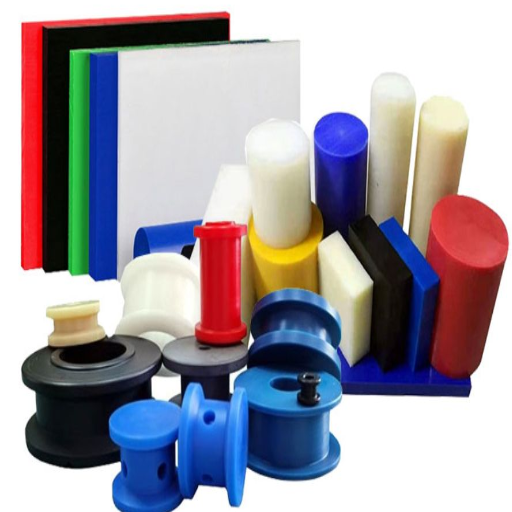
Primarily, Nylon 6/6 is prepared by polycondensation of hexamethylenediamine and adipic acid. The method involves exact weighing and mixing of the two crucial monomers in a reactor. Heating initiates the polymerization between them, with water evolving as a byproduct. The molten polymer is extruded and quenched quickly before pelletization into small cylindrical forms. These pellets are employed further in molding and extrusion methods for forming molded products. The basis of this procedure is an assurance of strength, heat resistance, and corrosion resistance that allows Nylon 6/6 to be used in various industrial applications.
Extrusion Process of Nylon Plastic
The extrusion procedure for nylon plastic includes some exact operations to ensure the production of fine materials suitable for various applications. It begins with pre-drying nylon pellets to reduce moisture because nylon is highly hygroscopic, and any excess water will cause product defects. Usually, these pre-drying operations are carried out at around 175-190°F (80-90°C) for 4-6 hours until moisture levels have reached below 0.2%.
Once dried, the pellets are fed into the hopper of the extrusion machine. The temperature gradually increases until nylon melts at about 500°F (260°C) for Nylon 6/6. The molten polymer is then pushed by a screw acting through a die. The die forms the shape of the extruded product, which may be sheets, rods, or profiles. Throughout this procedure, it is essential to maintain temperature control to prevent any thermal degradation of the material, as this would decrease its strength.
Subsequently, the product is cooled, usually with a water bath or by air quenching. The cooling type depends on the polymer’s thickness and the characteristics it requires. Puller machines guarantee consistent and controlled pulling rates for dimensional accuracy and surface finish. After cooling, the extrudate is chopped to size or post-processed, depending on its application.
Real-time monitoring is also incorporated in modern extrusion technology to ensure optimum product quality by monitoring the temperature, pressure, and flow rate during processing. According to recent industry reports, it was more than 1.5 million metric tons in 2022, due to extruded nylon plastics being used by industries like automobile, electrical, and consumer goods. Due to their durability, flexibility, and resistance to heat and chemicals, extruded nylon is highly sought for manufacturing mechanized components like gear wheels, tubing, and cable insulations.
In continuing efforts to sustain the environment, advancements in polymer science are paving the way for sustainable nylon extrusion processes via bio-based or recycled raw materials.
Factors Affecting Shrinkage During Production
Whatever product is to be finished with precision, performance, and quality, shrinkage during the processing of extruded nylon parts is of paramount importance to track. Below are the five main factors responsible for shrinkage during production:
- Temperature Control
Any change in processing temperatures, including the barrel and die temperatures, will affect the shrinkage rate. The higher temperature may increase molecular movement, thus causing more shrinkage after the melt cools.
- Cooling Rate
The cooling rate of the extruded nylon is most important for shrinkage. Fast cooling can cause differential shrinkage, whereas slower cooling makes the structure more uniform, thereby preventing distortion.
- Material Composition
Different types of nylon may show various levels of shrinkage. For instance, nylon with filler materials such as glass fibers tends to shrink less than plain nylon due to the stabilizing effect of the fillers.
- Moisture Content in Material
Shrinkage can never go unnoticed if the nylon material has moisture content prior to extrusion. Extra moisture causes hydrolysis to lower the molecular weight and change the properties of the material, which then causes more shrinkage.
- Mold Design and Pressure
The mold design and pressure applied during the extrusion process influence how the molten nylon evenly fills the cavity. This irregular mold pressure causes an uneven shrinkage along the product.
Mastering these factors leads to the most precise, reliable production of extruded nylon parts.
Innovations in Nylon 6/6 Production Techniques
Improved Nylon 6/6 production has maximized technological skills for sustainability and economic viability. One process sees the bio-based adipic acid becoming integrated into polymerization. Traditional nylon production consumes a lot of fossil fuel, but according to recent reports, by using bio-adipic acid, manufacturers may cut emissions of greenhouse gases by some 50 percent.
One prominent development has seen the development of advanced additive manufacturing technologies, such as 3D printing, offering tools for manufacturing. Currently, in 3D printing applications, Nylon 6/6 is a high-performance type of strong, heat-resistant, and lightweight material. Some reports indicate that the global market for 3D-printed parts with nylon is projected to grow at a 28% CAGR up to 2030. This development opens new avenues for manufacturing while also saving materials relative to traditional manufacturing methods.
Extrusion quality control has been revolutionized with real-time processing-relevant monitoring systems based on AI and IoT. These systems ensure conformity by identifying irregular temperature, pressure, or flow distribution irregularities, reducing defect rates by around 20 percent.
The Nylon 6/6 industry seems poised to combine and realize greener and more efficient processes through these innovations, diminishing sustainability with precision and advanced technology.
Sustainability Considerations

Sustainability in Nylon 6/6 production minimizes the environmental impact while preserving material performance. Ideally, recycled raw materials should be used in manufacturing Nylon 6/6, including either post-consumer or industrial waste, to lessen the depletion of non-renewable resources. From another perspective, state-of-the-art manufacturing processes can significantly reduce carbon emissions by focusing on energy efficiency among their key criteria. Moreover, newer applications of biodegradable nylon variants are being pursued to address the disposal problem at the end of the life cycle and reduce plastic pollution. Together, these approaches promote the circular economy concept and support ecological conservation in the industry.
Environmental Impact of Nylon Production
Nylon production has environmental consequences because it uses petrochemicals and energy-intensive processes. Recent data disclose that greenhouse gases are heavily emitted, and one study even shows that up to 5.43 tons of CO2 equivalent can be released to create a ton of nylon. This places nylon at the forefront of fibers impacting climate change.
Whilst producing adipic acid, a critical precursor to nylon, nitrous oxide (N2O) is released. N2O is a potent greenhouse gas with a global warming potential about 300 times that of carbon dioxide. It is estimated that the production of nylon is responsible for about 10% of global N2O emissions.
The problem for the environment extends beyond emissions. Nylon is non-biodegradable and, therefore, contributes to plastic pollution, especially as microplastics. These microplastics are released into water systems during washing and subsequently reach the oceans, interfering with marine life. Research indicates that nylon-type synthetic textiles are responsible for over 35% of oceanic microplastic pollution.
Although some innovations, like recycled nylon from fishing nets and other wastes, have helped reduce the impact, the primary nylon-producing processes still rely on fossil fuels. Hence, there is a significant need to shift towards more sustainable alternatives and refine recycling technologies to decrease the environmental footprint.
Recycling and Reusability of Nylon 6/6
Nylon 6/6 finds applications in the automotive, textile, and industrial sectors because of its strength and durability, which makes it an environmental sustainability challenge. Recycling technologies have entered the limelight to ameliorate the issue, with researchers and industries focusing on two primary methods for recycling Nylon 6/6: mechanical recycling and chemical recycling.
Mechanical Recycling: Recyclers crush and reprocess discarded nylon materials into recyclables that can be used again in other applications. Repeated cycles of recycling, however, degrade the molecules so that few cycles are feasible in reuse. It currently works best for post-industrial wastes.
Chemical Recycling: More advanced and promising methods treat Nylon 6/6 by breaking it into raw polymer monomers through depolymerization mechanisms. These monomers, after purification, can be repolymerized into new nylon of virgin quality. Most studies have indicated that chemical recycling can recover nearly 95% of the raw material, providing a sustainable alternative to traditional means of production.
One standout example of chemical recycling is the implementation of the cycloaliphatic dicarboxylic acid (CDA) process, which has shown promise in cutting energy consumption by around 40% when compared to standard manufacturing processes. Additionally, emerging companies are developing large-scale applications based on closed-loop recycling for Nylon 6/6, wherein the materials are recycled indefinitely with almost no degradation.
However, a cost-effective barrier to improving widespread recycling is coupled with the other half of the equation—the requirement of proper waste collection and sorting infrastructure. An Ellen MacArthur Foundation report claims that globally, only approximately 1 percent of nylon waste is recycled through the currently available systems, emphasizing the need for infrastructural developments and regulatory support.
Alongside working on reusability, efforts are underway to design Nylon 6/6 materials from additives that would improve the product’s recyclability with extended life cycles. Bridging the gap between industries and institutions for research is an endeavour that is critical to scaling the innovations for maximum reduction of environmental impact. Acknowledging and investing in the solution can enable the realization of a circular economy for Nylon 6/6, which will address the issue of global waste and fossil-fuel dependency in a three-proportionate manner.
Reference Sources
- Authors: Tanmoy Rath, I. Alnaser, A. Seikh
- Publication Date: July 30, 2024
- Journal: Journal of Thermoplastic Composite Materials
- Key Findings:
- The study successfully fabricated a unique co-continuous morphology in polysulfone/Nylon 6,6 nanocomposites by varying the concentration of organically modified clay.
- The addition of clay decreased the domain size of Nylon 6,6, and a co-continuous morphology was achieved when the organoclay content exceeded 2%.
- The morphology was stable against high-temperature annealing, inhibiting coalescence of the dispersed phase.
- Methodology:
- Melt mixing was used to create the nanocomposite blends.
- The morphology was examined using scanning electron microscopy (SEM), transmission electron microscopy (TEM), and wide-angle X-ray diffraction (WAXD).
- Authors: B. Ameh, K. A. Bello, I. Chindo, A. I. Izang
- Publication Date: September 8, 2024
- Journal: Journal of Chemical Society of Nigeria
- Key Findings:
- The study investigated the synthesis of a monofunctional reactive dye and its dyeing behavior on Nylon 6,6 fabrics.
- It was found that the percentage exhaustion of the dye on Nylon 6,6 increased with decreased pH due to sulphonation.
- Methodology:
- The dyeing behavior was evaluated through experiments that varied pH levels and dye concentrations, assessing the dye uptake on Nylon 6,6 fabrics.
- Authors: Amir Fayyaz, H. Asghar, Muhammad Waqas, Asif Kamal, W. Al-Onazi, A. M. Al-Mohaimeed
- Publication Date: July 25, 2023
- Journal: Polymers
- Key Findings:
- The study assessed the potential of using laser-induced breakdown spectroscopy (LIBS) in combination with various other spectroscopic and statistical methods for characterizing pure and MgO-doped Nylon 6,6.
- The results indicated that LIBS and statistical methods could effectively characterize the structural and compositional properties of Nylon 6,6.
- Methodology:
- Pure Nylon 6,6 samples were doped with MgO and analyzed using LIBS, X-ray diffraction (XRD), Fourier transform infrared (FTIR) spectroscopy, and energy-dispersive X-ray (EDX) analysis.
4. Top Nylon CNC Machining Parts Manufacturer And Supplier In China
Frequently Asked Questions (FAQs)
Q: How is nylon 6/6 extruded in manufacturing?
A: Nylon 6/6 is commonly extruded by melting the polymer chains and forcing the material through a die. This method produces various shapes and forms, such as rods, sheets, and films. The extrusion process helps to create components used in different applications, including sprockets and intake manifolds. The high strength and good mechanical properties of nylon 6/6 make it a preferred choice for these applications. Additionally, using stabilizers during extrusion can enhance the final product’s thermal stability and flammability resistance. Proper temperature control during extrusion is crucial to maintain the integrity of the nylon 6/6.
Q: What are the differences between nylon six and nylon 6/6?
A: Nylon 6 and nylon 6/6 are both types of polyamide but have distinct differences in their molecular structure and properties. Nylon 6 is made from a single monomer, while nylon 6/6 is synthesized from two monomers, resulting in a higher melting point and better mechanical strength. Compared to nylon 6, nylon 6/6 exhibits lower water absorption, making it suitable for applications that require moisture resistance. Furthermore, nylon 6/6 has a higher elastic modulus, enhancing durability in demanding environments. This resilience makes nylon 6/6 a popular material in industries like automotive and textiles, where performance and reliability are crucial.
Q: What is the impact of water absorption in nylon 6/6?
A: Water absorption can significantly affect the performance of nylon 6/6, as it tends to absorb moisture from the environment. This characteristic can lead to dimensional changes and reduced mechanical properties, such as tensile strength and elastic modulus. Managing water absorption is critical for maintaining quality and durability in apparel or carpet manufacturing applications. To mitigate these effects, manufacturers often use additives or select different nylon grades, such as nylon 6, which has various water absorption characteristics. Understanding the water absorption properties of nylon 6/6 is essential for engineers and designers to ensure optimal performance in their specific applications.


