


Aluminum is a much sought-after metal for industries because of its remarkable properties of strength, light-weight, and corrosion resistance. Amongst the many uses of aluminum, extrusion is considered the most common, as aluminum can be extruded into innumerable profiles depending on the company’s diverse needs. But with so many aluminum alloys out there, the question arises: which is best suited for your extrusion task? This article delves into the key properties of aluminum, outlines the characteristics of different alloys, and offers some pointers to help you choose best for your needs. Whether for strength, flexibility, or cost, it is essential to understand the various alloy options available for best results.
Understanding Aluminum Alloys

When trying to determine the best aluminum alloy for your extrusion needs, it is important to distinguish between strength, corrosion resistance, machinability, and cost. As a general-purpose alloy, 6061 has an excellent balance of strength and corrosion resistance, so it is widely used for structural purposes. 6063, on the other hand, provides a finer surface finish, rendering it suited for architectural uses. If strength is of higher concern, consider 7075, a very high-strength alloy used in aerospace and automotive applications. Thus, the really “best” alloy is considered to be one that meets the parameters of your own project, fulfilling an application need and serving a particular purpose.
What Is an Aluminum Alloy?
An aluminum alloy is an aluminum matrix wherein chemically compatible metals such as copper, magnesium, silicon, zinc, or manganese are present in some quantity in order to impart specific desirable mechanical, physical, and chemical properties to the material. Untreated aluminum, in its pure state, is soft and ductile and hence cannot find many structural applications; however, when alloyed, its strength, corrosion resistance, and machinability can be greatly enhanced. These alloys are widely employed by industries like the airplane, automotive, construction, and electronics industries because of their lightweight, ergonomic nature, and versatility.
Two general classes of alloys are available: wrought and cast. Wrought alloys are produced by working the metals into shapes like sheets or extrusions; cast alloys are used when getting the metal into shape through melting and pouring into molds is preferential. These are further sub-divided into heat-treatable and non-heat-treatable alloys, the difference being whether or not it is possible to change their properties by heat treatment.
An example would serve well to demonstrate each one:
- 6061 Alloy: Quite versatile, it offers good corrosion resistance, strength, and weld ability at a yield strength of about 35,000 psi, with good machinability.
- 7075 Alloy: A high strength alloy primarily employed in aerospace and military applications. It stands at a yield strength of around 73,000 psi being one of the strongest available.
- 5052 Alloy: A non-heat-treatable alloy, it is exceptionally corrosion resistant, especially to marine environments, the yield strength being some 28,000 psi.
- 6063 Alloy: A preferred choice for architectural applications for its excellent surface finish and moderate strength, its typical yield strength is about 21,000 psi.
Recent developments have enhanced the existing aluminum alloy formulas to improve their fatigue resistance, thermal conductivity, and sustainability in keeping with the global emphasis on highly efficient and environment-friendly materials. The aluminum alloy keeps modern engineering solutions at the forefront for lightweight vehicles to heavy and demanding aerospace components.
Different Alloy Series Explained
Aluminum alloys divide basically into two families: wrought alloys and casting alloys, within which series are divided further based on composition and properties in somewhat distinctive ways. However, common alloy series are summarized below:
- 1000 Series: These alloys contain 99% or higher aluminum with good corrosion resistance and thermal conductivity. They are commonly used for electrical and chemical applications owing to their purity.
- 2000 Series: Strong and tough in nature, these series of alloys are mainly aluminum-copper based and find application in aerospace. However, they have comparatively less corrosion resistance than the other series.
- 3000 Series: Basically manganese alloys, they are recognized for nice corrosion resistance and moderate strength and find applications in roofing, siding, and cooking utensils.
- 5000 Series: Aluminum-magnesium alloys are superb in terms of corrosion resistance especially in marine atmospheres. They are, thus, applied extensively in shipbuilding, automotive body panels, and storage tanks.
- 6000 Series: These are very diversified aluminum-silicon-magnesium alloys, balanced with strength, corrosion resistance, and machinability. Their outstanding adaptability makes them suitable for use within structural elements and in transport.
- 7000 Series: These are, in essence, aluminum-zinc-magnesium alloys-being the strongest aluminum alloys currently available. They are often used in aerospace and automotive industries where materials of very high strength and low weight are on demand.
An understanding of the unique capabilities of each aluminum alloy series enables engineers and manufacturers to choose materials best suited for their applications for optimized performance and sustainability.
Importance of Alloy Selection
Choosing an aluminum alloy quite rightly influences engineering and manufacturing projects towards success. In fact, performance, durability, life, or even cost-effectiveness of a product are influenced by the decision. Different alloys have different mechanical, thermal, and corrosion resistance properties suited for specific applications. For example, the 2000 series enjoys high strength and hardness but doesn’t protect well against corrosion, thus opposing marine environments. On the other hand, the 5000 series supports a very good corrosion resistance and is used in such environments and chemical environments.
Recent research indicates benefits of aligning the choice of alloys on modern industries, such as the inclusion of 6061 aluminum alloy of the 6000 series in automotive manufacture to decrease half as much as 20% in vehicle weight, thus increasing fuel economy and curtailed emissions. The same way aerospace advancement is being considered more and more by means of 7050 and 7075 alloys of the 7000 series, offering the best strength-to-weight ratio in exceedingly high-performance fixations.
As we perk toward sustainability, great attention is given to the recyclability of aluminum alloys. According to a report by the Aluminum Association, “almost 75% of all aluminum produced is still being used today,” thanks to its ability to be recycled with no loss in quality. As a result, alloy selection is not a factor solely concerning performance; it is a major constituent of green manufacturing practices. Therefore, picking the right aluminum alloy, with great attention to its property and use, is absolutely imperative in reaching the technical, economic, and environmental goals.
Properties of Aluminum

An impressive suite of properties endows aluminum with versatility and broad applicability. It is slippery to be labeled “light” yet the different description of this adjective would be strong. Aluminum is highly resistant to corrosion, rendering it useful for hostile environments. Aluminum has reasonable or worthy heat and electrical conductivity and hence finds widespread utilization in heat exchangers and other electrical applications. Aluminum is quite malleable and ductile, owing to which it is easily shaped and fabricated; in addition to which, it does not lose quality when recycled. These innumerable features made aluminum a material of choice in many industries.
General Properties of Aluminum
A versatile and lightweight material that boasts such a fantastic combination of attributes that have made aluminum indispensable to so many industries). Aluminum’s density is around 2.7 g/cm³, about 1/3 that of steel, thus offering the designer the opportunity to make lightweight yet strong products. Aluminum has an impressive strength-to-weight ratio that renders it suitable in various applications, ranging from aerospace to automotive industries.
Aluminum has a thermal conductivity of roughly 205 W/(m·K), so heat can be efficiently dispersed in heat exchanger or electronics cooling systems. Aluminum’s conductivity stands at around 61 percent that of copper (IACS standard) and hence is frequently used as a cost-effective alternative, mainly where transmission lines and general electrical applications are concerned. The high reflectance of light and heat from aluminum has made it ideal for use in energy-efficient architectures and space technologies.
Next in line comes the phenomenal corrosion resistance of aluminum. Atmospheric exposure results in a thin oxide layer growing on the aluminum surface, acting as a barrier against rust and degradation in a diverse environment, ranging from marine to industrial. In many applications, this very characteristic makes additional coating unnecessary.
More in terms of mechanical properties, aluminum also exhibits stunning malleability and ductility; it is able to be worked into everything from thin foils to complicated structural shapes while maintaining its integrity. Its melting point of 660°C also provides it with excellent workability during processes.
Most importantly, aluminum is further recognized for being a highly recyclable metal, with around 75% of the total amount produced so far still in use. Recycling aluminum consumes merely 5% of the energy that primary production would require; hence, making it a high matter of reduced environmental impact watching with equal material properties. These general properties together with sustainability make aluminum an indispensable material resource for modern engineering and production.
Description of Extrudability and Its Importance
One most outstanding characteristic of aluminum is the extrudability property, which renders it easy for aluminum to be cast into complex profiles with high precision. Aluminum extrusion involves pushing aluminum through a shaped die to manufacture parts having cross-sectional profiles designed to fit specific applications. This, on the one hand, reduces material waste, whereas on the other hand, greatly enhances design flexibility making it a fitting candidate for the construction, transportation, and electronics industries.
According to recent data, aluminum extrusion is said to be the more efficient and most cost-effective. With the possibility of meeting even the most stringent design specifications, aluminum extrusion can hold dimension tolerances as narrow as ±0.02 inches. Furthermore, extrusion requires relatively low energy in comparison to other material forming methods. Given the low melting point of aluminum (660°C) combined with its malleability, extrusion takes place at much lower temperatures and energy levels than that for materials such as steel.
The aluminum testing market is growing fast globally. It was valued at around USD 76 billion in 2022 and expected to provide around USD 130 billion in revenues by 2032, supported by demand from automotive and construction sectors. Lightweight aluminum profiles in electric vehicles (EVs) boost energy efficiency and emission reductions. The transportation domain accounts for about 40% of the global aluminum extrusion market, where it is applied to build lightweight structures of great strength.
Aluminum extrusions have a sustainability angle that further ingrains their importance. More than 90% of all aluminum used in extrusions comes from recycled material, supporting circular economy initiatives and carbon footprint reduction. This unique blend of design flexibility, efficiency, and sustainability makes aluminum extrusions at the heart of modern innovation.
Comparison of 6061 Aluminum vs 6063
6061 aluminum provides higher strength and better machinability, while 6063 offers superior corrosion resistance and is ideal for aesthetic applications.
| Parameter | 6061 | 6063 |
|---|---|---|
| Strength | Higher | Lower |
| Machinability | Better | Moderate |
| Corrosion Res. | Moderate | Higher |
| Weldability | Good | Excellent |
| Finish Quality | Moderate | High |
| Usage | Structural | Aesthetic |
Aluminum Extrusion Process
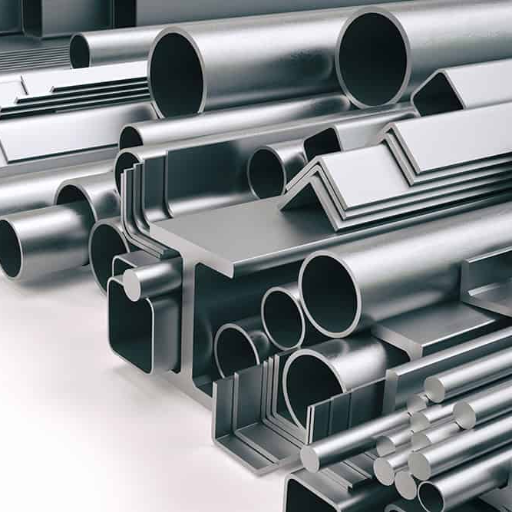
- Heating the Aluminum Billet – The aluminum is heated to make with malleability but not molten.
- Extrusion Through a Die – The softened aluminum is pressed through the die to the desired shape.
- Cooling and Finishing – The extruded aluminum is then cooled down, cut to length, and occasionally finished with operations such as anodizing for better corrosion resistance and looks.
Extrusion Process Overview
First pushing of aluminum through a die is accomplished to the desired cross-sectional profile by the extrusion process. Heating makes aluminum billet more malleable, which is then forced to pass through the die and take the shape needed. Given that the extrusion is done, the aluminum is cooled down, cut, and sometimes subjected to finishing operations to enhance its wear strength and aesthetics. This quick method is mostly used for structural and ornamental applications owing to dexterity and precision.
Aluminum Extrusion Design Considerations
There are some considerations involved in designing for aluminum extrusion systems, which must be met to provide an acceptable end product. Uniform wall thickness produces fewer defects and provides uniform strength in the extrusion. Complex profiles should be a good compromise between functionality and manufacturability so as not to cause problems in the extrusion process. Proper tolerances and allowances for treatments after extrusion such as anodizing or machining must be considered. Material selection, die design, and application will all contribute to the final structural and aesthetic requirements.
Choosing the Right Aluminum Extrusion
I focus on the extrusion that fits the specific application and performance requirements. Factors like material grade, wall thickness, and profile complexity are considered to ensure that the design meets both functional and structural needs. I also take into account tolerances and planned post-extrusion treatments like anodizing or machining, so that the finished product reaches the desired quality and finish.
Best Aluminum Extrusion Alloys

- 6061: It is applied where structural strength is considered along with corrosion resistance and versatility. Construction and transportation industries are its common users.
- 6063: Good surface finish and excellent corrosion resistance make an aluminum alloy perfect for applications in doors, windows, and frames.
- 3003: The alloy performs excellently under corrosion and is used where moderate strength is sufficient for instance, roofing and siding.
- 7075: Extremely, high-strength alloys are used where a stand is taken in aerospace and automotive industries.
Features of 6061 Aluminum Alloy
- High Strength: 6061 is often described as being balanced in terms of strength and thus supports applications in many areas.
- Corrosion Resistance: It has excellent corrosion resistance, especially in harsh environments.
- Machinability: This alloy is easily machined, hence being used in precision manufacturing.
- Weldability: 6061 aluminum is an excellent grade of aluminum in welding, retaining its properties even after welding.
- Lightweight: Due to its low density, its weight counts as a major factor in applications.
Features of 6063 Aluminum Alloy
- Surface Finish: 6063 aluminum is famous for an excellent surface finish and is thus chosen in applications that require a high appeal.
- Formability: The metal basically can be formed efficiently, including shaping into complex profiles.
- Corrosion Resistance: 6063 has the same ability as 6061 to resist corrosion, hence being quite suitable for outdoor and architectural works.
- Applications: 6063 is used extensively in window frames, doors, and decorative trims due to its great strength coupled with very smooth finishing.
Uses of Different Alloys
Depending on their particular characteristics, different alloys find varied applications. For example, the 6061 alloy exhibits enormous versatility and finds use in automotive parts, aerospace components, and structural frames where high strength-to-weight ratio and resistance to corrosion are required. The 6063 alloy, which provides the best surface finish and formability, finds architectural applications such as window frames, doors, and piping. The problem posed by the above differences reiterates the imperative that the proper alloy must be selected according to the necessary functionality and aesthetic appeal of the product.
Choosing the Right Aluminum Extrusion Alloy

When choosing the right aluminum extrusion alloy, you will want to consider the specific requirements of your project. The 6061 alloy can be most optimum for projects that emphasize on strength and structural integrity, while the 6063 alloy is favorable in cases where surface finishes and visual considerations are the priority. Weighing these factors will ensure the alloy is harmonious with both functionality and appearance.
Factors to Consider When Choosing
- Strength Requirements: The loading on the structure must be examined to decide on the respective alloy strength.
- Surface Finish: Surface finish plays a vital role for appearance; hence alloys like 6063 will be preferred.
- Corrosion Resistance: In instances where moisture or chemicals pervade the environment, select alloys with higher corrosion resistance, such as 6061.
- Machinability: How it will behave during machining processes like cutting and welding.
- Price: A balance has to be achieved between performance and price to satisfy the set budget of this project.
Common Mistakes in Alloy Selection
- Application requirements taken lightly and selecting an unsuitable alloy.
- Environmental variables such as corrosion or temperature ignored.
- Consideration of cost taking precedence over essential performance requirements, thus ending up on compromise.
- Not taking into consideration fabrication requirements such as machinability or weldability.
Best Practices for Alloy Selection
- Know Application Requirements: Delineate very clearly the specific requirements of your project; mechanical properties, environmental conditions, and operational demands.
- Consider Long-Term Performance: Consider factors such as corrosion resistance, wear resistance, and temperature resistance so that the alloy will give endurance on operational application with time.
- Balance Between Cost and Quality: Consider price but prioritize the choice according to those characteristics critical to the success of your application.
- Take Fabrication into Account: Keep the fabrication side in consideration; the alloy can be machined, amalgamated, and formed; hence, you want to keep these in consideration.
- Seek Expert Consultation: Bring material scientists, manufacturer, or supplier into the picture to help you determine the most appropriate alloy for your use.
- Test and Validate: When possible, conduct tests or simulation to validate the suitability for implementation of the alloy.
Accompanying these best practices, one can optimize the selection of alloys to the betterment of their project in terms of efficiency and durability.
Reference sources
- Influence of Stepped Annealing on the Properties of Conductor Wire After Ingotless Rolling-Extrusion and Drawing of Aluminum Alloys Containing Zr, Ce, La, and Fe
- Authors: V. Bespalov et al.
- Published: January 31, 2023
- Journal: Journal of Chemical Technology and Metallurgy
- Key Findings:
- The study investigates how stepped annealing affects the mechanical properties of aluminum alloys after processes like rolling-extrusion and drawing.
- The presence of elements like Zr, Ce, La, and Fe in the alloys was found to significantly influence the final properties of the conductor wire.
- Methodology:
- The authors conducted experiments involving the processing of aluminum alloys through ingotless rolling-extrusion followed by drawing, with subsequent annealing treatments to assess changes in mechanical properties(Bespalov et al., 2023).
- Microstructures and Properties of Aluminum Alloys During Repetitive Continuous Extrusion Forming
- Authors: Xiankun Ji et al.
- Published: November 1, 2016 (not within the last 5 years but relevant)
- Journal: Materials Science Forum
- Key Findings:
- The paper discusses the microstructural evolution of aluminum alloys during repetitive continuous extrusion, highlighting how processing parameters affect mechanical properties.
- Methodology:
- The authors utilized various experimental techniques to analyze the microstructure and mechanical properties of aluminum alloys subjected to continuous extrusion(Ji et al., 2016, pp. 2261–2267).
- Bimodal Microstructure Obtained by Rapid Solidification to Improve the Mechanical and Corrosion Properties of Aluminum Alloys at Elevated Temperature
- Authors: I. Paulin et al.
- Published: January 29, 2021
- Journal: Metals
- Key Findings:
- The study demonstrates that rapid solidification techniques can create a bimodal microstructure in aluminum alloys, enhancing their mechanical and corrosion resistance at elevated temperatures.
- Methodology:
- The authors employed rapid solidification followed by extrusion and various mechanical tests to evaluate the properties of the resulting aluminum alloys(Paulin et al., 2021).
Frequently Asked Questions (FAQs)
What are the properties of the 6063 alloy for aluminum extrusion design?
The 6063 alloy has been known for excellent extrudability, attracting the use of aluminum extrusions for various applications. A good trade-off between strength and corrosion resistance presents the ability to use this alloy in outdoor or architectural applications. Moreover, their surface finish can be anodized for aesthetic value and protection. The alloy is usually used in applications needing very complex shapes and thin walls, as the profiles can be formed very easily into complicated outlines. Another primary reason for choosing the 6063 alloy for custom aluminum extrusion is its excellent extrusion characteristics.
Which aluminum alloy is great for different aluminum extrusion needs?
An aluminum extrusion alloy is usually chosen depending on the requirements of the specific project. Likewise, for general-purpose applications, the 6061 and 6063 aluminum alloys are considered the most versatile and having good mechanical properties. For higher strength, 6005 aluminum would be the best alloy to be used as it offers enhanced strength capabilities for extrusion. Conversely, if heat treatment is a stage in the process, 6061 would be one of the alloys that are heat-treated to reach higher strengths. To be sure that your extrusion design requirements are covered, it is important to consider the properties desired in the aluminum alloy series you are choosing.
What are the characteristics of aluminum alloys used for extrusion?
Aluminum extrusion alloys usually feature many distinct properties that characterize them as good for this manufacturing process. Such characteristics include high corrosion resistance, easy to weld, and possess a high strength to weight ratio. The 6000 series aluminum alloys, mainly 6061 and 6063, are well known for their very good extrudability and formability in an immense range of profiles and tubing. In addition, these alloys provide the functionality to anodize or paint, making them aesthetically appealing in applications. Awareness of the specific properties of these alloys further aids in choosing the best suited to your extruding application.
How do custom aluminum extrusions differ from standard aluminum extrusions?
Custom aluminum extrusions are designed with unique specifications that standard aluminum extrusions can typically not accommodate, which means it is possible for custom designs to include the most intricate shapes, sizes, and features for their intended purpose. Standard extrusions are typically available off-the-shelf and are often made from the most popular aluminum alloys such as 6063, whereas custom extrusions allow for further complexity in meeting exact requirements. It can be quite easy to add features that enhance the functionality of an aluminum profile when working with aluminum for custom profiles, such as embedded mounting points or channels. Also, the choice of alloys can be customized, ensuring the material selected has the properties required for use.
What applications of 6000 series aluminum alloys are known to be common?
6000 series aluminum alloys are greatly used across a lot of industries because of their versatility and admirable properties. Plus, they are used for constructional applications inside buildings, automotives, and machinery and manufacturers. Good corrosion resistance and workability are characteristics these alloys are appreciated for, making them the best choice for aluminum extrusions used outdoors. Moreover, 6000 series alloys are frequently selected in tubing and framing applications where both strength and lightness are major criteria. These alloys being adaptable makes them more suitable for extrusion design works.


