Copper pipes are used in plumbing and various construction installations due to their durability and desirability. Yet cutting copper pipes without the right tool or the wrong technique is a task hard to accomplish. In cutting copper pipe, whichever way it is believed to do, whichever way it is actually done, mastering the safest, most efficient method is key to successful application. The article describes three cutting methods that are among the easiest and most efficient for copper pipe cutting. Depending on your tools, skills, and project requirements, you will then select the right method for you. After completing the task, you will be fully confident in your abilities to accomplish such a common job smoothly and precisely.
What Tools Are Needed for Cutting Copper Pipe?

For cutting copper pipe efficiently, the following tools will be needed:
- Pipe Cutter – This particular pipe cutter will create clean and precise cuts. Make sure it is good for copper pipe.
- Hacksaw – When a pipe cutter is not around, a regular hacksaw may be employed, but care needs to be taken to cut as straight as possible.
- Measuring Tape – Use to measure the length of the pipe that you are going to need to cut.
- Pipe Deburring Tool – Use to remove burrs, or sharp edges, from the cut pipe, making it nice and smooth.
Having these tools by your side will make everything easier, and a professional-level finish will be the result.
Using a Tubing Cutter for Clean Cuts
Generally designed for making neat, straight cuts on pipes and tubing, tube cutters are valuable tools for the professional and DIY alike. So, to properly use a tubing cutter, measure the pipe carefully and mark the location of the cut with a pencil. Align the cutter blade on the marked spot, and tighten it securely on the pipe. Rotate the cutter around the pipe, tightening it a little more following every full rotation. This gradual cutting action ensures an even cut and limits deformation of the pipe. The latest trend reports from Google Search Trends emphasize that the correct use of tubing cutters will enhance working efficiency and reduce material wastage caused by uneven or jagged cuts. Proper use of tubing cutters, in essence, underscores the need for precision and professional results.
When to Use a Hacksaw for Copper Pipe
A hacksaw serves as an alternative for cutting copper pipe and is particularly efficient in instances where a tubing cutter is not available for use or the space requirements do not fit well. This tool is generic and useful for cutting all pipe sizes and forms; nevertheless, one must exercise care and attention to achieve nice, straight cuts. According to Google’s trend studies lately, the situations in which hacksaws are most used are rapid cutting or older pipes that may not provide an ideal surface for use with the tubing cutter. Though a hacksaw does the job well, it will usually produce an edge that needs some finishing. Finishing could give way to filing away burrs to keep the surface smooth so it will fit properly. Hacksaws are accordingly better used in circumstances where higher precision tolerances are not as important or where the lowest cost and availability are the major concerns.
The Role of a Multi-Tool in Pipe Cutting
The multi-tool can play a versatile role, offering convenience and adaptability in multiple scenarios. With its interchangeable blades or attachments, it produces cuts on numerous materials, including plastic and thin metal pipes. Not as accurate as cutters meant for the specific purpose, the multi-tool works best for fast fixes or where larger tools cannot fit into tight spaces. Remember, though, that the right type of blade has to be in use, followed by keeping steady control during the cutting procedure for smoother finishing of the surface.
How to Use a Copper Pipe Cutter Effectively?
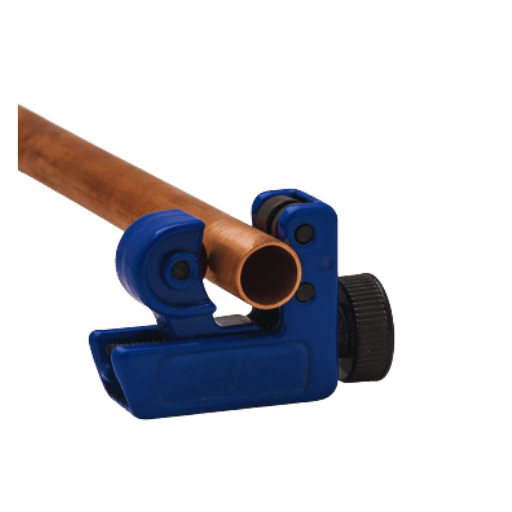
Steps to Clamp the Copper Pipe Securely
1. Measure and Mark the Pipe
Before clamping, measure the length of the copper pipe requiring cutting. The measurement is marked with a felt-tip or pencil to ensure precision.
2. Prepare the Pipe Cutter
Open the jaws of the pipe cutter by turning the adjustment knob in a counterclockwise direction. This will enable the pipe to fit securely within the cutting device.
3. Align the Blade With the Mark
Insert the copper pipe into the cutter so the cutting wheel aligns exactly with the line. The alignment must be perfect for an accurate cut.
4. Secure the Cutter on the Pipe
Tighten the adjustment knob in a clockwise direction until the pipe is securely clamped between the cutting wheel and the support rollers. Do not overtighten, as it will deform the pipe.
5. Double-Check Stability
Check that the pipe is firmly clamped. Moving or wobbling will produce an uneven cut, and one might also lose control of the tool.
Ensuring a Clean Cut with Minimal Burr
1. Smooth Cutter Rotation
Rotate the cutter slowly around the pipe in a smooth, unhurried motion. Excessive downward force is not necessary; consistent pressure yields even cutting and minimum burr formation.
2. Gradual Tightening
Tighten the knob just enough after the cutter completes one full rotation. Too much tightening will dull the cut or even damage the pipe, while too little will not be an effective cut.
3. Deburr Edges
Using a de-burring tool or file, remove any rough edges or burrs after the cutting process. This gives a smooth finish to the edges, preventing any problems in assembly or functioning later on.
Can You Use a Hacksaw for Copper Pipe Cutting?

Choosing the Right Metal Blade for Hacksaws
A hacksaw will do for cutting copper pipes as long as it has the right blade. I suggest a fine-tooth blade for metal cutting, usually in the 24 to 32 TPI range. This type of blade will glide through the comparatively soft metal rather than pulling unevenly. Keep your sawing steady and controlled, as this prevents damage to the pipe and requires little finishing work afterward.
Tips for Cutting Straight with a Hacksaw
1. Secure the Work Properly
Use a good vice or clamp to fix the workpiece in place. Make sure that it is firmly held in position so that any movement during the cutting causes unevenness in the cut.
2. Make Markings for the Cut Line
Straightedge marking is done with a ruler and marker, or scribe, to create a guide that is clear and accurate on the workpiece. Double-check the marking for accuracy.
3. Make a Guide Cut
Start cutting slowly and with steady, quick strokes, just enough to make a shallow groove following the guideline. The guide cut will help keep the blade aligned.
4. Pressure on the Blade Should Be Consistent
The pressure on the blade during the forward stroke should be steady and even, hardly pressing on the return stroke to save the material or blade from any damage.
5. Hold the Blade Properly
Hold the blade at a constant angle, normally 90 degrees, with the material so that the cutting will be straight and parallel.
6. Use Full Blade Length
Make use of the full length of the blade by using long strokes. These long strokes help reduce blade wear while ensuring a straighter cut.
7. Keep Checking Alignment
On occasion throughout the cut, check that the blade still tracks along the guideline. Correct your technique if it’s inconsistent.
8. Sharp Blade
Keep dia Impressively inspired by the Now, tending to the replacement or worn-out and dull ones’ blades comes a shut opportunity to use a sharper blade to limit erroneous and clean-cut.
By applying these tips, you might increase the accuracy and the smoothness of the cuts and get professional results every time.
Common Mistakes to Avoid When Using a Hacksaw
The most common hacksaw mistakes include putting the blade in upside down, not securing the material properly, using the wrong type of blade, exerting too much force, not wearing safety equipment, and not keeping the blade clean and in good condition.
|
Key Point |
Details |
|---|---|
|
Blade Direction |
Teeth face forward |
|
Material Secure |
Use vice/clamps |
|
Blade Type |
Match material |
|
Force Applied |
Avoid excess force |
|
Safety Gear |
Wear protection |
|
Tool Maintenance |
Clean, oil, and inspect |
How to Cut Large Diameter Copper Pipes?

Why a Reciprocating Saw is Ideal for Large Cuts
Because of their versatility and capable nature, reciprocating saws prove to be the best tool for cutting large diameter copper pipes. Essentially, the tool is a reciprocating saw, which uses a push-pull motion of its blade that renders it capable of making precision cuts through thick and dense materials such as copper. When compared with manual woodworking saws, reciprocating saws minimize the labor time and effort required to cut pipes of generally one inch diameter or above.
Reciprocating saws are ideal for this kind of work, as they give the user a good range of straight or angled cuts and blade options to suit the metal. Usually, blades for cutting copper are either bi-metal or carbide-tipped, projecting clean and smooth finishes. The size of this saw is small and fits into tight spaces, making it quite suitable for plumbing and industrial purposes where, most importantly, maneuverability matters. With the correct technique and maintenance, the reciprocating saw is undoubtedly the best tool for big pipe cutting jobs.
Using a Pipe Cutter for Thick Copper Tubing
The first step for the acrylic pipe is to let it fit into the cutter. The cutter is then secured around the pipe, and the blade is tightened to cut across the surface of the copper tubing. Rotating the cutter slowly while continually tightening the blade finishes the job and completely cuts the pipe.
Safety Tips When Cutting Large Diameter Pipes
- Wear Suitable Protective Gears: Always wear safety goggles, gloves, and steel-toe boots against flying debris and accidents.
- Check Tools Before Using: All cutting tools should be checked and maintained for safety; there should be no cracks, no dull blades, and no loose parts that might affect safety or cutting precision.
- Pipe Properly: Secure the pipe in a vice, clamp, or pipe stand, so that it will not move during cutting, potentially causing an accident.
- Keep the Workplace Clean: No unnecessary objects in the working area; proper illumination should remain available to avoid tripping or interference with visibility.
- Practicing Manufacturer’s Guidelines: Use the tools as recommended by the manufacturer and observe the stipulated weight and size limits for the safe use of tools.
- Avoid Excessive Force: Let the tool do its work; do not apply extra force, as it may lead to damage to the tool or loss of control.
- Watch Out for Heat and Sparks (if any): Operations like grinding or sawing might generate heat or sparks- never forget to keep proper ventilation and have fire safety measures in place, such as a fire extinguisher at arm’s reach.
- Take Breaks: Breaks during any extended duration project will keep fatigue away, maintaining your focus and increasing error with potential.
- Store Tools and Materials Properly: When the job is finished, keep the tools in a secure location and dispose of scrap materials to maintain a secure and organized work environment.
What Are the Best Practices for Copper Pipe Cutting?
How to Prevent Burr Formation on Pipe Ends
To keep burrs from forming while cutting copper pipes, utilize a pipe cutter of fine quality made specifically for copper. Make sure that the blade is sharp and that equal pressure is being applied throughout the rotation of the cutter around the pipe. Do not overtighten because this will deform the edges of the pipe. After completing the cut, use a deburring tool or a reamer to smooth the edges, remove any burrs, and give it a neat finish.
Maintaining Your Pipe Cutting Tools for Longevity
The precise maintenance of pipe-cutting tools ensures consistency in their working and also extends their life. Proceed by cleaning after every use to ensure that no dust or any residues are hindering its operations. Check the cutting edge frequently to see whether it has undergone wear or thinning due to use; if disturbed, replace it with a fresh blade for cutting purposes. A thin coating of machine oil is applied to moving parts to protect them from rusting, thereby retaining smooth functionality. Keep the tool stored in a dry place where no moisture or other forms of damage are possible. Periodic indulgence in inspection and maintenance would breed a pipe cutter that would be at its best during the time of use.
Techniques for Ensuring a Straight Cut Every Time
Straight cuts are precise when you have the proper technique and the right tools. First, ensure that your pipe is properly clamped. This process requires a vise or clamp meant for round objects. By doing this, the pipe remains still, resulting in minimal movement. Then draw a clear-cut line with a felt pen or a scriber on the pipe, ensuring that the marking line is perfectly along the cut. Next, line your blades or tools with this line accurately before applying the cutting force. If one uses the manual type of pipe cutter, rotate the cutter around the pipe one complete revolution, evenly applying pressure for the entire duration of rotation so that the cut is perfectly even all over. Do not hurry, uneven pressure or rushed rotation will give you crooked cuts.
Additional methods, such as laser-guided pipe cutters or adjustable guide rails, offer even greater precision. According to recent statistics, these technologies are being increasingly employed by professionals to upgrade accuracy and speed, especially when time is of concern in large volumes or stringent applications. Combining these aids with proper practices will deliver a correct cut every single time, putting a halt to wastage and also polishing the quality of the product finish.
Frequently Asked Questions (FAQs)
Q: What is the best way to cut copper pipe using a copper tubing cutter?
A: Generally considered the best way to cut with a copper tubing cutter, place the cutter over the pipe and tighten it just slightly. Then rotate it partially around the pipe and tighten again. This tightening-rotating process continues until the pipe cleanly breaks off at the cut.
Q: What must I consider before choosing a tool to cut copper tubing?
A: The tool to cut copper tubing depends on the diameter of the pipe, the space available around the pipe itself, and whether one is looking towards a power-operated tool or a manual one. Copper tubing cutters or tube cutters are generally recommended for standard copper pipe.
Q: Can I use a sawzall for cutting copper pipes?
A: Yes, it’s good to go. If the diameter is larger or if it becomes hard to cut straight using other tools, the sawzall should come in handy. Make sure to use the appropriate saw blade intended for cutting metals.
Q: Any precautions I should take when using a power tool to cut pipes?
A: When using a power tool to cut pipes, wear your safety gear, namely goggles and gloves. Make sure the pipe is in position and does not move around. In addition, follow all manufacturers’ instructions.
Q: How can I make straight cuts on copper tubing?
A: Straight cuts on copper tubes and pipes can be made by using a copper tubing cutter or an autocutting tool. When this tool is rotated around the pipe in an even manner, it is designed to cut straight and prevent shifting toward the angle.
Q: After a cut, is it necessary to deburr the pipe’s end?
A: It should be done after cutting. It will give you a smooth edge and will be an important factor when it comes to the fitting and soldering of plumbing applications. By far, the best approach to doing so will be by way of a deburring tool.
Q: How does a tube cutter differ from a hacksaw blade when cutting pipes?
A: A tube cutter is a tool for cutting round pipes and tubes to get cleaner, precise cuts without causing damage to the pipe. On the other hand, a hacksaw blade requires more effort in cutting, and after finishing the task, one may observe uneven edges, which are numb inconvenient to copper tube and pipe cuttings.
Q: Can a copper tubing cutter be used on steel pipes?
A: No, a copper tubing cutter cannot be used on steel pipes as they are generally intended for softer materials like copper. A heavier-duty pipe cutter or a power tool such as a sawzall with an appropriate blade is appropriate for steel pipes.
Q: What should I do if the pipe and tube are difficult to cut straight?
A: When the pipe and tube prove difficult to cut straight with a copper tubing cutter, always use a superior quality copper tubing cutter and apply consistent pressure while working it around the pipe. With any power tool, ensure the pipe is securely clamped to avoid any potential movement during cutting.
Q: Are there any tool reviews that can help me select the best pipe cutter?
A: Yes, certainly. Many online tool reviews compare different pipe cutters in terms of ease of use, durability, and precision. These will be of great help in picking out the very best tool for your particular needs.
Reference Sources
1. Evaluation of tensile property and bending-induced residual stress of slender copper pipes.
- Authors: Sang Young Kim et al.
- Publication Date: October 1, 2006
- Summary: This paper examines the tensile properties and bending-induced residual stresses in slender copper pipes. Although it does not directly relate the findings to cutting methods, knowledge of the mechanical properties of copper pipes will be useful in choosing the proper cutting method. The study uses tensile testing and bending tests to study the behavior of the material under stress that would relate to the cutting and handling of copper pipes (Kim et al., 2006, pp. 636–639).
2. A Comparative Review of Trenchless Cured-in-Place Pipe (CIPP) With Spray Applied Pipe Lining (SAPL) Renewal Methods for Pipelines
- Authors: J. Hicks et al.
- Publication Date: June 21, 2022
- Summary: This review compares various trenchless methods used for the renewal of pipelines, including CIPP and SAPL. It does not candidly consider cutting methods but brings out the primal need for minimizing environmental impact and costs in pipeline maintenance, factors that in some capacity relate to how pipes are eventually cut and renewed (Hicks et al., 2022).
4. Copper