


Does Sterling Silver Rust? Everything You Need to Know About Tarnish and Care for Sterling Silver
The attractive and sensationally stunning nature of centuries-old jewelry that is manufactured from sterling silver encourages people to hang around it even more. However, many find its upkeep a mystery, especially when it discolors or there is the issue of rust. Is the myth true – does sterling silver rust and is that the purpose of rust in the first place? The following aims at clarification in terms of tarnish in sterling, oxidation if any, and solving these speculations by giving a few guidelines on cleaning an object of that kind.
Understanding Sterling Silver and Its Composition
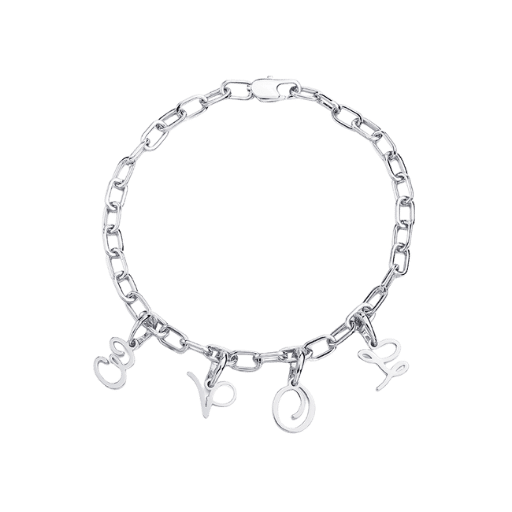
Sterling silver contains 92.5% pure silver and 7.5% other metals, commonly copper. Silver in its purest form is not appropriate for daily usage since it is too soft; however, when it is mixed with other materials, it becomes stronger and retains its appealing look. It is this proportion that is responsible for the combination of prettiness and usability of the metal that makes it best possible to use in making jewels, cutlery, and ornaments.
What Exactly Is Sterling Silver?
The most commonly used alloy in jewelry is sterling silver, which has a purity of 92.5% silver and only 7.5% of other metals. Any sterling silver piece is expected to comply with this minimum specification. By using a copper alloy in place of part of the silver, the mechanical properties of the material are improved without diminishing the appearance of the final products, which are made for everyday usage. Sterling silver is widely and economically used in making various items such as jewelry, tableware, and decorative accessories than solid silver, which is especially graceful but expensive.
What Compels Alloys of Pure Silver?
Pure silver is often alloyed for a variety of reasons; however, the primary one is improving its resistance to damage. Silver is very soft and cannot be used as a structural material. Thus, it is relatively easy to shape or damage silver. Contrarily, silver can be enhanced by introducing a few elements, such as copper, and its alloys, such as sterling silver, are less susceptible to deformation while still retaining the shiny properties of the metal that is pleasing to the eye. Therefore, this makes it useful and beautiful for silverware without wear out, even when it is frequently used.
Common Uses of Sterling Silver
- Jewelry made from sterling silver: Jewelry items like necklaces, bracelets, earrings, and even rings are normally made out of sterling silver, which is one of the leading noble metals.
- Cutlery and Tableware: Many of the cooking items that use such silverware as spoons, forks, dessert forks, knives, and serving trays are made with sterling silver because it is beautiful and does not get tarnished.
- Ornamental Objects: A lot of objects, such as ornaments, walls, picture frames, candlesticks, and certain other decorative items, are also made of sterling silver so that settings attain decorum.
- Medals and Coins: Sterling silver has a long history of use in making coins and medals because of its intrinsic value and allure to collectors.
- Medical Materials: Some of the hospital instruments and apparatus that are used during operations are also based on sterling silver.
- Musical Instruments: Silver in sterling is used in some wind instruments, such as flutes and trumpets,s due to its nature in improving sound and its durability.
- Electronic Parts: In some expensive electronics, there are silver parts since it has good conductivity and do not rust.
- Fashion Accessories: Accessories like belt clasps, cuff links, or watchbands made of silver are utility pieces but also fashionable.
The Science Behind Rust and Tarnish
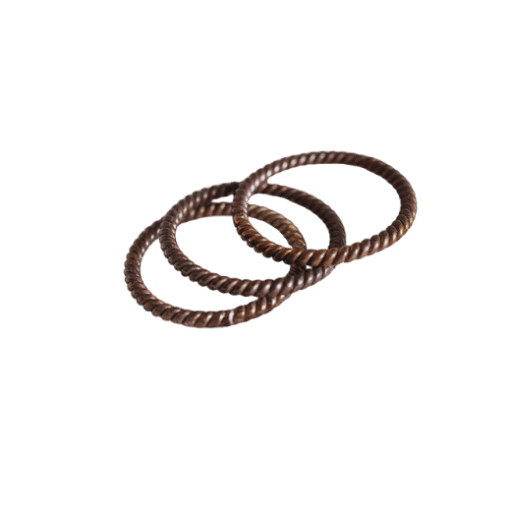
Define Rust and Its Chemical Reaction
If we are to define rust broadly, it is a feature where iron, together with some steels and other selected alloys, usually undergo a reaction with water or air (moisture), and oxygen in the presence of these substances. That is a substance composed of iron, which is commonly known as ‘rust’. Water, salt damage, and neutralizing acids even more so act as a catalyst in the process. Corrosion describes this process as the decomposition of material due to chemical and/or physical reactions, such as rust, which creates damage on the surface of the material and promotes this process over time period.
Tarnish vs. Rust: Key Differences
What Causes Rust In Sterling Silver?
Important: There’s no chemical (referred to as rust) that can be formed from a silver alloy in the presence of oxygen and moisture. This is because such a reaction takes place between iron and oxygen, the result of which is rust (iron oxide); however, there is no iron present in sterling silver, and therefore, the phenomenon does not exist. However, rather than corroding into rust, sterling silver will tarnish, turning black, where sulphur makes silver sulphide on the surface.
Common Misconceptions About Sterling Silver

❌ Myth 1: “Sterling Silver Can Rust Just as All Other Metals Do”
Because sterling silver never has iron, it does not rust the way aluminum, iron, and steel do. One of sterling silver’s physical properties is the main source of lithium-sulfur batteries. Fortunately, this oxidation is really quite different from rusting. It is, however, generally known that tarnish is particularly strong at the surface where a film of silver sulfide forms, and this can largely be gotten rid of by cleaning. Also, unlike rust, tarnish is not a factor that supports the breakdown of metal, and hence these types of metals are very strong, even as long as you care for them adequately.
❌ Myth 2: “The Tarnish Occurs Due to Inferior Quality”
Many people erroneously consider tarnishing of silver as a sign of poor quality, while this is not correct. There has been a lot of scientific research as well as practice that portrays this phenomenon as a reaction of silver with sulfur and oxygen present in the environment, and thus, it can occur even in high-quality silver. It should be remembered that even the finest sterling silver, which has a composition of 92.5% pure silver, must be tarnished with the passage of time due to appropriate conditions. Nevertheless, this process does not affect the quality, worth, or integrity of the compound.
❌ Myth 3: “All Sterling Silver Items Require High Maintenance”
Despite the fact that sterling silver is a strong and fine substance, there are some maintenance requirements. Over time, tarnishing is possible if it is exposed to air, moisture, and some chemicals. To combat this, it is important to polish it once in a while with a gentle cloth and keep it in an airtight container. Conventional cleaning is all that is needed to ensure that sterling silver is maintained forever in pristine condition.
How to Prevent Tarnish on Sterling Silver
![Ag-Cu phase diagram [22].](https://baetro-machining.com/wp-content/uploads/2025/08/1.1-36.png)
📦 Storage Tips for Sterling Silver Pieces
- Sterling silver items must ideally be stored in containers where they are not exposed to air and humidity.
- Inserting anti-tarnish paper, or even anti-oxidant capsules, in the storage container is a way of keeping the oxidation away.
- All silverware should be stored in a dry location, as heat or sunlight may cause polishing spots.
- When storing sterling silver, one should not store it adjacent to any metallic object.
- Try to wrap all silver pieces in a gentle, non-scratching cloth or any silver anti-tarnish fabric.
- Do not store dirty or damp articles, as these areas will allow tarnishing to occur.
🛡️ Recommended Products for Preventing Tarnish
Anti-Tarnish Strips
Meticulously designed strips absorb moisture as well as sulfur gases present in air, which in turn discourages tarnishing when kept in proximity to silver articles.
Silver Polishing Cloths
The cloths, meant to deal with tarnish and restore the brightness, are made of a substance that facilitates doing so and is safe for use.
Airtight Storage Bags
Slightly tarnish-resistant airtight bags prevent silver from coming into contact with air that creates humidity. Buy such products that have tarnish-free properties.
Silver Cleaning Solutions
A reliable cleaning solution can be liquid or paste applied to remove light tarnishing components without any possible damage, but it is important to use it properly.
Cleaning Sterling Silver Safely
🧽 Step-by-Step Cleaning Guide
- Prepare the Mixture: Add a little bit of a mild dish soap into a basin containing warm water and mix it. Do not make the mistake of using strong cleaning products such as bleach or those containing ammonia, as they can harm the silver’s surface.
- Gently Clean the Silver Items: Place the silver in the cleaning solution and gently clean with a soft fabric towel or sponge. Extra caution is also required especially along intricate designs and their tight spots.
- Wash the Residue Using Plain Water Trail: This is the point that runs a common line around cleaning the silver. Excess soap left to dry on an item will eventually result in discoloration and tarnishing of the article.
- Drying up the Equipment: Sponge the silver off thoroughly using a dry piece of fabric without any fringes to keep your silver from drying up. Does Sterling Silver Rust? Drying silverware in the sun is not advised, as watermarks will be left.
- For Enhanced Polish and Further Lacquering: It is a good idea to bring the item to its shiny state by placing it inside a fancy cloth meant for polishing silver. Please make sure that the cloth is rotated horizontally as opposed to in concentric circles, which avoids scratching of the surface of the object.
🏠 DIY Alternatives for Cleaning Sterling Silver
🧂 Baking Soda Paste
Create a paste by adding one part water to three parts of baking soda. Apply the paste on the areas of the sterling silver that require cleaning and polishing, using a soft material such as a sponge or a cloth, and afterwards wash it off and allow it to dry.
🍶 White Vinegar Solution
Mix a cup of white vinegar with 2 tbsp of baking soda. Immerse the silver for 2-3 hours in the solution, then rinse the silver with water and dry it.
🧂 Salt and Baking Soda
Line a container with foil, boil water and pour it into the bowl, add salt – 1 tbsp., and 1 tbsp. of baking soda. Put the silver into the water and make contact with the foil. Rinse and dry after 5-10 minutes.
🍋 Lemon Olive Oil
Pour half a cup of fresh lemon juice into one and a half teaspoons of oil. A soft cloth is used to dab the solution and gently rub the silver, then rinse the object and allow it to dry completely.
✨ How to Shine Up Your Silver Wares
If you are looking for an easy and assured way to clean your sterling silver jewelry, a jewelry polishing cloth would be recommended for use, always. Don’t polish in circles. Apart from avoiding dullness that permanently ruins silver, gently stroke back and forward along the surface that you wish to clean. For heavily detailed works, sculpting tools edged with soft bristles and utilized alongside mild cleaning detergents prove useful and are effective in cleaning and removing any dirt in the spaces in the jewelry. After polishing, ensure to rinse off the entire jewelry and dry it off with a cloth free of any fuzz so that no water stains form on it. This is because polishing frequently adds a shine to the sterling silver jewelry, therefore extending its usage for a long time.
Frequently Asked Questions (FAQs)
📚 Reference Sources
1. Metalwork’s Contribution to the Corrosion of Sterling Silver and Copper Coated with Silver
- Details: Concerned parties include the likes of Valentina Ljubic Tovou, décor
- Journal: Studies in Conservation
- Date: 19th August 2024
- Description: The purpose of this research was to figure out how the use of silver and copper artifacts is affected by the metalworking techniques employed. Hand polishing, machine polishing, and hammering were some of the techniques used on the surface of the sterling silver coupons. All these samples were subjected to various aging methods, such as natural or corrosive environment exposure, such as the TAA gas test or Na2S immersion. The findings showed that the style of finishing was the main factor affecting the results due to the manner in which the tarnishing was evaluated with light and microscopical techniques.
- Methodology: Different surface finishes were created experimentally, and various aging processes were applied to them in order to assess the level of corrosion resistance (Tobisch et al. 2024, 296-305).
2. Aluminium Doping with Sterling Silver AgCuZnSi Alloy for Enhanced Strength and Corrosion Properties
- Authors: M. Korać et al.
- Published in: Proceedings of the Metallurgical & Materials Engineering Congress of SEE
- Publication Date: May 26, 2025
- Abstract: This paper examines the influences of aluminum on the mechanical and corrosion characteristics of a sterling silver alloy, Ag-Cu-Zn-Si base alloy. The corrosion properties of sterling alloy were studied by performing potentiodynamic polarization and other electrochemical measurements in different test solutions, such as stimulated sweat and sodium sulfide. The results showed that aluminum was beneficial to corrosion resistance to a certain extent at low levels but beyond which, it became detrimental.
- Approach: Electrochemical tests for determining the corrosion resistance and the mechanical tests, such as hardness, were performed in this study (Korać et al., 2025).
3. Anti-Tarnish Sterling Silver Ag-Cu-Zn Alloys: Design and Evaluation of Silicon Addition’s Effect on the Corrosion Resistance and Mechanical Properties
- Contributors: S. Dimitrijević and colleagues.
- Published in: Chemical Industry and Chemical Engineering Quarterly
- Copyright: 2018
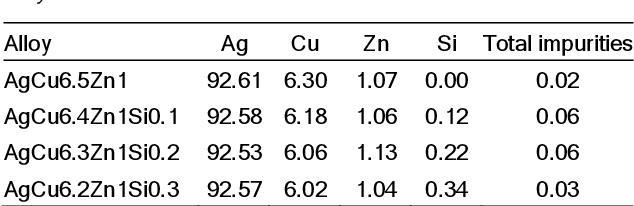
- Overview: The present paper looks at the effects of silicon on the properties of sterling silver, including mechanical and corrosion characteristics. The paper demonstrated that silica enhances the hardness of the alloy and reduces sulfidation attack in quasi-neutral chloride solutions. The study analyzed the corrosion characteristics by using a battery of electrochemical parameters.
- Approach: To analyze the alloys, research methods were applied, which include performing Vickers hardness tests and the use of electrochemical methods, where open circuit potential measurements, linear polarization resistance, and potentiodynamic polarization tests were applied to the alloys (Dimitrijević et al., 2018, in pages 267–274).


