


In one of the most flexible and application-oriented aluminum alloys, Aluminum 6063 enjoys its beauty because of its delicate balance of strength, corrosion resistance, and finish. This alloy is in much demand in architecture, transportation, and consumer products, and plays a massive role in shaping the modern-day culture. But what are the qualities that put Aluminum 6063 in its special league? This blog will give a deep insight into the fundamental properties and characteristics that make it unique, spotlighting the application’s key sectors and bringing out why engineers and manufacturers continue to rank it among their favorites. So, if you intend to learn all the potential of this magnificent material, you have surely landed at the right place.
What are the properties of 6063 aluminum?

The 6063 aluminum product is recognized for its brilliant corrosion resistance, strength, and machinability. This metal also has surface finishing qualities that make it suitable for anodizing and other surface treatments. This alloy welds well and has moderate malleability; hence, it is used in the motive automotive sectors, architectural structures, etc. Another advantage of 6063 aluminum is that it balances lightweight features with durability, which makes it very attractive to the manufacturing industry.
How does the thermal conductivity of 6063 aluminum compare to other alloys?
6063 Aluminum carries a thermal conductivity of about 200 W/m·K. Compared to most other materials, it is an excellent heat conductor. This 6063 material works well in thermal applications but is a little less conducting than 1050 aluminum, which claims to have a thermal conductivity of about 230 W/m·K. The 6063 has just about the perfect balance between thermal conductivity and structural strength, thus making it ideal for applications such as heat exchangers and architectural components, where there is a need for moderate heat transfer alongside some structural strength.
What are the mechanical properties of aluminum 6063?
The Aluminum 6063 possesses desirable mechanical properties and a good balance, making it suitable for various structural applications. Tensile strength varies from 140 MPa (20,000 psi) to 240 MPa (35,000 psi) depending on the temper of the material. The yield strength is 105 MPa (15,000 psi) for T5 temper and 170 MPa (25,000 psi) for T6 temper. It has elongation properties of about 8-10% at break, offering flexibility and resistance against breakage while bending or forming. Hardness measured using the Brinell scale ranges from 60 to 75 HB, depending on the temper. These are supplemented by excellent corrosion resistance and weldability, which makes this alloy suitable for architectural frames, railings, and piping systems.
What is the difference between 6061 and 6063 aluminum?
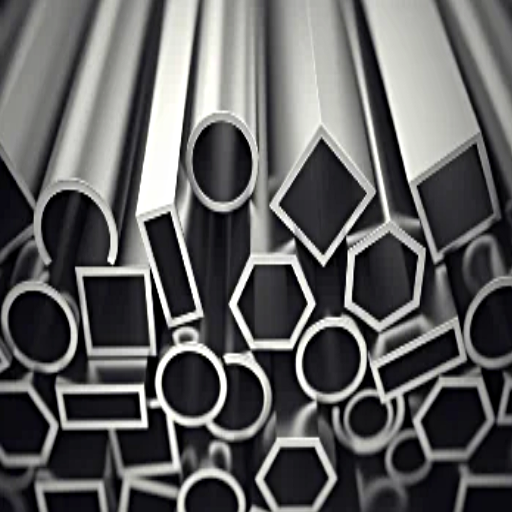
6061 aluminum is known for its strength and takes precedence in structural applications. In comparison, 6063 aluminum is recognized for its resistance to corrosion, surface finish, and ease of extrusion, and thus is the fine aluminum for architecture.
|
Parameter |
6061 |
6063 |
|---|---|---|
|
Strength |
High |
Moderate |
|
Corrosion Res. |
Moderate |
High |
|
Surface Finish |
Good |
Excellent |
|
Extrudability |
Moderate |
High |
|
Machinability |
Good |
Fair |
|
Applications |
Structural |
Architectural |
|
Cost |
Higher |
Lower |
What are the main characteristics of 6061 aluminum?
The different spells cast on the aluminum alloy define its properties. The properties of 6061 aluminum are as follows:
- Strength-to-Weight Ratio
6061 aluminum offers great strength relative to its weight, and thus, it is widely used in structural applications.
- Resistance to Corrosion
The 6061 aluminum, with its higher percentage of aluminum, is resistant to corrosion and wears well in moist environments or marine settings.
- Machinability
It can be machined and formed easily, so it is often chosen for making complex parts and products.
- Weldability
It is weldable and stands weldability processes quite well; construction and automotive usages usually employ this alloy.
- Heat Treatment
The alloy is heat treatable, and thus, it can be treated to improve its mechanical properties through heat treatment, like precipitation hardening.
The 6061 aluminum stands out as one of the preferred standard materials in aerospace, automotive, construction, and marine engineering.**
When should you choose 6063 over 6061?
The specifications for 6063 aluminum probably offer more than those for 6061 when corrosion resistance, surface finish, and extrudability for architectural or visible applications are more important than strength.
|
Parameter |
6063 |
6061 |
|---|---|---|
|
Strength |
Moderate |
High |
|
Corrosion Res. |
High |
Moderate |
|
Surface Finish |
Excellent |
Good |
|
Extrudability |
High |
Moderate |
|
Applications |
Architectural |
Structural |
|
Cost |
Lower |
Higher |
What are the typical applications of aluminium alloy 6063?

Aluminum Alloy 6063 is employed in applications requiring strength with corrosion resistance, with an added aesthetic appeal. Some of the standard applications include:
- Architectural Structures: These comprise window frames, door frames, and curtain walls, which are known for their excellent surface finishes and corrosion resistance.
- Construction: Railings, fences, and structural tubing for buildings and infrastructures.
- Transportation: Roof-racks, automotive trims, and components wherein lightweight and durability are paramount.
- Consumer Products: Furniture, lighting fixtures, and sports equipment due to their versatility and ease of fabrication.
- Electrical Applications: Conduits and Heat sinks because of their good thermal and electrical conductivity.
These applications speak to the adaptability of the alloy for various industries.**
In what architectural applications is 6063 aluminum typically used?
6063 aluminum, also called an architectural grade alloy, finds wide application in construction and architectural areas due to its superb surface finish, good corrosion resistance, and the opportunity to be formed into complicated shapes. Here are five popular architectural applications of 6063 aluminum:
- Window and Door Frames
The essence of the alloy lies in its durability and corrosion resistance, coupled with its good looks, which makes it suitable for fabricating into attractive and sturdy window and door frames.
- Curtain Wall Systems
6063 aluminum frame for curtain wall construction systems in modern buildings has an excellent structural application and offers thin and lightweight solutions to large glass panels.
- Railings and Balustrades
Its extrudable nature allows designing interesting profiles for railings and balustrades, which are commonly found in residential and commercial buildings.
- Roofing and Cladding Panels
The high corrosion resistance of 6063 makes it an excellent choice for use in roofing systems and cladding. This gives it a long life and the ability to sustain minimum maintenance costs in all sorts of climatic conditions.
- Sunshades and Awnings
6063 aluminum is often used in sunshades and awnings. Its mechanical strength and weather resistance make it a good choice for shading structures.
What role does aluminum 6063 play in extrusion processes?
In extrusion, improper use of 6063 aluminum will never go unnoticed due to its excellent extrudability, which easily forms intricate and complex profiles. Having the ability to create delicate and smooth surfaces, 6063 is suitable for applications requiring precise dimensions and pleasing aesthetics. The alloy reinforces good mechanical strength and offers good corrosion resistance, which finds applications in structural and decorative fields. Similarly, the alloy is soft compared to others and therefore extrudes well with fewer energy requirements, leading to cheaper products. Because of these properties, aluminum 6063 is widely used in the construction, automotive, and electronics industries, where custom profiles are often required.
How is 6063 aluminum used in pipe manufacturing?
6063 aluminum has been used to manufacture pipes for a long time because of its good corrosion resistance, light weight, and strength-to-weight ratio. This alloy favors pipes used for architectural and structural applications because it gives a smooth finish to the surface and can be extruded into the exact shapes and dimensions required. The excellent weld characteristics of 6063 aluminum allow for the efficient joining of components, so the fabrication of frameworks, irrigation systems, and transportation tubes is easily achieved. Since it offers good resistance to stresses and factors of the environment, it is often selected for hard-wearing and long-lasting applications.
How does weldability affect aluminum 6063?

Since Aluminum 6063 possesses excellent weldability, it is used where joints need to be strong and dependable. It can be welded using conventional methods such as TIG and MIG welding with little chance of cracking. Good weldability protects the material from deterioration in mechanical properties after welding, which is required for unquestionable structural integrity. Incorrect welding procedures and filler materials weaken the material in essential applications. This feature, therefore, renders aluminum 6063 favorably valuable for construction, piping, and extrusion designs.
What are the best practices for welding aluminum 6063?
While welding in aluminum 6063, it is essential to observe certain best practices to have good welds and the structural integrity of the alloy preserved. Here are five such practices to keep in mind:
- Choose an Appropriate Filler Material
Use welding filler materials such as 4045, 4047, or 5356 to ensure compatibility with aluminum 6063. These fillers maintain strength and avert cracking in the welding area.
- Proper Surface Preparation
Before welding, the aluminum surface must be cleaned well to remove dirt, grease, and any oxidized layers. Use a stainless steel wire brush or chemical cleaners specifically designed for aluminum.
- TIG or MIG Welding Processes
The TIG and MIG welding processes best suit aluminum 6063. TIG welding suits precision work, whereas MIG welding is faster and better for larger works.
- Appropriate Shielding Gas
During welding, 100% argon or a mixture of argon and helium shields the weld. This protects the weld pool from contamination and ensures a smooth weld finish.
- Heat Input Control
Aluminum 6063 is heat-sensitive; too much heat results in warping and weak material. Heat should be applied evenly so as not to overheat the material during the welding technique.
How does the temperature affect weldability?
Weldability of aluminum 6063 depends on the temper, which determines the mechanical properties and weldability of the material. Aluminum 6063 in the T4 and T5 tempers is typically considered more weldable since they have medium strength and ductility enough to resist the development of thermal stresses and weld-induced cracking. While T6 is a softener more prone to tempering effects along the HAZ region, it also brings about additional challenges concerning weldability. Especially for high-strength applications, post-weld heat treatment is an option for recovering the material’s original mechanical properties. Hence, choosing the right temperature in a given application is critical for strong, durable welds.
Reference Sources
- Author: B. Malomo
- Published: July 2, 2023
- Journal: Mechanics of Advanced Materials and Structures
- Key Findings:
- The study implemented a coupled Mori-Tanaka/finite element strategy to analyze the deformation profiles of aluminum 6063 tubes reinforced with coir fiber.
- It was found that the reinforcement layer thickness and loading angles significantly influenced the peak crushing forces, indicating potential for lightweight energy-absorbing structures.
- Methodology:
- Finite element simulations were used to model the deformation under oblique crushing, incorporating damage models to capture the material behavior.
- Authors: S. Whalen et al.
- Published: July 1, 2023
- Journal: Journal of Manufacturing Processes
- Key Findings:
- The study examined the impact of high iron content on the recycling process of aluminum 6063 scrap.
- It was found that high iron levels adversely affected the mechanical properties of the recycled material.
- Methodology:
- Conducted experimental recycling processes and analyzed the mechanical properties of the resulting materials.
3. Top Aluminum CNC Machining Parts Manufacturer And Supplier In China
Frequently Asked Questions (FAQs)
Q: What is the chemical composition of Aluminum 6063 Alloy?
A: The chemical composition of Aluminum 6063 Alloy primarily consists of magnesium (0.45% to 0.9%) and silicon (0.2% to 0.6%) as its main alloying elements. This combination provides good mechanical properties and makes it suitable for various applications.
Q: What are the main properties of Aluminum 6063 T6?
A: Aluminum 6063 T6 is known for its good mechanical properties, medium strength, and excellent corrosion resistance. It also offers good formability and is commonly used in applications requiring complex shapes and a good surface finish.
Q: How does the fabrication process affect Aluminum extrusions of 6063?
A: The fabrication process of Aluminum extrusions 6063 involves heating the alloy to its melting temperature and then extruding it into desired shapes. This method allows for the production of complex designs while maintaining good mechanical properties.
Q: What are the common applications of Aluminum 6063?
A: Aluminum 6063 is widely used in architectural applications, including sign frames, balustrading, and building products. Its good formability and corrosion resistance make it ideal for these uses.
Q: What is the difference between 6063 T52 and 6063 T6?
A: The primary difference between 6063 T52 and 6063 T6 is their tempering process. 6063 T6 is heat-treated to achieve higher strength, while 6063 T52 is in a solution heat-treated state but not artificially aged, resulting in lower strength than T6.
Q: Why is Aluminum 6063 considered an architectural alloy?
A: Aluminum 6063 is considered an architectural alloy due to its excellent surface finish, good formability, and ability to be extruded into complex shapes. These characteristics make it ideal for aesthetic and structural components in buildings.
Q: What are the advantages of using Aluminum 6063 for building products?
A: Aluminum 6063’s advantages for building products include its lightweight nature, resistance to corrosion, good mechanical properties, and ease of fabrication. This makes it a preferred choice for various construction applications.
Q: What is the melting temperature of Aluminum 6063?
A: The melting temperature of Aluminum 6063 typically ranges from 600 to 650 degrees Celsius, depending on its specific chemical composition and alloying elements.
Q: How do aluminum extrusions made from 6063 perform in terms of modulus?
A: Aluminum extrusions from 6063 exhibit a good modulus, contributing to their strength and durability in structural applications. This property ensures the extrusions can support loads effectively while maintaining their shape.


