


Knowing how to analyze the melting point of metals is of great significance in several sectors, from jewelry to industrial manufacturing. Silver has been considered interesting due to its ease of shaping, attractive nature, and its use in many areas. However, what does the term melting point mean, and why is it important? This post provides an in-depth analysis of the concept of melting points, with special attention to silver and how its melting point affects its behavior and applications. Additionally, an attempt will be made to understand the specific melting points of other common metals and assess how they differ in terms of structure and their applications in various sectors. Whether you are an applicant in high school, a professional technician, or someone interested in enriching your knowledge, this resource will be beneficial when it comes to metal melting points.
Introduction to Melting Points

Refers to melting points as the specific temperatures at which a solid turns into a liquid. Pure substances have a well-defined melting point that is invariant under standard atmospheric pressure. The composition, or rather material, at which its melting point occurs, as well as its constituents and specific properties, is mainly affected more so through the strength of the bonds between the particles in the material starting state. That is, some metals, for example, silver, have high melting points due to intense metallic bonding, which makes them suitable for situations that require them to be temperature-insensitive in any way.
What is a Melting Point?
A melting point is the temperature at which a solid changes to a liquid as the temperature increases over time. Particles can move freely as a liquid as the kinetic energy of the particles is greater than the intermolecular forces. A physical property that depends on the state of the pressure, that is, the pure melting point of a substance, is only attained at one atmospheric pressure, which is helpful in the know-how of its quality control and testing. Many mixtures are not expected to undergo such a transformation at the temperatures at which a change in their physical state occurs. This is due to some components being temperature-dependent, pressure-dependent, and concentration-dependent, while others are less dependent; thus, these factors contribute to differences in the melting points of a substance, among others.
Importance of Knowing the Melting Temperature
In many fields of study, it is clear that the determination of the melting temperature of a particular substance is of critical importance. It is used as an indicator of the quality and purity of materials, and even small changes in contaminants can significantly affect the melting point. Specifically, in fields such as pharmaceuticals, careful examination is performed, and any variance in the melting temperature may indicate the risk of contamination; a notable example of this is in the pharmaceutical industry. The significance of information is even more pronounced in fields such as metallurgy and ceramics, as it is often critical to the production environment in which the materials are used, and possessing this knowledge will help avoid these failures. On a related note, in scientific research dealing with the behavior of matter, phase transitions and phase changes are topics that are studied. Melting temperature profiles within materials are also noted, and the data generated from this research also assist in addressing environmental problems.
The Melting Point of Silver

The melting point of silver is 961.8°C or 1763.24°F. This value is of the utmost importance in numerous applications, including jewellery and coin crafting, as well as industrial operations. It is essential to regulate the heat treatment and processing of silver in a manner that allows it to be worked on while maintaining its qualities and features intact.
Exact Melting Point of Silver
The particular temperature at which silver changes from a solid to a liquid is 961.8°C (1763.24°F), as quoted above. This information ensures that silver melts, an element essential for its utilization in various industries that employ metal casting techniques, as well as in several ancillary treatment processes.
Factors Affecting the Silver Melting Point
- Silver’s purity and its ability to melt
The purity of silver plays a significant role in its melting temperature. 99.9 percent pure silver melts at 961.8°C (1,763.24°F) only. However, as modules are added, for example, nickel or copper, there is a decrease in the melting point due to the mixing of the two different metals and changes in their thermal properties.
- Presence of Contaminants(s) in Sample
The presence of contaminants or other components in silver also significantly impacts its melting temperature. These contaminants potentially cause the molecular crystal lattice to become less organized, which means the inward energy required for the solid-to-liquid transformation is reduced.
- State of Environment (Atmosphere)
The external environment, considering the pressure and oxygen content present, may also induce significant shifts in the physical properties of silver as it approaches the melting point. For example, high oxygen pressure can cause silver to have oxide coatings on its surface, thus producing slight alterations in the melting behavior.
- Heating Characteristics
The rate of temperature increase or the rate at which the vessel containing silver may, in combination, increase the impact on the melting point. Keeping in mind that a sudden temperature rise will cause some parts to melt while others will lose their temperature.
- Apparatus and Reagents
The composition of the refractory material or insulating material that comes into contact with the silver also plays a crucial role in the process. The interaction of silver in its molten form with specific components may adversely affect the temperature gradients that should be maintained during melting.
Comparing Silver Melting to Other Metals
The melting point of silver is 961.8°C, and it is higher than lead (327°C) and aluminum (660°C) but lesser than platinum (1768°C) and gold (1063°C).
|
Metal |
Melting Point (°C) |
Melting Point (°F) |
Key Notes |
|---|---|---|---|
|
Silver |
961.8 |
1763.2 |
Moderate temp |
|
Gold |
1064 |
1947 |
Higher than Ag |
|
Platinum |
1768 |
3214 |
Very high |
|
Copper |
1084 |
1983 |
Above Ag |
|
Aluminum |
660 |
1220 |
Below Ag |
|
Lead |
327 |
621 |
Low temp |
|
Iron |
1538 |
2800 |
High strength |
|
Zinc |
419.5 |
787.1 |
Low temp |
|
Nickel |
1455 |
2651 |
High temp |
|
Titanium |
1668 |
3034 |
High temp |
Melting Points of Other Metals

The melting points of metals differ, reflecting the differences in their atomic-level structures and bonding. For example, gold has a low melting point of 1064 degrees Celsius or 1947 degrees Fahrenheit, values that are significantly higher than silver, which has a melting point of 961.8 degrees Celsius or 1763 degrees Fahrenheit (follows 1,263.9 to wow). The melting point of copper is roughly 1,085 degrees centigrade or 1,985 degrees Fahrenheit, only a little bit above that of gold. Meanwhile, aluminum is on the other extreme, as it melts at 660.3 degrees Celsius, which is just below 1,220 degrees Fahrenheit. However, iron, one of the most widely utilized metals in various industries, can withstand even higher temperatures, as it has a melting point of 1538 degrees Celsius or 2800 degrees Fahrenheit, which is one of the highest for common metals. Knowing these facts is crucial for selecting the appropriate materials and processes in metallurgical operations.
Melting Point of Gold
Gold has a well-defined melting point of 1,064 degrees Celsius[1] (1,947.52 degrees Fahrenheit). This property is strongly associated with the nature and properties of pure gold in various application fields, including dental restoration, electrical components, and the copper industry. This point is relatively high, indicating that the item is highly stable at high temperatures and easy to work with, making it straightforward to combine with other substances or give it new shapes, as it is easily moldable. Moreover, the fact that natural gold retains its properties even after undergoing a significant amount of melting and solidification is the most outstanding merit of this application for manufacturing and recovery purposes.
Melting Temperature of Common Metals
There are significant differences in the melting points of most metals used in day-to-day applications, which are primarily defined by the metal’s structure and physical properties. For example, at average temperatures, gold has a melting point of approximately 1,064 °C (1,947 °F), allowing the metal to perform at higher temperatures. Silver, a ubiquitous metal used in conjunction with gold in ornaments and as a component in electronics, has a melting point of approximately 961 °C (1,762 °F). Copper, another standard metal used in the construction of electrical cables and components, melts at 1085 °C. One important example is that of steel that melts at around 1538° C (2800° F) that is why it is used in construction and other industries. Thus, the application of such metals can be tailored based on their melting point capabilities, as well as the technology employed in the various aspects of metal shaping.
How Silver Melting Compares to Other Precious Metals
Long before that, many would want to find out where the silver melting point stands among others, and it is likely to be lower than that of the majority of precious metals, such as gold and platinum. This expectation, referenced in the melting points of gold and platinum, is accurate in comparison with silver, which has a lower melting point of 1,762 degrees Celsius or 961 degrees Fahrenheit. While gold is famous for its malleable nature and is appreciated for use in jewelry, it melts slightly in air at 1064 degrees Celsius or approximately 1940 degrees Fahrenheit. The lower and the higher of these metals, sdifferent1996, is j1465 high metallic, and so there are reportedly very few industrial applications for them. The most common being the development of nanoparticles for use in biomedical and catalysis. For example, copper and most ferrous metals reach their melting points at relatively high temperatures. Silver and gold, on the other hand, facilitate “work in embrittlement surgically,” that is, metalmaking in which precise designs can be formed over grains and other defects. Titanium’s remarkably high melting point is particularly significant.
The Melting Process and Its Implications
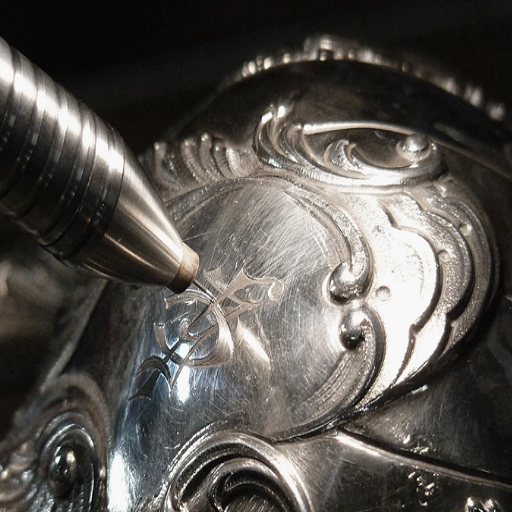
Melting is an example of a phase change in which a solid is converted into a liquid after absorbing sufficient heat to reach its melting point. The importance of this procedure lies in its restriction on the processing of silver, gold, and platinum, including shaping the materials, creating alloys, and utilizing these items in the manufacturing process. For example, the low melting points of silver and gold are ideal for use in intricate craftwork and jewelry, unlike the case of platinum, which cannot be melted without the use of a torch. This information is significant for industries to optimize the selection of metals and their alloy applications to enhance the effectiveness, wear resistance, and other properties of their products.
Boiling Point vs. Melting Point of Silver
Silver, which is not pure, does not have a fixed melting or boiling point. Therefore, the melting and boiling points of such an alloy change, allowing the mass of different phases to be determined. The lower one can attain the melting point, and the higher one can reach the boiling point.
| Parameter | Melting | Boiling |
|---|---|---|
|
Temp (°C) |
961.8 |
2162 |
|
Temp (°F) |
1763.2 |
3924 |
|
Phase Change |
Solid-Liq |
Liq-Gas |
|
Energy Need |
Lower |
Higher |
|
Applications |
Casting |
Vaporizing |
Applications of Molten Silver in Industry
Molten silver is a versatile element in various industrial processes, owing to its special properties, whether physical or chemical. In brief, some of the main applications of molten silver in the industry include the following:
- Electronics Manufacturing
The electronic manufacturing sector utilizes molten silver for the fabrication of conductive materials, including printed circuit boards, as well as electronic components such as solder and electrical connectors. Distinctively, the good conductivity of silver ensures high efficiency in electrical operations.
- Jewelry and Ornament Production
Silver possesses resources that are easy to work with and a bright color, which eases the craft of making fine jewelry and ornamental embellishments. The particular physical properties of the metal in its molten state enable it to fill the smallest spaces with the most intricate forms without loss of precision in casting.
- Silver Coating and Plating
While making such products many objects where attempts to put coating with the help of other physical methods are ineffective are made using coating with the help of molten silver. They prefer this material for producing a variety of items, ranging from mirrors and utensils to various decorative objects, due to its ability to reflect light and its attractiveness.
- Purely Chemical Manufactures the Catalyst
In fact, as part of pure chemical manufacture, molten silver is used to produce catalysts that help catalyze specific reactions involved in the production of formaldehyde and ethylene oxide. In the case of high-temperature operations, such as those involving these two, the chemical can be used, and it remains stable, while its reactivity remains higher.
- The Technology of the Sun
In the use of photovoltaic cells containing electrical contacts, the broad use of molten silver has been limited, despite its consideration as crucial. It contributes to making electrical contacts that are applied in the formation of solar energy systems through the panels in a very active manner.
It is clear from the extensive use of molten silver that the metal has numerous advantages in various sectors of the current industrial world.
Reference Sources
1. Survey of Transient Process During Melting of Silver Below the Equilibrium Melting Point
- Authors: Miao Liu et al.
- Journal: The Journal of Chemical Physics
- Publication Date: December 27, 2019
- Citation Token: (Liu et al., 2019, p. 241103)
- Summary:
- This study investigates the melting behavior of silver nanoparticles at the micro and atomic levels, revealing that the melting process is not a direct transformation from solid to liquid but involves a gradual transition through an intermediate state.
- Methodology: The researchers employed advanced techniques, including confocal scanning laser high-temperature microscopy, differential scanning calorimetry, and environmental transmission electron microscopy, to observe the melting process of silver nanoparticles with diameters ranging from 60 to 120 nm. They found that the melting point of these nanoparticles decreased by 100-400 °C compared to bulk silver.
- Authors: Makoto Higashino et al.
- Journal: Journal of Physical Chemistry C
- Publication Date: December 3, 2020
- Citation Token: (Higashino et al., 2020)
- Summary:
- This research focuses on enhancing the plasmonic properties of silver nanoparticle arrays through atomic layer deposition and annealing processes that occur above the melting point of silver.
- Methodology: The study involved coating silver nanoparticles with thin films and subsequently annealing them at elevated temperatures to improve their optical properties. The results indicated significant enhancements in the plasmonic response, which is crucial for applications in sensors and photonic devices.
3. Size and Shape Dependent Melting Point Depression of Al, Ag, Au, and Pb Nanoparticles
- Authors: Seema Redhu et al.
- Journal: Journal of Metastable and Nanocrystalline Materials
- Publication Date: April 7, 2025
- Citation Token: (Redhu et al., 2025, pp. 1–16)
- Summary:
- This paper discusses the melting point depression observed in nanoparticles of silver and other metals, emphasizing how size and shape influence melting temperatures.
- Methodology: The authors reviewed various melting models, including the Gibbs-Thomson equation and surface phonon instability models, to analyze how reduced particle size leads to significant decreases in melting temperature. They also examined the effects of different nanoparticle shapes on the depression of their melting points.
Frequently Asked Questions (FAQs)
What is the melting point of silver?
The melting point of pure silver is approximately 961.8°C (1763.2°F). This is the temperature at which solid silver transitions into liquid silver, making it a key characteristic of the metal.
How does the melting point of sterling silver compare to pure silver?
The melting point of sterling silver is slightly lower than that of pure silver due to its alloy composition, which typically contains 92.5% silver and 7.5% other metals, like copper. This addition affects the melting temperature, usually lowering it to around 893°C (1639°F).
Is the boiling point of silver higher than its melting point?
Yes, the boiling point of silver is significantly higher than its melting point. Silver has a boiling point of approximately 2162°C (3924°F), which means that it must reach a significantly higher temperature to convert from a liquid to a gas.
Can you melt silver at home?
Yes, you can melt silver at home using a suitable furnace or torch. However, it is crucial to ensure that you are working safely and have the right equipment to handle the high temperatures required for melting silver.
What is the silver melting temperature for different silver products?
The melting temperature of silver can vary depending on the type of silver product. For fine silver, which is 99.9% pure, the melting point is around 961.8°C, while sterling silver, which contains alloys, has a lower melting point. Knowing the specific melting temperatures is essential for working with different silver products.
How does the melting point of silver compare to other metals?
When compared to other metals, silver has a relatively low melting point. For example, gold has a higher melting point of approximately 1064°C (1947°F). This property makes silver easier to melt and work within various applications.
What is the process of removing impurities from silver?
The process of removing impurities from silver often involves refining techniques that can include electrolysis or chemical treatments. This purification can help achieve fine silver, which has a higher melting point than alloyed silver, making it ideal for producing high-quality silver products.


