


When selecting a material that provides a perfect blend of strength and weight, very few materials are as attractive as 2024 aluminum. This high-strength alloy is appreciated and favored in industries such as aerospace and automotive applications due to its high performance. However, the areas where it is used are challenging and require durability without much space, making it a sought-after material. So, that brings us to 2024 aluminum, and what is so special about it, and how can your next project use it? This chapter will discuss the peculiar characteristics that contribute to the material’s peculiarity, how it is used, and why it is preferred by engineers and producers throughout the globe. Whether you are a professional in the industry or just somebody interested in the materials that define the modern world, this piece will go a long way in widening your understanding of everything 2024 aluminum.
What is 2024 Aluminum, and What Are Its Key Properties?
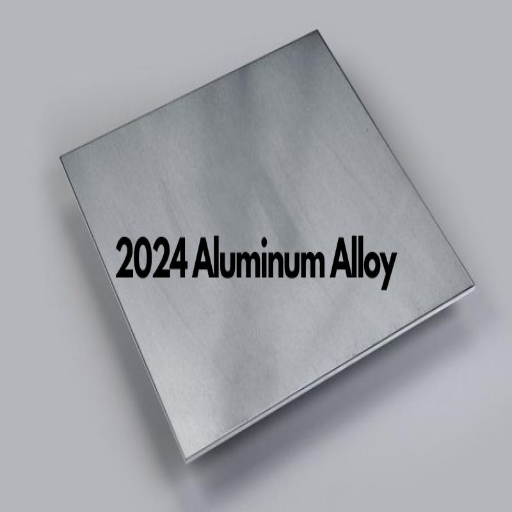
2024 aluminum is a standout material mainly made of an aluminum base, strengthened by the inclusion of copper and elements such as magnesium, manganese, and iron. Its outshining weight/strength ratio makes it the sturdiest aluminum material suitable for high-performance applications. Besides the brilliance fatigue resistance, 2024 aluminum diminishes corrosion resistance properties compared to the other aluminum types. This is why some have considered using additional solutions to make the aluminum suitable for its intended purpose. Esteemed as a one-of-a-kind metal in the sense of properties, it easily finds a place in the aerospace, military, and automotive industries.
Mechanical Properties of 2024 Aluminum Alloy
Engineers and fabricators know that the famous 2024 aluminum alloy’s high strength/mechanical properties make it an essential material for structural purposes in engineering. The alloy has tensile strength levels at nearly 446 MPa (65,000 psi), yielding strength at about 308 MPa (44.6 ksi) in T3 condition. The material elongates 10-20% within the form in most conditions. And the elastic modulus is around 71 GPa (10.3 Msi). Despite the high mechanical strength, the materials have the resistance capacity for corrosion; however, they may be reinforced with some substance as protective and strengthening coatings. Such materials’ strengths are most useful when used in specific devices that undergo mechanical strain and predominantly cyclic straining.
Strength-to-Weight Ratio of 2024 Aluminum Plate
The aluminum plate of 2024 type is popular for the best ratio of resistivity and density, the factors that affect its weight. It is no wonder that most of the alloys used in deformed states are aluminum alloys, especially the 2024 type, owing to their high tensile strength compared to their weight. In such situational requirements where performance efficiency, such as saving fuel or optimizing the load, is required, this feature is handy. With a density of about 2.78 g/cm³, the alloy 2024 features a tensile strength of around 470 MPa (68 ksi), making it a beautiful material. These extraordinary characteristics ensure that the 2024 aluminum plate hasn’t gone the way of many other materials, which were once very popular but are no longer used.
How is 2024 Aluminum Used in Aerospace Applications?
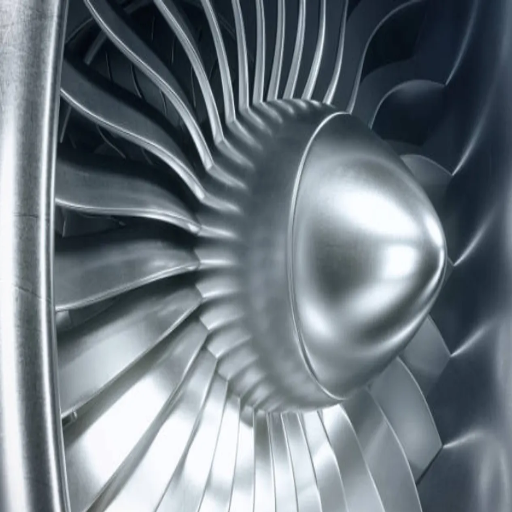
2024 Aluminum is a respected material in aviation because of its favorable lightweight without compromising strength properties and its fatigue characteristics. Every day, 2024 Aluminum can be seen in appreciably loaded structural details such as fuselage longarons and crossbeams, wing spars and components, airframe assemblies including its skin. High strength and high fatigue endurance levels are required in all such structures, and require aluminum. Light yet strong aluminum strain can be used widely to optimize aircraft performance and fuel efficiency. The fly-away optimization concept of this engineering material also stems from this fact. Additionally, these characteristics, together with the chip removal capacity and the ability of this composition to be joined by the widest range of methods, make Aluminum useful in aviation applications.
Applications of 2024 Aluminum in Aircraft Manufacturing
Recognized for its exceptional tensile properties and high fatigue strength, the 2024 aluminum alloy is often used as a structural material in aerospace. Reports based on the latest surveys indicate that this alloy is applied in primary structure components, including some parts in wing spars, fuselage ribs, and engine fittings. For aspects such as the fabricated piece weight undergoing considerable variation during a cycle of flight or an application, the use of 2024 aluminum without any concerns has increased. Most importantly, research into the fabrication processes of the alloy in question has considerably enhanced its abilities regarding corrosion and other forms of attack, especially in conjunction with environmental protective factors. Thus, it is possible to argue that the characteristics mentioned in the 2024 aluminum are perfectly adapted to ensure the accomplishment of a safe, effective, and automated flight in a qualified 2004 aircraft.
Benefits of Using 2024 Aluminum for Fuselage and Wing Structures
- Maximum Capability-To-Mass-Ratio
Compared to other materials, 2024 aluminum has very high properties, yet the phenomenon of gravity in plane structures makes the weight very important.
- Even More Importantly, Increased Life Over Circumstances
It is also possible to practice using these materials for high-loaded assemblies such as wings or fuselages, particularly when the aircraft is ready to fly. They assume these components will always be blackened because such materials can be machined, blackening the last machining.
All corrosion coatings, including 2024-T3 protectives, exhibit significant corrosion resistance. However, the nature of some environments, including aircraft service, renders the protective coatings ineffective, resulting in premature failure of such bright materials.
The 2000 series of alloys has a greater corrosion issue, mainly due to the machining qualities utilized. Most of the treatable intrinsic features tend to worsen the machinability of the structural parts.
- High Levels of Machinability
Manufacturing is quite straightforward due to this material’s relatively machinability, which is especially important for fabricating the structural components.
- Providing Extended Functioning In Adverse Conditions
2024 still has improved tensile and impact fatigue performance under the same adverse working loads. No aging occurs inside working parts up to the specified limit of their strength, where no more strain can be put on the parts.
Comparing 2024 Aluminum vs. 6061 Aluminum in Aerospace
On one hand, 2024 aluminum alloy displays enhanced strength and resistance to wear, making it suitable for use in the aviation industry. On the other hand, 6061 aluminum alloy is malleable, able to withstand rust, convenient for joining, and often used in general construction.
|
Parameter |
2024 Aluminum |
6061 Aluminum |
|---|---|---|
|
Strength |
High |
Moderate |
|
Fatigue |
Excellent |
Moderate |
|
Corrosion |
Moderate |
Excellent |
|
Weldability |
Poor |
Excellent |
|
Machinability |
Good |
Excellent |
|
Cost |
Higher |
Lower |
|
Applications |
Aerospace |
General-purpose |
|
Composition |
Cu, Mg, Mn |
Mg, Si |
|
Heat Treatable |
Yes |
Yes |
|
Versatility |
Niche |
Broad |
What Are the Advantages of 2024 Aluminum Over Other Alloys?
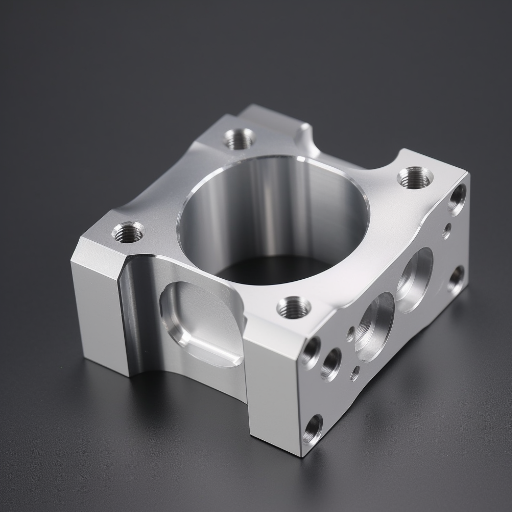
2024 Aluminum offers various benefits compared to other alloys, especially where aerospace is concerned. At the top of these benefits are as follows:
- High Strength-to-Weight Ratio
It is safe to use as a structural component in aircraft because of its incredible strength-to-weight ratio.
- Better Fatigue Life Expectancy
2024 aluminum performs splendidly in resisting the effects of fatigue, increasing its ability to hold up to cyclic load and stress conditions.
- Optimum Converting Capability
It is mainly used as separate parts or makeshift components that are scored, heat pressed, embossed, or grafted onto other products. In other words, it can be machined easily.
- Correct Post Processing Ensures Against Erosion
While it is not without additional lightweight precautions, moderately increasing its corrosion resistance in either the atmosphere or the liquid medium used for testing would be possible.
For these reasons/adjectives, 2024 aluminum is extensively used in numerous applications requiring high strength, fatigue resistance, and low weight.
High Strength and Fatigue Resistance of 2024 Aluminum
2024 aluminum is praised for having better mechanical properties and offers a lot of great applications in the building industry, as it can cope with a high level of mechanical loading. Additionally, the material can also withstand a good deal. Lots of stress comes from repetitive stress-related fatigue. This situation presents where the material’s high durability is compromised by aging, which is motivated by its high copper content. This not only helps increase the tensile strength levels of the material, but at the same time allows the material to be machined and bent and undergo other complex processes without the fear of damage. The commercial plane and automobile solve a variety of military and business applications quite successfully. Alongside, Lightweight aspects are generally possible in 2024 aluminum, offering an astonishing enhancement of efficiency in engineering and design.
Corrosion Resistance in 2024 Aluminum Compared to Other Alloys
2024 aluminum does not have high corrosion resistance like 6061 and 7075, and may necessitate the addition of protective coatings for its uses.
|
Parameter |
2024 Aluminum |
6061 Aluminum |
7075 Aluminum |
|---|---|---|---|
|
Corrosion |
Low |
High |
Moderate |
|
Protection |
Coating needed |
Minimal |
Coating optional |
|
Strength |
High |
Moderate |
Very High |
|
Applications |
Aerospace |
General-purpose |
Aerospace, Defense |
|
Composition |
Cu, Mg, Mn |
Mg, Si |
Zn, Mg, Cu |
|
Cost |
Higher |
Lower |
Higher |
Weldability of 2024 Aluminum vs. 6061 Aluminum
2024 aluminum is suitable for welding only for low copper content, as compared to 60661 aluminum, which has a high welding ability.
| Parameter | 2024 Aluminum | 6061 Aluminum |
|---|---|---|
|
Weldability |
Poor |
Excellent |
|
Cracking Risk |
High |
Low |
|
Techniques |
Specialized |
Standard |
|
Applications |
Aerospace |
General-purpose |
|
Cost |
Higher |
Lower |
What is the Heat Treatment Process for 2024 Aluminum?
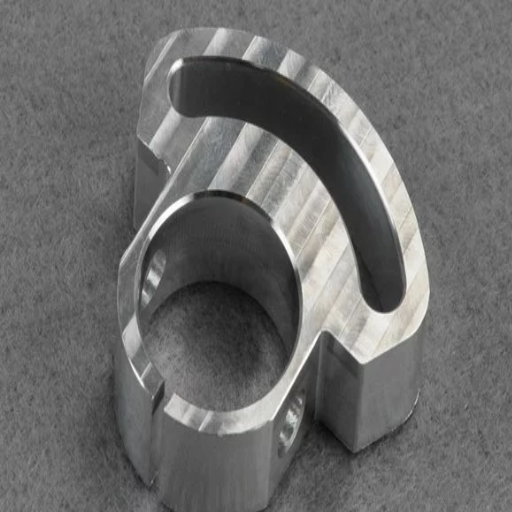
2024 aluminum’s heat treatment comprises a set of operations that include solution treating, quenching, and aging to produce the most satisfactory mechanical characteristics. The material is heated to the melting temperature of 920°F (493°C), causing the alloying elements to dissolve the problems presented and maintain the material in a solid state. This heating process makes heating immersion into water to quench very important, thus locking in the potential strength of the material by ensuring the alloying elements stay in the solid state. Later, the whole process is resolved by aging, sometimes done naturally at room temperature, i.e., T4 temper, or by soaking it in an oven, T6 temper, to let the strengthening or hardening effect proceed by uniform precipitation of the alloying elements.
The Role of Heat Treatment in Enhancing 2024 Aluminum Properties
A well-designed heat treatment is critical in enhancing the mechanical and structural properties of the 2024 aluminum alloy. Recent research confirms that, as an alternative to these conventional heat treatment processes, quenching and aging will increase not only the ultimate tensile strength but also the fatigue strength of the material. These performance gains make the alloys there more and more relevant and suitable for industrial sectors, such as aeronautics and the automobile industry. Good heat treatment essentially supports high strength and workability in the material, which is necessary for advanced products. Moreover, progress in heat treatment processes, such as the use of controlled cooling and sensible heat treatment cycle, makes it possible to adjust the desired properties of these products depending on customer requirements. This indicates the industry’s ever-present desire to use technology to create new and high-performance materials for contemporary engineering practice problems.
Fracture Resistance of Heat-Treated 2024 Aluminum
Among the several attractive mechanical properties of the heat-treated 2024 aluminum is its resistance to cracking. This material is characterized by outstanding toughness and resistance to cracks, making it an ideal candidate for applications with high static loads like aerospace applications… This level of mechanical properties is revealed only in 2024 alloy tempered, where 2024 nowadays is predominantly treated by the T3 or T351 temper. This increases resistance to deformation or elongation compared to mechanical properties resulting from” cold rolled material. Such a novel understanding of mechanical properties allows the application of other energy absorbers in the automobile bumper systems, adapting very simple sheet metal stamping techniques. However, it should be noted that the resistance enhancement associated with armorplate on the base of available material is only one of the ways.” – Improve. It is an absolute requirement that appropriate monitoring measures are established, and their number is increased with the increase in temperature.
Reference Sources
- Authors: Piotr Myśliwiec et al.
- Published: March 22, 2024
- Journal: Materials
- Key Findings:
- The study optimized friction stir welding (FSW) parameters for 1.6 mm-thick 2024-T3 aluminum alloy sheets.
- Achieved an FSW joint efficiency of 93% relative to the base material.
- The maximum tensile strength of the joints was found to be 87% relative to the base material.
- Methodology:
- Employed a 3 × 3 factorial design to explore tool rotation speeds (1100 to 1300 rpm) and welding speeds (140 to 180 mm/min).
- Utilized machine learning models (Random Forest, XGBoost, and MLP-ANN) for hyperparameter optimization and parameter regression, achieving over 98% accuracyhttps://www.semanticscholar.org/paper/Optimization-of-2024-T3-Aluminum-Alloy-Friction-and-My%C5%9Bliwiec-Kubit/481496908df99fc5c294cc400b6ea8a9ffc3e223?utm_source=api.
- Authors: Jing Zhao et al.
- Published: March 12, 2024
- Journal: Coatings
- Key Findings:
- The 2024 aluminum alloy showed significant susceptibility to corrosion in marine atmospheric environments.
- Pitting corrosion was observed initially, transitioning to general corrosion after prolonged exposure.
- The formed corrosion product layer had a protective effect, but its effectiveness diminished over time.
- Methodology:
- Employed weighing, morphology observation, phase analysis, and electrochemical testing to study corrosion behavior(Zhao et al., 2024).
3. High-strength and crack-free welding of 2024 aluminium alloy via Zr-core-Al-shell wire
- Authors: Jun Jin et al.
- Published: February 26, 2024
- Journal: Nature Communications
- Key Findings:
- Developed a zirconium (Zr)-core-aluminum (Al)-shell wire for welding, achieving crack-free joints.
- The tensile strength of the welds was comparable to that of friction stir welding joints.
- Methodology:
- Utilized an oscillating laser-arc hybrid welding technique to control solidification during welding(Jin et al., 2024).
4. Corrosion-Fatigue Behavior of Welded Aluminum Alloy 2024-T3
- Authors: V. K. Yadav et al.
- Published: April 1, 2023
- Journal: International Journal of Fatigue
- Key Findings:
- Investigated the combined effects of residual and mean stresses on the fatigue behavior of welded 2024-T3 aluminum alloy.
- Identified critical factors influencing fatigue life and performance under cyclic loading.
- Methodology:
- Conducted experimental fatigue tests and analyzed the results to understand the impact of welding on fatigue behavior(Yadav et al., 2023).
5.Top Aluminum CNC Machining Parts Manufacturer And Supplier In China
Frequently Asked Questions (FAQs)
Q: What is the chemical composition of 2024 aluminum alloy?
A: The chemical composition of 2024 aluminum alloy includes copper as the primary alloying element, typically around 4.4% to 5.0%, along with small amounts of other elements such as manganese, silicon, magnesium, and titanium. This composition contributes to its high-strength properties.
Q: How does 2024 aluminum compare to 6061 aluminum alloy?
A: 2024 aluminum alloy is known for its high strength and good fatigue resistance, making it suitable for aircraft applications, while 6061 aluminum offers better corrosion resistance and formability. The choice between them depends on the specific requirements of the application.
Q: Can you buy 2024 aluminum in various thicknesses?
A: Yes, you can buy 2024 aluminum in various thicknesses, including plates and sheets. The thickness options are typically available in stock sizes, allowing for customization based on the needs of different industrial applications.
Q: What are the heat treatment properties of 2024-T351 aluminum?
A: The 2024-t351 aluminum alloy undergoes a heat treatment process that enhances its strength and reliability. This temper designation indicates that the alloy has been heat-treated and artificially aged to improve its mechanical properties.
Q: Is 2024 aluminum resistant to corrosion?
A: 2024 aluminum is less corrosion-resistant than other aluminum alloys, such as 6061. However, it does offer good fatigue resistance and is often used in applications where strength is more critical than corrosion resistance.
Q: What industrial applications commonly use 2024 aluminum?
A: 2024 aluminum is widely used in the aerospace industry, particularly in aircraft structures and components, due to its high strength-to-weight ratio. It is also applied in various industries in automotive, marine, and other high-strength applications.
Q: How is the extrusion of 2024 aluminum performed?
A: The extrusion of 2024 aluminum involves forcing the material through a die to create desired shapes. This process is commonly used to produce structural components that require high strength and precision.
Q: What is the importance of the primary alloying element in 2024 aluminum?
A: Copper, the primary alloying element, significantly impacts the mechanical properties of 2024 aluminum. It contributes to the alloy’s high strength and good fatigue resistance, making it ideal for demanding applications.
Q: Can 2024 aluminum be used for friction welding?
A: Yes, 2024 aluminum can be used for friction welding, a process that joins materials by generating heat due to friction. This technique is beneficial for creating strong, reliable joints in high-strength applications.
Q: What are the advantages of using 2024 aluminum in aircraft?
A: The advantages of using 2024 aluminum in aircraft include its high strength, good fatigue resistance, and ability to maintain structural integrity under stress. These properties are essential for ensuring safety and performance in aerospace applications.


