Titanium isn’t just lightweight aviation gear or hip-joint implants; it’s the metal engineers turn to when they need an unusually high strength-to-weight ratio along with built-in resistance to sea salt, jet fuel, and even human tissue. In the machine shop, however, it mocks conventional cutters because the alloy absorbs heat like a sponge yet springs back harder the moment the tool lifts. This article strips away the myth and gloom, laying out straightforward observations rather than polished lectures-bits of shop-floor wisdom honed during many trial-and-error runs. You will hear about milling speeds that feel reckless until the chips start flowing, drills sharpened on-site because cobalt never lives long in titanium, and coolant fogs that cool nothing yet keep the carbide industry honest. Take the pages as a living checklist rather than gospel; every spindle behaves differently, but the pointers here at least offer a sensible starting line.
Why is Titanium Considered Difficult to Machine?
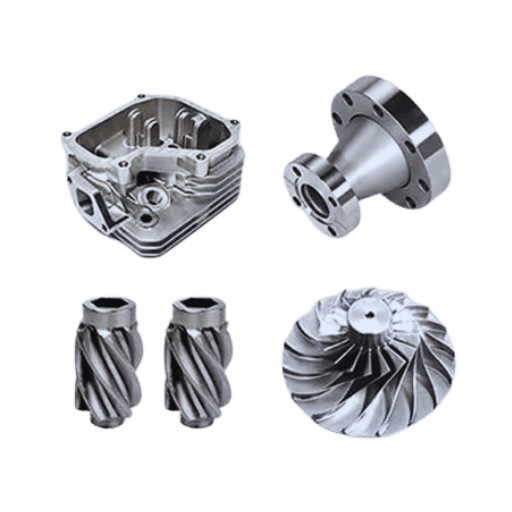
Machinists routinely rank titanium among the trickiest metals because its physical profile defies automatic solutions. The alloy absorbs cutting heat so quickly that edge-tool temper vanishes long before the workpiece yields. Strong tensile value coupled with a low elastic modulus engineers a noticeable spring-back, throwing tolerances off by unexpected margins. A further complication arises from the metal’s eagerness to oxidize at elevated temperatures, pushing operators toward coated inserts and controlled atmospheres to finish the job within specification.
Understanding the Hardness of Titanium
The hardness of titanium depends largely on its grade; commercially pure titanium typically registers 70 to 80 on the Brinell scale. By contrast, the widely used Ti-6Al-4V alloy can climb as high as 350 HB, a difference that underlines the metal’s adaptability in settings where lightweight must co-exist with remarkable strength and wear resistance.
The Impact of Low Thermal Conductivity
Titanium is machined with difficulty because its thermal conductivity is about 60% lower than that of steel. The difficulty stems from the fact that heat produced during operations such as cutting or machining is not conducted away to the surrounding material, which results in the tool wearing out quickly, as well as causing distortion in the workpiece. A solution to this would be to use cutting tools with a thermal barrier, low-powered tool speeds, efficient cooling systems, and high-pressure coolant. More recent developments in technology, for instance, adaptive control and tools with sophisticated edge configurations, have also greatly helped in making this trait more bearable without hindering the ability to machine titanium very well, and sectors that include aerospace, healthcare, and automotive have benefited.
Challenges with Tool Wear and Tool Life
In machining circles, tool wear and tool life are often treated as the first indicators of economic health on the shop floor. When lathe inserts are invited to turn titanium alloys, even a modest loss of sharpness can spike scrap rates, delay deliveries, and quietly inflate budgets. Cutting velocity, spindle heat, and the phase makeup of both the insert and the workpiece decide how soon that modest loss becomes a crisis. Coated-carbide edges, paired with dialed-in feeds and careful coolant use, still rank among the simplest remedies. More scientifically, vibration sensors and software-driven alarms are nudging foremen toward predictive maintenance before the chatter turns destructive.
What are the Best Techniques for Titanium Machining?
Using Carbide Tools for Efficiency
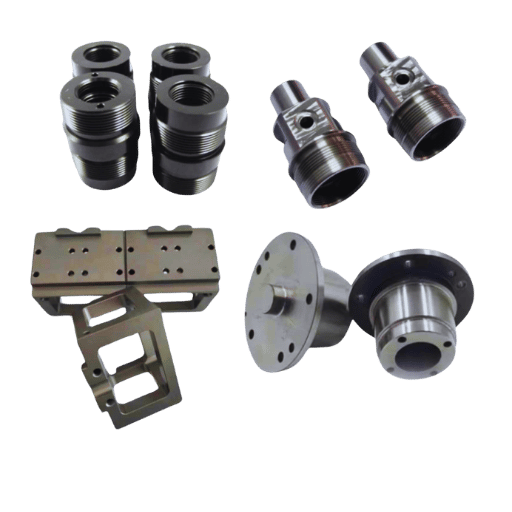
Among the tools for cutting titanium alloys, especially in manufacturing, carbide ones have been identified as the most suitable due to their high hardness and great ability to resist heat. This means the tools can operate within the high circumstances common when working with titanium alloys, and can offer better wear resistance and extended life for other tools. In the period under review, among the developments in carbide tools technology is the addition of multiple-layered coatings such as titanium aluminum nitride (TiAlN) and the adjustment of the tools’ geometry, which has been shown to greatly improve the performance of cutting processes. In other words, it is advisable to use carbide-based tools in conjunction with proper high-speed machining parameters such as lower velocities and higher loads to avoid overheating and related problems. Jetting of coolants can also enhance chip removal and heat control, which are important in any machining activity, thus improving the efficiency during and how titanium is machined.
Importance of Coolant in the Machining Process
Nothing heats up a cutting tool faster than the friction of hard metals against hard inserts, and that’s exactly where coolant comes in. Engineers have long noted that roughly three out of every four machining headaches trace back to runaway temperatures and chips that refuse to budge. High-pressure nozzles or through-the-tool piping now blast fluid directly at the action, sparing the tool from thermal shock while whisking shavings out of the gap. Modern formulations even tolerate the frantic speeds demanded by today’s accelerative milling and drilling cycles, letting manufacturers push feed rates without gambling on surface finish. Given the real dollar cost of tool wear and scrap, picking the right coolant and aiming it correctly can make the difference between profit and red ink.
Optimizing Cutting Speed and RPM
Optimizing the cutting speed and RPM has proven to extend the service life of any working tool and enhance the process of machining as well. Cutting speed refers to how fast the material is getting cut out in space, surface feet per minute, or simply SFM; on the other hand, RPM is the spindle speed or the rotational motion of the spindle. In order to find the right values, one has to take into account the type of material that has to be machined, the structure of the tool, and the technical characteristics of the machine. You shall use the Cutting speeds provided by the particular tool manufacturers and thereby must estimate Rotational Speed by the following formula:
RPM = [CS (SFM) × 3.82] / D (Inch)
Take care that factors such as the hardness of the material, tool degradation, and cooling regimes are accounted for. Observe and adjust operating and wear conditions frequently in order to optimize parameters for continuous production at required standards.
How Does CNC Machining Enhance Titanium Processing?
Benefits of CNC in Precision and Accuracy
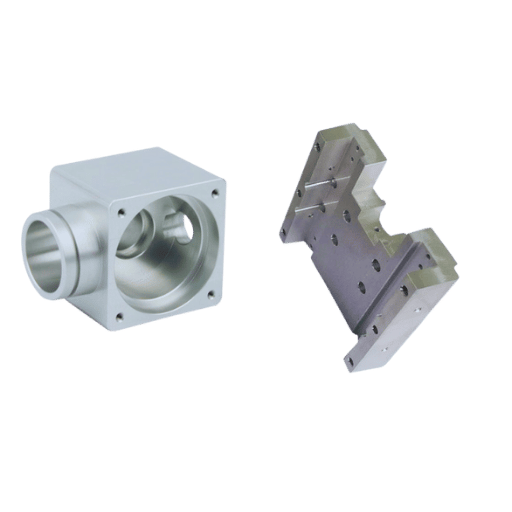
- Consistent Repeatability-CNC lathes and mills keep cranking out the same part over and over, drift hardly noticeable across run after run. A designer in one shift can expect the same profile to show up on the bench by morning.
- Enhanced Tolerance Levels- Minds in aviation or on a surgical floor trust numbers that press into the low thousandths, and only the high-stability spindles of a CNC shop deliver that kind of margin.
Improved Surface The quiet dance of tool speed and feed in a controller room leaves a mirror streak where a hand grinder once waved dust. Technicians run fingers over a slab and call it glass. - Reduction in Human Error- Fingers pull back the instant a file loads; motors take the restless leap instead. Less human presence cuts fatigue slips from a 2 a.m. run.
- Complex Design Capabilities- Breathe cloverleaf vents, scalloped webs, or under-cut arcs- simple wristwatch mechanics, ornate brackets, cry for geometry that laughs at a hacksaw.
- Real-Time Monitoring and Adjustments- Sensors cradle heat or chatter, pulse the servo back to center before a tooth can protest. The fix feels invisible, yet an entire part rides on it.
- Integration with Design Software CAD sketch becomes code in a breath; no paper drift, no raw guesswork, just lines stepping down into metal. A designer anywhere with a laptop now holds a machine.
Each advantage, small or monumental, stacks the case for CNC-run parts that obey deadlines and meet specs in the same heartbeat. Reliability of that kind is rarely open for debate.
Role of Helical Milling Techniques
A very effective machining approach supported by the current manufacturing industry is helical milling. It is an efficient process which improves the machining of holes, grooves or contours and is more precise than other methods. Being a linear plus a circular movement during machining, it enables the generation of flat surfaces with less wear on the tool and less machining surface per cycle. Employing this approach is particularly lucrative in cases where it is necessary to machine hard materials or in cases where it is necessary to hold significant tolerances.
There have been a lot of improvements in the CNC machines in terms of automation. Seamless colonization of the cross into these programs is possible and quite relieved of the mechanical strength. But more importantly, with the increased concentration on engineering, search analysis has shown too much interest in helical milling methods. In doing so, many industries like aerospace, automobiles, and even pharmacy employ such types of machine installation. This leads to the conclusion that its users have made more use of the helical approach in carrying out large-scale current engineering tasks.
Handling Elevated Temperatures with CNC
Routing rather than drifting into extremes, I choose inserts and stock that advertise serious heat tolerance. That early call pays dividends when I layer steady coolant and custom feed tweaks atop a hot cut. I watch expansion in real time, correcting offsets or nudging design tolerances so the finished part still behaves like the model.
What are the Common Titanium Alloys Used in Industry?
Properties of Ti-6Al-4V Alloy
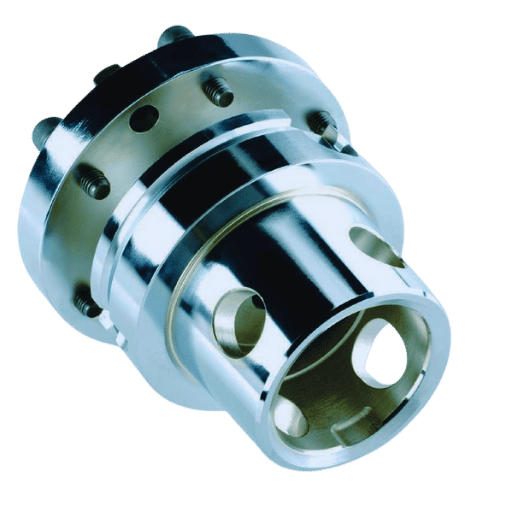
Ti-6Al-4V has remarkable mechanical properties, good thermal resistance, and is also compatible with the human body. These properties make it a light, corrosion-resistant, strong, and highly adaptable α–β titanium alloy.
Let’s take a look at a simple table that highlights core attributes of the alloy:
|
Key Point |
Details |
|---|---|
|
Density |
4.43 g/cm³ |
|
Melting Point |
1604–1660 °C |
|
Tensile Strength |
≥ 895 MPa |
|
Yield Strength |
≥ 828 MPa |
|
Elongation |
≥ 10% |
|
Elastic Modulus |
105–120 GPa |
|
Corrosion |
Excellent |
|
Thermal Conduct. |
6.6 W/mK |
|
Applications |
Aerospace, Medical |
|
Weldability |
Fair |
Applications of Pure Titanium in Aerospace
- Airframe Parts: Has high-strength yet low-weight properties and is mostly applied to wing and body sections of the plane.
- Rotating Components of Engines: Used in the formation of blades of the turbines, discs of the compressor, and housing of the motor, acting as strain owners in the temperature regime.
- Joining Elements: Enters construction works mostly where bolts, heads of the screws, or any other fasteners are produced and heavily corroded.
- Undercarriage: Made to be extremely sturdy so that when planes are taking off or landing, it can support the weight of the craft.
- Spaceships: Used in the fabrication of satellites and other important components because of their lightweight and high-temperature strength.
- Aircraft Engines Afterburners: Applied in constructing the linear section of the nozzles and walls of the devices, where the material should be heat-resistant.
- Hydraulic Devices: Provides for tubing and essential elements for hydraulic systems because of the hard-wearing qualities of this material.
Comparing Tensile Strength of Different Alloys
|
Alloy |
Type |
Tensile (MPa) |
Yield (MPa) |
Use |
Key Prop. |
|---|---|---|---|---|---|
|
Ti-6Al-4V |
Alpha-Beta |
897 |
828 |
Aerospace |
High Strength |
|
Ti-6Al-4V ELI |
Alpha-Beta |
897 |
828 |
Medical |
Biocompatible |
|
Ti-3Al-2.5V |
Near-Alpha |
621 |
483 |
Tubing |
Formability |
|
Ti-6Al-2Sn-4Zr-2Mo |
Alpha-Beta |
931 |
862 |
High Temp. |
Heat Resist. |
|
Ti-10V-2Fe-3Al |
Beta |
1241 |
1104 |
Industrial |
High Strength |
|
CP Grades (1-4) |
Pure |
241-552 |
172-483 |
Corrosion |
Ductility |
How Does Titanium Compare to Steel in Machining?

Comparison of Strength-to-Weight Ratio
Titanium offers an impressive strength-to-weight ratio, resists corrosion remarkably, and feels surprisingly light in the hand. That advantage comes at the price of greater machining difficulty and a sticker shock that few budgets can shrug off. Steel, by contrast, is heavier and stronger in the raw sense, but its price tag and familiarity usually tip the scales in its favor for everyday applications.
Evaluating Plastic Deformation and Work Hardening
Titanium and steel each have different properties that affect how they respond to plastic deformation and work hardening. Stress beyond elastic limits results in permanent changes (deformation) in the shape of a given material, which is called plastic deformation; and when such deformation causes hardening and resistance of the material, the term used is work hardening or strain hardening.
Titanium
When plastic deformation begins, titanium does not undergo as much structural damage as steel, but with that, some of its grades, in particular those with stronger components of α and β alloys, are very brittle. The titanium to temperature behavior refers to two things: the first one is the applicable amount of work hardening of the metal, i.e., how much the metal directory titanium can be hardened in one cycle with ease. This is considerably high, and the reason for this is the hexagonal close-packed crystal structure. which has very few displacement segments that admit plastic flow. A work hardening exponent of 0.3 – 0.5 is observed in most of the titanium alloys subjected to certain processing techniques that change their hardening potential. However, this rapid work hardening is problematic when it comes to machining because the system wears easily and consumes more power.
Steel
Steel has higher strain hardening capacity, particularly the low-carbon and stainless steels, due to the face-centered cubic or BCC crystal structure. Since the last level of dislocations is likely to occur in metals has some effect on the ability of the metal to allow plastic deformation. The extent of this behavior is achievable varies from 0.1 to 0.3 in mild steel; however, for special steels with high strength like dual steel or AHSS (advanced high-strength steel), it can go beyond 0.5. For this reason, steel proves to have wider uses, especially where high degrees of robustness and shape change are required.
Comparative Data
|
Property |
Titanium Alloys |
Steel (General) |
|---|---|---|
|
Work Hardening Rate (n) |
0.3 – 0.5 |
0.1 – 0.5 |
|
Slip Systems |
Limited (HCP structure) |
Extensive (FCC/BCC structure) |
|
Machining Tool Life |
Reduced due to high hardening |
Longer due to a moderate rate |
|
Plastic Deformation |
More resistant, less ductile |
More ductile, uniform |
Engineers often note that titanium hardens almost on contact and remains stubbornly brittle beyond a narrow heat window; these quirks confine it to aerospace skins, salt-water valves, and precision biomedical scaffolds. Steel, by contrast, bends and breaks on curves that are easy to plot, and its slower hardening gives it the motion to be stamped, spun, or forged for everything from steam pipes to skyscraper frames.
Machining Titanium vs Steel: Key Differences
The cost factor, weight handling, strength, corrosion resistance, in mechanization, and thermal characteristics are not the same for steel and titanium.
|
Parameter |
Titanium |
Steel |
|---|---|---|
|
Cost |
High |
Low |
|
Weight |
Light |
Heavy |
|
Strength |
High strength-to-weight |
High overall strength |
|
Corrosion |
Excellent resistance |
Moderate resistance |
|
Machinability |
Difficult |
Easier |
|
Thermal Conductivity |
Low |
High |
|
Durability |
High |
Moderate |
|
Applications |
Aerospace, Medical |
Construction, Tools |
Frequently Asked Questions (FAQs)
Q: What are the advantages of using titanium for machining?
A: Titanium is a better choice because it is stronger and lighter compared to many other materials, and these properties define its applications in the aerospace, automotive, and medical fields. There are further factors, such as corrosion resistance and biocompatibility, that also impact the usage of this material.
Q: What are the categories of titanium that are most used for machining purposes?
A: Among machinable types of titanium, one can see that such grades as commercial pure or alloyed Ti-6Al-4V are found to be the most applicable. However, other alloys within the same category also render a different ratio of strength versus weight and corrosion resistance.
Q: What machining processes are recommended to be used for cutting titanium?
A: Machining processes involving the cutting of titanium generally use a sharp tool with a proper cutting edge and/or coating, such as Titanium Aluminium Nitride, for the reason of heat dissipation in the course of the two materials being put into the process.
Q: How does the modulus of elasticity of titanium alloy impact the process of machining?
A: The modulus of elasticity of titanium alloy may lead to spring-back of machined components, which would require extensive monitoring on the machines for dimensional control as well as avoidance of dominant tool wear before usage.
Q: What are the hurdles experienced during the cutting of titanium by machinists?
A: While machining titanium, most machinists come across such difficulties as ultra-high temperature rates and low metal removal during the process, which also involves heat and sparks, making the process a fire hazard.
Q: How does a fire extinguisher help in work involving titanium?
A: A fire extinguisher becomes a must in titanium machining because there is great heat during cutting, which can easily ignite titanium chips and dust.
Q: Which cutting tool material will be used for the machining of titanium alloys?
A: Cutting tools for machining of titanium alloys are generally made of either carbide or ceramic. The tools are coated with an even layer of lubrication, such as titanium-aluminum-nitride, which helps greatly in wear as well as heat reduction.
Q: In what way can the machinability of titanium materials be improved by operators?
A: To improve the machinability of titanium materials, players must know how to establish the proper machining process parameters, for example, slower speeds, larger depth of cuts, or acceptable modes of cooling the tools to avoid excessive heating of the material.
Q: In the process of machining titanium, how important is the machine tool?
A: The mechanical tool is an important component in titanium cutting as it has to support the cutting forces in a manner that does not compromise cutting edge sharpness.
Reference Sources
1. The Optimization of Wire EDM on Grade 9 Titanium Alloy
- Authors: Manikandan S Natarajan, et al.
- Journal: AIP Advances
- Date of Publication: 1st January, 2024.
- Citation: (Natarajan et al., 2024)
- Abstract: This research seeks to provide solutions on how titanium is machined, as well as other difficult-to-cut materials, by the use of Wire Electrical Discharge Machining. With the help of hybrid learning, the authors sought to vary the machining parameters such as pulse length and current. Amongst the most important indices were cutting speed, surface finish, and precision. It is observed in conclusion that the proposed tool for decision making based on AI could help manufacturing industries since it can properly assess for machining output.
2. A comparison of cutting tools made of SiAlON, CBN, and Carbide while machining Titanium
- Authors: Phokobye, S; Aston, M; and Shen, X
- Journal: The International Journal of Advanced Manufacturing Technology
- Published on: August 22, 2023
- Reference: (Aston et al., 2023, 3775–3786)
- Abstract: The research seeks to evaluate the different machining characteristics of Ti-6Al-4V using SiAlON, CBN, and carbide tools. Titanium Ti-6Al-4V alloy, called face milling, was made by using a CNC machining operation. In addition, cutting force, cutting temperature, cutting vibration, and surface roughness were noted down. From the above preface, there was a tool material that positively contributed to the machining, SiAlON, which depicted lower wear and a good finished surface.
3. The Workability of Titanium Grade 5 Using Wire Electrical Discharge Machining with a Combination of Learning Algorithms
- Authors: M. Natarajan et al.
- Journal Name: Inf.
- Release Date: August 3, 2023
- This Paper: (Natarajan et al., 2023, page 439)
In this essay, the authors concentrated on other parameters such as pulse on time and the peak current while investigating how titanium is machined. The study attempted to use the design of experiments with the Taguchi method and to analyze the data through ANOVA. In the fill factor analysis, it was found that the current, which is the source of energy, has the highest effect on the machining efficiency, and the hybrid learning approach was effectively able to predict the parameters.
4. Titanium