


Global manufacturing acts as a pivotal force for innovation and international trade. So the question arises: Which nations can lay claim to being manufacturing superpowers? And what sets them apart in this high-stakes arena? This article ventures into the intricate dynamics of global manufacturing, showcasing the major players, various approaches used by these leaders, and factors that contribute to their eminence. From technology development, worker considerations, and trade aspects, we shall look into the very ingredients that make a successful building of manufacturing globally. Please join us in unveiling its challenges and triumphs and the ever-volatile trends shaping this profoundly vital industry.
Understanding Global Manufacturing

Global manufacturing is affected by various factors, such as access to technology, cheap labor, and policies for trade. Countries like China, the United States, and Germany hold the leadership of the sector due to technological innovations, well-skilled workforce, and strong infrastructures. Manufacturers now have to face the challenges of shifting supply chains, environmental laws, and geopolitics to stay competitive.
Defining a Manufacturing Superpower
Manufacturing superpowers are countries that dominate global production through high tech, high output, and immense influence on global supply chains. Such countries are built on strong infrastructure and skilled labor, an ability to produce goods at scale, and systems that allow them to remain competitive based on cost and quality.
For example, China remains the world’s freshest manufacturing superpower, accounting for roughly 28% of global manufacturing output in 2023, according to recent industry reports. Labor costs are kept minimal in China amid its sprawling production units and recent technological advances in electronics and green energy. Simultaneously, the United States secures nearly 16% of the global manufacturing share, concentrating more on high-value industries like aerospace, pharmaceuticals, and advanced machinery, promoting gains through automation and artificial intelligence.
Other countries such as Germany, well known for precision engineering, and Japan continue to make important contributions through exports of automobiles, machinery, and electronics. With the evolution of global markets, to keep the title of manufacturing superpower worthy, continuous innovation, adaptation to supply chain disruptions, and focus on sustainable practices are becoming more critical.
Key Metrics: Manufacturing Value Added
Manufacturing Value Added (MVA) stands as a vital indicator of the nations’ industrial strength and economy development. It stands for net manufacturing output after deducting costs for raw material and other inputs. According to World Bank, global MVA was $16.7 trillion in 2022, with China, the US, and Germany leading as the top three contributors.
From that point, China remains the number one manufacturing economy, accounting for close to 30% of the world’s MVA, yet with industrial expansion, high-tech sectors, and solid export policies keeping a lion’s share under recent years. The United States comes next with roughly 16% of the global share, led by aerospace, pharmaceuticals, and advanced machinery sector investments in innovation and reshoring activities to reinvigorate its competitiveness. Germany comes third, boasting of a race-skilled workforce and precision engineering, accounting for about 6% of global MVA and excelling in automotive and industrial machinery exports.
Japan, on the other hand, also has immense contributions thanks to huge industries in robotics, electronics, and automotive manufacturing.
With the shift of the global manufacturing sector toward sustainability and digital transformation, MVA is getting more and more recognized. Measures such as adoption of the Industrial Internet of Things (IIoT), energy efficiency, and share of GDP from manufacturing will continue to direct the competitive landscape.
The Role of Manufacturing Countries in the Economy
Manufacturing countries are important in economic growth: they provide employment, create exports, and nurture innovations that are necessary for the advancement of the communities. These economies provide a vital link in the global supply chains, providing goods that meet the demand beyond borders. With the introduction of advanced technology and focus on sustainability, the manufacturing countries are steadily increasing their sway in economic efficiency and competitiveness in global markets.
Top 10 Manufacturing Countries
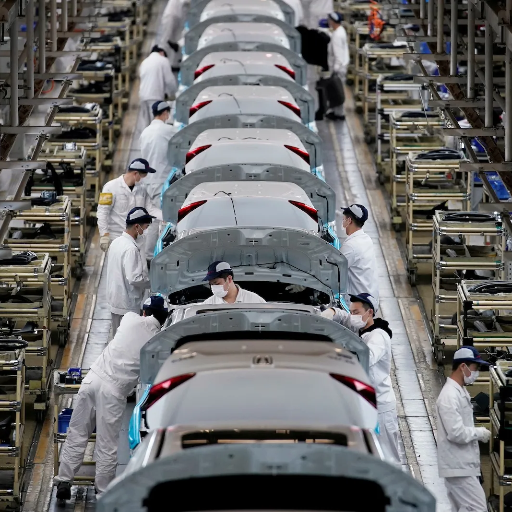
- China – The world’s largest manufacturing hub with manufacturing dominant in electronics, machinery, and textiles.
- United States – An enable of technological developments including machinery, aerospace, and automobile advancement.
- Germany – Well appreciated for automotive and industrial equipment engineering.
- Japan – Known for electronics, robotics, and the automobile industry.
- India – A growing manufacturing giant with specialization in textiles, chemicals, and pharmaceuticals.
- South Korea – Innovates in technology: few examples being semiconductor and shipbuilding.
- Italy – Fashion, luxury goods, and precision machinery.
- Mexico – Automotive and electronics assembly.
- France – Aerospace, luxury goods and pharmaceutical products.
- United Kingdom – Pharmaceuticals, aerospace and high-tech industries.
An Exposition of the Leading Manufacturing Nations
A global economy is bolstered by the leading manufacturers as they maintain industrial capabilities and technological innovations on a more advanced scale. They focus on large-scale production of goods and on quality end outputs for the diversification of global markets. Countries like the United States, China, and Germany top the charts with several industries, from technology to heavy machinery, while Japan and South Korea hold dominance over electronics and automotive production. Other countries such as Italy, Germany, and France dominate the luxury good, fashion, and aerospace industries. Numerous industries of these industrial powerhouses signify high efficiency, competitiveness, and innovation, making them singularly important in global trade and economic development.
Manufacturing Output Comparison: US and China
The United States and China differ in manufacturing output, with China leading in total production volume, while the United States excels in high-value manufacturing and innovation.
| Parameter | US | China |
|---|---|---|
| Total Output | Lower | Higher |
| Key Strength | Innovation | Mass Production |
| Sector Focus | High-Tech | Consumer Goods |
| Labor Cost | Higher | Lower |
| Efficiency | Advanced | Good |
| GDP Contribution | 11% | 27% |
| Global Share | ~16% | ~28% |
Emerging Players: South Korea and Beyond
With the aid of strategic technology investments and an emphasis on high-value industries, South Korea has rapidly come to stand as an eloquent testimony to dynamic global manufacturing. It is strong in the semiconductor, automotive, and shipbuilding industries. The semiconductor industry in South Korea constituted about 20% of the global chip manufacturing market in 2023, with Samsung dominating memory chip production.
Other countries such as India and Vietnam are also pushing forward manufacturing. India is an important player in pharmaceutical production, with a claimed share of 20% in global generic drugs. Besides this, “Make in India” stimulates further developments in automotive and electronics manufacturing. Vietnam is slowly establishing itself in electronics assembly; recent reports of exports point to figures over $100 billion per annum, with large-scale global technology companies moving production to the country because of competitive labor prices.
The new entrants, therefore, are changing the old global production order, competing on low cost, government incentives, and growing skill sets, thereby threatening the interests of the traditional strongholds in production in some key sectors.
Having a Hub for Manufacturing
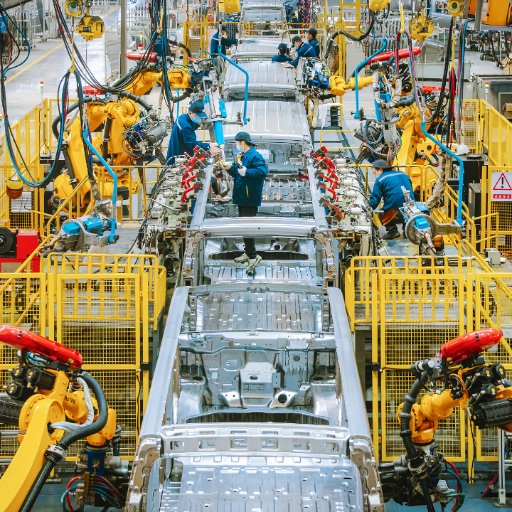
As new emerging locales such as Vietnam and India take advantage of cheap labor costs, governmental incentives, and grow in expertise, the global manufacturing environment keeps on changing. These countries are now fully challenging the established giants of manufacturing in the sectors of electronics and textiles. This transition is a perfect example of how dynamic global production is and how the relevance of resilience and innovation is on the rise for any entity trying to stay competitive.
What Makes for a Flourishing Manufacturing Hub?
A flourishing manufacturing hub depends on factors such as infrastructure, skilled labor, economic policies, and accessibility to markets. For example, more recent indications show India has risen as a large player, with its manufacturing sector accounting for about 17% of GDP in 2023, alongside initiatives under the “Make in India” umbrella to attract foreign investors. At the same time, Vietnam has been rushing forward as manufacturing exports have increased at more than 15% per annum facilitated by trade agreements and cheap operational costs.
Technology and automation itself also builds a crucial part of manufacturing success. Those countries that invest in Industry 4.0 report extraordinary gains in productivity as automation curtails human errors while increasing output. China’s heavy investment in robotic and AI-based manufacturing processes is one of the major drivers that propels it to the top spot globally, with at least one International Federation of Robotics reporting an all-time high of industrial robot deployment way into 2023.
Economic stability and access to resources are also critical. Countries such as Germany, with excellent logistics networks, continue to thrive since their emphasis on research and development yields high-quality exports. The trade collaborative policies and strong supply networks must be the glue holding manufacturing hubs as they compete in an ever-evolving global economy.
Geopolitical Factors Affecting Manufacturing Locations
For manufacturing concerns to be location oriented, one needs a jurisdiction within which it can minimize gains and have minimal disruptions. According to recent data, diversification has accelerated due to global conflicts, trade wars, and changing alliances. For example, the trade war between the US and China encouraged manufacturers to diversify the location of their production, with Vietnam and Mexico becoming attractive alternatives because of their cheap labor costs and strategic proximity to important markets.
Energy crises, fueled by geopolitical instability, have further highlighted the significance of production localization and renewable energy sourcing. The International Energy Agency (IEA) reported that in 2023 energy costs in Europe had gone past an increase of 15%, compelling manufacturers to look for relocation to regions with cheaper and more stable energy supplies. Additionally, the enactment of the Inflation Reduction Act in the United States has caused significant green manufacturing and technology investments, which in turn has positioned the United States to become a competitive manufacturing hub.
The data cited shows also that sanctions plays a significant role in trade controls with vital sectors, for example, semiconductors becoming bottlenecked by the restricted access to critical materials such as rare earth metals. For instance, China controls over 60% of the global rare earth supply, creating difficulties for nations that rely on those critical components in electronics and defense manufacturing.
Some cases demonstrate the intertwining of geopolitical landscapes with the future of manufacturing, forcing companies to analyze not only costs but also risks upon deciding where to locate.
Supply Chains in Consideration of Manufacturing Abroad
Supply chain dynamics, given the global disruptions and geopolitical factors, increasingly necessitate resilient approaches to ensure business continuity. In recent reports, the COVID-19 pandemic in particular exposed vulnerabilities through supply chains, with businesses’ average production efficiency translating into a 25% reduction due to delayed deliveries of raw materials and the shut down of primary manufacturing hubs. Companies are also investing in technologies such as AI and IoT to facilitate more intelligent supply chain forecasting, with Gartner having predicted that by 2025, half of all large manufacturers will have such advanced supply chain analytics implemented to cope with interruptions.
Nearshoring has, however, been considered another major factor. Data from a recent Deloitte study suggest that 62% of companies are now weighing the option of relocating some of their supply chain operations closer to home markets to paint less dependence on far-off suppliers and more against risks emanating from long lead times and geopolitical tensions. Also, on a global front for sustainability, about 72% of consumers state that they would rather buy from supply chains that have taken care to be environmentally responsible-McKinsey reports it.
These developments place a priority on framing adaptive strategies from data-informed decisions and wider networks of suppliers with the aim to strike a waterside that balances cost-efficiency, resilience, and sustainability goals in global manufacturing endeavors.
Effects of Tariffs and Safeguards
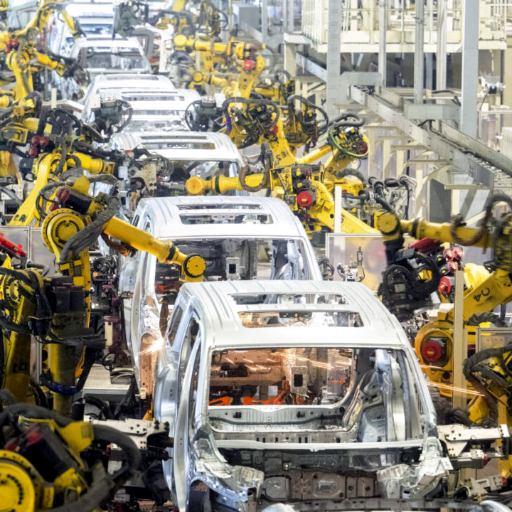
Tariffs and safeguards significantly affect international manufacturing by increasing the cost of imported goods and materials, production costs, and price structures. While they are employed to protect home industries, these measures disrupt supply chains and intensify the financial burden on manufacturers with international suppliers. To counteract these barriers, manufacturers consider alternative supply options, resupply purchase contracts, or invest in domestic production.
Understanding Tariffs on Manufacturing Exports
Tariffs on manufacturing exports negatively impact company competitiveness within the international market. When foreign countries place tariffs on exported goods, this means the price is higher for overseas buyers, and so, demand may potentially fluctuate. This problem forces manufacturers either to increase their prices to keep foreign markets attractive or go at least for some of the cost themselves to keep their buyers. Apart from that, tariffs can encourage countries in searching for new markets where favorable trade agreements are in place or innovate to reduce the cost of production. A solid understanding of the trade policies applied within the markets of interest is therefore an important asset in maneuvering through such barriers and remaining profitable in this ever-changing global trade environment.
Ramifications for the Global Supply Chains in 2023
A global supply chain has come face-to-face with increasing challenges since past years, with disruptions coming from geopolitical tension, the COVID-19 outbreak, and the consequent economic uncertainty that remains unsteady. Recent reports and analyses showed that 56% of companies worldwide said that their supply chains were disrupted during 2023. With key industries being automotive and electronics, these industries took the hardest hit due to their dependence on globally sourced special components or materials.
Nearshoring, which means moving production closer to key markets, is one way highlighted to counteract these disruptions. Experts say nearshoring has allowed businesses to shorten lead times by 25-30%, providing much-needed flexibility, and allowing them to respond much quicker to market demands. At the same time, investment in digital supply chain ICTs, including AI-powered analytics and blockchain technologies for real-time tracking, has increased by 42% year-on-year to enhance visibility and risk mitigation.
Also noteworthy are ongoing issues caused by semiconductor shortages, which bring to the fore issues relating to diversification. Governments worldwide, including the United States with its CHIPS Act, have pledged billions towards growing domestic production capacities and curtailing reliance on single-source suppliers, predominantly situated in Asia.
In their turn, companies looking to protect global supply chains must keep abreast of geopolitical risks, ensure supplier diversification, and employ novel technologies. Continual cooperation between public and private sectors will be required to build resilient networks able to react to ongoing unpredictability in global trade.
Effects of Tariff Imposition on Manufacturing Countries
Tariffs have greatly reshaped the global manufacturing landscape, both for exporting and importing countries. Among others, the U.S.-China trade war serves as the most evident case showing the disruptive power of tariffs on supply chains. Recent data informed that the U.S. tariffs on Chinese goods, which began in 2018, averaged about 19% in 2023 as against 3% in 2017. These added costs forced companies to find alternative production bases; this influx of manufacturing worldwide has led to industrial growth in Southeast Asian countries like Vietnam, Thailand, and Malaysia.
However, introducing such trade barriers is not berthing in the favor of any party. Tariffs generally lead to a reduction in demand for goods in countries that depend on exports. Reports noted a decline in China’s exports to the U.S. by approximately $35 billion between 2018 and 2022 as a result of tariff hikes. Conversely, producers in importing countries have to bear increased production costs and quite often pass these costs onto consumers. These policy changes have been directly linked to rising inflationary pressures in major markets, including critical sectors such as technology and apparel.
Depending on the big picture, countries are also adapting themselves, diversifying their trade partners, and signing new bilateral agreements. There is data indicating a 40% growth in trade between the EU and emerging Asian suppliers as manufacturers start to diverge from the long-standing dominant hubs. This transition marks the global effort to mitigate the vulnerabilities exposed by tariffs.
Future Trends in Global Manufacturing
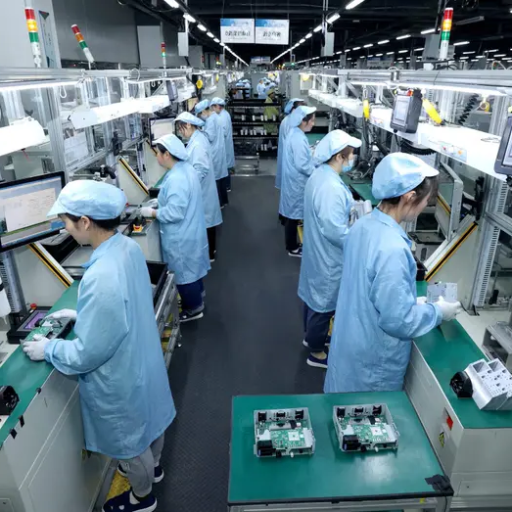
The future of manufacturing on a global scale is expected to revolve around automation, sustainability, and greater regional diversification. The prime drivers for efficiency would be advanced robotics and AI technologies that entail reducing labor costs. Sustainability trends including and renewable energy and circular economy approaches arise at an increasing rate and will become important considerations for businesses to operate at par with profitability and environmental sustainability. Conversely, regional diversification will continue further as production shifts to lower emerging geopolitical and supply chain risks amid evolving manufacturing networks that are both agile and resilient.
Technology Innovation and Its Effects on the Manufacturing Sector
The more competitive technology transformations are continuously driving the manufacturing realm. Among the technological evolutions is AI and machine learning integration to optimize production-related processes with predictive maintenance or real-time decision-making. According to a report from Google Research published in 2023, 76% of manufacturers had implemented or integrated AI into at least one of their line operations, and the proportion is expected to increase as AI technologies get more accessible and scalable.
Another significant trend is IIoT coming into play. With the help of these smart sensors and connected systems, manufacturers can collect massive data, thus providing visibility across supply chains and improving operational efficiency. IoT adoption can reduce equipment downtime by as much as 30% and cut production costs by 20%, as per the case studies in the industry.
3D printing contributes heavily to changing the way we prototype and produce; it is anticipated to be one of the major technological trends in the coming years, with the global market for 3D printing estimated to reach $83 billion in 2029. This is especially important for industries like aerospace, automotive, and healthcare. This technology offers manufacturers the ability to quickly manufacture complicated parts with minimal waste, from both the perspectives of cost savings and sustainability agendas.
Lastly, the technology of automation and robotics is irreplaceably built into minimizing mundane processes with collaborative robots, or cobots. The global robotics market is poised to grow at a compound annual growth rate (CAGR) of 18.2% between 2023 and 2030, which demonstrates rapid expansion in the industry.
Such technological developments, coupled with increasing focus on renewable energy and smart manufacturing practices, are moving the sector forward into an innovative, sustainable, and resilient future.
Environment and Industrial Manufacture
Environmental consciousness is mainly pertinent for focus in the manufacture sector, industries going beyond sustainability measures to meet global climate solutions. Newly acquired data states that the manufacturing industry contributes nearly 20% to the global greenhouse gas emissions. To interfere with this, more and more industrialists are advocating the use of renewable sources of energy such as solar and wind power to supply energy to their plants and factories. In 2023, the global renewable energy use in industrial manufacturing saw a 17% increase in adoption.
Minimizing industrial waste remains another keen endeavor. Advanced recycling technologies and various methods of circular economy are being applied to achieve less waste generation. Studies further suggest that such recycling programs in manufacturing sectors could reduce their waste by 30% in a year, which equates to an increase in efficiency and decreased environmental degradation.
Also, smart manufacturing technologies together with AI-enabled analytics and IoT are utilized to monitor energy use and emissions in real-time. The approach has empowered manufacturers to fine-tune operation, cut energy consumption, and accelerate accumulated efforts towards sustainability better. As an example, a global electronics manufacturer saw a 25% reduction in energy consumption within one year of mainstreaming IoT-based energy monitoring systems from 2022.
Being propelled by the adoption of renewable energy, waste reduction efforts, and enhanced technologies, this industry marks its alliance with the manufacturing-industrial sector for environmental stewardship and broader global sustainability objectives.
How Countries are Positioned for the Future
From my viewpoint, countries are positioned for the future concerning the investment in sustainable technologies, renewable energy, and forward-looking policies about climate change. Placing importance on innovation and teamwork can help countries better align with the global sustainability agenda, along with ensuring environmental and economic resilience in the long term.
Reference sources
- Research Trends and Perplexity of Green Manufacturing Under the Goal of “Carbon Peaking and Carbon Neutrality”
- Authors: Yingnan Ding, Q. Meng
- Published: 2023
- Journal: E3S Web of Conferences
- Citation: (Ding & Meng, 2023)
- Summary:
- This paper analyzes the trends in green manufacturing, emphasizing China’s leading role in international publications on the subject. It highlights that China has been at the forefront of green manufacturing development, reflecting its commitment to sustainability and innovation in manufacturing practices.
- Key Findings:
- The attention to green manufacturing has rapidly increased over the past seven years.
- China leads in the number of international publications, indicating its significant investment and focus on green manufacturing.
- There is a noted imbalance between R&D investment and the actual development of green manufacturing in China.
- Methodology:
- The study utilized Citespace for analyzing published theses and a coupling model to assess the coordination between current hot topics and the development of green manufacturing in China.
- Research on the Measurement and Characteristics of Virtual Agglomeration Based on Social Network Analysis: Evidence from 29 Manufacturing Industries in China
- Authors: Qing Zhang, Shaofeng Ru, Yiyang Cheng
- Published: 2023
- Journal: Syst.
- Citation: (Zhang et al., 2023, p. 571)
- Summary:
- This research investigates the concept of virtual agglomeration in China’s manufacturing industries, providing insights into how industries cluster and interact within the digital economy.
- Key Findings:
- The virtual agglomeration level of the overall manufacturing industry in China is improving, with significant differences among various industries.
- The study reveals characteristics of specialization and diversification in virtual agglomeration.
- Methodology:
- The authors constructed a social network for virtual agglomeration, measuring levels using network indicators and analyzing characteristics through cluster and core-periphery analysis.
- Impact of Environmental Regulation on Export Technological Complexity of High-Tech Industries in Chinese Manufacturing
- Authors: Weixin Yang, Xiu Zheng, Yunpeng Yang
- Published: 2024
- Journal: Economies
- Citation: (Yang et al., 2024)
- Summary:
- This paper examines how environmental regulations affect the technological complexity of exports in China’s high-tech manufacturing sector, which is crucial for maintaining its competitive edge globally.
- Key Findings:
- The intensity of environmental regulations has a significant “U-shaped” impact on the technological complexity of exports.
- The study identifies regional differences in how these regulations affect high-tech industries.
- Methodology:
- The research employed quantitative analysis using data from 30 provinces in China, focusing on environmental regulation intensity and its correlation with technological complexity in exports.
Frequently Asked Questions (FAQs)
Is China actually the world’s top producer in global manufacturing output?
Yes. China is currently the world’s largest producer of manufacturers on a global scale. Enormous expansion of the Chinese manufacturing sector has resulted in China holding a share that is considered significant of the global manufacturing output. China has 1.4 billion people, plus technically skilled labor, and therefore big in manufacturing power. The Chinese government supports industrial growth and innovation; hence, this dominance. Furthermore, it is the vastness of China’s manufacturing production base which provide it with an upper hand in manufacturing a variety of goods that range from cheap consumer goods to technologically sophisticated goods:
How does Chinese manufacturing base compare to the developed countries?
Bigger by magnitude than the manufacturing bases of a few developed countries, China’s manufacturing base holds great importance all over the world. Certainly, advanced manufacturing capacity does exist in developed countries such as Japan and Germany, but the scale and sheer capacity of China to manufacture anything from scratch is what gives it a competitive edge. Through focusing on value-added production, China has strengthened high-tech manufacturing, allowing it to sustain the presence it holds as a superpower in global competition. In terms of manufacturing output and export capacity, the Chinese economy is stronger compared to some top manufacturing nations because of this strong industrial base.
What are the challenges faced by countries seeking to decouple their economies from China?
Decoupling from China would be difficult for many countries, especially for the developed ones that depend more on Chinese manufacturers for their supply chains. Those recent moments have, in fact, exposed a lot of vulnerabilities that arise with the overdependence on a particular nation for manufacture. The United States, for one, in conjunction with members of the European Union, has begun to seek ways that would lessen reliance on Chinese production, yet in doing so, the alternatives are still hampered by China’s very entrenched and competitive industrial base. Secondly, seeking to develop alternative manufacturing locations would require not only heaps of resources but potentially much time, making it quite problematic for any high-income country pursuing to diversify its sources of manufacture.
What role does Chinese manufacturing bear in world economy?
China manufactories thus form, to a certain extent, the backbone of the world economy, being among the prominent manufacturers and exporters of goods. It represents a large percentage of the shareholding structure of the world’s total manufacturing output, thus deranging the trade dynamics. As the lone manufacturing superpower of the world, China determines the prices of goods, along with economic policies of several countries. Its manufacturing prowess and expansive production network lend it to monopolize various industries sufficient enough to continue the growth path of its economy. The world has grown interdependent through the supply chain; hence any disruption in Chinese manufacturing would trigger propagation effects on economies worldwide.


