


Selecting an appropriate pipe for a task can be a meticulous process, especially when faced with the need to describe the exterior dimension (OD). Everyone in the construction or plumbing department, or even someone who enjoys DIY, will acknowledge that acquiring the skill of figuring out the outer dimensions saves money and nerves. Looking at the particular factor of outer diameter about pipe sizing, the paper will define what it is, its usage, why it is essential, and how it affects work success in the field. By the conclusion, individuals will be well equipped to acknowledge the piping and the pitfalls that they will quickly escape rather than fumble as people work with the pipes in question.
What is Outer Diameter?

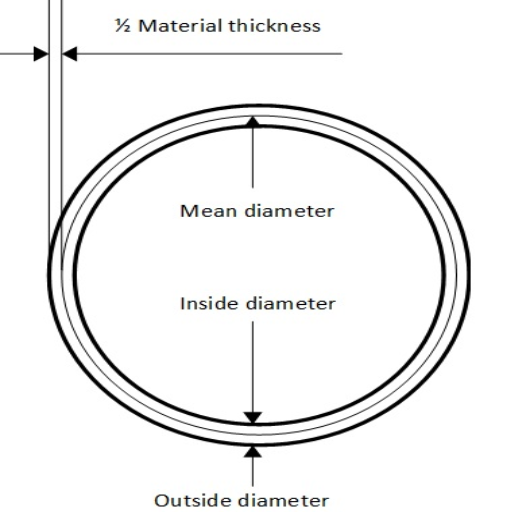
The outer diameter, alternatively noted as OD, is the farthest length across the outer surface of the free end of the pipe or the cylindrical shape of an object under scrutiny. The term implies the diameter intercepted by the widest point of the object’s external surface in discussion. The measurement is critical to size the outsized object called the pipe and is appropriate for utilization in plumbing, construction, etc. It is structurally sound in attaining appropriate sizing in such applications, since it does not neglect the pipe’s wall thickness, as the internal diameter does, and other components are less influential in this regard.
Definition of Outer Diameter
Measuring the outer diameter (OD) is significant in numerous industries for ensuring a tight fit and a safe working environment in applications such as pipelines, machinery, and construction support. For instance, if there is a need to build a pipeline, it is crucial to know the OD of the pipe to properly select convenient joints, seals, and accessories to prevent any possible leakages or breakages of the structure. Further, in the case of manufacturing, exact OD readings are used for many things; one of the most important uses is controlling the quality of products to ensure the actual dimensions are maintained with minimum waste. Using OD, where data is available and supported by technology such as laser sources, speeds up operations and makes manufacturing more competitive.
Importance of Measuring Outer Diameter
Measuring outer diameter (OD) with precision is critical in several industries such as manufacturing, construction, health care, and aerospace. It is reported that the precision of modern optical and laser measuring devices reaches a magnitude of order in micrometers, making it possible to build complex pipelines and assemble components much more accurately. For example, in the pipe industry, proper OD sizing is synonymous with the safe design of corrosion-resistant underground pipes. As the standards define it, such a small OD tolerance up to 0.5mm should not leave any error during the assembly point and should not lead to free leakage and cost increases due to more maintenance.
This is further exemplified in the production of medical devices, including catheters and needles, wherein correct OD dimensions are essential for the safety and effectiveness of users. Available data shows that modern devices use non-contact laser sensors, leading to 30% less effective production time and fewer raw materials. The attention is further geared towards quality management, based on the ever stringent control requirements of ISO 9001 standards. OD measurement ensures the firm can compete with others in the global market and meet customer requirements.
Applications of Outer Diameter in Industry
The measurement of Outside Diameter (OD) forms an important part of numerous sectors, ensuring easy precision that guarantees accuracy and quality standards. Various industries use OD measurement for numerous purposes. Some of the prominent applications of OD measurements are mentioned below.
- Pipe and Tube Manufacturing
Accurate OD measurements assure that the output of pipe and tubing is standardized, and defects are traced even in small pipes used for plumbing, buildings, and industrial premises. Reports state that adherence to very tight OD tolerances may decrease the quantity of scrap by as much as 25%.
- Automobile Manufacturing Sector
OD is explicitly considered during the production of items such as automobile engine cylinders, bearings, and axles. Appropriate OD measurements enhance services and car safety.
- Aerospace Engineering
Considering the constructions, OD measurements are still crucial in manufacturing aerospace components, especially various structures, hydraulic lines, and moving components such as shafts and disks, where flight safety and operational reliability play a key role.
- Medical Instruments
To ensure the efficient functioning of medical devices such as catheters and stents or the performance of surgeries with minimal invasiveness without any risks to patients, etc., the surface and inside of these disposable devices must also adhere to a range of Outside Diameter checks.
- Wire and Cable Manufacturing
OD measurements are pretty effective in controlling the uniformity of the cavity planning of wires, plugs, or pipes and their corresponding outputs, such as the interior and exterior diameters of the remaining insulation. This is considered potentially significant among sectors such as telecoms and electricity distribution.
Comparing Inner and Outer Diameter

Inner diameter (ID) is the ability to measure the space inside any hollow object, such as a pipe or tube, while the outer diameter (OD) is the total width from one edge to the other. The inner diameter determines the capacity or ability to work internally, and the outer diameter is used to fit external parts or accessories. Proper dimensions of both quantities are definite because without this, the onsite operation quality and in challenging manufacturing and assembly procedures can be compromised and may not meet requirements.
Differences Between Inner and Outer Diameter
The basic distinction between the inner diameter (ID) and outer diameter (OD) is that in one case, the other’s, ID addresses the walls of the pipe while determining the flow capacity, and in the other , the external walls take precedence in assessing the fit and space availability.
|
Parameter |
Inner Diameter (ID) |
Outer Diameter (OD) |
|---|---|---|
|
Definition |
Internal width |
External width |
|
Measurement |
Inside edge to edge |
Outside edge to edge |
|
Impact |
Flow capacity |
Fit and space |
|
Dependence |
Wall thickness |
Independent of thickness |
|
Usage |
Fluid flow |
Fitting and placement |
How to Measure Inner and Outer Diameter
A vernier caliper or an inside micrometer is widely used to determine the internal diameter (ID) of a pipe or any empty spaces. With the object to be measured of the said sections, slowly insert the tool into the hollow interiors and extend it until it comes into contact with the inner surface. Check this measurement against the scale on the instrument to verify the position for accuracy. It is therefore helpful to perform this action in different positions around the ID to ensure that an accurate figure is obtained and any deformities inherent in the pipe are catered for.
To measure the external diameter (OD), the same vernier caliper or an outside micrometer can be employed. ‘Hold it externally so that their jaws are attached to the widest points of the object and in a circular motion close them inwards until they snug by the sides of the points. The same scale must be used and in multiple measurements because objects in different shapes may not have specified dimensions. This is to eliminate any variations in the measurements, as the object is irregularly shaped, and to understand that any inaccuracies may come from using mechanical devices.
Common Uses of Inner and Outer Diameter Measurements
In numerous sectors and areas of interest, measuring the inner and outer diameters when implementing operations is necessary. One example is that diameter measurements are one of the core aspects of the production sector, which helps regulate the quality of the specified parameters of the products, especially in the context of the dimensions of objects such as piping, bearings, and cylindrical components. As regards construction, measurement of the diameter is given paramount importance, especially while fitting piping, as this is needed to protect the piping with the tubing and other materials, etc., it has to be retained intact in its stations.
On the other hand, in upcoming industries such as automotive, rib wavelengths often come in handy when checking for the readiness for assembling and/or functioning of parts such as wheel bearings, among others. The same applies to plumbing, aerospace, and engineering, where measurements are taken to avoid catastrophes and function at the most outstanding levels. The increasing usage of developed measuring facilities via brilliant improvements indicates the availability of accurate and effective inner and outer diameter measurements applied to various establishments to increase dependability and productivity levels.
Tools for Measuring Outer Diameter

Many practical tools are used to measure OD, including the caliper, micrometer, and laser measurement machine. However, the calipers, particularly the digital ones, are the most commonly used tools for the outer diameter measurement since they provide quick and accurate readings when used in different applications. The other tools are micrometers, which are highly precise and perfect for more advanced tasks. On the other hand, Laser measurement systems are not as frequently used, but they are outstanding in industrial applications because they are quick and accurate and give exact measurements. The choice of tools will therefore depend on how much higher the level of precision is required and what the real application is.
Types of Measurement Tools
Some measuring materials are rulers, steel tapes, calipers, micrometers, bubble levels, protractors, or laser meters tailored for specific degrees of accuracy.
|
Tool |
Purpose |
Key Feature |
|---|---|---|
|
Ruler |
Length measure |
Straight lines |
|
Tape Measure |
Distance measure |
Flexible, retractable |
|
Caliper |
Internal/external |
Precision jaws |
|
Micrometer |
Small dimensions |
High accuracy |
|
Spirit Level |
Surface leveling |
Bubble vial |
|
Protractor |
Angle measure |
Degree scale |
|
Laser Measure |
Long distances |
Digital display |
Tips for Ensuring Accurate Outer Diameter Measurements
- Ensure the object surface it is intended to touch is free of all debris, oils and dust. Any size of particles, dust, etc., would make it difficult to obtain the appropriate measurement of such a surface.
- Look over the handle of a vernier caliper; maybe it is damaged. Before using the device, check for wear and/or damage and ensure all parts are in place for correct performance. A calibrated or uncalibrated caliper may fail in its measurements and readings if not checked.
- Handle the Caliper Properly: Position the caliper jaws at a ninety-degree angle to the measuring object. If the parts are not correctly installed, “Scraggly” values may arise during readings. Take proper care in understanding this technicality.
- Gently Hold It Straight Enough: Do not let the caliper or alternatively stretch or atrophy the object while taking a measurement so that the results can be considered an original reading. Also, try to hold the caliper’s jaws firmly, no less than firmly, as it will be possible to misread the readings.
Do a Dry Run of the Caliper every so often. Proper calibration is a fundamental prerequisite for ensuring the device returns the correct measurements whenever it is used. As the tool is expected to perform specific tasks, a caliper lith must be calibrated to guarantee the accuracy of all its operations.
Applications of Compression and Tubing
- Compression and tubing are essential aspects of various industries, thanks to their serviceability and effectiveness even for the most demanding applications. Some of the key applications include:
- Medical Devices: Tubing is required in health care systems, particularly in equipment such as IV solutions, urine catheters, and respiratory equipment for precise flow control and wear resistance
- Manufacturing: Compression fittings and tubing help to move gas or liquid in the assembly line, which helps to run the industries smoothly without any halt in labor production
- Plumbing Systems: On the other hand, they are important in houses and offices and are used in the piping system to join two pipes and create a weld-free and leak-proof connection.
- HVAC Systems: Compression fittings and tubing are used in air conditioner operations. The internal elements fill the coolant and clash with the external part of the air conditioner to prevent too cold air.
- Automotive Industry: They are also utilized in fuel and brake systems and air conditioners to maintain safety and prevent unnecessary pressure drops.
These applications reveal that compression and tubing play important roles in the processes necessary to ensure that most of the activities are carried out properly.
The Role of Outer Diameter in Compression Fittings
One of the most critical factors in determining the optimum inner and outer diameter in compression fittings is the outer diameter (OD) of the tube with which they will be used. It pertains to the ability of the fitting to create a water-tight seal between the tube and the fitting, facilitating the flow of fluids or gases. The tube selection is also necessary as it prevents the leakage from taking place, or the occurrence of a drop in pressure points or system malfunctioning from taking place. The application of compressional fittings requires that the final tubing outer diameter complies with a pre-determined length, hence installation of the tubes usually takes place in areas that are intended for the same purpose. The awareness of the OD further ensures that specific sectors meet the occupational health and safety requirements, which include low-pressure systems, a case in point being the residential systems.
Choosing the Right Tube Based on Outer Diameter
Choosing the right cylinder based on the outer diameter is crucial in various applications. The OD is a basic measure that regulates the groove depth into the benzene-fused Benzo coupling or any adjacent connector. This reduces the phase-out risk of leakage or any other mechanical dysfunction. Some fields, like the plumbing, automotive, and aviation industries, require a change in OD during the design to meet safety and efficacy standards. In addition, the appropriate OD should get through the pressure range assigned to the system, and there will be no unwanted operation. In the configurations requiring booster air excavation, the detailed consultation of the manufacturer’s literature and industry guidelines is used to manage the system and improve its performance.
Reference Sources
- Authors: Christopher Mathis, Ryan A. Romans, A. Divekar
- Journal: Catheterization and Cardiovascular Interventions
- Publication Date: February 29, 2020
- Citation Token: (Mathis et al., 2020, pp. 620–625)
- Summary: This study compares conventional and radial sheaths’ outer diameter (OD) from different manufacturers for sizes typically used in infant catheterization. The findings indicate significant variations in OD among other manufacturers, which could impact clinical outcomes during catheterization procedures.
2. Significance of the outer diameter of an endotracheal tube: a lesser-known parameter
- Authors: B. Gupta, L. Gupta
- Journal: Korean Journal of Anesthesiology
- Publication Date: May 30, 2018
- Citation Token: (Gupta & Gupta, 2018, pp. 72–73)
- Summary: This paper discusses the importance of endotracheal tubes’ outer diameter (OD), particularly in pediatric patients. It highlights how variations in OD can affect cuff pressure and sealing efficacy, critical for preventing airway leaks during ventilation.
- Authors: K. Kiyota, S. Nakano, A. Chiba
- Journal: IEEE Transactions on Industry Applications
- Publication Date: June 25, 2018
- Citation Token: (Kiyota et al., 2018, pp. 5802–5811)
- Summary: This research presents a method for calculating the optimal ratio of outer diameter to axial length in switched reluctance motors (SRMs) to improve torque. The study utilizes finite-element method (FEM) analysis to derive optimal design parameters, demonstrating that the outer diameter significantly influences motor performance.
Frequently Asked Questions (FAQs)
What is the outer diameter?
Outer diameter refers to measuring the outermost edge of a cylindrical object, such as pipes, tubes, or circular objects. It is a crucial parameter in manufacturing and engineering, as it helps determine the compatibility of components in assembly and design.
How do you measure outer diameter?
You can use calipers or a measuring tape to measure the outer diameter. Place the caliper around the object and read the measurement at the widest point. For accurate results, ensure that the object is placed on a flat surface and that the caliper is perpendicular to the object’s surface.
Why is the other uter diameter critical?
Outer diameter is critical because it affects how components fit together in mechanical assemblies. It influences flow rates in piping systems, the strength of structural elements, and the overall design of products. Ensuring the correct outer diameter is essential for functionality and safety.
What is the difference between outer diameter and inner diameter?
Outer diameter is the measurement across the widest part of a cylindrical object, while inner diameter refers to the measurement across the inside. The difference between the two is significant for applications involving pipes and tubes, as it affects wall thickness and fluid capacity.
Can the outer diameter affect the performance of a product?
Yes, outer diameter can significantly impact a product’s performance. An incorrect outer diameter can lead to poor fitment, increased friction, or failure in mechanical systems. Adhering to specified outer diameter measurements is crucial for optimal performance.
How is the outer diameter specified in engineering drawings?
In engineering drawings, outer diameter is typically specified using the abbreviation “OD” followed by the measurement value. It may also include tolerances to indicate acceptable variations in size. This ensures that manufacturers produce components that meet exact specifications.
What materials can have an outer diameter measurement?
Various materials, including metals, plastics, and composites, can be measured by their outer diameter. Common applications include pipes, tubes, rods, and circular discs. Based on its properties, each material may require specific considerations for measuring and manufacturing.
How does the outer diameter relate to pipe fittings?
The outer diameter of pipe fittings is crucial for ensuring that pipes and fittings connect properly. Fittings are designed to match specific outer diameters of pipes, allowing for secure connections that prevent leaks and ensure proper flow rates in plumbing and industrial systems.
What factors can affect the outer diameter during manufacturing?
Material shrinkage, tooling wear, temperature variations, and production processes can affect the outer diameter during manufacturing. It is essential to monitor these factors closely to maintain consistent outer diameter measurements across batches.


