


Metal production and fabrication are being taken up a notch by CNC machining of metals. How does this CNC metal work, and how does it use encoding dark arts? In this post, we shall take a closer look at the ‘magic’ of CNC technology, what it does in the delicate processing of metal parts, and how it does it more effectively. Let’s pick apart the basics of how metal is worked by machinery, as well as showing the use of CNC Machining as the appropriate solution within the ambit of modern manufacturing. For someone green in the field, or if you are more advanced in the world of will go well with them, they will not be disappointed. This article explains CNC machine applications, who might need them, and how cnc milling machining enables clients to get what they applied for.
What is CNC Metal Machining?
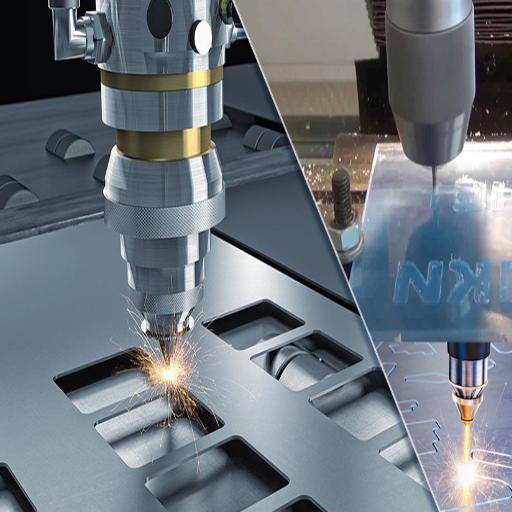
CNC (Computer Numerical Control) Metal Machining is a metal processing facility where a manufacturing tool is controlled by using a pre-programmed sequence of commands on a computer software installed in a system. This manufacturing technique allows fabricators to generate precise and repeatable shapes and forms of very complex parts since it cautiously calls for eliminating job processes other than those requiring skilled inputs. Since CNC machining is capable of precision engineering, it has been applicable in various industries such as the motor vehicle, aviation, and even in the ultimate fields such as electronics, excellently because it is used to produce quality products reasonably fast and with minimal error.
What does CNC stand for in machining?
CNC, which stands for Computer Numerical Control, is nothing but a system in which a computer controls the hyperaesthetic operation of machining tools like drills, lathe machines, mills, 3D printers, and almost any other related machinery tool. This unnecessary technological detail is really about reading in ones and zeros and executing them in relation to making objects or parts.
How does the CNC machining process work?
In this article, CNC machining involves many special machines that can produce physical outputs of digital information or requests in different and controlled steps. Still, the process starts with a computer program. The following steps illustrate the CNC machining process:
- Development of Design
The first step is to develop a model. A 3D CAD (Computer-Aided Design) model is required. This model gives exact specifications, measurements, and the appearance or geometry of the object to be produced. Then, this model is particularized for the machine load, which is the CNC abbreviation, which stands for the code the machine understands, usually G or M codes.
- Setting Up the Machine
After the design is completed, the CNC machine is prepared for use. In this operation, the user selects the correct tools, such as drills, milling machines, and cutters, and stockpiles the in-feed stock (whether metal, plastic, or wood) on the machine’s working table or chuck.
- Programming the Equipment
Providing the machine with the edited design from the earlier processes is introduced as the programming stage. For this matter, the most used programs are software whose system better used to convert the codes into useful information to the machine as it has operations of this other kind of instruction which is to operate the machine and move some parts and aspects of the work from particular instant to an appropriate period and even under specific environmental conditions.
- Mechanized Process
The current state of engineering automation is such that the machine is exact. Some bands may be required for drilling, some for cutting, some will be involved in milling, some will be turned, and some will be for chasing the product leads. Such inks push out the mold material, encouraging the shaped material to take the programmed form as the line of the Cutting device moves by the program, which knows the defined shape of the machine more precisely. The orientation system reassembles the machine’s outcome using the chosen pattern. The fashion development for very dynamic machines is so that the machine can hold even small flats in the order of 0.0001.
- Improvement of the Product and Quality Control
Quality is paramount in every finish, so after the machining process, each part made there is inspected to determine whether it is within the limits or oversized. There are also recent technological advances where the machines come with sensors and software that monitor how the process is going, making little or no errors since the process is done accurately. The Final step might be provided like crafting on the part, commenting on the surface quality, or plating.
Latest Technological Advancements and Data
The CNC industry has welcomed innovations such as Artificial Intelligence (A.I) programming and 5-axis machining. However, the most important one would be the integration of the so-called IoT (the internet of things). The advent of these technologies has brought about a significant increase in efficiency, and as they continue to evolve, the gains are expected to increase. CNC machining, for example, refers to a very complex model. As the need for such services grows, the demand for CNC machining is expected to increase, propelling the industry to higher levels. According to this paper, the numerical control market is expected to grow at a CAGR of over 7.3% from 2023 to 2030, with the market growth concentrated within the accelerated infrastructural, aerospace, automotive, and health care industries. Moreover, superlative CNC machines achieve cutting speeds of 20,000 RPM or even higher. At the same time, the feasible usage of automation in manufacturing has resulted in over 95% operating efficiency in some machining facilities.
Such an approach to handling the manufacturing process is a framework that involves both science and art—the aim is the directive integration of design concept and technology.
What are the benefits of CNC metal machining?
Cycling is an oversized sport for ordinary people. It has several possible benefits. Let’s examine a few.
- Each Spin on a Penny
Cycling has the potential to be a costly thing to do, right? Whether controversial or not, I see how bikes can be generously cheap. If you have a smartphone with a tracking app and a wallet with coins for feeding a vending machine, purses are done with and m’wife shall await their liberation as tardy crew. Animation allows each disheartened bike owner to filter the wallet, right?” This is where I did, wud, wud, thud budge, the money in my hand makes a clapping sound, denting the bone, followed by ding, dialogue…
- Start The Party
Another element that kind of comes out with biking is socializing. Whether you want to socialize or not, it is all there: people around you, bikes everywhere, and races, so why not join them? Antisocial time where you can kill anybody in the game with no shame or anything while playing,” – Dying to kill others without actual battle sounds like the dream; violence here can finally be brought somewhere, ” said one woman.
- Enthuse The Hip
Every minute, your pocket feels extremely heavy. Well, it might be time to do something ordinary: cycling. Make no mistake, you cannot do it whenever you feel like it, but it may be costly in other ways for the purist cycling fan. Take me, for instance. I bought a road bike that costs a lot of money but much less than some of my friends use for one shoe.” this is where I did, wud, wud, thud budge, […] the money in my hand makes a clapping sound, denting the bone followed by ding, dialogue…
- Them Have Fun
The other part related to biking is the fun element, which excites me. Games appeal to the competitive gamer in all of us. There is also something called fun, games, where we do not feel like killing anyone. Antisocial time, where you can kill anybody in the game with no shame or anything while playing. ” Dying to kill others without actual battle sounds like the dream; violence here can finally be brought somewhere, said one woman.
- Excite The Cool Kids
Have you ever experienced a day when your pocket scraped the bottom due to keeping other things within it? Well, it might be time to do something different, such as inhaling fresh air by cycling. That’s quite good. Still, anyone who is a purist about bikes and riding cannot do it at home all day, for it is simply more tedious than going to an under-resourced exercise class instead. For me, for instance, I spend too much money acquiring a high performing road bike than what most people use to buy one shoe.” this is where I did, wud, wud, thud budge, […] the money in my hand makes a clapping sound, denting the bone followed by ding, dialogue…
- PROS
I feel like I am about to have Swing Five experiences stuck in my pockets, and I do not think I would last out tonight. These don’t make you addicted; they convince you to like something you never enjoyed in the first place.
Types of CNC Machines Used in Metal Fabrication
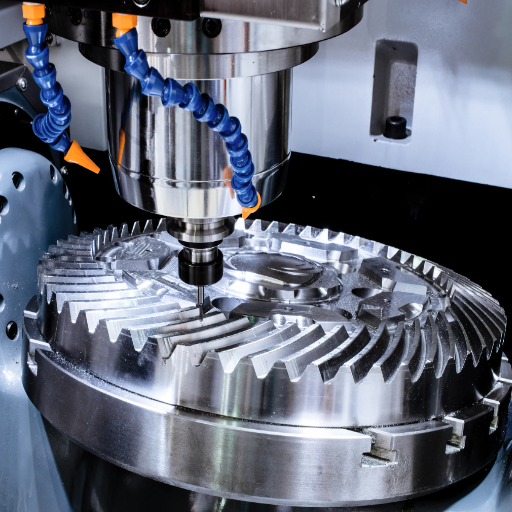
- CNC Milling Machines
CNC milling machines cut, drill, and mold metal for fabrication. They utilize cutting elements that can spin and cut, giving rise to highly perfected operations ideal for any part with multiple loose parts.
- CNC Lathes
Machining, which is perpendicular to the axis of rotation, is in terms of CNC lathes. They do not turn on the spindle; they only rotate the spindle. Such contours are smoother and found in many parts. One of its applications involves turning symmetrical parts such as pipes and shafts.
- CNC Plasma Cutters
Here, plasma torch cuts through large pieces of metal, made possible by high temperatures. When it comes to cuts that are very intricate and require the use of complex shapes, finishes in fabrication, cutting, and shaping—through measures such as staging and nesting—plasma cutters are very popular.
- CNC Laser Cutters
CNC laser cutters employ laser beams to accurately and cleanly cut materials into the desired shapes. Complex shapes like the spelling of “Aloha” engraved on a wooden piece will not frustrate the original idea due to the lack of border, as efficient laser cutting means there is no room for sides that will be eroded by gas. CNCs are the best for such accuracy and efficiency in action.
- CNC Grinders
CNC machines of this type are employed in metalworking to give smooth surfaces with smooth textures. A direct comparison of the two types of contours reveals that contours from the other machines have a more polished appearance, and precision is more achievable.
Each type of CNC machine plays a distinct role in metal fabrication, servicing specific needs determined by the nature of the material and the desired output.
What are the different types of CNC machines?
There are various computer numerical control machines known as milling machines, lathes, routers, plasma cutters, laser cutters, electric discharge machines, waterjet cutters, 3D printers, grinding machines, drilling machines, multi-axis machines, and automatic tool changers.
|
Type |
Key Function |
Material |
Axes |
Use Case |
|---|---|---|---|---|
|
Milling Machine |
Cutting |
Metal, Wood |
3-6 |
Precision shaping |
|
Lathe Machine |
Rotating Cuts |
Metal, Wood |
2-4 |
Cylindrical parts |
|
Router Machine |
Routing |
Wood, Plastic |
3-6 |
Prototypes, Design |
|
Plasma Cutter |
Melting Cuts |
Metal |
2-3 |
Heavy materials |
|
Laser Cutter |
Laser Cuts |
Metal, Plastic |
2-3 |
Fine detailing |
|
EDM |
Electric Sparks |
Metal |
2-3 |
Complex shapes |
|
Waterjet Cutter |
Water Cuts |
Any Material |
2-3 |
Heat-sensitive |
|
3D Printer |
Additive Build |
Plastic, Metal |
3-5 |
Prototyping |
|
Grinder |
Abrasive Cuts |
Metal |
2-3 |
Finishing |
|
Drilling Machine |
Hole Drilling |
Metal, Wood |
2-3 |
Precision holes |
|
Multi-Axis |
Complex Cuts |
Metal, Plastic |
4-12 |
Aerospace, Medical |
|
Tool Changer |
Auto Tool Swap |
Any Material |
N/A |
Automation |
How do CNC mills and lathes differ?
CNC mills and lathes differ mostly in their operating mechanism. In CNC lathes, the workpiece is rotated against the stationary cutting tools, while in CNC mills, it is the cutting tools that are rotated against the stationary workpiece.
|
Parameter |
CNC Lathe |
CNC Mill |
|---|---|---|
|
Operation |
Workpiece rotates |
Tool rotates |
|
Shape |
Cylindrical parts |
Complex shapes |
|
Tools |
Single-point tools |
Multi-point tools |
|
Axes |
2-4 |
3-6 |
|
Applications |
Shafts, screws |
Grooves, pockets |
|
Material |
Metal, plastic |
Metal, wood, plastic |
|
Precision |
High for round parts |
High for flat surfaces |
What is the role of CNC routers in metal machining?
The CNC machines’ job brings out good results in the metal machining departments, as they are very necessary in shaping units to perform the previous role. When we talk about this type of machine being used to perform a particular activity on a certain surface within this technology, the chances that some complex designs can be easily set without many problems are very high. This advantage is a massive highlight for CNC routers in processing soft metals like those stated above, due to the high speeds and the accuracy of components in place. CNC routers fall in the latter category of machine tools and branches of machine tools owing to their emphasis and adaptability in the market. CNC routers, a subcategory of routers, have become part of the market classification since their inception.
Understanding the CNC Machining Process
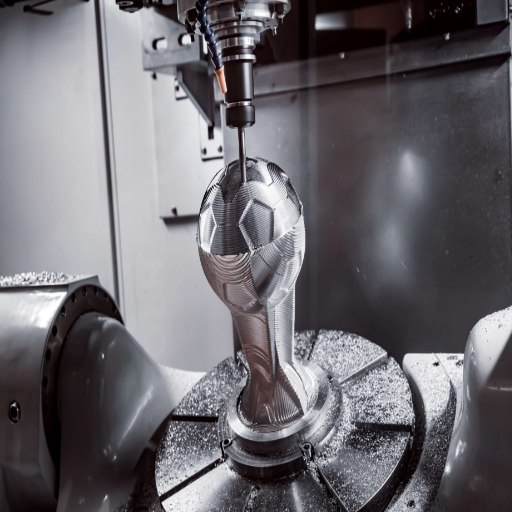
CNC machining is a fabrication method that employs computer systems equipped with machining programs to control the movements of machines and tools while creating intricate and consistent parts. Firstly, CAD software is used to make the object digital, which is then translated into a format that CNC understands. This digital file will tell the machine how to do the machining, for example, cutting, shaping, or drilling. The use of CNC machines with a higher degree of accuracy makes it possible to manufacture components inexpensively due to the low waste possible, but also accurately with a high level of precision, which is difficult to achieve using traditional methods of CNC machining. This is a highly appreciated method in various industries mainly because of the speed that comes out due to some causes, such as being a single source of truth and working on various hard and soft materials, including various metals, plastics, wood, etc.
What are the main steps in the CNC machining process?
- Design of the CAD Model
First, one needs to draw explicitly on 2D or 3D CAD (Computer-aided Design) all dimensions, attributive to shapes and even their feature functioning, which will be a pamphlet for the industrial operation.
- Changing the CAD file to a CNC Program (CAM)
The next stage of work is an option to convert once final CAD models into CNC-readable files with CAM (Computer-Aided Manufacturing) so that a digital G-code or verbally M-code is created that is loaded up to the CNC machine to define the tool paths, the speed at which the cutting should take place and other cutting operations.
- CNC Machine Preparation
The steps taken in this section of work include preparing the CNC machine for use. This primarily involves fixing the piece to be machined (workpiece) on the machine’s bed, installing the required cutters, and aligning the tool and work pieces to guarantee their correct operation.
- Applying the Tools
One of the most critical steps in the sequence is programming and operating the CNC machine. The action consists of cutting, drilling, milling, or shaping the workpiece in the initial plan. This self-regulated stage excludes human interventions to eliminate the probability of insufficient or inaccurately produced parts.
- Final Check-Up and Appearance Enhancement
Once the cutting process is over, the machined component is taken for a tolerance check to ensure that it is within the dimensional limits prescribed in the design. Also, the face of the part may be camouflaged from sanding, polishing, or further coating operations to improve its visual aspect.
How vital is CNC programming in the machining process?
In the production of parts and components, the redemption of every detail is essential, and CNC coding activates table accuracy, speed, and repeatability of output in general. As well as the knowledge from the last searches of the Google search engine, it has become much easier for engineers to use machine tools and perform operations, download and cut precise parts. This surgery guarantees that the parts are made in the current shape most accurately, so that waste and human error are more or less eliminated. Because of improved software, such as CAD or CAM, today’s industry can perform such actions with CNC tool programming, which was infeasible. The possibility of having a diagnostic approach beforehand mitigates the time needed and costs, indicating the program’s imperative nature among the current manufacturing activities.
What is G-code, and what is its significance in CNC machining?
While possessing the full range of geometric attributes, G-code is the language that instructs CNC computers. These are the particular commands that the machine refers to while running any program, like how to run it, how fast to run it, and even how to manipulate the shape of the materials. Such core instructions are usually highlighted by the “G” in the expression G-code, as it relates to the directions in which each of the parts of the machine may be moved. This specific language has been uniform across such CNC systems and machine kinds as per the international standard of standard ISO 6983.
Quick and precise movements of the machines characterize the importance of G-code. The intricacy of these movement restrictions allowed G-code to achieve positional accuracies up to ±0.0005 inches, which is remarkably beneficial for sectors like the aerospace, healthcare, or automotive industries. Recent data illustrate that 8 of 10 machining centres operate with G-code as their terminal output program. On top of that, owing to the parametric flexibility of G-code, most of the technicians in the machining industry have been able to produce their cnc programs without resorting to writing conventional cnc programs, which in turn has greatly helped in reducing operation changeover time and minimizing errors that may come with manual operations.
Some of the useful commands in G-code include “G01” for straight line movement, “G02” and “G03” for changes in orientation from clockwise and counterclockwise direction, and general-purpose “M-codes” such as stopping the machine spindle, allowing the flood voltage of an OEM, among others. As a result of these devices, the machinist has purchased a broad matrix of flexible machine control, including the workpiece rotation, the execution of necessary maneuvering movements, and the formation of intricate cutting patterns.
Recent progress has allowed most CNC milling setups to include an intermediate stage, the simulation of the program’s output separated from the program itself. This practice is calculated to reduce scrap costs by up to 30%, save material, and ease operation automation, by preventing the initiation of a project known to be overrated by errors. Thus, G-code is one aspect that is bound to remain an essential part of the CNC machining and eras of increased automation, where designing and making are part of the same activities.
CNC Tools and Technology for Metal Cutting
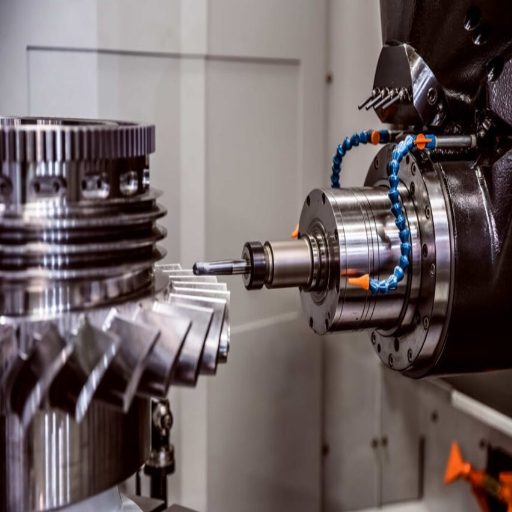
Metal cutting tools in CNC machining may be discussed by categories, such as tool material, cutter geometry, and use of a particular type of cutter, such as turning, boring, milling, drilling, etc. Another way to classify is by tool- cutting in a lathe, face, plain, end milling, tool milling, inserts, and arbor–mounted cutters. Appropriate steps are selected depending on the work, size, and materials. Brand new substances and manufacturing techniques are developed, such as laser cutting teeth and shells that include titanium nitride (TiN). Such a coating, for example, prevents cutting edges from wearing and breaking. In addition, today’s CNC equipment has tool changing systems and spindles for high-speed cutting, which allow changing operations in a flash and forget about accuracy issues. These come into cold flow and ensure the cutting tasks are done quickly and accurately.
What types of cutting tools are used in CNC machining?
The CNC machine tool utilized for the cutting processing will consist of a work piece that will be cut at particular required rates and depths using cutters such as drill bits, end mills, face mills, reamers, gear cutters, hollow mills, thread mills, slab mills, fly cutters, ball end mills, T-shape mills, and countersink mills.
| Tool Type | Function | Material | Shape |
|---|---|---|---|
|
Drill Bits |
Hole drilling |
Metal, Plastic |
Conical |
|
End Mill |
Versatile cutting |
Metal, Plastic |
Cylindrical |
|
Face Mill |
Surface flattening |
Metal, Plastic |
Flat |
|
Reamers |
Hole resizing |
Metal |
Cylindrical |
|
Gear Cutters |
Gear shaping |
Metal |
Varied |
|
Hollow Mill |
Cylindrical cuts |
Metal |
Pipe-shaped |
|
Thread Mill |
Thread cutting |
Metal |
Cylindrical |
|
Slab Mill |
Flat cuts |
Metal |
Flat |
|
Fly Cutter |
Surface smoothing |
Metal |
Single-point |
|
Ball End Mill |
Curved surfaces |
Metal, Plastic |
Spherical |
|
T-Shape Mill |
Undercuts |
Metal |
T-shaped |
|
Countersink Mill |
Chamfering |
Metal, Plastic |
Conical |
How does CAD and CAM software facilitate CNC machining?
CAD (Computer-Aided Design) and CAM (Computer-Aided Manufacturing) applications have played a crucial role in implementing CNC machining by shortening the design and manufacturing cycle. CAD helps engineers and designers build exact digital models of any parts or details, no matter how complex they are. These assemblies include the correct values, limits, and other specifications without which the machining would be low-quality. At this point, such data is processed with transference from such CAD techniques with G codes, as such data commands different machines to move, turn, or perform various other activities.
Left to their own devices, CAD and CAM systems allow an unbroken transition between design and fabrication, virtually eliminating human error, and maintaining clear continuity in the design, construction, and many identical parts. A great functional addition to the current CAD/CAM tools is the incorporation of advanced simulation, which enables the user to perform 3D analysis of the tool path and three-dimensional analysis of the part to be machined before physical cutting. The achievable impact remains more sophisticated than the familiar cases when the processing rate and the selection of tools and cutting strategies are optimized directly due to a compromise between two opposed forces. This effectively refers to the high precision, adaptability, and automation achieved through parts of CAD and CAM programs as applied in CNC machining methodologies.
What advancements in CNC technology are shaping metal fabrication?
The metal fabrication sector will experience irreversible changes after adopting computer numerical control (CNC) technology. The complex framework of the standard milling machine has been highly improved by CNC technology. Another good thing related to computer numerical control is its use for metallurgical and processing, which can be transformed using intelligent systems and machine learning. Technological innovations will improve intelligence, pushing perambulation at a particular restoration time. In working with a high-dimensional space, where one needs to optimize a multi-criteria objective function, the appearance of tools designed to improve the convergence and focus on the polygon towards spatial optimization of feasible implementations is welcome. As a result, attempts were made to create numerical control centres equipped with two, three, or more machine tools to carry out specific processes. This is a genuinely revolutionary production method using robots.
Reference Sources
- Investigating the ‘techno-eco-efficiency’ performance of pump impellers: metal 3D printing vs. CNC machining
- Authors: H. Jayawardane et al.
- Published: July 23, 2022
- Journal: The International Journal of Advanced Manufacturing Technology
- Key Findings:
- The study compares the techno-eco-efficiency of metal 3D-printed parts with CNC-machined parts, focusing on technical, economic, and environmental performance.
- It was found that the 3D-printed impellers exhibited lower normalized environmental impacts (54.6% less) compared to the CNC-machined counterparts, indicating a higher eco-efficiency.
- The research utilized a novel metal extrusion 3D printing technology to create centrifugal pump impellers from 316L stainless steel.
- Methodology:
- The study evaluated the impellers’ geometry, build material, mechanics, morphology, and functional performance.
- Eco-efficiency was assessed through environmental life cycle assessment, life cycle costing, and portfolio analysis(Jayawardane et al., 2022, pp. 6811–6836).
- Low cost semi-industrial 3GDL CNC vertical milling center design with non-ferrous metal machining capability
- Authors: S. Shimabukuro et al.
- Published: September 1, 2020
- Conference: 2020 IEEE XXVII International Conference on Electronics, Electrical Engineering and Computing (INTERCON)
- Key Findings:
- The paper presents a design for a low-cost semi-industrial CNC vertical milling center capable of machining non-ferrous metals.
- The design addresses high costs and transportation issues associated with commercial industrial CNC machines.
- Methodology:
- The design includes specifications for stepper motors, control systems using open-source firmware, and a working area of 320x180mm with a precision of 100 microns(Shimabukuro et al., 2020, pp. 1–4).
- Optimizing the machining variables in CNC turning of aluminum based hybrid metal matrix composites
- Authors: Ravi Butola et al.
- Published: July 8, 2020
- Journal: SN Applied Sciences
- Key Findings:
- The study focuses on optimizing machining parameters to improve the performance of CNC turning processes for aluminum-based hybrid metal matrix composites.
- It highlights the importance of optimizing cutting speed, feed rate, and depth of cut to enhance surface finish and material removal rate.
- Methodology:
- The research employed experimental design techniques to analyze the effects of various machining parameters on the performance of the CNC turning process(Butola et al., 2020, pp. 1–9).
- Parameter Optimization of the CNC Wire-Cut EDM Process for Machining Aluminium 6063-B4C Metal Matrix Composites
- Authors: N. Gurusamy et al.
- Published: February 18, 2020
- Journal: Transactions of Famena
- Key Findings:
- The paper discusses optimizing wire-cut electrical discharge machining (WEDM) parameters for machining aluminum metal matrix composites.
- It identifies optimal settings for parameters such as servo voltage and pulse on/off times to maximize metal removal rate and minimize surface roughness.
- Methodology:
- The study utilized the grey-based Taguchi method for multi-objective optimization, focusing on performance characteristics like surface roughness and kerf width(Gurusamy et al., 2020, pp. 91–108).
Frequently Asked Questions (FAQs)
Q: What is metal CNC machining?
A: Metal CNC machining is a manufacturing process that uses computer numerical control (CNC) to automate the operation of machine tools. This allows for producing precise and complex metal parts from raw metal workpieces.
Q: How does CNC manufacturing differ from manual machining?
A: CNC manufacturing automates the machining process using CNC machines, which are controlled by computer programs, while manual machining relies on a machine operator to control the machine manually. This allows CNC machining to achieve higher precision and efficiency than manual methods.
Q: What are the benefits of using metal milling in CNC machining?
A: Metal milling is a key process in CNC machining that removes material from a metal workpiece using rotating cutting tools. Its benefits include the ability to create complex shapes, high precision, and a smooth surface finish on metal parts.
Q: What is involved in CNC machine programming?
A: CNC machine programming involves writing instructions that dictate the feed rate, cutting paths, and other cutting parameters for CNC machines. This programming ensures that the CNC machines can produce the desired metal parts accurately and efficiently.
Q: What is a career as a CNC machinist like?
A: A career as a CNC machinist involves operating CNC machinery, setting up machines, programming, and monitoring production processes. CNC machinists can work with various materials, which are essential in the manufacturing industry, particularly in sectors like aerospace.
Q: What types of materials can be machined using CNC services?
A: CNC services can work with various materials, including various metals such as aluminum, steel, titanium, and more. These materials are commonly used in aerospace, automotive, and medical device manufacturing processes.
Q: How do cutting force and feed rate affect machining metals?
A: Cutting force and feed rate are critical cutting parameters in machining metals. The cutting force affects the tool’s ability to cut through the material, while the feed rate determines how quickly the tool moves through the workpiece. Properly adjusting these parameters ensures optimal machining efficiency and part quality.
Q: What are the latest advancements in modern CNC technology?
A: Modern CNC technology includes advanced machines with improved automation, enhanced precision, and the ability to handle more complex machining tasks. These advancements allow for faster production times and higher-quality metal pieces.
Q: Can CNC machines produce custom metal parts?
A: CNC machines can produce custom metal parts tailored to specific designs and specifications. This flexibility makes CNC machining ideal for manufacturing unique components across various industries.


