


The scenario is different today as Laser cutting is a technology that has found a way into the manufacturing sector. The use of lasers in the manufacturing industry is cost-effective and significantly faster, making it applicable to various industry sectors. Laser plastique is a field where DLF Plastics shines as we specialize in the use of POM at each stage of the development,nt while targeted at the modern requirements of industry. Today, disc laser cutting is the giant and change-bringer in processing POM plastics, shown especially in its record-breaking precision, unbeatable price, and fit for the structural elements light approach, among others. In automotive, electronics, or medical manufacturing, discover why POM is the active material in lasers, cutting, and is credited with success and new developments in design and production. In the process of this article, let us also research how DLF Plastics goes beyond the conventional use of laser technology to provide a perfect cut every single time.
Overview of Laser Cutting Technology

Laser cutting technology is a method that involves using a laser beam of high power to cut materials with very high precision. To make clean and high-precision cutting in the material with the least wastage, a laser focuses the energy in an immense amount on one place. It can also create cutting surfaces on POM plastics, metals, wood, and cotton. Moreover, it allows for very detailed shapes as the designs can be complicated, which is excellent for use in sectors like automotive, electronics, and medical institutions. There are several reasons for the enhancement of laser cutting. Some include its speed, evenness, and potential for very high-quality bonding.
What is Laser Cutting?
Laser cutting is an advanced process, defined as the art of cutting designs into an existing material using a focused laser beam. The term ‘laser’ stands for ‘light amplification by the stimulated emission of radiation’, i.e., simply an intense beam of light that can be directed and focused onto a work surface using controlled optics. This is where the military and civil applications of the technology differ; one uses it to cut, troubleshoot, and fix, while the other uses it to kill or cause damage to humans or buildings. Such techniques are not used by different applications in construction, electronics, or military devices sectors because of specific properties, such as efficiently handling materials –steels, plastics, woods, etc. Usually, this operation involves additional computer-aided design and production control equipment, or computer numerical control systems CNC, which improves production even more. Industrialization, particularly in high-volume automated industries manufacturing metal prototypes, considers laser cutting machines proper as they offer precision and reduce wastage, thus increasing production efficiency.
Advantages of Laser Cutting
- High Precision and Accuracy in Cutting – One of the advantages of cutting with a laser is the minimal width of the kerf. Tolerances as small as ±0.1 millimeters can be made. Laser cutting is therefore suitable for work containing fine cuts and wonderful schemes.
- The Whole Lots of Variety—Laser cutting methods have been applied to different material baskets, such as metal, plastic, driftwood, and RTVCM. Different thicknesses and material densities can also be processed.
- Not Handled or Touched—When laser cutting, the material is not contacted since the melting laser falls on the work piece. This reduces the likelihood of ruining the work and maintains a good-quality product instead.
- Quick and Constant Speed Performance—For rapid execution and processing of tasks, such as in the automotive industry, Laser cutting has resulted in improved productivity. Increased operational performance and efficiency are obtained through computer numerical control systems (CNC.
- Materials Sparing—The precision of work in laser cutting enables the utilization of material savings by adapting cost efficiency, which is the case in manufacturing nowadays, which promotes ecological sustainability.
Applications in Various Industries
Laser cutting is a popular and widely implemented practice in many business ventures because of its adaptability, accuracy, and economy. Here are the five prominent industries for which the application of laser cutting technology is a game changer.
- Automotive Industry
In simple terms, laser cutting ensures that manufacturing highly complicated components such as engine parts, airbags, and car bodies is done with unmatched precision. Laser cutting, being advanced enough with the right equipment and hence not restricted to a specific type of material, makes it possible to produce its products in huge batches.
- Aerospace Industry
The airplane manufacturing industry requires pinpoint accuracy and detail. While laser cutting is good for providing materials to work with, it is also effective in creating such components from lightweight materials. For example, the laser cutting of high-performance, reliable parts for aircraft is particularly effective.
- Electronic Industry
Traditionally, all industries, including the electronics industry, have been involved and continue to affect the production of bulky systems. Miniaturisation of electronic systems is the need of the hour, and space-saving solutions call for minimal and clean designs. In such instances, laser cutting would often involve cutting intricate circuit boards, micro components, and covers, which would be devoid of industrial waves, as there are always fresh standards in the industry at any given time.
- Medical Industry
Laser cutting is a technique most relied upon to achieve the highest precision in several medical instruments, such as surgical instruments, implants, and stents. The manufacturing process ensures that the items produced are made possible thanks to the laser cutting technique, which is clean of contaminants and produces designs with a very high level of detail as required by the rigorous medical standards.
- Jewelry Industry
Notwithstanding its aesthetic capabilities within the aerospace industry, laser cutting entrenches the manufacturing associated with intricate designs in jewelry. In actual sense, laser cutting as a tool can recover almost all the material used in jewelry making. However, it has been made better with ideologies. The precision that any designer or jeweler dreams of is achievable through laser cutting.
POM and Its Properties

Although polyoxymethylene (POM) has remained a favorite among many demanding applications, it has recently been highly utilized in the automobile industry, the electronics industry, and even in fabricated commercial items like sitting room items. Other than this, cold water resistance is another thermochromic framed eating material and a thruster receptacle material, without fail. This factor bridges plasma treatment and surface bonding, promoting energy disparities in metal/polymer devices. Economically, good performance relief is available using reinforced injectable polymers for assembled well elements. These can also be personalized in almost all structural and Flow Patterns suitable for every application and industry, except for Offshore, Military, and Naval Weight.
Understanding POM (Polyoxymethylene)
Despite the potential of Polyoxymethylene (POM), it is still a commonly explored material used in various industries. Recent studies have revealed that it is used in the automobile, electronics, and consumer products/no applicators area the most. Since it possesses an excellent tensile strength and has a low coefficient of friction, pom is well positioned to be utilized for components such as fuel system components, internal gears as well as dimensions that require high tolerances. Additionally, medical devices and industrial equipment, such as machining, require better chemical and temperature resistance than POM. One reason POM is relevant in the present manufacturing techniques is that it can perform complex sculpting more effectively than many other materials.
Benefits of Using POM in Manufacturing
- High Burstiness
POM has excellent mechanical properties, enabling it to produce items or products that are likely to be used for military purposes, as they can withstand much abuse. The high burstiness helps maintain the material’s structure when it is subjected to load.
- Low Perplexity
One thing that I love about POM is that there is very little probability of any system wearing out. This is so important because wear and tear is cut by a huge margin, meaning that parts such as gears, bearings, conveyor parts, etc., will all have prolonged average useful lives.
- High Residue
POM is known to be very resistant to many chemicals, such as solvents, fuels, and lubricants. That is why it is the right material for applications in both industrial and automotive systems.
- Burstiness Elimination
The POM material does not break even after a number of temperature twists and precisely fits the high and narrow tolerance parts. This particular quality control is essential in tools and gadgets used in military and aerospace engineering.
- Stiff Mesh
Soft and flexible self-healing materials do not exist, and one of the few exceptions to this is POM. Softness will not be a barrier between the machine operator and the workpiece, and it is also beneficial when applied before fabrication or molding.
POM vs Other Plastics
Unlike other artificial materials, such as Nylon, ABS, Polycarbonate, and PTFE, POM is valued much more for being a better abrasion-resistant material with less internal resistance and tendencies towards wear and tear, and which also does not change its dimensions over time.
|
Key Point |
POM |
Nylon |
ABS |
PC |
PTFE |
|---|---|---|---|---|---|
|
Friction |
Low |
Moderate |
High |
Moderate |
Very Low |
|
Wear Res. |
High |
Moderate |
Low |
Moderate |
High |
|
Strength |
High |
High |
Moderate |
High |
Low |
|
Stability |
High |
Moderate |
Low |
High |
High |
|
Moisture |
Low |
High |
Low |
Low |
Very Low |
|
Temp. Res. |
Moderate |
Moderate |
Low |
High |
Very High |
|
Chemical Res. |
Moderate |
Low |
Low |
Moderate |
Very High |
|
Cost |
Moderate |
Low |
Low |
High |
High |
DLF Plastics and Laser Cutting Services

DLF Plastics is here to provide the very best services in laser cutting technology for the manufacturing industry. Laser techniques incorporated in developing products enhance precision in product development, eliminating material wastage, further improving the efficiency of these processes. Such services are necessary to create any peculiar shape and complicated drawings with POM and other polymers under the accustomed precision and accepted reliability levels in standards for the given sector. The aim of supplying innovative POM solutions to the market has led to the adjustment of DLF Plastics to offer solutions to enable production for different big and small users.
Laser Cutting Capabilities at DLF
DLF Plastics takes pride in using the best available technology to tackle a wide range of specification requests for laser cutting. The company uses the latest CO2 and fiber laser technology, which can handle a wide range of materials such as POM (polyoxymethylene) plastics, acrylics, specialty engineering thermoplastics, and many others. The dimensional accuracy provides for laser cutting with tolerances up to ±0.1 mm, making it possible to produce even the most intricate shapes with a fine level of detail.
It is worth pointing out that the latest laser cutting equipment at DLF is integrated with high-speed processing, enabling them to work on projects faster and much better, especially those that do not need much time for prototyping or those that are on heavy production. Material speed can reach 50 inches per second, depending on the quality and thickness of the material under processing, thereby efficiently reducing prototyping and testing time schedules even further. In addition, their machine has a sophisticated program that allows one to reduce the number of off-cuts by optimising the layout. Traditional cutting methods can save up to 30% of waste.
DLF’s laser cut services are particularly recommended for such industries as automobiles, electronics, and medical equipment, where minute components are of the essence. To this effect, DLF has a workshop facility that can handle the fabrication of sheets size 3000 mm x 1500 mm, and therefore, processing of bulk and complex orders has never been easier. Thus, the blend of advanced technology and expertise guarantees that customers not only get quality products but also lower the incurred costs of production and wastage, as well as improve delivery time and provision of after-sales services.
Case Studies of Successful Projects
Case studies of successful POM are areas of application in consumer electronics, power tools, and home appliances, which prove that POM is stronger, resistant to heat, and can perform under stress.
|
Key Point |
Electronics |
Power Tools |
Appliances |
|---|---|---|---|
|
Application |
Controllers |
Gears, Bushings |
Blades, Tanks |
|
Material |
POM |
POM |
POM |
|
Advantage |
Insulation |
Durability |
Thermal Res. |
|
Issue Solved |
Cost, Strength |
Wear, Friction |
Cracking |
|
Outcome |
Longevity |
Improved Life |
Shape Retain |
Industrial Applications of Laser-Cut POM
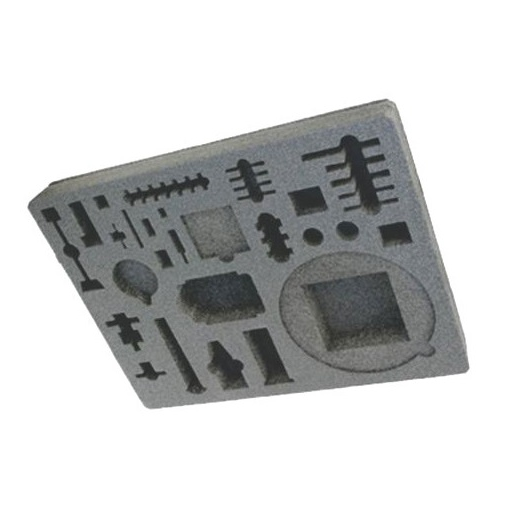
Polyoxymethylene, or POM, which a laser has cut, is used in various industrial applications because it is highly accurate, chemically inert, and flexible. Some of the simple uses or where POM gets used include:
- Automotive: For example, POM is employed to produce various types of gear wheels, bearings, and fasteners because of its strong technical performance and good abrasion resistance.
- Pharmaceutical: POM is used in medical applications such as surgical instruments and dental prosthetics because the material is famous for being biocompatible and having low backlash.
- Electrical: One of the popular examples of using POM is insulating and low-friction, where such housings, switches, and connectors could be considered.
- Machinery: Besides these areas, other industries, such as making cams, bearings, and rollers, use laser-cut POM where precision and endurance are required.
The potential for POM to be used in various laser cutting applications demonstrates its ability to conform to hypercritical design standards.
Key Industries Utilizing Laser-Cut POM
Laser-cut POM has gained acceptance across several major industries for its excellent properties, which include high strength, frictional equipment, excellent machinability, etc. The list of industries that can benefit from laser cut POM is large,e some of them being:
There are industries where POM is widely used in automotive parts. For this reason, POM is the most common material used to produce various components in the auto industry. They include gears, clips, components of the fuel spool, their wear rating being the integral feature, and the reliability they come with. It also offers essential features such as maintaining its shape under varying work conditions.
Another sector that benefits from POM is the medical industry. P. has found use in the manufacture of instruments, prosthetics, and other medical devices intended for use where cleanliness and mechanical precision are demanded.
For example, in the case of the textile industry, it is most in demand because in these systems, if all the components of POM gears and the others are not used such that the productive system moves greater than one of its standard speeds, it would not run and would lead to a malfunction. This is why the systems must have materials that will cater to the needs while maintaining the downtime required, such as the POM gears and any other components of POM in the systems.
Another application is in the aerospace industry, where the material is suited for lightweight, high-tolerance assemblies in the pistons of fluid control systems and many other vital elements.
Thanks to its insulating features and elegant machining characteristics, POM is virtually present in critical, delicate, and one-off electromechanical integrations and repair operations within the electronics industry.
Considering these rapidly changing demands, laser-cut POM is a preferred material solution for various applications.
Innovative Uses of Laser-Cut POM Components
Laser cutting POM elements has recently gained popularity due to their capacity to facilitate the application of these components in various applications. The unique aspects of the material have been well appreciated; for example, the precision, mechanical, and wear-resistant properties of polyoxymethylene have helped create components such as artificial limbs and surgical tools. Moreover, the biocompatibility of POM implies that nose devices, which are particularly useful in such sectors, cannot be made without the inclusion of the material, should they hope to work quickly while minimizing damage to the target tissue.
One such new realm is detailed herein, the developments in robotics, wherein laser-cut components are necessary to design lightweight yet strong frameworks. Moreover, these components extend the robot’s durability indoors due to the low friction and contain self-lubrication. Owners, and its organizational aspects with POM allow puckers for joystick housings and mechanical keyboard switches are another area which is being targeted, with success, for the use of laser-cut POM components
All these latest inventions show that laser-cut POM is a material poised to serve any modern need in constantly developing markets.
Reference Sources
- Influence of Laser Beam on Polymer Material
- Authors: M. Kubišová et al.
- Summary: This paper investigates the effects of concentrated radiant energy from a laser beam on polymer materials, specifically focusing on POM (Polyoxymethylene) and PMMA (Polymethyl methacrylate). The study examines how varying technological parameters during laser machining affect the cutting process. The authors utilized regression analysis to evaluate the interaction between laser parameters and the material properties, providing insights into optimizing laser cutting processes for POM.
- Effect of concentrated energy of laser beam on polymer material
- Authors: L. Sýkorová et al.
- Summary: This research explores the impact of concentrated laser energy on POM and PMMA during cutting processes. The authors conducted experiments to assess how different laser settings influence the quality of the cut and the thermal effects on the material. The findings indicate that specific laser parameters can significantly enhance the cutting efficiency and quality of POM, suggesting optimal settings for industrial applications.
- Dimensional analyses and surface quality of the laser cutting process for engineering plastics
- Authors: Mustafa Kurt et al.
- Summary: Although this study is older, it provides foundational knowledge on laser cutting of engineering plastics, including POM. The authors analyzed the dimensional accuracy and surface quality achieved through laser cutting, emphasizing the importance of optimizing cutting parameters to improve outcomes. The methodologies included experimental setups and statistical analyses to evaluate the effects of various laser settings.
- Top POM CNC Machining Parts Manufacturer and Supplier in China
Frequently Asked Questions (FAQs)
Industrial Applications of POM Laser Cutting
POM laser cutting is widely used in various industrial applications due to its precise cutting capabilities. The process employs a laser beam to cut through plastic parts, making it suitable for manufacturing components in sectors such as automotive and electronics.
Understanding DLF Plastics and Their Role in Laser Cutting
DLF Plastics specializes in advanced manufacturing processes, including the use of laser technology for cutting POM. Their expertise in laser deposition techniques ensures high part quality and optimizes the material properties of the POM being cut.
How Does Laser Cutting Work with POM?
The laser cutting process involves directing a high-power laser onto the POM material, which melts it at the desired points. This allows for intricate designs to be achieved with minimal waste, showcasing the advantages of using laser technology in additive manufacturing.
Benefits of Using DLF Plastics for POM Laser Cutting
Choosing DLF Plastics for POM laser cutting provides access to state-of-the-art technology and experienced professionals. Their use of advanced laser techniques enhances the efficiency and accuracy of the cutting process, leading to superior results in plastic parts manufacturing.
What Makes Laser Cutting a Preferred Method for Plastics?
Laser cutting is favored for plastics like POM due to its ability to maintain the integrity of the material while providing a clean cut. The process parameters can be precisely controlled, ensuring that the mechanical properties of the plastic are preserved during cutting.


