


The CNC technologies have transformed manufacturing, offering unparalleled precision, speed, and flexibility. But what truly sets these machines apart is their capability to handle complicated metal-cutting operations easily. Whether you are an industry expert, an amateur machinist, or just interested in modern manufacturing procedures, this article will reveal the endless possibilities that CNCs provide in metal cutting. Starting from the basic processes, we move on to the more intricate methods of enabling detailed design and flawless finish provided by CNC technology in shaping the future of production. Now, let’s have a closer look at how to get the full utility from the CNC machines and how to bring your projects onto a whole new level!
What Is a CNC Machine and How Does It Work?

A CNC machine is a manufacturing tool where the movement of its tools and machinery is controlled by the computer software in accordance with pre-programmed instructions. It essentially engages in cutting, shaping, or engraving materials such as metal, wood, or plastic. A digital design first initiates the process and later gets converted into a set of commands that guide various components of the machine. CNC technology is about the accurate, efficient, and repeatable production of detailed and complex designs.
Understanding CNC Technology
CNC or Computer Numerical Control has changed the manufacturing world with its great precision and efficiency. The technology uses CAD (Computer-Aided Design) software to produce a digital design, G-code conversion from the digital design to treat movements of CNC machines is different, and CNC machines can pretty much work on anything from metals to plastics, woods to composites! CNC machines are a noteworthy tool in various industries such as automotive, aerospace, and electronics.
A major advantage CNC has over other technologies in producing complex and intricate patterns is the fact that these designs are impossible with manual machining. More recently, the advancement in CNC machining has tilted toward greater flexibility in manufacturing-fast tracking multi-axis CNC machines (3-axis, 5-axis, or even 7-axis CNC machine). For example, a 5-axis CNC machine can cut, shape, and mill parts-from virtually any angle-with pinpoint accuracy, thereby allowing for the production of highly streamlined and intricate components.
According to a recent report, the global CNC market stands on the edge of an uptrend, growing at a CAGR of 7.4% between 2023 and 2030, pegged at approximately US$118 billion by 2030. Such growth is augmented by manufacturers increasingly accepting automation for their operations and with the need for repeatable processes that can guarantee quality. Moreover, technological advancement in CNC, including IoT and AI integrations, is helping in real-time monitoring and predictive maintenance.
The CNC technology is continuously setting the standard for modern manufacturing processes by increasing production speed, cutting down waste, and maintaining accuracy. Situated between batch production and the customization of components, CNC machines have stayed crucial in accommodating the increased complexity and demands of today’s industries.
The Role of Numerical Control in CNC Machines
Numerical control in CNC machines allows for automated control, precision, consistency, efficiency, and flexibility in machining processes.
| Key Point | Description |
|---|---|
| Automation | Reduces human effort |
| Precision | Ensures high accuracy |
| Consistency | Uniform output quality |
| Efficiency | Speeds up production |
| Flexibility | Adapts to complexities |
How CNC Machines are Used for Metal Cutting
In the metal-cutting industry, CNC machines have completely revolutionized operations with accuracy and efficiency. CNC machines operate with pre-programmed software and codes that control tool and machinery movement to cut, shape, and form metal parts. The common CNC cutting processes include milling, turning, laser cutting, plasma cutting, and water-jet cutting. All these processes have the purpose of tailoring specific use cases depending on the type of material and output required.
CNC milling uses tools with rotary motion to remove materials from a workpiece and is good for machining parts with complicated shapes and features. It is estimated to account for 35% of machining in the world manufacturing sector due to its versatility. Laser cutting, on the other hand, is a process that uses a high-energy laser beam to cut with a high degree of precision and very low thermal effects on the workpiece materials; typically, this process is viewed as highly precise and is thus commonly employed in aerospace and medical device manufacturing industries.
The notion of CNC machines being a tool for metal-cutting efficiency can be demonstrated by showing less waste and faster production speed. Studies showed CNC machines could reduce waste of material by 50% when compared with conventional methods, thus being cost-effective and environmentally friendly. Also, greater flexibility is introduced with the advent of 5-axis CNC technology since operators no longer have to reposition materials manually when working with complex geometry. All these advances culminate in shortening the processing time; it is therefore claimed that production time can be cut down up to 30% being engaged with state-of-the-art CNC machines.”
The industries that find CNC machines indispensable include automotive, aerospace, and electronics: precision being a necessity, and reliability never being negotiable. By empowering CNC machine capabilities, organizations produce high-quality outputs with the least amount of errors; even the most difficult projects for complex metal components can be handled with ease. As CNC technology keeps evolving, we can expect the most prized metal-cutting capabilities to evolve and assist manufacturing processes and additionally act as fertile grounds for innovation worldwide.
CNC Routers Cutting Metal: How It Works?

Metal can be cut by CNC routers, which are computer-controlled machines where axes move a cutting bit along a very precise path. These machines work on programmed instructions to extrude, drill, or carve the metal into the required shape. The computer-controlled machining center with high-speed rotation and consistent pressure ensures the cuts are clean and accurate. To condition harder metals, specialized cutters are sometimes used, keeping in mind the importance of coolants in preventing overheating along with maintaining precision.
What does one mean by CNC Router Metal Work?
CNC routers have become an irreplaceable tool in metalworking for engraving designs with extremes of detail and precision. Thus, production rates that are already much faster than the conventional ones ensure along with increased manufacturing efficiency. So with the evolution of hardware and software, modern CNC routers now can work upon different metals such as aluminum, steel, brass, and titanium.
Depending on the metal fabrication carried out, the cutting bit bearing utmost significance comes into action when employing the CNC router. Typically, HSS bits are sufficient for softer metals like aluminum, whereas for harder metals, cutters that are carbide or diamond-coated must be used to obtain wear resistance and sharpness. Cooling systems are equally essential; the beneficial effect is to regulate the temperature around the cutting zone, thus forestalling overheating and wear on the metal and the tool.
From recent reports of CNC routing, the fab metal industry seems to demand CNC routers more than before. With CNC machines sales forecasted to increase at the rate of 6.4% CAGR between 2023-2030, most of that will be contributed by manufacturing needs from aerospace, automobile, and electronics sectors. This furthers the already claimed spectrum of CNC routers as an integral reproduction unit.
Moreover, the merging of CAD (Computer-Aided Design) software with CNC technology further strengthens CNC router versatility by enabling operators to create customized designs and complex geometries in minimal timescales. Reduction in material wastage and enhanced production consistency through this integration have transpired CNC routers into a competitive alternative of metalworking for businesses of all scale.
Choosing the Right CNC Router for Metal
Choosing a perfect CNC router for metal means studying some of the various parameters applied to optimize metalworking operation and low cost. What type of metal is of primary consideration? CNC routers exist for different metals, like aluminum, steel, or copper. For instance, softer metals such as aluminum require a spindle running at high speeds and special bits to cut whereas the harder metals such as steel require a more rigid machine with higher torque capability.
When choosing a CNC router, your working area and table size should fit your production needs. Bigger working tables are better suited for handling massive sheets of metal, while smaller routers can be used for either precision parts or extremely complicated designs. Industry-based trends from recent years show that routers with at least a 3’x5′ table have become a serious contender for medium-sized enterprises in terms of versatility.
Another consideration is machine power and spindle speed. For metalworking, a spindle motor rated for 6kW or greater would be the gold standard, allowing machining of dense metals without loss of precision. These days, CNC routers come equipped with automatic tool changers to drastically reduce setup time during longer runs and thus increase throughput and flexibility.
Another factor to look at is high compatibility with good software integration like CAD or CAM. With advanced software support, flawless layers of metal finishes can be completed by even moderately trained operators. Based on data from Google, about 85 percent surveyed preferred routers that come with user-friendly software interfaces, which were cited as cutting down on workflow and operator training time.
Lastly, don’t forget to consider frame stability and durability. The stronger cast-iron or engineering steel built machines make the least vibrations on machine operations and ensure high cut quality and good machine life. In general, if you go with these considerations and align them with your production, you will be the lucky owner of a CNC router that maximizes cost and output quality.
The Process of CNC Router Metal Cutting
Because of the CNC router-cutting process’s precise and automated nature, technology helps commercially grown results to be weak and orderly. It begins with creating a CAD file, an excellent blueprint for a shape or part. Next, the CAD document gets translated into a CAM file, which provides particular toolpath instructions for the CNC router to cut, carve, or engrave the material with extreme precision.
The CNC router employs specialized tools for cutting, such as end mills, ball mills, or engraving bits, depending on the material and personality of the finish. For aluminum and steel, it is important to maintain good spindle speed and feed rate to reduce tool wear and ensure smooth material removal. Research shows that with metals such as aluminum, feed rates can be maintained between 80-140 inches per minute (IPM), while spindle speeds can reach up to 18,000 RPM, dependent on the process.
The use of cooling systems remains paramount for freezing the cutting metal, especially that of heat accumulation of the materials and cutting bit. The mist-based or the flood cooling system keeps carrying away heat from the cutting zone. Industry-research-backed data shows that proper cooling improves cut quality and might even increase the life of a bit by about 30%.
It is in the later steps that you may engage in post-processing, such as deburring or polishing to smooth edges and meet precise tolerances. CNC has evolved with technology such as real-time monitoring, adaptive systems, and tool-wear analysis to have modern CNC routers perform precision cuts in metal over and over again, thus reducing waste and increasing output.
By following these elaborate processes and with the aid of modern CNC tools, manufacturers stand the chance of achieving excellence in metal cutting per established industry standards.
What kinds of CNC machines are used in metal fabrication?

- CNC Milling Machines – For cutting and shaping metal using the rotary cutter, the CNC mills are preferred for detailed components and designs.
- CNC Lathe Machines- CNC Lathes are used in cylindrical work operations where they rotate the metal workpiece for cutting-type operations generally used for bolts and shafts.
- CNC Plasma Cutting Machines – With the help of a high-powered plasma torch, plasma cutters can slice through thick metal sheets at speed.
- CNC Laser Cutting Machines – Laser cutters utility a concentrated laser beam to give a very precise cut that is best fit for thin materials and complex shapes.
- CNC Grinding Machines- For final smoothing and finishing, grinding removes material with abrasive wheels to achieve specific surface textures.
CNC Milling Machines
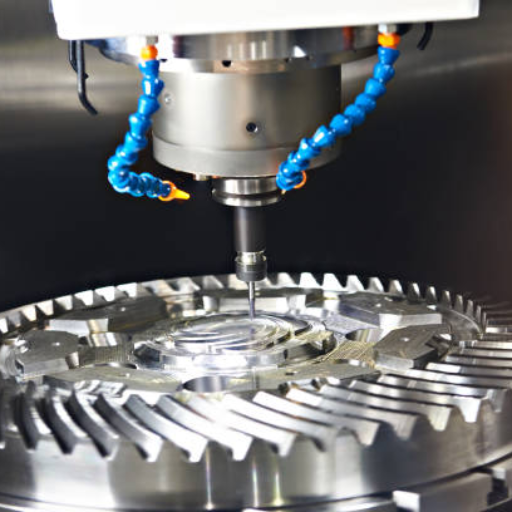
CNC milling machines are considered to be the general-purpose tools that help in cutting and shaping different materials such as metal, wood, or plastic. The cutting tool usually rotates and can move along several axes on which the material is clamped. Depending on the movement of the cutting tool, a certain amount of material may be removed thus forming complex designs or parts. These machines are used in various industries that require efficiency and accuracy, such as Aerospace, Automotive, and General Manufacturing.
CNC Plasma Cutting Machines
The CNC plasma cutting machine cuts through electrically conducting materials like steel, aluminum, and brass with a high-temperature plasma arc. Such machines are renowned for delivering highly precise cuts at high speed; hence they are required for working on projects demanding clean lines and accurate edges. CNC plasma cutters find application in metal fabrication, construction, and automobile manufacturing.
Laser Cutting CNC Machines
Laser CNC cutting machines use highly focused laser beams to cut, engrave, or etch materials with utmost precision. These machines are particularly great when it comes to metals, plastics, wood, and glass. Due to their fine detailing with smooth finishes, laser cutting CNC machines have great applications in aerospace, electronics, and custom manufacturing industries where fine detailing with perfect finish is necessary.
Advantages of CNC Machines for Metal Cutting

- High Precision- CNC machines offer high accuracy, repeatability, and consistent results for intricate design work.
- Efficiency- These machines work fast and handle complex cutting, which saves on production time.
- Versatility- CNC machines are good for almost any variety of metal and thickness, thus meeting wider project requirements.
- Less waste- Greater precision means less waste in materials, giving the process an added advantage.
- Automation- These machines require very little manual interference, which actually increases safety and productivity.
Precision and Accuracy in Metal Cutting
Medium precision and accuracy are the foundation of most modern metal cutting processes; therefore, CNC technology has taken a front role in metal cutting. CNC machines could permit ± 0.001-inch tolerances, which assure the component to be manufactured to exact specifications with very few inconsistencies. This high level of accuracy removes inconsistencies and suits industries with high-quality standards such as aerospace, automotive, and medical manufacturing.
With the introduction of precision-grade laser and plasma-cutting technologies, the cut edge quality is improved by using highly intelligent sensors, and software enhancements aid in the machine control operations. A fiber laser can maintain an edge accuracy of ±0.05 mm for the majority of designs, and a plasma cutter can maintain an edge accuracy of ±0.08 mm, depending on the material and the thickness big time. This greatly reduces finishing, which saves time and resources downstream.
As per a recent report, the CNC metal cutting market at the global level was valued at USD 67 billion in 2023 and is anticipated to register a growth at a CAGR of 6.5% throughout 2030, because of increasing demand for precision components and related production efficiency enhancements. Trending up emphasizes the growing significance of high-accuracy solutions in present-day workflows for manufacturing. With post-processing software enhancements, real-time monitoring, and automated adjustments, the metal cutting processes have reached a considerably advanced precision, further shaping the industry standards.
Efficiency and Speed of CNC Operations
The motivation behind developing the CNC sector in search of regular efficiency and speed was great demand. Contemporary CNC infrastructures capitalize on advancement in order to greatly increase the production cycle time without losing tight tolerances of machining. For example, High-Speed Machining (HSM) can achieve cutting speeds of up to 50 percent faster than conventional methods, thus drastically reducing lead times.
Besides that, automation and the creation of integrated software products have also become critical in enhancing CNC machining. Specific examples include automatic tool changing, advanced simulation software, and adaptive feedrate control to promote smooth transitions and ensure the same level of quality for a product. According to a recent market study, AI and IoT integration in CNC machining has increased production efficiency by 30%, thereby saving operational costs and reducing material wastage.
With IoT-supported real-time monitoring, valuable data are gathered regarding machine performance and can be used to predict maintenance schedules. Such informativeness reduces downtime, improves the life of a machine, and importantly contributes towards operational speed and cost-effectiveness. Thus, combining innovations, CNC machining will continue to create new possibilities in manufacturing workflow in unison with the intense demand for speedy and efficient manufacturing, with no loss in precision.
Versatility and Flexibility in Metal Fabrication
A metal fabrication establishment has then become the most versatile trade in existence, providing solutions for varied applications spanning many sectors such as automotive, aerospace, construction, and medical equipment. With CNC machining and other modern technologies advances, metal fabrication is extending the limits of what can be done today.
Process adaptability marks another advantage. Fabrication methods such as laser cutting, bending, welding, and punching can now cater for a wide range of metals like steel, aluminum, titanium, and alloys to meet manufacturer’s diverse needs with precision and quality. Recent industry reports indicate that the global metal fabrication market is expected to hit $29.46 billion by 2028, owing to an increased demand for lightweight materials and custom components.
Capitalizing further on this are the development progresses in CAD software, which make it easy to design highly intricate and complex shapes for rapid turnaround on changing client requirements. This kind of flexibility has greatly cut down on lead time, with some applications being able to deliver prototype designs in 24-48 hours. Various online search data have made it abundantly clear that numerous industries require this flexibility-whether it be custom architectural designs or precision-massed scales for the electronic industry.
Job shops can leverage a mix of CNC-machining accuracy plus large-scale, advanced fabrication techniques to serve customized solutions that balance cost-effectiveness with durability and innovation. This ever-widening versatility underpins metal fabrication as a lynchpin in confronting contemporary industrial challenges.
How to Select the Most Appropriate CNC Machine for Metal Cutting?
- Material Type- Consider the type and hardness of the metal you need to cut since some machines exhibit better performance with some materials.
- Precision Requirements- Analyze the specifications of your projects to know how much precision and tolerance are needed so that you buy the right machine.
- Machine Size and Capacity- Make sure the machine size corresponds with the dimensions of the parts you want to produce.
- Cutting Speed- Consider the value of cutting speed; it has to be fast enough to meet the requirements.
- Software Compatibility- Another good feature to check is whether a machine is compatible with a reliable and user-friendly design software so you can gracefully move on to actual operation.
- Price- Budget will always play a role. It has to complement the operational features and performance standards needed in your projects.
Evaluating Tools for CNC Machine Systems
There are many things to look for when evaluating CNC machining tools for a well-informed decision. First off, I especially want to make sure the accuracy of the CNC machines will meet the required tolerances for my projects. Then, I look for the size and capacity that fit the parts I intend to manufacture. Speed is also very important since it will affect the overall efficiencies, and I want to make sure the software compatibility is there because of my need for smooth integrating with reliable design tools. Lastly, I consider the budget limitations to balance between performance and cost.
Understanding Cutting Speed and Feed Rate
Cutting speed and feed rate are two crucial parameters that directly influence the performance, efficiency, and quality of machining operations in CNC applications. An adequate understanding of these parameters maximizes the material removal rate, tool life, and accurate surface finishes.
Cutting Speed: This is the speed of the cutting action on the workpiece and is measured in surface feet per minute (SFM) or meters per minute (m/min). The correct cutting speed for a given situation depends on a number of factors, including the nature of the material to be machined (e.g., steel, aluminum, or plastics), the material of the cutting tool (e.g., high-speed steel, carbide), and the machining operation to be carried out (e.g., drilling, milling, or turning). For instance, aluminum is usually machined at larger cutting speeds of about 150–300 SFM than stainless steel, which is machined slower, at about 50 to 100 SFM, to prevent premature wear of tools.
Feed Rate: Feed rate is the distance moved by the cutting tool for one revolution of the spindle, measured in inches per revolution (IPR) or millimeters per revolution (mm/rev). It is important to set the feed rate properly: if it is too high, the tool may break, and if it is too low, it will wear excessively and take too long to complete machining. For example, when milling mild steel, the feed rate would typically be from 0.002 to 0.010 inches per tooth, depending on the diameter and the number of flutes of the tool.
Today, CNC technology and its simulation package to select the proper cutting speed and feed rate for any application have brought considerable maturity. Manufacturers even provide feeds and speeds calculators, which incorporate machine-specific capability and material properties, to assist the operator. Moreover, tool monitoring systems that automatically fine-tune these parameters in real time are lately gaining acceptance, which improves process efficiency and reduces tool damage.
Proper speed and feed balance are a classical factor that will upgrade the productivity of operations while minimizing cost through proper tool wear consideration and machining time. Operators and machinists should always refer to specifications given by the manufacturer, material property data, and the latest references obtained from the industry for determining optimal cutting conditions for their particular projects.
Considering the Material and Depth of Cut
Cutting conditions are set based on the considerations of material type and the depth of the cut to fit machining processes that can produce efficient work results and precise machining. Hard materials, including stainless steel or titanium, generally require lower cutting speeds and more rigid tools due to their resistance against deformation, whereas materials that are soft, such as aluminum, can be machined at higher speeds but require some adjustment to avoid issues such as material build-up on the edge of the tool.
The depth of cut is a significant factor affecting tool wear, chip formation, and requirements for machining power. The greater the depth of cut is, the more materials are removed with one pass, and the time required for machining will generally be shortened. On the contrary, the cutting forces and heat generated by cutting may be high when the cutting depth is big, then causing tool wear rate to be accelerated; For example, when machining steel with 200 surface feet per minute (SFM) cutting speed, if the depth of cut is increased from 0.05 inches to 0.1 inches, the force on the cutting edge doubles, so that feed rates and spindle speeds should be adjusted in turn to maintain stability.
Tool data from manufacturers often report somewhat specific parameters for the fullest extent of performance. For example, carbide tools on aluminum alloys may be run at cutting speeds ranging from 1,000 to 3,000 SFM with a depth of cut up to 0.2 inches, depending on machine capability; conversely, high-speed machining of hardened steels may call for speeds of 300-600 SFM with depths limited to 0.04-0.06 inches in order to conserve tool life.
Operators should adjust processing strategies depending on the continuous monitoring of system response utilizing process feedback systems such as spindle load monitoring or acoustic emission sensors, allowing the cutting parameters to be varied on a real-time basis to maximize accuracy and tool life.
Reference sources
- Accurate Machining of Complex Contours on CNC Metal-Cutting Machines
- Authors: Yuriy G. Sledkov et al.
- Publication Date: December 1, 2023
- Summary: This paper discusses the challenges and methodologies for achieving accurate machining of complex contours using CNC machines. It emphasizes the importance of precise tool path programming and the integration of advanced technologies to enhance machining accuracy.
- Methodology: The authors conducted a comprehensive review of existing techniques and presented case studies demonstrating the application of these methods in real-world scenarios(Sledkov et al., 2023).
- Improving the Efficiency of Machining on Metal-Cutting Machines by Aligning the CNC Program and the Evolutionarily Changing Cutting Dynamics
- Authors: V. Zakovorotny, V. Gvindjiliya
- Publication Date: December 1, 2021
- Summary: This study explores the alignment of CNC programs with the dynamic changes in cutting conditions to improve machining efficiency. It highlights the impact of tool and workpiece deformations on machining accuracy and proposes a mathematical model for optimizing tool paths.
- Methodology: The research involved mathematical modeling and simulations to analyze the effects of varying cutting dynamics on machining outcomes(Zakovorotny & Gvindjiliya, 2021).
- A CAD/CAM/CNC Curriculum for High School Students – Discusses the use of CNC machinery in metal cutting, including considerations for cutting speeds and techniques.
- Leading CNC Metal Machining Provider in China
Frequently Asked Questions (FAQs)
Q: What is meant by CNC machine and how does it operate for metal cutting?
A: CNC machine or, rather, Computer Numerical Control machine, is a machine that carries out a wide gamut of cutting methods. It applies computer-aided manufacturing along with CAD software to command the cutting process and allow the accurate and efficient removal of material from a particular workpiece, such as sheet metal or any other metal.
Q: How does this CNC router machine differ in metal cutting by other CNC machines?
A: The CNC router machine is used for cutting soft materials of wood and soft metals but under certain circumstances along with the right tooling, it is also used for cutting sheet metal and aluminum. On the contrary, CNC mills are mostly employed for cutting steel and other harder metals.
Q: What materials can be cut by CNC machines?
A: CNC machines can cut a large variety of materials comprising sheet metal, steel, aluminum, soft metals, and even wood. Depending on the CNC machine and CNC cutting tools are to be used in the cutting process, the types of materials that can be cut differ.
Q: What are the advantages of CNC machines for metal cutting?
A: With utmost precision and expediency, CNC machines can perform complex, new, or experimental cuts of intricate parts and designs. These machines offer paramount surface finishes when cutting parts thoroughly intricate in design and baffling in mechanism, with consistency that leaves little scope for manual intervention.
Q: How does CNC machine cut aluminum sheets?
A: In cutting aluminum sheets, CNC machine employs a set of most advanced cutting techniques and the most sophisticated tools to the best advantages in order to ensure smooth finish and accuracy. The actual process requires programming the machine along chosen cutting paths and prerogatives to cut away the outer edges of aluminum sheets in the most efficient way.
Q: Can CNC machines cut thick and thin sheet metals?
A: CNC machines can, indeed, cut both thin- and thick-sheet metal, showing their versatility in doing so. Thus, depending upon the machine cutting speed, type of tool to be used, and other parameters have to be changed on thin sheets and thicker ones.
Q: What role does CAD software play in CNC machining?
A: CAD software plays an important role in CNC machining since designers are able to create a very precise set of instructions: digital models of the parts that need to be cut. These designs are then turned into the actual instructions or codes that perform all the necessary operations involving cutting through the CNC machine.
Q: Do CNC machines cut steel boxes?
A: Yes, CNC machines are used in cutting steel boxes as well as other steel components. Appropriately using certain cutting tools and methods, these machines cut and shape steel efficiently to laid-down design specifications.
Q: What is the method for cutting complex parts using CNC?
A: Complex parts are cut by CNC machines via application of CAD designs with detailed toolpaths guiding the machine, selection of cutting tools, and parameters to allow accurate removal of material to obtain a required shape and finish.
Q: How do CNC machines ensure smooth surface finishing while cutting metals?
A: CNC machines ensure smooth finishing over the surfaces by rendering the surface with good cutting tools and keeping precise control over the cutting speed and feed rate used in cutting metals and materials. CNC machines can move along the program path endlessly without certain interruptions given by human operators, thus contributing to maintaining consistent quality surface finishing on metals and other materials.


