


Dealing with the carbon fiber processing is not easy, yet a necessary activity for almost all industries – from space to motor racing, machinery and more, particularly for those where the feature is key. Sophisticated in its strength capability, this material is one of the lightest, but holds tremendous application potential. This is why we can say 85% of the cases where it is necessary to machine with a traditional method will most likely result in questioning efficiency. There is still the option of exploring other avenues. And for those of us working with carbon fiber in any of its many forms of production, it is vital to invest heavily on cutting things in between carbon reinforced layers as there is no need to fulfil the requirement of these cuts and then striped carbon to draw off cuts of material off the woven or pinned mats. This tutorial will cover ways to expand the use of carbon fiber without making common errors.
Understanding the Machining Process for Carbon Fiber
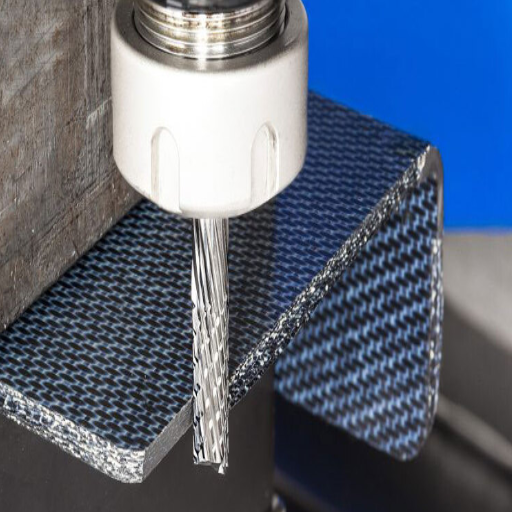
Manufacturing things from carbon should always be done very carefully and meticulously, to avoid harming the commodity and compromising the accuracy. There are some aspects to consider in the case of machining carbon, the use of elements as a high-tech feature:
- The first is Tool Selection. Diamond-coated and carbide cutting tools for composites are a great option. Such tools are particularly designed to cut carbon-RFLA-influenced composites. They are therefore wear-resistant and do not leave fringes or cause carbon fiber separation.
- The second is cutting speed. The logic is that high cutting speeds can generate too much heat, which may damage the work material. Moderate cutting speeds that are moderated with an effective cooling mechanism are ideal because they minimize damage to the carbon fiber component in their structure.
- The third is Feed Rate. Using a constant feed rate ensures minimum damage to the fibers due to tension and that no excess fibers remain at the stroke’s end.
The fourth one is Dust Management, which is necessary as the carbon fiber dust is harsh. A convection dust extraction system should be installed, and protective clothing should be provided.
What are the Key Properties of Carbon Fiber?
Properties of carbon atoms are brilliant. The reason why this material is of high value in many industries. Here are some of the reasons:
- High Strength to Weight Ratio: Carbon fiber is strong but very light by nature, so it allows for applications that require strength but don’t want mass, like in the aerospace and automotive industries.
- Good Stiffness: Its tough layer makes the construction material, such as concrete, more biaxial than uniaxial, which means its resistance to changes in shape or deformation as a result of any applied force is strong.
- No Corrosion: Non-oxidative materials such as carbon fibers do not undergo corrosion due to environmental conditions, including water or salts.
- Inhibitors: Some materials, even carbon fiber-reinforced plastics, may undergo changes when they are subjected to high temperatures. They may lose some of their mechanical properties. Composites may be used in an air aviation system without features for thermal cycling or oven environments.
- No Surges: Some applications require dimensional stability, which carbon fiber reinforced composites do not possess.
- Conduction of Heat/ Electric Energy: Such properties in carbon fibers may be mostly determined with a kind of composite, and if the specific structure allows, the fibers can be employed in some electrotechnical applications.
Another huge advantage of composite construction is the ability to manufacture different shapes while giving this material the necessary properties.
Differences When Machining Carbon Fiber vs. Other Materials
There are several reasons why carbon fiber machining differs from others: the abrasive nature of the material, the way the fibers conduct heat, and the requirement of specific machines and dust extraction systems during the machining process.
|
Aspect |
Carbon Fiber |
Other Materials |
|---|---|---|
|
Tool Wear |
High abrasion |
Moderate |
|
Heat Impact |
Resin damage |
Minimal |
|
Dust Control |
Critical |
Less critical |
|
Cutting Style |
Fracturing |
Chip removal |
|
Tooling |
Specialized |
Standard |
|
Coolant Use |
Limited |
Common |
|
Safety |
Conductive dust |
Non-conductive dust |
Choosing the Right Equipment to Machine Carbon Fiber
There are three basic sizes to choose from: standard, sleeper, or even one oversized size. A comfortable fit is always achieved by repeating the process of taking your measurements. These are mixed, enabling the user to adjust the waistcoat. Upper back shell: A medium increase or decrease from the design pattern could be determined to care for those with large or small backs. Armholes: shapes of the arm holes in the dress capture those with both slim and wide arms. Bars are also intended to capture the measurements and effects relating to the shoulders. The illusion of hatch marks, which is present on some lines, is similar to the curve but with horizontal streaks. All the measurements that change based on the cardiac level have been measured adequately, and the effect relating to the waist and the hoods aimed at the space.
What CNC Machine is Best for Carbon Fiber Machining?
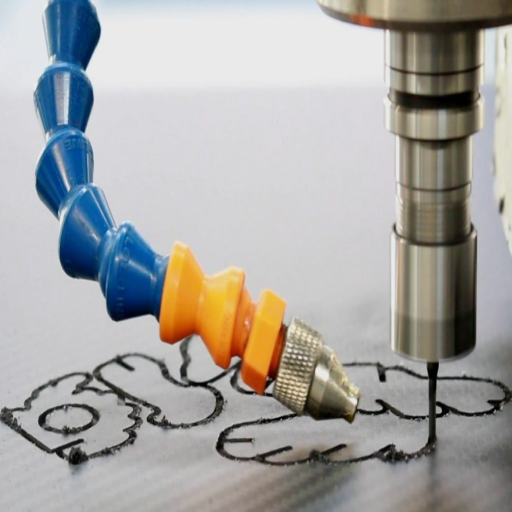
It is essential to choose an appropriate CNC machine for carbon machining. 5-axis machines have positioned themselves as the best for carbon fibre due to precision, versatility, intricate cutting abilities (which carbon often requires), and high machine performance. Such kinetic objects from companies like Haas, DMG MORI, and Mazak are admired for their precision and utilization of extreme designs. On the other hand, other fast machining specifications like high-speed spindles and rigidity in bed construction are physically confirmed to slow down the intermittent. Such composite technical features allow one to make more accurate cuts, decrease the amount of wasted material, and extend the life of the machine tools. Such very high precision CNC machines, including CNC machines for the machining of CFRPs, are well-renowned for their machining efficiency and access to the most advanced technological features, such as five axes.
How to Select Cutting Tools for Carbon Fiber Parts?
An appropriate selection of cutting equipment for carbon fiber cutting must be chosen to achieve high accuracy, low defects, and an extensive tool life. The importance of selecting cutting tools can be viewed from the following points, Dulles:
- Tool Material—Tools made from polycrystalline diamond (PCD) or carbide are advised as they are more likely to withstand wear and tear. Polycrystalline Carbide (PCD) tools, in particular, are classed as high-performance cutting tools compared to other cutting tools because they perform so well even when cutting composites such as Carbon Fibre.
- Tool Geometry—It is necessary to select a tool with a sharp and well–defined cutting edge. Helica patterns or diamond-cut tools have been engineered to cut barriers and materials without shear, thus improving the edge quality of the material.
- Deposition- Deposited counts and so do the cutting tools, it brings doubt as to whether carbon maze or Titanium aluminium deposits give a minimal material or tool wear during machining
- Cutting Speed and Feed Rate—The carbon fiber in place should be machined in amenities, with the added advantage of using the resources of providing speeds and feed rates so as not to have high temperatures that may decompress the material.
- Dust Collection—The dust produced during the carbon fiber machining operation is very small and contains sharp particles that will easily cause abrasive wear. Hence, it is better to prepare with equipment that has a vacuum sealing system capable of collecting the dust effectively.
These aspects should be considered along with the specifics of the application and the carbon fiber you will work with. For best results while machining, use high-quality specialized cutting tools to maintain accuracy and ensure the job is completed as efficiently as possible.
What are the Effects of Cutting Speed and Feed Rate on Machining?
Regarding carbon fiber machining, one of the most standout aspects about their performance and how the workpiece should be machined is the cutting speed and feed rate. Tools are available for cutting to remove the material from the workpiece at a determined cutting speed. The heat produced becomes excessive and obnoxious when this cutting speed is too high. Moreover, such high cutting speeds are capable of causing rapid wear of the tools used, leading to thermal damage on the workpiece, and therefore a deteriorated quality of surface finish. However, a decrease in cutting speed would lead to doing much material removal quickly. Alternatively, this would help eliminate poor finishes but increase the operation duration. Cutting feed rate plays a vital role in chip formation and the tool’s life. An increase in feed rate has a higher chance of chipping material out faster, whereas this may compromise the purity of the surface and necessitate more effort by the tool. One of the most critical aspects in machining is determining the best cutting speed and feed rate to achieve effective cutting, reduce tool wear, and ensure the carbon fiber material retains its material composition. Using state-of-the-art cutting tools and adding live tooling helps promote efficiency and consistency during carbon fiber milling.
What Machining Methods are Effective for Carbon Fiber?
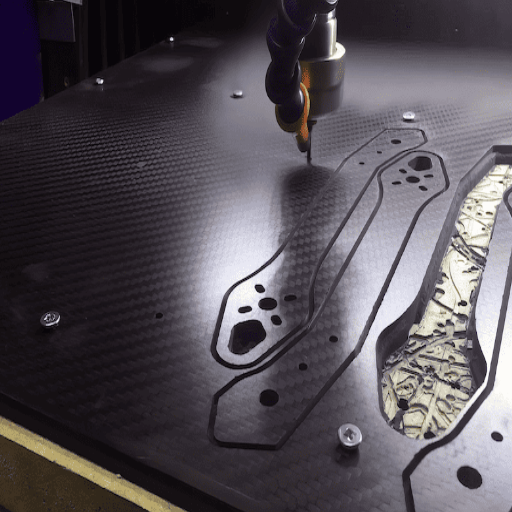
- Waterjet Cutting uses sharp water and metallic finishing touches to cut carbon fiber without emitting heat, thereby reducing the risks of thermal damage.
- Laser Cutting—Laser cutting is pertinent to fine, defined cuts. It is cutting done under high heat but in a controlled manner so as to limit any damage to the fibers present on the edge of the cut.
- Diamond-Coated Tools—Using diamond-coated tools while performing procedures like drilling and milling will result in less tool wear and a better finish because the external layer’s hard-wearing durability will ensure a better finish.
- CNC Machining—Computerized metal cutting (CNC) allows positions to be machined to very closely controlled, replicable dimensions. This restriction is uniform in nature and is also characteristic of machining carbon fiber.
Therefore, each method of carefully chosen training on the application and its requirements should be considered, as it concerns the preservation of the material and success in its full functioning.
CNC Milling Techniques for Carbon Fiber Sheets
CNC milling techniques, when working with carbon fiber sheets, necessitate a specialized set of tools, careful planning, and attention to detail in order to avoid any damage and ensure that the work meets the required standards. Appropriate selection of cutting tools, e.g., diamond-coated or carbide end mills specifically manufactured to accommodate the toughness of carbon fiber, is among the main factors to be analyzed. Additionally, using a spindle with a quick speed and a slow feed rate helps in reducing fiber during cutting. The importance of efficient dust extraction systems is highlighted by carbon fibers being harmful to equipment and metals as fumes. Moreover, other techniques like milling are chosen for a lower chance of splinters in materials causing damage to the cutting. While working with carbon fiber sheets, it is possible to work with the least risk by using the latest exceptional CNC systems and appropriate tools.
Waterjet Cutting vs. Traditional Machining Methods
Waterjet cutting outperforms competing technologies because of its flexibility, accuracy, and beneficial rendering factor. Other technologies, such as milling, laser, and plasma cutting, have advantages over waterjet systems, especially in speed issues, heat exposure, and straightness of material being cut.
|
Aspect |
Waterjet |
Traditional |
|---|---|---|
|
Material Range |
Almost all |
Limited |
|
Heat Impact |
None |
Present |
|
Precision |
High |
Varies |
|
Setup Time |
Quick |
Longer |
|
Thickness |
Up to 24″ |
Varies |
|
Speed |
Moderate |
Varies |
|
Cost |
Moderate |
Varies |
|
Edge Quality |
Smooth |
Varies |
Choosing the Right Machining Method for Your Project
In order to choose the appropriate process of treatment for any order, there are several points that need to be kept in mind. This can include the material, the precision expected, the speed of production, and the money constraints that may be present. For example, materials sensitive to heat can be cut using the waterjet technology,y and crisp cutting edges can be obtained without the risk of warping or distortion due to heat. However, CNC machining services like the conventional one would serve even at a higher level of domain of high precision, and they are commonly used in projects that demand narrow margins. Depending on what you want to achieve, as well as comparing the exigencies of the project with the acceptable standards in the market, you can do this with proper research and data analysis, such as material data.
Applications of Carbon Fiber Machining

- Cutting carbon fiber material has high strength, durability, and very low weight, so it has vast applications in various industry sectors. In this regard, the most common uses are mentioned below;
- Aeronautical Industry: It aims to manufacture lightweight and sturdy components for aircraft and spacecraft that help in better fuel utilization and faster aircraft performance.
- Automobile Industry and Vehicles: Production of high-speed vehicles in the form of lightweight body panels, frames, and internal parts for ease in weight and speed acceleration during a drive.
- Sports Equipment Production: Advanced Research in Producing Sports Goods for Various Sports like High-End Bicycles, Tennis Rackets, Golf Equipment, etc.
- There’s also a need for metallic and radiolucent implants to overlay other rigid implants, so as to create space for placing an audio speaker, microphone, or other accessory device and reduce the weight of the total assembly. Renewable Energy—In the automotive industry, the trends are more smart and light parts, for instance, constructing wind energy equipment, Light Weight Energy Teil utilizing CF blade generators and other additional parts.
From this point of view, Carbon Fiber is a multifunctional material that undoubtedly holds a dominant position in a wide range of technological advances and improvements in many branches of science.
What are the Typical Applications of Carbon Fiber Components?
In several industries, carbon fiber has been recognized as one of the most reliable materials due to its high strength-to-weight ratio, resistance to corrosion, and high adaptability in terms of manufacturing. Here are some of the in-depth aspects and applications of carbon fiber components, accompanied by data.
Aerospace and Defense: Carbon fiber is used extensively to comprise the structure of aircraft fuselages, wings, and other equipment. New Boeing and Airbus contemporary planes like the Boeing 787 Dreamliner and Airbus A350 consist of carbon fiber materials in almost 50% of their weight, which decreases fuel use by 20-25% compared to traditional aluminum airplanes.
Automotive: Speed and luxury car manufacturers such as Tesla, Burgman, and Lambor utilize Carbon fiber to manufacture all of their vehicles. The use of Carbon fiber helps many people, motor vehicle owners in particular, in that it reduces the weight of the car to a considerable extent, increasing fuel efficiency. For example, the production of the BMW i3 electric car with a carbon fiber body reduced approximately 250-450 kilograms of the vehicle’s weight compared to the steel structures that are usually used.
Sports and Entertainment: Sports equipment such as tennis rackets, bicycles, golf clubs, hockey sticks, and skis are made out of improved grades of carbon fiber composites. This is achieved by reducing the equipment’s weight while improving the gear’s wear resistance and resilience. Using the carbon fiber bicycle frame over the traditional steel frame has also shown control fatigue reduction and improved performance during long rides for the cyclist.
Medical Industry: Carbon fiber’s radiopacity (i.e., X-ray transparency) makes it safe for medical use, where medical equipment such as operation tables, surgical tools, and prostheses are employed. For instance, using light composite carbon fiber prosthetics that are more comfortable and mobile-friendly and imaging cushion instruments has since improved the quality of patients’ images.
Clean Energy: Carbon fibers are abundantly used in making wind turbines’ propeller blades because of their environmentally friendly properties, which reduce the impact of green sprouting. Constructing wind turbine blades with a carbon-reinforced thin layer coating protects the turbines from corrosion, which reduces their weight by 20-30% compared to the traditional blades. Consequently, these blades can absorb more energy with the same efficiency as the old ones. A recent survey shows that carbon fiber composites will continue to be instrumental in developing clean energy use applications in the future.
Marine Industry: The use of carbon fiber as a composite material for the construction of yachts, boat racing, and various types of sea-going vehicles remains a popular trend in a fast-paced modern world. One cannot overlook the extent to which reducing the weight of such vehicles improves other parameters of the vessels, such as speed, fuel efficiency, and the minimized risk of pollutants to the environment.
From the numerous illustrations above, it is evident that carbon fiber has found multiple applications in many industries and is an indispensable technology for future developments. Admittedly, the current carbon fiber market development data cannot be overlooked. The growth of the global carbon fiber market is estimated at more than $4.5 billion in 2021. It is said to be around a CAGR of 10.6% by the end of 2030 thus reaching a figure over $9.5 billion and this development this fuelled change would suggest using more carbon fibers for advanced engineering in the form of its solutions.
How is Carbon Fiber Used in Aerospace and Automotive Industries?
Carbon fiber is a key component in the aerospace and automotive sectors because it is light, strong and resists breakage over time, making it easier to install and maintain vehicles. Aircraft manufacturers use this material to cut the weight of their airplane bodies, wings, and stabilizers, leading to improved aircraft fuel efficiency and better performance. This material is used with great success in modern commercial passenger aircraft structures like the Boeing 787 Dreamliner and the Airbus A350, where a significant part of the structures, up to 50%, consist of composite materials based on carbon fibers by weight.
In the field of car production, the use of carbon becomes even more widespread in the design of lightweight components like panels, chassis, drive shafts, etc. This is due to car concerns about the speed and driving manners, efficient fuel consumption, and throttle emissions. Whether it is within the scope of Lamborghini, BMW, or Tesla, all luxury and high-performance automobile producers have advanced means to use carbon fibers to improve the efficiency and resilience of their vehicles. With costs coming down, production technology advancement will drive up the use of carbon fiber in these kinds of vehicles, hence there will be a wider scope of potential customers.
Reference Sources
- Authors: Gyuho Kim et al.
- Journal: International Journal of Precision Engineering and Manufacturing
- Publication Date: September 2, 2023
- Citation Token: (Kim et al., 2023, pp. 1989–2008)
- Summary: This study investigates the impact of cutting angles on tool wear during the machining of carbon fiber reinforced plastics (CFRP). The authors employed directional milling techniques to optimize cutting conditions, aiming to reduce tool wear and improve machining efficiency. The findings suggest adjusting the cutting angle can significantly influence tool longevity and machining performance.
2. Dynamic Performance of Industrial Robots in the Secondary Carbon Fiber-Reinforced Plastics Machining
- Authors: Dong Chan Kim et al.
- Journal: Journal of Manufacturing Processes
- Publication Date: October 1, 2023
- Citation Token: (Kim et al., 2023)
- Summary: This paper explores the dynamic performance of industrial robots used in the secondary machining of CFRP. The authors conducted experiments to assess the robots’ capabilities in handling the unique challenges posed by CFRP materials, such as their anisotropic properties. The results indicate that industrial robots can effectively manage the machining processes, enhancing productivity and precision.
- Authors: Patricia Krawczak et al.
- Journal: Journal of Manufacturing and Materials Processing
- Publication Date: May 29, 2024
- Citation Token: (Krawczak et al., 2024)
- Summary: This study compares conventional drilling with helical milling techniques for producing holes in carbon fiber-reinforced aluminum laminates. The authors analyze the effects of machining parameters on cutting force and temperature. The results show that helical milling significantly reduces thrust force and machining temperature, leading to better surface quality and reduced risk of thermal degradation.
- Authors: I. A. Popan et al.
- Journal: Applied Sciences
- Publication Date: September 21, 2024
- Citation Token: (Popan et al., 2024)
- Summary: This study introduces an artificial neural network (ANN) model for optimizing process parameters to reduce delamination in CFRP materials during abrasive water jet (AWJ) machining. The model effectively predicts optimal process parameters, demonstrating the potential of ANNs in enhancing AWJ processes and improving the quality of CFRP parts.
5. Top Carbon Fiber Cnc Machining Parts Manufacturer And Supplier In China
Frequently Asked Questions (FAQs)
Q: What is the process of machining carbon fiber composites?
A: The machining of carbon fiber composites involves various techniques such as drilling, cutting, and milling to shape the composite material into desired parts. These processes require specific machining parameters like depth of cut and cutting speed to ensure precision without causing delamination.
Q: Why is carbon fiber considered an abrasive material during machining?
A: Carbon fiber is abrasive due to its strong and rigid fibers, which can cause excessive tool wear during machining. To minimize tool wear and achieve optimal results, specialized tools and cutting parameters must be used.
Q: What are the standard techniques used for carbon fiber cutting?
A: Common techniques for carbon fiber cutting include CNC machining, waterjet machining, and laser cutting. Each method has its advantages and is selected based on the specific requirements of the machining services and the carbon fiber laminate being processed.
Q: How does fiber orientation affect the machining of carbon fiber parts?
A: Fiber orientation significantly influences the machining of carbon fiber parts, as it affects the strength, stiffness, and machinability of the composite material. Proper fiber alignment is crucial to maintaining the integrity of the part and preventing issues such as fiber pull-out or delamination during machining.
Q: What are the challenges associated with drilling carbon fiber?
A: Drilling carbon fiber presents challenges such as avoiding delamination, managing tool wear, and achieving the correct tolerance. Properly choosing drill bits and cutting parameters is essential to minimize these issues and ensure that clean holes do not damage the composite material.
Q: What machining parameters should be considered when machining carbon fiber reinforced polymer?
A: Important machining parameters for carbon fiber reinforced polymer include cutting speed, feed rate, depth of cut, and tooling material. Adjusting these parameters correctly helps optimize the machining process and reduce issues like tool wear and delamination.
Q: How can one handle carbon fiber safely during machining?
A: Handling carbon fiber safely requires wearing appropriate personal protective equipment (PPE) such as gloves and masks to avoid inhaling dust and fibers. Ensuring proper ventilation and using dust extraction systems during machining are crucial to maintaining a safe working environment.
Q: What are the benefits of using CNC routers for machining carbon fiber?
A: CNC routers provide high precision and repeatability when machining carbon fiber parts. They allow for complex shapes and designs to be produced efficiently while minimizing the risk of delamination and ensuring tight tolerances.
Q: How does the coefficient of thermal expansion affect machining composite materials?
A: The coefficient of thermal expansion affects how composite materials behave under temperature changes during machining. Temperature variations can lead to dimensional changes, which must be accounted for to avoid issues such as warping or delamination in the final product.


