


Developing a new product from a novelized piece of machinery is a process that requires inspiration but not compromise. It brings the idea from one point to another, as there are in-between steps. A crucial step that many people overlook is conducting a small production run before creating the product prototype. In particular, this stage not only involves creating duplicates of the design but also entails tactics for conducting further scans on feasibility, development, and constraints. That is why, in this article, we can comprehend the reason behind the phenomenon of such introduction-changing for potential and already launched inventors and companies, namely, how small production helps them improve the process of prototype development. Regardless of whether one is an entrepreneur, designer, or someone interested in practical solutions for abstract problems, this paper will address the critical role of thinking small when aiming to create a large product or system.
Introduction
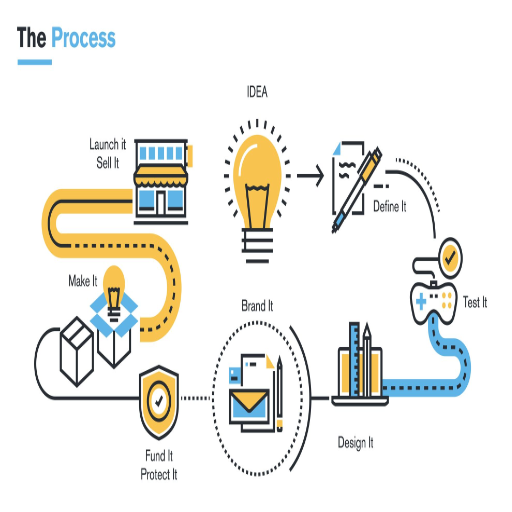
Small-scale production helps innovators and entrepreneurs explore and validate their ideas with high risk of money loss. It generally involves producing limited quantities to spot, get comments and alter any shortcomings on the design prior the making of bigger investment. This method leads to risk and cost savings and enhances the usefulness of the end product in terms of end-user satisfaction and utility in the market.
Importance of Small-Scale Production
Innovation is further nurtured by small-scale production which is also significant to the sustenance of the environment and satisfaction of markets with unique tastes. This falls well within the domain of one major benefit that smallness possesses which is nimbility – the ability of businesses to change and accommodate the needs of their customers without being held back by existing structures in the old market. An illustrative instance for this can be seen from the 2023 report from Forbes, where 67% of the small-sized startups which Whose products are launched into the market relatively fast followijng the pprodicuon due to flexibilitying e reviewed, spend less time on the average in order for the products to hit the shelves as opposed to the others that rely on the mass production only. This makes companies stay in the market and still sell in a mobile environment.
Furthermore, most firms are found within countries which affect the environment in one or the other manner going for low volume production can help in reducing this continuing health and environmental burden. A smaller scale of operation always means that there will be fewer raw materials that will be used as well as the area within which the production system will . Evolving of technology has made production of less waste as the knows what they have to do and ways of ensuring that waste does not find its way into wherever it should not be. McKinsey & Company (2022) has also shown that enterprises employing practiced small-scale ecological technologies managed to improve by up to 30% waste generation in comparison to the base endeavors which were conducted in a very outdated way.
In a nutshell, niche markets are effectively covered by small production units. It is great because these production batches are not so big, and which means that the companies can easily respond to the specific customer needs, say in handiwork goods, or wherein products can be modified to suit the customers. Consumers are looking to companies that are product specific and this is evident from a report released by Deloitte indicating that this year, a whooping 80% of purchasers prefers a product that is individualized for them and are willing to pay more in the process. This development further shows the appropriateness and importance of cottage industries today.
Bridging the Gap Between Concept and Manufacturing
Many businesses are faced with one common question, which is “What is the most efficient way to turn an innovative idea into a new good without any harm to its quality?” Modern technologies and data science are optimal remedies for overcoming this challenge. According to Google, there has been a significant increase in demand for such services as rapid prototyping tools and manufacturing automation solutions in the year 2023. All of these signals suggest that industries such as 3D printing, computer-aided design (CAD) software, and AI-based industrial processes are given increasing attention. These technologies available not only speed up the development process, but also fill the void between the design teams and production managers ensuring that the end product adheres as much as possible to the initial idea. Installing such capacities any organization is capable of slicing up the production runs of parts, slashing down the mistakes, and coping up the customer demand much better than before.
What is Small-Scale Production?

Small scale production is when physical products are made in small quantities according to what the consumer wants. This is the method that is used when less space is required by the building, fewer workers are hired, and the stress is placed on artisanship and the products are produced in small quantities as opposed to mass production. This kind of production is most typically used in the sectors of the economy which host small and medium–sized enterprises and industries that are highly adaptable. And that is so because it does not require huge capital investment in technology or plant and there is some level of ease in switching from one product or activity to another.
Definition and Characteristics
In today’s markets, emphasis is shifting towards making products in limited quantities or small scale production, a technique, which further progresses the benefits of recent developments. In recent years, the increase in Google Search needs regarding modern day consumerism, has brought the concept of small scale production forward for the sole purpose of satisfying the ethical and high artisanal product demands of consumers. Also, small-scale production offers businesses the flexibility to quickly adapt to changing market conditions, avoid unnecessary production processes thus, waste and establish an interactive relationship with their customers, all these aids in enhancing their strategies within industries such as fashion, foodstuffs, technology and many others.
Comparison with Mass Production
Companies may notice rapid progress in invention development as a result of road sales because it allows producing cost-effective prototypes, implementing multiple design stages, and regulating the quality, organizing market testing, as well as providing for a step-by-step translation into the large-scale production.
Key Points Overview
| Key Point | Description |
|---|---|
| Definition | Limited production for prototyping and testing before mass production. |
| Cost | Reduces financial risks and avoids high initial investments. |
| Flexibility | Allows design adjustments and material experimentation. |
| Quality | Ensures tight control over product specifications. |
| Testing | Enables real-world feedback and market validation. |
| Scalability | Bridges the gap between prototype and full-scale production. |
| Methods | Includes 3D printing, CNC machining, and injection molding. |
| Materials | Selection impacts design, functionality, and scalability. |
| Transition | Requires manufacturability planning, BOM, and thorough testing. |
| Challenges | Includes cost, time, and material limitations, mitigated by strategic planning. |
Ideal Role in the Prototype Phase
Small-batch production provides an essential link in the prototyping stage by offering firms the opportunity to test different designs, improve their production techniques and user feedback without having to start mass production. Unlike mass production where huge several leak time and huge amount of initial investment is involved, small scale production can be done fast and is flexible enough. This method is especially useful in developing economies and areas where there are frequent changes in consumer tastes because it deals with the problem of excessive production and consequently financial losses. In this period of development, enterprises using this model are able to ask the client comments which will help them to come up with an improved product hence no wastage of resources during expansion of their activities in the market and utilization of stretching ones financial capital.
Benefits of Small-Scale Production Before the Prototype Phase

Economy of Scale
Reduced Risk of Resource Waste: Ninth concept on a smaller scale (optimiziravam) the use of materials and financial resources, and decreases the probability of loss in case the expected result is not reached.
Information of the Quality of the Work at Small Runs
It is easier to check how the item satisfies consumer and functional requirements when the produced quantity is relatively small and be corrected before higher costs are incurred.
Validation that is within the Budget
This affords a more lean approach to assume all risks compared to waiting until the latter stages of the process of developing a product and to assess marketing plan activities.
Knowledge obtained from the market
The employees shall go for early testing with small volumes since, in doing do, company is likely to learn vital consumer preferences and the evolution of the consumer markets over time while bettering the product to suit the consumer preference.
Limited Assemblies
Smaller repeated orders help implement the changes which the designer may have preferred without disturbing production lines.
Cost Efficiency and Financial Risk Reduction
When things are produced on a small scale but use Google search trends data while integrating the current best practices in each line of production, businesses are able to take more informed decisions that are data-based. The argument is that firms should research on the motivating factors of consumers and how they purchase in order to know how much to produce in terms of consumer demand without having leftover goods. This strategy minimizes the misuse of resources, decreases the running expenditures and improves the effectiveness of investing the capital. Small batch based on instantaneous information regarding demand serves to reduce the risk of financial loss by ensuring that valuable funds are utilized in the right products.
Flexibility in Design Adjustments
Coupling real time-manufacturing strategies and data that is updated straight from Google’s search engine would help most organizations to grasp with ease the current market trends and preferences of consumers. This will make it easier for enterprises to modify designs promptly based on the current market needs and emerging tendencies. Take, for instance, there are search terms that are trending; it follows that, there will also be features, styles as well as modifications of any forms that your market demands, and a prompt action in altering the product line can be taken on that basis. This level of malleability is not only more enjoyable for the consumer but also more beneficial to business enterprises embedded in the dynamic competition system.
Quality Control in Production
Quality assurance methodologies complemented by statistical analysis tool (such as Google search engine) will enable any merchandise site to get into terms with customer oriented parameters and issuing, public instances merchandise problems. By understanding the search trend, the businessman sees patterns and tendencies leading to default by plumbing and addressing the critical concerns in the production processes. For instance, where analysis of the search patterns suggests a sharp increase in the number of consumers in search of products made of recycled or durable materials, manufacturers can change the quality control parameters that will address these growing tastes. It is in doing so that the systems are tailored to both preset standards and the consumer tastes, striking a balance between the two extremes—cretation and adaptation.
How Small-Scale Production Enhances Product Development

Manufacturers can engage in small-scale production process to a adapt their products faster and improve them both when faced with regulatory bottlenecks, for the sole purpose of inflating costs. They also can proof the concepts and put up and adapt the product to the market without incurring the huge risks observed in mass unit production. Despite a lot of time should be on the development stage, they can be ‘more developed’ which enhances time efficiency of the products. What is more, the experimental materials or approaches do not usually get into the market before thorough fine-tuning. Also, having to output a smaller number of pieces helps in preventing wastage in the development stage while still keeping the expenses relatively low.
Creating Functional Prototypes
Functional prototyping plays an integral role in changing theoretical concepts to physical, measurable prototypes. It allows designers and engineers to assess the criteria of decorativeness, efficiency, robustness in execution before the decision-making on the full commercial production. Harper Creek Fab Lab Denver or any other type of Fab Lab Denver – especially to carry out designer jewelry- is one of such laboratories aimed at creating materialized concepts of users and designers of all ages. This also includes the consumer protection strategies in the fabrication process and 3D models enclose designs of existing products that can be rapid prototyped and tested for the target customers. Real-time and virtual approaches designed for commercial services rely on computerized models for judgment processes and decision making. Rather than areas like rapid tooling, this answer is contemplating whether use of new technologies could seriously affect the operations of the company, and what the response to such changes could be. In other words, it describes what the procedure for costing and manufacturing the product would be from the simplest to the most complex technology fired methods.
Iterative Design Improvements
In view of the latest data on the functioning of Google’s search engine, the improvement of the website development at each stage depends on the analysis of objective data on user behavior and preferences. This enables businesses accordingly, to adjust the prototypes due to the changes or trends experienced, as well as to address the strategic concern – how to best satisfy the needs of the target group. It is possible to modify or enhance designs as a result of it in a more flexible and modern manner; hence releasing such built products that appeal to the customers and can therefore be sold.
Bridging Concept and Manufacturability
To merge theoretical mastery and mechanical stability a salutary effort of committing boundless creativity to the factories’ concerns needs to be done. In this regard, accomplishing the goal means that not only is the concept introduced to its target viewers convincingly but there are also means of reproducing at distributable ranks. There is a strong incentive to employ such means more frequently by adopting micro-economics and design in general, and the tools, such as computer-aided design software, in particular, are technologies that have some operating capabilities. Designers at the initial stages can make the best possible assumptions by collaborating with computer-aided design (CAD) simulations of sketches and the realization of materials or manufacturing conditions. In addition, it is highly recommended that the design teams work with the production team. This integration ensures that issues that may arise during the design process are easily anticipated and corrected such that all stages from prototypes up to the final production are tailored for the minimal consumption of resources.
Reference Sources
- Prototyping Guide for Engineering Students at The Ohio State University
Discusses prototyping and production processes, emphasizing small-scale production before full-scale manufacturing. - Utilizing the Product Development Process to Bring an Idea from Concept to Production
Explores the stages of product development, including prototyping and testing production processes. - Prototyping Practices in Electromechanical Startups
Focuses on prototyping and small-scale production in early-phase product development for startups.
Frequently Asked Questions (FAQs)
Manufacturing small quantities of products to assess their tenability and effectiveness, when done at the stage of development and prototype testing, is considered a form of minimized-scale production. In this case, it assists a company in understanding the ‘how to do’ of transformation processes and evaluating product attributes, helping to analyze breaches of these limits before full-scale production.
Small-scale production during the product prototype phase improves the overall functioning of the firm as it makes the development of the product more user-friendly and flexible. It enables a precise understanding of the complex steps involved in product design and operationalization through testing and experimentation, ensuring that it is always developed based on ‘accredited’ rather than ‘fictionalized’ market analysis phases.
Well, the main benefits of small scale production can be listed as the reduced risk, lower investment costs as well as the capability to develop a new product design quickly and test it. In this way, one can prove or disprove a concept without getting lost in the expenses typical for the large-scale rollout.
The development of the prototype is crucial in the shift of the prototype to mass production as it allows the early identification of problems in the development of the product. When it comes to the production of prototypes, companies go about refining their production systems and thus their advanced function SAP, so that by the time they scale production, their products are production-ready.
Going from concept to blueprint phase can cause a huge change to the time it takes to realize a product by teaspoon. Efficient concept development significantly lower manufacturing labor on one hand and reduces the chances of delaying the completion of an acceptable project on the other. Contrarily, times may surge and there may be a need for extra adaptation because of some moving problems detected during this period of transformation of a prototype into production.
The most suitable production method for small scale manufacturing more often is about methodologies that offer room for flexibility and rapid changes. Such techniques could be for instance, 3d printing or even small batch production however beneficial because they help company to realize final products of high quality while also reduction of wastage and costs.
In the production process, small scale production in which authentication testing is done should be applied before production. With the consumer testing’s feedback elicitation and adjustments made possible, this becomes beneficial to both the customer and manufacturer because of the interactive modifications carried out. Such a staged progression results in a product that is capable of meeting the requirements of the user and thus fit for the market.
Intelligence obtained from small scale production enables one to know the production possibilities, possible impediments and focuses the improvement of product design. Such information is used in enhancing the product effectively, thus avoiding mass production of low-quality product which would be costly.


