


CNC machines have forever changed the landscape of the metalworking industry, altering how we design, cut, and shape metal parts with great precision and speed. So what exactly are CNC machines, and why are they so important in contemporary manufacturing? This blog talks about the basics of metalworking CNC technology-how these machines work, the advantages of CNCs, and why CNCs are good for manufacturing metal parts of great quality. Be it a connoisseur or a beginner in the field of metalworking; this write-up aims to clear their understanding of CNC machines and how they are an integral part of putting inventive designs. Have your seats ready and join us in an exciting ride into the world of CNC technology and its impact on manufacturing in the times to come.
What is a CNC Machine?

In the field of manufacturing, CNC machines emerge as perfect machines that work under efficient programmed instructions to cut materials of metal, plastic, or wood, make shapes, or engrave into them. The CNC machine is basically kept under the control of computer software; therefore, manual control is not necessary. The positives of the technology inculde proficiency, precision, and consistency in the production of complicated or intricate components.
How Does a CNC Machine Work?
It goes about operating very precisely with instructions programmed into it. First, CAD software may be used for designing the part. Then that design is converted to a CAM file that generates the G-code, which is the kind of language CNC machines understand. The G-code carries information relating to the movements of the machine: speed of movement, cutting path, and depth.
When the G-code is loaded upon a CNC machine, the machine acts according to its instructions. The components of the CNC machine combine with each other to do very precise operations: cutting tools, the spindle, and axis motors. CNC machines can work on many axes, including the traditional X, Y, and Z linear axes and, for some machines, the transverse axes (A, B, C). For example, the 5-axis CNC machine can move in five different directions at once, thus having the ability to create highly complicated parts.
When it comes to CNC, efficiency and accuracy come to mind. CNC technology is capable of reducing setup time by as much as 50% relative to manual methods, according to Studies, whilst also nearly eliminating errors, hence improving work quality; hence, these machines can also run for long hours with minimal supervision, further enhancing productivity in industries like aerospace, automotive, and medical device manufacturing. Industry information also shows that the CNC machine market is anticipated to expand at a CAGR of 6.5% from 2023 to 2030, emphasizing this technology’s critical placement in modern manufacturing. Not only does this technology have higher performance enhancement capabilities, but it has become an indispensable production technology for complex parts that require tight tolerances, fulfilling the needs of today’s high-tech industries.
What are the main components of a CNC machine?
- Controller – It is the brain of the machine, which takes the machine instructions and executes them.
- Machine Frame – Gives structural strength and support to the entire components during operation.
- Cutting Tool – The tool used for cutting, drilling, or shaping.
- Spindle – This drives the cutting tool or controls its speed and accuracy.
- Worktable – Massively supports the workpiece or the material and keeps it rigid upon the machining.
- Drive System – Gives motion and power to various parts of the machine for causing programmed movement.
What types of CNC machines are commonly used?
- CNC Milling Machines – Milling is the process of cutting and shaping by means of cutting tools. These machines move cutters in different axes.
- CNC Lathes – May be considered to manufacture cylindrical parts by means of spinning the material, while the cutting tool cuts radially.
- CNC Plasma Cutter – The plasma torch is a hot power jet able to cut through iron and steel.
- CNC Laser Cutters – The best way for these machines is to cut or mark through materials with laser beams.
- CNC Router – Most used for cutting and engraving on softer materials such as wood, plastic, and foam.
- CNC Grinder – Achieves fine finishes by grinding surfaces with high accuracy.
How CNC Machining is Used in Metal Fabrication?
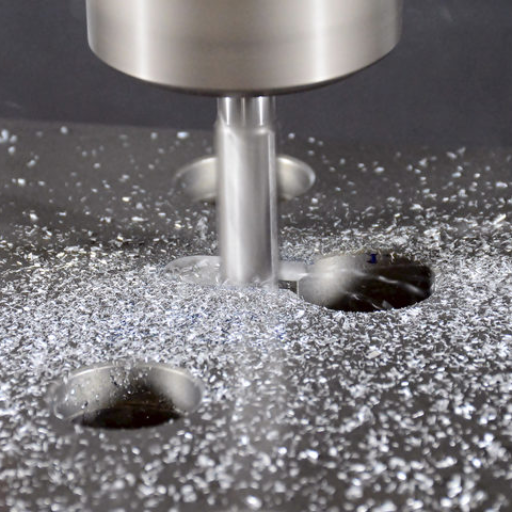
For ensuring extreme precision and replicability of components, CNC machining finds extensive applications in metal fabrication. Considered to be a metal cutting, forming, and drilling machine, CNC machines could be utilized for creating complex designs with tightly controlling dimensions. The precision provided by CNC machines helps industries such as automotive, aerospace, and manufacturing keep errors to a minimum and limit wastage, thus building-a-strong case for metalworking projects. CNC machining automates processes, which improve efficiency and ensure optimal results.
What is Metal CNC Machining?
Metal CNC machining is the use and application of controlled precision automated tools that are steered by computer programs to fashion and fabricate metal components. CNC technology provides manufacturers with the immense scope for specifying highly intricate designs with tight tolerances on an array of metals such as aluminum, steel, titanium, and brass.
The process starts by way of a CAD (Computer-Aided Design) model that is then changed into a set of instructions or a CNC program for a machine. These instructions inform the movement of the cutting tools, the speed at which they work, and specific depths of cuts needed to transform the material into a product. CNC machines are varied and may be lathes, milling machines, or laser cutters capable of executing complicated movements such as drilling, turning, milling, and engraving with great precision.
Constant demand has been one of the forceful factors driving the evolution of CNC machining. Recently, it was forecasted that the CNC machining market had a value of around $67.5 billion in 2022, with a solid projected growth of 5.6% CAGR from 2023 through 2030. With the continuous development in the automation sector, increasing demand in aerospace, automotive, and health sectors, such machining is very much capable of running from designing purposes to both industrial applications for small-batch prototypes and mass production.
Among the advantages that an experienced metal CNC machining facility offers are accuracy, less material wastage, and efficient production compared to manual machining processes. It can be said that metal CNC machining is staging very important interventions in modern manufacturing, where it offers highly custom, durable parts to satisfy the needs of many industries.
What are the advantages of CNC machining in metalworking?
- Excellent precision and reproducibility: CNC machines achieve accuracy that allows each piece to be produced with consistent quality.
- Efficiency: Automated means of production reduce time of manufacture and enhance output while allowing even the execution of complex designs.
- Minimization in materials wasted: Cutting precision defines cost-efficient and eco-friendly markets.
- Wider applications: CNC machines can cut different types of metal, which means several applications can be produced depending on needs.
- Production capacity: Equally applicable in the provision of prototypes and contract manufacturing without compromising the quality.
How CNC Technology Improves Metal Fabrication Processes
With the production of systems, CNC (Computer Numerical Control) technology has improved metal fabrication by introducing improvements in precision, efficiency, and scalability. traditional systems depended on human work, so the output seemed inconsistent and slow. CNC machines, on the other hand, are controlled by special software; they work towards an extremely accurate, repeatable process system. This way, the automation process limits errors down to about one-third of a millimeter, required by the aerospace, automobile, and medical manufacturing enterprises.
Then comes the speed of production, which is another attribute of CNC technology. Industry figures claim that CNC machines process components up to five times faster compared to conventional procedures, minimizing turnaround periods for manufacturing-related projects. With CAD integration, operators can generate complex geometry impossible or cumbersome to produce through manual techniques. According to the recently conducted Technavio research, the global CNC machine market is forecasted to expand at a CAGR of 6% during 2022-2026 period, mostly propelled by the need for efficiency and innovation in manufacturing processes.
CNC machining also enhances the sustainability aspect of metal fabrication. Precision cutting enormously minimizes the material wastage-an important factor as industries move towards eco-conscious solutions. For instance, CNC systems can maximize the material use to almost 98%, whereas some traditional machining procedures have an efficiency of close to only about 85%. Moreover, energy consumption is minimal in automated systems since it excludes the unnecessary consumption due to manual alterations.
One major improvement lies in the scaling-up ability. Through CNC technology, manufacturers can smoothly negotiate prototype production alongside mass manufacture without compromising quality. And through consistent performance, CNC machines guarantee that every single unit-it may be in small batches or a two-way large-scale operation-is reliable.
In summary, CNC technology has shaped an entire industry of metals and fabrication where it enables manufacturers to build quality components on short notice, with excellent yields on cost and time, less wastage of materials through reductions, and furthermore have capability for economically producing any size or number of components demanded by a modern engineering and manufacturing specification.
What Types of CNC Machines are Used for Metal Cutting?
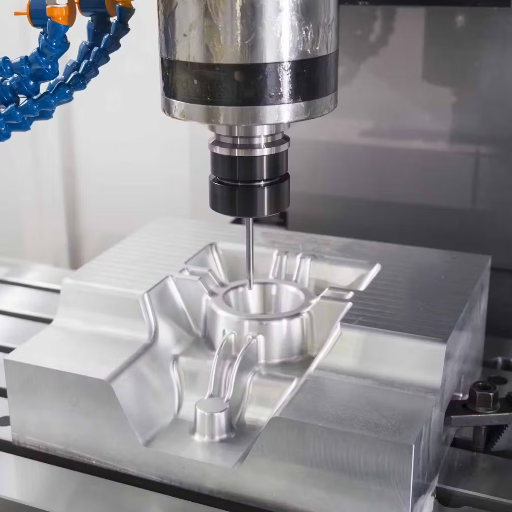
- CNC Milling Machines- These machines, unlike CNC lathes, use rotating cutters to remove material from the workpiece and are adept at crafting any complex shape or design.
- CNC Lathes – Good for cylindrical parts, the CNC lathe acts by spinning the workpiece and shaping it by cutting.
- CNC Plasma Cutters – These work with a plasma torch to make the cuts through electrically conductive metals, very fast and very precise.
- CNC Laser Cutters – Good for detailed cutting, these machines operate by sending an intense laser beam to the workpiece surface.
- CNC Waterjet Cutters – Use highly pressurized jets of water, or this water-aided with abrasives, to cut through metals without causing any heat.
What is the difference between CNC mills and lathes?
CNC mills and lathes differ in their operation, with mills using rotary cutting tools to remove material and lathes rotating the workpiece itself against stationary tools.
| Parameter | CNC Mills | CNC Lathes |
|---|---|---|
| Operation | Cutting tool | Rotating part |
| Workpiece Motion | Stationary | Rotates |
| Tool Motion | Rotates | Stationary |
| Shape Capability | Complex | Symmetrical |
| Typical Use | Flat/squares | Cylinders |
| Material Removal | Multidirect. | Rotational |
| Precision | High | High |
| Tool Types | Multiple | Single |
CNC Routers for Metalworking and Their Applications
A CNC router is a computer-guided cutting machine designed to carve, engrave, or shape materials such as metal with fine precision. If CNC mills and lathes are used mainly for shaping or removal of material, then CNC routers are employed mostly for making fine cuts and intricate designs. A CNC router with a rotating cutting tool executes the programmed path to achieve cuts that may be intricate patterns or fine details.
Before the actual production of decorative metal pieces, surface engraving, and testing of complex designs in metalworking, CNC routers can be used. They are also used for the cutting of sheet metal, fabrication of signs, and manufacture of precision parts required by industries like aerospace and automotive. CNC routers are great for anything that involves flat or semi-flat materials and can produce extremely fine details, rendering them almost indispensable where artistic as well as technical designs are required. CNC routers are very versatile and efficient and form the backbone of the modern-day metal fabrication process.
How can metal be cut by a CNC plasma cutter?
A CNC plasma cutter operates by using a pressurized stream of ionized gas-the plasma-for cutting metal. The procedure commences as the gas stream-is it nitrogen or oxygen?-electrically charges the gas, thereby creating plasma. A computer-controlled system guides the plasma torch with consistent precision along its programmed path while melting and cutting the metal with great ease. This method is versatile; it can cut different thicknesses and types of metal fast and untiringly.
What is the CNC machining process for metal parts?

CNC machining for metal parts is a manufacturing technique that involves computer-aided tools to mould and cut metal into a specific design accurately. The process starts with the creation of a digital drawing, which gets uploaded into the CNC machine software. The machine then follows the drawing in order to guide cutting tools or drills in shaping the metal. The method is characterized by a high degree of accuracy, repeatability, and speed, suitable for creation of complex and intricate parts.
How does the CNC translate a CAD model?
The CAM (Computer Aided Manufacturing) is used to translate the CAD model for CNC machining. Firstly, the CAD model is imported into the CAM software that converts the design into instructions for the machine, called G-code. The G-code guides the CNC machine in moving, cutting, and shaping the material into the designed part. In this way, the machine generates a physical counterpart of the CAD model, the dimensions of which precisely match their computer representation.
What are the main conditions relative to CNC cutting?
- Cutting Speed: The relative speed between the cutting tool and material. Directly influences the cut quality and tool life.
- Feed Rate: The speed at which the material is fed to the cutting tool. It affects the efficacy and accuracy of the cutting process.
- Depth of Cut: The thickness of material removed from the workpiece in a single pass. It controls the machine’s load and affects the surface finish of the part.
- Tool Selection: The type of cutting tool used in relation to the material and desired result. It ensures accuracy and lasting tool life.
- Spindle Speed: The rotational speed of the cutting tool. It helps in achieving a good compromise between speed and accuracy.
What is G-Code in CNC programming?
From me, G-Code, CNC programming, is really the very backbone as it provides precise instructions for machine operations. Like where your CNC machinery is supposed to move, speed, shift of tools, etc., to do processes with utmost accuracy and repeatability. Taking standardized codes, G-Code turns complex designs into concrete instructions that help manufacturing to be automated and manufacture with consistent results.
How CNC Enhances Metalworking Productivity?
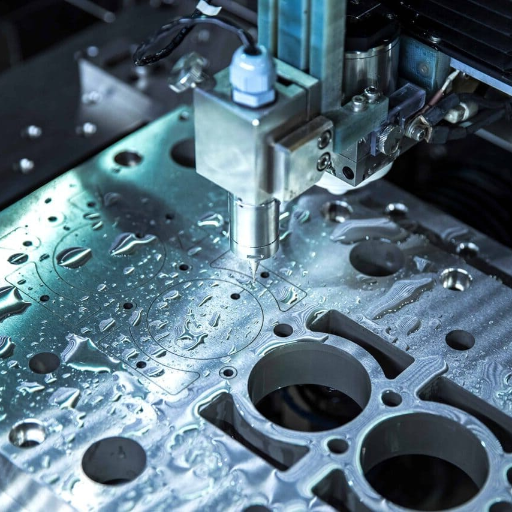
CNC technology improves productivity in metalworking by decreasing manual labor and increasing precision; faster production cycles can be achieved with good quality, owing to automated processes. These CNC machines can even work throughout the night with mild periods of downtime, thus generating more amounts of output. By executing complex operations beyond human capability with a high degree of accuracy, CNC operations reduce material wastage and thus cut down on production costs, CNCs have become indispensable in the metalworking trades of today.
Production Rate Upgraded Through CNC Tools
Possessed by CNC (Computer Numerical Control) tools to streamline manufacturing and give an unprecedented amount of precision to production, they skillfully enhance the production rate. Contrary to traditional machining methods where myriad processes are done manually, CNC tools can perform a myriad of complicated processes automatically with minimum production time. For instance, it has been said in some research that machines controlled by CNC have the potential of increasing production efficiency by about 70% by virtue of their ability to run around the clock with minimal human supervision.
With the aid of programming and software, CNC systems provide manufacturers with multiaxis machining capabilities, such as cutting, drilling, and finishing numerous intricate parts simultaneously. This significantly improves the production cycles while ensuring accuracy on all units. According to a report from Allied Market Research, the worldwide CNC machine market has been anticipated to grow at a CAGR value of 5.3% from 2021 to 2030, signaling their increasing adoption due to productivity benefits.
Additionally, CNC tools avoid downtime due to their built-in reliability and predictive maintenance features that keep things running. They also prevent operator errors that lead to tighter tolerances demanded by challenging aerospace, automotive, and medical manufacturing processes. These qualities themselves speed production but, more importantly, eliminate situations where CNC tools would cost huge sums in rework and material wastage. The integration of CNC tools with smart manufacturing technologies will improve production capacity and efficiency further.
Efficiency Gains Under Automation in CNC Machinery
Automation of CNC (Computer Numerical Control) machinery does very well to improve manufacturing efficiency by making processes lighter, operating independent of too much human presence, and rendering continuous consistency with output activities. With the integration of automation, such as robotic arms and tool changers, CNC machines can run uninterruptedly through increased amount of production uptime with so little intervention from any person. Recent claims have it that it increases productivity by nearly 30% and reduces operational costs by 15%.
Smart manufacturing technologies, such as IoT and AI-based analytics, facilitate further enhancement of CNC automation by enabling fast-paced monitoring and predictive maintenance. Sensors deployed in the machinery gather data about performance parameters, like tool wear or temperature variations, guaranteeing suitable adjustments within time and preventing any instance of prolonged downtime. For example, unplanned machine downtime has reportedly been reduced by 25% due to predictive maintenance. Also, automation assures high-grade quality by eliminating human error, with tolerances as tight as ±0.005 mm or less-sharp for an advanced build-for-instance, such as in medical device manufacturing and aerospace engineering.
Even more so, batch production of complex parts sees a huge advantage from automation. Automated CNC arrangements change back and forth between jobs seamlessly, owing to the sophisticated programming and automatic tool changer, reducing cycle time by 45%. In parallel, this flexibility pushes production speed and cost-effectiveness from forth and onward in custom and high-mix, low-volume production. Automation shall be providing companies with better opportunities in satisfying market demands without undermining quality and operational efficiency.
Current CNC System Trends in the Manufacturing Industry
The modern CNC system tends towards integrating advanced technologies in an attempt to satisfy the ever-changing requirements of the manufacturing industry. One major trend goes with IoT and Industry 4.0 principles for real-time monitoring of machines and data analysis for predictive maintenance. In addition, AI and machine learning are employed within CNC systems for improved process optimization and less downtime. Multi-axis machining has also gained more ground-the bigger the business, the greater the variety of machining opportunities will be put forth from behind the scenes. Lastly, the combination of robots and CNC machinery is going to become the main driver in streamlining workflow and automating production processes. These technologies provide new levels of efficiency, precision, and adaptability to manufacturing operations.
Reference sources
- Optimisation of Parameters for Metal Part Cutting on a CNC Plasma Cutting Machine (Cajner et al., 2024)
- Key Findings:
- Determined the optimal kerf value and axis accuracy for cutting 2, 4, and 6 mm thick plates of construction steel, aluminum, and stainless steel using a CNC plasma cutter.
- Developed equations to describe dimensional deviations for each material and thickness based on the measured data.
- Used an optimization algorithm to determine the ideal kerf value for each material and thickness to achieve the highest possible accuracy.
- Methodology:
- Conducted a detailed experiment plan using Design-Expert software to cut test samples and measure dimensional deviations.
- Performed statistical analysis on the measured data to develop models for kerf values and dimensional deviations.
- Utilized an optimization algorithm to determine the ideal kerf value for each material and thickness.
- Key Findings:
- Corn Oil Biodiesel Dispersed with Nanopowder as Cutting Fluid in Metal Cutting Process on CNC Milling Machine (Ganivada et al., 2023)
- Key Findings:
- Evaluated the effectiveness of biodiesel infused with CuO nanopowder as a cutting fluid for metal cutting processes on a CNC milling machine.
- Observed a positive relationship between depth of cut and cutting time, and a negative relationship between depth of cut and roughness values.
- Concluded that the biodiesel produced has promising characteristics for use as an efficient cutting fluid in metal cutting procedures.
- Methodology:
- Synthesized biodiesel from corn oil and blended it with CuO nanopowder.
- Conducted metal cutting experiments on an aluminum workpiece using the biodiesel-based cutting fluid on a CNC milling machine.
- Evaluated surface roughness parameters (Ra, Rq, and Rz) using a Talysurf apparatus.
- Key Findings:
- A CAD/CAM/CNC Curriculum for High School Students – Discusses the integration of CNC machinery in educational programs and its relevance to metalworking.
- Design of Educational Engineering Projects Fabricated with the Laser-Cutter and CNC Wire Bender – Explores CNC applications, including metal box designs and wire bending.
- Leading CNC Metal Machining Provider in China
Frequently Asked Questions (FAQs)
Q: What is a CNC machine for metal?
A: A CNC machine for metals is a computer-controlled machine that automates the metal machining process, cutting, shaping, and finishing metal workpieces with precision.
Q: How is CNC metal milling different from conventional milling?
A: CNC metal milling uses a numerical control system to automate the milling operation, providing accuracy, and speed that were not achievable by milling methods that were at least partially of manual nature.
Q: What types of materials can CNC machines cut?
A: CNC machines can cut a wide selection of materials including metals like aluminium, carbon steel, and titanium, as well as various others depending on the design of a particular machine.
Q: What does a CNC operator do during the metal machining process?
A: The CNC operator sets up and operates the CNC machines, monitors the machining process, and checks that the cutting parameters followed are yielding the best results in performance and quality of the metal workpieces.
A: CNC machines are very much a part of aerospace manufacturing processes, having the capability to cut materials with precision necessary to render the produced components safe and reliable.
Q: What are some cutting procedures commonly employed in CNC machining?
A: Common cutting procedures in CNC machining include face milling, shoulder milling, and plasma cutting; each can be applied depending on the desired shapes and finishes to be imparted on metal workpieces.
Q: How do CNC machines react to cutting force exerted during machining?
A: During machining, there is a cutting force exerted, and a CNC machine well able to perform its task must be able to counteract these forces as much as possible by varying cutting parameters and tool paths to minimize damage to itself while optimizing the cutting operation on raw metal.
Q: What are recent developments in CNC technology?
A: The recent developments in CNC technology include new CNC machines with improved control systems, new levels of precision, and the ability to work on more complex shapes and materials.


