


ABS plastic is a truly all-rounder, considered well for its versatility, durability, and cost-effectiveness. When CNC machining processes are advanced, and ABS is the material of choice, the combo produces precise components as per the demanding technical requirements in modern-day manufacturing. How is this combo executed, and why does it work so well? In this article, we will analyze the special-anthology characteristics of ABS plastic and how CNC machining extracts the full value of it. Whether designing a product, manufacturing it, or simply interested in industrial procedures, this guide will clarify the killer combination of material and method and assist you toward competent choices for your next project.
Introduction to ABS Plastic
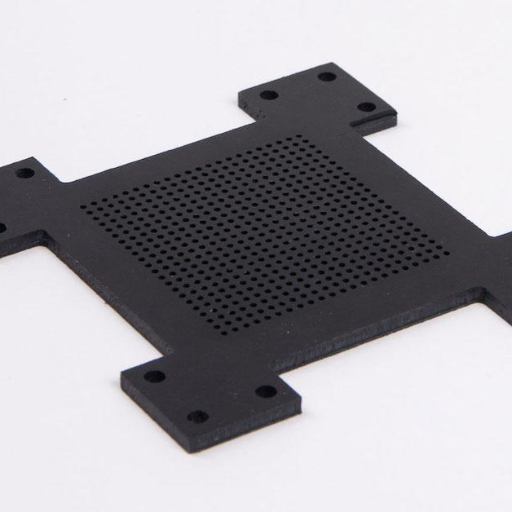
Known for its versatility, the ABS plastic is a thermoplastic polymer made of Acrylonitrile butadiene styrene. It is a durable, impact-resistant, and easy-to-fabricate material. With its lightweight yet strong characteristics, this plastic is suited in applications ranging from automotive parts to consumer electronics. What makes ABS an economical choice is that it is also compatible with a wide range of manufacturing processes, including CNC machining so that it can be molded into precise, high-quality products.
Definition and Composition of ABS
Acrylonitrile Butadiene Styrene (ABS) is a strong thermoplastic polymer consisting of three monomers: acrylonitrile, butadiene, and styrene. Each component contributes differently to the material. Hence, the resultant mix possesses strength, flexibility, and stability in meaningful proportions. Acrylonitrile confers chemical resistance and thermal stability; the added butadiene offers toughness and impact strength; while styrene aids processability and surface finish.
Normally, ABS contains roughly 20-30% acrylonitrile, 40-60% styrene, and 15-35% butadiene – although these proportions can vary depending on the desired properties for a given application. The three components undergo polymerization via either emulsion polymerization or continuous mass polymerization, ultimately creating a material with excellent mechanical and thermal properties.
Recently, it is reported that the density of ABS stands approximately at 1.04-1.07 g/cm³ while the melting point rests about 220°C (428°F). Its tensile strength ranges from 40 to 50 MPa, with an impact strength if needed, going up to 400 J/m; thus, it is mostly employed in making objects that need high impact resistance. ABS also exhibits a good degree of abrasion resistance and can take very prolonged exposure to extreme temperature. Therefore, it enjoys wide usage in various industries.
Physical Properties of ABS Plastic
ABS plastic has a good balance of mechanical strength, toughness, and heat resistance. Some prominent properties are generally as follows:
- Durability: ABS is a highly durable material with good impact resistance making it more suitable for products subjected to mechanical stress.
- Thermal Stability: It can resist temperatures of up to about 220°C (428°F) with no serious compromising on its integrity.
- Machinability: It is easy to process and mold, making ABS plastic a favorable choice in shaping and in 3D printing.
- Resistance to Chemicals: It resists many acids, alkalis, and oils, providing long-lasting service in challenging conditions.
- Lightweight: ABS is comparatively lightweight (around 1.04-1.07 g/cm³ in density) for such a stronger material, and is therefore widely, used where weight is an issue.
These characteristics of ABS make it one of the materials with multiple uses across various industries such as automotive, electronics, and consumer goods.
Advantages of ABS Plastic in Manufacturing
ABS plastic is an important material for manufacturing because of its durability, ease of molding process, and cost-effectiveness. The impact-resistant property ensures that it can endure the daily wear and tear in both indoor and outdoor conditions. Its light-weight nature also lowers the cost of production. Besides, the chemical-resistant property of ABS makes it appropriate for products that have to function in demanding environments, and its smooth surface allows for fine finishes that very much contribute to the aesthetic appeal of the end user. Due to these features, ABS has become the material of choice in various industries for making dependable and efficient products.
An Introduction to CNC Machining

CNC machining, or Computer Numerical Control machining, is a manufacturing process in which pre-programmed computer software commands the movement of tools and machinery. It is used to manufacture all kinds of parts and components out of given materials, ranging from metals to plastics. Some of its main advantages include being very accurate, repeatable, and very quick at making complex designs. It is used in almost every industry requiring precision and reliability, that is, the automotive, aerospace, and electronics sectors.
What is CNC Machining?
CNC machining is an industrial procedure in which computer software, pre-programmed by numeric data, commands the machining tool and machinery motion. This technology has changed the manufacturing industry by making it possible to produce parts and components with precision for a wide variety of materials, including metals, plastics, and composites. CNC machines follow digital instructions or CAD (Computer-Aided Design) files and perform very precise operations with an unequaled degree of precision and efficiency.
According to the latest industry data, the global CNC machine market size valued approximately at USD 81.95 billion in 2022 and is expected to register a CAGR of 6.4% during the period of 2023-2030. The growth is fueled by the rising demand for quality and complex parts in the automotive, aerospace, defense, healthcare, and electronics industries.
Types of CNC machining supported are milling, turning, drilling, and grinding. CNC milling is used for making products with complex designs, while CNC turning is used to create cylindrical parts. More so, multi-axis machining allows even greater freedom in machining parts with complex geometries that once were impossible or too costly to manufacture.
Some other advantages of CNC machining include reducing human errors, lowering product time, ensuring consistency in mass production, etc. Furthermore, these days, there are many trends evolving, such as integrating AI and IoT into CNC systems to make them smarter and more functional. With modern-day technology, CNC machining continues to evolve as the backbone of modern manufacturing.
Types of CNC Machines
CNC machines can be categorized into various types, including lathes, milling machines, routers, plasma cutters, laser cutters, 3D printers, grinders, and electrical discharge machines.
| Type | Key Function | Material | Precision | Application |
|---|---|---|---|---|
| Lathe | Turning | Metals/Wood | High | Cylindrical |
| Milling Machine | Cutting/Shaping | Metals/Plastics | High | Complex Cuts |
| Router | Engraving | Wood/Plastics | Moderate | Designs |
| Plasma Cutter | Cutting | Metals | Moderate | Industrial |
| Laser Cutter | Precision Cuts | Various | Very High | Fine Craft |
| 3D Printer | Additive | Various | High | Prototypes |
| Grinder | Surface Finish | Metals | High | Polishing |
| EDM | Shaping | Hard Metals | Very High | Intricate |
CNC Machining Processes for ABS Plastic
CNC machining processes, such as milling, turning, and routing, are for use with ABS plastic. The hardness and machinability of ABS allow for all these operations to be done together, including accurate shaping, cutting, and engraving. Milling is mostly used for complex shapes or detailed parts, whereas routing could be great for engraving or developing designs. Turning is generally preferable when one is working with cylindrically shaped parts and requires a very fine finish. Working with the right tools and speeds is essential for keeping the plastic from melting or warping during machining operations.
Applications of ABS CNC Machining

Being strong, durable, and easy to machine, ABS CNC machining finds applications in various industries. Most of its usages involve making automotive parts, electronic enclosures, prototyping, and consumer goods. Due to its versatile nature, ABS is apt to manufacture custom parts with complex geometries and is capable of performing reliably and in precision-demanding applications.
Common Industries Utilizing ABS Parts
ABS parts see heavy utilization in automotive, electronics, consumer goods, aerospace, and medical sectors. With the application areas demanding robustness in terms of impact resistance and machinability, ABS responds well to these requirements for automotive applications from durable automotive components to protective covers for electronics, aerospace parts that are light in weight, and functional prototypes for various purposes. Its versatility ensures that it can account for the extremely dynamic needs of such varied industries.
Examples of ABS Machined Products
ABS machined products include automotive dashboards, protective casings for electronics, medical device housings, aerospace brackets, and custom prototypes. All of these products showcase ABS’s adaptability to meet the requirements of various industries that engage in applications demanding durability and precision.
Prototyping and Production with ABS CNC
ABS CNC machining is an excellent process for prototyping and production. In prototyping scenarios, ABS allows engineers and designers to make truly proportional and demonstrated models for experiments and refinements before final production. Also, the machinability of ABS ensures that even the most intricate designs can be articulated with precision and repetition. For production purposes, ABS CNC machining assures the manufacture of durable and reliable components with tight tolerances, ideally accepted by industries with an acute focus on quality assurance. This process steps into scaling also so that whether it is a thousand pieces or just one prototype, the process will never compromise on accuracy and efficiency.
Advantages of CNC Machining with ABS

- Durability: ABS is a strong and impact-resistant material, making it ideal for parts that require long-term performance.
- Precision: CNC machining here ensures high accuracy and tight tolerances, for prototype, as well as big production works.
- Cost-Effectiveness: ABS provides quite affordable pricing and is readily available, so the material costs can be lessened without compromising on quality.
- Versatility: This material supports a variety of applications in industries ranging from the automotive to the consumer goods fields.
- Scalable: CNC machining can handle and maintain high quality whether it is a single piece or high volume order.
Cost-Effectiveness of ABS CNC Machining
ABS CNC machining offers cost efficiency, making the application popular across industries. A primary advantage is the widespread availability and the relatively inexpensive cost of ABS material. As per recent market data, the average cost of ABS in the market ranges from $1.50 to $2.50 per pound, so this makes ABS an inexpensive alternative to other engineering plastics.
Additionally, the properties of ABS make it very predictable from a machinability standpoint; it is easy to work with CNC machines, which in consequence leads to shorter setup and cycle times and lower labour input costs-the more significant factors in costs of manufacturing. ABS required fewer tool changes than harder materials during machining and thus reduced machine setup and downtime – further improving cost-effectiveness. Its impact resistance and dimension stability also minimize material wastage, thus adding to the cost benefits.
ABS industries also make it advantageous because it can go through heavy-duty treatments to enhance its surface finish. Apart from being used in heavy-duty treatments, they also provide very attractive surfaces without making the parts heavy with the applications of lighter fills or paints. Combined with the CNC machining scalability, it is clearly a very cost-effective and efficient solution for industrial-scale production or small prototyping stages, guaranteeing repeatability and high-quality output without exorbitant pricing. Thus, representing cost and performance that make ABS CNC machining an option in automotive, aerospace, and consumer electronics applications.
ABS Machining: Precision and Quality
I believe that the precision and in how they quality is achieved in machined ABS is beyond compare for many applications. ABS offers excellent dimensional stability and surface finishes, which allows intricate designs to be realized with the greatest degree of accuracy. The machinability of this material also allows for tight tolerances and thus makes this an excellent choice for prototypes as well as end-use components, mainly in so many demanding industries.
Speed and Efficiency in Production
Machined ABS, however, is not only famous for precision but speed and efficiency in the production process. Since ABS is fairly easy to machine, it presents cycle times shorter than many engineering plastic counterparts. This material lends itself well to CNC machining processes for rapid prototyping as well as low-to-mid volume runs without compromising on quality. According to industry data, CNC machining of ABS can achieve cutting speeds of up to 200 m/min, dependent on the tool selection and setup, thus greatly enhancing productivity. Furthermore, being a durable and workable material, ABS helps to reduce tool wear, therefore improving on time and cost efficiency in production.
ABS machining efficiency is recognized in the use of the resulting products in rapid design iterations within consumer electronics, as well as in automotive prototyping, where precision and speed define development timelines. Near-final properties can be realized directly by machining, therefore drastically reducing post-processing and streamlining workflows for faster delivery of results to markets.
Tips for Leveraging ABS CNC in Manufacturing

- Choose the Right Tools: Use sharp cutters at very high speeds when machining ABS to get finer cuts and also to lessen tool wear.
- Set Correct Cutting Parameters: Set feed rates and spindle speeds such that they may promote a balance between accuracy and speed and at the same time minimize heat creation, which can compromise the integrity of the material.
- Simulation: Simulation in CAD/CAM may be used to produce an optimized toolpath and avoid errors from creating the final toolpath.
- Less Post-Processing: ABS can be CNC-machined to almost final properties, cutting down post-CNC processes.
- Always Keep Clean: Chips must be removed frequently from the machining environment to avoid material build-up on tools, ultimately affecting machining accuracy and surface finish.
- Rapid Prototyping: ABS machining should be employed for rapid prototype iteration where precision and speed matter much, in particular in the automotive and electronic industries.
Selecting the Right CNC Machine for ABS
When choosing a CNC machine for ABS machining, preference should be given to those designed for plastic processing. Pick machines that prioritize high-speed spindles to maintain precision and heat generation to as low as possible because heat buildup tends to deform material. Rigid construction ensures the machine’s stability on a local scale, which subsequently guarantees the accuracy of machining. Vacuum tables or other work-holding systems would be the best option to keep ABS sheets or blocks firmly in position during machining. Moreover, look for a machine with the best configurable settings for feed rates and speed to tailor the performance to ABS materials.
Best Practices for Machining ABS Plastic
To get the best results with ABS plastic machining:
- Tools Should be Sharp- Cutting tools must be sharp to ensure good cuts and to avoid chipping.
- Machine at Moderate Speed and Feed Rates-Avoiding overheating is the key to preventing both warping and melting.
- Ensure Proper Cooling by Allowing Air or Using Light Coolants-This ensures heat buildup is controlled during machining.
- Hold the Material in Place-Fabricate moldings or clamps to hold tightly the ABS plastic so that it does not shift.
Applying these tips will deal greatly with enhancing the precision and surface finishing of your work while minimizing the chances of marred material.
Future Trends for ABS CNC Machining
The waxing and waning of technology and the emergence of more complex, highly exact components have made the domain of CNC machining ABS more agile. One important trend is toward the inherent presence of automation and artificial intelligence (AI). Automated CNC systems use AI algorithms to optimize machining processes, predict when maintenance is needed, and minimize the downtime for maintenance, thus saving both costs and time. The rising trend toward IoT adoption in machining allows for real-time monitoring and analysis of data to improve production efficiency and quality control.
Another trend is that of greener machining. Because environmental issues are increasingly coming under scrutiny, different cutting industries are urgently looking for environmentally friendly machining solutions. Recycling of ABS plastic waste and use of energy-efficient CNC machines are among the trends gaining ground in manufacturing units.
It is estimated that CNC machining market value was about $93 billion in 2023 and will grow at a CAGR of 6.5% between 2023 and 2030. Much of such growth is anticipated to come from the demand for machining low weight and very strong materials like ABS plastic, especially in automotive, aerospace, and electronics sectors. These industries, distinguished from others, are looking for extremely precise and intricate parts that only CNC machined products can deliver.
Those new developments will, in turn, spur better performance of ABS machining through enhancements in cutting tool technology, including diamond coating of tools. These would mean the least wear and tear and the best surface finishes with simultaneous longer life of tools. This will evolve and transit ABS CNC machining towards a prosperous, efficient, and green future.
Reference sources
- “An Experimental Study Focused on the Impact of Manufacturing Process in the Mechanical Performance of Lattice Structures”(Hamel et al., 2024)
- Publication Date: 2024-11-17
- Key Findings: This study compared the mechanical performance of planar lattice structures fabricated from ABS plastic using both CNC milling and additive manufacturing (AM). The results showed good agreement with published models for lattice performance and suggested that the choice of manufacturing process has a measurable effect on the mechanical performance of the resulting structures for this specific material and geometry combination.
- Methodology: Planar lattice structures were designed using CAD software and fabricated from ABS using CNC milling and material extrusion AM. The fabricated lattices were then subjected to tensile testing to failure. The results were compared to analytical predictions from the literature.
- “Selection of Material and Manufacturing Technology for Batik Canting Stamps Based on Multi-Criteria Decision-Making Methods”(Setiawan et al., 2023)
- Publication Date: 2023-10-31
- Key Findings: This study explored alternative materials and manufacturing technologies for batik canting stamps, including CNC milling and additive manufacturing of conductive ABS electroformed by copper (CABS-EBC). A multi-criteria decision-making (MCDM) approach was used to assess the alternatives, and the results indicated that CABS-EBC processed with additive manufacturing could substitute copper as a canting stamp material.
- Methodology: The study employed MCDM methods (SAW, TOPSIS, PROMETHEE) to evaluate different materials (including ABS) and manufacturing technologies (including CNC milling and additive manufacturing) for batik canting stamps. Expert opinions were also incorporated into the assessment.
- “Short-term Creep Behaviour of Different Polymers Used in Additive Manufacturing under Different Thermal and Loading Conditions”(Doğan, 2022)
- Publication Date: 2022-08-25
- Key Findings: This study investigated the creep behavior of ABS and other polymers commonly used in additive manufacturing under different thermal and loading conditions. The results showed that material type, temperature, and loading levels significantly influenced the creep behavior of the 3D-printed polymer materials.
- Methodology: Creep test specimens were 3D-printed and then their final dimensions were refined using CNC milling. Creep experiments were conducted at three different temperatures (25°C, 40°C, and 60°C) and two different stress levels (10 MPa and 20 MPa).
Frequently Asked Questions (FAQs)
What is CNC machining of ABS plastic?
CNC machining of ABS plastics refers to the process of shaping and refining ABS using CNC technology. This system allows the plastic part to be produced with very high precision and is thus often applied in situations calling for good dimensional stability. The versatility to be machined into complex shapes in less time has made CNC machining in ABS a favorite in the automotive and white goods sectors. Also, taking advantage of the excellent mechanical properties of ABS, such as impact resistance, is another favorable note on many projects. CNC machined ABS plastic parts, therefore, are mostly found in prototype casting and production casting.
How does CNC milling apply to ABS plastic?
CNC milling is a process of machining whereby precise components can be crafted for ABS plastic. The milling cuts away material from a workpiece with rotary cutters and is useful in highly detailed designs and close tolerances. It is a good material for CNC milling as it possesses great impact strength and relieves internal stresses in the machining process. CNC milling is versatile to its core and can be applied from automotive parts to aesthetic functional products. The harder the ABS would be, the more durable it would make these components, thus putting it on the list of materials that highly accommodate manufacturing.
What are the properties of the CNC machined ABS?
CNC machined ABS comprises excellent mechanical strength, good dimensional stability, and resistance to impact among other properties. These favorable properties make ABS plastic cheap and are generally used in prototyping and mass production. This thermoplastic material bonds a little rigidity with toughness and so makes it perfect for situations that demand durability without having much weight. Besides, it can be machined into complex shapes allowing for complex designs in various plastic machining assignments. Their versatility makes it a good choice in many industries, including electronic and consumer goods.
Why is ABS good for applications demanding good dimensional stability?
ABS is good for applications demanding good dimensional stability because it could resist temperature fluctuations through time and retain its shape accordingly. This particularity is important in the industries where precision and accuracy are the building blocks, e.g., automotive industry. The excellent mechanical properties of CNC machined ABS make it such that the final products may withstand various operational stresses yet still hold their performance properties. In addition, with a low thermal expansion rate, ABS remains stable and safe for components that will be subjected to frequent use. Hence, ABS plastic parts are often the material of choice for prototyping as well as the actual end-use.


