


Amongst its many variations, 440C stainless steel has gained distinction for being exceptionally hard, abrasion-resistant, and durable, thus more commonly found in such applications in need of much precision and performance. This guide inspects those unique features and properties that make 440C stainless steel germane as a material and addresses its full scale of applications-from high-performance hand tools to medical instruments. Whether you are an engineer, a manufacturer, or just interested in material science, this article is sure to give you valuable insights into why 440C stainless steel is such an exceptional alloy. So gear up to know everything about this high-performance material and its status in present-day industries.
Properties of 440C Stainless Steel

440C stainless steel is renowned for being sufficiently hard, strong, and wear-resistant. The material is martensitic, high carbon, and chromium stainless steel produced by adding carbon and chromium to the steel, which provided corrosion and wear resistances. This is a heat treatable alloy with a high hardness capable of requirements needing precision and tough applications, such as tooling and bearings. Moreover, it shows resistance against rust and stains when treated in a corrosive environment, so it performs well in adverse environments.
440C Chemical Constituents
The special composition of stainless steel 440C endowed it exceptionally with hardness, strength, and corrosion resistance. Generally, it contains:
- Carbon (C): Ranging from 0.95 percent to 1.20 percent, which is crucial in attaining high hardness and resistance to wear by heat treating.
- Chromium (Cr): Approximately between 16 and 18 percent, granting corrosion resistance to the alloy and forming the stainless oxide coating.
- Manganese (Mn): Not exceeding 1.0 percent, with the function of strengthening and hardening and improving wear resistance.
- Silicon (Si): Not exceeding 1.0 percent, contributing to heat resistance and wear resistance.
- Molybdenum (Mo): Present in very small quantities at times, to further increase corrosion resistance and strength.
- Phosphorus (P) and Sulfur (S): Usually kept below 0.04% and 0.03%, respectively, in order to maintain the toughness and machinability of the alloy.
This combination allows the steel to achieve its select balance between durability, toughness, and resilience, and thus find use in high-performance industrial and engineering facets.
Production Engineering Viewpoint of 440C Mechanical Properties
The 440C stainless steel is prized for its excellent mechanical properties and, consequently, makes for a perfect candidate in demanding applications.
- Hardness: 440C shows hardness values from 58 to 62 HRC (Rockwell-hardness scale). This high degree of hardness is realized by heat treatment to make the material wear-resistant and abrasion-resistant.
- Tensile Strength: Fully hardened and tempered 440C exhibits a tensile strength of about 225,000 psi (1,550 MPa) that allows it to resist considerable mechanical force without undergoing deformation.
- Yield Strength: Yield strength of 440C steel is approximately 200,000 psi (1,380 MPa), so that the material withstands operational loads of high magnitude before a permanent deformation can occur.
- Impact Resistance: 440C is capable of taking the impacts very well, being hard and strong, although it may not be as tough as other very soft grades of stainless steel.
- Corrosion Resistance: Due to its high chromium content (16 to 18%), 440C exhibits outstanding corrosion resistance to water, mild acids, and a variety of other environments. However, its corrosion resistance may somewhat decrease in highly chlorinated or saline environments.
- Thermal Conductivity and Expansion: Has a moderately low value of thermal conductivity of 24.2 W/m·K and a coefficient of thermal expansion of 10.1 µm/m·°C, thus maintaining dimensional stability while temperature varies.
- Elastic Modulus: It has an elastic modulus or Young modulus of about 29 million psi (200 GPa), which reflects its rigidity and resistance to elastic deformation under stress.
Such mechanical properties illustrate 440C steel’s many fields of application, ranging from bearings, cutlery, surgical instruments into any other equipment where resistance to wear and tear is of the essence, alongside strength and resistance to corrosion. It is precisely because of this excellent balance of performance characteristics that 440C remains on the top of materials used in industrial and engineering fields.
440C Corrosion Resistance Profile
Because of the 16-18% chromium present in it, 440C steel affords it corrosion resistance. The chromium oxide, or chromium (III) oxide, is a thin, transparent, and passive oxide layer that forms by way of oxidation on the 440C steel surface, thereby protecting the steel from oxidation, rusting, and other environmental degradation. 440C is better in corrosion resistance than other martensitic stainless steel in mildly corrosive environments such as freshwater or humid air.
However, it is a matter of note that 440C, while strongly resisting ordinary corrosion, stands out less in the highly acidic, alkaline, or chlorinated surroundings than the austenitic grades like the 316 stainless steel. Based on research, the 316 stainless steel material contains higher amounts of nickel and molybdenum, thus providing better pitting resistance, especially in the application of saltwater. For instance, 440C has a Pitting Resistance Equivalent Number (PREN) of about 17-18, while stainless steel of 316 grade has a PREN of 23-28 and is thus well suited for harsh environments.
Nevertheless, for applications that require a balance of corrosion resistance, hardness, and wear resistance—such as surgical tools, precision bearings, and knives—440C remains a preferred choice. Doing proper maintenance and care, such as keeping the steel dry and clean, will only further enhance its corrosion-resistant performances.
What Does Heat Treatment Do to 440C Steel?
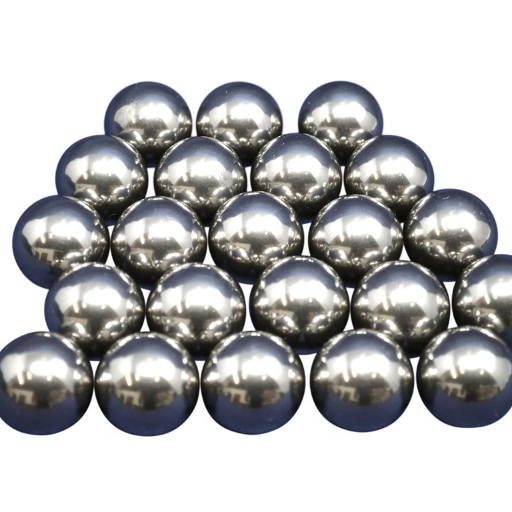
Heat treatment does several wonderful things for the 440C steel by providing an acceptable hardness, strength, and good wear resistance. The steel is heated at a high temperature, quenched to become hard, and, finally, tempered to check brittleness so it can retain strength. Posterior to correct heat treatment, a 440C steel will be able to work very well in strenuous applications.
Hardening Process for 440C Stainless Steel
Hardening 440C stainless steel follows a meticulous heat treatment procedure in order to get the maximum hardness and best balance of mechanical properties. Below is a more detailed step-by-step description of the hardening procedure for 440C stainless steel:
- Preheating: The steel should be slowly preheated to 1400°F to 1500°F (760°C to 815°C). This practice ensures even heat penetration and reduces thermal shock during further heating.
- Austenitizing: The steel is brought to the austenitizing temperature, usually 1850°F to 1950°F (1010°C to 1065°C). The steel undergoes a phase transformation in this stage where the microstructure turns into austenite, an essential feature for the formation of hardness. The material should maintain this temperature for 30 minutes to one hour, depending on the size and thickness of the component.
- Quenching: Immediately after austenitizing, the steel is rapidly cooled so that the austenitic structure is retained and modified into martensite, which is the hard microstructure wanted. Usually, quenching mediums are air, oil, or inert gas. Oil is mostly preferred for quenching 440C due to its uniform cooling.
- Cryogenic Treatment: Sometimes, to increase hardness and get better wear resistance, cryogenic treatment is applied after the quenching. This means cooling the steel to subzero temperatures, roughly around -110°F (-80°C), to convert retained austenite to martensite.
- Tempering: Again, during tempering, the steel material develops its properties. Temper the steel for 1 to 2 hours between 300°F to 500°F (150°C to 260°C) to alleviate brittleness. Basically, the lower the tempering temperature, the greater the hardness, but at the price of less toughness.
Tempering and Quenching: Attaining the Desired Degree of Hardness
Tempering and quenching are the basic processes in heat treatment, which work hand in hand to give steel the desired hardness and mechanical properties. The quenching step involves hardening the steel by rapidly cooling it from its austenitizing temperature, generally containing martensitic structure. However, the quenched steel is quite brittle. Tempering involves heating the quenched steel to a predetermined temperature, below its critical temperature, and holding it for a prescribed amount of time.
By a fine selection of quenching media and tempering temperature, one can achieve the material of desired hardness versus toughness suitable for the particular end-use. The lower temperatures for tempering are needed for materials that require stronger hardness, such as cutting instruments. Meanwhile, higher tempering temperatures enhance the toughness of the object, thus enabling the object for components where it would be subjected to impacts. The balance between hardness and toughness can be optimized by suitable process control of these interrelated processes.
Why is Annealing Important for 440C?
Annealing is a very important heat treatment for stainless steel 440C as it aids in refining the microstructure, improves machinability, and reduces any internal stresses that may have been induced during its initial manufacturing processes such as forging or rolling. 440C is a high carbon martensitic stainless steel with an excellent degree of hardness and good wear resistance, and these characteristics, if not maintained properly, make the steel very hard to machine and brittle.
Annealing of 440C is carried out by heating to a temperature of about 1550°F (843°C), followed by slow cooling, normally in the furnace. This heat treatment relieves internal stress, increases its ductility, and prepares the material for further processing such as machining or hardening. Data shows that the hardness value of about 207 HBW (Brinell Hardness) or 20-25 HRC (Rockwell Hardness) can be attained for 440C stainless steel after annealing, which is sufficient for machining without extreme wear of cutting tools.
Besides improving the uniformity of its composition, annealing also reduces warping or cracking during subsequent heat treatments such as quenching and tempering, where the risk of cracking is very high. Combining annealing with controlled subsequent processes will enable 440C to develop to full potential in use as bearings, molds, and cutting tools requiring high resistance with strength.
What are Some Common Uses of 440C Stainless Steel?

- Machinery ball bearings and roller bearings
- Cutting tools such as knives and surgical instruments
- Manufacturing molds and dies
- Valve parts and pumps in industrial settings
The Application of 440C in Knife Blades and Cutlery
440C stainless steel has been regarded widely as a balanced high-performance steel suitable for knife blades and cutlery in terms of hardness, wear resistance, and corrosion resistance. Martensitic stainless steel, the 440C attain a hardness of as high as 58~60 HRC with suitable heat treatment and is suitable in making tools that need to be finely engineered and cut. Its ability to retain the sharpness after prolonged use is a considerable advantage for professional chefs, outdoor officianados, and collectors.
The corrosion resistance of 440C is one of its primary advantages in knife manufacture. A crucial consideration for kitchen knives and cutlery is that they often stay in prolonged contact with moisture and acidic food ingredients. According to chemists and metallurgists in relevant industries, 440C alloys have a chromium content of about 16-18%, which forms a very strong passive layer from corrosion in humid or wet environments.
On top of that, thanks to the fine-grained structure of 440C steel, it ensures uniformity and consistency in production without compromising structural integrity. This attribute makes it an extremely popular choice in custom knife making as well as cutlery production in larger quantities. Its wear-resistance properties render it suitable not only for cutlery but also for outdoor knives, tactical knives, and survival tools.
While slightly losing out in corrosion resistance to some other stainless grades, 440C steel stands noticeably far above others in edge retention, one of the deciding factors in very demanding working conditions. 440C-Was tested to stay sharp for a longer time through usage than steels such as 420 or 440A. That has made it a universally accepted and trusted steel-grade among knife makers.
440C in Ball Bearings and Industrial Components
440C has equally stood out in ball bearings and industrial components manufacture. These applications include aerospace, automotive, and precision machinery, where high hardness, resistance to wear, and corrosion resistance are required. Under high loads and extreme rotation conditions, ball bearings made out of this steel show minimum wear.
In terms of temperature resistance, 440C Stainless-steel made ball-bearings will resist temperatures up to 250°C (482°F) without losing mechanical integrity. Their Rockwell hardness is about 58-60 HRC, which ensures their long-lasting durability. This makes 440C the preferred choice for high-precision qualities, in which dependability and efficiency come first.
It also works very well for industrial valves such as seats, molds, and cutting tool components as 440C resists deformation while under stress and more or less prolongs of tool life when under heavy operational condition. Further development in the manufacturing technologies render 440C as the foremost preferred material in industries where neither durability nor performance is questionable.
Utilizing 440C in Valve and Precision Instruments
440C stainless steel has been used extensively in valve and precision instruments due to its superb hardness, corrosion resistance, and wear resistance, ensuring optimal performance and longevity under even the most adverse environmental conditions. Its dimensional stability under stress makes it perfect for applications requiring a great deal of precision and reliability.
Machining and welding 440C stainless steel?

Machining methods are conventional for making parts of 440C, with slower speeds and higher feed rates since it is hard. It is best to use carbide or high-speed steel tools so that precision may be achieved. Cooling ought not to be neglected while machining so as to avoid side effects such as overheating that will reduce the integrity of the material surface.
The welding of 440C is an almost impossible task because of its very high carbon content, which increases cracking. It should be preheated and then given heat treatment after welding so that thermal stress are reduced and weld quality is improved. If welding cannot be successfully done, better joinery methods should be considered.
Best techniques for machining 440C
Due to the special hardness and toughness of 440C stainless steel, machining has to be done with a special approach. Tooling is best when out of carbides or high-speed steels used in machining 440C. These tools will stand the test of this tough material and produce cuts with great accuracy. Also, without good cooling during machining, the temperature will rise and can lead to degradation of the material structure or even surface damages.
When machining, use the lower cutting speed and let the feed be moderate; these settings will increase the tool’s life and decrease the tool wear. Very important is also to ensure that the machine is rigid so that any vibration, shaking, or unsteadiness will not spoil the accuracy of the finished product. Meanwhile, keep an eye on the tool and change it whenever it wears out. With such care in applying the machining methods and process control, machining 440C will be relatively easy and deliver fine results.
Issues in Welding 440C and How to Resolve Them
Welding 440C has posed a rather severe problem due to the high carbon content and cracking threats. I have found that preheating to 500-600°F (260-315°C) and controlled cooling of the weldment are important to minimize thermal stresses and cracking. In addition, austenitic stainless steel filler metals will further help to enhance weldability of 440C and reduce brittleness of the joint. Post-weld heat treatment will restore hardness and corrosion resistance of the metals, while it reduces residual stresses. Careful controlling of these stages would ensure the success of welding on 440C without compromise in the integrity of the material.
What Makes 440C Steel Different from Other Stainless Alloys?

The principal difference between 440C steel and other stainless alloys lies in the fact that this series has higher carbon content and, therefore, upon heat treatment, 440C achieves exceptional hardness and wear resistance. Good corrosion resistance is provided by 440C steel under normal atmospheric conditions, which can diminish under more extreme conditions. Unlike lower carbon stainless steels such as 304 or 316, 440C is principally used in heavy-duty applications where strength and wear resistance are given preference over highest corrosion resistance: knives, bearings, and industrial machinery, to name just a few.
Comparing 440C with Other Martensitic Stainless Grades
Martensitic stainless steel grades include 410, 420, 431, 440A, 440B, and 440C.
| Grade | Carbon | Hardness | Corrosion | Strength | Wear Res. | Applications |
|---|---|---|---|---|---|---|
| 410 | Low | Medium | Moderate | Medium | Low | Cutlery, Tools |
| 420 | Medium | High | Good | High | Medium | Surgical Tools |
| 431 | Medium | High | Better | High | Medium | Marine Gears |
| 440A | High | High | Moderate | High | High | Kitchen Blades |
| 440B | Higher | Higher | Moderate | Higher | Higher | Industrial Blades |
| 440C | Highest | Highest | Good | Highest | Highest | Knives, Bearings |
How Carbon Content Influences the Performance of 440C
The incredible performance provided by 440C stainless steel can be mostly attributed to a high carbon content, which confers high hardness, wear resistance, and strength. Being a high-carbon stainless steel in the range of 0.95 to 1.20%, 440C can be heat-treated to extremely hard states with Rockwell combined hardness levels ranging between 58 and 65. It is the preferred stainless steel grade for high-wear applications requiring hardening treatment for better wear resistance, such as knives, bearings, and industrial tools.
440C has high carbon content, which promotes the formation of carbide precipitates during the heat treatment. These carbides impart wear resistance to the steel, which directly contributes to the retention of the carbide edge, making the steel popular for precision cutting instruments such as kitchen knives and surgical instruments. Thanks to the chromium content (16–18%), 440C also provides good corrosion resistance, despite being hard on the surface, and hence is preferred in an environment where a fair amount of moisture and mild chemicals are present.
With recent advances in metallurgy and the increased knowledge of alloying, 440C steel can be manufactured more uniformly so that it guarantees properties that make it suitable as a top-tier material for applications where life and performance matter the most. Hence, one can see where 440C outperforms another stainless grade such as 420 in a knife application especially when it needs to be hard as well as tough.
440C vs. Other Steel Series: Key Differences
As a basis for comparison, the main difference is in the carbon content: In the family of 440 stainless steels, 440C has a higher carbon content when compared to grades like 440A and 440B. Hence, with more carbon, this steel can achieve much higher hardness and wear resistance. It becomes the working-choice steel where tools of enhanced durability are needed-view industrial blades, surgical tools, and bearings needing abuse.
Compared with the soft grade such as 420 stainless steel, 440C is very hard and capable of edge retention. In comparison, the 420 will resist corrosion better, i.e., the higher carbon content in 440C can form more carbides to the detriment of chromium retained in the matrix in 420, which opposed this in becoming a good resistance stainless. Nevertheless, 440C is chosen highly for use in place where it can have to carry strength, hardness, and corrosion resistance under high stress.
Compared to D2 type steels, 440C offers better all-round corrosion resistance since they are stainless; however, in certain instances, the D2 is slightly tougher. This brings us back to the statement that the final choice of either 440C or a different steel would depend on the specific needs of the application involving, corrosion versus hardness, toughness versus wear resistance.
Reference sources
- Investigation of Surface Integrity of Conical Hole in Laser Polishing 440C Stainless Steel(Zhang et al., 2024)
- Publication Date: 2024-01-03
- Authors: Chuanqi Zhang et al.
- Methodology: Empirically determined laser parameters and scanning strategies through planar experiments, followed by validation on ball-milled small conical holes. Surface roughness, morphology, re-melt layer thickness, heat-affected zone, and surface hardness were measured.
- Key Findings: Nanosecond pulsed laser polishing effectively reduced surface roughness (by ~41.7% on planar surfaces and ~73.6% on conical holes) while preserving dimensional integrity (re-melt and heat-affected zones below 5 μm). Surface hardness significantly increased (100-180%). This method is presented as a reliable solution for removing machined traces from complex internal surfaces.
- Behavior of Retained Austenite and Carbide Phases in AISI 440C Martensitic Stainless Steel under Cavitation(Brunatto et al., 2024)
- Publication Date: 2024-08-17
- Authors: S. F. Brunatto et al.
- Methodology: X-ray diffractometry to determine retained austenite phase fraction evolution in as-hardened AISI 440C after cavitation for increasing times. Scanning electron microscopy (SEM) was used to observe microstructural changes.
- Key Findings: Preferential carbide phase removal occurred along prior austenite grain boundaries during the incubation period. Strain-induced martensitic transformation of retained austenite was observed, assisted by the martensitic matrix. Stacking fault energy was estimated. Incubation period, maximum erosion rate, and erosion resistance were determined.
- Microstructural characterization of AISI 440C stainless tool steel fabricated by laser powder bed fusion(Pan et al., 2024)
- Publication Date: 2024-08-01
- Authors: Z. Pan et al.
- Methodology: Multi-scale experimental methods (not specified in detail) were used to characterize the microstructure of AISI 440C fabricated by laser powder bed fusion (L-PBF). Thermodynamic calculations were also performed.
- Key Findings: The as-built sample exhibited a fully austenitic structure with sub-micro cellular structures and nano-sized carbides decorating cell walls. Significant segregation was observed at cell wall intersections but not along high-angle grain boundaries. Factors contributing to crack-free AISI 440C in L-PBF are discussed.
Frequently Asked Questions (FAQs)
Q: Highlight some major characteristics of Stainless Steel 440C.
A: Stainless Steel 440C is a high-carbon martensitic stainless steel. It has good hardness and wear resistance. It can obtain the highest strength, somewhere at about Rockwell C 60, and it has moderate corrosion resistance.
Q: What are the usual application areas of Grade 440C Stainless Steel?
A: Grade 440C Stainless Steel is normally used where very high strength and moderate corrosion resistance are needed, such as knifemaking, ball bearings, and flat bars. It is also commonly used in the manufacture of tools and surgical instruments.
Q: What is the difference between Stainless 440C and other stainless steels?
A: Stainless 440C is the highest strength stainless steel belonging to the 400 series. While it is able to give good hardness and wear resistance, corrosion resistance is moderate, unlike the austenitic grades like 304 and 316. Therefore, it finds utility in areas where strength is considered the paramount criterion.
Q: Can 440C stainless steel be heat treated?
A: Yes, Different properties can be given to Stainless Steel 440C through heat treatment. It has high hardenability, and it is normally hardened by quenching in warm oil. Annealed conditions can also be used to improve machinability. The steel is annealed to make it more workable before a hardening treatment.
Q: What is the specification standard for Stainless 440C?
A: Stainless Steel 440C is normally manufactured to the ASTM A276 specification, which covers stainless steel bars and shapes for a wide variety of applications.
Q: What are some aspects of 440c machining?
A: 440C is very difficult to machine due to high hardness and toughness. The chips are tough and stringy, and sharp tools and good coolant must be employed to machine it successfully.
Q: What is the annealed condition for 440C?
A: When annealed, the 440C stainless steel gains increased workable and less hard and brittle qualities and thus is easier to machine and form compared to after it has been subjected to final hardening treatments.
Q: Why does 440C find its specialty in knifemaking?
A: 440C is considered one of the premier steel grades in knifemaking because it steels with its high carbon content, hence rendering very hard, able to hold an edge, and possessing some corrosion resistance in the moderate range, which makes for an excellent steel for knives for indoors or outdoors, depending on how much one intends to use the knife for cutting.


