


Knowing the properties and differences between the materials can be the big difference in the choice of the right material for a project. High-Density Polyethylene and Delrin® are two materials that find use across a wide spectrum of industries and have different benefits and applications. If you really are wondering which option is most suitable for you, this article can come to your aid. Along with us, we will be looking into the key properties of HDPE and Delrin®, their pros and cons, so that you can put all of the information to work in making a wise choice for your project. This comparison will help if you want anything from precision components to durable and cheap materials.
What Goals Are Sought Through the Material Properties of HDPE and Delrin®?
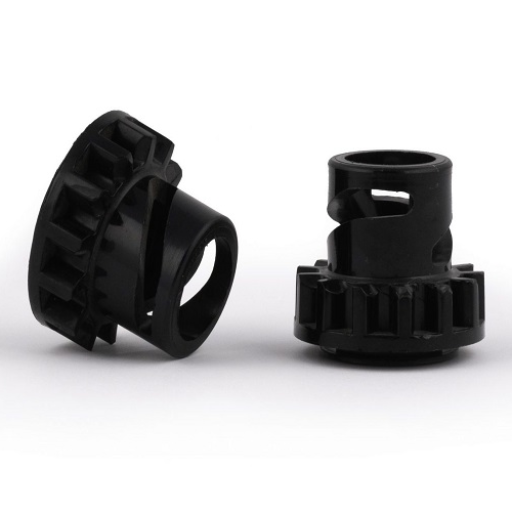
HDPE (High-Density Polyethylene) is a plastic that is light and durable. It offers resistance to impact, moisture, and chemicals. Its ductile nature allows it to be molded, with one of the lowest molding costs in the industry. Typical applications include piping, storage containers, and packaging.
Delrin® (Acetal) is a much more rigid engineering-grade plastic. It has very high strength and low friction, with extremely good dimensional stability. Delrin® is best adapted to precision parts like gears, bearings, and structural components where good durability and precision are required.
They differ in character, and it all comes down to the specifics of what is needed for your project.
Understanding the Differences Between HDPE and Delrin
HDPE and Delrin differ in terms of flexibility, strength, friction, temperature resistance, and application suitability.
| Key Point | HDPE | Delrin® |
|---|---|---|
| Flexibility | High | Low |
| Strength | Moderate | High |
| Friction | High | Low |
| Temp. Res. | Moderate | High |
| Applications | Piping, Storage | Gears, Bearings |
Difference in Densities of High-Density Polyethylene and Delrin®
One of the key distinctions between High-Density Polyethylene (HDPE) and Delrin® (Acetal) is related to density, affecting weight, strength, and ideally suited applications. Generally, HDPE has a density value between 0.93 and 0.97 g/cm³; this implies making it lightweight and used in applications where ease of transportation or handling is necessary. It is through this property that it is widely used in piping, containers, and storage-type applications.
Conversely, Delrin® is heavier, at about 1.41 g/cm³, making it more dense. The high density imparts a measure of strength and stiffness to Delrin®, making it more suitable for high precision components such as gears, bearings, and fixtures. Increased density provides Delrin® with the ability to withstand greater mechanical loads and afford dimensional stability to a better degree when exposed to stress.
Understanding this difference in density helps bring clarity to the applications of HDPE in lightweight and flexible solutions on one hand and to the engineering uses of Delrin® wherever a high level of durability coupled with mechanical precision is demanded.
Reasons Why Delrin® Bestows Superior Dimensional Stability
Delrin®, the high-performance acetal resin from DuPont™, enjoys a reputation for superior dimensional stability, making it an industry standard for precision engineering uses. Key to Delrin® dimensional stability is a low coefficient of thermal expansion and a high resistance to moisture absorption. Delrin® changes remarkably less in dimensions as compared to materials like HDPE when exposed to varying temperatures or humidity, and this allows parts to securely maintain shape and tolerances for extended periods.
According to recent data, the linear thermal expansion coefficient of Delrin® is about 8 x 10⁻⁵ per °C, far less than that of HDPE, which ranges between 11-15 x 10⁻⁵ per °C. Furthermore, under standard conditions, Delrin® absorbs roughly 0.2% moisture, whereas HDPE can absorb up to 0.04%—a figure that initially may be surprising but ultimately highlights Delrin®’s specialized design for maximum stiffness with the least creep under load.
Such properties ensure that Delrin® becomes a candidate for extremely critical use cases in aerospace, automotive, and industrial machinery, where precision matter greatly. By retaining strength and shape under stress and environmental shifts, Delrin® helps smooth operations and reduces the wearing of moving parts, consequently extending the overall service life of a product. This further must-have reliability engenders the preference for Delrin® among engineers worldwide.
Performance Attributes for HDPE and Delrin® in Various Applications
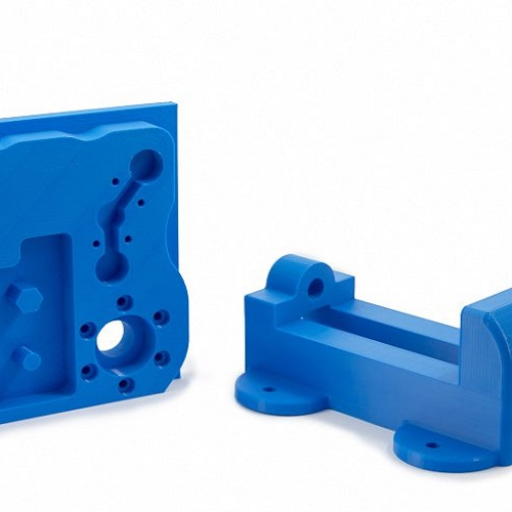
HDPE and Delrin® fare well in a variety of applications; however, their advantages vary as per the requirements. HDPE is stronger in chemical resistance, flexibility, and cost-effectiveness and is thus best suited for piping, containers, and lightweight machinery components. Delrin® fares better in strength, dimensional stability, and resistance to wear, fitting it well for precision parts like gears, bearings, and automotive components. Hence the choice between the two must be made based on the actual mechanical and environmental requirements of the application.
Applications of HDPE and Delrin®
HDPE (High-Density Polyethylene) and Delrin® (Acetal) are versatile materials that find applications throughout many industries because of their properties. HDPE is utilized industrially and in consumer applications requiring durability and lightness, such as plastic bottles, fuel tanks, and corrosion-resistant pipes. Being flexible and chemically resistant, HDPE enjoys wide applications as an outdoor and underground piping material placed under conditions of exposure to harsh elements.
Delrin®, on the other hand, is a premium option for applications wherein great precision and strength are necessary. It could be employed in automotive components such as door mechanisms and fuel system components due to its wear resistance and dimensional stability. It offers low friction and relatively high stiffness, making it appropriate for conveyor systems, bearings, and gears employed in industrial machinery. Manufacturers can review the pros and cons of each material to ensure an efficient selection that caters to the performance demands of their respective projects.
Which is Preferred for Particular Applications?
While making a selection of materials for a particular use, aspects such as performance demands, cost, durability, and environmental conditions are to be taken into consideration. Polymers such as polyamide (nylon) are generally appreciated in applications where wear resistance and self-lubricating properties are needed. This is why it is preferred for gears, bearings, and conveyor belts. Recent reports state that the worldwide demand for polyamide is predicted to increase with a compound annual growth rate (CAGR) of nearly 6%, reflecting its widespread commercial usage in the automotive and industrial sector.
On the other hand, polyoxymethylene (POM) is well known for precision and dimensional stability and is best suited for fine tolerance applications such as fuel system components, medical device parts, and consumer electronics. Insight analysis confirms that due to its perfect machinability and capability to resist environmental stressors like moisture and heat, the demand for POM has increased.
In cost-conscious projects, nylon might be preferable when large quantities are required, while POM is favored when high rigidity and low friction are paramount technical requirements. Assessing current trends with use-case demands helps guarantee manufacturers produce efficient and durable products through the deliberate selection of the most appropriate material.
What Are the Reasons for Positioning Delrin® as the Fit-Mate for Precision Components?
Delrin®, a traded name for polyoxymethylene (POM), is considered an excellent precise product because of the unique set of properties. High stiffness, low friction, and excellent wear resistance allow it to be used in applications requiring precision and durability. It has a density of about 1.41 g/cm³ and can operate well from -40°F to 185°F (-40°C to 85°C), thus maintaining dimensional stability even in unfavorable environments.
Let us explore Delrin®’s machinability, one of its many distinguishing characteristics. It permits fabrication into complex shapes with tight tolerances and has been extensively used for gears, bearings, and automotive components. In addition to having low moisture absorption (about 0.2% at saturation), Delrin® will resist warping or dimensional changes in excess humidity, a vital design criterion for components that will need steady performance with the passage of time in moist ambient conditions.
Furthermore, Delrin® is resistant to chemicals, especially to fuels, solvents, and many industrial chemicals. With an approximate tensile strength of 63 MPa and impact resistance, it can bear mechanical stress without losing or compromising its shape; thus, it assures that it will endure in demanding applications such as medical devices and aerospace components.
New alternative formulations for the Delrin® product family have seen diverse gain in performance. For example, with acceptable modifications on its composition, newer grades of Delrin® provide better UV resistance, allowing it to be used outdoors. Market reports note that industries are maximizing the use of Delrin® in precision applications, citing up to 40% reductions in frictional wear of dynamic systems compared to other POM materials.
Integration of Delrin® into precision component manufacturing has allowed companies to realize superior performance, greater reliability, and reduction of cost. The unique combination of properties of Delrin® makes it a top performer in applications where precision, strength, and endurance become mandatory.
Why select HDPE over Delrin for projects?

- Strength and Stiffness: Delrin® is stronger and stiffer, thus more suitable for precision parts requiring high durability and tight tolerances.
- Wear Resistance: Delrin® hence exhibits better wear resistance, particularly in cases where dynamic applications are involved.
- Cost: HDPE has been considered the cheaper of the two, making it suitable for applications without stringent performance requirements.
- Chemical Resistance: HDPE does well in resisting many chemical substances, which might favor its choice in an environment with exposure to harsh materials.
Choosing the Right Material for Your Next Project
- Application Requirements: Whether it is Delrin® for precision, strength, and wear resistance or HDPE for cost-effectiveness and chemical resistance.
- Environmental Conditions: The perfect environment for Delrin® would be a challenging mechanical environment, while HDPE would work well where there is exposure to chemicals.
- Budget Constraints: Consider your budget. HDPE is generally the more inexpensive option, and thus good for an application where cost is a matter.
Comparing the Properties of HDPE and Delrin for Optimal Choices
When comparing the properties of HDPE and Delrin, key parameters include strength, durability, cost, temperature resistance, chemical resistance, and machinability.
| Property | HDPE | Delrin® |
|---|---|---|
| Strength | Moderate | High |
| Durability | Excellent | Excellent |
| Cost | Low | Moderate |
| Temp. Resist. | Moderate | High |
| Chem. Resist. | High | Moderate |
| Machinability | Moderate | Excellent |
What Applications Use HDPE and Delrin Plastic?
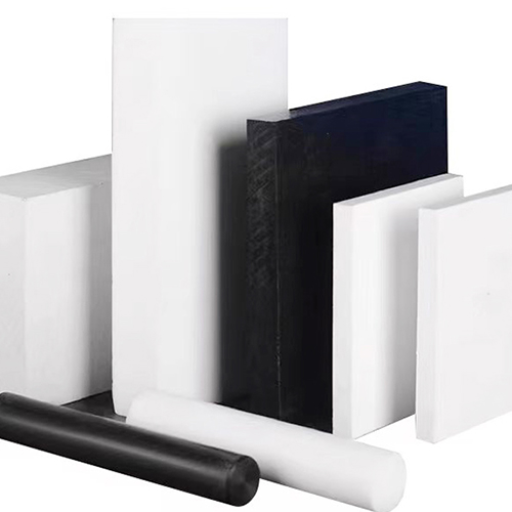
HDPE finds use in various applications like piping, storage containers, and outdoor furniture, thanks to its excellent durability, chemical resistance, and cost-effectiveness. Delrin®, being high in strength and temperature resistance and easy to machine, is meant to construct precision parts such as gears, bearings, and other mechanical applications. Both materials serve very specific purposes; their resisting capacity and degree of excellence vary from one application to another depending on what is required.
How HDPE Is Usually Used in Industry
In industries, HDPE applications commonly include the manufacture of strong pipes, large storage tanks, and containers of industrial standards. It is the preferred material for packaging chemicals due to its chemical resistance. On the other hand, being light in weight and weather-resistant is an added advantage, thus making it a perfect material for outdoor furniture and agricultural products.
Understanding Delrin Components and Their Uses
In my opinion Delrin is described as a high-performing acetal material with specific characteristics including high strength, stiffness, and very low friction levels which are almost impossible to attain in the use of other materials. It is usually employed in the manufacturing of accurate machine parts like precision gears, bearings, and bushes, as it has the ability to resist the effects of mechanical stress and physical erosion. Moreover, it has little moisture absorption and shows almost no expansion, thereby making it ideal for use in various fields such as cars, electronics, and pharmaceutical devices. This is a very good raw material in terms of designing for tough and detailed applications.
Material Differences and Comparisons Between HDPE and Delrin®
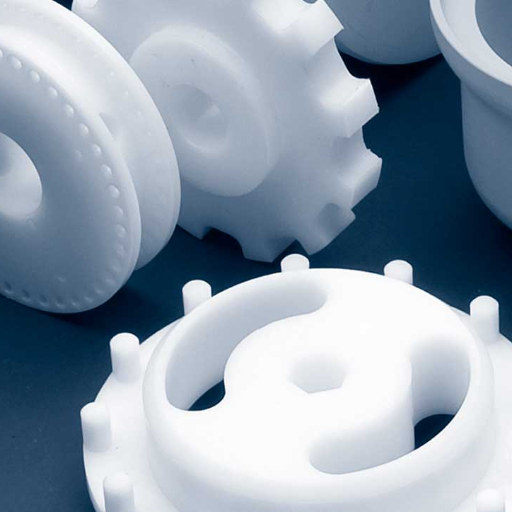
When one is thinking of HDPE and Delrin®, one tends to draw comparisons on the account of these two substances. High-Density Polyethylene is a plump polymer that is widely employed in numerous industrial applications attributed from its good chemical and impact resistance properties and low cost. This feature makes polyethylene appropriate for usage in containers, piping and packaging. Consequently, Delrin® offers much more in terms of when compared to HDPE. This is a stiff, resilient acetal resin product with a sibilant sound that has a strong modulus, good sliding friction properties and is very low. Therefore it is best for manufacturing of mechanical devices like wearing gears, shafts, bushings among other. Although the use of HDPE is more common and ideal in applications that seek easy bending and the relationship to some chemicals, Delrin® material is more prevalent in environments that require dimensional precision, abrasion resistance and that are under intense mechanical loading.
Understanding the low friction behavior of each of the materials
Low friction is one of the salient features of these materials and is at the heart of their wide industrial usage, their differentiation being their respective strengths for respective applications. HDPE provides mainstream industries with its typical low value in coefficient of friction on a surface which is above 0.2 and less than or equal 0.3. This property acts as a very effective abrasion preventative in their specific applications especially those with intricate motion such as conveyor systems, guiding rails, and sliding mechanisms. Even with chemicals or water in the picture, HDPE low friction level still stays the same which increases its usability within extreme conditions like food processing and chemical applications.
On the other hand, the usefulness of Delrin® (acetal resin) polymer is mostly in performance regarding low friction; the most notable in high precision engineering. Against steel, the chemical shows friction figures of down to 0.1 to 0.2 allowing it to be employed reasonably to high-performing internal machine parts such as gears, bushes and bearings. In the case of applications that do not permit the use of additional lubricants, it retains its ‘natural lubricant’ property which predominantly is fit for sanitary applications such as medical devices and all the others necessitating synchronizedly manufacturing with other processes and applications. Moreover, in high-stress volumes there is wear reduction through its ability to maintain low friction under dynamic loads enabling long service life of the parts under such environmental conditions.
It, therefore, goes without saying that the choice of the materials lies within the specific conditions to conquer. As low friction encompasses any sliding action, material fatigue, the loss of materials where frictional forces are involved, materials adversely affected by poor heat transfer and % along any other sliding frictional aspects, High density polyethylene is ideal in the development of general use low cost solutions concerning friction. At the time of writing, mechanical and production engineering has an important section as any paste material processed in granulates and it is used to press manufactures parts.
Reasons why HDPE can Be Applied in Various Cases of Technology
HDPE is a form of thermoplastic that is most popular among the polymers available owing to its extreme flexibility, which excels in a wide range of activities and sectors. Strength, chemical resistance, cost and mobility are all things that the product transcends in comparison with other plastics.
An outstanding feature of HDPE, which other materials have not managed to match, is its lightness in relation to strength. It has tensile strength much higher than the environment, approximately 20-37MPa depending on the grade, and still maintains lower specific gravity compared to its rivals. Increased strength to weight ratio makes it suitable for such applications where performance is important to the working of the system but no material should be added un necessarily. Rashes of high stress are more like to grow on surfaces of containers and bottles than most of such items, since it possesses a perfect combination of physical restrain and resistance to moisture, chemicals in industrial applications and food processing and even household stuff like food containers and chopping boards.
In addition, HDPE can be reused thanks to its waste management properties. In chemical terms, HDPE is often referred to as a type 2 plastic for it is made up of plastic components which can be readily processed for recycling. Plastics made out of HDPE can be modified and used for production of things such as plastic bottles as well as piping, and construction of buildings can even get manufactured for better results including recycling. This statement upholds the general direction followed by many countries regarding eco-friendly products and their promotion.
The upgrade of not only material grades of HDPE but also the HDPE grade technology itself has been major breakthroughs. New type of HDPE now provides the features of better UV resistance for its application in the open and harsher weather conditions, increased impact resistance to avoid quick damage and better appropriateness for advanced technology and processing such as blow molding and 3D printing industries. For example, developments in HDPE geo-membranes play a critical part in both agriculture and infrastructure by creating barriers that are strong and water impermeable to avoid any seepage.
Ultimately, HDPE’s versatility is derived from the fact that it is able to address the demands of a particular application while juggling the aspects of strength, cost and adaptability. Its extensive application in industries like: construction, packaging, automotive, and medical, also symbolizes sustainable existence in the field of polymer coatings.
Providing Ways of Selecting Good Materials
When making decisions about the right materials to be used, it is important to analyse some key factors such as resistance to deformation, linear or volumetric shrinkage, solvent resistance and costs. Determining this, the specific design requirements and much more such as the physical and chemical environment of the work, the particular condition of the materials of construction and the magnitude of the load determines application of the given material. This restricts the use of HDPE, LDPE, or any other analogs only in the comparison phase leading to substantial functional and economic value. One should also take into account the cost of works in the future and keep in mind that maintenance has to be simple and cost effective.
Reference sources
- Dual Frequency Bi-Orthogonally Polarized Antennas for GPS Applications – Discusses the use of materials like HDPE and Delrin in applications requiring specific material properties.
- Predicting the Life and Design Stresses of Medical Plastics Under Creep Conditions – Examines the stress limits and performance of materials like HDPE and Delrin under specific conditions.
- Long Term Performance of Corrugated HDPE Pipes Produced with Post-Consumer Recycled Materials – Focuses on the properties and performance of HDPE in structural applications.
- Top Aluminum CNC Machining Parts Manufacturer and Supplier in China
Frequently Asked Questions (FAQs)
Q: In what ways is HDPE different from Delrin?
A: Renowned for its strength-to-density ratio, High-Density Polyethylene or HDPE is a highly durable material used in various applications. On the other hand, Delrin® is an acetal resin that is known for its outstanding mechanical wear properties. The application of HDPE or that of Delrin largely depends on the application purpose such as the strength, flexibility and other environmental factors.
Q: What is the tensile strength of Delrin vis-a-vis HDPE?
A: The mechanical strength and the stiffness of Delrin are generally higher than that of HDPE. This fact explains why most applications which necessitate high tolerances and load bearing implements opt for Delrin. On the other hand, HDPE is relatively stronger, but more often used due to its elastic property and resistance to sudden shocks.
Q: How are HDPE and Delrin materials commonly employed?
A: In construction, HDPE is geared towards such products as tubes, units of transport, packaging owing to its wearing and corrosion resistance. Delrin is rather used best in spare parts with low tolerance, such as pinions, bearings, valves and so on, as it has better mechanical properties.
Q: Why will you sideline Delrin and rather opt for HDPE for your purposes?
A: More often than not, the choice between the two materials depends on particular conditions of the task soon to be solved. The availability of relatively cheaper impact resistant HDPE provides a solution for mass production processes that require flexibility and cost efficiency. Events, where accuracy and strength are paramount, would require the use of Delrin.
Q: Can parts made of both HDPE and Delrin be cut millimetrically by computerized machine?
A: Yes, computerized processing used in manufacturing parts work well in both HDPE and Delrin. For computerized machine cutting, Delrin is one of the materials used because it can be machined with precision in addition to having such features as stable dimensions and ease of its machining.
Q: Why Delrin Used in Engineering Mostly Because of its Qualitative Advantage?
A: Delrin provides a strong alternative in many situations. This plastic features high mechanical strength, low cogging effect and nature of low wear rates. As a result, there are applications areas that may outlast the Delrin properties under load.
Q: When compared with HDPE, which stands out as a more expensive material?
A: Delrin appears to be the better and more expensive material in comparison with HDPE as it has better performing mechanical abilities and other additional features. If user has to choose between HDPE and Delrin, he is more likely to check the cost against the performance.
Q: Why is HDPE in demand and what has it in terms of properties and applications? Can it be used in a number
A: HDPE is preferred as it resists chemicals, moisture as well as shock apart from being versatile in use. Such properties account for the popularity of HDPE in such products as the containers and pipe, or even in the toy industry. The material is readily available and can be found in different applications because of its versatile nature and affordability.
Q: Can Delrin withstand all weather conditions?
A: Delrin when treated can be protected from UV rays, but in general, it has limited outdoor exposure compared to HDPE prestigious, which is the resistance of the material to such environmental factors as sunlight and moisture.
Q: Delrin Versus HDPE-Which is Greener?
A: Although the two materials, HDPE and Delrin, have multiple application possibilities, the impacts they cause in their specific use cases now becomes the main determining factor. High-density polyethylene commonly referred to as HDPE is recyclable making it environmentally friendly in most applications. Although such considerations might be out shadowed by the production implications of Delrin, the recycling and reuse potential of HDPE products make it an equally good alternative.


