


In the construction, manufacturing, and engineering spheres, materials impinge decisively upon the strength and reliability of undertakings. Among numerous materials available, Q235 steel is one that stands out by being uniquely versatile and widely used carbon steel. What exactly sets it apart in popularity? This blog attempts to elucidate what Q235 steel means, its distinctive qualities, and how it addresses the needs of thousands of industries. Whether you are an experienced engineer, a fellow professional, or just venturing into this arena of materials science, this guide will seek to explain why Q235 steel has remained such a preferred choice. Walk along as we break down applications, advantages, and features making this material so special.
What is Q235 Steel?
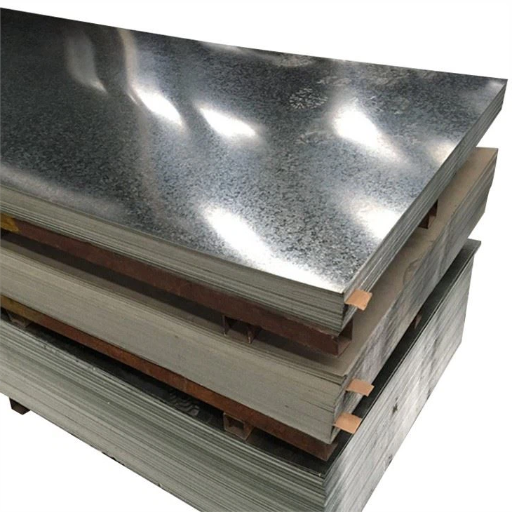
Q235 steel is a one-surface carbon structural steel most-commonly used in construction and manufacturing. The steel has good strength, weldability, and plasticity-the combination suits them for quite different applications. This material is broadly used for structural components such as beams, plates, and steel frameworks due to its cost-effectiveness and assured quality.
Understanding Q235 Steel Composition
The chemical composition of Q235 steel generally includes carbon, manganese, silicon, sulfur, and phosphorus. Carbon content in the range of 0.12 to 0.20% provides a balanced strength and ductility. Manganese content from 0.30 to 0.70% gives greater hardness and toughness, while silicon content up to 0.30% serves as a strength enhancer. Sulfur and phosphorus should be very limited in order not to adversely affect the properties of the steel. Such a balance ensures the solid realization of structural and manufacturing applications by Q235 steel.
Different Grades of Q235: Q235A, Q235B, Q235C, Q235D
Each type of Q235 steel—Q235A, Q235B, Q235C, and Q235D—differs mainly by its carbon content and by its resistance to impact at different temperatures. Q235A and Q235B are considered general-purpose grades, with Q235B having somewhat better properties due to stricter controls on chemical composition. Q235C and Q235D are for enhanced toughness applications, with Q235D being capable of operating at a lower temperature due to its improved impact resistance. These subtle differences allow for the better selection of the suitable steel grade on the basis of the structural or environmental need.
The Carbon Content in Q235 Steel
Carbon content plays an important role in defining the mechanical properties of Q235 steel, i.e., strength, ductility, and weldability. Its carbon content is usually around 0.12-0.20, which often classifies it as a low carbon steel. Such a relatively low percentage of carbon favors weldability and flexibility, which makes it suitable in structural applications such as bridges, buildings, and machinery parts.
Higher carbon decreases ductility and toughness but increases hardness and strength of the steel. For Q235 steel, the carbon balance is carefully controlled to allow it to tolerate stresses without becoming too brittle, especially at low temperatures. It has been shown through investigations that tighter control on composition including tighter carbon limits is beneficial to enhance impact resistance and durability for Q235 steel grades such as Q235C and Q235D in low-temperature applications.
Besides, the lower carbon content means fewer problems arising during welding, such as cracking and distortion. This characteristic makes it highly advantageous for big fabrication and assembly works. Research shows that steels, such as Q235, are well maintained under differing working conditions, further proving its generalized application in industrial as well as architectural fields.
Mechanical Properties of Q235 Steel
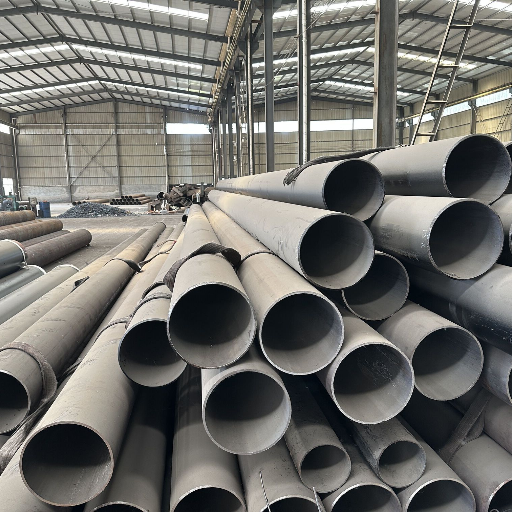
It has a good balance of strength and ductility, so it can be used for different applications. Its tensile strength varies from 370 to 500 MPa, while its yield strength can bear anywhere between 235 and 275 MPa, depending on thickness. It also has a good rate of elongation, between 20%-26%, underlining its adaptability to stress. These mechanical properties make Q235 steel a good material for structural parts, machine parts, and general engineering purposes.
Exploring Yield Strength and Tensile Strength
Yield strength and tensile strength are the two main mechanical properties that describe how a material, like Q235 steel, behaves under stress. Yield strength is the maximum stress a material can handle before it starts to deform plastically. The yield strength, on average, lies between 235 MPa and 275 MPa for Q235 steel, depending on such considerations as thickness and processing conditions. This ensures the material can bear loads without permanent deformation, which makes it quite dependable structurally.
Tensile strength, on the other hand, represents the maximum stress that is placed on the material as it is stretched or pulled before it actually breaks. With Q235 steel, tensile strength is generally between 370 and 500 MPa. These figures therefore portray the material breaking under much force and provide durability and structural integrity.
Recent data and the latest research unequivocally show that Q235 steel acts consistently under varying environmental and load conditions. Its elongation rate of 20%-26% stands as proof of the simultaneous presence of strength and flexibility, essential for bridges, buildings, and mechanical systems. The whole bouquet of mechanical properties, therefore, provides a consistent framework to predict material behavior in engineering and construction projects where safety and endurance are key concerns.
Factors Affecting Weldability and Ductility
Q235 steel is widely regarded as a steel with excellent weldability and ductility, rendering it the best construct for application in an array of construction and industrial fields. The carbon content in the steel is low, generally around 0.12-0.20%; thus it allows welding under low heat input to be carried out smoothly and without worry of excessive hardening or cracking in the weld joints, providing the welded structure with reliable performance even under different stress scenarios.
In addition, Q235 is endowed with a ductility that is highly applicable. Its elongation of 20-26% means that Q235 steel is able to deform substantially before land failure. It can be subjected to dynamic loading and complex forming processes. This sort of high ductility is very vital in seismic zones, as there are fluctuating stresses during earthquakes affecting; Q235 steel maintains the structural integrity even in adverse environmental conditions from research studies; this is a very important factor when actually considering long-term stability.
Moreover, a preheating treatment is generally not required for welding unless Q235 is either very thick or is being welded in very low-temperature environments. This lends to its versatility on projects both small and large alike.
Toughness and Hardness Features
Q235 steel is endowed with a good balance of toughness and hardness. This balance enjambs the steel to be suitable for a variety of applications ranging from basic engineering to life-critical cases. Toughness refers to a material’s ability to absorb energy and resist fracture under high staining conditions or impact forces. Charpy V-notch impact test value of Q235 steel is in the range of 27 J at 0°C, which is quite apt for an application of low-carbon structural steel built for energy absorption.
Hardness values (commonly measured by the Brinell Hardness Scale-HB) of Q235 steel are in the range of 100-170HB. This hardness range lets the material be strong enough while maintaining ductility and ease of fabrication. Also owing to its low carbon content, Q235 steel is easily machined and welded; this makes the steel perform well under dynamic loading conditions or situations requiring bending and welding.
Q235 steel, when intended for applications of greater strength, may then either be heat treated or alloyed with other elements; though this treatment will tend toward loss of ductility and increase in brittleness. The natural combined qualities of toughness-harness makes Q235 steel a way for construction beams, sheet metal, and general structural components across industries.
How Does Q235 Carbon Steel Compare to Other Steels?
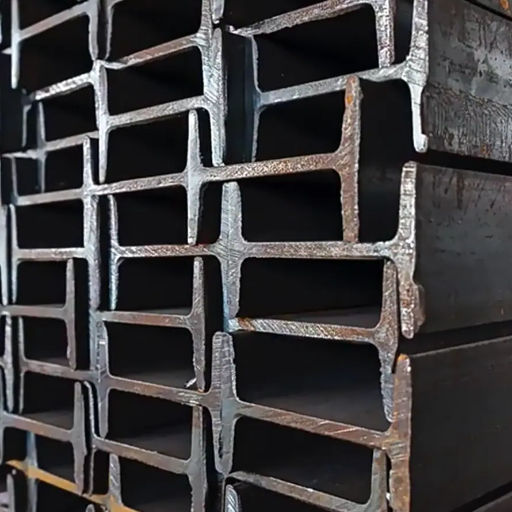
Q235 carbon steel has a blend of strength and ductility and workability. It has lesser tensile strength when compared to a higher grade of steel but has more flexibility; hence, it could be used for general building matters and structural purposes. It rusts faster when compared to stainless steel but is also cheaper so, it can serve projects where corrosion resistance is not the main consideration. In a nutshell, Q235 steel is highly sought after for its versatility and inexpensive price in various industries.
Comparing with A36 and Other Material Equivalents
Q235 is comparable to A36, S235JR, SS400, and St37-2, with slight differences in chemical composition, mechanical properties, and applications.
| Key Point | Q235 | A36 | S235JR | SS400 | St37-2 |
|---|---|---|---|---|---|
| Yield Strength | ≥235 MPa | ≥250 MPa | ≥225 MPa | ≥245 MPa | ≥235 MPa |
| Tensile Str. | 375-500 MPa | 400-550 MPa | 360-510 MPa | 400-510 MPa | 370-450 MPa |
| Composition | C≤0.2%, Mn≤1.4%, Si≤0.35% | Similar | Similar | Similar | Similar |
| Common Use | Structural | Structural | Structural | Structural | Structural |
| Cost Efficiency | High | Moderate | Moderate | Moderate | Moderate |
Why Chemical Composition Plays Important Roles
Chemical composition, in contrast, is vital to several other aspects of structural steel, such as determining mechanical properties, weldability, performance, and corrosion resistance in its different applications. Depending on which elements are present in which proportions, such as carbon (C), manganese (Mn), silicon (Si), sulfur (S), and phosphorus (P), the metal can achieve specific strength, ductility, or toughness.
For example, carbon content usually is limited to ≤0.2% in structural steels (like Q235) to provide strength yet maintain weldability. Manganese is usually limited to ≤1.4% to increase its toughness and resist brittleness. Silicon should not go beyond 0.35% on strength grounds since it may harm ductility. Most of the negative impact of sulfur and phosphorus occurs sometime when they exceed permissible limits or are not controlled properly, such as in embrittlement or spurious cracking.
To illustrate by example, Q235 steel is an extensively applied material in construction. Its carefully balanced chemical composition results in optimum levels of yield strength and tensile strength. Its tensile strength ranges between 375 and 500 MPa. Conversely, SS400 has an almost identical chemical composition but does vary slightly in mechanical strength properties so that it can be directed toward different types of structural requirements.
In a nutshell, the strict control of the chemical composition acts as a guarantee upon which each grade of structural steel can depend on reliable performance across some of the most demanding industries, from construction through automotive to shipbuilding and equipment manufacturing.
Advantages of Q235 Steel Over Other Steel Grades
Q235 steel is thus a very versatile and cheap material, which finds preference in a multitude of industrial applications. The price is one of the cheapest in the market while still imparting the basic mechanical properties for structural usage. The metals demonstrate tensile strength between 375 and 500 MPa, with a yield strength of 235 MPa, providing an excellent balance between price and performance in terms of fabrication and structural needs in general.
Another plus point for Q235 steel is superior weldability. Lower carbon content ensures that welding can be conducted without requisite pre-heating, thereby reducing production costs and simplifying the construction work. This weldability combined with its obvious ductility means that it is capable of being readily fabricated or joined into a commercial form without compromising its structural integrity.
Thirdly, it has very good plasticity and toughness, which enables Q235 steel to withstand functioning under medium stress or impact. It is used in structural applications for bridges, buildings, and other medium-load-carrying infrastructure satisfactorily. Also, it has been accumulated to perform well between normal atmospheric conditions and outdoors in most cases; hence it is an excellent choice across sectors.
However, compared with superior steel grades such as Q345, Q235 is less complex in composition and contains fewer alloying elements and thus remains easier to process. For example, while higher-strength Q345 contains more alloying elements that types to complicate machining and welding processes, the extra cost might not be justified on projects that don’t require such high performance.
In conclusion, Q235 comes out to be the most optimally balanced steel between mechanical properties, affordability, and usability, explaining its widespread adoption in construction, manufacturing, and equipment industries.
What Are The Applications of Q235 Steel?

- Construction: Used commonly for making structural steel such as beams and columns for buildings and bridges.
- Manufacturing: Making mechanical parts, tools, and machines requiring medium strength and wear resistance.
- Equipment Fabrication: The production of equipment frames, panels, and other components where cost and ease of processing are the considerations.
- Piping and Tubing: Suitable for the general-purpose pipes and tubes which are subject to loads from light to medium.
Knowing About Its Usage in Building and Bridges
Carbon and alloy steels being strong, versatile, and cost-effective have always had an important role in construction and bridge-building industries. These materials are advantages to construction because they impart to the structure itself the needed structural integrity against loading and stresses. According to recent industry studies, in modern construction, more than 50 percent of the materials used constitute structural steels, for their capacity to sustain deformation on being subjected to pressure.
Steel is a perfect choice for bridges, as they undergo varying dynamic loads and also need to resist fatigue. The World Steel Association claims that steel’s natural flexibility allows it to effectively resist aftershocks from traffic, wind, and even seismic events, which is a critical consideration in the design of long-span and suspension bridges. Besides, new developments in high-strength low-alloy steels allow lighter and more sustainable designs, which decrease material consumption and overall costs.
Recent developments in protective coatings and weathering steel have ensured the long life of steel components in construction and bridges without compromising structural integrity. Weathering steel, for example, when exposed to the environment, forms a protective oxide layer, which results in considerably less maintenance and hence long-term savings. This is the reason steel could never be taken out from all constructions of iconic structures like the Golden Gate Bridge and Burj Khalifa-an indicator of its critical need and consideration in present engineering.
Industries in Which Q235 Steel is Widely Used
- Construction: Q235 steel is widely used in building structures, bridges, and general construction, given its strength and versatility.
- Manufacturing: It finds common uses in building machinery, vehicle frames, and tools.
- Infrastructure: Q235 steel is an important material in pipelines, storage tanks, and other utility infrastructure thanks to its durability and cost backgrounds.
- Energy: The steel is used in the manufacturing of parts of power plants, wind turbines, and more.
Why the Market Widely Uses Q235 Steel
I would say that Q235 steel is a very popular trade because it strikes a good balance between strength and affordability. The steel is used in all domains ranging from civil and construction to handling and infrastructure and energy. Besides giving reliable performance, it also gives an ease for processing amongst others, thus securing cheap and lasting solutions on all applications.
Advantages of Q235 Steel

- High Strength and Durability – It has ample strength for building structures and for other heavy-duty applications.
- Cost-Effectiveness – It is cheap, so it offers a cost-efficient solution without any compromise on quality.
- Versatility – This material finds use in various industries such as construction, manufacturing, and transportation.
- Ease of Processing – Q235 steel is easy to weld, cut, and form, making manufacturing and assembly easier.
Good Weldability and Corrosion Resistance
Q235 steel enjoys universal recognition for excellent weldability and considerable corrosion resistance; corrosion resistance varies depending on many factors. Its weldability allows for easy and swift fabrication to meet the demands of intricate designs and structural needs. The low carbon content in Q235 steel—generally around 0.12-0.20%—makes it less likely to suffer defects such as cracking during welding, thus making the welded joints highly strong and sound. It also supports most welding methods, like arc welding, resistance welding, and gas welding, allowing manufacturing processes to choose the method most suited to them.
The corrosion resistance of Q235 steel is excellent when under consideration of rust exposure or in the presence of moisture-bearing or other atmospheric conditions, especially when surface treated by different coating systems processes that protect it from environmental damages. The application of coating processes like galvanization or painting greatly enhances resistance to environmental wear. Many research studies have pointed out that galvanized steel offers long-term service by preventing galvanized steel and Q235 from rust formation, which is one of the best solutions for outdoor structures and long-term use. By providing Q235 with these advanced industrial properties at affordable prices, it is indeed an ideal material choice in construction, transportation, and industrial manufacture.
Keeping Both Cost and Quality in Check
Balancing cost with performance is a must when selecting materials for large-scale projects. Q235 steel has positioned itself as a cheap option that does not sacrifice quality and thus may find suitability in many applications. According to several recent sources, the price of Q235 steel varies between $450 and $650 per ton, contingent on fluctuations on the market and treatments applied to the steel after purchase, such as galvanization. This kind of affordability, coupled with its material properties such as a tensile strength of 370–500 MPa, makes Q235 steel a material worth considering in any construction project where performances are required at limited cost.
Also, through industry reports, it was further emphasized that using Q235 steel can help cut down the project cost by up to 20% compared with the applications of superior steel alternatives but still keeping the structure intact enough for medium or heavy-duty applications. The simple welding and fabrication process will also reduce fabrication costs since it requires less equipment and labor. Hence, the price for maintenance longevity after galvanized surface treatment is also low; give a high value for the clients in the end.
That inexpensive and reliable durability combination has allowed the material to be in great demand by cost-conscious projects, yet satisfactorily serve the broad spectrum of industries.
Understanding Its Physical Properties
Q235 steel is a widely used carbon structural steel, appreciated for its fairly balanced physical properties and versatility. It features a tensile strength between 370-500 MPa, which enables it to withstand a reasonable amount of stress before deforming or failing. The yield strength varies depending on the thickness of the steel and is generally rated at 235 MPa for thinner sheets (less than 16 mm), with its strength decreasing as the thickness increases. It is for these reasons that Q235 steel is considered suitable in those applications that require a balance of strength and flexibility.
The steel also allows for high elongation of about 20%-26%, thus ensuring that it will absorb shocks without breaking, which becomes a factor in certain applications in construction and manufacturing. The density is also about 7.85 g/cm³, meaning that it is sufficiently dense and heavy yet not too dense and heavy to bear for structural components. It all possesses welded joints of excellent quality and machinability that will make it more convenient in production and will consume less fabrication time.
Another very important characteristic of Q235 Steel is its reduced resistance to moderate environmental factors. In bad environments, the corrosion resistance is frequently enhanced by several treatments such as galvanization or painting that increases the longevity of Q235 Steel in structural applications. This set of physical properties places Q235 Steel in the reliable and versatile materials group in numerous industries ranging from construction to machinery manufacturing.
Reference sources
- Enhanced Corrosion Inhibition of Q235 Steel by N,S Co-Doped Carbon Dots: A Sustainable Approach for Industrial Pickling Corrosion Inhibitors.(Xu et al., 2024)
- Publication Date: 2024-04-08
- Authors: Jiani Xu et al.
- Methodology: Synthesized N,S-codoped carbon dots (N,S-CDs) and N-doped carbon dots (N-CDs) using a biochemical oxidation reaction. Evaluated corrosion inhibition using electrochemical tests (polarization curves, electrochemical impedance spectroscopy) and weight loss experiments. Characterized the microstructure and properties of the carbon dots using various techniques.
- Key Findings: N,S-CDs showed significantly enhanced corrosion inhibition of Q235 steel compared to N-CDs in both electrochemical and weight loss tests (93.83% vs 77.65% inhibition efficiency at 50 mg/L). This improvement was attributed to the formation of dense adsorption films and hydrophobic properties of the N,S-CDs nanoparticles on the steel surface.
- The inhibitor effect of migrating corrosion inhibitors on Q235 steel in high alkaline environment under cathodic polarization.(Jia et al., 2024)
- Publication Date: 2024-04-25
- Authors: Hang Jia et al.
- Methodology: Investigated the electrochemical characteristics of Q235 steel with and without migrating corrosion inhibitors (MCIs) using polarization curves and electrochemical impedance spectroscopy (EIS). Analyzed the surface composition using X-ray photoelectron spectroscopy (XPS) and studied the migration characteristics and adsorption behavior using Raman spectroscopy.
- Key Findings: Diethanolamine (DEA) and N,N-dimethylethanolamine (DMEA) inhibited the increase of Fe(II) in the oxide film of Q235 steel under cathodic polarization. DMEA showed higher adsorption stability and corrosion inhibition ability than DEA under cathodic polarization. A corrosion inhibition mechanism was proposed.
- Laser-Melted Wc/Ni-Based Coating Remelting Study on Q235 Steel Surface.(Wu et al., 2024)
- Publication Date: 2024-09-11
- Authors: Xianglin Wu et al.
- Methodology: Prepared WC-enhanced nickel-based remelted layers on Q235 steel using laser cladding at different laser powers. Observed micro-morphologies using scanning electron microscopy (SEM), and tested hardness and corrosion resistance using a Vickers hardness tester and an electrochemical workstation.
- Key Findings: At 1600 W laser power, the remelted coating showed the highest uniformity, most average microhardness, and highest corrosion resistance (lowest corrosion current density of 2.397 × 10⁻⁵ A/cm2).
Frequently Asked Questions (FAQs)
Q: What constitutes the steel Q235?
A: Q235 steel is a general carbon structural type steel which generally welds well and offers excellent mechanical properties. It is used in construction and industrial works owing to its strength and resistance levels.
Q: What is the chemical composition of Q235 steel?
A: Carbon, silicon, manganese, sulfur, and phosphorus generally comprise the chemical composition of Q235 steel. As per the national standard of China, quite a small amount of carbon is present that makes the steel easily weldable and ductile.
Q: ASTM A36 is quoted to be a substitute for Q235 steel. Is that true?
A: Q235 steel is commonly compared to ASTM A36 because both fall under common carbon structural steel grades. Both have similar applications and mechanical properties, although slight differences exist between their specific chemical compositions and the national standards they conform to.
Q: What are the physical properties of Q235 steel?
A: With respect to the physical properties, Q235 steel has good plasticity, toughness, and weldability. Great mechanical properties render it suitable for structural components and steel products.
Q: Which mechanical properties can Q235 steel exhibit?
A: Q235 possesses outstanding mechanical properties like higher tensile strength, reasonably good ductility, and resistance to impact or shock. Hence the steel is apt for most structural applications.
Q: Materials equivalent to Q235 steel?
A: The materials considered as equivalents of Q235 steel include steel grades such as ASTM A36 and various other kinds of mild steel. These have almost the same mechanical and chemical properties; thus, these can be deployed interchangeably in some applications.
Q: What really means the grade of steel, Q235?
A: The Q235 grade denotes an ordinary carbon structural steel that is widely used in construction and engineering work. Its significance lies in the balance between strength, weldability, and cost.
Q: Heat treatment for Q235 steel required or not?
A: In general, heat treatment is not required for Q235 steel since it is utilized naturally for many structural implementations due to its inherent properties; however, when heat treatment is desired for enhancement purposes, it can be applied.
Q: What distinguishes Q235 from the round steel bars in other forms?
A: Q235 round steel bars are delineated by their circular cross-section; because of this, they are ideal for variably sized mechanical and structural applications. These exceptionally high strengths and good resistance characteristics are bestowed upon these bars from other products of Q235 steel as well.


