


The properties of construction materials are particularly important in ensuring safety, efficiency, and durability in engineering and manufacturing projects. Q345 steel is one of the most versatile and widely choice of materials for structural applications. I wonder what made it so well-deserved. This article will focus on the specification and mechanical properties of Q345 steel. We will uncover its composition, strength, and applications. For practitioners in the field or material enthusiasts, this guide shall give insight into why Q345 is an excellent working steel in many projects.
Q345 Steel and Its Applications

Q345 steel is a low alloy structural steel with qualities like high strength, excellent welding characteristics, and a great overall performance. Q345 steel because of its durability and adaptability finds vast applications in construction, machinery, bridges, and vehicles. The steel usually has a composition of carbon, manganese, and silicon, along with traces of other elements that enhance its mechanical properties. The strength being balanced with some flexibility makes it suitable for heavy and light applications.
Understanding the Properties of Q345 Steel
With a value of strength exceeding 345 MP, Q345 has become a heavy-duty steel. The respective tensile strength ranges from about 470 to 630 MPa-with this range, it can retain its high stress in a strong environmental-demanding situation.
Q345 steel has carbon: up to 0.2%, manganese: 1.0 – 1.6%, silicon: 0.5%, with other trace elements including phosphorus, sulphur, and vanadium; the proportions of these may vary slightly between the subtypes of Q345 steel such as Q345A, B, C, D, and E, which mainly differ in their requirement for toughness at minimum temperature. Q345B, for example, is the grade most commonly used and provides excellent weldability and strength precautions over a wider temperature range. These elements contribute to the balanced properties of Q345 steel.
Q345 steel is also a good performer in low-temperature conditions, with the higher-grade ones like every Q345E being able to hold mechanical integrity at temperatures as low as -40°C. Hence, it finds great application for projects requiring structural integrity in cold climates such as bridges, ships, and offshore platforms; its weldability and machinability qualities ensure it is not difficult to fabricate and adapt for specialised use.
Hence, the strength, flexibility, and environmental versatility put Q345 steel into the spotlight across industries worldwide.
Industrial Uses of Q345 Steel
Q345 steel has been broadly used for construction, manufacturing operations, and industrial infrastructure. Its high strength and adaptability render it suitable for erecting frameworks, bridges, and heavy-duty machines. Additionally, with its performance in low-temperature conditions, it gains further application value in shipbuilding and offshore platforms; these features assure its activation in highly demanding industrial scenarios.
Comparison with Q235 and Other Grades
Q235, Q345, and other grades differ in terms of their chemical composition, tensile strength, yield strength, and applications.
| Key Point | Q345 | Q235 | Other Grades |
|---|---|---|---|
| Carbon Content | ≤0.20% | ≤0.22% | Varies |
| Yield Strength | ≥345 MPa | ≥235 MPa | Varies |
| Tensile Strength | 490-675 MPa | 370-500 MPa | Varies |
| Ductility | High | Moderate | Varies |
| Applications | Heavy Struct. | Light Struct. | Specific Uses |
| Weldability | Good | Good | Varies |
| Low Temp Perf. | Superior | Moderate | Varies |
Studying Other Mechanical Properties of Q345 Steel
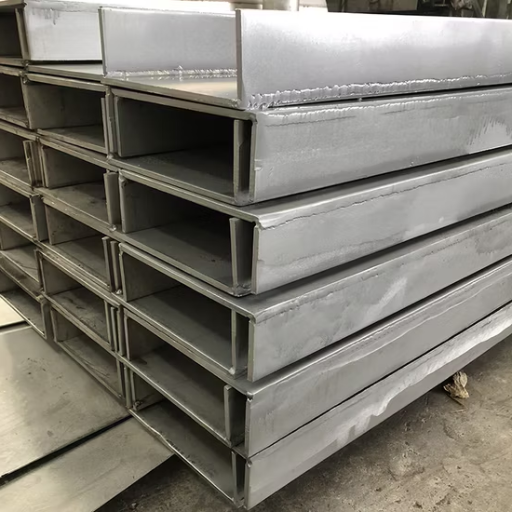
Q345 steel is thought of as possessing the best mechanical properties and, thus, is used in heavy structural applications. The third digit in the steel grade indicates the minimum yield strength in MPa, whereas the fourth and fifth digits denote the tensile strength range in MPa. These include a 490-675 tensile strength, yield strength greater than or equal to 345 MPa, all indicating that the steel can bear a load and is more ductile than ductility implying how it can be deformed under great stress without fracturing. With weldability, the performance in low-temperature conditions increases, making it one of the most-used steels in the construction and manufacturing industries. Due to their superior properties, Q345 steels prove to be suitable for various applications, notwithstanding the rigorous applications that require the highest level of durability.
Studying the Yield Strength of Q345 steels
Yield strength of 345 MPa contributes to the widespread utilization of Q345 steels. Yield strength denotes at what level the material initially shifts deformation from elastic state to plastic state and thus help investigate that any other force will be absorbed by the material. According to recent literature and industrial data, the mechanical stability of Q345 steel is supported under very heavy loads; thus, it stands out as an appropriate candidate for the manufacture of bridges, buildings, and heavy machinery.
Moreover, the yield strength for Q345 steel depends on the chemical composition, such as carbon, manganese, and silicon. Q345 is subdivided into grades such as Q345B, Q345C, Q345D, and Q345E, all of which, due to chemical variations and heat treatment, show slight variations in performance. In contrast, grades Q345D and Q345E perform better in retaining their ductility and strength in severe cold environments, with grade Q345E rated for use at -40°C.
In tests conducted under international standards of an extremely rigorous nature, Q345 yield strength generally exceeds 345 MPa, that is, baseline strength, providing dependable performance-based results in all applications. It is this inherent toughness that is much sought-after in industries where finer details and structural integrity are pivotal as it provides an equal balance between strength, flexibility, and price.
Tensile Strength of Q345
Tensile strength is a very vital mechanical property that makes Q345 prominent in his industry. The tensile strength value for Q345 steel varies between 490 to 675 MPa, meaning the steel can undergo a considerable amount of stress just before it breaks into pieces. The variance in this range of tensile strength depends on subgrades such as Q345B, Q345C, Q345D or Q345E, each designed with respect to some particular needs arising from environment or application.
Thus, the demand for ductility and tensile strength is an assurance of this steel Q345 type suitable for structural applications, including bridges, buildings, vehicles, and machinery. For example, Q345E has been recognized for the tensile strength under almost extreme conditions, from that low temperature of down to -40°C, which also retains its performance. Such tests under GB/T1591, among other standards, guarantee the consistency of these values, thus ensuring reliability for engineers and manufacturers.
Balanced with ductility is cost-effective and flexible with regard to any project where tensile strength will deem Q345 steel as one of the natural choices for materials, especially in environments where safety and preciseness of structural stability are of utmost importance.
Effect of Low Alloy Composition on Performance
The low alloy composition of Q345 steel largely increases its mechanical properties at low cost. The presence of manganese (Mn), silicon (Si) with a minimum content of vanadium (V), niobium (Nb), and titanium (Ti) balances the steel in strength, toughness, and weldability. Manganese is present for about 1.2%-1.7%, yet enhances tensile strength and hardening capacity; silicon for about 0.2%-0.5%, adds to its structural stability.
Research has shown that this optimized alloying composition supports Q345 steel in attaining its yield strength of 345 MPa, allowing it to oppose heavy loads of stress without any permanent deformation. Moreover, microalloying with vanadium and niobium elements makes slight grain refinement, which improves toughness and impact resistance of Q345 steel. At low temperatures, Q345 steel still performs, Grade B usually showing a Charpy impact energy of not less than 34J at -20°C, which gives it reliability in critical applications.
Further, low carbon content (less than 0.20% typically) also favors weldability since it reduces the cracking possibility in fabrication without compromising tensile properties. Alloying composition, a balancing act, thus ensures the Q345 steel is tough yet versatile, making it fit for construction, auto manufacturing, and heavy machinery where performance is required in all manner of stress-intensive conditions.
Chemical Composition of Q345 Steel
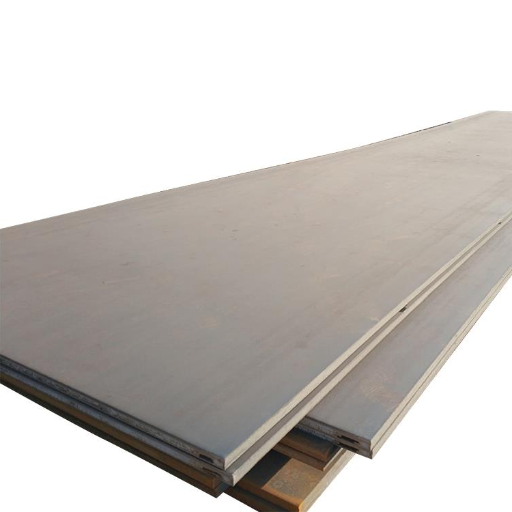
Q345 is a generic term for a class of steel containing chiefly iron (Fe) with much less element along with carbon (C), manganese (Mn), and silicon (Si), with trace amounts of elements like sulfur (S) and phosphorus (P). The carbon content is generally below 0.20%, thus enabling the steel to be welded, whereas manganese increases strength and toughness. Silicon is needed for the strength of the material, while the trace elements are kept at a minimum to maintain integrity and performance overall. This well-balanced composition enables Q345 steel to attain both flexibility and strength and thereby be applied for highly demanding applications.
Origin of Carbon in Q345 Steel
Carbon plays an important role in the mechanical properties and overall performance of Q345 steel. Generally, it has a carbon content of less than 0.20%, purposely kept low in order to provide weldability and to avoid cracking during fabrication. The low carbon content is required in structural applications to ensure a good compromise between strength and ductility of the steel, hence further ensuring that the metal is not brittle.
Carbon did not act to unreasonably hinder the welding of Q345 steel without the need of pre-heating or post-weld heat treatments. This best suits the needs of construction and manufacturing as it saves assembling time and costs. In addition, low carbon imparts good toughness at lower temperatures, which is a very important consideration for applications operating under very cold climatic conditions or under very adverse environmental factors. Thus, the Q345 steel, with such low carbon content combined with the presence of manganese and silicon, demonstrates high strength and maintainability for a wide range of industries such as shipbuilding, bridges, and pressure vessels.
This intricate balance of chemical composition and resultant properties allows Q345 steel to be used in a wide array of applications in both the civil and engineering fields.
Significance of Alloying Elements in Q345
Alloying elements have a profound influence on the properties of Q345 steel. Manganese gives tensile strength and toughness, while silicon increases strength and deoxidizes the steel during its production. Together, these elements give Q345 its high degree of durability, capacity for adaptation, and resistance to wear, all of which are very desirable characteristics in its demanding applications.
Comparing Q345 with ASTM A572
Q345 and ASTM A572 differ in chemical composition, mechanical properties, structural applications, and regional specifications.
| Key Point | Q345 | ASTM A572 |
|---|---|---|
| Standard | GB | ASTM |
| Region | China | Global |
| Yield (MPa) | 345 | 345-450 |
| Tensile (MPa) | 470-630 | 450-620 |
| Alloy Elements | More Mn, Si | Varies |
| Weldability | Excellent | Good |
| Applications | General use | Structural |
| Grades | B, C, D, E | 42, 50, etc. |
| Cost | Lower | Higher |
Equivalent Materials for Q345 Steel

In various parts of the world and for applications, Q345 steel has a number of equivalent materials that are commonly utilized: ASTM A572 (Grade 50), EN S355, DIN St52-3, and JIS SM490. Going by mechanical properties and applications, they appear equivalent; but differences in chemical composition and regional standards may necessitate changes in design or fabrication. The recommendations for an equivalent material should therefore always be based on specific project requirements and standards.
Substitute Grades
Requirements like mechanical properties, chemical composition, and the application itself have to be kept in mind when choosing substitute grades for Q345 steel. ASTM A572 Grade 50 serves widely as a substitute with almost the same tensile strength and yield strength, followed by EN S355 that is quite reliable in structural applications. There could be local scenarios where DIN St52-3 and JIS SM490 act as other possible substitutes. However, differences in alloying elements, weldability, and toughness must be analyzed for compatibility. Relevant engineering standards should be referenced in any case, and where necessary, material testing should be undertaken to verify whether the substitute grade is suitable for the project at hand.
Understanding the Global Standards for Equivalence
When making comparisons between steel grades in terms of both engineering and structural applications, international standards that define the mechanical properties and chemical constitution of materials, depending on their classifications, must be cited. Equivalence across global standards such as EN, ASTM, DIN, and JIS ensures that in the interest of specific applications, the best material is chosen while safeguarding the ideals of safety and efficiency.
For example, structurally speaking, EN 10025-2 S355 is widely accepted across Europe and is prominently juxtaposed with ASTM A572 Grade 50 within the ASTM standards in the USA. Both grades share a veneer of basic mechanical properties in that they have a minimum yield strength of 355 MPa and are basically weldable. However, a much closer look at their chemical composition will reveal subtle differences in the levels of alloying elements that could, one way or another, affect the column of toughness and corrosion resistance. EN S355 usually contains a lower content of phosphorus and sulfur, whereas ASTM A572 Grade 50 allows a broader content of other alloying elements for meeting different industrial requirements.
The St52-3 steel according to DIN is again a popular structural steel often compared with EN S355JR and JIS SM490. St52-3 enjoys its reputation for tensile strength and importance for structural applications with a minimum yield strength value of about 355 MPa, closely resembling the EN counterpart. Whereas JIS SM490, which is very popular amongst Asian companies, almost equally resembles yield strength of around 325-355 MPa emphasizing its weldability suitable for fabrication-intensive industries in Japan.
Reliable equivalence is determined from a comparative study of other properties like tensile strength, usually anywhere from 490 to 620 MPa as across these mentioned grades, and Charpy impact tests as well, especially for applications in low-temperature environments. Engineers therefore shall also look at country-specific standards such as GOST from Russia or GB/T from China when working on international cooperation projects to stay in line with regional requirements.
Finally, materials equivalence databases or a dedicated engineering manual such as ISO/TR 20172 can expedite the task of identifying substitute materials from global standards. Mechanical testing and examination of third-party certifications are, however, something that should be part of the process to ensure that a material is appropriate for its intended use, especially when it comes to a high-risk or heavily-loaded structure.
Comparison with High-Strength Structural Steel
High-strength structural steel outperforms standard counterparts with enhanced tensile strength, durability, weight efficiency, weldability, and cost-effectiveness.
| Key Point | High-Strength Steel | Standard Steel |
|---|---|---|
| Strength | Higher tensile | Lower tensile |
| Durability | Greater resistance | Moderate resistance |
| Weight | Lighter designability | Heavier alternatives |
| Weldability | Easier to weld | Fairly weldable |
| Cost | More cost-effective | Higher material cost |
Assessing the Weldability and Corrosion Resistance of Q345
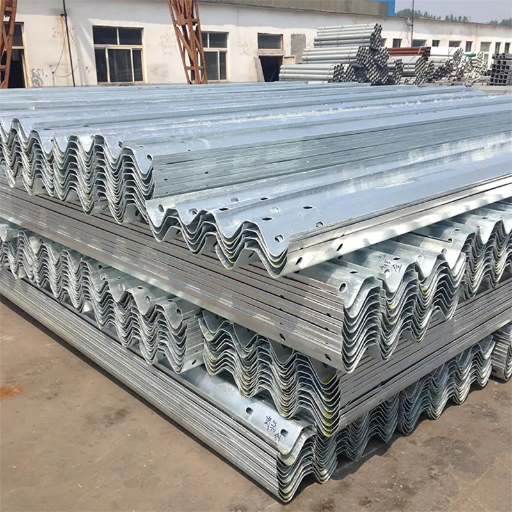
Q345 is a high-strength, low-alloy structural steel that welds quite well since the carbon content is controlled and balanced with the other elements. That is why all welding methods, including arc welding and gas welding, have become accepted for use in structural applications. The corrosion resistance of Q345 is moderate, whereby it may be applied where there is very slight exposure to moisture or corrosive agents. It may require protective physiology treatments of galvanization or coating when in harsher environments.
Factors Affecting the Weldability of Q345
- Chemical Composition: Weldability is particularly dependent on the carbon content and alloying elements, which may also affect the ability to use various filler metals for welding and the alloy structure behind the weld. Q345 is considered to have good weldability due to low carbon content.
- Preheating and Cooling: The steel should be preheated before welding and cooled down in a controlled manner after welding, ignoring conditions where cracking is more prone to develop-thicker materials.
- Welding Procedures: The welding procedure to be used-whether gas welding or arc welding and the like-should ideally be selected on the basis of the particular job and thickness of the material.
- Joint Design: It must be designed in such a way as to lessen the stresses on the weld and to hold up under these conditions.
Protection Against Corrosion in Q345 Steel
Corrosion should be the primary environmental concern with Q345 steel, especially under conditions that tend toward high humidity, chemical aggression, or salinity. The application of a good protective treatment helps increase the durability of the steel as such, by raising its structural integrity. Few protection methods are discussed below:
- Surface Treatment: Surface treatments about paints, galvanization, or epoxy-resin coatings are adoptable techniques that form resisting layers against environmental exposure. Literature shows that galvanizing coatings may extend the service life of structural steel for between 40-60 years under diffuse favorable conditions.
- Cathodic Protection Systems: Such systems can suppress corrosion by way of diverting electrical currents. The best time to employ this method is when the application has a marine service or underground service. Sacrificial anodes or an impressed current system are used for protection of Q345 steel.
- Alloying Additions: One can further improve their alloy’s corrosion resistance by alloying elements additions (e.g., chromium, nickel). There is statistically significant data demonstrating that low alloying additions can reduce degradation rates by 30 % in very aggressive environments.
- Environmental Controls: Environmental controls and reduction in moisture exposure and aggressive chemical attack would significantly lessen the likelihood of corrosion. For example, in industrial exposure sites, corrosion signs have first appeared in periodic inspections and maintenance.
- Use of Anticorrosive Chemicals: Utilization of corrosion inhibitors-including phosphates and silicates-are capable of reducing corrosion rates when applied during maintenance programs. New nanocoating technologies offer a much higher cost-effective protection up to a 90% increase in resistance.
When combined with adequate inspection schedules, these methods serve well in considerably minimizing the corrosion risks associated with Q345 steel, thus guaranteeing good performance and reliability for the rest of its service life.
Welding Process Recommendations for Q345 Steel
When welding Q345 steel, I follow a few key procedures to ensure excellent weld quality. It is essential to prepare-Weld preparation includes cleaning the steel surface for any rust, oil, or mill scale-and be mindful not to do anything that will reduce the quality of the weld. Preheating is also recommended for thicker parts, as this will reduce the thermal stress buildup and hence reduce cracking. During welding, low-hydrogen electrodes or filler materials should be used to prevent hydrogen-induced cracking. Post-weld heat treatment is done after welding to relieve residual stresses and improve the structural integrity of the weld to maximize durability and reliability in the final welded product.
Reference sources
- The Impacts of Contact Explosions on Ultra-High Performance Reinforced Concrete Slabs – Mentions Q345 steel’s mechanical properties in structural applications.
- Experimental Investigation into Mechanical Properties of Q345 Steel After Fire – Focuses on the post-fire mechanical properties of Q345 steel.
- Top custom stainless steel parts Manufacturer and Supplier in China
Frequently Asked Questions (FAQs)
Q: How does this grade of Q345 steel compare with other carbon steels?
A: This grade is a low alloy steel offering higher strength and better mechanical properties than some common carbon structural steels. Quite close to 16mn steel, it actually surpasses it in terms of toughness and strength, for the creation of machinery and shipbuilding applications.
Q: How are the mechanical properties of Q345 steel?
A: Mechanical properties of Q345 steel refer to tensile strength ranged between 470 and 630 MPa, with a yield value from 345 MPa up. Given these broad mechanical properties, it suits usages requiring high strength coupled with good toughness.
Q: Can we make the boilers out of Q345 steel?
A: With Q345 steel being high strength and possessing good weldability, it indeed has potential use as boiler steel. Because of its full mechanical properties being of a high standard, pressure vessels and boilers are categories where the steel is greatly used.
Q: What does the Q mean in Q345?
A: The Q stands for yield strength in Q345. Yield strength value of 345 MPa is an element by which a steel sample is distinguished as Q345, and as such, it makes it favorable for structural and other demanding uses.
Q: How good is Q345 steel in welding?
A: Welding properties of Q345 steel are pretty good, and thus, it is widely used in construction and structural works. Good welding properties of Q345 ensure easy fabrication and good joint performance, which is necessary in steel structures and mechanical parts.
Q: What are the good tensile strength properties of Q345 steel that would benefit the application?
A: Having tensile strength between 470-630 MPa, the strength of the Q345 steel helps to bear more loads and increases its service life; hence, it performs excellently in bridges and other constructions that are subjected to enormous stresses where utmost priority should be given to strength.


