


It is overwhelming to consider the emergence of stainless steel balustrade parts. These elements have firmly established themselves as the core parts of modern infrastructure. They not only offer beauty but also structural strength in equal measure. However, they are not only helpful in residential applications, but also in commercial applications, ensuring the structures are developed with a good modern finish. This essay seeks to discuss high-quality balustrade railings made of stainless steel, as well as the reasons why they can improve the quality of the task by meeting every expectation. This is especially true today, as more innovative materials, including steel, have been used extensively in many construction environments. Towards the end of this article, you are going to be acquainted with insights that will make available the appropriate materials necessary for the construction effort to achieve both health and safety and a perfect ending.
What are the Key Balustrade Components?

Common Elements of a Balustrade System Comprise the Following:
- Handrails are most often erected on the top section of the balustrade. Handrails help provide balance and security and are the main points of contact for users.
- Balusters/Infills – typically vertical or horizontal members which create the guard, allowing both utility and style to the balustrade.
- Posts – upright members that are utilized to sustain or brace the balustrade’s weight and its superimposed loads.
- Baseplates and Fastenings are components that help lock the balustrade into its operating position on an elevated surface. These also ensure that the balustrade is sturdy and has great load-carrying attributes.
- Clamps and Cantilevers – these help in the completion of the steel barrier by providing for proper interlocking of the units and the anchorage where necessary.
Every one of these elements is integrally arranged and constitutes a sense of security with a structural and pleasing appearance that falls into place.
Types of Stainless Steel Balustrade Parts
- Round Tubes – Used for the making of handrails or other indoor furniture.
- Square Tubes – These are mostly used when the design of the structure is geometrical.
- Glass Clamps – enhance the attractiveness of their bill of quantities and perform that of a bill of quantities.
- Threaded Rods – Carries out a lot of the inspections and technical work on the construction sites.
- End Caps – Fits onto the end of a section of tubing or a motor and prevents the ingress of contaminants.
- Railing Spigots – These are used to fix the glass panels or posts in place in such a way that there is no worry about the broken surface.
- Wall Brackets – Connected to the wall and provide stable support for the handrails and other components.
- Baluster Posts – Help in preventing the handrails and your hand from falling off the railing.
- Adjustable Elbows – As the name suggests, these correspond to transforming the rail into another angle or connecting two inclined rails with varying angles.
- Flanges – These are very common fittings that allow fixed joints and fittings of items in various systems.
- Glass Standoffs – They provide a modern way of mounting glass without the need for visible fixings.
- Handrail Brackets – More properly known as balustrade brackets, these are accessories used to accurately install a handrail.
- Cable Fittings – These are components that enable the use of tensioned cables in this structure.
- Spacers – Devices that help to supply finished railings with consistent panel-to-panel distances in order to get a balanced look.
Understanding Handrail Components and Their Uses
Handrail and other components for this matter are quite an important aspect that determines effectiveness, durability, and forms of guard rails and others in all areas of application. Each component actually calls for a different application as follows:
- Handrails are used for holding on and for preventing falls where staircases and platforms are used.
- Brackets are the materials that are fixed by screwing, which are used for connecting handrails to walls or columns for proper placement and rigidity.
- Posts are the upstanding and non-movable columns that take control of the handrail system from the bottom and keep it in place safely.
- Connectors are devices for linking different sections of handrails together and they help maintain a consistent design with minimal breakages.
Each of the materials is functional in terms of advancing safety and compliance while beautifying the work. Nevertheless, without this standard this such an aid remains a deceptive one and should not be considered during the construction of such a handrail.
Essential Balustrade Fittings for Installation
- Balusters – The supported verticals or spindles that form the supporting structure and fillers of a balustrade system.
- Handrails – The horizontal rails that are guiding and additionally helpful units superimposed on balusters, newel posts, or walls.
- Newel Posts – Large upright posts found at the ends or corners of a balustrade to serve as support locations.
- Base Shoes – Railings or other structural members detachable or removeable from the base or pod i.e enlist to the ground or step.
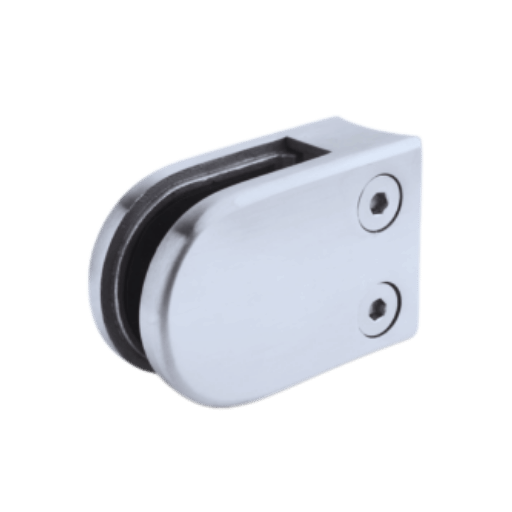
- Glass Clamps – The accessory joiners used to hold glass panels within the safety rail of a glass balustrade.
- End Caps – Coverings for the upper and lower ends of handrails to create a professional finish.
- Brackets – These are things used to reinforce structures when handrails are to be fixed alongside walls or on structures other than those of the walls.
- Spigots – Pillars that are of a smaller size and are utilized to mount pane glass without the use of a frame on a balcony.
- Rod Holders – Joining pieces used in transforming metal bars of staircases into modern types of balustrades.
- Fasteners – Screws, bolts, and other elements necessary for anchoring the construction and joining the components.
All such elements are vital as they help improve the safety and functionality of the system and also its appearance. Careful choice becomes crucial when it comes to any construction which will be exposed to extreme loads.
Why Choose 316 Stainless Steel for Balustrades?

Benefits of 316 Grade Stainless Steel in Balustrades
- Corrosion Resistance – The element chromium, present in 316 stainless steel, offers greater intergranular corrosion resistance compared to other types of stainless steel alloys.
- Durability – Further, 316 stainless steel offers enhanced pitting and crevice corrosion resistance at elevated temperatures, making it suitable for use even in severely corrosive fields, for example, in thermal power plants.
- Aesthetic Appeal – When architectural decorative features are required, the bright polished lustrous surface of type 316 stainless steel enhances the beauty level of the installed balustrade systems and fit well with contemporary structural designs.
- Low Maintenance – The user does not need to worry about painting the 316 stainless steel structure, as this metal does not need to be painted in order to prevent staining or rusting.
- Hygienic and Eco-Friendly—Built with natural resistance to bacteria, this material provides higher levels of environmental friendliness, which does not depend on cleaning levels to prevent bacterial build-up.
Durability and Corrosion Resistance
316d stainless steel is most known for its ability to withstand corrosion. Has in its composition and molybdenum, which strengthens the grade further in relation to tough conditions, specifically sea or water galleries and objects with acidic properties. The durability of the stainless steel found even in the most hostile conditions prompts users to operate sustainably and attain structural and architectural needs at less cost and risk.
Comparing Stainless Steel Grades for Balustrade Applications
When it comes to balustrades, 304 and 316 are the most commonly used steel grades, with 316 being the most popular selection for bad weather and salinity due to its improved corrosion resistance.
Below is a brief summary of the most important aspects in the form of a table:
|
Parameter |
Grade 304 |
Grade 316 |
|---|---|---|
|
Chromium |
18% |
18% |
|
Nickel |
8-9% |
10% |
|
Molybdenum |
None |
2-3% |
|
Corrosion |
Moderate |
High |
|
Cost |
Lower |
Higher |
|
Use |
Indoor/General |
Coastal/Marine |
|
Strength |
Higher tensile |
Strong, durable |
|
Finish |
Satin/Polished |
Polished preferred |
How to Design a Stainless Steel Balustrade System?

Planning Your Balustrade Design
The first point to consider when designing stainless steel balustrades is the purpose and location of the installation. This is done to ensure that it is safe and also beautiful. Determine the appropriate grade of stainless steel, such as Grade 304 for indoor use or Grade 316 for outdoor or challenging conditions, in order to get value from usage. Even without any practical issues, determine the size of the area and calculate the number of rails, poles, and fastening supports required. Just remember to adhere to all local footprint requirements and laws governing the same, so as not to fall on the wrong side of the law. As a final step, decide on a look, be it shiny or matte, chipping the paint to break the monotony in look and prevent showing fingerprints.
Incorporating Glass Railing for a Modern Look
Glass railing solutions are innovative and fill today’s demand. Buildings that use them are ones that suggest minimalism. They turn a place bright and pleasant when the sun is up; they make an area more dimensioned. Don’t worry about the lifetime and safety of the glass; it must be tempered or laminated and comply with all the relevant safety requirements. One can also, for example, consider frameless or patch fittings or nelly fittings in mountings as part of an advanced design so as to fulfill the construction requirements laid down on the project. Regular cleaning is of great benefit as it keeps the features looking good and maintains their functionality. When well-laid plans have been made and the right materials are employed, getting the job done well becomes quite easy.
Choosing the Right Handrail and Wire Balustrade
When it comes to handrails and wire barriers, it is necessary to give preference to the materials that are strong and suitable to the conditions under which they will be used. Inasmuch as it is strong and resistant to the influences of weathering, stainless steel is also often used for such applications. For both outdoor and indoor settings, stainless steel is often used. The handrail shall provide a suitable grip and be within the prescribed height limits for the safety of users. It should also be within the specified load limits of the railings. When installing wire balustrades, it is advisable to use high-quality wire designed for marine use so as to preclude corrosion and ensure its retention over time. This also applies to the length and spacing of the wires of the balustrade, which should be sufficient enough to make it safe and the possibility of risk reduced. Another factor to consider is the design to be incorporated, bearing in mind that it has to meet the standard safety requirements and also suit the aesthetic outlook of the space in question.
What should be considered for balcony and staircase installations?

Key Considerations for Indoor and Outdoor Use
- Physical Durability: Select the best-suited material for the prevailing conditions. If placed outside, elements such as stainless steel, aluminum, or treated timber are of the utmost necessity because they are able to stand up to the rough conditions. In these cases, it is possible to explore a wider array of materials, including light and fragile ones, that can be used.
- Compliance with Safety and Building Codes: Every design created by individual designers should be in compliance with the existing laws of the city or the national building codes, as well as the safety standards set by national safety boards. Tall buildings have rules which are spelled out, including how high the bare rises, how close it should be to the next fault, as well as load limitations, which also help in designing elevated places.
- Slip Resistant Coating: Work on the steps and flooring in passage areas, particularly in places of heavy traffic and outdoor premises, where the chances of the floor being wet are high, install efficient liquid vinyl asbestos based slip proof coatings that will ensure that accidents do not occur.
- Maintenance When Needed: Make an assessment of the type and level of maintenance which will have to be carried out after the materials and finishes are placed. As long as some maintenance-free materials are not installed, other materials such as treated wood or lower grades of steel and aluminum would require periodic treatments to avoid scuffing, rusting, or even collapse of the structures.
- Design Compatibility: Chose designs and materials that fit in with the general architectural direction and functional orientation of the area, thereby striking a balance between creative work and operational requirements.
Ensuring Safety in Staircase Balustrades
If you are eager to enhance the safety of the staircase balustrades, the key issues to consider include the following:
- Height Dimensions: Check the compliance of the staircase balustrade height according to the specific height specified by the wall to the top of the Hopper at the aforementioned levels, which ranges from 34 to 38 inches from the base of the stair tread.
- Use of Strong Materials: Insist on application of hard-wearing materials such as stainless steel, laminated glass and pressure treated timber to reinforce reconciliatory effort and decrease chances of degradation.
- Proper Distancing: Also ensure that uprights are positioned reasonably, i.e., not suspending such that gaps are more than 4 inches, to keep children from entering such openings so that they do not put themselves into any danger.
- Secure Installation: Every care possible, construction-wise, was taken to prevent falls, including vertical loads. It is necessary to ensure mechanical support of members as far as possible, placing them in a horizontal manner so proper restraint is achieved.
- Flat and even structure: All parts of the staircase balustrade and floors shall be made with a sufficiently dense or hard finish to avoid splinters or protrusions that can be harmful to users’ hands.
These will ensure strict compliance with prescribed design standards that achieve quality and safety and fit into the given space of the balustrades.
Maintenance Tips for Stainless Steel Handrails
- General Maintenance: Wipe the handrails regularly with a damp cloth diluted in detergent to remove dust, oil, and fingerprints in order to maintain a shiny appearance.
- Do Not Use Harsh Cleaning Agents: Do not satisfy your cleaning needs with hard objects and solutions, as this might leave particles that can damage the finish or the stainless steel itself.
- Check the Damage Due to Rust Issues: Look for warning signs of rusting. Any issues, particularly if they affect the materials in outside places or those with people frequenting them, need treatment as soon as possible and may often involve the application of chemicals, etc.
- Check and Fasten Protruding Parts: Any joint or screw or anything jutting out needs to be tightened and kept in place. Ensure all defective areas and components are attended to in order to prevent any harm to the structures as well as the persons occupying them.
- Guard Against Exterior Wear and Tear: Every once in a while, the item in question needs to be polished using polish or a protective covering, since it is necessary to prevent staining and scratches and allow the steel to last longer.
How Do Balustrade Parts Impact Product Quality?
Role of High-Quality Components in Balustrade Durability
Ensuring the durability of a balustrade requires high-quality materials. That is, it is the use of these materials that makes a balustrade stay the course, subjected to strains of various sorts. It must be noted, therefore, that an urgent reformation is needed to alter all the claims and assumptions about first-classness in relation to the wearing out of a balustrade system. Most importantly, it should be noted that, with proper use, the system will remain efficient and reliable, it should as long as the elements of the balustrade are made up of good quality materials.
Impact of Stainless Steel Tubing on Aesthetic Appeal
- Contemporary and sophisticated aesthetic: A stainless steel frame is classically designed without tarnish which makes it most sought-after in the current context.
- Ease in compatibility with construction: It’s ripe for fusion for incorporation of different parts of the system, such as glass, wood, etc, without any disturbance in the design.
- Long Service Life and Low Maintenance of Stainless Steel Structures: Without protection in the form of anti-corrosion coating, the passive layer of stainless steel works effectively for external and internal applications.
Evaluating Manufacturer and Supplier Offerings
- Material Quality: Check the contractor or material supplier, stainless steel supplied is of correct grade and composition in line with industry as well as project requirements.
- Certifications and Compliance: Assess whether the supplier conforms to some of these certifications and standards codes, e.g., the quality documentation in line with ISO.
- Customization Options: Examine to what extent tailor-made dimensions, finishing, or alloy variations can be adapted to fulfill the design or operational requirement.
- Delivery and Lead Times: Understand whether the vendor has the capacity to observe the time and honor the consistent promise of time so that delays will not be common.
- Customer Support and After-Sales Service: Gauge the kind of help provided, which includes technical advice, consultants’ service, and the availability of services and the quality of goods and services available after the sale.
Frequently Asked Questions (FAQs)
Q: What are the key features of high-quality stainless steel balustrade components?
A: High-quality stainless steel balustrade components are popular due to their rugged design, persistence, and appearance, which even makes them suitable for interior and exterior. These are all-purpose, effectual, and normally packaged for installation with finesse, fitting excellently for contemporary personal spaces.
Q: Why is 50.8mm a popular diameter for stainless steel tubes in balustrade systems?
A: Rails work, if placed anywhere, at railings, require stainless steel tubes of 50.8mm. At this diameter strength and beauty are blended. This size is adjusted for many uses both indoor and outdoor application and offers an impressive yet sleek appearance.
Q: What types of stainless steel balustrade fittings are essential for a railing system?
A: Basic stainless steel balustrade fittings are found in base plates, brackets, and connectors. It covers the areas of the used materials in installing the balustrade and make it function while also making it look good.
Q: How does the thickness of stainless steel affect the durability of balustrade components?
A: The thickness of stainless steel is a major factor in the various strengths and strains of the materials used in balustrade assemblies. Such as 2mm, thicker materials provide and improvement and are less likely to get bent, clipped, or cracked; and therefore are suitable for heavy use in public spaces or such massive structures.
Q: Can stainless steel balustrade components can be used in marine environments?
A: Yes, stainless steel balustrade components are well-suited for marine environments due to their corrosion resistance and robust nature. Stainless steel grade associated with marine applications has coatings to prevent corrosion thus promoting use in areas near water bodies.
Q: What advantages do aluminium infill panels offer in a stainless steel railing system?
A: Aluminium infill panels offer advantages such as being lightweight and resistant to corrosion. As a result, they are an essential part of the overall construction, which enhances the aesthetics and function of the railing by installing stainless steel posts in a stylish manner.
Q: How do stainless steel wire balustrades contribute to the design of modern homes?
A: Stainless steel wire balustrades help in the construction of modern homes because of its clean, simple lines. They maximize the view, ensure containment and add a touch of contemporary to both the dwelling and exterior.
Q: What should be considered when selecting accessories for stainless steel balustrades?
A: While selecting accessories for stainless steel balustrades, one should keep in mind several issues, such as – how the accessories are compatible with the existing system, how well the material augers, the aesthetics, and the construction method. However good the looking rail might be, well fitted accessories improve on the rail’s safety and beauty.
Q: How does innovation play a role in developing stainless steel balustrade components?
A: Innovation plays a role in developing stainless steel balustrade components, comprising better materials, improved design procedures, new fixing techniques, and new placement methods. Through such attempts, the members evolve to be more efficient and strong and meet the demands of contemporary structures and designs.
Q: What are the benefits of using stainless steel posts in retail spaces?
A: Stainless steel posts are most definitely suited to shopping space layouts as they are strong, designed, structured, and sleek in appearance. They are engineered to withstand the mall environment and protect patrons and customers, while the elegant frame provides overall comfort and attractiveness as it encourages consumer activity.
Reference Sources
-
Architectural Design Resource – looks into the application of stainless steel cables in the construction of balustrades.
-
Leading Stainless Steel CNC Machining Services Provider in China
- Handrail


