


This state-of-the-art material exerts an unusual force of its own on the engineering and design possibilities by promulgating so much strength and stiffness simultaneously. This blog goes into the disruption potential of UHM carbon fiber while capturing its distinct properties, main applications, and how it shapes new-age high-performance materials. Engineers, designers, or innovators alike will learn through this deep dive why UHM carbon fiber acts as the steely foundation of modern technology. Stay on the line to uncover some of the new standards for strength and efficiency established by this extraordinary material.
What is Ultra High Modulus Carbon Fiber?
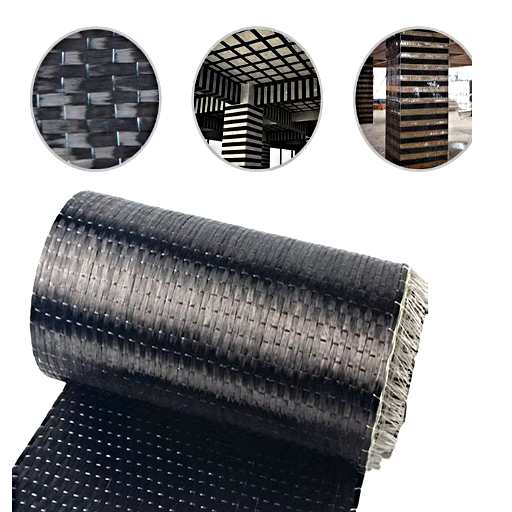
Ultra-high modulus carbon fiber comes under a superior class of carbon fiber, with exceptional stiffness and strength. The fiber has a very high value for modulus of elasticity; that is, it deforms very little under applied stress. Thus, it is suitable for applications in which high rigidity is required. UHM carbon fiber finds typical applications in aerospace, robotics, sports, and several other high-tech applications where weight and strength are of paramount concern. Its unique properties allow the convergence of technology and design to ensure that the materials perform reliably under demanding conditions.
How Does Ultra High Modulus Differ from High Modulus Carbon Fiber?
Ultra-high-modulus (UHM) and high-modulus carbon (HM) fibers are advanced, high-strength materials that are also extremely stiff. A few key distinctions distinguish them.
The main difference lies in tensile modulus, the inherent material property that manifests as resistance to deformation under stress. UHM carbon fibers exceed 600 GPa in tensile modulus, whereas HM carbon fibers fall between 300 GPa and 500 GPa. With this marked increase in stiffness, UHM carbon fiber can provide more rigidity where minimum deflection is essential- on satellites and components of precision instruments, for instance.
So, UHM carbon fiber trades higher modulus for tensile strength and impact resistance. HM fibers are balanced in strength and stiffness and fit well for aerospace and general automotive components; meanwhile, UHM carbon fibers cater to specialized applications demanding ultimate rigidity.
Besides considering performance, price plays a huge role in deciding the fiber selection, as UHM carbon fibers are much more expensive to manufacture than HM carbon fibers due to the demanding processing and special precursors needed.
Thus, the decision between UHM and HM carbon fiber is project-oriented and heavily based on a compromise between projected performances and prices for optimum results.
Applications in Aerospace and Other Industries
- Construction of Aerospace Structures
UHM and HM carbon fibers are widely used in aerospace fields to produce structural components such as wings, fuselage sections, and tail assemblies. The materials permit a substantial cut in aircraft weights without compromising the aircraft’s mechanical strength, which is of paramount importance for fuel costs and performance optimization.
- Satellite Components
Carbon fiber’s lightweight and highly stiff characteristics make it suitable for satellite components such as support structures, antennas, and protective panels. These components need to be designed to minimize further launch costs while maintaining durability over a long period under severe environmental conditions in space.
- Sports Equipment
High-grade sports equipment, such as tennis rackets, racing bicycles, and golf clubs, is synthesized with HM carbon fiber to attain precision, strength, and lightness, all of which are instrumental in providing better performance and comfort to the user.
- Car Industry
Carbon fiber is increasingly becoming a trend in manufacturing expensive vehicles. Lightweight body panels, chassis components, and structural reinforcements can all be made from carbon fiber. This goes a long way in improving fuel efficiency, handling capabilities, and overall performance of these vehicles, especially electric and performance ones.
- Wind Turbine Blades
The renewable energy sector utilizes HM carbon fiber to fabricate wind turbine blades because of its superb stiffness-to-weight ratio. This makes the blades more efficient in capturing wind power while reducing costs related to material and transportation.
All these applications highlight the versatility and significance of UHM and HM carbon fibers in nurturing technological advancement and sustainability in multiple industries.
What Are the Types of Carbon Fiber?
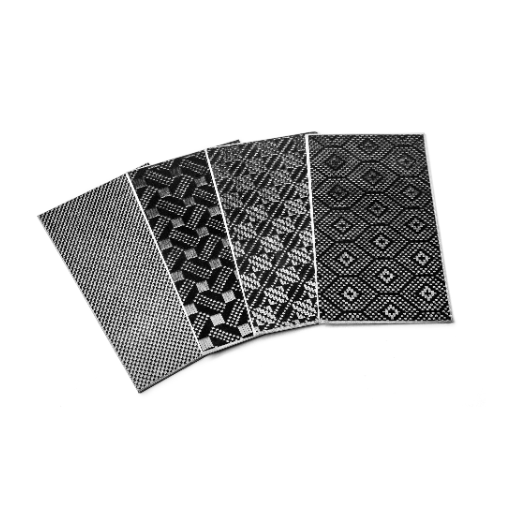
Carbon fiber can be grouped into three broad categories depending on modulus and strength:
- High Modulus Carbon Fiber
This has excessively high stiffness levels and is used in applications that demand rigidity, such as aerospace and precision instruments.
- Intermediate Modulus Carbon Fiber
When strength and stiffness are balanced, IM carbon fiber is applied in sporting goods, automotive components, and industrial applications.
- Standard Modulus Carbon Fiber
SM carbon fiber possesses a high strength at a lower cost and can be used for general purposes in various industries, including construction and recreational products.
Each category serves specific functions, ensuring that carbon fiber solutions can cater to the unique needs of various projects.
Exploring Standard Modulus Carbon Fiber
Being a middle-of-the-road option that balances tension and stiffness while costing little, Standard Modulus carbon fibers find their main commercial market. Tensile modulus usually ranges around 33-35 Msi (million pounds per square inch), while tensile strength lies around 500-700 ksi (thousand pounds per square inch). Therefore, it fits the need for high strength in projects where extreme stiffness is unnecessary.
One significant advantage of SM carbon fiber is its cost; it’s cheap compared to high and intermediate modulus fibers. Its cost-effectiveness makes it a favorite in several industries, including:
- Construction
Used as reinforcement materials for buildings and bridges, thus enhancing durability and resistance to stress.
- Sporting Goods
Used quite a lot in sports equipment like fishing rods, bicycles, and tennis rackets: anything that demands a robust yet very lightweight material.
- Aerospace and Marine Applications
It is very suitable for structural members that require strength under flexing loads, and its weight must be kept to the absolute minimum to promote performance.
- Transportation
It is used in manufacturing automotive parts such as frames and panels, which help fuel efficiency by keeping vehicle weight down.
An essential advantage of SM carbon fiber is that it is quite versatile. The fibers can be woven in various orientations, ranging from entirely unidirectional to completely multidirectional fabric, to meet specific design and engineering requirements. By combining superb mechanical and pricing characteristics, SM carbon fiber is still a driving force behind the development of many industries worldwide.
Characteristics of Intermediate Modulus Carbon Fiber
- High Tensile Strength
Due to its intermediate modulus, carbon fiber provides very high tensile strength, i.e., it can withstand many tensile forces without breaking. Hence, this is helpful for applications where strength and durability are factors.
- Moderate Modulus of Elasticity
It possesses a somewhat moderating modulus of elasticity and is, thus, a compromise between stiffness and fatigue. This nature makes it suitable for applications wherein some degree of mechanical stability and flexibility are required.
- Lightweight Structure
The material retains a low density while maintaining an exceptional strength-to-weight ratio. This characteristic is essential in the aerospace and automotive sectors, where weight reduction becomes imperative.
- Superior Fatigue Resistance
Intermediate modulus carbon fiber offers high resistance to fatigue, making it durable under the continuous application of stresses and strains. This means that in dynamic or load-bearing applications, these materials will last for an extended period.
- Thermal and Chemical Stability
The fiber can resist high temperatures and exposure to varying chemical environments, providing high reliability and performance under hostile environments.
Why Choose Ultra High Modulus Carbon Fiber?
In the engineering realm, apart from the ultra-high modulus carbon fiber used for superior stiffness and the least deformation under load, there is no other material with a higher stiffness-weight ratio, and hence considered for aerospace, robotics, and precision tooling applications. This material grants the ability to make lightweight components without compromising their structural integrity, an essential consideration since these industries focus on performance and efficiency. Additionally, top-level thermal stability allows for operations in extreme temperatures, while very low creep assures that the compound will keep its geometric precision longer. All this, together with modern technologies and fabrication methods, makes ultra-high modulus carbon fiber stay on top as the solution in advanced materials.
What is the Modulus of Elasticity in Carbon Fibers?

The modulus of elasticity in carbon fibers refers to their ability to resist deformation under a force, which is often described as stiffness. High-modulus carbon fibers generally range between modulus values of 290 and 600 GPa, depending on the type and grade. Therefore, these fibers are used in applications requiring high rigidity and strength.
Defining Elastic Modulus and Its Importance
The elastic modulus or Young’s modulus of a material is a quantity indicating its stiffness, or in other words, quantifying how much it deforms when subjected to force. It becomes an essential property that denotes a material’s rigidity with regard to its force. The elastic modulus is significant in the performance and applications of materials such as carbon fibers.
Carbon fibers may have elastic moduli ranging across a vast spectrum, which depends directly on their composition and manufacturing process. Standard-modulus carbon fibers generally range from some 230 to 250 GPa; meanwhile, fibers with intermediate modulus measure toward 290-350 GPa. Ultra-high modulus fibers can reach 600 GPa; however, they are mostly reserved for state-of-the-art aerospace or extreme-level high-performance applications.
The modulus of elasticity is an indicator for determining whether a material qualifies for a specific structural application. For example, In design and engineering fields, materials with a high modulus of elasticity are always favored where rigidity, strength, and precise load-bearing capacity are worthy of application. Consequently, carbon fibers with their excellent modulus range are mainly used in aerospace, automotive, and sports equipment, where performance and weight saving are the chief concerns.
This property ensures structural integrity and reliability for designing an entirely new range of lightweight components offering excellent strength while still being stable under stress. The elastic modulus and low density are one reason for carbon fiber’s advancement in modern material science and engineering.
How Does Tensile Modulus Affect Performance?
Tensile or elastic modulus becomes instrumental in considering how a material behaves under mechanical stress. It is the capacity of a material to resist deformation and return to its original configuration upon tensile stress. If the tensile modulus is high, the material is stiff and rigid to bend or stretch under load, an attribute highly desirable when tight precision and dimensional stability are necessary.
For example, aircraft frames and components with high tensile modulus in aerospace will sustain high-speed travel stresses while remaining structurally sound. In another setting, the automobile, high tensile modulus materials for components mitigate the unwanted flexing or deformation upon stress, thereby keeping the vehicle safe and efficient. Put simply, tensile modulus gives engineers a window of opportunity in picking materials whose performance, durability, and reliability are built for demanding applications.
Comparing Higher Modulus Options in Carbon Fiber Products
Higher modulus carbon fiber options, which comprise the intermediate, high, and ultra-high modulus fiber, progressively increase the stiffness while lessening strength and price.
|
Parameter |
Intermediate |
High Modulus |
Ultra High Modulus |
|---|---|---|---|
|
Stiffness |
Higher (43-47 MSI) |
Very High (57 MSI) |
Extreme (110 MSI) |
|
Strength |
High (800-1000 KSI) |
Moderate (640 KSI) |
Low (425 KSI) |
|
Cost |
Moderate |
High |
Very High |
|
Applications |
Aerospace, industrial |
Aerospace, precision |
Space, specialized |
|
Weight |
Lightweight |
Lightweight |
Lightweight |
|
Durability |
High |
Moderate |
Low |
How is Ultra High Modulus Carbon Fiber Produced?
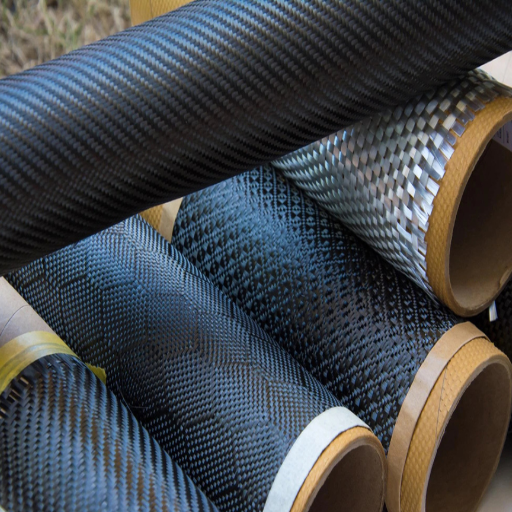
Ultra-high-modulus carbon fiber is created by selecting appropriate precursors, mainly polyacrylonitrile (PAN). The fibers are stabilized and then carbonized at extremely high temperatures, sometimes over 2,500°C. During this stage, the carbon atoms line up more tightly, slightly increasing stiffness and strength. Controlled tension and heating further minimize possible structural defects during manufacturing, thus enhancing the modulus of the fiber. The process is exact and specialized; hence, ultra-high-modulus carbon fiber may be used in applications requiring utmost rigidity and performance.
The Carbon Fiber Production Process Explained
The carbon fiber production process is multi-stage and heavily controlled. It starts from a polymer precursor that is usually polyacrylonitrile (PAN). The process begins when production fibers are stretched and oxidized in a controlled environment, stabilizing the precursor and preparing it for carbonization. Carbonization exposes the fiber to very high temperatures in a low-oxygen environment to remove all non-carbon elements while also tightly aligning the carbon atoms in the fiber. This stage ensures the material is very lightweight but with high tensile strength properties.
If these fibers are produced, surface treatment may be applied, and sizing materials used to give a better interface with res
What Role Does Toray Play in Carbon Fiber Manufacturing?
With over a century and several decades of experience, Toray Industries, Inc. has led the way in producing and innovating carbon fibers and composite materials. Because of this time-honored expertise, the company was responsible for innovations in manufacturing that provided the high-performance fiber that has applications across several types of industries. The company also went vertically integrated to produce everything from the raw material to the finished composite product so that the quality and performance of these materials were never compromised. Toray carbon fibers are used in aerospace components, automotive lightweighting, wind turbines, and high-performance sports equipment. Continuous development for the company has made it a reliable partner for design, eco-friendliness, and high-performance solutions in carbon fiber.
Innovations in Prepreg Techniques for Carbon Fiber Sheets
Advancements in prepreg technology for carbon fiber sheets have essentially transformed their applications through various industries. Prepreg, in other words, a term for pre-impregnated material, involves reinforcing fibers, which are pre-coated with a resin system, promising better control, more uniformity, and less processing time. Improvements in resin chemistries delivered high thermal stability, short curing cycles, and stronger bonds for materials, thus making these sheets more viable options for high-end applications. Incorporation of automation into prepreg manufacturing processes yields high production efficiencies and less waste, therefore adhering to sustainability. Henceforth, these developments ensure that carbon fiber prepreg materials remain the optimum solution for engineering challenges in the aerospace, automotive, and energy industries.
Reference Sources
- Key Findings:
- Pitch-based carbon fiber reinforced epoxy composites exhibited higher normalized tensile fatigue strength and less steep stress-life (S-N) curve than standard-modulus polyacrylonitrile (PAN)-based carbon fiber composites.
- Cyclic loading of the pitch fiber composite resulted in minimal matrix damage, with eventual localized and fiber-dominated fractures.
- The difference in fatigue behavior is attributed to the different strain levels attained at similar stress levels and the consequent difference in matrix damage development.
- Methodology:
- Woven quasi-isotropic epoxy matrix composites made with ultra-high-modulus pitch-based carbon fiber and standard-modulus PAN-based carbon fiber were subjected to uniaxial tension fatigue tests.
- Fatigue behaviors, including stress-life curves, damage mechanisms, and fracture characteristics, were analyzed and compared between the composite types.
- Key Findings:
- The use of ultra-high modulus carbon fiber-reinforced polymer (CFRP) can significantly enhance the fatigue life of steel girders.
- CFRP reinforcement can help reduce or eliminate the need for large amounts of steel reinforcement in the end zones of prestressed girders, which is typically required to prevent severe cracking.
- Methodology:
- The study employed finite element modeling to investigate using UHPC and CFRP bars to enhance crack control and long-term durability in the end zones of prestressed girders.
- The model was validated with experimental data and used to quantify the UHPC zone lengths needed to restrain end zone cracks and the potential for replacing steel reinforcement with CFRP bars.
- Key Findings:
- The study investigated the bond performance of ultra-high modulus CFRP rods attached with GFRP ribs.
- The bond performance was improved by attaching GFRP ribs to the ultra-high modulus CFRP rods.
- Methodology:
- Bond tests were conducted on ultra-high modulus CFRP rods with and without GFRP ribs to evaluate the bond performance.
- Key Findings:
- Reinforced concrete beams strengthened with bond-improved ultra-high modulus CFRP rods exhibited improved mechanical performance under monotonic and cyclic loading.
- The bond improvement between the CFRP rods and concrete was achieved by attaching GFRP ribs to the CFRP rods.
- Methodology:
- Monotonic and cyclic loading tests were conducted on reinforced concrete beams strengthened with ultra-high modulus CFRP rods, both with and without the GFRP rib bond improvement.
5. Top carbon fiber cnc machining Parts Manufacturer and Supplier in China
Frequently Asked Questions (FAQs)
Q: What is a High Modulus & Ultra High Modulus Carbon Fiber Composite?
A: High Modulus and ultra-high modulus Carbon Fiber Composites are advanced materials known for their exceptional stiffness and strength. These composites are often utilized in aerospace applications due to their higher modulus of elasticity, allowing them to withstand greater stress than standard carbon fibers.
Q: How does the modulus of a carbon fiber composite affect its performance?
A: The higher the modulus of a carbon fiber composite, the stiffer it becomes. This means that materials with a higher modulus, such as those made with pitch fiber, can perform better in applications requiring rigidity and resistance to deformation.
Q: What are some common manufacturers of high modulus carbon fiber composites?
A: Notable manufacturers include DragonPlate and Rock West Composites, which offer a variety of modulus sheets and tubes made from high-performance fibers like Toray’s carbon fiber.
Q: What are the benefits of using pitch fiber in carbon fiber composites?
A: Pitch fiber is known for its higher tensile strength and stiffness than conventional carbon fibers. Composites with pitch fiber exhibit a significantly higher fiber modulus, making them suitable for demanding applications.
Q: Can you explain the term “two sizes” about carbon fiber composites?
A: Tow sizes refer to the number of individual fibers bundled together in a single strand. Standard tow sizes include 1k, 3k, 12k, and 24k. Depending on the application, larger tow sizes usually result in cost-effective fibers that can still deliver high performance.
Q: What is the significance of thermal conductivity in high modulus carbon fiber composites?
A: Thermal conductivity is crucial in applications where heat dissipation is essential. High modulus carbon fiber composites can exhibit varying degrees of thermal conductivity, which affects their performance in aerospace and other high-temperature environments.
Q: How do the manufacturing processes affect the properties of carbon fiber composites?
A: Different manufacturing processes can significantly impact the properties of carbon fiber composites. For instance, the method used can influence the fibers’ elongation and tolerance, leading to stiffness and strength variations.
Q: What is the role of elongation in the performance of carbon fiber composites?
A: Elongation refers to a material’s ability to stretch before breaking. In carbon fiber composites, a lower elongation typically indicates a stiffer material, which is desirable in applications requiring rigidity. However, some flexibility is also necessary, depending on the application.
Q: Are high modulus carbon fiber composites cost-effective for industrial applications?
A: While high modulus carbon fiber composites can be more expensive due to the advanced materials and manufacturing processes, their superior performance and durability often justify the cost in industrial applications. They provide a long-term solution that can reduce maintenance and replacement costs.


