


The epitome of high modulus carbon fiber is in modern production with an almost perfect balance of strength-lightness-versatility. This great carving of materials has ushered changes from aerospace, through automobile, into sports equipment, toward renewable energy-laden reagents. However, what makes the high modulus carbon fiber quite different from other materials, and why is it preferred for high technology applications? In this article, we shall get into the science of its strength, delve into the idiosyncrasies of the material’s provisions, and look at the innovations and the new emerging life it offers to various industries. Whether you are a technology buff or an engineer, curiosity about advanced materials may convince you of the high modulus carbon fiber and its myriad applications.
What is High Modulus Carbon Fiber?

High modulus carbon fiber is a special carbon fiber with excellent stiffness and strength-to-weight ratios. It is produced with careful control of the manufacturing process to achieve greater degrees of alignment and crystallinity of the carbon atoms. In application, it can take on massive stress without bending or deforming. Its exceptional qualities are desired in any field where rigidity, lightweight construction, and durability are desired: aerospace, automotive, and high-performance sporting goods.
Definition and Characteristics of High Modulus Carbon
Due to potential mechanical properties and versatility, high modulus carbon remains at the highest value in today’s industries. Development in manufacturing processes and high-end technology has further improved its performance capabilities and adjustabilities. The newest data confirm that in aerospace and aviation, the high-strength sector, in which the strength-weight ratio is critical for building a high-end, reliable aircraft. It is also used in the automotive industry, employing lightweight construction for improved fuel efficiency and performance. The inventions have stretched their application to wind turbine blades, wherein durability and rigidity are paramount in maximizing energy production. These developments further reaffirm the continuous advancement of high modulus carbon as a material of choice in cutting-edge engineering solutions.
Comparison with Standard and Intermediate Modulus Carbon Fiber
Standard modulus carbon fibers are less costly and have moderate stiffness; intermediate modulus offers greater stiffness and strength, while high modulus stands in contrast, all for an increase in stiffness against price, with lower strength.
|
Parameter |
Standard Modulus |
Intermediate Modulus |
High Modulus |
|---|---|---|---|
|
Stiffness |
Moderate (33-36 MSI) |
Higher (43-47 MSI) |
Very High (57+ MSI) |
|
Strength |
High (500-700 KSI) |
Higher (800-1000 KSI) |
Moderate (640 KSI) |
|
Cost |
Low |
Moderate |
High |
|
Applications |
General-purpose |
Aerospace, industrial |
Aerospace, precision |
|
Weight |
Lightweight |
Lightweight |
Lightweight |
|
Durability |
High |
High |
Moderate |
Applications of High-Modulus Carbon Fiber
The high modulus carbon fiber finds several applications across industries because of its extreme stiffness, low weight, and incredible strength. Below are the five primary applications:
- Aerospace Components
Developed for the aerospace industry, this cruising high-modulus carbon fiber improves the structural integrity of aircraft components, including wings, fuselages, and satellite structures. Because of a high stiffness-to-weight ratio, these materials help reduce the total weight, thus enhancing fuel efficiency and flight performance.
- Sporting Goods
Highly prized sporting equipment such as tennis rackets, golf clubs, and bicycles retains high-modulus carbon fiber so it can be the best, with strength and lightness. This contributes to the athletes’ extrinsic performance and endurance.
- Automotive Design
High-modulus carbon fiber makes structural panels, chassis, and interiors in luxury and high-performance vehicles. Removing weight also contributes to fuel efficiency and handling characteristics without compromising rigidity.
- Wind Turbine Blades
Due to their strength and low density, high modulus carbon fibers are used by wind energy industries to manufacture long, durable blades for wind turbine facilities. These materials make wind turbines energy-efficient and capable of withstanding harsh environmental conditions for a long time.
- Medical Devices
High-modulus carbon fiber is used in advanced medical imaging systems and prosthetics. It is lightweight and strong, providing comfort and reliability in prosthetic devices while imparting competence in imaging equipment.
What Are the Different Grades of Carbon Fiber?
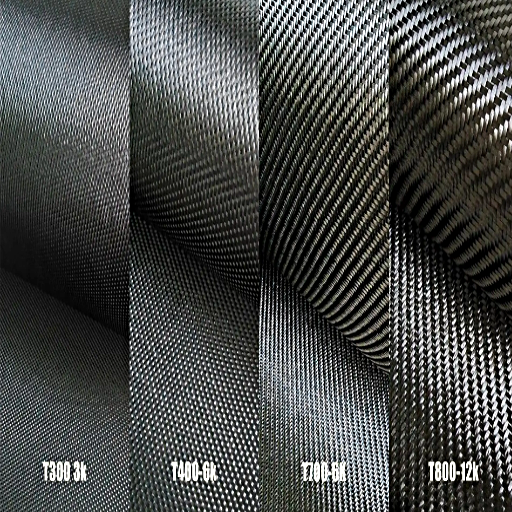
Three primary grades of carbon fiber are used; each brings its properties and applications:
- High Modulus Carbon Fiber
This is the stiffest and strongest grade. Its applications are mainly in high-performance fields, such as aerospace, wind turbines, and advanced sporting goods.
- Intermediate Modulus Carbon Fiber
A compromise between strength, stiffness, and cost, this grade is used mainly in automotive components and general industrial uses.
- Standard Modulus Carbon Fiber
This grade is most commonly used. It balances strength with affordability and is ideally suited for use in consumer goods or recreational products.
By grading these products according to their price and performance, manufacturers can select the best for given applications.
Overview of Carbon Fiber Grades
Carbon fiber grades are selected by property to suit the diverse needs of various industries. For example, the ultra-high modulus carbon fibers find aerospace applications owing to their stiffness and extreme lightweight for manufacturing cutting-edge aircraft components. On the other hand, high modulus carbon fibers are used in making some high-performance sports equipment and specialized industrial instruments, where wear and tear resistance and reliability are of considerable concern. Further, the standard modulus carbon fibers, being cheap and sufficiently strong, are primarily used in making consumer products like bicycles, fishing rods, and automobile parts. In this way, precisely matching materials to their intent allows manufacturers to make the best compromise between efficient performance and cost.
High Modulus vs. Ultra High Modulus Carbon Fiber
In terms of stiffness, high-modulus carbon fiber provides sufficient stiffness and moderate strength; ultra-high modulus provides extreme stiffness but significantly less strength and at a higher price.
|
Parameter |
High Modulus |
Ultra High Modulus |
|---|---|---|
|
Stiffness |
Very High (57 MSI) |
Extreme (110 MSI) |
|
Strength |
Moderate (640 KSI) |
Low (425 KSI) |
|
Cost |
High |
Very High |
|
Applications |
Aerospace, precision |
Space, specialized |
|
Weight |
Lightweight |
Lightweight |
|
Durability |
Moderate |
Low |
How to Choose the Right Carbon Fiber Grade for Your Project
Depending on your desired application, the Right Carbon Fiber grade is selected after balancing the performance criteria with cost and intended use. First, you need to consider the mechanical needs for your project: Is it more important to feel stiffness, durability, or cost? For applications requiring super stiffness and lightweight landing on the aerospace or robotics side, a high-modulus carbon fiber or, better yet, an ultra-high-modulus carbon fiber would be the best choice because it will give you rigidity greater than the price! Somehow, recreational manufacture, or simple commercial use, a Standard Modulus Carbon Fiber is an attractive compromise between strength, flexibility, and cost.
Consider also the environment in which your material is going to live. Very High Modulus might be more suited for static loads. Standard Modulus might be preferable for dynamic loads. Nevertheless, if you have doubts, you should consult with any material engineers or suppliers to be sure that the selected carbon fiber meets the specified criteria of performance and budgetary restrictions. By extracting the carbon fiber grade most suitable for the demand requirements of your projects, you will stand the best chance of succeeding as defined by your own set goals.
How Does the Modulus of Elasticity Affect Carbon Fiber Performance?

A material can perform a lesser or higher amount of stretching; therefore, the modulus of elasticity pertains directly to the fibre’s stiffness and determination characteristics. If a material possesses a high value for the modulus of elasticity, it is stiff, and it’ll hardly bend or stretch under load. Therefore, loads carried under circumstances with minimal deflection, such as aerospace or structural components, are suitable. On the contrary, a low value of the modulus of elasticity allows greater freedom, whereby such a thing can help carry an application depending upon dynamic or variable loads. The choice must rest on the performance required by a project, keeping a balance among stiffness, flexibility, and durability.
Understanding Modulus Carbon Fiber and Its Importance
Depending on the stiffness and tensile strength values, modulus carbon fibers are divided into three grades: standard, intermediate, and high. The mechanical properties of each type influence the applications for which they are best used.
- Standard Modulus Carbon Fiber
Standard modulus carbon fiber typically has a tensile modulus of 33 MSI (million pounds per square inch) and an accompanying tensile strength value of 500 KSI (thousand pounds per square inch). Offering a balance of cost and performance, it is used in sporting goods, automotive components, and generic structures.
- Intermediate Modulus Carbon Fiber
With an approximate stiffness of 42 MSI and extremely high tensile strength, intermediate modulus carbon fibers are stronger than standard modulus ones and are primarily employed in aerospace and performance industries, demanding higher performance at a slightly increased cost.
- High Modulus Carbon Fiber
High-modulus carbon fiber has a tensile modulus greater than 60 GPa, whereas standard-modulus fibers are slightly lower in tensile strength. Its rigidity confers ideal suitability for applications demanding precision dimensional stability, such as telescopic instruments, satellites, and more costly sporting applications. While applications are typically limited due to more expensive pricing arrangements, the rest are relegated to a few specialized uses.
According to data, the global demand for carbon fiber is continuously growing, primarily because of its superior strength-to-weight ratio, corrosion resistance, and adaptability across industries. For example, as of 2022, the world market for carbon fiber is worth more than $5 billion and is expected to register a compound annual growth rate of more than 10% through 2030.
With this knowledge concerning the varying types of modulus, engineers and designers can entrust their products’ performance to their favor. The choices regarding which modulus grade can be made by balancing stiffness, strength, and cost, whereby all three indices meet project-specific requirements.
Effects of Elastic Modulus on Stiffness
Young’s modulus is the name for elasticity or elastic modulus. As a stiffness factor for materials, it should be considered as well. Stiffness and elastic modulus are directly proportional to each other: the greater the modulus of the material, the more resistance it offers to any attempt at deformation under an applied load. High modulus metals like steel will be far stiffer than polymers, usually with a lower modulus. This property would be desirable for applications requiring rigidity or structural integrity, aerospace applications being one example, along with load-bearing structures. The opposite goes for those with a lesser modulus: the lesser in stiffness, in turn, are more flexible and capable of energy absorption. This property is used for cushioning or vibration-damping purposes. Understanding elastic modulus and its relation to stiffness would empower an engineer to decide to design a material for the intended use.
High Tensile Modulus vs. Standard Modulus
The high tensile modulus carbon fiber elevates stiffness yet lowers strength and costs more compared to the standard modulus, which is versatile and competitively priced.
|
Parameter |
Standard Modulus |
High Tensile Modulus |
|---|---|---|
|
Stiffness |
Moderate (33-36 MSI) |
Very High (57+ MSI) |
|
Strength |
High (500-700 KSI) |
Moderate (640 KSI) |
|
Cost |
Low |
High |
|
Applications |
General-purpose |
Aerospace, precision |
|
Weight |
Lightweight |
Lightweight |
|
Durability |
High |
Moderate |
What Are the Benefits of Using High-Strength and High-Modulus Carbon Fiber?

Key advantages of high-strength and high-modulus carbon fiber are as follows:
- Weight-saving with High Strength: Carbon fiber is a strong yet weight-saving material. It can be used in applications that demand durability and weight reduction, such as aerospace and automobiles.
- Stiffness Enhancement: Its high modulus guarantees the best stiffness for carbon fiber to hold shape and not bend when force is applied.
- It resists corrosion: Carbon fiber, unlike metal, resists corrosion, enhancing the life of any component subjected to a harsh environment.
- Energy Efficiency: Carbon fiber materials can realize greater energy savings in lightweighting; for instance, in transportation, this would translate to better fuel economy versus electric batteries.
- Design Versatility: Carbon fiber can be molded into complicated shapes for design freedom.
Thus, combining these benefits makes carbon fiber a high-strength and high-modulus material in modern-day engineering and manufacturing.
Advantages in Aerospace and Automotive Applications
- Weight Reduction: Carbon fiber’s lower density makes it suitable for aircraft and vehicles. Later, it reduces overall weight and thereby promotes fuel economy. For instance, a 10% weight reduction might translate to fuel savings of about 6% to 8% in commercial aviation.
- Improved Performance: The material’s structural integrity is enhanced because of its very high strength-to-weight ratio, thereby affording aerospace and high-speed automotive applications somewhat greater performance and safety.
- Corrosion: Resistant Carbon fiber being resistant to corrosion reduces maintenance costs and increases the life of structures/components.
- Fuel Efficiency: Less weight on the vehicle means better mileage or slightly more battery range for electric cars, thus making carbon fiber a major contributor towards sustainability.
- Design Freedom: Carbon fiber can be molded into complicated and aerodynamic shapes, allowing designers to fine-tune structures for better performance and beauty without compromising durability.
Impact on Composite Materials Performance
Carbon fiber composites have dramatically enhanced the specific aspect of mechanical behavior, which has been considered under a set of parameters, closing a large section specific to industries across their application. With an unmatched strength-to-weight ratio, the tensile strength of carbon fiber composites ranges between 3,500 MPa and about 6,000 MPa or more. In contrast, steel is near 500 MPa and aluminum 250 MPa; this gives composites from carbon fibers an excellent prospect in robotics or aerospace, automotive, and mechanical applications in terms of strength with the least weight.
Moreover, carbon fiber composites possess very high modulus values, which usually range between 230 GPa and 700 GPa, depending on the grade and type. A high modulus maintains the parts’ structural integrity without offering enough deformation to be rated as threatening when subjected to high or severe loads. Such properties instill confidence about safety and reliability in designs and provide a longer life span of the chosen materials.
Advances in new manufacturing methodologies such as automated fiber placement (AFP) and resin transfer molding (RTM), among others, have helped bring the cost and price of carbon fiber composites down in recent years. According to an industry report, the global carbon fiber market is expected to climb at a compound annual growth rate (CAGR) of 8.6%, reaching $13.3 billion by 2030. This is attributed to the demand for lightweight and sustainable materials in industries such as renewable energy, with wind turbine blades being a significant application.
The composite materials derive enhanced corrosion and de-icing resistance properties from carbon fiber composites, thereby outperforming the applications of other composites and metals. When combined with a resin system suitable for application, these composites retain these superior properties even in harsh environments, an advantage not shared by conventional materials.
Using carbon fiber in composites contributes to sustainability, besides improving performance. Carbon fiber composites can lessen fuel consumption and carbon emissions by being lightweight, which becomes a worthy concern in the quest for environmental consciousness. Corporations and manufacturers have realized this and are investing in further developing processes that would render carbon fiber production green, such as bio-based precursors and recycling technologies to secure a sustainable future based on composites.
Aerospace Applications of High-Modulus Carbon Fiber
Due to its unparalleled strength-to-weight ratio, this high modulus carbon fiber has revolutionized the aerospace sector. Rigidity and durability are essential elements of aircraft component manufacturing since weight reduction will equal fuel efficiency and performance. According to industry reports, an aircraft’s weight can be decreased by 20% through advanced carbon fiber composites, allowing a fuel saving of 15% in CO2 emissions.
High modulus carbon fiber is mainly used in aerospace applications for primary structural components of aircraft, including wings, fuselages, and tail structures. For example, Boeing 787 Dreamliner and Airbus A350 XWB airframes have more than 50% composite materials, among which high modulus carbon fiber is critical; this material allows these next-generation aircraft to achieve higher operational efficiency and longer ranges, while maintaining structural integrity.
Additionally, carbon fiber finds its commercial application in producing fan blades and nacelles, where higher thermal resistance, fatigue tolerance, and other similar factors are essential. Available data show that by using carbon fiber composites in the engine, parts can achieve about 30% weight savings compared to titanium or aluminum.
The space industry, in particular, benefits heavily from high modulus carbon fiber in making rocket casings, satellite frameworks, and payload fairings. Being able to carry extreme temperatures and stress loads yet remain lightweight makes carbon fiber imperative for space missions. On the lines of engineering, composite materials, including carbon fiber and shoulders, ensure reusability in a better way, along with the overall structure of the Falcon 9 rocket of SpaceX.
Continuous advancements in carbon fiber production, such as automated manufacturing methods and cheap recycling processes, contribute substantially to its further uptake in aerospace applications. Given current priorities like combating emissions and encouraging sustainable aviation, the spotlight on high modulus carbon fiber shines brightly in front of the industry.
Reference Sources
- Effect of Fiber–Matrix Interface Friction on Compressive Strength of High-Modulus Carbon Composites
- Authors: Sarvenaz Ghaffari, G. Seon, A. Makeev
- Publication Date: February 22, 2023
- Journal: Molecules
- Key Findings:
- This study addresses the low compressive strength of high-modulus carbon fiber-reinforced polymers (CFRPs). It explores the hybridization of intermediate-modulus (IM) and high-modulus (HM) carbon fibers to enhance compressive strength.
- The hybrid material nearly doubles the compressive strength of HM CFRPs, achieving performance comparable to advanced IM CFRPs while maintaining a higher axial modulus.
- The research highlights that differences in surface topology lead to significantly higher interface friction for IM fibers than HM fibers, contributing to improved interface strength.
- Methodology:
- In situ scanning electron microscopy (SEM) experiments were developed to measure interface friction. They revealed an approximately 48% higher maximum shear traction for IM fibers compared to HM fibers(Ghaffari et al., 2023).
- Understanding Compressive Strength Improvement of High Modulus Carbon-Fiber Reinforced Polymeric Composites through Fiber-Matrix Interface Characterization
- Authors: Sarvenaz Ghaffari, A. Makeev, G. Seon, D. Cole, D. Magagnosc, S. Bhowmick
- Publication Date: August 1, 2020
- Journal: Materials & Design
- Key Findings:
- This paper discusses the low compressive strength of HM CFRPs and the role of fiber-matrix interface shear strength in this context.
- Integrating IM fibers into HM CFRPs significantly enhances compressive strength due to improved microstructural stability.
- Methodology:
- The study utilized in situ SEM-based experiments to assess the fiber-matrix interface properties and their influence on compressive strength(Ghaffari et al., 2020, p. 108798).
- Analysis of Fracture State and Fatigue Life of High Modulus Carbon Fiber Wrapped Composite Barrel
- Authors: Rui Yin, Gang Tao
- Publication Date: November 20, 2023
- Journal: Journal of Reinforced Plastics and Composites
- Key Findings:
- This research investigates the fatigue and fracture behavior of high-modulus carbon fiber-wrapped composite barrels, revealing that the fracture characteristics differ significantly from those of high-strength materials.
- The study establishes a fatigue failure model for high modulus fibers, indicating that brittle fractures characterize their failure mechanisms.
- Methodology:
- The authors conducted quasi-static tensile and fatigue tests on NOL ring specimens of high-modulus carbon fiber, analyzing the fracture state and characteristics during fatigue(Yin & Tao, 2023, pp. 217–229).
-
Top carbon fiber cnc machining Parts Manufacturer and Supplier in China
Frequently Asked Questions (FAQs)
Q: What is high modulus carbon fiber, and how does it differ from standard modulus carbon fiber?
A: High-modulus carbon fiber is characterized by a higher elastic modulus than standard-modulus carbon fiber. This means it has a stiffer structure, making it ideal for applications requiring high rigidity. While standard-modulus carbon fiber offers a balance of strength and flexibility, high-modulus carbon fiber focuses on providing superior stiffness and reduced deformation under load.
Q: What are the common types of carbon fiber used in composites?
A: The common types of carbon fiber used in composites include standard modulus carbon fiber, intermediate modulus carbon fiber, and high modulus carbon fiber. Each type’s tensile strength and modulus varies, offering different benefits for specific applications, such as lightweight structures or high-performance components.
Q: Can you explain the role of prepreg in carbon fiber composite manufacturing?
A: Prepreg is a form of carbon fiber pre-impregnated with a resin system. It allows for precise control over the fiber-to-resin ratio, enhancing carbon fiber composites’ performance. Prepreg materials are often used in high-end applications where consistency and quality are paramount, including the aerospace and automotive industries.
Q: What are the advantages of using Toray carbon fiber products?
A: Toray carbon fiber products are known for their high strength and modulus characteristics. They offer excellent tensile strength and modulus, making them suitable for demanding applications. Toray’s advanced manufacturing processes also ensure consistent quality and performance, which is crucial for the aerospace and sports equipment industries.
Q: How does the coefficient of thermal expansion affect carbon fiber composites?
A: The coefficient of thermal expansion (CTE) measures how much a material expands or contracts with temperature changes. A low CTE is desirable in carbon fiber composites as it ensures dimensional stability under varying temperatures, which is critical for precision applications. High modulus carbon fibers typically exhibit lower CTE values, enhancing their performance in thermal cycling environments.
Q: What are the different tow sizes available for carbon fiber, and how do they impact performance?
A: Carbon fiber tow sizes refer to the number of filaments in a bundle. Smaller tow sizes offer greater flexibility and can be woven into complex shapes, while larger ones provide higher tensile strength and stiffness. The choice of tow size affects the overall performance of carbon fiber products, impacting their strength-to-weight ratio and application suitability.
Q: What types of carbon fibers are derived from polyacrylonitrile (PAN)?
A: PAN-based carbon fibers are the most common type of carbon fiber, known for their high strength and modulus. These fibers are produced through a process that involves carbonizing polyacrylonitrile, resulting in high-performance fibers used in various applications, including aerospace, automotive, and sporting goods.
Q: How do carbon fiber’s tensile strength and tensile modulus influence its applications?
A: The tensile strength indicates how much load a carbon fiber can withstand before breaking, while the tensile modulus measures its stiffness. Together, these properties determine the suitability of carbon fiber for specific applications. High tensile strength and modulus make carbon fiber ideal for structural components in aerospace and automotive industries, where performance and weight savings are critical.
Q: What are typical applications for high-strength and high-modulus carbon fiber products?
A: High-strength and high-modulus carbon fiber products are used in various applications, including aerospace components, sporting goods, automotive parts, and industrial equipment. Their unique properties allow for lighter, stronger, and stiffer designs, making them essential in industries prioritizing performance and reliability.


