


Polyoxymethylene, known as POM or acetal, has earned its reputation as a premier engineering thermoplastic in almost every industry. POM-H is the variant of choice because of its better mechanical properties for applications and precision components. But what exactly makes POM-H that versatile and trustworthy? The blog will cover in-depth the properties, advantages, and typical applications of POM-H-aPOM-H, alls that have placed this material at the forefront of engineering and manufacmanufacturingether you are a professional or just beginning in material selection, this article should give you some valuable insights about POM-H in high-performance and durability.
What is pom-h?
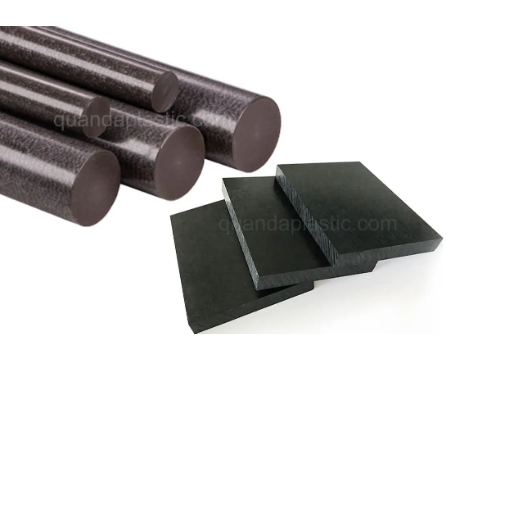
POM-H, or polyoxymethylene homopolymer, is a high-performance engineering thermoplastic prized for its strength, stiffness, and dimensional stability. Given its low friction, high wear resistance, and ability to retain these properties over a broad temperature spectrum, POM is highly favored for manufacturing precision components in demanding applications across automotive, electronics, and medical device industries.
Definition of pom-h
POM-H, or polyoxymethylene homopolymer, is a crystalline thermoplastic with excellent mechanical properties. It is noted for its low moisture absorption and high tensile strength and does not easily change performance when subjected to varying temperatures. Intending to work in challenging precision engineering environments, it is a chemically resistant material capable of withstanding mild exposure to chemicals, oils, fuels, and cleaning agents. Typical uses for POM-H include automotive system gears, bearings, and fasteners; delicate parts in electronics; and structural components in medical devices where precision and reliability are imperative. The ability to deliver both ruggedness and machinability is why this material is still preferred among industries seeking out high-performance solutions.
Characteristics of pom-h
- High Stiffness and Strength – POM-H offers superior mechanical strength and rigidity, making it an ideal material for load-bearing applications.
- Low Friction and High Wear Resistance—The material has excellent sliding properties, helping ensure the smooth operation of moving parts.
- Dimensional Stability- POM-H would retain its shape and dimensions even when exposed to varying temperature and moisture conditions.
- Chemical Resistance- Without deteriorating, it would resist exposure to many chemicals, such as fuels, oils, and cleaning agents.
- Good Machinability- POM-H can be machined easily to produce exquisitely shaped components.
Applications of pom-h
POM-H enjoys wide application in many industries because of its excellent mechanical characteristics. Below are five applications for POM-H:
- Automotive Components
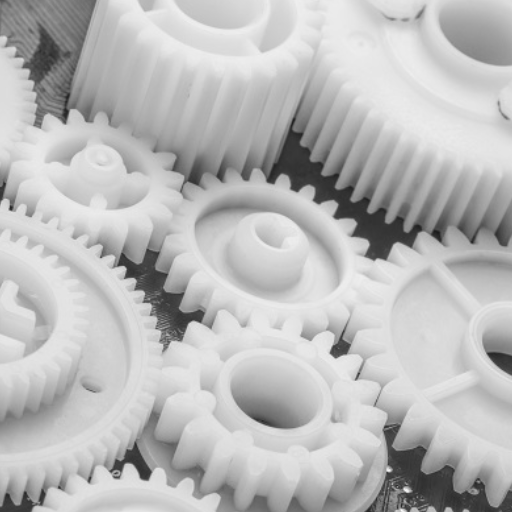
The automotive industry uses POM-H to produce gears, bushings, and fuel system components because it offers top-class wear resistance and dimensional stability under demanding conditions.
- Consumer Electronics
POM-H is used to produce precision parts in electronic devices, such as buttons, switches, and connectors, because it provides good durability and electrical insulation.
- Industrial Machinery
The POM-H is most suitable for conveyor belts, rollers, and bearings in industrial machinery, contributing to long life, less friction, and less maintenance.
- Medical Equipment
The material is used in medical device components such as handles for surgical instruments and insulin pens because of its strength, chemical resistance, and sterilizability.
- Plumbing and Fluid Handling Systems
POM-H is always chosen for valves, fittings, and pump components in plumbing systems because they must endure water, chemicals, and heat exposure without compromising performance.
How does Delrin compare to other materials?

Delrin offers the finest balance of strength, stiffness, and wear resistance, which sets it apart from other materials. It exhibits superb durability and good dimensional stability while being lighter than most metals; hence, it finds use in applications demanding precision. In applications, Delrin has better mechanical properties, lower friction, and resistance to moisture and chemicals than other plastics such as nylon or polypropylene. These attributes make Delrin one of the most versatile materials used in applications where performance and resistance matter.
Difference between delrin and pom-c
Delrin is robust and extremely stiff, while the POM-C has better chemical resistance, dimensional stability, and lower porosity.
|
Parameter |
Delrin (POM-H) |
POM-C |
|---|---|---|
|
Strength |
Higher |
Moderate |
|
Stiffness |
Higher |
Moderate |
|
Chem. Res. |
Moderate |
Superior |
|
Dim. Stability |
Moderate |
Excellent |
|
Porosity |
Higher |
Low |
|
Cost |
Higher |
Lower |
|
Applications |
Precision parts |
Wet, corrosive uses |
Comparison of Delrin to other acetal materials
Delrin, also called POM-H, has been acknowledged for good strength, stiffness, and wear resistance, while another acetal, POM-C, stands for chemical resistance, better dimensional stability, and lower price.
|
Parameter |
Delrin (POM-H) |
POM-C |
Other Acetals |
|---|---|---|---|
|
Strength |
Higher |
Moderate |
Varies |
|
Stiffness |
Higher |
Moderate |
Varies |
|
Wear Res. |
Higher |
Moderate |
Varies |
|
Chem. Res. |
Moderate |
Superior |
Moderate |
|
Dim. Stability |
Moderate |
Excellent |
Moderate |
|
Porosity |
Higher |
Low |
Varies |
|
Cost |
Higher |
Lower |
Varies |
When to use Delrin over other plastics
Delrin is chosen whenever strength, durability, or precision is of the essence. It outperforms other plastics in providing low friction, high dimensional stability, and wear resistance, while working perfectly with gears, bearings, and conveyor systems. Delrin performs better with warping and degradation than nylon or polypropylene when exposed to moisture, chemicals, or changing temperatures. Because it allows easy machining and surface finishing, Delrin is chosen wherever acceptable tolerances and complex designs are specified- it finds applications in medical devices or automotive parts. For situations where reliability and performance matter more, Delrin sits well between functionality and durability.
What are the material properties of Delrin?
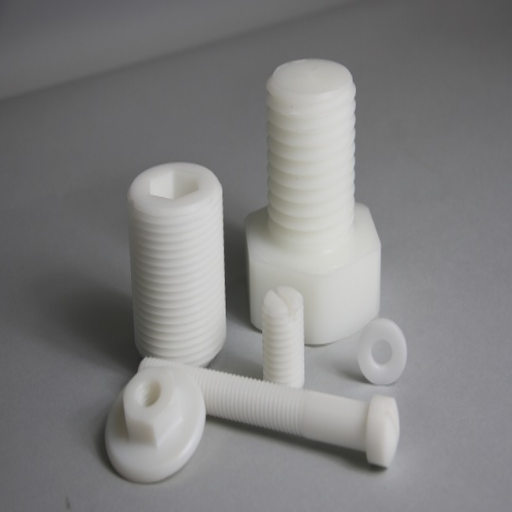
- High Strength and Stiffness: Delrin has great mechanical strength and rigidity and is, therefore, used for very demanding load-bearing applications.
- Low Friction: It has very low natural friction, which allows movements to take place smoothly and diminish wear in applications where parts slide past each other.
- Dimensional Stability: It will not warp or change dimensions over temperature and mechanical stress.
- Moisture Resistance: Delrin has minimal moisture absorption, ensuring stability and restricted swelling of products when subjected to humid environments.
- Chemical Resistance: Delrin is resistant to fuels, solvents, and many chemicals, thereby guaranteeing a long service life in aggressive environments.
- Good Impact Resistance: The material resists impacts and maintains its toughness over a wide temperature range.
These properties make Delrin a versatile and dependable solution in the automotive, electronics, and medical device industries.
Mechanical properties of Delrin
- Tensile Strength: Delrin has considerable tensile strength, usually ranging between 8,000 and 11,000 psi, and it can thus withstand extreme pulling forces without deformation.
- Flexural Modulus: It ranges from 400,000 to 450,000 psi, specifying that the material is rigid and resists bending when stressed.
- Impact Strength: Delrin is highly resistant to impacts and can absorb shock energy, preventing cracking even at low temperatures.
- Coefficient of Friction: Its low coefficient of friction makes it perfect for applications including gears, bearings, and other moving parts.
- Thermal Stability: It will operate well from -40°F to about 185°F (continuous with high temperature possible in short-term applications).
The above mechanical properties make Delrin an efficient material for high-performance applications that require strength, durability, and flexibility, potentially under varying environmental conditions.
Wear resistance and durability of Delrin
Delrin is known for excellent wear resistance in demanding environments. Its coefficient of friction is extremely low, and it exhibits exceptional abrasion resistance, making it an ideal candidate for abrasive environments wherein parts undergo constant motion or repetitive stress. Automotive and industrial manufacturing industries use Delrin for parts such as bushings, bearings, and conveyor systems, where low wear and long life are of significant concern. Delrin is also a worthy choice for applications requiring precision and long life when they operate under heavy loads.
Dimensional stability in Delrin applications
Dimensional stability is one of Delrin’s key properties in applications requiring tight tolerances. Delrin exhibits minimal thermal expansion and remains accompanied by minimal contractions or expansions due to changing environmental conditions such as temperature and humidity. The water absorption rate is minimal (only about 0.2% at saturation), ensuring that dimensional changes caused by moisture are negligible, a beneficial property for applications in moisture-abundant or wet environments.
Delrin’s coefficient of linear thermal expansion (CLTE) at 110 x 10⁻⁶in/in/°F enables outstanding dimensional stability performance, meaning that even slight temperature changes do not create deviations from accurate dimensions. Moreover, with its glass transition temperature near 257°F (125°C), it can resist deformations at higher temperatures.
The properties discussed above make Delrin the best choice for manufacture of gears, screws, housings, and other types of precision machinery. Automotive and aerospace industries characterize Delrin as a must-have material in critical parts that must maintain consistent performance with minimal deformation and reliable dimensional stability over time. This enhanced stability of Delrin reduces instances where the machinery requires a lot of recalibration or adjustment, thus leading to greater efficiency in industrial applications.
How to assemble Delrin parts effectively?
- Clean the Parts
Ensure that all Delrin components are clean and free of dust, grease, or debris. A soft cloth and a cleaning agent suitable for Delrin might be used.
- Check for Proper Fit
Check that all parts align and fit precisely as intended. Precise alignment maintains the integrity of the assembly.
- Use the Right Tools
Use the proper tools recommended for Delrin. These include clamps or fasteners that work well with plastic. Avoid overtightening to prevent the parts from destroying themselves.
- Consider Adhesive Application
Where bonding is necessary, the adhesive must be one recommended for Delrin or similar acetal materials, and the manufacturer’s instructions should be followed without deviation.
- Apply Pressure Evenly
When parts are assembled using press fitting, apply pressure evenly to achieve a good fit and avoid deformation.
These steps are reasonable for assembling Delrin parts and, concurrently, maintaining their durability and reliability.
Best practices for assembling Delrin components
- Ensure Proper Surface Preparation
Ensure the surface of the Delrin component is free of dirt, grease, or contaminants. Use isopropyl alcohol or a similar agent to clean so that the parts can adhere or fit together properly during assembly.
- Choose the Correct Fasteners
Usually, Delrin components can be fitted using screws or threaded inserts, provided the fasteners are compatible with acetal materials. Using self-tapping screws for plastics would minimize stresses and avoid cracking.
- Maintain Controlled Assembly Temperatures
Due to its high thermal expansion coefficient, temperature changes will cause dimensional changes in Delrin components. Assembly should take place in a controlled ambience to prevent misalignment or loosening of parts over time.
- Avoid Over-tightening
Over-tightening with screws or bolts must be avoided because Delrin gets stress cracks. Fasteners with an inbuilt torque limitation are used to ensure a tight fit without damaging the material.
- Consider Thermal Expansion in Design
When designing mating parts or assembly configurations, consider Delrin’s thermal expansion characteristics. Providing sufficient clearances helps the parts remain functional through various temperature ranges.
Australian-detailed best practices will ensure increased performance capacity, longevity, and structural integrity of Delrin components in any project.
Tools and methods for working with Delrin
Choosing the correct tools and procedures is essential to attain precise work on Delrin while preserving the material’s properties. The following five tools and techniques are well-suited for Delrin machining and forming:
- Carbide and High-Speed Steel Cutting Tools
Delrin is easy to machine; however, when carbide or HSS cutting tools are applied, they provide a clean cut and have a greater tool life. They are wear-resistant and, therefore, ideally suited for working on Delrin without causing burrs.
- Band and Circular Saws
These bigger Delrin sheets or rods are best cut using band or circular saws equipped with fine-tooth blades. These saws produce smooth, clean edges, thus reducing unwanted chipping.
- CNC Machines
CNC machines are best used when working with basic or repetitive parts made of Delrin. Because of their precision, errors are reduced, and the outcome against intricate designs is consistent.
- Drill Bits with Low Helix Angle
Helix drill bits with low angles are more advanced for drilling in Delrin. They build less heat, preventing melting so that the holes become cleaner and more controlled.
- Plastic Welding Kit
For joining or repairing Delrin, welding kits with appropriate filler rods can generate strong, durable joints at a point where the structural integrity of the base material is not compromised.
With these tools and methods, manufacturers and engineers can ensure easy processing of Delrin, maintaining its physical properties and thus ensuring the high quality of finished components.
Common challenges when assembling Delrin parts
- Poor Adhesion
Due to low surface energy, adhesives may have difficulty bonding to Delrin. An adhesive-based assembly may fall apart without an adequate surface treatment, such as plasma or chemical etching.
- Thermal Expansion
Due to their high coefficient of thermal expansion, Delrin parts may expand or contract greatly with temperature. This might cause misalignment or gaps in assemblies with tight tolerances.
- Stress Cracking
Delrin parts grow stress cracks when in contact with certain chemicals or under a prolonged bombardment of mechanical stresses. This poses a problem when parts are actively loaded on and off or exposed to aggressive agents.
- Dimensional Stability
Delrin machined parts provide an excellent example of how bad machining, along with incorrect design tolerances, may cause warping and, hence, inconsistent dimensional stability during assembly.
- Friction and Wear in Motion Applications
Moving assemblies with Delrin parts can experience friction and wear problems if lubrication is not used or if incompatible materials are placed in contact with Delrin.
Reference Sources
- A bifunctional POM-based Cu-viologen complex with mixed octamolybdate clusters for rapid oxidation desulfurization and effective photogeneration of hydrogen
- Authors: Lin Yang et al.
- Publication Date: November 10, 2023
- Journal: Rare Metals
- Key Findings:
- The study presents a bifunctional complex that combines Cu-viologen with mixed octamolybdate clusters.
- This complex demonstrates high efficiency in oxidation desulfurization processes and effective photogeneration of hydrogen.
- The results indicate that the complex can be utilized for sustainable energy applications, particularly in hydrogen production.
- Methodology:
- The authors synthesized the complex and conducted various tests to evaluate its performance in oxidation desulfurization and hydrogen generation under different conditions.
- Highly Efficient Synthesis of p-Benzoquinones Catalyzed by Robust Two-Dimensional POM-Based Coordination Polymers
- Authors: Shenzhen Chang et al.
- Publication Date: April 28, 2021
- Journal: ACS Applied Materials and Interfaces
- Key Findings:
- The study focuses on two-dimensional polyoxometalate-based coordination polymers (POMCPs) that serve as catalysts for synthesizing p-benzoquinones.
- The catalysts exhibited superior performance compared to their three-dimensional counterparts, achieving high yields and turnover frequencies.
- Methodology:
- The authors prepared the POMCPs through a one-step synthesis strategy and characterized them using various analytical techniques.
- Catalytic activities were assessed in the selective oxidation of alkyl-substituted phenols to p-benzoquinones.
- In Situ Growth of 3D NiFe LDH-POM Micro-Flowers on Nickel Foam for Overall Water Splitting
- Authors: Congling Li et al.
- Publication Date: October 26, 2020
- Journal: Small
- Key Findings:
- This research presents a method for growing three-dimensional NiFe layered double hydroxide-polyoxometalate (LDH-POM) micro-flowers on nickel foam.
- The resulting catalyst showed excellent performance for overall water splitting, achieving significant current densities at low overpotentials.
- Methodology:
- The authors synthesized the micro-flowers using a hydrothermal method and conducted electrochemical tests to evaluate their catalytic performance in water splitting.
- Top POM CNC Machining Parts Manufacturer and Supplier in China
Frequently Asked Questions (FAQs)
Q: What is the difference between POM-H and POM-C?
A: POM-H, or homopolymer acetal, is known for its superior strength and hardness compared to POM-C, a copolymer. Homopolymer acetal has exceptional sliding characteristics and good wear resistance, making it ideal for durable applications.
Q: What are the applications of Delrin®?
A: Delrin®, a registered trademark of DuPont, is widely used in producing large Delrin parts due to its excellent mechanical properties, electrical insulating properties, and good wear resistance. It’s commonly found in automotive, industrial, and consumer products.
Q: How does the crystallinity of POM affect its performance?
A: POM’s crystallinity impacts its hardness and wear resistance. Homopolymer acetal, particularly POM-H, has a higher level of crystallinity, resulting in enhanced mechanical strength and stability under stress compared to POM-C.
Q: Why is Delrin® preferred for high-wear applications?
A: Delrin® is preferred for high-wear applications due to its good wear resistance properties and exceptional sliding characteristics. These features make it suitable for components subjected to friction and repetitive motion.
Q: What is the significance of the trade name Delrin®?
A: Delrin® is a registered trademark of DuPont that signifies a high-quality brand of acetal homopolymer. It is known for its reliability and performance in various engineering applications, setting a standard in the industry.
Q: How does the hardness of homopolymer acetal compare to copolymer acetal?
A: Homopolymer acetal, such as POM-H, typically exhibits greater hardness than copolymer acetal (POM-C). This higher hardness provides enhanced wear resistance, making it better suited for demanding applications.
Q: Can you explain the electrical properties of POM materials?
A: POM materials, particularly POM-H, possess excellent electrical insulating properties, making them ideal for applications in electrical components where insulation and reliability are crucial.
Q: What are the variants of POM and their uses?
A: The main variants of POM include homopolymer acetal (POM-H) and copolymer acetal (POM-C). POM-H is used for applications requiring high strength and wear resistance, while POM-C offers improved impact resistance and is often used in general engineering applications.
Q: What is Tecaform® AD, and how does it relate to POM?
A: Tecaform® AD is an Ensinger brand of acetal copolymer. It offers properties similar to Delrin® but is formulated to provide specific performance characteristics, making it suitable for various applications in engineering and manufacturing.


